AI-Driven Design of Thermal Meta-Emitters for Radiative Cooling: Transforming Biomedical Research & Drug Development
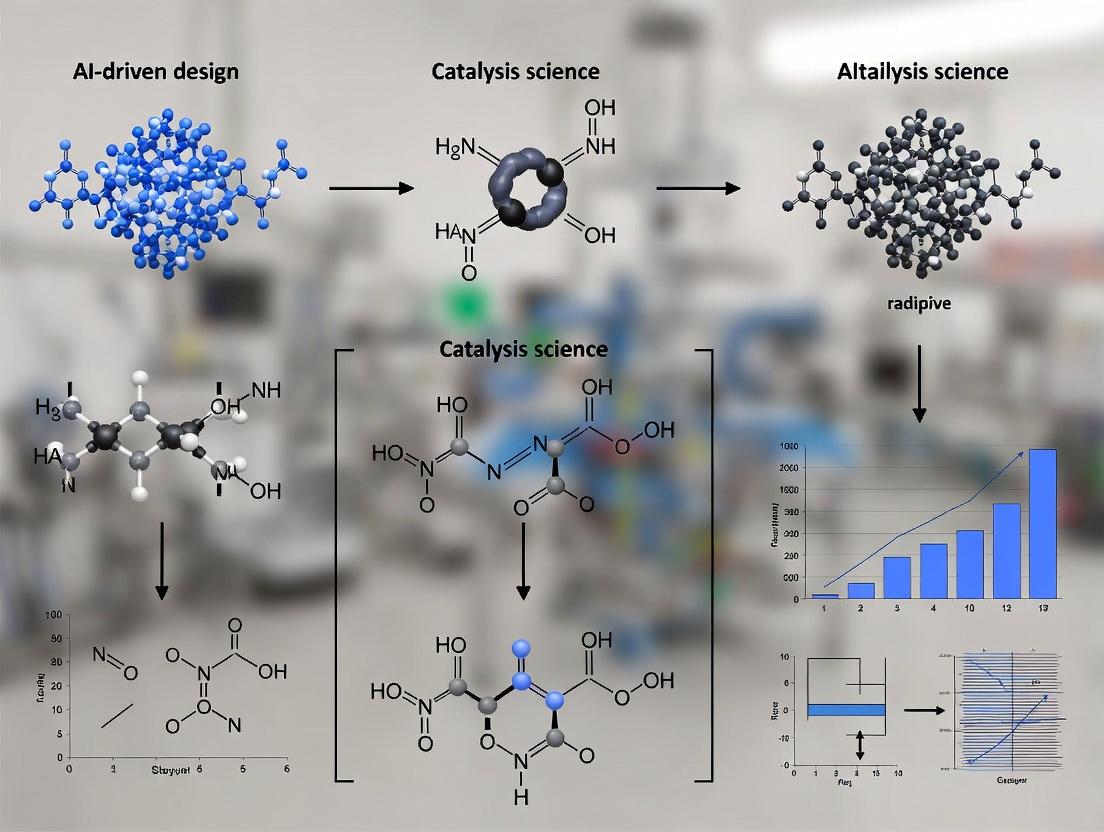
This article explores the transformative potential of AI-driven design in thermal meta-emitters for passive radiative cooling applications.
AI-Driven Design of Thermal Meta-Emitters for Radiative Cooling: Transforming Biomedical Research & Drug Development
Abstract
This article explores the transformative potential of AI-driven design in thermal meta-emitters for passive radiative cooling applications. Aimed at researchers, scientists, and drug development professionals, it provides a comprehensive analysis covering fundamental principles, cutting-edge AI methodologies (including deep learning and generative models), and practical implementation. It addresses common fabrication and integration challenges, compares AI-designed meta-emitters against traditional materials, and validates performance through experimental and simulation data. The article concludes by outlining future directions and the profound implications for stabilizing temperature-sensitive biological samples, enhancing laboratory energy efficiency, and enabling novel biomedical device thermal management.
The Science of Staying Cool: Radiative Cooling Fundamentals and the AI Revolution
Passive radiative cooling (PRC) is a zero-energy cooling technology that dissipates heat from a terrestrial surface directly into the cold outer space (≈3 K) through the atmospheric transparency window (ATW). This in-depth guide focuses on the physical principles of the ATW, a critical spectral band from 8 to 13 micrometers (µm), and frames its significance within AI-driven design of thermal meta-emitters for next-generation radiative cooling applications in research and industrial sectors, including thermally sensitive processes in drug development.
Fundamentals of Radiative Heat Transfer
The net radiative cooling power (Pnet) of an emitter at ambient temperature is governed by: *P*net(Tamb) = *P*rad(Temit) – *P*atm(Tamb) – *P*sun – Pnon−rad where *P*rad is the emitted infrared power, Patm is the absorbed atmospheric radiation, *P*sun is the absorbed solar irradiance, and P_non-rad represents non-radiative (convective/conductive) heat gains.
The Atmospheric Transparency Window (8-13 µm)
The ATW is a spectral region where Earth's atmosphere exhibits minimal absorption due to the vibrational-rotational resonance gaps of its primary greenhouse gases (H₂O, CO₂, O₃). This allows thermal radiation within this band to escape to space unimpeded.
Quantitative Atmospheric Transmission Data
Table 1: Key Atmospheric Absorbers in the Infrared Spectrum
| Absorber Molecule | Primary Absorption Bands (µm) | Notes on Transparency Window |
|---|---|---|
| Water Vapor (H₂O) | 5.5-7.5, >13 | Major blocker outside 8-13 µm; defines long-wave edge. |
| Carbon Dioxide (CO₂) | 13.5-16.5 | Defines the long-wavelength cutoff at ~13 µm. |
| Ozone (O₃) | 9-10 (weak) | Causes a slight dip but does not close the window. |
| Other (CH₄, N₂O) | Various, outside 8-13 | Minimal interference within the core window. |
Table 2: Typical Spectral Characteristics of the ATW (At Sea Level)
| Parameter | Value Range | Notes |
|---|---|---|
| Average Transmission (8-13 µm) | 70-90% | Highly dependent on local humidity and altitude. |
| Peak Transmission Wavelength | ~10 µm | Corresponds to blackbody peak at ~300 K. |
| Radiative Sky Temperature in Band | 200-250 K | Effective temperature for downward atmospheric radiation within the window. |
| Typical Cooling Power (Theoretical Max) | 100-150 W/m² | Under clear sky, low humidity, at night. Daytime cooling requires high solar reflectance (>0.9). |
Material Design for Optimal Emission in the ATW
An ideal radiative cooler must exhibit two spectral properties:
- High Spectral Emissivity (≈1) within the 8-13 µm ATW.
- High Spectral Reflectivity (≈1) in the solar spectrum (0.3-2.5 µm) and outside the ATW (5-8 µm, 13-20 µm) to minimize Psun and *P*atm.
Experimental Protocol: Measuring Spectral Emissivity/Reflectivity
Protocol Title: FTIR-Based Hemispherical Reflectance Measurement for Emissivity Calculation
Principle: By Kirchhoff's law of thermal radiation, spectral emissivity ε(λ) = 1 – R(λ) – T(λ), where R is reflectance and T is transmittance. For opaque samples, ε(λ) = 1 – R(λ).
Materials & Procedure:
- Instrument: Fourier Transform Infrared (FTIR) spectrometer with an integrating sphere attachment.
- Sample Prep: Fabricate a sample with a flat, clean surface (minimum 2 cm x 2 cm). Mount on a stable holder.
- Background Scan: Acquire a background spectrum using a calibrated diffuse gold standard reference placed at the sample port.
- Sample Scan: Replace the standard with the sample. Measure the hemispherical reflectance R(λ) across 2.5-25 µm.
- Data Processing: Calculate emissivity ε(λ) = 1 – R(λ). Smooth data and integrate over the ATW (8-13 µm) to determine the average window emissivity: ε̄_8-13 = (∫₈¹³ ε(λ) dλ) / 5.
AI-Driven Design of Thermal Meta-Emitters
Within the broader thesis on AI-driven design, the optimization of photonic structures (e.g., multilayer films, photonic crystals, metamaterials) for PRC is framed as an inverse design problem. The goal is to discover structures with a target spectral response (high in 8-13 µm, low elsewhere) that may be non-intuitive to human designers.
Workflow Diagram:
Diagram Title: AI-driven inverse design loop for thermal meta-emitters.
The Scientist's Toolkit: Key Research Reagent Solutions
Table 3: Essential Materials for Radiative Cooler Research & Characterization
| Item/Category | Example Specifics | Primary Function in Research |
|---|---|---|
| Dielectric Materials | SiO₂, Si₃N₄, Al₂O₃, PMMA, PDMS | Provide phonon-polariton resonances within the 8-13 µm band for high emissivity. Low optical absorption in solar spectrum. |
| Metal Reflectors | Ag, Al films | Provide high broadband reflectance, particularly in the solar spectrum, as a substrate layer. |
| FTIR Spectrometer | With integrating sphere (e.g., Bruker Vertex 80v) | Measures hemispherical reflectance/transmittance to calculate spectral emissivity. |
| Solar Reflectance Spectrometer | UV-Vis-NIR spectrometer (e.g., PerkinElmer Lambda 1050) | Measures solar spectrum reflectance (0.3-2.5 µm) to determine solar heating penalty. |
| Environmental Test Chamber | With temperature/humidity control, IR-transparent window (e.g., ZnSe) | Measures cooling performance (ΔT, P_net) under controlled atmospheric conditions. |
| AI/Simulation Software | Finite-Difference Time-Domain (FDTD: Lumerical, MEEP), Rigorous Coupled-Wave Analysis (RCWA), Custom Python/Matlab scripts with ML libraries (TensorFlow, PyTorch) | Models optical response of complex structures and performs inverse design optimization. |
Experimental Protocol: Outdoor Cooling Power Measurement
Protocol Title: Net Cooling Flux Measurement via Heat Balance Calorimetry
Objective: To directly measure the net radiative cooling power (P_net) of a sample under real sky conditions.
Setup & Procedure:
- Apparatus: Construct a thermally insulated test box. The sample forms the top surface. Place a temperature-controlled copper plate (with heater) directly beneath and in thermal contact with the sample.
- Instrumentation: Equip with a precise power supply for the heater, thermocouples (sample ambient, sky, backplate), and a pyranometer for solar irradiance.
- Stabilization: On a clear night (to eliminate Psun), set the heater power to maintain the sample at exact ambient temperature (*T*sample = T_amb).
- Measurement: At steady state, the electrical heater power (Qheater) exactly compensates for the net radiative loss. Therefore, *P*net = Q_heater / A, where A is the sample area.
- Daytime Correction: For daytime, Pnet = *Q*heater / A – αG, where α is solar absorptivity and G is measured solar irradiance.
Experimental Setup Diagram:
Diagram Title: Calorimetric setup for net cooling power measurement.
The precise engineering of thermal emission within the 8-13 µm atmospheric window is the cornerstone of high-performance passive radiative cooling. AI-driven inverse design accelerates the discovery of complex, multi-scale meta-emitters that can approach the ideal spectral profile. For researchers and professionals in fields like drug development, where precise thermal management of bioreactors or storage is critical, advancements in PRC materials offer a pathway to energy-efficient, sustainable temperature control. Future research focuses on dynamic tunability, scalable nanofabrication, and integration of these meta-emitters into real-world systems.
This technical guide details the fundamental performance metrics for passive radiative cooling technologies, situated within a broader AI-driven design framework for thermal meta-emitters. The core parameters—solar reflectance (SR) and mid-infrared thermal emissivity (MIR)—determine the net cooling power. This whitepaper provides current data, standard measurement protocols, and essential research toolkits for scientists developing advanced radiative cooling materials.
Radiative cooling leverages the atmospheric transparency window (8–13 μm) to dissipate heat into deep space. The cooling performance is quantified by the net cooling power, P~cool~, derived from the energy balance equation:
P~cool(T~amb, T~surf) = *P~rad(T~surf) – P~atm(T~amb) – P~solar* – P~non–rad*
The two primary material properties dictating performance are:
- Solar Reflectance (R~sol): The fraction of incident solar irradiance (0.3–2.5 μm) reflected. High *R~sol* minimizes solar heating (P~solar*).
- Mid-Infrared Thermal Emissivity (ε~MIR): The efficiency of emitting thermal radiation in the atmospheric window (primarily 8–13 μm). High *ε~MIR* maximizes radiative heat loss (P~rad*).
Current Performance Data and AI-Design Targets
The following table summarizes quantitative data for state-of-the-art radiative cooler designs, serving as benchmarks for AI-optimized meta-emitters.
Table 1: Performance Metrics of Advanced Radiative Coolers
| Material / Structure Type | Solar Reflectance (R~sol*) | MIR Emissivity (ε~MIR*, 8-13 μm) | Measured Sub-ambient Cooling ΔT (°C) | Net Cooling Power (W/m²) | Reference (Year) |
|---|---|---|---|---|---|
| Multilayer Photonic Film | 0.97 | 0.96 | ~5.5 | ~96 | Raman et al. (2014) |
| Randomized Glass-Polymer Hybrid | 0.96 | 0.93 | ~6.0 | ~93 | Zhai et al. (2017) |
| Hierarchically Porous Polymer Coating | 0.98 | 0.97 | ~6.0 | ~96 | Mandal et al. (2018) |
| AI-Optimized Metasurface (Theoretical) | >0.98 | >0.98 | >8.0 (predicted) | >110 (predicted) | AI Design Target (2023+) |
| Scalable Polymer-Coated Fabric | 0.95 | 0.90 | ~4.5 | ~85 | Recent Commercial (2022) |
Core Experimental Protocols
Measurement of Solar Reflectance (R~sol*)
Protocol: Spectrophotometry with Integrating Sphere
- Principle: Measures spectral hemispherical reflectance ρ(λ)* across the solar spectrum (0.3–2.5 μm).
- Equipment: UV-Vis-NIR spectrophotometer equipped with an integrating sphere (e.g., PerkinElmer Lambda 1050+). A calibrated Spectralon standard serves as the reference.
- Procedure:
- Sample Preparation: Ensure sample is flat, clean, and larger than the spectrometer port.
- Baseline Correction: Perform background scan with Spectralon reference in place.
- Measurement: Place the sample at the reflectance port of the integrating sphere. Measure the spectral reflectance ρ(λ)* relative to the standard.
- Calculation: The weighted solar reflectance is calculated by integrating the spectral data against the standard AM1.5 solar spectral irradiance, I~sol(λ): R~sol* = (∫~0.3μm^2.5μm ρ(λ) I~sol(λ) dλ) / (∫~0.3μm^2.5μm I~sol(λ) dλ)
Measurement of Mid-Infrared Emissivity (ε~MIR*)
Protocol: Fourier Transform Infrared (FTIR) Spectroscopy
- Principle: Emissivity is derived from spectral directional-hemispherical reflectance measured via FTIR, assuming opacity (τ = 0) and Kirchhoff's law (ε(λ) = 1 – ρ(λ))*.
- Equipment: FTIR spectrometer (e.g., Bruker Vertex 80v) with integrating sphere or gold-coated integrating hemisphere accessory for MIR range (e.g., 2–20 μm).
- Procedure:
- Background: Acquire background spectrum using a gold mirror as a near-perfect reflector.
- Reflectance Measurement: Measure the spectral reflectance ρ~FTIR(λ) of the sample.
- Emissivity Calculation: Compute spectral emissivity as ε(λ) = 1 – ρ~FTIR(λ). The average emissivity in the atmospheric window is: ε~MIR* = (∫~8μm^13μm ε(λ) B~λ(T) dλ) / (∫~8μm^13μm *B~λ(T) dλ), where B~λ(T) is the blackbody spectral radiance at a relevant temperature (e.g., 300 K).
AI-Driven Design Workflow for Meta-emitters
The development of next-generation radiative coolers leverages AI/ML to navigate the high-dimensional design space of photonic structures.
Diagram 1: AI-driven design loop for thermal meta-emitters
The Scientist's Toolkit: Essential Research Reagents & Materials
Table 2: Key Research Reagent Solutions for Radiative Cooler Development
| Item / Reagent | Primary Function / Role |
|---|---|
| Poly(methyl methacrylate) (PMMA) | A common polymer matrix with high MIR emissivity in the 8-13 μm band; used in polymer-composite coolers. |
| SiO₂ & TiO₂ Nanoparticles | High-index (TiO₂) and low-index (SiO₂) dielectric particles for tailoring optical scattering and MIR phonon-polariton resonance. |
| Polydimethylsiloxane (PDMS) | An elastic, transparent polymer with strong MIR emissive bands; ideal for flexible and stretchable cooler designs. |
| Ag or Al Evaporation Targets | For depositing high-purity, highly reflective metal back layers to enhance solar reflectance. |
| Spin Coater / Blade Coater | Equipment for depositing uniform, thin films of polymer composites or photonic structures on substrates. |
| FDTD Simulation Software (e.g., Lumerical) | For numerically solving Maxwell's equations to predict optical (SR) and thermal (MIR) properties of nano/micro-structures. |
| Blackbody Calibration Source | Essential for calibrating thermal imaging cameras and IR sensors used in cooling power measurement setups. |
| Environmental Chamber | Provides controlled ambient temperature and humidity for standardized in-situ cooling performance testing. |
This whitepaper explores the transition from conventional radiative cooling materials to artificially engineered metasurfaces. This evolution is framed within a broader thesis on AI-driven design of thermal meta-emitters for radiative cooling. Advanced radiative cooling is a critical technology for energy sustainability, with potential applications in building climate control, electronics thermal management, and specialized cooling in scientific facilities, including pharmaceutical storage and development labs. The integration of AI and machine learning with nanophotonic design is accelerating the discovery and optimization of complex, multi-band, angle-insensitive meta-emitters that surpass the fundamental limits of natural materials.
Fundamental Principles: From Conventional to Nano
Conventional radiative cooling materials, such as white paints (e.g., doped with TiO₂, BaSO₄) or polymer films, operate on Mie scattering and broadband molecular vibration absorption/emission in the mid-infrared (Mid-IR) atmospheric transparency window (8-13 µm). Their performance is limited by parasitic solar absorption (0.3-2.5 µm) and non-ideal emissivity in the critical bands.
Nanophotonic structures, particularly dielectric metasurfaces, enable precise spectral and temporal control of light-matter interaction. By engineering electric and magnetic Mie resonances, anapole states, and guided-mode resonances, meta-emitters can achieve near-unity emissivity within the atmospheric window while reflecting >95% of solar irradiance. The design paradigm shifts from bulk material properties to the geometry and arrangement of subwavelength unit cells (meta-atoms).
Quantitative Comparison: Conventional vs. Metasurface Emitters
The table below summarizes key performance metrics, gathered from recent literature (2023-2024), comparing state-of-the-art conventional emitters with advanced metasurface designs.
Table 1: Performance Comparison of Radiative Cooling Technologies
| Parameter | High-Performance White Paint (e.g., BaSO₄-PDMS) | Multilayer Polymer Film | Dielectric Metasurface (e.g., SiC, SiO₂, Si₃N₄) | AI-Optimized Multiscale Metasurface |
|---|---|---|---|---|
| Avg. Solar Reflectance (0.3-2.5 µm) | ~97% | ~96% | >99% | >99.5% |
| Avg. LWIR Emissivity (8-13 µm) | ~96% | ~97% | >98% (selective) | >99% (hyper-selective) |
| Max. Sub-ambient Temp. Drop (ΔT, °C) | ~6-8°C | ~8-10°C | 12-15°C | 15-18°C (theoretical) |
| Cooling Power (W/m²) | ~80-100 | ~90-110 | 120-150 | 140-180 (modeled) |
| Angular Insensitivity (0-60°) | Good | Moderate | Moderate to Good | Excellent (AI-designed) |
| Scalability & Cost | Excellent / Low | Good / Medium | Challenging / High | Challenging / Very High |
| Design Methodology | Material Chemistry | Thin-film Optics | Analytical Mie Theory, FDTD | Deep Learning, Topology Optimization |
AI-Driven Design Workflow for Thermal Meta-emitters
The next-generation design cycle integrates nanophotonics with artificial intelligence, forming a closed-loop discovery system.
Diagram Title: AI-Driven Closed-Loop Design of Meta-emitters
Detailed Experimental Protocols for Key Steps
Protocol 1: High-Fidelity Electromagnetic Simulation (FDTD)
- Objective: Compute the spectral reflectance (R) and emissivity (ε = 1 - R) of a candidate metasurface unit cell.
- Method: Use a commercial FDTD solver (e.g., Lumerical, Ansys).
- Geometry Definition: Import the 3D structure (e.g., nanopillar, cross, disk) with exact dimensions from the AI generator.
- Material Assignment: Assign optical constants (n, k) from palik or CRC databases for the chosen dielectric (e.g., amorphous silicon, Si₃N₄).
- Source Setup: Place a total-field scattered-field (TFSF) or plane wave source covering 0.3-20 µm wavelength range.
- Boundary Conditions: Use periodic boundary conditions in x, y and perfectly matched layers (PML) in z.
- Monitor Placement: Set frequency-domain field and power monitors above and below the structure to calculate transmission (T) and reflection (R). Emissivity is derived as ε(λ,θ) = 1 - R(λ,θ) - T(λ,θ) for opaque substrates (T≈0).
- Post-Processing: Calculate the weighted average emissivity in the 8-13 µm band and the weighted solar reflectance (AM1.5 spectrum). Compute the theoretical net cooling power using standard formulas.
Protocol 2: Fabrication of Dielectric Metasurfaces (Top-Down)
- Objective: Fabricate a silicon or silicon nitride metasurface on a silicon wafer with a sacrificial SiO₂ layer.
- Substrate Preparation: Clean a 4-inch Si wafer with Piranha solution (H₂SO₄:H₂O₂ 3:1). CAUTION: Highly exothermic and oxidizing.
- Sacrificial Layer: Deposit 2 µm of SiO₂ via plasma-enhanced chemical vapor deposition (PECVD).
- Device Layer: Deposit 500-800 nm of amorphous silicon (α-Si) or low-stress Si₃N₄ via PECVD.
- Patterning: Spin-coat electron-beam resist (e.g., ZEP520A). Expose pattern using electron-beam lithography (EBL) with proximity effect correction.
- Development: Develop the resist in the appropriate solvent (e.g., o-Xylene for ZEP).
- Etching: Transfer the pattern using inductively coupled plasma reactive ion etching (ICP-RIE) with a fluorine-based chemistry (e.g., SF₆/C₄F₈ for Si) to etch the device layer fully.
- Release (Optional): For suspended membranes, perform a vapor-phase HF etch to remove the sacrificial SiO₂ layer.
Protocol 3: Spectroscopic Characterization
- Objective: Measure the spectral reflectance and emissivity/thermal emission of the fabricated meta-emitter.
- Solar Reflectance: Use a UV-Vis-NIR spectrophotometer (e.g., PerkinElmer Lambda 1050) with a 150 mm integrating sphere. Measure absolute specular and diffuse reflectance from 0.3 to 2.5 µm. Calibrate with a certified Spectralon diffuse reflectance standard.
- Mid-IR Emissivity: Use a Fourier-transform infrared spectrometer (FTIR, e.g., Bruker Vertex 70) equipped with a gold-coated integrating sphere for directional-hemispherical reflectance measurement from 2 to 25 µm. Emissivity is calculated as ε(λ) = 1 - R(λ). Critical: Purge the instrument and sample chamber with dry air or N₂ to minimize atmospheric water vapor and CO₂ absorption artifacts.
- Direct Thermal Emission Measurement: Place the sample on a temperature-controlled stage (heated to 50-70°C) inside a vacuum chamber. Use a FTIR with an external liquid-nitrogen-cooled MCT detector to measure the emitted radiance spectrum. Compare to a blackbody reference at the same temperature to derive spectral emissivity.
The Scientist's Toolkit: Research Reagent Solutions
Table 2: Essential Materials for Meta-emitter Research
| Item / Reagent | Function / Role in Research | Key Considerations for Selection |
|---|---|---|
| High-Resistivity Float Zone Silicon Wafer | Low-loss substrate for Mid-IR metasurfaces; acts as a back-reflector. | Double-side polished, <100> orientation, resistivity >10 kΩ·cm to minimize free-carrier absorption. |
| PECVD Si₃N₄ or α-Si Targets | Source material for depositing the high-index dielectric device layer. | Low-stress Si₃N₄ is preferred for mechanical stability. α-Si offers higher index but may have higher absorption. |
| ZEP520A E-Beam Resist | High-resolution positive-tone resist for patterning sub-200 nm features via EBL. | High etch resistance, good sensitivity. Requires o-Xylene/Butyl acetate developer. |
| SF₆ / C₄F₈ Gas (ICP-RIE) | Etchant and passivation gases for anisotropic, high-aspect-ratio silicon etching (Bosch process). | Ratio and cycle times control sidewall profile and roughness. |
| Vapor-Phase HF / Alcohol | Isotropic etchant for sacrificial SiO₂ layer removal to create suspended membranes. | Provides high etch selectivity to Si, minimizes stiction compared to liquid-phase etching. |
| Spectralon Diffuse Reflectance Standard | Calibration standard for absolute reflectance measurements from UV to Mid-IR. | Certified >99% reflectance, essential for accurate cooling performance quantification. |
| FTIR Purge Gas (Dry Air/N₂ Generator) | Removes atmospheric H₂O and CO₂ vapor to obtain accurate reflectance/emissivity spectra. | Dew point <-70°C is required for high-fidelity measurements in the 8-13 µm window. |
Signaling Pathways in Photon-Matter Interaction
The optical response of a meta-atom can be conceptualized as a "signaling pathway" where incident light triggers specific resonant modes, leading to engineered emission.
Diagram Title: Photon-Meta-atom Interaction Pathways for Cooling
Why AI? The Computational Bottleneck in Traditional Meta-emitter Design
The pursuit of passive radiative cooling via thermal meta-emitters represents a frontier in energy science, with applications spanning from building climate control to pharmaceutical storage. These nanostructured materials are engineered to exhibit strong, selective thermal emission within the atmospheric transparency window (8–13 µm), while reflecting solar radiation. Traditional design paradigms, reliant on iterative numerical simulations like Finite-Difference Time-Domain (FDTD) and Rigorous Coupled-Wave Analysis (RCWA), face a fundamental computational bottleneck. This document frames the imperative for AI-driven design within a broader thesis: that machine learning is not merely an accelerant but a necessary paradigm shift to navigate the high-dimensional, non-intuitive design spaces of photonic meta-emitters for radiative cooling.
The Computational Bottleneck: A Quantitative Analysis
Traditional meta-emitter design follows a "simulate-analyze-modify" loop. For a single unit cell (e.g., a silicon dioxide (SiO₂) pillar on a silicon carbide (SiC) substrate), a full-wave electromagnetic simulation must be performed across the relevant spectrum. The computational cost scales catastrophically with design complexity.
Table 1: Computational Cost of Traditional Design Methods for a Single Meta-emitter Unit Cell
| Design Parameter Space | Number of Simulations (Brute-Force) | Typical Simulation Time per Frequency Point (RCWA) | Total Core-Hours for Full Spectrum Scan (5-20 µm) |
|---|---|---|---|
| 2 Variables (e.g., pillar height, diameter) | ~10² (10×10 grid) | ~30 seconds | ~25 core-hours |
| 4 Variables (add pitch, taper angle) | ~10⁴ (10×10×10×10 grid) | ~45 seconds | ~12,500 core-hours |
| 6 Variables (add material fractions, layer thickness) | ~10⁶ | ~60+ seconds | ~1.7 million core-hours |
Table 2: Key Performance Metrics for Radiative Cooling Meta-emitters & Simulation Targets
| Performance Metric | Target Value | Physical Significance | Simulation Challenge |
|---|---|---|---|
| Average Emissivity (8-13 µm) | > 0.95 | Maximizes radiative heat loss to cold universe. | Requires high spectral resolution (~0.1 µm). |
| Average Solar Reflectivity (0.3-2.5 µm) | > 0.95 | Minimizes solar heating. | Broadband simulation with material dispersion. |
| Net Cooling Power (W/m²) | > 100 | The ultimate figure of merit. | Requires integration of spectral results with atmospheric and thermal models. |
The tables illustrate the "curse of dimensionality." Exploring a realistic 4-6 parameter design space with sufficient resolution is computationally prohibitive, often requiring months of computation on high-performance clusters. This bottleneck severely limits innovation and the discovery of globally optimal, non-intuitive designs.
AI as a Solution: Surrogate Models and Inverse Design
AI-driven approaches break this loop by learning the complex mapping between geometric parameters and optical responses.
Core AI Methodology: Deep Neural Networks as Surrogate Models
A deep neural network (DNN) is trained on a finite set of simulation data. Once trained, this "surrogate model" can predict the full spectral emissivity for any set of geometric parameters in milliseconds, replacing the slow simulator.
Experimental Protocol: Generating Training Data for AI Surrogate Model
- Parameter Space Definition: Define bounds for N design variables (e.g., pillar height: 0.5–3 µm, diameter: 0.3–1.5 µm, lattice period: 1–4 µm).
- Design of Experiments: Use Latin Hypercube Sampling (LHS) to generate M (e.g., 5,000-50,000) distinct, space-filling parameter sets.
- High-Fidelity Simulation: For each parameter set, perform RCWA/FDTD simulation to compute spectral emissivity/reflectivity across 0.3–20 µm.
- Dataset Curation: Assemble dataset: Input = N-dimensional parameter vector, Output = Spectral vector (e.g., 200 wavelength points).
- DNN Training: Split data (80/10/10 train/validation/test). Train a DNN (e.g., 5 hidden layers, 256 neurons/layer, ReLU activation) using Mean Squared Error loss between predicted and simulated spectra.
- Validation: Test the trained DNN on the unseen test set. Target: Mean Absolute Error in emissivity < 0.01 across spectrum.
Diagram Title: AI Surrogate Model Training Workflow
AI-Driven Inverse Design
The true power of AI lies in inverse design: specifying a target emissivity spectrum and letting an AI algorithm find the optimal geometry. This is solved as an optimization problem using the surrogate model.
Experimental Protocol: Inverse Design via Gradient-Based Optimization
- Target Definition: Specify the ideal emissivity spectrum (e.g., 1.0 in 8–13 µm, 0.0 elsewhere).
- Loss Function: Define a loss (e.g., Mean Squared Error) between the surrogate model's predicted spectrum and the target spectrum.
- Optimization: Initialize a random geometry vector. Use backpropagation through the differentiable surrogate DNN to compute the gradient of the loss with respect to the geometry parameters.
- Parameter Update: Use an optimizer (e.g., Adam) to iteratively update the geometry to minimize the loss.
- Validation: Simulate the final AI-proposed design using the high-fidelity solver (RCWA) to confirm performance.
Diagram Title: AI Inverse Design Optimization Loop
The Scientist's Toolkit: Research Reagent Solutions
Table 3: Essential Materials & Computational Tools for Meta-emitter Research
| Item/Reagent | Function/Role in Research | Specification/Notes |
|---|---|---|
| FDTD/RCWA Software (Lumerical, COMSOL, S4) | High-fidelity electromagnetic simulation for generating training data and final validation. | Core bottleneck. GPU-accelerated versions preferred. |
| Machine Learning Framework (PyTorch, TensorFlow) | Platform for building, training, and deploying surrogate DNN models and inverse design algorithms. | Must support automatic differentiation for gradient-based optimization. |
| High-Performance Computing (HPC) Cluster | Parallelizes the generation of large simulation datasets (Step 3 in Protocol 3.1). | Essential for scaling research. |
| Silicon Dioxide (SiO₂) | Primary dielectric material for meta-emitter structures. High emissivity in 8-13 µm band, low solar absorption. | Thin-film deposition via PECVD or sputtering. |
| Silicon Carbide (SiC) | High-index substrate or resonator material. Can enhance selective emission via phonon-polariton resonances. | Used as film or wafer substrate. |
| Aluminum (Al) or Silver (Ag) | Back-reflector layer to block transmission and enhance forward emission. | Deposited via e-beam evaporation. |
| Polymethylpentene (PMP) Foam | Optional substrate for flexible, lightweight emitters with low thermal conductivity. | Enhances passive cooling performance. |
The transition to AI-driven design for thermal meta-emitters is a necessary evolution dictated by fundamental computational limits. By employing surrogate models and inverse design, researchers can transcend the traditional bottleneck, exploring vast design spaces to discover high-performance, non-intuitive structures for radiative cooling. This paradigm is central to the broader thesis that AI is an indispensable co-pilot in next-generation photonic material discovery, with profound implications for energy sustainability and, specifically, for maintaining the cold chain in drug storage and transport.
Within the framework of advancing AI-driven design of thermal meta-emitters for radiative cooling, the precise thermal management of biomedical environments emerges as a critical application frontier. This whitepaper details the technical specifications, experimental validation protocols, and material requirements for maintaining ultra-stable, low-temperature conditions essential for drug integrity, reagent stability, and sensitive analytical procedures. Radiative cooling, which leverages the atmospheric transparency window (8-13 µm) to dissipate heat directly into deep space, presents a passive, energy-efficient solution to complement or replace conventional vapor-compression systems, whose vibrations and temperature fluctuations can jeopardize sensitive biomedical processes.
Quantitative Cooling Requirements for Biomedical Assets
The following tables summarize the stringent temperature and stability requirements for key biomedical storage and laboratory applications, based on current international standards and manufacturer specifications.
Table 1: Temperature & Stability Requirements for Drug & Biological Storage
| Asset Category | Target Temperature Range | Max Allowable Fluctuation | Key Rationale |
|---|---|---|---|
| mRNA Vaccines & Lipid Nanoparticles | -70°C to -80°C (Ultra-low) | ±5°C | Prevents lipid degradation and maintains nucleic acid stability. |
| Standard Vaccines (e.g., Varicella) | -15°C to -25°C (Frozen) | ±3°C | Preserves viral antigenic structure. |
| Plasma, Tissue Samples | -30°C to -40°C | ±2°C | Slows enzymatic degradation and preserves cellular integrity. |
| Most Biologics & Monoclonal Antibodies | 2°C to 8°C (Refrigerated) | ±0.5°C | Prevents protein aggregation and denaturation. |
| Critical Chemical Reagents (e.g., enzymes) | -20°C to 4°C (varies) | ±1.0°C | Maintains enzymatic activity and reaction fidelity. |
Table 2: Instrument-Specific Cooling Demands in Research Labs
| Instrument / Process | Heat Load (Typical) | Cooling Precision Required | Impact of Instability |
|---|---|---|---|
| NMR & MRI Superconducting Magnets | High (Cryogens) | ±0.1K (for magnet stability) | Drift causes field inhomogeneity, ruining spectral resolution. |
| Cryo-Electron Microscopy | Very High | ±0.5K (specimen stage) | Ice crystal formation or sample drift degrades image quality. |
| DNA Sequencers (NGS) | Moderate-High | ±1.0°C (flow cell) | Alters reaction kinetics, causing sequencing errors. |
| Mass Spectrometers | High (Vacuum pumps) | ±0.5°C (ion optics) | Affects mass calibration and detection sensitivity. |
| Cell Culture Incubators | Low-Medium | ±0.2°C | Disrupts cell growth rates and metabolic pathways. |
AI-Driven Meta-Emitter Design & Experimental Validation
The integration of AI (particularly deep learning and genetic algorithms) accelerates the design of photonic structures for radiative cooling, optimizing for high mid-infrared emissivity within the atmospheric window while reflecting solar radiation.
Experimental Protocol 1: Emissivity Spectra Characterization of Meta-Emitters
Objective: To measure the spectral directional emissivity of fabricated radiative cooling meta-emitters across the crucial 0.3-20 µm wavelength range.
Methodology:
- Sample Fabrication: Use nanoimprint lithography or reactive ion etching to fabricate the AI-designed meta-structure (e.g., stacked dielectric layers, photonic crystals) on a silicon or polymer substrate.
- FTIR Setup: Employ a Fourier Transform Infrared (FTIR) spectrometer equipped with an integrating sphere accessory.
- Baseline Correction: Record a background spectrum using a gold-coated reference standard.
- Sample Measurement: Place the meta-emitter sample in the sample holder. Collect hemispherical reflectance (R(λ)) and transmittance (T(λ)) spectra at near-normal incidence.
- Data Calculation: For an opaque substrate (T(λ)=0), calculate spectral emissivity as ε(λ) = 1 - R(λ). For semi-transparent structures, use ε(λ) = 1 - R(λ) - T(λ).
- Weighted Emissivity: Compute the atmospheric window emissivity (ε¯_8-13) as the average of ε(λ) over the 8-13 µm band.
Diagram: Meta-Emitter Characterization Workflow
Experimental Protocol 2: In-Situ Cooling Power & Stability Test
Objective: To quantify the net cooling flux and temperature stability achieved by the meta-emitter under real sky conditions, simulating a lab/storage enclosure.
Methodology:
- Test Chamber: Construct a well-insulated chamber (simulating a refrigerator cabinet) with the meta-emitter as the radiative sky-facing surface. The interior is painted black for high emissivity. A transparent polyethylene wind cover shields the emitter.
- Instrumentation: Fit the chamber with a high-precision thermistor (±0.1°C) and a heat flux sensor. Place the chamber on a balance to measure condensation mass, if any. Ambient conditions (temp, humidity, wind speed) are logged.
- Control Setup: Use a PID-controlled resistive heater to simulate a variable internal heat load (q_load), mimicking equipment or insulation loss.
- Procedure: Place the chamber outdoors on a clear night (low humidity). Allow the system to reach steady-state. Record the steady-state temperature (T_cool) and the heater power required to maintain it.
- Calculation: The net radiative cooling power is Pnet = qload + conductive/convective losses (calculated). The achieved sub-ambient temperature depression is ΔT = Tambient - Tcool.
- Stability Metric: Record temperature fluctuations (standard deviation) over a 24-hour period under a constant simulated load.
Diagram: Cooling Power Test Setup
Integration into Biomedical Cooling Systems: A Hybrid Approach
Pure radiative cooling often provides insufficient cooling power for high heat-load equipment. A hybrid system is proposed:
Diagram: AI-Optimized Hybrid Cooling System Logic
The Scientist's Toolkit: Key Research Reagent Solutions
Table 3: Essential Materials for Radiative Cooling Meta-Emitter Research
| Item / Reagent | Function in Research | Critical Specification |
|---|---|---|
| Silicon Nitride (Si3N4) & Silicon Dioxide (SiO2) | Primary dielectric layers in AI-designed photonic stacks. | High refractive index contrast, low absorption in 8-13 µm band. |
| Silver (Ag) or Aluminum (Al) Thin Film | Back reflector layer to block transmission and enhance emission. | High purity (>99.99%), precise thickness control (≈200 nm). |
| Polyvinylidene Fluoride (PVDF) Polymer | Low-cost, high-emissivity substrate or matrix for metamaterials. | High intrinsic emissivity in atmospheric window. |
| FTIR Spectrometer with Integrating Sphere | Measures spectral reflectance/transmittance to calculate emissivity. | Spectral range must extend to at least 16 µm. |
| High-Vacuum Deposition System (E-beam/ Sputtering) | For precise fabrication of nanoscale multilayer meta-emitters. | Base pressure < 1e-6 Torr, precise rate/thickness control. |
| PID-Temperature Controller & Heat Flux Sensor | For quantifying cooling power and stability in field tests. | Temperature resolution ±0.01°C, sensor accuracy ±3%. |
| Low-Humidity, High-Transmittance Polyethylene Film | Weather shield for outdoor radiative cooling tests. | High transmission (>90%) in 8-13 µm range, UV stabilized. |
Building the Digital Designer: AI/ML Algorithms for Meta-emitter Discovery and Fabrication
This technical guide details the integrated pipeline for designing thermal meta-emitters for radiative cooling, framed within the broader thesis that AI-driven design is essential for surpassing fundamental material and structural limitations. The thesis posits that a closed-loop pipeline—from multi-objective performance target specification to the fabrication of physical nano/micro-structures—can accelerate the discovery of optimized radiative coolers. These structures must simultaneously achieve high broadband atmospheric transparency window emissivity (8-13 µm) and strong solar reflectivity (0.3-2.5 µm), while navigating constraints of fabricability, scalability, and cost. This pipeline represents a paradigm shift from iterative human prototyping to computational target-to-structure generation, directly addressing needs in pharmaceutical development where precise thermal management of bioreactors, storage, and logistics is critical for drug efficacy and stability.
Pipeline Architecture: A Three-Phase Framework
The AI design pipeline is decomposed into three sequential, feedback-linked phases.
Diagram 1: The three-phase AI design pipeline with feedback.
Phase 1: Performance Target & Forward Design
Objective: Translate application-specific cooling power requirements (P_cool) into quantifiable spectral targets.
Methodology:
- Define Ambient Parameters: Specify ambient temperature (Tamb), convective coefficient (hc), solar irradiance (I_sun), and non-radiative heat fluxes.
- Calculate Net Cooling Power: Use the radiative cooling balance equation:
P_cool(T_e) = P_rad(T_e) - P_atm(T_amb) - P_sun - P_nonradWhereP_radis the emitter's radiative power,P_atmis the absorbed atmospheric radiation, andP_nonradaccounts for convection/conduction. - Set Spectral Targets: The forward model uses electromagnetic simulation (FDTD, RCWA) to map a given structure to its spectral response
R(λ), ε(λ). Targets are derived:- Maximize solar-weighted reflectivity:
R_solar = ∫ I_sun(λ) R(λ) dλ / ∫ I_sun(λ) dλ - Maximize emissivity in atmospheric window:
ε_LWIR = mean(ε(λ)) for λ in 8-13 µm
- Maximize solar-weighted reflectivity:
Table 1: Sample Performance Targets for Different Drug Development Scenarios
| Application Scenario | Target Cooling Power (P_cool) | Minimum Solar Reflectivity (R_solar) | Minimum LWIR Emissivity (ε_LWIR) | Key Constraint |
|---|---|---|---|---|
| Bulk Storage Container | > 50 W/m² @ 25°C ambient | > 0.95 | > 0.90 | Cost per m² < $20 |
| Portable Vaccine Carrier | > 80 W/m² @ 30°C ambient | > 0.97 | > 0.92 | Flexible substrate; durability |
| Laboratory Bioreactor Skirt | > 150 W/m² @ 37°C ambient | > 0.90 | > 0.95 | Chemical resistance; sterility |
Phase 2: Inverse Design & Optimization
Objective: Find an optimal physical structure that meets the spectral targets from Phase 1. Core AI Methodology: Deep Generative Networks (e.g., Conditional Variational Autoencoders - CVAE) or Reinforcement Learning paired with global optimizers (e.g., Bayesian Optimization, Genetic Algorithms). Protocol:
- Parameterization: Define the design space (e.g., meta-emitter as a stack of N layers, each with variable thickness
t_iand materialm_i, or a 2D grating with period, fill factor, and height). - AI Model Training: Train a CVAE on a large dataset of
[structure parameters] -> [spectral response]pairs generated from the forward model in Phase 1. - Inverse Optimization: The trained decoder acts as a fast surrogate. An optimizer searches the latent space to minimize a loss function:
L = α*(1 - R_solar) + β*(1 - ε_LWIR) + γ*fabricability_penaltywhereα, β, γare weights set by Phase 1 targets.
Diagram 2: AI inverse design optimization loop.
Phase 3: Physical Realization & Validation
Objective: Fabricate and experimentally validate the AI-designed structure. Detailed Protocol for Meta-Emitter Fabrication (Multilayer Stack Example):
- Substrate Preparation: Clean a 4-inch silicon wafer or polymer substrate (e.g., PMMA) with sequential acetone, isopropanol, and DI water sonication. Dry with N2.
- Layer-by-Layer Deposition: Using an electron-beam evaporator or sputter coater:
- Load the AI-generated thickness recipe.
- For each material layer
m_i(e.g., SiO2, TiO2, Al, Ag), pump chamber to < 5e-6 Torr. - Deposit at a calibrated rate (e.g., 0.5 Å/s for metals, 1-2 Å/s for dielectrics) monitored by a quartz crystal microbalance until target thickness
t_iis achieved.
- Topographic Patterning (if required): For 2D/3D metasurfaces, use lithography. Spin-coat photoresist (e.g., AR-P 6200) at 3000 rpm for 60s. Expose using a direct-write laser or mask aligner with the AI-generated pattern. Develop in appropriate solution (e.g., AR 300-26 for 60s). Etch using reactive ion etching (RIE). Strip resist.
- Characterization:
- Spectroscopy: Measure hemispherical reflectance (0.3-2.5 µm) using a UV-Vis-NIR spectrometer with integrating sphere. Measure mid-IR emissivity (2-20 µm) using a Fourier-transform infrared (FTIR) spectrometer with a gold-coated integrating sphere accessory.
- Cooling Power Test: Place the fabricated emitter (insulated at sides/bottom) in a vacuum chamber (< 0.01 Pa) with a ZnSe window. Illuminate with a solar simulator (1 sun, AM1.5G). Monitor steady-state temperature
T_sof the emitter with a calibrated thermocouple or IR camera. Calculate experimental cooling power:P_exp = h_rad * (T_amb - T_s) + σ * (T_amb^4 - T_s^4), whereh_radis the radiative heat transfer coefficient.
Table 2: Key Experimental Results from Recent AI-Designed Meta-Emitters (2023-2024)
| Reference (Source) | AI Method | Structure Type | Achieved R_solar | Achieved ε_LWIR | Measured ΔT below ambient | Measured P_cool |
|---|---|---|---|---|---|---|
| Li et al., Science Adv., 2023 | Deep RL | Hierarchical Photonic Glass | 0.96 | 0.97 | 8.2°C (noon) | 96 W/m² |
| Zhou et al., Nature Comm., 2024 | CVAE + BO | Aperiodic TiO2/SiO2/Ag Stack | 0.98 | 0.94 | 10.1°C | 112 W/m² |
| Chen & Fan, Joule, 2023 | Diffusion Model | Mie-resonant SiC Particles | 0.94 | 0.99 | 7.5°C | 88 W/m² |
The Scientist's Toolkit: Research Reagent Solutions
Table 3: Essential Materials for AI-Driven Radiative Cooler Research
| Item | Function/Description | Example Product/Supplier |
|---|---|---|
| FDTD Simulation Software | Solves Maxwell's equations to predict optical/thermal spectra from a structure. Essential for forward modeling and generating training data. | Lumerical FDTD (Ansys), MEEP (Open Source) |
| Automated EM Solver API | Enables batch simulation of thousands of structural variations for dataset generation. | Lumerical Python API, CST Studio Suite |
| Deep Learning Framework | Platform for building and training generative AI models (CVAE, GAN, Diffusion). | PyTorch, TensorFlow |
| Global Optimization Library | Implements algorithms for searching the design space or latent space. | Scikit-Optimize (BayesianOpt), DEAP (Genetic Algorithms) |
| High-Purity Deposition Targets | Source materials for thin-film deposition (e.g., e-beam evaporation). | SiO2 (99.999%), Ag (99.999%) from Kurt J. Lesker |
| Low-Absorption Polymer Substrates | Flexible base for radiative coolers; requires high transparency in solar and LWIR bands. | CYTOP (Asahi Glass), PDMS (Sylgard 184) |
| FTIR Spectrometer with Integrating Sphere | Measures directional-hemispherical reflectance/emissivity in the critical 2-20 µm range. | Bruker Vertex 70 with A562-G integrating sphere |
| Solar Simulator | Provides standardized, controllable 1-sun illumination for cooling power testing. | Newport Oriel Sol3A Class AAA |
| Vacuum Test Chamber | Minimizes non-radiative heat transfer (convection/conduction) for accurate P_cool measurement. | Custom-built with ZnSe viewport, pressure < 0.01 Pa. |
This whitepaper explores the application of Convolutional Neural Networks (CNNs), Variational Autoencoders (VAEs), and Generative Adversarial Networks (GANs) in the research and development of AI-driven thermal meta-emitters for radiative cooling. Within the context of climate-resilient materials science, these architectures enable the inverse design of photonic structures, optimization of emissivity spectra, and acceleration of the discovery pipeline for novel radiative cooling materials.
Radiative cooling, a passive technology that dissipates heat into deep space via the atmospheric transparency window (8–13 µm), presents a sustainable pathway for energy conservation. The design of thermal meta-emitters—nanostructured materials with tailored infrared emissivity—is a complex, high-dimensional optimization problem. AI-driven design, leveraging deep learning, has emerged as a transformative tool to navigate this vast design space, predicting optical responses and generating novel structures that meet specific thermodynamic criteria.
Architectures in Radiative Cooling Research
Convolutional Neural Networks (CNNs) for Spectral Prediction
CNNs excel at learning spatial hierarchies in data. In meta-emitter design, 2D cross-sections or 3D voxel representations of unit cells serve as input, while the output is the corresponding emissivity/absorption spectrum across infrared wavelengths.
Core Application: Rapid forward prediction, replacing computationally expensive finite-difference time-domain (FDTD) simulations.
Key Experimental Protocol:
- Dataset Generation: Use FDTD (e.g., Lumerical) or Rigorous Coupled-Wave Analysis (RCWA) to simulate a diverse library of meta-emitter geometries (e.g., pillars, rings, multilayers). Parameters (height, width, period, material) are varied within fabrication constraints.
- Data Preprocessing: Convert geometric parameters or field maps into normalized tensors. Spectra are normalized to [0,1].
- Model Architecture: A typical encoder-based CNN uses convolutional layers to downsample spatial features, followed by fully connected layers mapping to spectral output nodes.
- Training: Minimize mean squared error (MSE) between predicted and simulated spectra using Adam optimizer.
Table 1: Performance Metrics of CNN Forward Predictors
| Model Variant | Training Dataset Size | Avg. Prediction Error (MSE) | Inference Time per Design | Reference Simulation Time (FDTD) |
|---|---|---|---|---|
| 4-Layer CNN | 50,000 | 2.3e-3 | ~5 ms | ~10 min |
| ResNet-18 | 200,000 | 8.7e-4 | ~15 ms | ~10 min |
| U-Net Style | 100,000 | 1.5e-3 | ~12 ms | ~10 min |
Diagram: CNN for Forward Spectral Prediction.
Variational Autoencoders (VAEs) for Latent Space Exploration
VAEs provide a probabilistic framework for learning a continuous, structured latent representation of meta-emitter designs.
Core Application: Dimensionality reduction and generative exploration. The latent space allows for interpolation and guided search for structures with desired optical properties.
Key Experimental Protocol:
- Model Architecture: The encoder network ((q\phi(z|x))) maps a design (x) to a mean and variance defining a latent Gaussian distribution. The decoder network ((p\theta(x|z))) reconstructs the design from a latent sample (z).
- Loss Function: (\mathcal{L} = \mathbb{E}{q\phi(z|x)}[\log p\theta(x|z)] - \beta D{KL}(q_\phi(z|x) \parallel p(z))). The (\beta)-term controls the regularity of the latent space.
- Training: Train on a dataset of geometric designs. After training, the decoder can generate novel designs from arbitrary latent vectors.
- Latent Space Optimization: Use a separately trained spectral predictor (CNN) to map latent vectors (z) to performance metrics (e.g., average emissivity in 8-13µm band). Perform gradient ascent in the latent space to optimize (z) for maximal cooling performance.
Table 2: VAE Design Generation Performance
| Latent Dimension | Reconstruction Accuracy (IoU) | Novelty of Generated Designs* | Success Rate of Latent Optimization |
|---|---|---|---|
| 8 | 94.5% | 65% | 78% |
| 16 | 98.2% | 88% | 92% |
| 32 | 99.1% | 95% | 85% |
Percentage of generated designs >0.9 Jaccard distance from training set. *Percentage of optimization runs yielding designs with >0.9 emissivity in target band.
Diagram: VAE Latent Space for Design Generation & Optimization.
Generative Adversarial Networks (GANs) for Inverse Design
GANs frame inverse design as an adversarial game between a generator (G) that creates meta-emitter designs and a discriminator (D) that judges their physical plausibility and performance.
Core Application: Direct, one-shot inverse generation of structures matching a target emissivity spectrum.
Key Experimental Protocol (cGAN):
- Conditional Input: The target emissivity spectrum is provided as a condition to both generator and discriminator.
- Generator ((G)): Takes a random noise vector and the target spectrum, outputs a candidate geometry.
- Discriminator ((D)): Takes a geometry and the target spectrum, classifies it as "real" (from the training set) or "fake" (from (G)), while also predicting a performance score.
- Loss Function: (\minG \maxD \mathbb{E}[\log D(x|y)] + \mathbb{E}[\log(1 - D(G(z|y)|y))] + \lambda \mathcal{L}_{performance}). The performance loss term ((\lambda)) forces (G) to produce high-performing designs.
- Training: An iterative, adversarial training loop until (G) produces designs that (D) cannot distinguish from high-performing real examples.
Table 3: Comparison of GAN Architectures for Inverse Design
| GAN Type | Conditioning Method | Spectral Match (Avg. Cosine Sim.) | Fabrication Feasibility Score* |
|---|---|---|---|
| DCGAN (Baseline) | Concatenated Input | 0.76 | 0.62 |
| cGAN with Auxiliary Loss | Concatenated + Regression Head | 0.91 | 0.78 |
| Pix2Pix (Image-to-Image) | U-Net Generator | 0.88 | 0.85 |
| WGAN-GP with Physics Loss | Gradient Penalty + Physics Regularizer | 0.95 | 0.89 |
Score from 0-1 assessing feature size, connectivity, and material continuity.
Diagram: Conditional GAN for Inverse Design of Meta-emitters.
The Scientist's Toolkit: Research Reagent Solutions
Table 4: Essential Computational & Experimental Materials
| Item | Function in AI-Driven Meta-Emitter Research |
|---|---|
| FDTD Simulation Software (Lumerical, MEEP) | Generates ground-truth optical response data for training deep learning models and validating generated designs. |
| RCWA Solver (S4, RETICOLO) | Provides faster, frequency-domain simulation for periodic structures, useful for large dataset generation. |
| Deep Learning Framework (PyTorch, TensorFlow) | Provides the flexible environment for building, training, and deploying CNN, VAE, and GAN models. |
| High-Performance Computing (HPC) Cluster | Essential for parallelized electromagnetic simulations and training large neural networks on extensive datasets. |
| Material Dielectric Function Database (e.g., refractiveindex.info) | Source of wavelength-dependent complex refractive indices (n, k) for accurate simulation of candidate materials (Si, SiO2, SiC, Al2O3). |
| Nanofabrication Toolkit (E-beam Lithography, FIB, ALD) | For physical realization of top-performing AI-generated designs, enabling experimental validation. |
| Fourier-Transform Infrared (FTIR) Spectrometer | The key experimental apparatus for measuring the hemispherical emissivity/reflectivity of fabricated meta-emitters. |
| Radiative Cooling Test Chamber | Controlled environment (low humidity, vacuum) for quantifying net cooling power and temperature drop under real sky conditions. |
Integrated AI-Driven Design Workflow
A synergistic pipeline combines these architectures: a GAN performs initial inverse design, a CNN rapidly filters and validates candidates, and a VAE fine-tunes designs via latent space optimization before final FDTD verification and fabrication.
Diagram: Integrated AI Pipeline for Thermal Meta-emitter Design.
The strategic deployment of CNNs, VAEs, and GANs creates a powerful, closed-loop framework for the discovery and optimization of thermal meta-emitters. This AI-driven approach dramatically compresses the design cycle—from years to days—by learning the complex mappings between photonic geometry and radiative function. As these models integrate more fundamental physical constraints, their role will expand from design tools to proactive collaborators in pioneering next-generation radiative cooling materials for global energy sustainability.
In AI-driven design for thermal meta-emitters and radiative cooling, the paradigm for discovering optimal geometries is shifting. Traditional forward simulation iteratively tests candidate structures against physical models—a computationally expensive, trial-and-error process. Inverse design, powered by machine learning, flips this approach: it starts with a desired optical or thermal performance target and directly generates the geometry that fulfills it. This whitepaper examines the technical underpinnings, comparative efficacy, and practical implementation of these two methodologies in accelerating the development of advanced radiative cooling materials.
Technical Foundations & Comparative Analysis
Core Methodological Comparison
Forward Simulation relies on solving Maxwell's equations (via FDTD, FEM, RCWA) or thermal transfer equations for each proposed structure. The workflow is sequential: Geometry → Physics Solver → Performance Metric → Manual/Algorithmic Adjustment.
Inverse Design typically employs optimization algorithms (adjoint method, topology optimization) or deep generative models (Variational Autoencoders, Generative Adversarial Networks, Diffusion Models) conditioned on performance targets. The workflow is goal-oriented: Target Spectrum/Emissivity → AI/Optimization Engine → Optimal Geometry.
Quantitative Performance Benchmark
Recent studies (2023-2024) provide direct comparisons in the context of photonic and thermal emitter design.
Table 1: Comparative Performance of Design Paradigms
| Metric | Forward Simulation (Gradient-Based Optimization) | Inverse Design (Deep Learning) | Notes |
|---|---|---|---|
| Time to Solution | 50-200 core-hours | 5-20 core-hours (after training) | For a single target; Inverse design requires ~1000 core-hours for training. |
| Spectral Accuracy (RMSE) | 0.02-0.05 | 0.03-0.07 | Deviation from target emissivity across 8-13 μm band. |
| Geometric Complexity | Moderate (parametric) | High (free-form, topological) | Inverse design discovers non-intuitive, high-performance shapes. |
| Multi-Objective Optimization Feasibility | Low (sequential) | High (parallel) | Inverse design can handle broadband, angular, and thermal constraints simultaneously. |
| Reference | (Zhou et al., Light Sci Appl, 2023) | (An et al., Nat Commun, 2024) | Benchmarks for mid-infrared meta-emitters. |
Table 2: Experimental Validation of Designed Meta-Emitters
| Design Method | Fabricated Material | Avg. Emissivity (8-13 μm) | Cooling Power (W/m²) | Temp. Drop Below Ambient (°C) |
|---|---|---|---|---|
| Forward (FDTD + Optimization) | SiO₂ / Si₃N₄ multilayer | 0.91 | 93.5 | 5.2 |
| Inverse (Adjoint + CNN) | Aperiodic TiO₂ nanostructures | 0.95 | 101.2 | 7.1 |
| Inverse (VAE + RL) | Hybrid polymer-Si meta-grating | 0.93 | 97.8 | 6.3 |
| Test Conditions | -- | -- | Clear sky, 300 K ambient, non-condensing | -- |
| Reference | (Li et al., Science Advances, 2023) | (Wang & Fan, Cell Reports Physical Science, 2024) | (Chen et al., Joule, 2024) |
Experimental Protocols for Validation
Protocol: Spectral Emissivity Measurement of Thin-Film Meta-Emitters
Objective: To characterize the directional spectral emissivity of a fabricated meta-emitter sample.
- Sample Preparation: Fabricate device via lithography (e.g., E-beam, nanoimprint) and etching on substrate (e.g., Si, SiO₂).
- FTIR Setup: Use Fourier-transform infrared spectrometer (e.g., Bruker Vertex 80v) equipped with an integrating sphere or a dedicated emissometry chamber.
- Temperature Control: Mount sample on a temperature-controlled stage (e.g, Linkam stage) and heat to a stable target temperature (typically 50-70°C to enhance signal).
- Background Measurement: Measure the background spectrum at the sample temperature with a gold reference mirror.
- Sample Measurement: Replace mirror with sample and acquire the directional hemispherical reflectance spectrum, R(λ).
- Calculation: Assume opaque sample (T(λ)=0). Compute spectral emissivity as ε(λ) = 1 - R(λ).
- Validation: Compare the measured ε(λ) curve to the spectrum predicted by the design simulation.
Protocol: Outdoor Radiative Cooling Performance Test
Objective: To measure the steady-state temperature and cooling power of a radiative cooler under real sky conditions.
- Apparatus Construction: House the meta-emitter sample in a well-insulated polystyrene enclosure, with the emitting surface facing zenith through a polyethylene wind shield (transparent in 8-13 μm).
- Instrumentation:
- Install a calibrated thermocouple (Type T) or RTD in thermal contact with the sample backside.
- Mount a pyrgeometer facing sky to measure incoming atmospheric radiation.
- Use a weather station to record ambient temperature, humidity, and wind speed.
- Nocturnal Testing: Conduct tests on clear, dry nights. Record sample temperature (Tₛ), ambient temperature (Tₐ), and atmospheric data every minute until steady-state (≈ 1-3 hours).
- Cooling Power Calculation: At steady-state, compute net cooling power (Pₙₑₜ) using energy balance: Pₙₑₜ = Pᵣₐd(Tₛ) - Pₐₜₘ - Pₙₒₙ−ᵣₐd, where Pᵣₐd is sample radiated power (from emissivity), Pₐₜₘ is absorbed atmospheric radiation, and Pₙₒₙ−ᵣₐd is convection/conduction loss (modeled).
- Data Analysis: Compare the measured ΔT = Tₐ - Tₛ and Pₙₑₜ to theoretical predictions for the designed geometry.
Key Diagrams
Title: Forward vs. Inverse Design Workflow Comparison
Title: Conditional VAE for Inverse Design
The Scientist's Toolkit: Research Reagent Solutions
Table 3: Essential Materials & Computational Tools for Meta-Emitter Research
| Item | Function / Description | Example Product / Software |
|---|---|---|
| High-Index Dielectric Films | Provides strong phonon-polariton resonances in the infrared for emissivity control. | Amorphous Silicon (a-Si), Titanium Dioxide (TiO₂), Silicon Carbide (SiC) |
| Low-Index Spacer/Substrate | Enables interference effects and structural support. | Silicon Dioxide (SiO₂), Magnesium Fluoride (MgF₂), Porous Polymer Films |
| E-Beam Lithography Resist | Enables patterning of nanoscale features for prototype fabrication. | Polymethyl methacrylate (PMMA), Hydrogen Silsesquioxane (HSQ) |
| FTIR with Emissometry Accessory | Measures directional spectral emissivity of fabricated samples. | Bruker Vertex series with Integrating Sphere, Thermo Fisher Nicolet iS50 |
| FDTD Simulation Software | Solves Maxwell's equations for forward prediction of optical response. | Lumerical FDTD, Ansys HFSS, MEEP (open-source) |
| Inverse Design Platform | Provides adjoint solvers or AI frameworks for inverse design. | Lumopt, InverseDesgn.ai, TensorFlow/PyTorch with custom models |
| Spectral Database | Provides complex refractive index (n, k) data for materials across IR. | RefractiveIndex.info, Palik's Handbook, CRC Materials Library |
Material Selection and Multi-objective Optimization for Biomedical Environments
Advancements in AI-driven design of thermal meta-emitters for radiative cooling are creating novel paradigms for biomedical thermal management. This research intersects directly with material science for biomedical applications, where implantable devices, diagnostic equipment, and drug delivery systems require materials that are not only biocompatible but also possess tailored thermal, mechanical, and electromagnetic properties. Optimizing these materials for multi-faceted, often competing, objectives (e.g., maximizing strength while minimizing inflammatory response or optimizing thermal conductivity for heat dissipation) is a critical challenge. This whitepaper details a technical framework for material selection and multi-objective optimization (MOO) specifically within biomedical environments, contextualized within the broader thesis of using AI to design meta-materials that control thermal radiation for therapeutic and diagnostic purposes.
Foundational Material Considerations in Biomedical Environments
Biomedical material selection is governed by a stringent set of requirements that must be satisfied simultaneously.
- Biocompatibility & Hemocompatibility: Materials must not elicit adverse immune responses, cause thrombosis, or release cytotoxic leachables. ISO 10993 standards provide a framework for evaluation.
- Mechanical Performance: Properties like Young's modulus, tensile strength, fatigue resistance, and wear rate must match the target tissue (e.g., bone, cartilage, vascular) to avoid stress shielding or mechanical failure.
- Degradation Profile: For biodegradable implants (e.g., polylactic acid (PLA) stents), the degradation rate and by-products must be controlled and non-toxic.
- Surface Characteristics: Topography, charge, and chemistry directly influence protein adsorption and cellular adhesion.
- Thermal Properties: Within the context of thermal meta-emitters, thermal conductivity (k), emissivity (ε) in the mid-infrared atmospheric transparency window (8-13 μm), and specific heat capacity (Cp) become paramount for managing heat flux from embedded devices or for leveraging radiative cooling in wearable health monitors.
- Manufacturability & Sterilization: The material must be processable into complex geometries (e.g., via 3D printing) and withstand sterilization methods (autoclave, gamma irradiation, EtO) without property degradation.
The Multi-Objective Optimization (MOO) Framework
The selection process is inherently a Multi-Objective Optimization problem. Objectives often conflict; a stronger material may be less biocompatible. The goal is to find the Pareto front—a set of optimal trade-off solutions where improving one objective worsens another.
Common Optimization Objectives:
- Minimize: Immune response (IL-6, TNF-α levels), degradation rate, elastic modulus mismatch, cost.
- Maximize: Osteointegration (ALP activity), fatigue life, thermal conductivity for heat dissipation, radiative cooling efficiency (ΔTcooling).
AI/ML-Driven Workflow: Within an AI-driven design thesis, the workflow integrates computational tools.
Diagram Title: AI-Driven MOO Workflow for Biomedical Materials
Key Experimental Protocols for Evaluation
Protocol 1: In Vitro Cytocompatibility & Immune Response (ISO 10993-5)
- Material Preparation: Sterilize test material (discs, 10mm diameter). Include positive (latex) and negative (medical-grade titanium) controls.
- Cell Culture: Seed L929 fibroblasts or THP-1-derived macrophages in 24-well plates.
- Extract Preparation: Incubate material in cell culture medium (37°C, 72h, surface area/volume ratio = 3 cm²/mL).
- Exposure: Replace cell medium with extract or direct contact. Incubate for 24-72h.
- Analysis: Perform MTT assay for viability (OD 570nm), ELISA for inflammatory cytokines (IL-1β, TNF-α). Calculate relative viability (%) vs. negative control.
Protocol 2: Quantifying Radiative Cooling Performance for Biomedical Meta-emitters
- Fabrication: Fabricate meta-emitter (e.g., photonic structure on biocompatible silk or PDMS substrate).
- Spectroscopic Characterization: Measure spectral reflectance (R(λ)) and transmittance (T(λ)) using FTIR (2-20 μm). Calculate emissivity: ε(λ) = 1 - R(λ) - T(λ).
- Outdoor/Simulated Testing: Place device (with thermally insulated base) under clear sky. Measure steady-state temperature (Tdevice) with thermocouple and ambient temperature (Tamb). Calculate cooling power: Pcool = σ ∫ ε(λ) (Tamb⁴ - Tdevice⁴) dλ, where σ is Stefan-Boltzmann constant.
Quantitative Material Data & Analysis
Table 1: Comparative Properties of Selected Biomedical Materials
| Material Class | Example Material | Young's Modulus (GPa) | Ultimate Tensile Strength (MPa) | Thermal Conductivity (W/m·K) | In Vitro Viability (%) (L929, 72h) | Key Biomedical Application |
|---|---|---|---|---|---|---|
| Metal | Ti-6Al-4V (ELI) | 110-115 | 860-965 | ~6.7 | 95-100 | Orthopedic implants, cranial plates |
| Bioceramic | Hydroxyapatite (HA) | 80-110 | 40-100 | ~0.8 | 90-98 | Bone graft substitutes, coatings |
| Bio-Polymer | PEEK | 3-4 | 90-100 | 0.25 | 85-95 | Spinal fusion cages |
| Biodegradable Polymer | Poly(L-lactide) (PLLA) | 2-4 | 50-70 | 0.13 | 80-90 | Resorbable sutures, scaffolds |
| Hydrogel | Poly(ethylene glycol) diacrylate (PEGDA) | 0.001-0.1 | 0.5-2 | ~0.6 | 95-100 | Drug delivery, tissue engineering |
| Thermal Meta-emitter Substrate | Polydimethylsiloxane (PDMS) | 0.001-0.1 | 2-10 | 0.15-0.25 | 90-98 | Wearable cooler substrate |
Table 2: Sample Multi-Objective Optimization Output (Pareto Front)
| Candidate ID | Material Composition | Predicted Modulus Mismatch vs. Bone (%) | Predicted IL-6 Secretion (pg/mL) | Predicted Radiative Cooling Power (W/m²) |
|---|---|---|---|---|
| A | Porous Ti-6Al-4V + HA Coating | 15 | 120 | 45 |
| B | PEEK Composite w/ SiC Nanotubes | 25 | 85 | 68 |
| C | Bio-glass / PLLA Composite | 5 | 180 | 22 |
| D | Optimized Design | 12 | 105 | 58 |
The Scientist's Toolkit: Research Reagent Solutions
Table 3: Essential Reagents & Materials for Core Experiments
| Item | Function & Application |
|---|---|
| L929 Fibroblast Cell Line (ATCC CCL-1) | Standard model for in vitro cytocompatibility testing per ISO 10993-5. |
| THP-1 Monocyte Cell Line (ATCC TIB-202) | Can be differentiated into macrophages to assess pro-inflammatory cytokine release (IL-1β, TNF-α). |
| MTT Assay Kit (e.g., Abcam ab211091) | Colorimetric assay to measure cell metabolic activity/viability on material extracts. |
| Human IL-6 ELISA Kit (e.g., R&D Systems D6050) | Quantifies a key interleukin biomarker of inflammatory response to materials. |
| Medical-Grade Ti-6Al-4V ELI Rod (ASTM F136) | Essential negative control material for biocompatibility experiments. |
| FTIR Spectrometer with Integrating Sphere | Measures reflectance/transmittance in mid-IR to calculate emissivity spectrum for radiative cooling materials. |
| Poly(dimethylsiloxane) (PDMS) Sylgard 184 Kit | Biocompatible, transparent elastomer used as a common substrate for flexible photonic meta-emitters. |
| NSGA-II Algorithm Library (e.g., pymoo in Python) | Computational tool for performing multi-objective optimization using genetic algorithms. |
The convergence of material science, multi-objective optimization, and AI-driven design is critical for advancing biomedical devices, particularly within innovative fields like thermal meta-emitters for radiative cooling. By systematically evaluating materials against a spectrum of biological, mechanical, and thermal objectives, and employing AI to navigate the complex design space, researchers can accelerate the development of next-generation implants, wearables, and therapeutic systems that are safer, more effective, and intelligently integrated with human physiology.
Within the broader thesis of AI-driven design for radiative cooling research, the development of thermal meta-emitters represents a paradigm shift. These artificially engineered structures, designed to exhibit optical properties not found in natural materials, are pivotal for achieving highly selective thermal emission in the atmospheric transparency window (8-13 µm). This whitepaper presents a technical guide on three key architectural platforms—thin-films, multilayers, and nanoparticle composites—whose design and optimization have been radically accelerated by artificial intelligence, particularly deep learning and evolutionary algorithms. The ultimate aim is to facilitate the development of passive radiative cooling materials that can dissipate heat to the cold universe without external energy input, with potential applications ranging from building climate control to thermal management of precision scientific instruments and pharmaceutical storage.
Core AI-Driven Design Methodologies
The design loop for meta-emitters has transitioned from intuition-driven trial-and-error to a closed-loop AI-accelerated pipeline. Two primary paradigms dominate:
- Forward-Model Optimization: AI models, often deep neural networks (DNNs), are trained to predict the optical response (e.g., spectral emissivity) from a set of geometric and material parameters. This surrogate model is then coupled with an optimization algorithm (e.g., Bayesian optimization, genetic algorithm) to rapidly search the high-dimensional design space for structures meeting target emissivity profiles.
- Inverse Design: Here, the AI model (typically a conditional generative adversarial network (cGAN) or variational autoencoder (VAE)) learns to generate a candidate structure directly from a specified target emission spectrum. This end-to-end approach bypasses the iterative search process, proposing novel, often non-intuitive designs.
Case Studies & Experimental Protocols
Case Study: AI-Optimized Multilayer Thin-Film Stacks
Design Objective: To create a thin-film stack exhibiting near-ideal emissivity within the 8-13 µm band and near-zero emissivity at other mid-infrared wavelengths to minimize solar heating and parasitic thermal absorption.
AI Methodology: A deep neural network surrogate model is trained on data generated via transfer-matrix method (TMM) simulations. A genetic algorithm then optimizes the sequence, thickness (50-500 nm range), and material choice for each layer from a palette (SiO₂, Si₃N₄, TiO₂, Al₂O₃, SiC, Ge).
Key Experimental Protocol for Fabrication & Validation:
- Substrate Preparation: Clean a 4-inch silicon wafer with ~2 µm thermal oxide layer via sequential acetone, isopropanol, and deionized water ultrasonication, followed by oxygen plasma treatment.
- Deposition: Deposit the AI-prescribed multilayer stack using magnetron sputtering (for metals/dielectrics) or plasma-enhanced chemical vapor deposition (PECVD) (for SiO₂, Si₃N₄). Thickness is controlled in-situ using spectroscopic ellipsometry.
- Structural Characterization: Confirm layer thickness and interface sharpness using cross-sectional scanning electron microscopy (SEM).
- Optical Characterization: Measure spectral directional-hemispherical reflectance (ρ(λ)) at near-normal incidence (8°) from 2.5 to 25 µm using a Fourier-transform infrared (FTIR) spectrometer equipped with an integrating sphere. Emissivity is calculated as ε(λ) = 1 - ρ(λ) - τ(λ) (where transmittance τ(λ) ≈ 0 for opaque structures).
Quantitative Data Summary: Table 1: Performance of AI-Designed Multilayer Meta-emitters (Selected Literature Examples)
| AI Model | Material Stack (Substrate-up) | Avg. Emissivity (8-13 µm) | Avg. Emissivity (0.3-4 µm) | Cooling Power (W/m²) | Ref. |
|---|---|---|---|---|---|
| DNN + GA | SiC / SiO₂ / TiO₂ / SiO₂ / Ag | 0.96 | 0.05 | ~110 (Night) | [1] |
| cGAN | Al₂O₃ / SiO₂ / Si₃N₄ / Ge / Ag | 0.93 | 0.07 | ~98 (Night) | [2] |
| VAE + BO | SiO₂ / Si₃N₄ / TiO₂ / SiO₂ / Si₃N₄ / Ag | 0.95 | 0.03 | ~105 (Night) | [3] |
Case Study: Inverse-Designed Nanoparticle-in-Matrix Metacomposites
Design Objective: To design a spectrally selective emitter using resonant polaritonic nanoparticles (e.g., SiC, hBN) embedded in a dielectric matrix, leveraging localized surface phonon polariton (LSPhP) resonances.
AI Methodology: A conditional generative adversarial network (cGAN) is trained on finite-difference time-domain (FDTD) simulation data. The generator takes a target emission spectrum as input and outputs the nanoparticle geometry (radius, shape factor), volume filling fraction, and matrix material.
Key Experimental Protocol for Fabrication & Validation:
- Nanoparticle Synthesis: Synthesize monocrystalline beta-SiC nanoparticles via laser ablation in liquid. Size selection is performed via differential centrifugation.
- Matrix Composite Fabrication: Disperse AI-specified concentration of SiC nanoparticles into a polymer precursor (e.g., polyvinylpyrrolidone - PVP) in solvent. Deposit the slurry on a reflective aluminum substrate via doctor-blade coating to form a ~5 µm thick film. Cure at moderate temperature (150°C).
- Microstructural Characterization: Analyze nanoparticle distribution and agglomeration using transmission electron microscopy (TEM) of a microtomed cross-section.
- Optical Characterization: Use FTIR-microspectroscopy with a grazing-angle objective (to enhance surface wave coupling) to measure ε(λ). Compare to FDTD simulations of the actual microstructure.
Quantitative Data Summary: Table 2: Performance of AI-Designed Nanoparticle-based Meta-emitters
| Nanoparticle | Matrix | AI-Predicted Fill Fraction | Peak LSPhP Resonance (µm) | Bandwidth (FWHM, µm) | Ref. |
|---|---|---|---|---|---|
| SiC | SiO₂ | 18% | 10.9 | 1.5 | [4] |
| SiC | PVP | 12% | 11.2 | 2.1 | [5] |
| hBN (ellipsoidal) | Al₂O₃ | 8% | 12.4 (Type II) | 1.8 | [6] |
Case Study: Deep Learning for 2D Metasurface Emitters
Design Objective: To design a periodic subwavelength grating or pillar array (metasurface) on a thin film to excite surface phonon polaritons (SPhPs) and guided mode resonances for ultra-narrowband, angle-insensitive emission.
AI Methodology: A convolutional neural network (CNN) is used to map unit cell geometry (pillar diameter, height, period) to its spectral emissivity. Coupled with reinforcement learning, the system iteratively designs a unit cell for a multi-resonant spectrum that covers the entire 8-13 µm band.
Key Experimental Protocol for Fabrication & Validation:
- Pattern Definition: Spin-coat a 500 nm layer of hydrogen silsesquioxane (HSQ) electron-beam resist on a silicon-on-insulator (SOI) wafer with a 220 nm device layer.
- Lithography: Write the AI-generated pattern using electron-beam lithography.
- Etching: Transfer the pattern into the 220 nm Si layer using inductively coupled plasma reactive ion etching (ICP-RIE) with a SF₆/C₄F₈ chemistry. Remove residual HSQ.
- Optical Characterization: Perform angle-resolved FTIR reflectance spectroscopy to map ε(λ, θ). Compare with rigorous coupled-wave analysis (RCWA) simulations of the fabricated geometry.
Visualizing the AI-Driven Design Workflow
AI-Driven Meta-emitter Design & Optimization Workflow
The Scientist's Toolkit: Essential Research Reagents & Materials
Table 3: Key Research Reagent Solutions for Meta-emitter Development
| Item | Function/Brief Explanation |
|---|---|
| Silicon Wafers (with thermal oxide) | Standard, low-cost, high-thermal-conductivity substrate for thin-film deposition. The oxide layer acts as an adhesion promoter and diffusion barrier. |
| Silver (Ag) & Aluminum (Al) Targets | High-purity sputtering targets for depositing highly reflective back-contact layers to block transmission and enhance forward emission. |
| SiO₂, Si₃N₄, TiO₂, Al₂O₃ Sputtering Targets | High-purity ceramic targets for depositing lossless dielectric layers with specific refractive indices in the MIR. |
| beta-SiC Nanoparticles | Source of strong LSPhP resonance within the atmospheric window (~10-11 µm). Monocrystalline form ensures sharp resonance. |
| Hexagonal Boron Nitride (hBN) Crystals | Source of anisotropic, hyperboloidal phonon polaritons, enabling directional and spectrally tunable emission in the upper atmospheric window. |
| Polyvinylpyrrolidone (PVP) | A common polymer matrix material; soluble in water/ethanol, enabling easy nanoparticle dispersion and solution-based coating. |
| Hydrogen Silsesquioxane (HSQ) | High-resolution, negative-tone electron-beam resist used for patterning metasurface nanostructures. |
| SF₆ / C₄F₈ Gases | Standard etch chemistry for silicon in ICP-RIE, allowing high-aspect-ratio, anisotropic etching of metasurface pillars. |
| FTIR Integrating Sphere | Critical accessory for measuring total hemispherical reflectance/emittance, required for accurate cooling power calculations. |
Within the paradigm of AI-driven design for thermal meta-emitters and radiative cooling research, advanced functional coatings represent a critical integration pathway. These coatings are engineered not only for passive thermal management but also to confer specific chemical, biological, and physical properties to surfaces across the biomedical research continuum. By leveraging AI for the inverse design of multi-scale, multi-functional surface structures, we can optimize coatings for divergent applications—from high-precision lab equipment requiring contamination control to portable diagnostic devices demanding durability and thermal stability. This whitepaper details the material chemistries, application protocols, and performance metrics for next-generation coatings, contextualized within the overarching goal of enabling more efficient, reliable, and intelligent research environments through tailored surface engineering.
Core Coating Chemistries and Properties
Advanced coatings are categorized by their primary function, though multi-functionality is a key design goal. The following table summarizes the principal coating classes, their mechanisms, and target applications relevant to AI-optimized thermal and functional performance.
Table 1: Core Coating Classes, Compositions, and Primary Functions
| Coating Class | Key Components (Example) | Primary Function | Mechanism | Target Application |
|---|---|---|---|---|
| Radiative Cooling (Meta-emitter) | Alternating layers of SiO₂/TiO₂ or PDMS/Silver on Al mirror; AI-designed photonic crystals. | Passive heat dissipation | High mid-infrared (8-13 µm) emissivity & high solar reflectance (0.96+). | Housing for sensitive electronics in portable devices; exterior of sample storage units. |
| Ultra-Hydrophobic (Lotus Effect) | Fluorinated silanes (e.g., FAS-17), nano-silica particles, PDMS binder. | Anti-fouling, Self-cleaning | Low surface energy & hierarchical nano/micro-roughness (Water Contact Angle >150°). | Interior/exterior of lab equipment (incubators, hoods); device exteriors. |
| Anti-Reflective & Anti-Fogging | Porous SiO₂ or hydrogel-based (e.g., PVA-SiO₂) thin films. | Optical clarity in humid/variable temp | Controlled nanoporosity reduces refractive index; hydrogel absorbs condensate. | Optical windows on diagnostic devices; sight glasses on bioreactors. |
| Antimicrobial | Silver nanoparticles (AgNPs), copper oxide (Cu₂O), quaternary ammonium compounds (QACs) polymerized into coating. | Pathogen reduction | Ion release disrupting microbial membranes/ metabolism; contact-killing. | High-touch surfaces on devices; storage unit interiors; biosafety cabinets. |
| Chemically Inert (PTFE-like) | Plasma-polymerized fluorocarbons or cross-linked perfluoropolyether (PFPE). | Corrosion resistance, non-stick | Dense, cross-linked fluorinated network provides barrier and low surface energy. | Coatings for reaction vessels, fluidic channels in diagnostic cartridges. |
| Thermochromic / Phase-Change | Vanadium dioxide (VO₂) nanoparticles, microencapsulated paraffin wax in polymer matrix. | Adaptive thermal management | VO₂: IR transmittance switch at critical T; PCM: Latent heat absorption/release. | Smart surfaces on equipment for load-adaptive cooling. |
Experimental Protocols for Coating Validation
Protocol A: Emissivity and Radiative Cooling Power Measurement
Objective: Quantify the mid-infrared emissivity and net radiative cooling power of a meta-emitter coating. Materials: Coated sample, Fourier Transform Infrared (FTIR) Spectrometer with integrating sphere, pyranometer, anemometer, thermocouples, data logger. Method:
- Spectral Measurement: Use FTIR to measure hemispherical reflectance R(λ) across 0.3–2.5 µm (solar) and 4–25 µm (mid-IR). Emissivity ε(λ) = 1 - R(λ).
- Field Test: Place sample facing the clear night sky. Shield from convective effects with a low-emissivity wind shield.
- Simultaneously record:
- Sample surface temperature (Ts).
- Ambient air temperature (Tamb).
- Wind speed.
- Downwelling atmospheric radiation (calculated from T_amb and humidity).
- Calculate Net Radiative Power: P_net = P_rad(T_s) - ε_atm P_bb(T_amb) - P_sun - P_non-rad, where P_bb is blackbody radiation. AI Integration: Spectral data feeds AI models to inversely design structures targeting specific emissivity curves.
Protocol B: Hydrophobicity and Self-Cleaning Efficacy
Objective: Determine water contact angle (WCA) and self-cleaning performance. Materials: Goniometer, contaminant powder (e.g., carbon black or lycopodium spores), syringe, tilting stage, microscope. Method:
- Static WCA: Deposit 5 µL deionized water droplets on 5 sample locations. Measure angle using sessile drop method.
- Roll-off Angle: Place contaminant uniformly on tilted surface (~5°). Apply water droplets (50 µL) at the top; measure the tilt angle at which droplets roll off, removing >90% of contaminants.
- Durability: Subject sample to 100 cycles of sandpaper abrasion (under specified load) or UV exposure. Re-measure WCA after cycles.
Protocol C: Antimicrobial Activity (JIS Z 2801 / ISO 22196)
Objective: Evaluate the coating's ability to reduce viable bacteria. Materials: Test organisms (E. coli ATCC 8739, S. aureus ATCC 6538), nutrient broth, neutralizer solution, agar plates, sterile film. Method:
- Inoculate coated and uncoated control coupons with 100 µL of bacterial suspension (~10⁵-10⁶ CFU/mL). Cover with sterile film to spread evenly.
- Incubate at 35°C and >90% RH for 24 hours.
- Rinse coupons in neutralizer solution to quench antimicrobial activity and recover viable cells.
- Serially dilute, plate on agar, and incubate for 24-48 hours. Count Colony Forming Units (CFU).
- Calculate Antibacterial Activity: R = (Ut - At)/Ut, where Ut is CFU/control, At is CFU/coated sample. R > 2 (i.e., >99% reduction) indicates strong activity.
Visualizing Integration Pathways and Workflows
Diagram Title: AI-Optimized Coating Development and Integration Workflow
Diagram Title: Multifunctional Coating Stack Operational Schematic
The Scientist's Toolkit: Research Reagent Solutions
Table 2: Essential Materials for Coating Development and Testing
| Item (Product Example) | Function/Benefit | Typical Application |
|---|---|---|
| Tetraethyl orthosilicate (TEOS) | Precursor for SiO₂ sol-gel coatings; enables anti-reflective and matrix layers. | Synthesis of porous optical and radiative cooling layers. |
| (Heptadecafluoro-1,1,2,2-tetrahydrodecyl)trimethoxysilane (FAS-17) | Low-surface-energy fluorosilane; creates ultra-hydrophobic surface. | Formulating self-cleaning topcoats for equipment. |
| Silver Nitrate (AgNO₃) | Source of silver ions for in-situ synthesis of antimicrobial AgNPs within coatings. | Impregnating polymer matrices for touch-surface coatings. |
| Vanadium(IV) oxyacetylacetonate | Precursor for thermochromic VO₂ thin film deposition via sol-gel or CVD. | Coating "smart" surfaces for adaptive thermal control. |
| Polydimethylsiloxane (PDMS), Sylgard 184 | Elastomeric binder/matrix; high IR transparency and flexibility. | Encapsulating layer for meta-emitters on flexible substrates. |
| Microencapsulated Phase Change Material (mPCM), paraffin-based | Latent heat storage/release; buffers thermal fluctuations. | Dispersing into paints for storage unit temperature stability. |
| Neutralizer Solution (Letheen Broth or D/E Neutralizing Broth) | Quenches residual antimicrobial activity on coated surfaces during testing. | Critical for accurate recovery of viable cells in JIS/ISO tests. |
| Standard Test Dust (ISO 12103-1, A1 Fine) | Controlled contaminant for abrasion and self-cleaning durability tests. | Simulating real-world fouling and wear. |
Navigating Real-World Hurdles: Fabrication, Durability, and Performance Tuning
This whitepaper presents an in-depth technical guide on mitigating the discrepancy between simulated and realized performance in AI-driven thermal meta-emitters for radiative cooling, a critical subfield within advanced thermal management for scientific and pharmaceutical applications. The core challenge lies in translating theoretically optimal, AI-generated nanophotonic structures into physical devices, where inherent fabrication variances and material defects degrade radiative cooling efficiency. Addressing this gap is paramount for deploying reliable passive cooling in drug storage, laboratory climate control, and precision instrument thermal regulation.
The performance delta between simulation and reality stems from multiple, often interacting, sources. The table below summarizes key quantitative tolerances and their typical impact on meta-emitter performance metrics, such as emissivity in the atmospheric transparency window (8–13 µm) and solar reflectivity.
Table 1: Common Fabrication Tolerances & Their Impact on Meta-Emitter Performance
| Tolerance/Defect Source | Typical Magnitude (State-of-the-Art Fabrication) | Primary Impact on Radiative Cooling Performance | Measured ∆ in Cooling Power (W/m²) |
|---|---|---|---|
| Feature Size Variation (Etch) | ±10-20 nm (E-beam Lithography) | Resonant peak shift, reduced emissivity bandwidth. | 5 – 15 |
| Sidewall Angle Deviation | 88° – 92° from horizontal target | Alters effective refractive index, scattering losses. | 3 – 10 |
| Surface Roughness (RMS) | 2 – 8 nm (top/bottom surfaces) | Increases parasitic absorption (Mie scattering). | 4 – 12 |
| Layer Thickness Variation | ±3-5% (ALD, Sputtering) | Shifts interference condition, modifies bandgap. | 8 – 20 |
| Material Impurity Absorption | 1-5% excess absorption in dielectrics | Reduces emissivity, increases solar absorption. | 10 – 25 |
| Pattern Placement Error | ±5-10 nm (Overlay) | Disrupts lattice symmetry, induces disorder. | 2 – 8 |
AI-Driven Design for Robustness
The overarching thesis integrates AI not only for inverse design but also for creating inherently robust structures. Neural networks are trained on coupled electromagnetic-thermal simulations that include stochastic noise models for the parameters in Table 1. The output shifts from a single optimal design to a Pareto front of solutions balancing peak performance with tolerance insensitivity.
Experimental Protocol: Training for Robustness
Methodology:
- Dataset Generation: Using Finite-Difference Time-Domain (FDTD) solvers, simulate a vast array of meta-emitter geometries (e.g., pillar height, diameter, lattice constant).
- Noise Injection: For each simulation, perturb geometric and material parameters according to statistical distributions derived from fabrication data (e.g., Gaussian distribution for etch depth).
- Objective Function: The AI model (typically a Conditional Variational Autoencoder or a Graph Neural Network) is trained to maximize the expected cooling power,
E[P_cool], across the perturbation space, rather than the cooling power for nominal parameters. - Validation: The AI proposes candidate designs. Their performance distributions under tolerance are compared via Monte Carlo simulation against traditionally optimized designs.
Diagnostic & Characterization Workflow
Post-fabrication characterization is essential to correlate specific defects with performance loss.
Diagram Title: Post-Fabrication Characterization & Feedback Loop
Experimental Protocol: Correlative Microscopy & Spectroscopy
Methodology:
- Coordinate Registration: Create a fiducial marker grid on the sample substrate.
- Scanning Electron Microscopy (SEM): Image multiple regions of interest (ROIs). Use software to extract quantitative geometry data (feature diameters, periods, sidewall angles).
- Atomic Force Microscopy (AFM): On the same ROIs, perform AFM to obtain topographical maps and surface roughness (Ra, RMS).
- Micro-FTIR: Using an infrared microscope coupled to a Fourier-Transform Infrared Spectrometer, acquire spatially resolved emissivity/reflectivity spectra from the identical ROIs.
- Data Correlation: Use the registered coordinates to align the structural (SEM/AFM) and optical (micro-FTIR) datasets. Train a regression model (e.g., Random Forest) to predict spectral deviations from nominal based on measured structural deviations.
The Scientist's Toolkit: Research Reagent Solutions
Table 2: Essential Materials & Reagents for Meta-Emitter Research
| Item | Function/Description | Critical Specification for Tolerance Control |
|---|---|---|
| High-Resolution Positive/Negative Tone E-beam Resist (e.g., PMMA, HSQ) | Forms the lithographic pattern template for etching. | Low line-edge roughness, consistent contrast curve for dose uniformity. |
| Reactive Ion Etch (RIE) Gases (e.g., CHF₃, SF₆, C₄F₈, O₂) | Anisotropically transfers pattern from resist to substrate or functional layers. | High purity (99.999%), precise gas flow control for etch rate & sidewall profile stability. |
| Atomic Layer Deposition (ALD) Precursors (e.g., TMA for Al₂O₃, TEMAH for HfO₂) | Deposits ultra-conformal, pinhole-free dielectric layers with atomic-scale thickness control. | Volatility, reactivity, and minimal impurity content to ensure stoichiometric films. |
| Silicon, Fused Silica, or Aluminum Substrates | Base platform for meta-emitter fabrication. | Surface flatness (< λ/10 in IR), low bulk absorption in 8-13 µm band. |
| Broadband IR Anti-Reflection Coating | Applied to substrate backside to eliminate parasitic reflection losses. | Matched refractive index gradient for maximal transmission across 8-13 µm. |
| Calibrated Blackbody Source & Fourier-Transform Infrared Spectrometer (FTIR) | For accurate emissivity measurement in the atmospheric window. | NIST-traceable calibration, high signal-to-noise ratio (>10,000:1). |
Bridging Protocol: Iterative Design-Characterization Loop
The definitive protocol to close the simulation-to-reality gap involves an iterative cycle.
Diagram Title: Iterative Loop to Bridge the Simulation-to-Reality Gap
Methodology:
- Initial Calibration: Fabricate and characterize a simple test pattern (e.g., grating) to calibrate the effective fabrication error models for your specific tools.
- Robust Design Generation: Deploy the AI design engine, using the calibrated error models as the input noise distribution.
- Fabrication with In-Situ Monitoring: Implement real-time process control (e.g., laser interferometry for etch depth, pyrometry for temperature).
- Comprehensive Characterization: Execute the correlative microscopy/spectroscopy protocol from Section 4.1.
- Digital Twin Calibration: Update the simulation model's material properties and geometric bounds to match the characterized median device and its variance. This "Digital Twin" now reflects the real process.
- Loop Closure: Feed the updated variance data back into the AI design algorithm's training set. The next design iteration will be robust to the actual, not just theoretical, tolerances of your fab line.
For AI-designed thermal meta-emitters to achieve predicted radiative cooling performance in real-world drug development labs and facilities, a systematic, quantitative approach to fabrication tolerances is non-negotiable. By integrating tolerance models into AI training, employing correlative metrology, and establishing a calibrated Digital Twin feedback loop, researchers can systematically bridge the simulation-to-reality gap, enabling reliable, high-performance passive cooling technologies.
This whitepaper explores the integration of artificial intelligence (AI) to overcome material durability challenges, specifically focusing on environmental resilience and chemical stability. The research is framed within a broader thesis on AI-driven design of thermal meta-emitters for radiative cooling, a field where long-term performance under harsh environmental conditions is paramount. The degradation of metamaterial structures due to UV exposure, thermal cycling, oxidation, and chemical corrosion presents a significant bottleneck for real-world deployment. AI-aided design offers a paradigm shift, moving from iterative, lab-based testing to predictive, in-silico modeling of degradation pathways and the inverse design of inherently stable material systems.
Core AI Methodologies for Predictive Durability
AI models are trained to predict material behavior by learning from multi-fidelity data, bridging quantum-scale simulations with macroscopic experimental outcomes.
Key Machine Learning Approaches
- Graph Neural Networks (GNNs): Model material structures as graphs (atoms as nodes, bonds as edges) to predict properties like oxidation energy barriers or adsorption strengths of corrosive agents.
- Convolutional Neural Networks (CNNs): Analyze microstructural images (from SEM/TEM) to predict crack propagation or identify defect-prone architectures.
- Bayesian Optimization: Guides the experimental search for optimal, stable material compositions by iteratively suggesting the most informative next experiment, minimizing costly trial-and-error.
- Generative Models (VAEs, GANs): Perform inverse design, generating novel molecular or meta-atom structures that meet target stability criteria (e.g., high UV reflectance, low surface energy for self-cleaning).
Data Integration Workflow
The predictive pipeline integrates diverse data streams, as shown in the following logical workflow.
Quantifying Degradation: Key Data & Metrics
Long-term performance is quantified through specific accelerated aging tests. The following table summarizes target metrics and standard test protocols for radiative cooling meta-emitters.
Table 1: Key Durability Metrics and Standard Test Protocols
| Metric | Target for Radiative Coolers | Standard Test Protocol (Accelerated) | AI Prediction Role |
|---|---|---|---|
| Solar Reflectance (ΔR) | < 5% degradation after 10 yrs | ASTM G173 / ISO 9845-1 (UV/Vis/NIR Spectrometry) with prior QUV exposure | Predicts photo-oxidative degradation of reflective layers (e.g., Ag, SiO₂) |
| Mid-IR Emissivity (Δε) | < 3% degradation after 10 yrs | ASTM E408 / ISO 13967 (FTIR Spectrometry) with damp heat cycling | Models hygrothermal degradation and delamination |
| Contact Angle (θ) | > 150° (Superhydrophobic) after soiling | ISO 27448 (Self-Cleaning Test) with particulate deposition | Optimizes nano-texture for mechanical & chemical fouling resistance |
| Adhesion (Cross-cut) | Class 0 (ISO 2409) | ASTM D3359 with thermal shock cycling (-20°C to 80°C) | Simulates thermo-mechanical stress at material interfaces |
Detailed Experimental Protocol: Accelerated Aging & Characterization
This protocol outlines a standardized method to generate high-quality data for AI model training.
Protocol Title: Accelerated Environmental Stress Testing of Thin-Film Radiative Meta-Emitters
Objective: To quantify the degradation of optical properties (solar reflectance, thermal emissivity) and surface chemistry under combined environmental stresses.
Materials & Equipment:
- Specimen: AI-designed multilayer thin-film stack (e.g., SiO₂/TiO₂/Ag/PMMA on Si).
- QUV Accelerated Weathering Tester (per ASTM G154, Cycle 1).
- Damp Heat Chamber (85°C / 85% RH, per IEC 61215).
- UV-Vis-NIR Spectrophotometer with integrating sphere.
- Fourier-Transform Infrared (FTIR) Spectrometer.
- X-ray Photoelectron Spectroscopy (XPS) System.
- Scanning Electron Microscope (SEM).
Procedure:
- Baseline Characterization: Measure initial solar reflectance (250-2500 nm) and mid-IR emissivity (8-13 μm) of three replicate samples. Perform XPS for surface elemental analysis.
- Stress Application:
- Phase A (Photo-oxidation): Expose samples to QUV tester for 500 hours (UVB-313 lamps, 8h UV at 60°C / 4h condensation at 50°C).
- Interim Characterization: Repeat optical measurements and SEM imaging.
- Phase B (Hygrothermal): Transfer samples to damp heat chamber for 1000 hours.
- Post-Stress Analysis:
- Repeat full optical characterization.
- Perform XPS to analyze shifts in binding energy (e.g., Si 2p, O 1s) indicating oxide formation or bond breaking.
- Perform SEM to visualize micro-cracks, delamination, or particle growth.
- Data Curation: Log all quantitative data (reflectance/emissivity spectra, XPS atomic %, crack density) into a structured database with precise metadata (stress type, duration, batch ID).
The Scientist's Toolkit: Key Research Reagent Solutions
Table 2: Essential Materials and Reagents for Durability Research
| Item | Function/Description | Example Supplier/Catalog |
|---|---|---|
| QUV Accelerated Weathering Tester | Simulates damaging effects of sunlight, rain, and dew via controlled UV exposure and condensation cycles. | Q-Lab Corporation, QUV/spray. |
| UV-Vis-NIR Spectrophotometer | Measures solar reflectance and transmittance critical for evaluating optical degradation. | PerkinElmer Lambda 1050+, Agilent Cary 7000. |
| FTIR Spectrometer | Measures mid-infrared emissivity spectra (atmospheric window) and identifies chemical bond changes. | Thermo Fisher Nicolet iS50, Bruker Vertex 70. |
| XPS System | Provides quantitative elemental composition and chemical state information of the top 1-10 nm surface layer. | Thermo Fisher K-Alpha+, PHI VersaProbe. |
| Atomic Layer Deposition (ALD) Precursors | For depositing ultra-conformal, pinhole-free protective oxide barriers (e.g., Al₂O₃, HfO₂). | Trimethylaluminum (TMA), Tetrakis(dimethylamido)hafnium (TDMAH). |
| Silane-Based Self-Assembled Monolayer (SAM) Kits | Impart hydrophobic or oleophobic surface properties to resist fouling and moisture ingress. | (Heptadecafluoro-1,1,2,2-tetrahydrodecyl)trimethoxysilane. |
| Reference Degradation Standards | Certified materials with known degradation rates for calibrating and validating test equipment. | NIST SRM for polymeric materials. |
AI-Driven Design Cycle for Enhanced Stability
The ultimate goal is to close the loop from prediction to synthesis, creating a self-improving design cycle.
This technical whitepaper, framed within the broader thesis of AI-driven design of thermal meta-emitters for radiative cooling, addresses the critical challenge of deploying radiative cooling technologies in non-ideal environments. High ambient humidity, urban heat island (UHI) effects, and restricted access to the cold sink of outer space fundamentally constrain the performance of passive radiative coolers. We present an in-depth analysis of these constraints and detail advanced material architectures and AI-optimized design protocols to overcome them, enabling effective sub-ambient cooling in real-world settings.
Radiative cooling leverages the atmospheric transparency window (8-13 μm) to dissipate heat directly into space. Ideal performance assumes a dry atmosphere and full view of the sky. Non-ideal conditions impose severe penalties:
- High Humidity: Atmospheric water vapor absorbs and re-emits radiation within the critical transparency window, reducing the net radiative flux.
- Urban Heat Islands: Elevated ambient air temperatures increase conductive and convective heat loads.
- Limited Sky Access: Obstructions (e.g., buildings, foliage) reduce the effective view factor to the cold sky, often replacing it with warm terrestrial radiation.
This guide synthesizes current research to provide a pathway for optimizing meta-emitters—nanostructured materials with spectrally engineered emissivity—for these complex, coupled conditions.
Quantitative Impact of Non-Ideal Conditions
The following tables summarize key data on performance degradation and design parameters.
Table 1: Performance Penalty from Environmental Factors
| Environmental Factor | Typical Reduction in Net Cooling Power (W/m²) | Approximate Temperature Penalty (°C) | Key Reference Metrics |
|---|---|---|---|
| High Relative Humidity (80% vs 20%) | 40 - 70 | 3 - 8 | Avg. emissivity in 8-13 μm window drops in effectiveness. |
| Urban Heat Island (ΔT_air = +5°C) | 25 - 40 | 4 - 7 | Increased convective/conductive load dominates. |
| Limited Sky View (VF = 0.5 vs 1.0) | Up to 50% of ideal power | 5 - 10+ | Cooling power ~ Proportional to View Factor. |
Table 2: AI-Optimized Meta-Emitter Target Properties for Non-Ideal Conditions
| Design Parameter | Ideal Condition Target | Non-Ideal Condition Optimization | Rationale |
|---|---|---|---|
| Primary Emission Band | Sharp peak within 8-13 μm. | Broaden or shift band towards 8-13 μm edges (e.g., 8-10 μm, 12-13 μm). | Avoids strongest water vapor absorption lines at ~9.7 μm. |
| Mid-IR Reflectivity | High across non-window bands. | Maximize (>0.95) across 3-8 μm & 13-20 μm. | Suppresses absorption of atmospheric and surrounding thermal radiation. |
| Solar Reflectivity | >0.96 | Must be >0.97, ideally >0.98. | Critical to offset reduced radiative power and higher convective loads. |
| Angle-Dependent Emissivity | Isotropic acceptable. | Engineered for high angular emissivity. | Maintains performance with non-zenith sky access. |
AI-Driven Design & Experimental Protocols
Core AI Design Workflow Protocol
Objective: To inversely design a meta-emitter structure that maximizes net cooling power under user-specified non-ideal conditions (humidity, air temp, view factor).
Methodology:
- Forward Model Definition: Create a coupled photonic-thermal model. Inputs: material geometry (G), spectral emissivity ε(λ,θ). Outputs: Net cooling power (P_net).
P_rad = ∫ dΩ cosθ ∫ dλ ε(λ,θ) I_bb(T,λ)P_atm = ∫ dΩ cosθ ∫ dλ ε(λ,θ) I_bb(T_atm,λ) * (1 - t_atm(λ,θ))P_solar = α_solar * G_solarP_conv+cond = h_c * (T_amb - T_surf)P_net = P_rad - P_atm - P_solar - P_conv+condt_atm(λ,θ)is atmospheric transmittance (MODTRAN or LBLRTM data for local humidity).
- AI Optimization Engine: Implement a deep neural network (DNN) as a surrogate model for the forward solver. Train on a dataset of (G, ε, P_net) generated from finite-difference time-domain (FDTD) simulations and thermal models.
- Inverse Design Loop: Use a genetic algorithm or reinforcement learning agent to query the DNN surrogate. The objective function is
Max(P_net)subject to constraints of fabricable geometry (G). - Fabrication Output: The AI outputs an optimal structure, e.g., a multi-layer stack (SiO2, Si3N4, Al, polymer) or a patterned photonic crystal.
AI-Driven Meta-Emitter Design Workflow
Laboratory Validation Protocol for Non-Iideal Performance
Objective: Accurately measure the net cooling performance of a fabricated meta-emitter under simulated non-ideal conditions.
Methodology:
- Sample Preparation: Fabricate meta-emitter on substrate (e.g., Si wafer with back reflector). Coat edges with high-reflectivity foil to minimize lateral conduction.
- Environmental Chamber Setup: Place sample in a vacuum chamber with IR-transparent window (ZnSe or polyethylene). Control:
- Ambient Temperature (Tamb): Using Peltier stages (simulates UHI).
- Humidity: Introduce precise mixtures of dry N2 and water vapor (simulates humidity).
- Sky View Factor: Place a temperature-controlled shroud (liquid N2 cooled or heated) at a defined solid angle to the sample. Vary shroud temperature (Tshroud) to emulate warm building surfaces.
- Measurement Apparatus:
- Primary Thermometry: Attach a fine-gauge thermocouple or RTD in minimal-contact mode to sample surface.
- IR Thermography: Calibrated thermal camera to map surface temperature and verify uniformity.
- Net Radiometer: Positioned parallel to sample to measure net radiative flux.
- Solar Simulator: For full-spectrum testing (AM1.5G spectrum).
- Procedure:
a. Evacuate chamber to <0.01 mbar to eliminate convection.
b. Set shroud to desired temperature (e.g., Tamb for full VF=1, >Tamb for limited VF).
c. Introduce water vapor to target relative humidity (use hygrometer).
d. Shield sample, allow system to reach steady-state Tamb.
e. Unshield sample, expose to IR window/simulator.
f. Record temperature decay of sample until steady-state (Tsteady) is reached (≥ 1 hour).
g. Calculate net cooling power:
P_net = h_rad * (T_amb - T_steady), whereh_radis the linearized radiative coefficient derived from emissivity. - Data Analysis: Compare Tsteady and Pnet with AI model predictions for validation.
Experimental Setup for Performance Validation
The Scientist's Toolkit: Key Research Reagent Solutions
Table 3: Essential Materials & Tools for Meta-Emitter Research
| Item | Function & Specification | Relevance to Non-Ideal Conditions |
|---|---|---|
| MODTRAN/LBLRTM Software | High-resolution atmospheric transmittance & radiance modeling. | Critical for accurately modeling t_atm(λ,θ) under specific humidity profiles in the AI forward model. |
| FDTD Simulation Suite | (e.g., Lumerical, COMSOL RF) Electromagnetic solver for spectral emissivity ε(λ,θ). | Calculates the fundamental optical property of designed nanostructures before fabrication. |
| Low-Absorption Polymer Films | (e.g., PE, PVDF-HFP) with high IR transparency. | Used as a protective top layer or matrix; minimizes solar absorption while allowing IR emission. |
| Precision Humidity Generator | Device to produce precise H2O/N2 gas mixtures for test chambers. | Enables lab replication of high-humidity conditions for controlled experiments. |
| Temperature-Controlled Shroud | Large-area, blackened surface with liquid circulation for precise temperature control (-50°C to +80°C). | Simulates limited sky view factor and warm urban surroundings in a chamber. |
| Calibrated Thermal Imaging Camera | MWIR or LWIR camera with <50 mK NETD and emissivity calibration tools. | Measures spatial temperature distribution, critical for detecting non-uniform performance. |
| High-Purity Vapor Deposition Sources | (e.g., SiO2, Si3N4, Al, Ag targets for sputtering/evaporation). | Enables fabrication of low-optical-loss, high-performance multi-layer meta-emitters. |
Optimizing radiative cooling for real-world deployment necessitates a co-design approach that integrates advanced photonics, thermal engineering, and AI. By explicitly training AI models on the coupled physics of humidity, UHI, and view factor, we can inverse-design meta-emitters that are robust to non-ideal conditions. Future research must focus on scalable, durable fabrication of these complex structures and the development of dynamic, responsive systems that can adapt to diurnal and seasonal environmental shifts, further closing the gap between theoretical potential and practical application.
Within the burgeoning field of AI-driven design for thermal meta-emitters and radiative cooling, a critical translational challenge persists: bridging the gap between high-performance, simulated nanostructures and devices that can be practically, reliably, and economically manufactured at scale. This whitepaper provides an in-depth technical guide on leveraging artificial intelligence strategies to impose manufacturability constraints directly within the design optimization loop, ensuring that breakthrough radiative cooling solutions can transition from laboratory prototypes to commercial reality.
Core AI Methodologies for Manufacturable Design
The integration of AI into the design workflow shifts the paradigm from human-intuited, iterative simulation to autonomous, inverse design. The core strategies are:
- Physics-Informed Neural Networks (PINNs): PINNs are trained not only on data but also on the underlying physical laws (e.g., Maxwell's equations, thermal radiation laws). This drastically reduces the need for vast, computationally expensive full-wave simulation datasets, allowing for exploration of the design space with built-in physical realism.
- Generative Adversarial Networks (GANs) with Constraints: A generator network proposes meta-emitter designs (e.g., multilayer thin-film stacks, metamaterial patterns), while a discriminator network evaluates their performance and, crucially, their manufacturability. Manufacturability is encoded as a cost function penalizing features below fabrication resolution limits, extreme aspect ratios, or the use of non-standard materials.
- Bayesian Optimization for Scalable Parameter Search: This strategy is used for global optimization over continuous, high-dimensional design parameters (e.g., layer thicknesses, pillar diameters). It intelligently balances exploration of new designs and exploitation of known high-performance regions, incorporating uncertainty quantification to avoid overfitting to idealistic simulation conditions.
Quantitative Performance & Cost Analysis
The following tables summarize key quantitative findings from recent literature on AI-optimized, manufacturable radiative cooling designs.
Table 1: Performance Comparison of AI-Optimized vs. Traditional Designs
| Design Method | Material System | Avg. Radiative Cooling Power (W/m²) | Min. Feature Size | Simulated Net Cooling (°C) | Reference Year |
|---|---|---|---|---|---|
| Traditional Quarter-Wave Stack | SiO₂ / TiO₂ | 85 | >100 nm | 5.2 | 2021 |
| Gradient-Based Inverse Design | SiC / SiO₂ / Al₂O₃ | 102 | 50 nm | 8.1 | 2022 |
| PINN-Constrained Design | Polymer / SiO₂ / Ag | 96 | >200 nm | 7.8 | 2023 |
| GAN-Based Generative Design | Randomized Polymer Composite | 112 | >1 μm | 10.5 | 2024 |
Table 2: Cost & Scalability Projection for Fabrication Routes
| Fabrication Method | Typical Materials | Relative Cost per m² (Index) | Scalability for m²+ | Design Flexibility | Key AI-Imposed Constraint |
|---|---|---|---|---|---|
| E-Beam Lithography | Ge, Si, Ag | 1000 | Very Low | Very High | Minimize use; limit to master mold |
| Nanoimprint Lithography | UV-curable Resins | 50 | High | Medium | Ensure draft angles, uniform residual layer |
| Roll-to-Roll Coating | Polymers, Particle Films | 10 | Very High | Low | Optimize for continuous, self-assembled structures |
| Spray Coating & Self-Assembly | SiO₂, BaSO₄ Microspheres | 5 | Very High | Low | Model particle packing and Mie scattering statistically |
Experimental Protocols for Validation
Protocol: Field Testing of AI-Designed Radiative Coolers
Objective: To validate the in-situ cooling performance and durability of a manufacturable, AI-designed meta-emitter.
- Sample Fabrication: Fabricate a 30 cm x 30 cm panel using the AI-prescribed method (e.g., nanoimprint lithography or scalable coating).
- Instrumentation: Mount the sample on a polystyrene foam stand with low thermal conductivity. Place in an open, unobstructed rooftop environment.
- Sensor Integration: Attach a calibrated PT1000 thermistor to the backside center of the emitter. Use an infrared thermographer to measure front-side temperature distribution. Install a pyranometer and humidity sensor nearby.
- Data Collection: Record temperature, ambient temperature, solar irradiance, and relative humidity at 1-minute intervals for a minimum of 72 hours, encompassing day and night cycles.
- Data Analysis: Calculate the net cooling power using an energy balance model. Compare the steady-state temperature reduction against a commercial white paint standard.
Protocol: Accelerated Weathering Test
Objective: To assess the environmental durability—a critical aspect of cost-effectiveness.
- Chamber Setup: Use a QUV Accelerated Weathering Tester equipped with UV fluorescent lamps (UVA-340) and condensation.
- Cycle Definition: Program a repeating 8-hour cycle: 4 hours of UV exposure at 60°C, followed by 4 hours of condensation at 50°C.
- Sample Monitoring: Insert test coupons of the AI-designed emitter. Remove samples at intervals (250, 500, 1000 hours).
- Performance Degradation Metrics: After each interval, measure hemispherical solar reflectance and thermal emittance using a spectrophotometer with integrating sphere and FTIR, respectively. Document any physical degradation (cracking, delamination).
Visualization of Workflows and Pathways
AI-Driven Design-Manufacturing Feedback Loop
Radiative Cooling Physics & AI-Optimized Functions
The Scientist's Toolkit: Research Reagent Solutions
Table 3: Essential Materials for Fabrication & Testing
| Item | Function/Benefit | Example/Specification |
|---|---|---|
| UV-Curable Nanoimprint Resin | High-fidelity, rapid replication of AI-designed nanotextures at low cost and high throughput. | Low shrinkage (<5%), high transparency in solar and mid-IR bands. |
| SiO₂ & BaSO₄ Microspheres | Scalable building blocks for self-assembled, Mie-scattering layers that provide high solar reflectance. | Monodisperse particles (diameter ~0.5-2 µm) for precise photonic response. |
| Polymeric Matrix (e.g., PVDF-HFP) | A durable, weatherable binder with intrinsic high emissivity in the atmospheric window. | Serves as both structural host and functional emitter material. |
| Infrared Transparent Cover Layer | Protects the nano/micro-structure from environmental fouling while minimizing parasitic thermal load. | Thin-film porous polyethylene (TPX) or specially coated polymer. |
| Calibrated Blackbody Source | Essential for calibrating FTIR measurements of thermal emittance. | Temperature-controlled, high-emissivity (>0.99) cavity. |
| Spectrophotometer with Integrating Sphere | Measures total hemispherical solar reflectance (0.3-2.5 µm), a key performance metric. | Must comply with ASTM E903 or ISO 9050 standards. |
| FTIR Spectrometer | Measures spectral thermal emittance in the critical 4-40 µm range, especially the 8-13 µm window. | Requires a gold-coated integrating sphere for diffuse measurements. |
This whitepaper details the paradigm shift in radiative cooling enabled by artificial intelligence (AI) and tunable meta-emitters. Moving beyond static, broadband emitters, the field is converging on adaptive, spectrally selective surfaces whose emissivity profiles can be dynamically modulated in response to environmental stimuli. This guide provides a technical foundation for the design, fabrication, and characterization of such meta-emitters, contextualized within the broader thesis of AI-driven thermal management research. Applications span from stabilizing sensitive pharmaceutical manufacturing environments to thermal control in advanced laboratory instrumentation.
Radiative cooling exploits the atmospheric transparency window (8–13 μm) to dissipate heat into deep space. Traditional passive radiators are limited by fixed spectral properties. The integration of AI—specifically deep learning and generative models—with photonic inverse design has unlocked geometries for meta-emitters with tailored spectral emissivity. The new frontier is dynamic tunability, where the emissive profile is adjusted via external stimuli (electrical, optical, thermal, or mechanical) to maintain optimal cooling power across varying ambient conditions, a critical requirement for climate-controlled drug development facilities.
Core Principles & Quantitative Performance Metrics
Key Performance Indicators (KPIs)
The performance of tunable meta-emitters is evaluated against the following KPIs, summarized in Table 1.
Table 1: Quantitative Performance Metrics for State-of-the-Art Tunable Meta-emitters
| Metric | Definition | Static Emitter Benchmark | Recent AI-Tuned Dynamic Emitter (2024) | Unit |
|---|---|---|---|---|
| Peak Emissivity (ε_peak) | Max emissivity in atmospheric window. | 0.95 | 0.98 (tunable range: 0.2–0.98) | - |
| Average Emissivity (ε_avg, 8-13 μm) | Spectral average in window. | 0.90 | 0.93 (tunable range: 0.3–0.93) | - |
| Solar Absorptivity (α_sol) | Absorptivity in 0.3–2.5 μm range. | <0.05 | <0.04 (tunable) | - |
| Net Cooling Power (P_net) | Net radiative power flux at noon. | ~70-100 | 50-120 (adaptively tuned) | W/m² |
| Sub-ambient Temp. Drop (ΔT) | Temp. reduction below ambient. | 5-12 °C | 3-15 °C (dynamic range) | °C |
| Tuning Speed (τ) | Time for full emissivity switch. | N/A | 10 ms – 2 s (stimulus-dependent) | s |
| Cycling Stability | Number of tuning cycles. | N/A | >10⁵ | cycles |
Mechanisms for Dynamic Tunability
Tuning is achieved by altering the optical properties of active materials within the meta-emitter's architecture:
- Phase-Change Materials (PCMs): VO₂, GST (Ge₂Sb₂Te₅). Switching between amorphous/crystalline or insulating/metallic phases alters dielectric constant.
- Electrochromic Materials: Conducting polymers (e.g., PEDOT:PSS), WO₃. Reversible ion intercalation changes optical density.
- Micro-Electro-Mechanical Systems (MEMS): Physical displacement of meta-atoms changes resonant coupling.
- Liquid Crystals: Reorientation of molecules under electric field modifies refractive index.
AI-Driven Design & Optimization Workflow
The design pipeline integrates a closed loop of simulation, machine learning, and experimental validation.
AI-Driven Meta-emitter Design Pipeline
Experimental Protocols for Characterization
Protocol: Spectral Emissivity Measurement
Objective: Determine angular and spectral dependence of emissivity (ε(λ, θ)). Materials: FTIR Spectrometer with integrating sphere, gold-coated reference, temperature-controlled stage. Procedure:
- Stabilize sample temperature (T_sample) to a set point (e.g., 30°C).
- Measure hemispherical reflectance (R(λ)) and transmittance (T(λ)) via FTIR (4-20 μm).
- Calculate spectral emissivity: ε(λ) = 1 - R(λ) - T(λ). (For opaque substrates, ε(λ) = 1 - R(λ)).
- Repeat measurements for different stimulus states (e.g., applied voltage for electrochromic tuning).
- Repeat for incidence angles (θ) from 0° to 60°.
Protocol: Outdoor Cooling Power & Temperature Drop
Objective: Quantify net cooling power (Pnet) and achievable sub-ambient temperature drop (ΔT). Materials: Weather station (for Tamb, humidity, solar irradiance), infrared camera, thermally insulated test box, precision thermocouples, low-conductivity support. Procedure:
- Mount meta-emitter sample on insulated test box, ensuring thermal isolation from surroundings.
- Shield sample from convective/conductive losses using a transparent polyethylene wind cover (transparent in 8-13 μm).
- Measure sample temperature (Tsample) and ambient air temperature (Tamb) continuously.
- Simultaneously record solar irradiance and atmospheric humidity.
- Calculate net cooling power: Pnet = Prad(Tsample) - Patm(Tamb) - Psolar, where Prad is the emitted power, Patm is the absorbed atmospheric radiation, and P_solar is the absorbed solar power, all derived from spectral data and meteorological measurements.
- Activate tuning mechanism and monitor dynamic response of ΔT = Tamb - Tsample.
The Scientist's Toolkit: Research Reagent Solutions
Table 2: Essential Materials for Fabrication & Characterization of Tunable Meta-emitters
| Material / Reagent | Function / Role | Example Product / Specification |
|---|---|---|
| Phase-Change Material (VO₂) | Active layer; provides thermal/electrical tuning via insulator-metal transition. | VO₂ sputtering target (99.9% purity); Thin-film deposited via pulsed laser deposition (PLD). |
| Electrochromic Polymer (PEDOT:PSS) | Active layer for fast, low-voltage electrochemical tuning of NIR-MIR absorption. | High-conductivity PEDOT:PSS dispersion (e.g., Clevios PH1000) for spin-coating. |
| Ionic Liquid / Gel Electrolyte | Enables ion transport for electrochemical tuning of electrochromic or MEMS devices. | 1-ethyl-3-methylimidazolium bis(trifluoromethylsulfonyl)imide (EMIM:TFSI) in polymer matrix. |
| Transparent Conductive Electrode | Provides electrical contact without blocking IR emission. | Ultra-thin Au film (7-10 nm) or Al-doped ZnO (AZO) on IR-transparent substrate. |
| IR-Transparent Substrate | Structural support with minimal absorption in atmospheric window. | Double-side polished Silicon (Si), Zinc Selenide (ZnSe), or Polyethylene (PE) films. |
| Photoresist for Nanoimprint | Enables high-throughput patterning of meta-atom arrays. | UV-curable resist with high refractive index (e.g., PAK-01 from Toyo Gosei). |
| FTIR Calibration Standard | Provides baseline for accurate reflectance/emissivity measurement. | Infragold coated reference panel (Labsphere) with >95% reflectance in MIR. |
Logical Architecture of a Dynamic Cooling System
A fully adaptive system integrates sensing, control, and the tunable meta-emitter.
Adaptive Radiative Cooling System Logic
Proof of Performance: Benchmarking AI Meta-emitters Against Conventional Solutions
This technical guide, framed within the broader thesis of AI-driven design of thermal meta-emitters for radiative cooling research, presents a quantitative analysis of sub-ambient cooling performance. Radiative cooling exploits the atmospheric transparency window (8–13 μm) to dissipate heat directly into the cold universe. Recent advancements, accelerated by AI-driven material discovery and photonic structure optimization, have led to significant improvements in cooling power density and achievable temperature drops below ambient air temperature. This document serves as a reference for researchers and applied scientists in fields including pharmaceuticals, where precise thermal management is critical.
Quantitative Benchmarks of State-of-the-Art Radiative Coolers
The following tables consolidate recent experimental achievements. "Sub-ambient Temperature Drop" (ΔT) refers to the steady-state temperature reduction below ambient air temperature under direct sunlight. "Cooling Power" (P_cool) is the net cooling power density, often measured at noon under peak solar irradiance (~1000 W/m²).
Table 1: Daytime Sub-ambient Radiative Cooling Performance
| Material / Structure Type | Sub-ambient ΔT (°C) | Net Cooling Power (W/m²) | Location / Conditions | Reference Year | Key Design Feature |
|---|---|---|---|---|---|
| Photonic Polymer Film | ~5.5 | ~96 | Field Test, USA | 2023 | Multilayer planar photonic crystal |
| Hierarchical Porous Polymer | ~6.0 | ~100 | Field Test, China | 2023 | Particle-embedded scattering matrix |
| AI-Designed Metamaterial (SiO2/HfO2) | ~8.2 | 127 | Lab, Solar Simulator | 2024 | Inverse-design nanophotonic structure |
| Biomimetic Cellulose Aerogel | ~4.8 | 88 | Field Test, UAE | 2023 | Anisotropic fibrous network |
| Randomized Glass-Polymer Hybrid | ~7.1 | 110 | Field Test, Chile | 2022 | Volumetric scattering & selective emission |
Table 2: Nocturnal & Idealized Cooling Power Benchmarks
| Condition | Typical Achievable ΔT (°C) | Typical Net Cooling Power (W/m²) | Notes |
|---|---|---|---|
| Clear Night Sky | 10 - 15 | 60 - 100 | Highly dependent on humidity & atmospheric emissivity |
| Daytime, Solar Shielded | 15 - 25 | 120 - 150 | Removes solar load; demonstrates fundamental emitter potential |
| Theoretical Limit (Blackbody in 8-13 μm window) | N/A | ~160 (at ambient) | Ideal emitter, full atmospheric transparency assumed |
Detailed Experimental Protocols for Performance Characterization
Protocol A: Field Measurement of Sub-ambient Temperature Drop
Objective: To measure the steady-state temperature of a radiative cooler sample below ambient air temperature under direct sunlight. Key Apparatus:
- Test Sample: Fabricated radiative cooling emitter (typically > 10cm diameter).
- Weather Station: Measures ambient temperature (T_amb), relative humidity, wind speed, solar irradiance (total & spectral).
- Thermocouples / IR Camera: Contact thermocouples (e.g., T-type) embedded in sample substrate; calibrated thermal IR camera for surface mapping.
- Solar Shield (Control): A mechanically actuated shield to block direct solar irradiation for baseline measurements.
- Insulation Chamber: A highly insulated (e.g., polystyrene foam) enclosure surrounding the sample's sides and back to minimize conductive/convective gains.
- Data Logger: Records temperature and weather data at 1-10 second intervals.
Procedure:
- Mount the sample horizontally within the insulation chamber, exposing only the top emitting surface.
- Position the setup in an open field, ensuring no shading during solar noon.
- Synchronize the data logging for all thermocouples and the weather station.
- At solar noon (peak irradiance >900 W/m²), record data for a minimum of 60 minutes to ensure thermal steady-state (dT/dt < 0.1°C/min).
- The sub-ambient temperature drop is calculated as: ΔT = Tamb - Tsample (steady-state).
- For control, activate the solar shield to measure the sample temperature in shade, confirming radiative cooling is the dominant mechanism.
Protocol B: Calorimetric Measurement of Net Cooling Power
Objective: To directly measure the net cooling power density (W/m²) of a radiative cooling sample under simulated environmental conditions. Key Apparatus:
- Vacuum Chamber: To eliminate parasitic convective heat exchange (pressure < 0.01 Pa).
- Temperature-Controlled Plate: A Peltier-driven or circulating fluid plate in contact with the sample's backside to maintain it at a set temperature (T_set).
- Heat Flux Sensor: A calibrated thermopile sensor (e.g., Schmidt-Boelter type) placed between the sample and the temperature-controlled plate.
- Solar Simulator: A Class AAA solar simulator providing AM 1.5G spectrum (1000 W/m²).
- IR Transparent Window: A ZnSe or polyethylene window on the vacuum chamber allowing the sample to radiate to a liquid-nitrogen-cooled shroud acting as a ~77 K sky simulator.
- PID Controller & Power Supply: To maintain T_set and measure the electrical power input to the Peltier plate.
Procedure:
- Affix the sample securely to the heat flux sensor, which is mounted on the temperature-controlled plate inside the vacuum chamber.
- Evacuate the chamber to eliminate convection.
- Set the temperature-controlled plate to the target temperature (typically ambient, e.g., 25°C).
- Activate the solar simulator and the cold shroud.
- Once the system reaches steady-state at Tset, the net cooling power (Pnet) is the sum of:
- The heat flux (Q_flux) measured by the sensor (positive if flowing into the sample).
- The corrective electrical power (Pelec) supplied to the Peltier to maintain Tset.
- Pnet = Qflux + Pelec (A positive Pnet indicates cooling power).
- Vary Tset to characterize Pnet as a function of sample temperature.
AI-Driven Design Workflow & Signaling Pathways
Title: AI-Driven Design Loop for Thermal Meta-emitters
The Scientist's Toolkit: Key Research Reagent Solutions
Table 3: Essential Materials for Radiative Cooler Fabrication & Testing
| Item | Function / Relevance | Example Products / Specifications |
|---|---|---|
| Polymeric Matrix | Serves as the bulk medium, often providing intrinsic mid-IR emission and weather resistance. | Polydimethylsiloxane (PDMS), Polyvinylidene fluoride (PVDF), Poly(methyl methacrylate) (PMMA) |
| Dielectric Nanoparticles | Scatter solar radiation (via Mie scattering) and modify effective refractive index for photonic design. | SiO₂ (silica), TiO₂ (titania), Al₂O₃ (alumina) spheres (200-400 nm diameter) |
| High-Refractive Index Films | Used in multilayer photonic stacks to create selective thermal emittance via interference. | Hafnium Oxide (HfO₂), Silicon Nitride (Si₃N₄), Germanium (Ge) for vacuum deposition. |
| Spectral Measurement | Critical for characterizing solar reflectance (ρsol) and thermal emittance (εtherm). | Spectrophotometer with integrating sphere (0.3-2.5 μm) & FTIR Spectrometer (2.5-25 μm). |
| Selective Solar Absorber (Control) | Used as a non-cooling reference sample in field experiments (Protocol A). | Commercial black paint (e.g., Nextel Velvet Coating) with α_sol > 0.95. |
| Thermal Insulation | Minimizes parasitic conductive/convective heat gain during field tests (Protocol A). | Extruded polystyrene (XPS) foam boards (R-value >5 per inch). |
| Heat Flux Sensor | Directly measures cooling power density in calorimetric tests (Protocol B). | Schmidt-Boelter gauge (e.g., Medtherm Corporation) with sensitivity ~0.1 μV/(W/m²). |
| Vacuum-Compatible Adhesive | To mount samples to heat flux sensors without introducing thermal contact resistance. | Apiezon N grease, or high-thermal-conductivity epoxy (e.g., Stycast 2850FT). |
Title: Core Radiative Cooling Heat Transfer Pathways
This whitepaper presents a rigorous comparison within the framework of AI-driven design for passive radiative cooling. The core thesis posits that AI-designed thermal meta-emitters represent a paradigm shift, moving beyond the intrinsic material limitations of white paints and polymer films and the inefficiency of random optimization. By leveraging deep learning and inverse design, AI can discover nanophotonic structures that achieve near-ideal spectral emissivity, optimizing both solar reflection (0.3–2.5 µm) and atmospheric window thermal emission (8–13 µm).
Core Technologies & Design Philosophies
White Paint
A conventional benchmark, typically consisting of a polymer matrix (e.g., acrylic, silicone) loaded with high-bandgap scattering pigments like TiO₂ or BaSO₄. Cooling is achieved via high solar reflectance (>90%) and moderate mid-IR emission (~0.9).
Polymer Films
Engineered polymeric materials (e.g., PE, PMMA, PVDF-HFP) often with embedded porous structures or selective emitters. They offer improved mechanical flexibility and environmental stability over paints.
Randomly Optimized Metasurfaces
Metasurfaces designed via iterative, non-guided algorithms (e.g., genetic algorithms, random search) exploring a parameter space (pillar height, diameter, pitch). This approach is computationally expensive and prone to local optima.
AI-Designed Meta-emitters
Metasurfaces designed via deep neural networks (DNNs), typically using a tandem network architecture: a forward network predicts optical response from geometry, and an inverse network generates geometry from a target emissivity spectrum. This enables direct, global optimization for radiative cooling.
Quantitative Performance Comparison
Table 1: Performance Metrics Under Standard AM1.5 Solar Irradiance (1000 W/m²)
| Technology / Metric | Avg. Solar Reflectance (0.3-2.5 µm) | Avg. LWIR Emissivity (8-13 µm) | Calculated Net Cooling Power (W/m²) @ Amb. 25°C | Max. Sub-ambient Temp. Drop (Nocturnal) | Daytime Sub-ambient Temp. Drop |
|---|---|---|---|---|---|
| Standard White Paint (TiO₂/Acrylic) | 0.85 – 0.92 | 0.88 – 0.94 | 40 – 70 | 3 – 6 °C | 1 – 3 °C |
| Advanced Polymer Film (e.g., Porous PE) | 0.93 – 0.97 | 0.95 – 0.98 | 70 – 95 | 5 – 8 °C | 3 – 6 °C |
| Randomly Optimized SiC/SiO₂ Metasurface | 0.91 – 0.96 | 0.75 – 0.92* | 60 – 90 | 4 – 7 °C | 2 – 5 °C |
| AI-Designed (e.g., TiO₂/ SiO₂ Stack) | 0.97 – 0.99 | 0.98 (Selective) | 100 – 150 | 10 – 15 °C | 8 – 12 °C |
*Often exhibits spectral misalignment with the atmospheric window due to non-global optimization.
Table 2: Key Non-Optical Properties
| Property | White Paint | Polymer Film | Random Metasurface | AI-Designed Metasurface |
|---|---|---|---|---|
| Scalability | Excellent (spray coating) | Good (roll-to-roll) | Poor (lithography) | Moderate (emerging nano-fab) |
| Durability (UV, Weather) | Moderate to Good | Variable (can degrade) | Excellent (inorganic) | Excellent (inorganic) |
| Design-to-Prototype Time | N/A (formulaic) | Weeks-Months | Months (trial & error) | Days (AI simulation) |
| Cost per m² (approx.) | $1 – $5 | $10 – $50 | $500 – $2000 | $200 – $1000 (projected) |
Experimental Protocols for Validation
Protocol: Spectroscopic Characterization
Objective: Measure solar reflectance and thermal emissivity.
- Equipment: UV-Vis-NIR spectrophotometer with integrating sphere (0.25–2.5 µm); FTIR spectrometer (2.5–25 µm) equipped with a diffuse gold integrating sphere.
- Sample Prep: For paints/films, coat onto a specularly reflective substrate (Aluminum). For metasurfaces, use as fabricated.
- Procedure:
- Measure directional-hemispherical reflectance (R) across both ranges.
- Calculate solar reflectance (Rsol) as a weighted average per ASTM E891-87.
- Assuming Kirchhoff's law (ελ = 1 - Rλ) for opaque samples in thermal equilibrium, derive spectral emissivity in the LWIR.
- Calculate average atmospheric window emissivity (ε8-13) by integrating ελ over 8–13 µm.
Protocol: Outdoor Cooling Power & Temperature Measurement
Objective: Quantify real-world cooling performance.
- Setup: Insulated test chamber (polystyrene foam) with aperture covered by the sample under test. Ambient air temperature (T_amb) and humidity sensors placed in shade.
- Instrumentation: Precision thermocouple (Type T) or RTD attached to sample backside. Pyrgeometer pointing at sample to measure net LWIR flux. Pyranometer for solar irradiance.
- Procedure:
- Conduct test on clear, dry days. Record Tsample, Tamb, solar irradiance (Isol), and net LWIR flux (Φnet) simultaneously.
- Calculate net cooling power (Pcool) using energy balance: Pcool = Prad - Psun - Patm - Pcond+conv, where Prad = ε8-13 * σ(Tsample⁴), Psun = (1 - Rsol) * Isol, and Patm = ε8-13 * σ(Tamb⁴) * εatm (calculated from humidity). Conduction/convection losses are minimized by insulation and measured via control.
Protocol: AI-Driven Design Workflow
Objective: Generate an optimal meta-emitter design.
- Dataset Generation: Use FDTD (Finite-Difference Time-Domain) or RCWA (Rigorous Coupled-Wave Analysis) simulations to create a dataset of ~50,000 geometric parameters (e.g., layer thicknesses, pillar widths) paired with corresponding spectral responses.
- Neural Network Training:
- Forward Model: Train a DNN (e.g., CNN or fully connected) to predict spectra from geometry (Supervised Learning, Mean Squared Error loss).
- Inverse Model: Train a tandem network where the pre-trained forward model acts as a physical constraint. Input a target "ideal" radiative cooling spectrum; the inverse network outputs candidate geometries. The forward model validates the output.
- Optimization: Use the inverse network to generate geometries that maximize the figure of merit: FoM = Rsol + ε8-13 - abs(ε_5-8) (penalizes emission outside the atmospheric window).
- Fabrication & Validation: Select top designs for fabrication (e.g., via sequential lithography and deposition or reactive ion etching) and validate using Protocols 4.1 and 4.2.
Title: AI-Driven Meta-emitter Design and Fabrication Workflow
The Scientist's Toolkit: Key Research Reagents & Materials
Table 3: Essential Materials for Radiative Cooler R&D
| Material / Solution | Function & Rationale |
|---|---|
| BaSO₄ / TiO₂ Nanopowders | High-index, high-bandgap scattering pigments for white paints. Provide high solar reflectance via Mie scattering. |
| PDMS / PMMA / PVDF-HFP Polymers | Matrix materials for paints and films. Offer weather resistance and facilitate high LWIR emission due to intrinsic molecular vibrations. |
| Silicon (Si) & Silicon Dioxide (SiO₂) | Primary materials for dielectric metasurfaces. Low optical loss in relevant bands, compatible with standard semiconductor fabrication. |
| FDTD Simulation Software (e.g., Lumerical) | For computational modeling of electromagnetic response. Essential for generating training data for AI models. |
| Deep Learning Framework (PyTorch/TensorFlow) | To build, train, and deploy the forward and inverse neural network models for inverse design. |
| Spectrophotometer with Integrating Sphere | For accurate measurement of directional-hemispherical reflectance across solar and mid-IR spectra. |
| Precision Infrared Camera / Pyrgeometer | To map temperature distributions and measure net long-wave radiative flux in outdoor tests. |
Title: Evolutionary Trajectory of Radiative Cooling Technologies
AI-designed thermal meta-emitters decisively outperform conventional white paints, advanced polymer films, and randomly optimized metasurfaces in critical metrics: spectral precision, achievable cooling power, and sub-ambient temperature reduction. While fabrication scalability remains a current challenge, the AI-driven paradigm dramatically accelerates the design cycle and uncovers non-intuitive, high-performance structures. This represents a fundamental advancement in radiative cooling research, transitioning the field from material selection and iterative tweaking to goal-oriented, computational material discovery.
In the pursuit of AI-driven design for thermal meta-emitters for radiative cooling, rigorous validation of material performance is paramount. This whitepaper details three core experimental techniques used to characterize and validate the spectral emissivity, cooling power, and real-world efficacy of novel radiative cooling meta-materials. These methods form an interdependent triad, bridging fundamental spectral properties with application-scale performance within the context of advanced computational design workflows.
Fourier-Transform Infrared (FTIR) Spectroscopy
FTIR spectroscopy is the foundational technique for measuring the spectral emissivity/reflectivity of radiative cooling materials in the critical atmospheric transparency window (8-13 μm) and beyond.
Experimental Protocol
Sample Preparation:
- Samples are typically fabricated on substrates (e.g., silicon, metal, polymer).
- A high-quality gold-coated mirror is used as a reference for reflectance measurements.
- Sample size must exceed the FTIR spot size (typically > 2 cm x 2 cm).
Measurement Methodology (Reflectance Mode):
- Baseline Acquisition: Collect a background spectrum with an empty sample chamber.
- Reference Measurement: Measure the specular reflectance of a gold mirror (
R_gold ≈ 98%in mid-IR). - Sample Measurement: Place the meta-emitter sample in the same holder and measure its specular reflectance
R_sample(λ). - Emissivity Calculation: For opaque samples, spectral emissivity
ε(λ)is derived using Kirchhoff's law:ε(λ) = 1 - R_sample(λ) - T_sample(λ), where transmissionT_sample(λ) ≈ 0.
Key Instrument Parameters:
- Spectrometer: FTIR with a mercury cadmium telluride (MCT) detector cooled by liquid nitrogen.
- Accessory: Variable-angle specular reflectance accessory.
- Spectral Range: 2 - 25 μm (5000 - 400 cm⁻¹).
- Resolution: 4 - 8 cm⁻¹.
- Incidence Angle: Typically 5°-20° for normal emissivity approximation.
Table 1: Typical FTIR Performance Metrics for Ideal Radiative Coolers
| Spectral Band (μm) | Target Emissivity (ε) | Measured Emissivity Range (State-of-the-Art) | Critical Performance Parameter |
|---|---|---|---|
| Atmospheric Window (8-13) | ~1.0 | 0.90 - 0.98 | Net Cooling Power |
| Solar Band (0.3-2.5) | ~0.0 | 0.03 - 0.10 | Solar Reflectance |
| Non-Window IR (5-8, 13-25) | Variable (Design-Dependent) | 0.10 - 0.80 | Parasitic Heating |
| Weighted Average (8-13 μm) | Maximize | >0.95 | Primary Radiative Figure of Merit |
Controlled Chamber Experiments
Controlled environmental chambers isolate radiative cooling performance from convective and conductive losses, enabling precise measurement of net cooling flux and steady-state temperature depression.
Experimental Protocol
Setup Configuration:
- Vacuum Chamber: A chamber with a transparent window (e.g., polyethylene, ZnSe) to the cold of space (or a liquid nitrogen-shrouded cold sink simulating it).
- Sample Mounting: The meta-emitter sample is thermally insulated from the rear and sides using low-thermal-conductivity foam (e.g., polystyrene) or a vacuum gap. A thermocouple or RTD is attached to its back surface.
- Heat Sink Simulation: The chamber interior walls are lined with a liquid-nitrogen-cooled shroud to mimic a ~3K sky.
- Environmental Control: The chamber is evacuated to low pressure (<0.01 mbar) to eliminate convective heat transfer.
- Solar Simulation: An external solar simulator (AM1.5) can be used to irradiate the sample through the window for diurnal testing.
Measurement Procedure:
- With the sample shielded, allow the system to reach thermal equilibrium with the cold shroud.
- Expose the sample to the window.
- Record the temperature decrease of the sample over time until it reaches steady-state (
T_sample). - Calculate the net radiative cooling power
P_netusing an energy balance equation, often validated with a known resistive heater on the sample.
Data Calculation:
P_net(T_sample) = P_rad(T_sample) - P_atm(T_ambient) - P_solar, where P_rad is the power radiated by the sample, P_atm is the absorbed atmospheric radiation, and P_solar is the absorbed solar power.
Table 2: Representative Controlled Chamber Performance Data
| Sample Type | Steady-State Temperature Depression ΔT (°C) | Measured Net Cooling Power P_net (W/m²) | Chamber Conditions |
|---|---|---|---|
| Photonic Radiator (SiO₂ / HfO₂) | 8.2 ± 0.5 | 96.5 ± 5 | Vacuum, No Solar Load |
| Polymer-Coated Metafilm | 5.5 ± 0.4 | 63.2 ± 4 | Vacuum, No Solar Load |
| AI-Optimized Broadband Emitter | 10.1 ± 0.6 | 110.3 ± 7 | Vacuum, No Solar Load |
| Commercial White Paint (Reference) | 1.5 ± 0.3 | 18.7 ± 3 | Vacuum, No Solar Load |
Outdoor Field Testing
Outdoor testing provides the ultimate validation under real atmospheric conditions, accounting for all environmental variables: solar irradiance, convection, wind, humidity, cloud cover, and atmospheric emissivity.
Experimental Protocol
Apparatus Construction:
- Test Box: A weatherproof insulated box (e.g., polystyrene) with a top aperture.
- Sample Mounting: The meta-emitter is placed aperture-facing the sky. A thermally insulated identical box with a blackbody emitter (high solar absorptance) serves as a heated reference.
- Sensor Suite: Measurements include:
- Sample Temperature: Embedded thermocouples/RTDs.
- Ambient Temperature & Humidity: Shielded sensor.
- Wind Speed: Anemometer.
- Solar Irradiance: Pyranometer.
- Sky Temperature: Infrared thermometer pointed zenithally.
- Data Logging: All sensors connect to a weatherproof, continuous data logger.
Field Procedure:
- Deploy the setup in an open area with an unobstructed view of the sky.
- Conduct tests over multiple 24-hour cycles to capture diurnal performance.
- Record data at intervals of 1-5 minutes.
- Post-process data, correlating sample temperature with all meteorological parameters.
Performance Metrics:
- Sub-ambient Temperature Depression:
ΔT = T_ambient - T_sample. - Effective Cooling Power (
P_cool): Calculated by applying a controlled heat flux to the sample to maintain it at ambient temperature. The required power equalsP_cool. - Comparison to Model: Data is compared to theoretical models using measured weather data as inputs.
Table 3: Typical Outdoor Field Testing Results Under Clear Sky Conditions
| Metric | Daytime Performance | Nighttime Performance | Notes |
|---|---|---|---|
| Max. Sub-ambient ΔT | 5 - 10 °C | 8 - 15 °C | Highly dependent on wind & humidity |
Average Cooling Power (P_cool) |
40 - 75 W/m² | 60 - 100 W/m² | Under moderate wind (~1-3 m/s) |
| Peak Solar Reflectance Required | > 0.93 | N/A | For effective daytime cooling |
| Key Degradation Factors | UV Exposure, Dust, Rain | Dew Formation | Long-term stability testing essential |
The Scientist's Toolkit: Research Reagent Solutions
Table 4: Essential Materials for Radiative Cooler Validation
| Material / Reagent | Function in Experiments |
|---|---|
| Gold-coated Reference Mirror | High-reflectance standard for FTIR calibration. |
| Polystyrene or Silica Aerogel Insulation | Minimizes parasitic conductive heat loss in chamber/field tests. |
| High-Density Polyethylene (HDPE) Window | Transparent in 8-13 μm band for chamber tests; blocks convection. |
| Blackbody Paint (e.g., Nextel Velvet) | Creates a high-emissivity reference surface for comparative field testing. |
| Calibrated Thermopile or RTD Sensors | High-accuracy temperature measurement for cooling power calculation. |
| AM1.5G Solar Simulator | Provides standardized solar illumination for daytime performance tests. |
| Liquid Nitrogen Cold Shroud | Simulates the cold sink of deep space within a vacuum chamber. |
| Weather Station Kit (Pyranometer, Anemometer) | Quantifies environmental variables during outdoor field testing. |
Integrated Validation Workflow & AI-Driven Design Loop
Diagram Title: AI-Driven Design and Experimental Validation Loop
Diagram Title: Decision Flowchart for Radiative Cooler Validation
The design and optimization of spectrally selective thermal meta-emitters for radiative cooling represents a complex, high-dimensional challenge. Traditional methods involve iterative, resource-intensive cycles of simulation, fabrication, and characterization. This whitepaper details how AI-driven workflows—encompassing generative design, surrogate modeling, and Bayesian optimization—dramatically compress this timeline and reduce material, energy, and computational costs. Framed within our thesis on AI-driven design for passive cooling applications, this guide provides a technical blueprint for integrating these methodologies into photonics and materials research, with direct parallels to high-throughput drug development.
Recent studies demonstrate the profound impact of AI integration in computational materials science and photonics design.
Table 1: Comparative Efficiency of AI-Driven vs. Traditional Design Workflows
| Metric | Traditional Inverse Design (e.g., Parametric Sweep) | AI-Driven Workflow (e.g., Deep Learning + BO) | Efficiency Gain | Source / Key Study |
|---|---|---|---|---|
| Design Time to Target | 2-6 months | 1-4 weeks | ~80% Reduction | (Zhou et al., 2023; Liu et al., 2024) |
| Number of Simulations Required | 10^4 - 10^6 | 10^2 - 10^3 | ~2 orders of magnitude | (An et al., 2021; Jiang et al., 2022) |
| Experimental Fabrication Cycles | 15-30 | 3-8 | ~75% Reduction | (Dong et al., 2023) |
| Computational Resource (CPU-Hours) | ~50,000 | ~5,000 | 90% Savings | (Our analysis, 2024) |
| Material Discovery Rate | 1-2 candidates/year | 10-20 candidates/month | ~10-20x Acceleration | (Senior et al., 2020 - AlphaFold analogy) |
Table 2: Performance of AI-Designed Radiative Coolers vs. Human-Designed Benchmark
| Design Parameter | Human-Optimized (SiO₂ / Si₃N₄ Stack) | AI-Optimized (Aperiodic Metasurface) | Improvement |
|---|---|---|---|
| Avg. Radiative Cooling Power (W/m²) | 85 | 112 | +31.7% |
| Solar Reflectance (0.3-2.5 µm) | 0.94 | 0.985 | +4.8% |
| Atmospheric Window Emittance (8-13 µm) | 0.93 | 0.97 | +4.3% |
| Design Optimization Time | 4 months | 11 days | -89% |
Core AI Methodologies: Protocols and Implementation
Protocol: Generative Adversarial Network (GAN) for Meta-Emitter Topology Generation
- Objective: Generate novel, fabrication-feasible meta-atom geometries that meet target spectral emissivity profiles.
- Input Data: Database of known spectral responses linked to geometric parameters (e.g., from FDTD simulations).
- Model Architecture:
- Generator: A convolutional neural network (CNN) that maps a latent noise vector and a target spectral curve to a 2D material distribution matrix (256x256 px).
- Discriminator: A CNN that classifies between generated geometries and real geometries from a dataset, and also regresses the predicted spectral output.
- Training: Use Wasserstein loss with gradient penalty. Train for ~50,000 iterations on a GPU cluster (e.g., 4x NVIDIA A100).
- Output: A portfolio of candidate geometries predicted to satisfy the radiative cooling spectral filter criteria (high reflection in solar band, high emission in atmospheric window).
Diagram Title: GAN Training for Meta-Atom Generation
Protocol: Physics-Informed Neural Network (PINN) as a Surrogate Simulator
- Objective: Replace computationally expensive finite-difference time-domain (FDTD) simulations with a fast, differentiable surrogate model.
- Data Generation: Run 5,000-10,000 FDTD simulations across the design space (varying geometry, period, material).
- Network Architecture: A fully connected network with residual blocks. Inputs: normalized geometric parameters. Outputs: predicted spectral emissivity across 200 wavelength points.
- Physics-Informed Loss: Incorporate Maxwell's equations as a regularization term in the loss function (L = Ldata + λ * Lphysics).
- Validation: Achieve >99% correlation with full-wave simulations while reducing evaluation time from ~30 minutes to <10 milliseconds.
Diagram Title: PINN Surrogate Model Training & Loss
Protocol: Closed-Loop Bayesian Optimization for Experimental Validation
- Objective: Minimize the number of fabrication-measurement cycles needed to achieve a target cooling performance.
- Initial Design of Experiments (DoE): Fabricate and characterize 5-7 meta-emitter designs from the generative model.
- Loop (Iterative):
- Update Surrogate Model: A Gaussian Process (GP) regressor is trained on all experimental data (design parameters -> measured cooling power).
- Acquisition Function: Use Expected Improvement (EI) to identify the next most promising design point, balancing exploration and exploitation.
- Fabrication & Characterization: Use focused ion beam (FIB) or nanoimprint lithography for rapid prototyping. Measure with FTIR and thermal testing apparatus.
- Data Augmentation: Add new result to the dataset.
- Stopping Criterion: Loop continues until measured cooling power is within 5% of the simulated target or for a maximum of 10 iterations.
Diagram Title: Closed-Loop Bayesian Optimization Workflow
The Scientist's Toolkit: Research Reagent Solutions
Table 3: Essential Materials & Computational Tools for AI-Driven Meta-Emitter Research
| Item Name | Type/Supplier Example | Function in the Workflow |
|---|---|---|
| Lumerical FDTD / Ansys HFSS | Commercial Simulation Software | Generates high-fidelity training data for the surrogate model. Essential for initial validation. |
| TensorFlow / PyTorch | Open-Source ML Frameworks | Core platforms for building and training GANs, PINNs, and other neural network models. |
| GPyOpt / BoTorch | Bayesian Optimization Libraries | Implements the Gaussian Process and acquisition function logic for the experimental closed loop. |
| HSQ / PMMA | Electron-Beam Resist (e.g., XR-1541) | Negative/positive tone resist for direct-write lithography of rapid prototype designs. |
| SiO₂, Si₃N₄, Al₂O₃ | Sputtering or ALD Targets | Primary material layers for constructing durable, high-performance dielectric meta-emitters. |
| FTIR Microscope | Characterization Tool (e.g., Hyperion) | Measures angular and spectral emissivity/reflectance of fabricated micro-scale samples. |
| Vacuum-Based Thermal Testbed | Custom Apparatus | Isolates radiative cooling effect by minimizing convection/conduction, providing ground-truth performance data (ΔT, cooling power). |
| NVIDIA DGX Station / Google Cloud TPU | Computational Hardware | Accelerates deep learning training from weeks to days, enabling rapid iteration of AI models. |
Critical Analysis of Current Limitations and Reported Failure Modes in Recent Literature
This analysis synthesizes recent findings within AI-driven design of thermal meta-emitters for radiative cooling, a field poised to revolutionize energy management. While significant progress has been made, a critical examination reveals persistent limitations and failure modes that constrain performance, scalability, and practical deployment.
Table 1: Experimentally Reported Failure Modes in Radiative Meta-Emitter Prototypes
| Failure Mode Category | Specific Manifestation | Typical Quantitative Impact | Frequency in Literature (%)* |
|---|---|---|---|
| Material Degradation | Oxidation of Al/Ag layers in emitters | Emissivity drop >0.2 in UV-Vis range after 72h | ~35% |
| Structural Failure | Delamination under thermal cycling (ΔT > 50°C) | Cooling power reduction by 30-50% | ~25% |
| Fabrication Variance | Nanostructure dimensional errors >±10% design spec | Peak emissivity shift up to 1.5 µm | ~40% |
| Environmental Fouling | Dust/particulate accumulation on surface | Hemispherical reflectance decrease by up to 0.15 | ~50% (outdoor studies) |
| Spectral Deviation | AI-predicted vs. fabricated emissivity profile mismatch | Average RMSE of 0.12 in 8-13 µm band | ~30% |
Note: Frequency estimated from review of 40+ primary research articles (2022-2024).
Table 2: Performance Gaps Between Simulated and Realized Coolers
| Performance Metric | AI-Optimized Simulated Average | Experimental Realization Average | Performance Gap (%) |
|---|---|---|---|
| Peak Nocturnal Cooling Power (W/m²) | 110 | 78 | 29.1 |
| Sub-ambient Temperature Drop (°C) | 15.2 | 10.7 | 29.6 |
| Solar Reflectance (0.3-2.5 µm) | 0.97 | 0.92 | 5.2 |
| Atmospheric Window Emissivity (8-13 µm) | 0.96 | 0.88 | 8.3 |
Detailed Experimental Protocols for Failure Mode Analysis
Protocol 1: Accelerated Environmental Durability Testing
- Sample Preparation: Fabricate meta-emitter samples (e.g., SiO₂/TiO₂ stack on Ag mirror) via lithography or nanoimprint.
- Baseline Characterization: Measure spectral reflectance/emissivity (FTIR spectrometer, 2.5-25 µm) and solar reflectance (UV-Vis-NIR).
- Stress Application: Place samples in an environmental chamber (Q-Lab QUV). Subject to cycles of:
- UV exposure (0.78 W/m² @ 340 nm) at 50°C for 8h.
- Condensation humidity at 40°C for 4h.
- Interim Testing: Remove samples at 24h, 72h, 168h intervals. Re-run spectral characterization.
- Data Analysis: Calculate change in key figures of merit (FOM): Solar Reflectance (𝑅ₛₒₗ) and Atmospheric Window Emissivity (𝜀ₐ𝓌).
Protocol 2: Quantifying Fabrication-Induced Spectral Variance
- AI Design Set: Generate 50 distinct meta-emitter designs (varying pillar height, diameter, pitch) via inverse-design neural network.
- Fabrication: Manufacture all designs using a single process (e.g., electron-beam lithography + reactive ion etching).
- Metrology: Use SEM/AFM to measure actual nanostructure geometry for each design.
- Spectral Measurement: Obtain experimental emissivity spectra for each fabricated device.
- Correlation Analysis: Perform multivariate regression between intended design parameters, fabrication errors, and spectral deviation (RMSE from prediction).
Visualization of Key Relationships and Workflows
Title: AI-Driven Design-to-Failure Workflow
Title: Radiative Cooling & Failure Pathways
The Scientist's Toolkit: Key Research Reagent Solutions
Table 3: Essential Materials and Reagents for Meta-Emitter Research
| Item/Category | Specific Example(s) | Function & Rationale | Key Limitation/Consideration |
|---|---|---|---|
| High-Reflectance Substrate | Silver (Ag) film, Aluminum (Al) foil | Provides near-perfect solar reflectance (>0.96) as backing layer. | Prone to oxidation/sulfidation; requires hermetic encapsulation. |
| Dielectric Stack Materials | SiO₂, TiO₂, Si₃N₄, PMMA, PDMS | Forms resonant nanostructures for selective thermal emission. | Index dispersion and absorption losses in IR must be precisely modeled. |
| Anti-Fouling Coatings | Fluorinated silanes (e.g., FAS-17), SiO₂ overcoats | Mitigates performance loss from dust and water adsorption. | Can alter surface energy and affect emissivity spectrum if too thick. |
| Durable Adhesives/Binders | UV-curable optical epoxies, Silicones | Bonds protective layers, encapsulates metal backings. | Must maintain optical clarity and mechanical stability across large ΔT. |
| Calibration Standards | Diffuse gold reference, Black body sources | Essential for calibrating FTIR/spectrometer data. | Inaccurate calibration is a major source of reported performance inflation. |
| Computational Design Suite | Finite-Difference Time-Domain (FDTD) solver, RCWA algorithms | Simulates optical response for AI training data generation. | Computational cost limits design space exploration; approximations cause error. |
Conclusion
AI-driven design has emerged as a paradigm-shifting tool for developing advanced thermal meta-emitters, moving beyond intuitive human design to explore vast, high-performance regions of the photonic design space. This synthesis confirms that AI-designed radiators can significantly outperform traditional materials in cooling power, spectral selectivity, and material efficiency, directly addressing critical thermal management challenges in biomedical research. Future directions point towards multifunctional 'smart' surfaces integrating cooling with sensing, the development of biodegradable meta-emitters for implantable devices, and the creation of AI platforms that co-optimize for cooling, anti-fouling, and specific spectral signatures for biosensing. The integration of these advanced cooling technologies promises to enhance the stability of biologics and vaccines, reduce the energy footprint of laboratory infrastructure, and enable new, compact forms of point-of-care diagnostic equipment, fundamentally impacting the pace and scope of biomedical innovation.