Bayesian Optimization for Catalyst Discovery: A Comprehensive Guide for Accelerated Materials and Drug Development
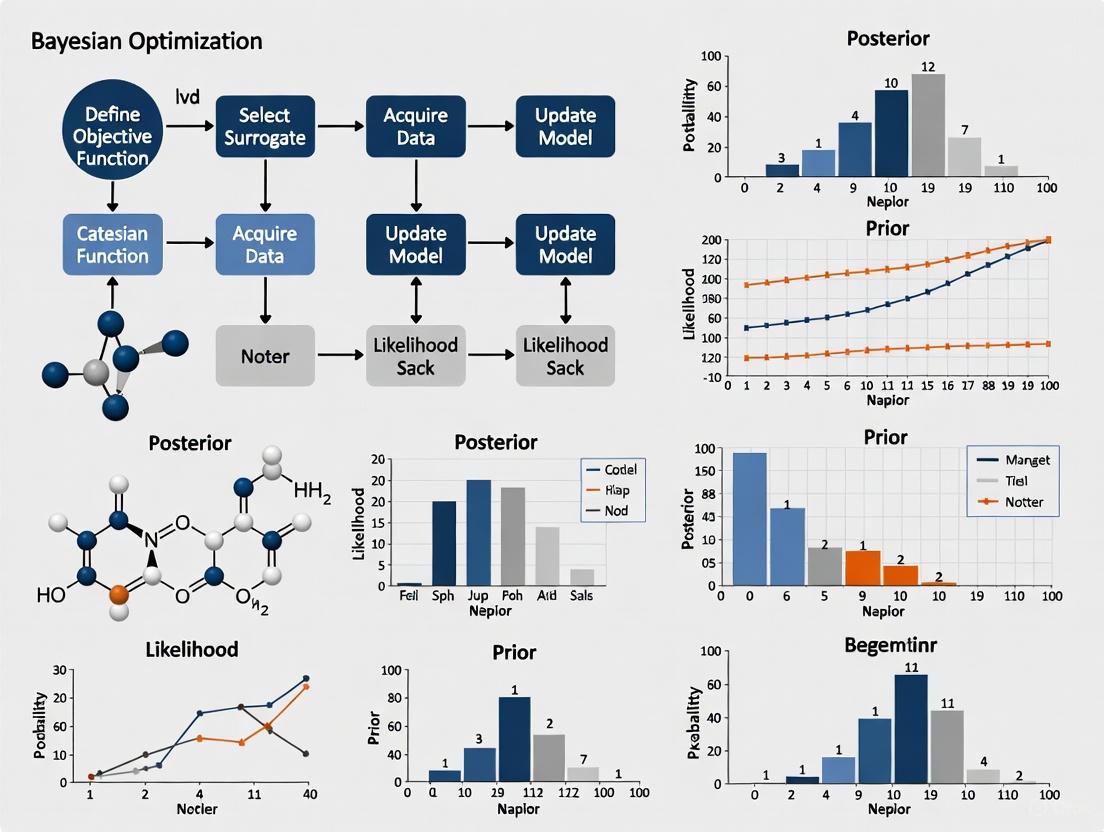
This article provides a comprehensive overview of Bayesian Optimization (BO) for optimizing catalyst composition, tailored for researchers and drug development professionals.
Bayesian Optimization for Catalyst Discovery: A Comprehensive Guide for Accelerated Materials and Drug Development
Abstract
This article provides a comprehensive overview of Bayesian Optimization (BO) for optimizing catalyst composition, tailored for researchers and drug development professionals. It covers the foundational principles of BO as a powerful machine learning strategy for navigating complex experimental spaces with minimal trials. The guide explores cutting-edge methodological advances, including in-context learning with large language models and multi-task learning, alongside practical applications in heterogeneous catalysis and pharmaceutical synthesis. It also addresses common troubleshooting challenges and presents rigorous validation frameworks through comparative case studies, demonstrating how BO achieves significant efficiency gains—often identifying optimal catalysts with 10-90% fewer experiments compared to traditional high-throughput screening.
The Core Principles of Bayesian Optimization in Catalyst Discovery
Frequently Asked Questions (FAQs)
What is Bayesian Optimization and when should I use it? Bayesian Optimization (BO) is a sequential design strategy for the global optimization of black-box functions that are expensive to evaluate and do not assume any functional forms [1]. It is particularly suited for tuning hyperparameters in machine learning [2], optimizing experimental conditions in drug development [3], and designing new materials, such as catalysts [4].
What are the core components of the BO algorithm? The BO algorithm consists of two key components:
- Probabilistic Surrogate Model: A model, typically a Gaussian Process (GP), used to approximate the unknown objective function. It provides a posterior distribution that captures beliefs about the function's behavior and uncertainty at unsampled points [3] [5].
- Acquisition Function: A function that guides the selection of the next point to evaluate by balancing the exploration of uncertain regions with the exploitation of promising ones. Common examples include Expected Improvement (EI), Probability of Improvement (PI), and Upper Confidence Bound (UCB) [1] [6].
Why is my BO algorithm converging slowly or to a poor solution? Slow or poor convergence can stem from several common pitfalls [3]:
- Incorrect Prior Width: Misspecifying the prior in your surrogate model can lead to an inaccurate representation of the objective function.
- Over-smoothing: This occurs when the surrogate model (e.g., using a standard GP) fails to capture non-smooth patterns or sharp transitions in the true function.
- Inadequate Acquisition Maximization: If the inner optimization loop that finds the maximum of the acquisition function is not performed thoroughly, it may choose suboptimal points.
How do I choose the right acquisition function? The choice involves a trade-off between exploration and exploitation [2] [6]:
- Expected Improvement (EI): A popular, general-purpose choice that balances both by measuring the average amount by which a point is expected to improve over the current best observation [3].
- Upper Confidence Bound (UCB): Good when you need explicit control over the exploration-exploitation trade-off via its
βparameter [3]. - Probability of Improvement (PI): More exploitative; selects points with the highest probability of improving over the current best, which can sometimes lead to getting stuck in local optima [2].
Can BO handle high-dimensional problems, like optimizing a catalyst with multiple elements? Standard BO is often limited to problems with fewer than 20 dimensions [1] [5]. However, recent advancements, such as the Sparse Axis-Aligned Subspace Bayesian Optimization (SAASBO) algorithm, use structured priors to effectively handle problems with hundreds of dimensions by assuming only a sparse subset of parameters is truly relevant [5]. This makes BO a viable tool for optimizing complex, high-dimensional catalyst compositions [4].
Troubleshooting Common Experimental Issues
Problem: Algorithm gets stuck in a local optimum This is a classic sign of over-exploitation, where the BO process fails to explore the parameter space sufficiently.
- Potential Causes & Solutions
- Cause 1: The acquisition function (e.g., Probability of Improvement) is too greedy.
- Solution: Switch to the Expected Improvement (EI) acquisition function, which more naturally balances exploration and exploitation. You can also adjust the
ϵparameter in PI to force more exploration, though tuning it can be challenging [2].
- Solution: Switch to the Expected Improvement (EI) acquisition function, which more naturally balances exploration and exploitation. You can also adjust the
- Cause 2: The surrogate model's kernel length scale is too short, making the model too certain about unexplored regions.
- Solution: Review and adjust the kernel's hyperparameters. For catalyst spaces, which can be high-dimensional, consider using Automatic Relevance Determination (ARD) kernels or more flexible surrogate models like Bayesian Additive Regression Trees (BART) that can better handle complex landscapes [7].
- Cause 1: The acquisition function (e.g., Probability of Improvement) is too greedy.
Problem: Model predictions are inaccurate and do not reflect my experimental results This indicates a poor fit of the surrogate model to your data.
- Potential Causes & Solutions
- Cause 1: The initial dataset is too small or does not cover the search space well.
- Solution: Increase the number of initial points sampled using a space-filling design like Sobol sequences to build a better initial model [5].
- Cause 2: The objective function has non-smooth patterns or discontinuities that a standard Gaussian Process with a common kernel (e.g., RBF) cannot capture.
- Solution: Use more adaptive surrogate models like BART or Bayesian Multivariate Adaptive Regression Splines (BMARS), which are designed to handle non-smooth functions and can perform automatic feature selection [7].
- Cause 1: The initial dataset is too small or does not cover the search space well.
Problem: The optimization loop is taking too long between iterations The computational overhead of the BO process itself becomes a bottleneck.
- Potential Causes & Solutions
- Cause 1: Maximizing the acquisition function is computationally expensive.
- Solution: Instead of a fine-grained discretization, use a numerical optimizer (e.g., L-BFGS-B) to find the acquisition function's maximum. You can also use a multi-start strategy to avoid local optima in this inner loop [1].
- Cause 2: The Gaussian Process surrogate is scaling poorly as the dataset grows.
- Cause 1: Maximizing the acquisition function is computationally expensive.
Experimental Protocols & Methodologies
Standard Protocol for a Bayesian Optimization Run
This protocol outlines the core steps for a single BO run, applicable to various domains including catalyst composition optimization [3] [5].
Define the Objective Function:
- Formally define your goal, for example:
x* = argmax f(x), wherexis a set of parameters (e.g., catalyst molar fractions) andf(x)is the expensive-to-evaluate function (e.g., catalytic current density) [3]. - Ensure the objective function can handle the input parameters and return a scalar value, even if the underlying process involves complex simulations or physical experiments.
- Formally define your goal, for example:
Specify the Feasible Search Space:
- Define the bounds for each parameter. For a quinary catalyst
Ag-Ir-Pd-Pt-Ru, the search space is a 4-simplex where the molar fractions sum to 1 [4].
- Define the bounds for each parameter. For a quinary catalyst
Select an Initial Design:
- Sample a small number of initial points (e.g., 5-20) from the search space to build the initial surrogate model.
- Use a space-filling technique like Sobol sequences to ensure good initial coverage [5].
Choose and Configure the Surrogate Model:
- Standard Choice: A Gaussian Process (GP) with a constant mean function and a squared exponential (RBF) kernel is a common and effective starting point [4].
- Kernel Hyperparameters: The kernel
k(x_i, x_j) = C² exp( -|x_i - x_j|² / 2l² )has amplitude (C) and length scale (l) parameters that are typically optimized based on the data [4].
Select an Acquisition Function:
- Recommended Default: The Expected Improvement (EI) function is a robust choice for most problems [4].
Execute the Sequential Optimization Loop:
- Iterate until a stopping criterion is met (e.g., budget exhausted, performance converged):
a. Fit/Update the Surrogate Model: Using all available data
D_{1:t-1}, update the posterior distribution of the surrogate model [3]. b. Maximize the Acquisition Function: Find the next pointx_tthat maximizes the acquisition functionα(x)[3]. c. Evaluate the Objective Function: Query the expensive objective function atx_tto obtainy_t = f(x_t)(potentially with noise) [8]. d. Augment the Dataset: Add the new observation(x_t, y_t)to the datasetD_{1:t} = {D_{1:t-1}, (x_t, y_t)}[8].
- Iterate until a stopping criterion is met (e.g., budget exhausted, performance converged):
a. Fit/Update the Surrogate Model: Using all available data
Quantitative Data for Experimental Design
The following table summarizes key metrics and parameters from a successful application of BO to catalyst design, providing a benchmark for your own experiments.
| Parameter / Metric | Value / Example | Context & Purpose |
|---|---|---|
| Initial Sample Size | 2 compositions [4] | Used to initialize the GP surrogate model for a quinary HEA catalyst system. |
| Total Iterations (Budget) | 150 [4] | Sufficient to discover locally optimal compositions in the HEA case study. |
| Kernel Function | Squared Exponential (RBF) [4] | k(x_i, x_j) = C² exp( -|x_i - x_j|² / 2l² ); a standard choice for smooth functions. |
| Acquisition Function | Expected Improvement (EI) [4] | Balances exploration and exploitation by measuring the average expected improvement over the current best. |
| Stopping Criteria | Exhaustion of budget (e.g., 50-150 evaluations) [4] | A practical constraint for expensive experiments or simulations. |
Workflow Visualization
BO Sequential Workflow
Troubleshooting Logic Map
The Scientist's Toolkit: Research Reagent Solutions
The following table lists key computational and software "reagents" essential for implementing Bayesian Optimization in an experimental research setting.
| Tool / Resource | Function / Purpose | Example Use Case / Notes |
|---|---|---|
| Gaussian Process (GP) | Serves as the probabilistic surrogate model; approximates the objective function and quantifies prediction uncertainty [5]. | The default choice for most BO applications; provides well-calibrated uncertainty estimates. |
| Expected Improvement (EI) | An acquisition function that selects the next point to evaluate based on the expected value of improvement over the current best [3] [4]. | A robust, general-purpose choice for balancing exploration and exploitation. |
| Squared Exponential Kernel | A common kernel for GPs that assumes the objective function is smooth [4]. | k(x_i, x_j) = C² exp( -|x_i - x_j|² / 2l² ); a good starting point. |
| Bayesian Optimization Library (e.g., Botorch, Scikit-optimize) | Software packages that provide implemented BO loops, surrogate models, and acquisition functions [9] [6]. | Drastically reduces implementation time; essential for applying BO to real-world problems. |
| Space-Filling Design (e.g., Sobol Sequence) | A method for selecting initial evaluation points that maximize coverage of the search space [5]. | Critical for building an informative initial surrogate model before sequential design begins. |
Frequently Asked Questions (FAQs)
Q1: What are the core components of a Bayesian Optimization (BO) framework? Bayesian Optimization is a powerful strategy for optimizing expensive black-box functions. Its core components are [10] [11]:
- Surrogate Model: A probabilistic model that approximates the unknown objective function. It is updated after each new evaluation.
- Acquisition Function: A function that uses the surrogate's predictions to decide the next point to evaluate by balancing exploration and exploitation. The typical BO workflow iterates through the following steps, as illustrated in the diagram below [11]:
Q2: My BO algorithm converges to a local optimum instead of the global one. How can I encourage more exploration? This is a classic sign of an over-exploitative strategy. You can address it by [10] [11]:
- Adjusting Your Acquisition Function: Switch to or tune the parameters of more explorative acquisition functions. For example, in the Upper Confidence Bound (UCB) function, (a(x;\lambda) = \mu(x) + \lambda \sigma (x)), increase the (\lambda) parameter to give more weight to the uncertainty term (\sigma(x)) [10].
- Using Adaptive Trade-Off Methods: Recent research proposes acquisition functions that dynamically balance exploration and exploitation, which can prevent getting stuck in local optima better than fixed schedules [12].
- Consider a More Flexible Surrogate Model: Standard Gaussian Process (GP) surrogates with stationary kernels assume a uniform smoothness of the function. If your catalyst search space is complex or high-dimensional, non-stationary or more flexible models like Bayesian Additive Regression Trees (BART) may capture the underlying function better and guide the search more effectively [7].
Q3: How do I choose the right surrogate model for my catalyst optimization problem? The choice depends on the characteristics of your design space and the objective function. The table below compares common surrogate models:
| Surrogate Model | Key Features | Best For | Considerations |
|---|---|---|---|
| Gaussian Process (GP) | Provides uncertainty estimates; mathematically explicit [7]. | Low-dimensional, smooth functions [7]. | Performance can degrade in high dimensions or with non-smooth functions [7]. |
| GP with ARD | Automatic Relevance Detection; assigns different length scales to each input variable [7]. | Problems where only a subset of variables is important [7]. | Can help with moderate dimensionality but still assumes smoothness [7]. |
| Bayesian Additive Regression Trees (BART) | Non-parametric; ensemble of small trees; handles complex interactions [7]. | High-dimensional spaces, non-smooth, or non-stationary functions [7]. | Often more robust and flexible than GP for complex spaces [7]. |
| Bayesian MARS | Uses product spline basis functions; non-parametric [7]. | Non-smooth functions with sudden transitions [7]. | Offers flexibility similar to BART [7]. |
| LLM with In-Context Learning | Uses natural language prompts; no feature engineering needed [13]. | Problems where materials can be naturally described in text (e.g., synthesis procedures) [13]. | A novel approach; performance may vary based on the LLM and prompting strategy [13]. |
Q4: What is the difference between Probability of Improvement (PI) and Expected Improvement (EI)? Both are popular acquisition functions, but they quantify "improvement" differently [10]:
- Probability of Improvement (PI): Measures the probability that a new point (x) will be better than the current best (f(x^+)). It only considers the likelihood of an improvement, not its magnitude. This can lead to over-exploitation, as it will favor points with even a tiny, almost certain improvement over points with a chance for a large but less certain gain [10].
- Expected Improvement (EI): Measures the expected value of the improvement. It considers both the probability of improvement and the potential magnitude of that improvement. This makes it less greedy than PI and generally a more balanced and effective choice [10] [11]. The analytical expression for EI under a GP surrogate is: [ \text{EI}(x) = \begin{cases} (\mu(\mathbf{x}) - f(\mathbf{x}^+) - \xi)\Phi(Z) + \sigma(\mathbf{x})\phi(Z) &\text{if}\ \sigma(\mathbf{x}) > 0 \ 0 & \text{if}\ \sigma(\mathbf{x}) = 0 \end{cases} ] where (Z = \frac{\mu(\mathbf{x}) - f(\mathbf{x}^+) - \xi}{\sigma(\mathbf{x})}) [11].
Q5: How can I implement a simple version of Expected Improvement (EI) in code? Here is a Python implementation of the EI acquisition function using a Gaussian Process surrogate model, as demonstrated in a practical tutorial [11].
Code source: Adapted from [11]
Q6: Are there quantitative measures to analyze the exploration behavior of my BO algorithm? Yes. Traditionally, analyzing exploration was qualitative. However, recent research has introduced quantitative measures, such as [14]:
- Observation Traveling Salesman Distance: Measures the spread of selected evaluation points by calculating the length of the shortest path connecting them all. A higher value indicates a more explorative strategy that samples from diverse areas.
- Observation Entropy: Quantifies the disorder or diversity in the distribution of selected points. Higher entropy also suggests greater exploration. These measures allow you to compare different acquisition functions objectively and diagnose if your algorithm is exploring the design space sufficiently [14].
Troubleshooting Guide
| Problem | Possible Causes | Solutions |
|---|---|---|
| Slow or No Convergence | - Over-exploitation (e.g., PI with low noise) [10].- Poorly chosen surrogate model kernel [7].- Data sparsity in high-dimensional space [7]. | - Use EI or UCB with a higher (\xi) or (\lambda) [10] [11].- Use a more flexible kernel or surrogate like BART[citati1].- Use ARD to identify irrelevant variables [7]. |
| Algorithm is Too Noisy/Sensitive | - Objective function is stochastic.- Acquisition function is too explorative. | - Use a GP that explicitly models noise (e.g., via alpha parameter) [11].- Use a Monte Carlo acquisition function that handles noise [15].- Reduce the (\lambda) parameter in UCB [10]. |
| Optimization Takes Too Long per Iteration | - Surrogate model is expensive to train with many data points.- Inner optimization of the acquisition function is slow. | - Use a surrogate with faster training times (e.g., BART for large datasets).- Use a quasi-second order optimizer like L-BFGS-B with a fixed set of base samples for MC acquisition functions [15]. |
Experimental Protocol: Optimizing Catalyst Composition with BO
This protocol outlines the steps for using Bayesian Optimization to find an optimal catalyst composition, based on methodologies successfully applied in materials science [7] [13].
1. Problem Formulation:
- Objective Function ((f(x))): Define the property to maximize/minimize (e.g., catalytic yield, selectivity). This is your expensive "black-box" experiment.
- Design Space ((\Omega)): Define the bounds of your variables (e.g., concentrations of metals, synthesis temperature, pressure).
2. Initial Experimental Design:
- Generate an initial set of points to first evaluate. A common method is Latin Hypercube Sampling (LHS) to ensure the space is covered space-fillingly [16].
- A typical initial size can be 5-20 points, depending on the dimensionality and expected complexity of your space [7].
3. Iterative Bayesian Optimization Loop: The core loop follows the Ask-Tell paradigm, which is well-suited for managing sequential experiments [13]. The following diagram illustrates this workflow in the context of catalyst optimization:
Workflow adapted from the BO-ICL approach for catalyst discovery [13]
- Step 1 - Fit Surrogate Model: Train your chosen surrogate model (e.g., GP, BART) on all data collected so far [7] [16].
- Step 2 - Propose Next Experiment: Optimize the acquisition function (e.g., EI) over the design space to find the point (x) that is most promising to evaluate next [11].
- Step 3 - Run Experiment: Synthesize and test the catalyst composition at the proposed point (x), measuring the outcome (y = f(x)).
- Step 4 - Update Data: Augment the dataset with the new observation ((x, y)).
- Repeat steps 1-4 until the evaluation budget is exhausted or performance converges.
4. Validation:
- Validate the final recommended catalyst composition with repeated experiments to ensure reliability.
Research Reagent Solutions
This table lists key computational tools and models used in advanced Bayesian Optimization research, particularly relevant for catalyst design.
| Tool / Model | Type | Function in Research |
|---|---|---|
| BoTorch | Library (Python) | A flexible framework for Bayesian Optimization research and deployment, providing state-of-the-art Monte Carlo and analytic acquisition functions [15]. |
| GPT Models (e.g., GPT-3.5) | Large Language Model | Acts as a surrogate model using In-Context Learning (ICL), allowing optimization directly on text-based descriptions of materials and synthesis procedures [13]. |
| Bayesian Optimization with Adaptive Surrogates | Algorithmic Framework | Uses flexible surrogate models (BMARS, BART) to overcome limitations of standard GPs in high-dimensional or non-smooth problems [7]. |
| Ask-Tell Interface | Programming Interface | A conceptual API that clearly separates the step of asking for a new candidate point ("Ask") from telling the model the result ("Tell"), simplifying the management of the optimization loop [13]. |
Why Catalyst Composition Optimization is an Ideal 'Black-Box' Problem for BO
Frequently Asked Questions
1. What makes catalyst composition optimization a "black-box" problem? In catalyst development, the relationship between a catalyst's composition and its performance (e.g., activity or selectivity) is typically a black-box function. This means you can input a composition and measure the output performance, but the precise internal relationship or "formula" is unknown, complex, and difficult to model from first principles. Evaluating this function is also expensive and time-consuming, as it requires synthesizing the catalyst and running experiments [17] [18]. Bayesian Optimization (BO) is designed specifically for such scenarios, where you can only query a costly black-box function and need to find its optimum efficiently [19].
2. My BO algorithm seems to get stuck in a local optimum. How can I encourage more exploration? This is a classic exploration-exploitation trade-off issue. You can address it by switching your acquisition function. The Upper Confidence Bound (UCB) function has a tunable parameter (β) that explicitly controls this balance; a higher β value encourages more exploration of uncertain regions [17]. Alternatively, Expected Improvement (EI) naturally balances improvement over the current best value with uncertainty, which can help avoid getting stuck [17] [19]. If these don't suffice, consider more advanced methods like Reinforcement Learning (RL)-based BO, which uses multi-step lookahead to make less myopic decisions and has shown better performance in navigating complex, high-dimensional landscapes [18] [20].
3. How can I incorporate practical experimental constraints into the BO process?
You can handle black-box constraints by using a joint acquisition function. A common approach is to combine Expected Improvement (EI) for the objective (e.g., catalytic yield) with the Probability of Feasibility (PoF) for the constraint. The overall acquisition function to maximize becomes EI(x) * PoF(x). This ensures that the algorithm selects points that are likely to be high-performing and adhere to your experimental constraints [21].
4. I have a large pool of potential catalyst candidates. How can a frozen LLM help with optimization? Recent research introduces BO with In-Context Learning (BO-ICL), which uses a frozen Large Language Model (LLM) as the surrogate model. The catalyst compositions and experimental procedures are represented as natural language prompts. The LLM, leveraging its in-context learning ability, predicts the performance and uncertainty for new compositions. This "AskTell" algorithm updates the model's knowledge through dynamic prompting without retraining, making it highly efficient. This method has successfully identified near-optimal multi-metallic catalysts for the reverse water-gas shift (RWGS) reaction from a pool of 3,700 candidates in only six iterations [13].
5. When should I consider moving from standard BO to a more advanced method like RL-BO? Consider this transition when dealing with high-dimensional problems (e.g., D ≥ 6) or when you suspect that the single-step (myopic) nature of standard acquisition functions like EI is limiting performance. Reinforcement Learning-based BO (RL-BO) formulates the optimization as a multi-step decision process, which can be more effective in complex design spaces. A hybrid strategy is often beneficial: use standard BO for efficient early-stage exploration and then switch to RL-BO for refined, adaptive learning in later stages [20].
Experimental Protocols & Case Studies
The following table summarizes key experimental cases where Bayesian Optimization has been successfully applied to catalyst composition optimization.
| Catalyst System / Reaction | Key Optimization Variables | BO Approach & Surrogate Model | Key Outcome / Performance |
|---|---|---|---|
| CoO Nanoparticles for CO₂ Hydrogenation [22] | Colloidal synthesis parameters (e.g., precursors, ligands, temperature, time) to control crystal phase & morphology. | Multivariate BO with a data-driven classifier. | Identified conditions for phase-pure rock salt CoO nanoparticles that were small and uniform. The optimized catalyst showed higher activity and ~98% CH₄ selectivity across various pretreatment temperatures. |
| Multi-metallic catalysts for Reverse Water-Gas Shift (RWGS) [13] | Composition of multi-metallic catalysts from a large candidate pool. | BO with In-Context Learning (BO-ICL) using a frozen LLM (GPT-3.5, Gemini) as a surrogate model with natural language prompts. | Found a near-optimal catalyst within 6 iterations from a pool of 3,700 candidates, achieving performance close to thermodynamic equilibrium. |
| Ag/C catalysts for electrochemical CO₂ reduction [18] | Synthesis conditions for Ag/C composite catalysts. | Reinforcement Learning-based BO (RL-BO) using a Gaussian Process (GP) surrogate model within an RL framework for multi-step lookahead. | The RL-BO approach demonstrated more efficient optimization compared to traditional PI and EI-based BO methods. |
The Scientist's Toolkit: Key Components for BO in Catalysis Research
| Tool / Component | Function in the BO Workflow | Example & Notes |
|---|---|---|
| Gaussian Process (GP) | A probabilistic model used as a surrogate to approximate the expensive black-box function. It provides a mean prediction and, crucially, an uncertainty estimate for any point in the search space [17] [23]. | The default choice for many BO applications due to its uncertainty quantification. Kernels like Matérn 5/2 are often preferred [20] [23]. |
| Acquisition Function | Guides the search by determining the next point to evaluate. It uses the GP's predictions to balance exploration (high uncertainty) and exploitation (high mean prediction) [17] [19]. | Expected Improvement (EI) and Upper Confidence Bound (UCB) are among the most common [17] [20]. |
| Large Language Model (LLM) Surrogate | An alternative surrogate model that operates on natural language representations of experiments, enabling optimization without manual feature engineering [13]. | Used in BO-ICL; models like GPT-3.5 or Gemini can be used in a frozen state, updated via in-context learning (prompting) rather than retraining [13]. |
| Probability of Feasibility (PoF) | A specific type of acquisition function used to handle black-box constraints. It estimates the likelihood that a candidate point will satisfy all experimental constraints [21]. | Often multiplied with EI (e.g., EI * PoF) to find points that are high-performing and feasible [21]. |
Workflow Visualization: Bayesian Optimization for Catalyst Design
The following diagram illustrates the iterative feedback loop that is central to the Bayesian Optimization process.
Frequently Asked Questions (FAQs)
FAQ 1: What are the fundamental limitations of the traditional "One Factor at a Time" (OFAT) approach that DOE overcomes?
The traditional OFAT method, which involves changing one variable while holding all others constant, has several key disadvantages compared to a structured Design of Experiments (DOE) approach. OFAT provides limited coverage of the experimental space and, most critically, fails to identify interactions between different factors [24]. This means you might miss the optimal solution for your catalyst formulation. Furthermore, OFAT is an inefficient use of resources like time, materials, and reagents [24] [25]. DOE, by contrast, systematically studies multiple factors and their interactions simultaneously, leading to a more thorough and efficient path to optimization.
FAQ 2: How does AI-guided DOE represent an advancement over traditional DOE methods?
AI-guided DOE is a powerful upgrade that integrates sophisticated AI algorithms with traditional DOE techniques. Think of it as replacing a compass with a cutting-edge GPS system [26]. Key advantages include:
- Automated Experiment Design: AI intelligently selects the most critical factors to test, streamlining the process [26].
- Predictive Analytics: It leverages historical data to predict potential outcomes, allowing for more proactive experimental planning [26].
- Real-time Analysis: AI can analyze data as it is generated, enabling on-the-fly adjustments to refine experiments and enhance precision [26].
- Reduced Expertise Dependency: By automating complex statistical tasks, AI-guided DOE makes powerful experimentation more accessible to a broader range of researchers [26].
FAQ 3: What are the common pitfalls in experimental design that can undermine results, especially in a high-throughput setting?
Even with advanced tools, several common pitfalls can compromise experimental outcomes [27]:
- Inadequate Design: This includes running experiments without a clear hypothesis, lacking a proper control group, or using an insufficient sample size, which can lead to unreliable results.
- Data Quality Issues: Poor data collection methods, a lack of data validation, and improper handling of outliers can introduce bias and errors.
- Statistical Missteps: Peeking at interim results without statistical correction, misusing statistical tests, and failing to account for the "multiple comparisons problem" can inflate false positives and lead to invalid conclusions.
- Organizational Challenges: A lack of leadership buy-in, biased assumptions that lead teams to ignore surprising data, and poor cross-team collaboration can all hinder successful experimentation programs [27].
FAQ 4: How can Bayesian Optimization be integrated with HTE and DOE for catalyst discovery?
Bayesian Optimization (BO) is a powerful strategy for navigating vast design spaces, such as multi-metallic catalyst compositions. It works by using a surrogate model to approximate the objective function (e.g., catalytic activity) and an acquisition function to intelligently select the next most promising experiment [13]. This can be directly integrated with HTE and DOE. A novel approach involves using large language models (LLMs) as the surrogate model through in-context learning, a method known as BO-ICL. This allows researchers to represent catalyst synthesis and testing procedures as natural language prompts. The BO-ICL workflow can then identify high-performing catalysts from a pool of thousands of candidates in a very small number of iterative cycles, dramatically accelerating discovery [13].
Troubleshooting Guides
Issue 1: Experiment Results are Noisy or Inconclusive
| Potential Cause | Diagnostic Steps | Solution |
|---|---|---|
| Insufficient Sample Size or Replication [27] | Calculate the statistical power of your experimental design. | Increase the number of experimental replicates to ensure results are reliable and not due to random chance [27] [28]. |
| Uncontrolled Confounding Variables [27] | Review your experimental setup for environmental factors (e.g., temperature fluctuations, reagent lot variations) that were not accounted for. | Implement tighter process controls and use randomization during experimental runs to minimize the influence of lurking variables [25] [28]. |
| Poor Data Collection Methods [27] | Audit data entry and instrument calibration logs for inconsistencies. | Establish reliable, standardized data collection protocols and implement automated data capture where possible to reduce human error [27]. |
Issue 2: Failure to Find an Optimal Catalyst Composition
| Potential Cause | Diagnostic Steps | Solution |
|---|---|---|
| OFAT Approach Limiting Discovery | Analyze your experimental history to see if factors have only been varied in isolation. | Shift from an OFAT to a fractional factorial or response surface methodology (RSM) design. This will efficiently screen many factors and reveal critical interaction effects [25]. |
| Vast, Complex Design Space | Assess the number of potential element combinations and reaction conditions; it may be too large to explore exhaustively. | Integrate AI-guided DOE and Bayesian Optimization [26] [13]. These methods use predictive models to focus experimental efforts on the most promising regions of the design space. |
| Ignoring Factor Interactions | Check the analysis from your last DOE for significant interaction terms in the statistical model. | Ensure your DOE is designed to capture two-factor interactions. Use statistical software to analyze results and visualize interaction plots to understand synergistic effects [25]. |
Issue 3: Barriers to Implementing HTE and DOE in the Lab
| Potential Cause | Diagnostic Steps | Solution |
|---|---|---|
| Perceived Complexity of Statistics [29] | Gauge the team's comfort level with statistical concepts like ANOVA and factorial designs. | Utilize modern DOE software that simplifies the design and analysis process. Foster collaboration between domain experts (biologists, chemists) and data specialists [29]. |
| Difficulty in Executing Complex Experiments [29] | Evaluate the time and error rate associated with manually preparing experimental arrays. | Invest in laboratory automation solutions, such as automated liquid and powder dispensing robots (e.g., CHRONECT XPR), to execute complex designs accurately and efficiently [29] [30]. |
| Challenges in Data Modeling [29] | Determine if the team has the tools and skills to model and interpret multi-dimensional data. | Leverage data analysis software with built-in modeling and visualization capabilities (contour plots, 3D surfaces). Collaborate with bioinformaticians or statisticians for advanced analysis [29]. |
Experimental Protocols & Workflows
Protocol 1: Setting Up a High-Throughput Catalyst Screening Campaign
This protocol outlines the steps for using an automated HTE platform to screen catalyst compositions for a reaction like the reverse water-gas shift (RWGS) [30] [13].
1. Key Research Reagent Solutions
| Item | Function |
|---|---|
| CHRONECT XPR Automated Powder Dosing System | Precisely dispenses solid catalysts, precursors, and inorganic additives at milligram scales into multi-well arrays [30]. |
| 96-Well Array Manifolds | Serves as the reaction vessel for parallel synthesis and testing at miniaturized scales [30]. |
| Automated Liquid Handling System | Dispenses solvents, corrosive liquids, and other liquid reagents accurately and reproducibly [30]. |
| Inert Atmosphere Glovebox | Provides a controlled environment for handling air-sensitive catalysts and reagents [30]. |
2. Methodology
- Step 1: Experimental Design. Define the objective (e.g., maximize CO yield). Select factors (e.g., metal ratios, dopants, reaction temperature) and their levels. Use a DOE screening design (e.g., Plackett-Burman or fractional factorial) to select the set of catalyst compositions to test.
- Step 2: Automated Solid Dispensing. Program the CHRONECT XPR system with the experimental design. The robot will automatically dose a wide range of solids into designated vials in the 96-well array. Reported deviations can be <10% at sub-mg scales and <1% at >50 mg scales [30].
- Step 3: Liquid Reagent Addition. Using an automated liquid handler, add the required solvents and liquid precursors to the solid catalysts in the array.
- Step 4: Parallel Reaction Execution. Place the 96-well array manifold into a controlled environment (heater/chiller) to initiate and run the reactions in parallel.
- Step 5: Automated Analysis & Data Collection. Use integrated analytical equipment (e.g., GC-MS, HPLC) to sample and analyze the reaction outcomes from each well, compiling data into a centralized database.
Protocol 2: Implementing a Bayesian Optimization Loop for Catalyst Optimization
This protocol describes how to use Bayesian Optimization to iteratively guide catalyst discovery campaigns [13].
1. Methodology
- Step 1: Create an Unlabeled Candidate Pool. Generate a large library (e.g., 3,700 candidates) of potential catalyst compositions and synthesis procedures, representing them in a structured natural language format (e.g., "5% Cu on ZrO2 support, calcined at 500°C") [13].
- Step 2: Initialize with a Small DOE. Select a small, diverse set of candidates from the pool (e.g., 10-20) using a space-filling DOE. Synthesize and test these candidates to collect the initial dataset of composition-performance pairs.
- Step 3: Build a Surrogate Model. Train a machine learning model (e.g., Gaussian Process, Random Forest, or an LLM via in-context learning as in BO-ICL) on the accumulated data. This model predicts the performance of any candidate in the pool and estimates the uncertainty of its prediction [13].
- Step 4: Propose the Next Experiment. Use an acquisition function (e.g., Expected Improvement), which balances exploration (high uncertainty) and exploitation (high predicted performance), to select the single most promising candidate from the pool for the next experiment [13].
- Step 5: Run the Experiment and Update. Synthesize and test the proposed candidate, then add the new data point to the training set. Repeat from Step 3 until a performance target is met or the experimental budget is exhausted. This workflow has been shown to identify near-optimal catalysts in as few as six iterations [13].
Workflow Visualization
HTE and BO Integrated Workflow
AI-Guided vs. Traditional DOE
Advanced BO Methodologies and Real-World Catalyst Applications
Gaussian Processes as the Standard Surrogate Model for Catalytic Property Prediction
Frequently Asked Questions (FAQs)
Q1: Why is a Gaussian Process (GP) the preferred surrogate model in Bayesian optimization (BO) for catalyst design?
GPs are the standard choice in BO for several key reasons. They provide a probabilistic framework that delivers not just a predicted value for catalytic properties (e.g., yield, selectivity) but also a quantifiable uncertainty (variance) at any point in the design space [13] [31]. This uncertainty estimate is crucial for the acquisition function in BO to effectively balance exploration (testing in uncertain regions) and exploitation (testing near predicted optima) [32] [33]. Furthermore, GPs are non-parametric and make minimal assumptions about the underlying functional form of the catalyst property landscape, allowing them to model complex, non-linear relationships from limited data, a common scenario in experimental catalysis [33] [31].
Q2: My GP model is overfitting to my small dataset of catalyst experiments. What can I do?
Overfitting, where the model fits the noise in the training data rather than the underlying trend, is often signaled by a trained GP that shows wild oscillations between data points. This is frequently controlled by the length-scale hyperparameter in the covariance function [34].
- A shorter length-scale allows the function to have faster variations, leading to overfitting.
- A longer length-scale results in a "stiffer" function that is less flexible and can underfit [34]. Solution: Instead of manually setting the length-scale, use automatic hyperparameter optimization. Most modern GP implementations will automatically tune these hyperparameters (like length-scale and signal variance) by maximizing the marginal likelihood of the data. This process finds the best model that explains your data without being overly complex [34] [35].
Q3: For catalyst optimization, should I use a single-objective or multi-objective GP?
Most real-world catalyst design involves multiple, often conflicting, objectives (e.g., high yield, high selectivity, low cost). While single-objective BO is simpler, a multi-objective approach is often necessary [32].
- Standard Practice: Conventional multi-objective BO models each property with an independent GP [32].
- Advanced Recommendation: For correlated properties (e.g., the common strength-ductility trade-off in materials), use Multi-Task Gaussian Processes (MTGPs) or Deep Gaussian Processes (DGPs). These advanced models explicitly learn correlations between different material properties, allowing them to share information across tasks. This leads to more efficient exploration and can significantly accelerate the discovery of catalysts that balance multiple performance criteria [32].
Q4: How do I represent a catalyst as an input for a Gaussian Process model?
The choice of catalyst representation, or descriptors, is critical for model performance. Successful approaches in the literature include:
- Physicochemical Descriptors: Using calculated quantum chemical descriptors, such as highest occupied molecular orbital energy (EHOMO) or steric parameters like percent buried volume (%Vbur), which provide mechanistically meaningful information [33].
- Fragmentation Strategy: For complex catalyst ligands, dividing the molecule into fragments and calculating descriptors for each part can be effective, especially with small datasets [33].
- Natural Language Representations: Recently, representing catalyst synthesis procedures and structures in natural language has emerged as a powerful, task-agnostic method, enabling the use of large language models as surrogates without extensive feature engineering [13].
Troubleshooting Common Experimental Issues
Poor Model Performance with Small Datasets
Problem: The GP surrogate model provides inaccurate predictions and poor guidance for the next experiments, often due to a very limited initial dataset of catalyst tests.
Solution: Implement an active learning loop where the BO algorithm itself guides data collection.
- Procedure:
- Start with a small initial dataset (e.g., 10-20 catalyst experiments chosen via Latin Hypercube or Sobol sequence).
- Train the GP model on this data.
- Use the acquisition function (e.g., Expected Improvement) to select the catalyst or reaction condition predicted to be most optimal or informative.
- Run the experiment and add the new data point to the training set.
- Re-train the GP model and repeat.
- Case Study: In optimizing stereoselective polymerization catalysts, this method converged to high-performance catalysts within 7 iterations, drastically outperforming random search [33].
Handling Multiple Correlated Objectives
Problem: You need to optimize multiple catalytic properties simultaneously and suspect they are correlated, but using independent GPs is inefficient.
Solution: Employ Multi-Task or Hierarchical Gaussian Processes.
- Procedure:
- Identify the primary objectives (e.g., catalytic activity and selectivity).
- Choose an MTGP or DGP model architecture capable of modeling the covariance between different tasks or properties.
- Train the model on your dataset where all properties are measured for each catalyst candidate.
- The model will leverage correlations; for example, if two properties are positively correlated, an improvement in one suggests a likely improvement in the other, guiding the search more effectively [32].
- Evidence: Research on high-entropy alloys demonstrated that a hierarchical DGP (hDGP-BO) was the most robust and efficient method for discovering materials with optimal combinations of properties like low thermal expansion and high bulk modulus [32].
Numerical Instabilities during Model Training
Problem: The GP training process fails due to an ill-conditioned or non-invertible covariance matrix.
Solution: This is often caused by duplicate data points or numerically singular matrices.
- Procedure:
- Add Jitter: Introduce a small positive value (e.g., 10^−6) to the diagonal of the covariance matrix. This is a standard technique to ensure numerical stability and is equivalent to assuming a tiny amount of independent Gaussian noise in the observation process [31].
- Remove Duplicates: Ensure your training data does not contain duplicate input points.
- Standardize Data: Standardize both your input parameters (e.g., center and scale catalyst descriptors) and output responses. This improves the conditioning of the covariance matrix and helps hyperparameter optimization converge more reliably [35].
Key Experimental Protocols
Protocol: Setting up a GP Surrogate for Catalyst Yield Prediction
This protocol outlines the steps to create a GP surrogate model for predicting catalytic yield based on catalyst composition and reaction condition descriptors.
Objective: To build a predictive model that maps catalyst descriptors to catalytic yield for use in a Bayesian optimization loop.
Materials and Software:
- A dataset of catalyst experiments with defined input descriptors and measured output (yield).
- GP software (e.g., scikit-learn in Python, MOOSE Framework, COMSOL).
Steps:
- Data Preparation:
- Inputs: Compile descriptors for each catalyst experiment (e.g., physicochemical properties, fragment descriptors, or linguistic representations).
- Output: Compile the corresponding catalytic performance metric (e.g., yield, conversion, selectivity).
- Preprocessing: Standardize all input descriptors and the output response to have zero mean and unit variance.
Model Configuration:
- Covariance Function: Select a kernel. The Squared Exponential (Radial Basis Function) kernel is a common and robust starting point [34] [35].
- Hyperparameters: Define initial values for hyperparameters (length scales, signal variance). For the Squared Exponential kernel, this includes
length_factorandsignal_variance[35]. - Optimization: Configure the trainer to automatically optimize (tune) all hyperparameters by maximizing the log marginal likelihood [35].
Model Training & Evaluation:
- Training: Train the GP model on the prepared dataset.
- Validation: Use hold-out validation or cross-validation to assess prediction error (e.g., RMSE, MAE).
- Uncertainty: Ensure the model provides uncertainty estimates (standard deviation) for its predictions, which are critical for the BO acquisition function.
Protocol: Running a Single Iteration of Bayesian Optimization
This protocol describes one cycle of the BO loop for catalyst discovery.
Objective: To use the GP surrogate to select the most promising catalyst candidate for the next experiment.
Steps:
- Update Surrogate: Train the GP surrogate model on all available data (historical data + data from previous BO iterations).
- Optimize Acquisition: Using the trained GP, calculate the acquisition function (e.g., Expected Improvement) across the unexplored candidate space.
- Select Next Experiment: Identify the candidate catalyst (point in the design space) that maximizes the acquisition function.
- Run Experiment: Synthesize and test the selected catalyst, recording its performance.
- Augment Dataset: Add the new input-output pair to the existing dataset [33] [13].
Workflow Diagram
The diagram below illustrates the iterative Bayesian optimization workflow for catalyst design, with the Gaussian Process surrogate model at its core.
Research Reagent & Computational Solutions
The table below summarizes key computational "reagents" – descriptors, models, and software – essential for building GP surrogates in catalyst optimization.
Table 1: Essential Research Reagent Solutions for GP-Based Catalyst Optimization
| Category | Item | Function & Application |
|---|---|---|
| Catalyst Descriptors | DFT-calculated Descriptors (e.g., EHOMO, %Vbur) [33] | Provide mechanistically meaningful features for the GP model; crucial for building interpretable structure-activity relationships. |
| Fragmentation-Based Descriptors [33] | Represent complex catalyst ligands by breaking them into smaller, computable fragments; useful for large combinatorial spaces. | |
| Natural Language Representations [13] | Represent catalysts and synthesis procedures as text, enabling the use of language models and avoiding manual feature engineering. | |
| GP Models & Kernels | Squared Exponential (RBF) Kernel [34] [35] | A default, general-purpose kernel that assumes smooth, infinitely differentiable functions. |
| Multi-Task Gaussian Process (MTGP) [32] | A surrogate model that learns correlations between multiple catalytic properties, improving data efficiency in multi-objective optimization. | |
| Software & Tools | Bayesian Optimization Libraries (e.g., BoTorch, Ax) | Provide pre-built frameworks for implementing GP surrogates and acquisition functions. |
| Quantum Chemistry Software (e.g., Gaussian) [33] | Used to calculate electronic and steric descriptors for catalyst candidates. | |
| Experimental Design | Sobol Sequence [36] | A quasi-random method for selecting an initial set of catalyst experiments that uniformly covers the parameter space. |
Leveraging Large Language Models (LLMs) and In-Context Learning for Language-Based Catalyst Representation
FAQs: Core Concepts
Q1: What is a "language-based catalyst representation" and why is it useful? A language-based catalyst representation describes a catalyst—its chemical composition, structure, synthesis method, and testing conditions—using natural language instead of numerical descriptors. For example, a catalyst might be described as "a bimetallic catalyst with a 1:3 Pd:Cu ratio, supported on ceria, synthesized via wet impregnation, and tested for the reverse water-gas shift reaction at 500°C" [13]. This approach is useful because it allows researchers to leverage the vast knowledge embedded in pre-trained Large Language Models (LLMs) without the need for complex, hand-crafted feature engineering. It provides a flexible and intuitive way to integrate diverse, multi-faceted experimental information into a single, optimizable format [13].
Q2: How does In-Context Learning (ICL) work with Bayesian Optimization (BO) for catalyst design? In this paradigm, ICL allows a frozen LLM to learn from a context of past experimental results provided directly in its prompt. The LLM acts as the surrogate model within a BO loop. The process, often called BO-ICL, follows these steps [13]:
- Ask: The LLM, prompted with a few previous (catalyst description, performance) examples, predicts the performance of new, candidate catalysts and estimates its uncertainty.
- Experiment: The top candidate, selected by an acquisition function that balances high performance and high uncertainty, is synthesized and tested.
- Tell: The new experimental result is added to the context of examples for the next LLM prompt. This "Ask-Tell" loop continually updates the LLM's context, enabling it to refine its predictions and guide the search towards high-performing catalysts without any retraining of the model weights [13].
Q3: My LLM's predictions for catalyst performance are inaccurate. What could be wrong? This common issue can stem from several parts of the experimental pipeline:
- Insufficient or Poor-Quality In-Context Examples: The LLM may not have enough relevant examples in its prompt to discern the underlying structure-property relationships. Ensure the in-context examples are high-quality and directly relevant to the search space [13].
- Improper Uncertainty Calibration: The accuracy of BO heavily relies on well-calibrated uncertainty estimates from the LLM. You may need to adjust the uncertainty scaling factor (a hyperparameter in BO-ICL) to balance exploration and exploitation effectively [13].
- Vague or Inconsistent Catalyst Descriptions: The language used to describe catalysts must be structured and consistent. Ambiguous descriptions lead to noisy representations and poor model performance. Implement a standardized template for describing catalysts [13].
Troubleshooting Guides
Problem: The BO-ICL loop fails to explore and gets stuck in a local performance maximum.
| Possible Cause | Diagnostic Steps | Solution |
|---|---|---|
| Over-exploitation | Check the acquisition function history. Is it consistently selecting candidates with high predicted performance but low uncertainty? | Increase the uncertainty scaling factor in the acquisition function to encourage exploration of less certain regions [13]. |
| Uninformative Context | Analyze the diversity of catalysts in the in-context examples. Are they all chemically similar? | Manually add a catalyst from a different region of the design space to the prompt to "jump-start" exploration [37]. |
| LLM Temperature Setting | The model's temperature parameter is too low, making its outputs deterministic. | Slightly increase the temperature (e.g., from 0 to 0.3) to introduce stochasticity in the predictions, aiding exploration [13]. |
Problem: The LLM cannot parse or understand the natural language descriptions of catalysts.
| Possible Cause | Diagnostic Steps | Solution |
|---|---|---|
| Lack of Domain Tuning | The base LLM performs poorly on scientific terminology. | Use a domain-adapted LLM like CataLM, which is pre-trained on catalysis literature, for significantly improved comprehension [38]. |
| Poor Prompt Structure | The prompt is unstructured, making it hard for the LLM to distinguish between catalyst attributes. | Implement a structured prompt template with clear sections for composition, support, synthesis, and test conditions [13]. |
| Inconsistent Nomenclature | The same element or method is referred to by different names (e.g., "Pd" vs. "Palladium"). | Create a controlled vocabulary for catalyst descriptions to ensure consistency across all experiments [39]. |
Experimental Protocols & Data
Protocol: Bayesian Optimization with In-Context Learning (BO-ICL) for Catalyst Discovery
This protocol outlines the steps for using BO-ICL to discover novel catalysts, as demonstrated for the reverse water-gas shift (RWGS) reaction [13].
- Create an Unlabeled Candidate Pool: Generate a virtual library of potential catalysts, each described in a structured natural language format. For example: "
[Metal A]_[Metal B]_[Support]_[Synthesis Method]" [13] [37]. - Initialize with Random Samples: Select a small number (e.g., 5-10) of catalysts from the pool at random, synthesize them, and measure their performance (e.g., CO₂ conversion or product yield).
- Construct the Initial Prompt: Format the results from step 2 as in-context examples for the LLM. The prompt should include: the system's task description, the few examples (catalyst description -> performance), and the query about a new candidate.
- Run the BO-ICL Loop: Iterate until a performance target or experimental budget is reached:
- Ask: The LLM processes the prompt to predict the performance and uncertainty for all candidates in the unlabeled pool.
- Select: An acquisition function (e.g., Upper Confidence Bound) uses these predictions to select the most promising candidate for the next experiment.
- Experiment: Synthesize and test the selected candidate to obtain its true performance value.
- Tell: Update the prompt by adding this new (catalyst, performance) pair to the in-context examples, and remove it from the candidate pool.
- Validation: Synthesize and test the top-performing catalyst identified by the BO-ICL process to confirm its performance.
Performance Benchmarks of BO-ICL
The following table summarizes quantitative results from applying BO-ICL to different chemical problems, demonstrating its sample efficiency [13].
| Dataset / Task | Key Performance Metric | BO-ICL Result | Benchmark Comparison |
|---|---|---|---|
| Oxidative Coupling of Methane (OCM) | Convergence to top 1% of catalysts | ~30 iterations | Matched or outperformed Gaussian Processes [13] |
| Aqueous Solubility (ESOL) | Regression Accuracy (RMSE) | Competitive performance | Comparable to Kernel Ridge Regression [13] |
| Reverse Water-Gas Shift (RWGS) | Discovery of near-optimal catalyst | 6 iterations | Identified high-performing multi-metallic catalyst from 3,700 candidates [13] |
Workflow Visualization
The following diagram illustrates the closed-loop, iterative process of optimizing catalysts using BO-ICL.
BO-ICL Catalyst Optimization Workflow
The Scientist's Toolkit: Research Reagent Solutions
The table below lists key computational and experimental "reagents" essential for implementing the described BO-ICL framework for catalyst design.
| Item | Function in the Experiment |
|---|---|
| Pre-trained LLM (e.g., GPT-series, Gemini) | The core engine that processes language-based catalyst representations and performs regression with uncertainty estimation through ICL [13]. |
| Domain-Adapted LLM (e.g., CataLM) | A language model pre-trained on catalysis literature, offering superior comprehension of domain-specific terminology and relationships [38]. |
| Structured Prompt Template | A pre-defined format for describing catalysts and their performance, ensuring consistency and improving the LLM's ability to learn from context [13]. |
| Acquisition Function (e.g., UCB, EI) | A function that uses the LLM's prediction and uncertainty to balance exploration and exploitation, deciding the next catalyst to test [13] [37]. |
| Virtual Catalyst Library | A computationally generated list of possible catalyst compositions and structures, described in natural language, which serves as the search space for the BO-ICL algorithm [37]. |
| High-Throughput Experimentation (HTE) Rig | An automated system for the rapid synthesis and testing of catalyst candidates selected by the BO-ICL loop, crucial for closing the feedback loop efficiently [37]. |
Frequently Asked Questions (FAQs)
FAQ 1: What is Multi-Task Bayesian Optimization (MTBO) and how does it differ from standard Bayesian optimization?
Multi-Task Bayesian Optimization (MTBO) is an advanced machine learning framework that accelerates the optimization of a primary, often expensive-to-evaluate task by leveraging knowledge gained from related, auxiliary tasks. Unlike standard Bayesian optimization, which starts from scratch for every new problem, MTBO uses a multi-task probabilistic model (like a multi-task Gaussian Process) to learn correlations between different tasks. This allows it to make more informed decisions from the very beginning of the optimization campaign, significantly reducing the number of experiments needed to find optimal conditions. [40] [41]
FAQ 2: When should I consider using MTBO for my catalyst discovery project?
You should consider MTBO if your work involves:
- Optimizing a new catalytic reaction where you have historical data from similar reactions with different substrates. [40]
- Balancing data from different sources, such as combining high-throughput computational screening (density functional theory - DFT) with physical experiments. [42]
- Avoiding the "cold-start" problem when experimental resources for the primary task are extremely limited or expensive. [42]
- Working with a family of related catalysts, where you aim to find the best performer and its optimal conditions simultaneously. [43]
FAQ 3: How do I determine if my historical data is suitable for transfer learning with MTBO?
The suitability depends on the relatedness of the tasks. Your historical data is likely suitable if the auxiliary and primary tasks share underlying physical or chemical principles. For example, data from Suzuki-Miyaura coupling reactions with different aryl halides can often be leveraged to optimize a new Suzuki-Miyaura coupling. [40] The MTBO algorithm is designed to be robust; even with imperfectly related tasks, it can still function effectively, though the performance gains may be more modest. Benchmarking the performance of MTBO against single-task optimization on a small scale can help assess the value of your historical data. [40]
FAQ 4: What are the common computational bottlenecks when running MTBO, and how can I address them?
Common bottlenecks and their solutions include:
- Scalability with many tasks: Traditional multi-task Gaussian Processes can saturate in performance beyond a moderate number of tasks. Emerging solutions involve using Large Language Models (LLMs) to learn from thousands of past optimization trajectories or employing more scalable surrogate models like Random Forests. [44] [45]
- High-dimensional search spaces: The "curse of dimensionality" can make optimization slow. Dimensionality reduction or feature selection based on domain knowledge can help. Alternatively, platforms like Citrine Informatics use Random Forests that naturally handle high-dimensional, discontinuous spaces more efficiently. [45]
- Handling multiple objectives and constraints: Standard BO is single-objective. For multiple objectives (e.g., maximizing yield while minimizing cost), you need Multi-Objective Bayesian Optimization (MOBO), which adds complexity. Hard constraints can be incorporated by modeling the probability of constraint satisfaction. [45]
FAQ 5: My MTBO model is suggesting catalyst formulations that seem chemically impractical. What could be wrong?
This is a known limitation of treating optimization as a pure black-box problem. It can occur if:
- The model lacks domain knowledge and chemical constraints. The solution is to integrate known chemical rules (e.g., stability conditions, compatibility) directly into the search space or the model itself to filter out invalid suggestions. [45]
- The kernel or surrogate model fails to capture the complex, non-linear relationships in your chemical space. Using models that offer better interpretability, like Random Forests, can help you understand which features are driving the suggestions and identify unphysical correlations. [45]
Troubleshooting Guide
| Problem | Possible Causes | Solutions & Diagnostic Steps |
|---|---|---|
| Poor Model Transfer | Auxiliary and primary tasks are not sufficiently related. [40] | 1. Quantify task similarity using domain knowledge or meta-features.2. Use multiple auxiliary tasks to improve the robustness of knowledge transfer. [40]3. If tasks are heterogeneous, consider methods like "Transfer Learning for Bayesian Optimization on Heterogeneous Search Spaces". [42] |
| Slow Optimization Progress | High-dimensional search space (e.g., many catalyst components & processing parameters). [45] | 1. Perform feature importance analysis to focus on critical variables. [45]2. Use scalable surrogate models (e.g., Random Forests) instead of Gaussian Processes for large spaces. [45]3. Implement a hierarchical approach to first screen broad regions before fine-tuning. |
| Unphysical/Impractical Suggestions | Lack of domain constraints in the model; pure black-box approach. [45] | 1. Manually review and add hard constraints to the search space based on chemical knowledge.2. Use an optimization platform that allows for the incorporation of domain rules and provides explainable predictions (e.g., via SHAP values). [45] |
| Handling Mixed Data Types | Search space contains both continuous (temperature, concentration) and categorical (solvent type, ligand type) variables. [40] | 1. Ensure your MTBO implementation uses a kernel that can handle mixed data types. [40]2. For structured inputs like molecules, use latent-space BO with a variational autoencoder (VAE) to convert molecules into continuous vectors. [44] |
| Noisy or Unreliable Measurements | Inherent experimental variability in catalytic yield or activity measurements. [46] | 1. Use a probabilistic model (like a Gaussian Process) that explicitly accounts for observation noise. [46]2. Incorporate replicate experiments to better quantify noise.3. Use acquisition functions that are robust to noise. |
Experimental Protocols & Methodologies
Protocol 1: MTBO for Organic Molecular Metallophotocatalyst Discovery
This protocol is adapted from a study that used a sequential closed-loop BO to discover and optimize organic photoredox catalysts. [37]
1. Define Virtual Library:
- Construct a virtual library of candidate molecules. The cited study used a cyanopyridine (CNP) core and combined 20 β-keto nitriles (Ra) with 28 aromatic aldehydes (Rb) to create 560 virtual molecules. [37]
2. Molecular Encoding:
- Encode each molecule in the library using molecular descriptors that capture key thermodynamic, optoelectronic, and excited-state properties. The study used 16 such descriptors. [37]
3. Initial Experimental Design:
- Select a small, diverse set of initial molecules for synthesis and testing using a space-filling algorithm like Kennard-Stone (KS). The study began with 6 initial molecules. [37]
4. Sequential Closed-Loop Optimization:
- Build a Surrogate Model: Use a Gaussian Process (GP) to model the relationship between molecular descriptors and the experimental outcome (e.g., reaction yield).
- Suggest New Experiments: Use an acquisition function (e.g., Expected Improvement) to select the next batch of promising molecules from the virtual library.
- Run Experiments: Synthesize and test the suggested molecules.
- Update Model: Incorporate the new data and repeat the process. The study used a batch size of 12 molecules per iteration. [37]
5. Reaction Condition Optimization:
- Once promising catalyst candidates are identified, a second BO loop can be run to optimize the reaction conditions (e.g., catalyst loading, ligand concentration). The study evaluated 107 out of 4,500 possible condition sets to reach a high yield. [37]
Protocol 2: MTBO for C–H Activation Reactions in Medicinal Chemistry
This protocol outlines using MTBO to accelerate the optimization of pharmaceutically relevant reactions by leveraging historical data. [40]
1. Task Definition:
- Main Task: The new chemical reaction you wish to optimize (e.g., C-H activation on a precious substrate).
- Auxiliary Task(s): Historical data from previous optimization campaigns of similar reaction classes (e.g., C-H activation with different substrates). [40]
2. Model Setup:
- Replace the standard Gaussian Process in BO with a Multi-task Gaussian Process.
- Train the multi-task GP on the combined data from both the main and auxiliary tasks. This model learns the correlations between them. [40]
3. Iterative Optimization:
- The acquisition function uses the multi-task GP's predictions to suggest experimental conditions that are promising for the main task.
- These experiments are run, and the data is used to update the model.
- The key benefit is that the algorithm can quickly identify high-performing regions of the search space by leveraging patterns learned from the auxiliary data. [40]
Quantitative Results from Case Studies: [40]
| Case Study | Auxiliary Task | Outcome with MTBO |
|---|---|---|
| Suzuki-Miyaura Coupling (Main: Suzuki B1) | Suzuki R1 | Found optimal conditions with P1-L1 (XPhos) faster than single-task BO. |
| Suzuki-Miyaura Coupling (Main: Suzuki B1) | Suzuki R3 & R4 | Achieved better and much faster results due to high task similarity. |
| Suzuki-Miyaura Coupling (Main: Suzuki B1) | Multiple (R1-R4) | Found optimal conditions in fewer than 5 experiments in 20 repeated runs. |
The Scientist's Toolkit: Research Reagent Solutions
This table details key computational and experimental resources used in MTBO for catalyst discovery.
| Item | Function in MTBO for Catalysis | Example / Note |
|---|---|---|
| Gaussian Process (GP) | Serves as the core probabilistic surrogate model to approximate the black-box function (e.g., catalyst performance). It provides predictions with uncertainty estimates. [40] [46] | Can be extended to a Multi-task Gaussian Process for knowledge transfer. [41] |
| Molecular Descriptors | Numerical representations that encode key chemical and physical properties of catalyst molecules, enabling the model to learn structure-property relationships. [37] | The metallophotocatalyst study used 16 descriptors for redox potentials, absorption, etc. [37] |
| Latent Space BO with VAE | A technique for optimizing in structured, non-numerical spaces (e.g., molecular structures). A Variational Autoencoder (VAE) maps discrete structures to a continuous latent space where BO is performed. [44] | Used in optimizing antimicrobial peptides and database queries; applicable to catalyst molecules. [44] |
| Acquisition Function | A utility function that guides the selection of the next experiment by balancing exploration (reducing uncertainty) and exploitation (evaluating promising candidates). [46] | Common functions include Expected Improvement (EI) and Upper Confidence Bound (UCB). [46] |
| Historical Reaction Dataset | Serves as the auxiliary task data that provides the prior knowledge for accelerating the optimization of a new, related reaction. [40] | E.g., data from previous Suzuki-Miyaura coupling optimizations. [40] |
Workflow Visualization
MTBO for Catalyst Discovery Workflow
Knowledge Transfer Logic in MTBO
This technical support guide provides a framework for troubleshooting the optimization of Co-Mo/Al₂O₃ catalysts for Carbon Nanotube (CNT) synthesis via wet impregnation. The process is complex, involving multiple interdependent parameters in catalyst preparation and CNT growth. This document, framed within a broader thesis on Bayesian optimization (BO), addresses common experimental challenges and provides detailed protocols to facilitate efficient catalyst development. BO is a machine learning technique that is particularly effective for optimizing "black-box" functions that are expensive to evaluate, such as catalyst synthesis, by balancing exploration of new parameters with exploitation of known high-yield conditions [47] [48].
Troubleshooting FAQs and Guides
Frequently Asked Questions
Q1: My CNT yield is consistently low. What are the primary parameters I should adjust first? A1: Focus on the four key preparation parameters identified by BO [47] [48]:
- Metal Weight Percent: Start within the 1-70 wt.% range. BO often found higher loadings beneficial for yield.
- Co:Mo Ratio: The ratio of Cobalt to Molybdenum is critical. Contour plots from optimization studies suggest that higher Mo content can have a negative effect on carbon yield [47] [49].
- Calcination Temperature: This is a highly sensitive parameter. Optimize within 300–950°C [47] [48].
- Drying Temperature: Also significant; optimize within 80–300°C [47] [48]. Begin by verifying your baseline against the initial database from published BO studies, which used a Sobol sequence for efficient initial space-filling [47] [48].
Q2: During wet impregnation, my metal precursors do not disperse evenly on the Al₂O₃ support. How can I improve this? A2: Uneven dispersion is a common weakness of impregnation methods [50].
- Ensure Sufficient Mixing: The catalyst precursor solution should be stirred for at least 1 hour at room temperature to promote interaction with the support [47] [48].
- Control Solution Volume: In classic Wet Impregnation (WI), an excess of precursor solution beyond the pore volume of the support is used, and the solid is later filtered out [50]. This can sometimes offer more control over the interaction compared to the Incipient Wetness method.
- Consider Advanced Methods: If dispersion remains poor, consider methods like Strong Electrostatic Adsorption (SEA), which controls pH to maximize electrostatic attraction between the metal precursor and the support, leading to higher dispersion and smaller nanoparticles [50].
Q3: My CNT products have high amorphous carbon content. How can I improve their purity? A3: High amorphous carbon indicates suboptimal growth conditions or catalyst deactivation.
- Verify CVD Conditions: Precisely control the synthesis temperature (e.g., 690°C), time (e.g., 10 min), and gas flow rates (e.g., C₂H₄: 30 sccm, H₂: 30 sccm, N₂: 150 sccm) [47] [48]. Use a computer-programmed recipe to eliminate human error.
- Characterize Your Product: Use Thermogravimetric Analysis (TGA) to quantitatively assess purity by measuring the combustion temperature profile of your sample. Use Raman spectroscopy to determine the IG/ID ratio, a key metric of graphitic order and defect density [47] [48].
- Check Catalyst Activation: Ensure your calcination and reduction steps are correctly generating active metallic nanoparticles. An incorrect calcination temperature can lead to poorly active or sintered catalyst particles.
Troubleshooting Quick Reference Table
| Problem Area | Specific Issue | Potential Causes | Recommended Solutions |
|---|---|---|---|
| Catalyst Preparation | Low metal dispersion on support | Lack of strong precursor-support interaction; insufficient mixing [50] | Extend stirring time to 1+ hour; consider pH-controlled SEA method [50] |
| Inconsistent results between batches | Uncontrolled drying process; variable calcination conditions [47] | Standardize drying temperature (80-300°C) and time; ensure consistent furnace temperature profile during calcination (300-950°C) [47] [48] | |
| CNT Synthesis & Yield | Low carbon yield | Suboptimal catalyst composition (Mo too high); incorrect calcination temperature; inefficient CVD conditions [47] [49] | Re-optimize Co:Mo ratio and calcination temp via BO; verify CVD gas flow rates and temperature [47] |
| Product Quality | High amorphous carbon content | Catalyst deactivation; inappropriate C₂H₄ concentration or flow rate [51] | Characterize with TGA/Raman; fine-tune carbon source flow rate and H₂ co-feed; ensure complete catalyst reduction pre-synthesis [47] |
| Uncontrolled CNT diameter/wall number | Incorrect catalyst nanoparticle size | Optimize metal loading and calcination temperature to control nanoparticle size; use a catalyst where Mo prevents Co aggregation (e.g., Mo-Co) [52] |
Experimental Protocols & Workflows
Detailed Wet Impregnation Protocol for Co-Mo/Al₂O₃
This protocol is adapted from the methods used in the Bayesian optimization study [47] [48].
1. Materials:
- Support: Porous Al₂O₃ powder (e.g., 99% purity, 32–63 μm, S({}_{\text{BET}}): 200 m²/g) [47] [48].
- Metal Precursors: Cobalt nitrate hexahydrate (Co(NO₃)₂·6H₂O) and Ammonium heptamolybdate tetrahydrate ((NH₄)₆Mo₇O₂₄·4H₂O) [47] [48].
- Solvent: Deionized water.
2. Procedure:
- Solution Preparation: Dissolve calculated masses of cobalt nitrate and ammonium heptamolybdate in deionized water to achieve the target total metal weight percentage (1-70 wt.%) and Co:Mo ratio.
- Impregnation: Add the porous Al₂O₃ support to the precursor solution. Stir the mixture vigorously for 1 hour at room temperature.
- Drying: Separate the solid (by filtration, if using classic WI with excess solution) and dry it while stirring, at a temperature within the optimized range of 80-300°C [47] [48].
- Calcination: Grind the dried powder to a consistent texture. Calcine the powder in a horizontal furnace in an air atmosphere for 2 hours at a temperature within the 300-950°C range [47] [48].
CNT Synthesis via Chemical Vapor Deposition (CVD)
1. Equipment Setup:
- Use a horizontal furnace with a quartz tube reactor (e.g., 5.5 cm inner diameter, 1.3 m length).
- Employ mass flow controllers for gases and a computer to program the entire synthesis recipe for reproducibility [47] [48].
2. Standard Growth Recipe:
- Catalyst Mass: 0.01 g of the prepared Co-Mo/Al₂O₃ catalyst.
- Temperature: 690°C.
- Growth Time: 10 minutes.
- Gas Flow Rates:
3. Yield Calculation: Calculate the carbon yield using the formula: [ \text{Carbon yield} (\%) = \frac{Mf - M{\text{cat}}}{M{\text{cat}}} \times 100 ] where (Mf) is the final mass after reaction and (M_{\text{cat}}) is the initial mass of the catalyst [47] [48].
Experimental Workflow Diagram
The following diagram illustrates the integrated workflow for the Bayesian optimization of catalyst synthesis and CNT production.
Bayesian Optimization Framework
Core Components of the BO Strategy
Bayesian Optimization is a powerful machine learning approach designed to find the maximum of an expensive-to-evaluate "black-box" function with a minimal number of experiments. Its application to catalyst development is particularly valuable [47] [48] [13].
- Surrogate Model: A probabilistic model, typically a Gaussian Process (GP), that approximates the unknown function (catalyst performance based on input parameters). It provides a mean prediction and an uncertainty estimate at any point in the input space. The Matern 5/2 kernel is often used for its flexibility [47] [48].
- Acquisition Function: A function that uses the surrogate model's predictions to recommend the next experiment by balancing exploration (probing regions of high uncertainty) and exploitation (probing regions near the current known optimum). Two common types are:
- Initial Database: An initial set of data points is required to build the first surrogate model. Using space-filling designs like the Sobol sequence ensures that the initial experiments are well distributed across the parameter space [47] [48].
BO Parameter Optimization Table
The following table summarizes the key parameters and outcomes from the referenced BO study on Co-Mo/Al₂O₃ catalysts [47] [48].
| Parameter / Outcome | Description / Value | Notes / Rationale |
|---|---|---|
| Parameters Optimized | ||
| Metal Weight Percentage | 1 – 70 wt.% | Physical constraint of the support [47] [48]. |
| Co:Mo Ratio | Variable | Critical for bimetallic synergy; Mo can suppress yield [47] [49]. |
| Drying Temperature | 80 – 300 °C | Prevents premature precursor decomposition [47] [48]. |
| Calcination Temperature | 300 – 950 °C | Key for forming active metal oxide/metallic sites [47] [48]. |
| BO Configuration | ||
| Surrogate Model | Gaussian Process | With Matern 5/2 kernel [47] [48]. |
| Acquisition Functions | EI and OKG | Both successfully optimized yield; EI preferred for lower computational load in robust systems [47] [48]. |
| Initial Design | Sobol Sequence (13 points) | Efficiently covers the parameter space [47] [48]. |
| Key Findings | ||
| Optimal Acquisition | Expected Improvement (EI) | Performed similarly to OKG but with lower computational cost [47] [48]. |
| Mo Effect | Negative on yield | Contour plot analysis showed Mo addition decreased carbon yield [47] [49]. |
| Maximum Initial Yield | 244% | Best result from the initial database before active learning [47] [48]. |
The Scientist's Toolkit: Research Reagent Solutions
Essential Materials and Equipment
| Item | Function / Role | Example & Specification |
|---|---|---|
| Support Material | ||
| Porous γ-Al₂O₃ | High-surface-area support to disperse and stabilize metal catalyst nanoparticles [47] [53]. | 99% purity, 32–63 μm, S({}_{\text{BET}}): 200 m²/g [47] [48]. |
| Metal Precursors | ||
| Cobalt Nitrate Hexahydrate | Source of Cobalt (Co) atoms, the primary CNT growth catalyst [47] [48]. | Co(NO₃)₂·6H₂O, 98.0% [47] [48]. |
| Ammonium Heptamolybdate | Source of Molybdenum (Mo) atoms, acts as a promoter or stabilizer [47] [48]. | (NH₄)₆Mo₇O₂₄·4H₂O, 98% [47] [48]. |
| CNT Synthesis | ||
| Ethylene (C₂H₄) | Carbon source gas for CNT growth via catalytic decomposition [47] [48]. | 30 sccm flow rate [47] [48]. |
| Hydrogen (H₂) | Reducing agent to activate metal oxide catalysts to metallic form [47] [48]. | 30 sccm flow rate [47] [48]. |
| Nitrogen (N₂) | Inert carrier gas to maintain atmosphere and control residence time [47] [48]. | 150 sccm flow rate [47] [48]. |
| Key Equipment | ||
| Horizontal Tube Furnace | Provides controlled high-temperature environment for CVD reaction [47] [48]. | With quartz tube reactor [47] [48]. |
| Bayesian Optimization Software | Implements the GP surrogate model and acquisition function to recommend experiments [47] [13]. | Custom code or libraries (e.g., in Python) [47]. |
Characterization Techniques for CNTs and Catalysts
| Technique | Abbreviation | Key Information Provided |
|---|---|---|
| Scanning Electron Microscopy | SEM | Reveals the overall morphology, alignment (e.g., forests), and density of the CNT product [47] [48]. |
| Transmission Electron Microscopy | TEM | Measures CNT diameter, number of walls, and assesses catalyst nanoparticle size and distribution [47] [48]. |
| Raman Spectroscopy | - | Determines graphitic quality (G-band) and defect density (D-band) via the I({}{\text{G}})/I({}{\text{D}}) ratio [47] [48]. |
| Thermogravimetric Analysis | TGA | Assesses the purity of CNT samples by measuring combustion profiles in air [47] [48]. |
The discovery and optimization of organic photoredox catalysts (OPCs) represent a significant challenge in modern synthetic chemistry. These metal-free catalysts offer advantages like lower cost and toxicity compared to their iridium-based counterparts but navigating the vast chemical space to find high-performing candidates is complex [37]. This case study details a data-driven approach, framed within broader thesis research on optimizing catalyst composition with Bayesian optimization, which successfully accelerated the discovery of OPCs for a decarboxylative cross-coupling reaction [37]. The methodology moved beyond traditional trial-and-error, employing a sequential closed-loop Bayesian optimization (BO) strategy to efficiently guide both molecular synthesis and reaction condition formulation. This article serves as a technical support center, providing troubleshooting guides and detailed protocols to help fellow researchers implement similar data-driven workflows in their own laboratories.
Troubleshooting Guides and FAQs for Bayesian Optimization in Catalysis
Frequently Asked Questions
Q1: Our Bayesian optimization model is converging slowly or suggesting seemingly poor candidates. What could be wrong? A: This often stems from inadequate molecular descriptors. The surrogate model's performance is highly dependent on the descriptors that encode the chemical space. Ensure your descriptors are mechanistically relevant. The featured case study used 16 molecular descriptors capturing thermodynamic, optoelectronic, and excited-state properties to represent their catalysts [37]. Benchmark different descriptor sets (e.g., electrotopological-state indices, DFT-calculated properties) on a subset of your data to identify the most informative ones for your specific catalytic system [33].
Q2: How can I initiate a BO campaign with little to no pre-existing data? A: A successful strategy is to start with a small, diverse initial dataset. The case study began with only six initial candidates selected using the Kennard-Stone (KS) algorithm to ensure they were scattered across the defined chemical space [37]. This provides the BO algorithm with a broad foundational understanding from which to begin its iterative search. For very small datasets (e.g., <100 data points), DFT-encoded descriptors have been shown to provide a favorable cost-accuracy trade-off and rich chemical information [33].
Q3: What are the common sources of irreproducibility in photoredox reactions, and how can the BO workflow account for them? A: Irreproducibility in photochemistry often arises from poorly controlled or reported experimental conditions [54]. Key factors include:
- Light Source: Variations in intensity, wavelength, and reactor geometry.
- Reporting: Lack of essential details like irradiation time, light intensity, and reactor setup. The BO workflow itself helps mitigate this by treating the reaction as a black-box function, systematically exploring the variable space. However, it is critical to standardize all experimental protocols and meticulously document all conditions, including those related to photon-specific information, as advocated by the IUPAC SynPho project [54]. Within the BO loop, all catalysis measurements in the featured study were repeated three times, and the average reaction yield was used as the objective function to ensure robust data [37].
Q4: How do I handle the optimization of multiple, potentially competing objectives, such as catalyst activity and stability? A: For multi-objective problems, a Single-Objective Bayesian Optimization is insufficient. Instead, a Multiobjective Bayesian Optimization (MOBO) approach should be employed. MOBO can search for a set of optimal solutions (a Pareto front) that represent the best trade-offs between competing objectives. For instance, this has been successfully applied to optimize electrocatalysts for both activity and stability [55]. The acquisition function in MOBO is designed to balance improvements across all objectives.
Troubleshooting Common Experimental Issues
| Problem | Possible Cause | Solution |
|---|---|---|
| Low Reaction Yield | Suboptimal catalyst structure, improper catalyst/nickel/ligand pairing, or incorrect concentrations. | Allow the BO algorithm to explore the formulation space. The case study found optimal performance by co-optimizing the OPC, nickel catalyst, and ligand concentrations [37]. |
| Poor Model Predictions | Noisy experimental data or an insufficient number of data points to train an accurate surrogate model. | Increase experimental replicates to average out noise. The sequential nature of BO is designed to be sample-efficient; continue iterations to enrich the dataset. |
| Algorithm Stagnation | The acquisition function is over-exploiting and trapped in a local optimum. | The batched BO in the case study used an acquisition function that balances exploration and exploitation. Check if your BO library allows you to adjust this balance. |
| Catalyst Degradation | Organic catalysts can be susceptible to degradation pathways like dearomatization, limiting turnover numbers [56]. | Consider incorporating catalyst stability (e.g., turnover number) as an additional objective in a MOBO framework. Computational studies of degradation pathways can also inform library design [56]. |
Experimental Protocols & Workflows
Two-Step Sequential Closed-Loop Optimization Workflow
The core of the methodology involved two distinct but sequential BO workflows [37].
Detailed Experimental Protocol for Catalytic Testing
The following methodology was used to evaluate the performance of each CNP photocatalyst for the decarboxylative sp3–sp2 cross-coupling reaction [37].
Reaction Setup and Procedure:
- Reaction Vessel: Conduct reactions in a suitable vessel compatible with your photoreactor.
- Reagent Addition: To the vessel, add:
- Amino acid substrate (e.g., 1.0 equiv)
- Aryl halide substrate (e.g., 1.5 equiv)
- CNP organic photocatalyst (4 mol%)
- NiCl₂·glyme (10 mol%)
- dtbbpy (4,4′-di-tert-butyl-2,2′-bipyridine) ligand (15 mol%)
- Cs₂CO₃ base (1.5 equiv)
- Solvent: Add anhydrous dimethylformamide (DMF) as the solvent.
- Irradiation: Place the reaction vessel under a blue light-emitting diode (LED) source. Ensure consistent irradiation intensity and distance for all experiments.
- Monitoring: Allow the reaction to proceed for the specified time, monitoring reaction progress via a suitable analytical method (e.g., LC-MS, GC-MS).
- Workup & Analysis: After irradiation, quench the reaction and work up the mixture. Purify the product and determine the isolated yield. For accurate BO feedback, repeat the catalysis measurement three times and report the average yield [37].
Catalyst Discovery and Optimization Performance
The following tables summarize the key quantitative outcomes from the Bayesian optimization campaign.
Table 1: Optimization Efficiency of the Two-Step Workflow
| Optimization Step | Search Space Size | Number of Experiments Conducted | Exploration Percentage | Maximum Yield Achieved |
|---|---|---|---|---|
| Catalyst Discovery | 560 candidate molecules | 55 molecules synthesized | 9.8% | 67% |
| Reaction Formulation | 4,500 possible condition sets | 107 condition sets tested | 2.4% | 88% |
Table 2: Key Reagent Solutions and Their Functions
| Research Reagent | Function in the Reaction | Specification / Notes |
|---|---|---|
| CNP Photocatalyst | Organic photoredox catalyst; absorbs light and mediates single-electron transfer (SET) processes. | Based on a cyanopyridine core. Library built from 20 β-keto nitriles (Ra) and 28 aldehydes (Rb) [37]. |
| NiCl₂·glyme | Transition-metal catalyst; operates in a synergistic cycle with the photocatalyst to enable cross-coupling. | Used at 10 mol% in the standard protocol [37]. |
| dtbbpy | Ligand; coordinates to the nickel center, modulating its reactivity and stability. | 4,4′-di-tert-butyl-2,2′-bipyridine. Used at 15 mol% [37]. |
| Cs₂CO₃ | Base; essential for the decarboxylation step of the amino acid substrate. | Used in 1.5 equivalents [37]. |
| DMF Solvent | Reaction medium. | Anhydrous conditions are typically required. |
| Blue LED | Light source; provides the photons required to excite the photocatalyst. | Wavelength and intensity should be controlled and reported for reproducibility [54]. |
Computational Tools for Bayesian Optimization
Implementing a similar BO campaign requires a combination of computational and experimental tools. Below is a non-exhaustive list of key resources.
Key Takeaways:
- Efficient Exploration: The integrated BO approach enabled the discovery of high-performing OPC formulations by exploring less than 3% and 10% of the respective search spaces, demonstrating profound efficiency over brute-force methods [37].
- Descriptor Importance: The choice of molecular descriptors is critical. DFT-calculated descriptors can provide a favorable balance of computational cost and chemical insight, especially for smaller datasets [33].
- Reproducibility is Key: The success of any data-driven campaign hinges on rigorous, standardized experimental protocols, particularly in photochemistry where minor variations can significantly impact outcomes [54].
- Emerging Methods: New approaches, such as using large language models (LLMs) as surrogate models via in-context learning (BO-ICL), are emerging. These methods can operate directly on natural language descriptions of experiments, potentially bypassing the need for complex feature engineering [13].
Troubleshooting Common Experimental Issues
FAQ 1: The optimization process is not converging on candidate ligands that meet our multi-objective criteria. What could be wrong?
This is often related to the formulation of the acquisition function or the handling of expert preferences.
- Potential Cause 1: Misalignment between the preference learning module and the multi-objective optimizer. The framework infers a latent utility function from pairwise comparisons; if this inference is poor, optimization will be misguided.
- Solution: Verify the quality of the preference data. Ensure that the pairwise comparisons provided by the domain expert are consistent. Increase the number of initial random explorations (
init_points) to build a more robust initial surrogate model before incorporating preferences [57] [9]. - Potential Cause 2: Inadequate trade-off balancing between exploration and exploitation. The algorithm may be stuck in a local region of the chemical space.
- Solution: Adjust the parameters of the acquisition function. For the Upper Confidence Bound (UCB) function, increase the
kappaparameter to encourage more exploration of uncertain regions [9].
FAQ 2: My virtual screening workflow is computationally too slow for large compound libraries. How can I improve its efficiency?
Bottlenecks typically occur during the docking and scoring steps.
- Potential Cause 1: Use of a single, inflexible receptor conformation for docking. This ignores protein flexibility, leading to many false negatives that require re-screening [58] [59].
- Solution: Implement a hierarchical screening strategy. Use a fast shape-matching method to pre-filter compounds and classify them based on similarity to known ligands. Then, dock each class of compounds against a single, pre-selected optimal receptor conformation, a method known as "distributed docking" [59].
- Potential Cause 2: Expensive scoring functions for all candidates. Using high-accuracy but slow physics-based methods (like MM/GBSA or FEP/MD) on entire libraries is not feasible [60] [58].
- Solution: Implement a funnel approach. Use fast scoring functions for initial screening and reserve expensive, high-fidelity scoring methods like Molecular Mechanics-Generalized Born Surface Area (MM/GBSA) or free energy perturbation molecular dynamics (FEP/MD) only for the top-ranked candidates [60].
FAQ 3: How can I incorporate my expert knowledge on drug-likeness (e.g., balancing solubility vs. binding affinity) into the automated screening process?
The Preferential Multi-Objective Bayesian Optimization framework is specifically designed for this.
- Solution: Use the framework's preference learning capability. Instead of manually defining complex utility functions, provide the algorithm with pairwise comparisons of candidate ligands. A chemist would state, for example, "Ligand A is better than Ligand B," considering all properties holistically. The BO algorithm will learn a latent utility function from these comparisons and guide the search towards regions of the chemical space that align with this expert intuition [57].
Experimental Protocols & Workflows
Protocol 1: Implementing the CheapVS Framework for Expert-Guided Screening
This protocol outlines the steps to set up and run the CheapVS (CHEmist-guided Active Preferential Virtual Screening) framework as described in the research [57].
Initialization:
- Input: Define your target protein
ρand the screening libraryℒ(e.g., 100,000+ compounds) [57]. - Define Objective Space: Select the molecular property vector
x_ℓfor each ligandℓ. This typically includes binding affinity, solubility, and toxicity [57]. - Initial Sampling: Randomly select a small fraction (e.g., 0.5-1%) of the library
ℒto form the initial training set. Evaluate the property vectorx_ℓfor these ligands using your chosen docking and property prediction tools [57].
- Input: Define your target protein
Preference Elicitation:
- Present a small set of candidate ligands (e.g., 5-10) from the initial sample to a domain expert (medicinal chemist).
- The expert provides feedback in the form of pairwise comparisons (e.g., "Ligand
iis preferable to Ligandj") based on the trade-offs between the multiple objectives [57].
Bayesian Optimization Loop:
- Surrogate Model Training: Train a multi-output Gaussian Process (GP) surrogate model on the currently observed data (ligands and their properties) [57] [61].
- Preference Integration & Acquisition: The model uses the expert's pairwise comparisons to infer a latent utility function. An acquisition function (e.g., Expected Improvement based on this latent utility) is optimized to suggest the next most informative ligand to evaluate [57] [9].
- Ligand Evaluation: The suggested ligand is evaluated (e.g., its binding affinity is measured via a docking simulation, and other properties are computed).
- Data Update: The new data point is added to the observation set.
Termination and Hit Selection:
- The loop (Step 3) is repeated for a pre-defined number of iterations (
n_iter) or until a performance threshold is met. - The process outputs a curated list of top-ranking candidate ligands that balance multiple objectives according to expert preference, having screened only a small fraction (e.g., 6%) of the entire library [57].
- The loop (Step 3) is repeated for a pre-defined number of iterations (
Protocol 2: Hierarchical Funnel for High-Throughput Virtual Screening
This protocol, derived from the APPLIED pipeline and other methods, focuses on computational efficiency for large libraries [60] [59].
- Binding Site Identification: Use a tool like
SurfaceScreento automatically identify and characterize the probable active site on the target protein [60]. - Pre-Filtering with Shape Matching: Screen the entire compound library (e.g., from ZINC) using a fast, ligand-centric shape-matching algorithm. This quickly eliminates compounds with poor shape and chemical feature complementarity to the binding site [59].
- Rigid Receptor Docking: Dock the pre-filtered compound set using a fast docking program (e.g., DOCK, AutoDock) with a rigid receptor model to generate initial poses and scores [60] [58].
- Hierarchical Re-Scoring:
- Stage 1 (MM/GBSA): Re-score the top 10,000 compounds from the previous step using a more rigorous, physics-based method like Molecular Mechanics-Generalized Born Surface Area (MM/GBSA) to better estimate binding free energy [60].
- Stage 2 (FEP/MD): For the top 100-500 compounds, use the most accurate but computationally intensive methods like Free Energy Perturbation Molecular Dynamics (FEP/MD) for final ranking and validation [60].
- Hit Identification: Select the final hit compounds based on the rankings from the highest-fidelity scoring stage.
Workflow Visualization
CheapVS Expert-Guided Screening Workflow
Hierarchical Virtual Screening Funnel
Research Reagent Solutions
The following table details key software and data resources essential for implementing the described virtual screening and Bayesian optimization protocols.
| Resource Name | Type | Function in Experiment | Key Characteristics |
|---|---|---|---|
| BOA Framework [62] | Software Framework | High-level Bayesian Optimization | Built on Ax & BoTorch. Language-agnostic, reduces boilerplate code, supports multi-objective optimization & parallel trials. |
| BayesianOptimization [9] | Python Library | Global optimization of black-box functions. | Pure Python implementation. Uses Gaussian Processes & acquisition functions (UCB, EI) to balance exploration/exploitation. |
| DOCK [60] | Docking Software | Predicts ligand pose & binding affinity. | Uses matching & incremental construction algorithms for sampling. A core component of hierarchical pipelines like APPLIED. |
| AutoDock [60] [58] | Docking Software | Predicts ligand pose & binding affinity. | Employs stochastic search methods (Monte Carlo, Genetic Algorithms) for flexible ligand docking. |
| CHARMM [60] | Molecular Simulation | High-accuracy binding free energy calculation (FEP/MD). | Physics-based method for re-scoring top candidates. Used in parallel distributed replica mode for efficiency. |
| ZINC Database [60] | Compound Library | Source of commercially available screening candidates. | Contains millions of purchasable compounds, minimizing the need for chemical synthesis. |
| Protein Data Bank (PDB) [57] [60] | Structural Database | Source of experimentally determined 3D protein structures for targets. | Provides the initial structural information required for structure-based virtual screening. |
Performance Data
The table below summarizes key quantitative results from the application of the CheapVS framework, demonstrating its efficiency and effectiveness [57].
| Metric | Performance on EGFR Target | Performance on DRD2 Target | Screening Efficiency |
|---|---|---|---|
| Known Drugs Recovered | 16 out of 37 | 37 out of 58 | - |
| Library Coverage | - | - | Screened only 6% of the 100,000-compound library to achieve recovery. |
Overcoming Practical Challenges in BO-Driven Catalyst Development
Handling Experimental Noise and Robust Optimization with Acquisition Functions like One-Shot Knowledge Gradient
Frequently Asked Questions
Q1: What is the primary advantage of using the one-shot Knowledge Gradient (KG) over other acquisition functions for catalyst optimization?
The one-shot KG is a "look-ahead" acquisition function that quantifies the expected increase in the maximum of the modeled function from collecting additional observations [63] [64]. Its key advantage is that it efficiently handles the computational expense of the traditional KG method by formulating optimization as a single, deterministic problem. Instead of solving many inner optimization problems repeatedly, it jointly optimizes the candidate points and fantasy models, making it more practical for high-dimensional search spaces like catalyst composition [63] [64].
Q2: My Bayesian optimization (BO) is converging slowly on my experimental catalyst data. Could input noise be the issue?
Yes, this is a common challenge. In practice, the control parameters (\mathbf{x}) (e.g., catalyst composition) are often subject to implementation noise, meaning the actual synthesized catalyst may be (\mathbf{x} \diamond \boldsymbol{\xi}), where (\boldsymbol{\xi}) is a noise parameter [65] [66]. Standard BO that optimizes (f(\mathbf{x})) will fail to account for this, potentially selecting catalysts that are optimal in simulation but fragile in practice. For robust optimization, you should aim to optimize (\mathbb{E}[f(\mathbf{x},\boldsymbol{\Theta})]), where (\boldsymbol{\Theta} \sim \mathcal{P}) models the uncertainty [65].
Q3: How can I handle experimental noise when I have multiple conflicting objectives, like catalyst activity and stability?
For robust multi-objective optimization, you should use methods that quantify risk under input noise. One advanced approach is to use the MVaR (Multi-Variate Value-at-Risk) set [66]. An acquisition strategy like MARS (MVaR Approximated via Random Scalarizations) can efficiently identify a set of solutions that perform well with high probability across all objectives, even when the inputs are perturbed [66].
Troubleshooting Guide
| Problem | Possible Cause | Solution |
|---|---|---|
| High memory usage or slow optimization with qKnowledgeGradient. [63] [64] | The num_fantasies parameter is too high. |
Reduce num_fantasies (e.g., to 32 or 64) for a faster, less accurate approximation. Use more fantasies (128+) for final experiments. |
| The BO model fails to learn from low-fidelity experiments (e.g., docking scores). | Standard BO does not leverage multi-fidelity data. | Implement a Multifidelity BO (MF-BO) approach [67]. Use an acquisition function like Targeted Variance Reduction (TVR) to automatically weigh the cost and benefit of different experiment types [67]. |
| The optimizer selects catalysts that perform poorly in validation experiments. | The algorithm is not accounting for implementation noise or uncertainty in synthesis. | Reformulate the problem for robust optimization. Use methods like TVR [65] or MARS [66] that explicitly model and optimize the expected performance under input uncertainty. |
| The inner optimization of the one-shot KG fails to converge. | Poor initialization of the fantasy points (\mathbf{X}'). | Use the built-in initialization heuristic in BoTorch (gen_one_shot_kg_initial_conditions) to generate better starting points for the joint optimization over (\mathbf{x}) and (\mathbf{X}') [63] [64]. |
| The acquisition value of KG is negative or does not make sense. | The current_value argument ((\mu)) was not provided. |
Compute (\mu = \max_{\mathbf{x}} \mathbb{E}[f(\mathbf{x}) \mid \mathcal{D}]) by maximizing the PosteriorMean and pass it to the qKnowledgeGradient function [64]. |
Workflow: Robust Catalyst Optimization with One-Shot KG
The following diagram illustrates a robust Bayesian optimization workflow for catalyst discovery, integrating the one-shot KG and handling experimental noise.
The Scientist's Toolkit: Key Research Reagents & Materials
The table below lists essential components for setting up a Bayesian optimization campaign for catalyst discovery, as demonstrated in applications from the literature [67] [37].
| Item | Function in Catalyst BO |
|---|---|
| Gaussian Process (GP) Surrogate | A probabilistic model that approximates the black-box function (e.g., catalyst performance) and provides predictions with uncertainty estimates [67] [37]. |
| Molecular Descriptors | Numeric representations of catalyst structure (e.g., Morgan fingerprints, Mordred descriptors) used to encode the chemical search space for the surrogate model [67]. |
| Multi-fidelity Data | Experimental data of varying cost and accuracy (e.g., docking scores, single-point assays, dose-response curves) used to guide optimization efficiently [67]. |
| One-shot KG Acquisition | An acquisition function that selects the next experiment by estimating which catalyst will provide the greatest gain in information, using a computationally efficient "one-shot" method [63] [64]. |
| Input Perturbation Model | A model (e.g., InputPerturbation in BoTorch) that simulates implementation noise during optimization to ensure selected catalysts are robust [66]. |
Advanced Methodologies
1. Protocol: Implementing One-Shot Knowledge Gradient in BoTorch
The code below outlines the key steps for setting up and optimizing the one-shot KG acquisition function [63] [64].
2. Protocol: Robust Optimization with Targeted Variance Reduction (TVR)
For robust optimization where control parameters (\mathbf{x}) are subject to noise parameters (\boldsymbol{\theta}), the TVR method uses a novel joint acquisition function over ((\mathbf{x},\boldsymbol{\theta})) [65]. This approach targets variance reduction in the desired region of improvement, effectively exploiting control-to-noise interactions. It can accommodate non-Gaussian noise distributions via integration with normalizing flows [65].
3. Quantitative Comparison of Acquisition Functions
The table below summarizes the properties of different acquisition functions relevant to catalyst optimization.
| Acquisition Function | Handles Noise? | Multi-Fidelity? | Key Feature | Best for... |
|---|---|---|---|---|
| Expected Improvement (EI) | No | No | Improves over best observation; simple. | Simple, standard optimization problems. |
| One-shot Knowledge Gradient (KG) | No | No | Values information gain; "look-ahead". | Data-efficient optimization, expensive experiments [63] [64]. |
| Targeted Variance Reduction (TVR) | Yes | Via extension | Jointly models control and noise parameters. | Robust optimization under input uncertainty [65]. |
| MARS (MVaR) | Yes | No | Optimizes multi-objective Value-at-Risk. | Robust multi-objective problems (e.g., activity & stability) [66]. |
Strategies for Effective Initial Database Construction Using Sobol Sequences and Space-Filling Designs
In data-driven research fields such as catalyst optimization and drug development, computer experiments and simulations are often expensive and time-consuming. Space-filling designs (SFDs) are experimental design methods that address this by spreading input points evenly throughout the parameter space being studied. This uniform coverage is crucial for building accurate initial models when you have little prior knowledge about the system, as it ensures no region is overlooked [68].
When working in high-dimensional spaces (e.g., optimizing multiple catalyst components or reaction conditions simultaneously), classical design methods can require prohibitively long calculations. Advanced algorithms, like the WSP algorithm, have been developed to generate high-dimensional SFDs that maintain this uniform spread [68].
Among the various techniques for creating SFDs, Sobol sequences are a type of low-discrepancy sequence (quasi-random sequence) known for their rapid convergence to a uniform distribution and excellent coverage properties in multi-dimensional spaces [69]. Unlike purely random sampling, Sobol sequences are deterministic, which makes experiments easily reproducible.
Frequently Asked Questions (FAQs)
1. Why should I use a Sobol sequence instead of simple random sampling to start my Bayesian optimization?
Random sampling can leave large gaps or cause unwanted clustering in the parameter space, especially with a low number of samples in high dimensions. Sobol sequences systematically fill the space, providing more uniform coverage. This leads to better initial surrogate model performance and faster convergence in Bayesian optimization, as the model gains a more representative understanding of the entire design space from the outset [69] [70]. Furthermore, Sobol sequences are deterministic, ensuring your experimental baseline is reproducible [69].
2. How does the performance of Sobol sequences compare to Latin Hypercube Sampling (LHS)?
Both are superior to random sampling, but they have different strengths. A key study comparing sampling schemes found that LHS and Sobol sequences both produced well-distributed points, but Sobol sequences exhibited faster convergence in sensitivity analyses [69]. The table below summarizes the key differences:
| Feature | Random Sampling | Latin Hypercube Sampling (LHS) | Sobol Sequences |
|---|---|---|---|
| Space Coverage | Can have gaps and clusters [69] | Good, ensures full range coverage per parameter [69] | Excellent, low-discrepancy uniform coverage [69] |
| Computational Cost | Lowest [69] | Highest [69] | Medium, marginally more than random [69] |
| Reproducibility | Requires known random seed [69] | Requires known random seed [69] | Deterministic (inherently reproducible) [69] |
| Best Use Case | Simple baseline comparisons | Ensuring all one-dimensional projections are covered | Efficient high-dimensional sampling and sensitivity analysis [69] |
3. I need to optimize my catalyst for multiple objectives (e.g., activity and stability). How do space-filling designs fit into a multi-objective Bayesian optimization framework?
The initial experimental design, created using a Sobol sequence or other SFD, is the critical first step in the multi-objective Bayesian optimization (MOBO) loop. A well-distributed initial dataset allows the Gaussian Process (GP) surrogate models to build an accurate initial representation of the complex relationship between your catalyst's composition/conditions and each objective. In MOBO, powerful acquisition functions like TSEMO (Thompson Sampling Efficient Multi-Objective) then use these models to efficiently search for the Pareto front—the set of optimal trade-offs between your objectives [71]. A high-quality initial design jump-starts this process, reducing the total number of expensive experiments needed to map the Pareto front [71].
4. My experimental measurements are noisy. Are Sobol sequences and space-filling designs still effective?
Yes. Bayesian optimization is particularly valuable for optimizing noisy functions, as the probabilistic surrogate model (like a Gaussian Process) can explicitly account for noise. The core principle of starting with a space-filling design remains sound, as it maximizes the information gain from your initial, limited set of experiments. The surrogate model learns not just the predicted outcome but also the uncertainty across the entire space, which the acquisition function then uses to balance exploration (trying noisy but potentially promising regions) and exploitation (refining known good regions) in subsequent iterations [46].
Troubleshooting Common Experimental Design Issues
Problem: Slow or Inefficient Convergence of the Bayesian Optimization Loop
- Potential Cause 1: Poor initial design coverage. If the initial points do not adequately represent the entire parameter space, the surrogate model may have high uncertainty in unexplored regions, leading the algorithm to waste iterations on basic exploration.
- Solution: Verify the uniformity of your initial design. Plot the projections of your Sobol sequence points in 2D and 3D subspaces to visually check for gaps or obvious patterns. Compare the performance of your Sobol sequence to a smaller LHS design as a benchmark [70].
- Potential Cause 2: Incorrect parameter scaling. The performance of space-filling designs can be harmed if input parameters are on different scales.
- Solution: Always normalize your input parameters to a common scale, typically [0, 1], before generating the design and running the optimization.
Problem: The Optimization Gets Stuck in a Local Optimum
- Potential Cause: The initial design was too small and failed to identify a promising region that contains the global optimum.
- Solution: Increase the size of your initial space-filling design. While this requires more upfront experiments, it provides the Bayesian optimization algorithm with a better global overview. Alternatively, you can adjust the acquisition function to be more exploratory, but a robust initial design is the most reliable foundation.
Problem: Difficulty Handling a Mix of Continuous and Categorical Variables (e.g., Catalyst Metal and Reaction Temperature)
- Potential Cause: Standard Sobol sequences are designed for continuous spaces.
- Solution: For problems with categorical variables, consider using specialized designs or algorithms that can handle mixed variable types. While this is an advanced topic, being aware of the limitation is important. Some modern Bayesian optimization frameworks offer solutions for categorical inputs.
The Scientist's Toolkit: Key Reagents & Materials
The following table lists essential computational tools and concepts for implementing the strategies discussed above.
| Tool/Solution | Function & Application |
|---|---|
| Sobol Sequence | A quasi-random number generator for creating initial experimental designs with maximum uniformity and minimal discrepancy in multi-dimensional space [69]. |
| Latin Hypercube Sampling (LHS) | A space-filling sampling method that ensures each parameter is stratified across its entire range, providing good one-dimensional projection [69] [70]. |
| Gaussian Process (GP) | A probabilistic surrogate model used in Bayesian optimization to predict the objective function and quantify uncertainty at unsampled points [46] [71]. |
| Expected Improvement (EI) | An acquisition function that guides the next experiment by balancing the potential reward of improving the current best result against the uncertainty of the prediction [46] [71]. |
| Thompson Sampling (TSEMO) | An acquisition function, particularly effective in multi-objective optimization, used to efficiently search for a Pareto front of optimal solutions [71]. |
Experimental Protocol: Implementing an Initial Design for Catalyst Optimization
This protocol outlines the steps to generate an initial experimental database for optimizing a catalyst composition using a Sobol sequence.
Objective: To create a set of catalyst formulations that uniformly cover a defined multi-element composition space for initial testing.
Materials/Software: A programming environment with a Sobol sequence generator (e.g., Python with SciPy or SALib).
Methodology:
- Define Parameter Space: Identify the
dchemical elements you are optimizing. Define the feasible range for each element's atomic fraction (e.g., from 0 to 1). The total composition must sum to 1. - Generate Sobol Points: Use the software to generate a Sobol sequence of
Npoints in ad-dimensional unit cube. This will create anN x dmatrix. - Apply Constraint Handling: The raw Sobol points will not automatically satisfy the constraint that all compositions sum to 1. A common technique is to use the Dirichlet distribution, which is the multivariate generalization of the beta distribution and is naturally defined for compositions. You can transform the Sobol points into a Dirichlet-simplex.
- Validate Design: Before proceeding with experiments, visualize the design. Create scatterplot matrices to inspect 2D projections and ensure points are evenly distributed without large gaps. Compare the distribution to a random sample of the same size.
- Execute Experiments: Conduct the catalytic experiments (e.g., measuring yield or selectivity) according to the list of compositions generated in Step 3.
Workflow Diagram: Integration in Bayesian Optimization
The following diagram illustrates how Sobol sequence-based initial design fits into the full Bayesian optimization cycle for catalyst development.
Diagram Title: Bayesian Optimization Workflow with Sobol Initialization
This technical support center provides troubleshooting guides and FAQs for researchers employing Bayesian Optimization (BO) in catalyst development. The content is framed within the context of advanced research on optimizing catalyst composition and reaction conditions.
Troubleshooting Bayesian Optimization Workflows
Issue: The optimization process is stuck in a local optimum and fails to find better catalysts.
- Possible Cause & Solution: The acquisition function may be over-exploiting known good results. Switch from Probability of Improvement (PI) to Expected Improvement (EI), which balances the probability and magnitude of improvement, or to Upper Confidence Bound (UCB), which more aggressively explores regions of high uncertainty [72]. For dynamic environments with noise, consider Thompson Sampling (TS) [72].
Issue: The model's predictions are inaccurate, leading to poor suggestions for the next experiment.
- Possible Cause & Solution 1: The surrogate model may be inadequate for the complex, non-linear relationships in catalysis. Consider using Large Language Models (LLMs) with in-context learning as surrogate models, which can operate directly on natural language descriptions of experiments without needing pre-defined feature engineering [13].
- Possible Cause & Solution 2: There may be insufficient data to train a reliable model. Implement a semi-supervised learning framework. Train a fast machine learning model on a small set of Density Functional Theory (DFT) data, then use it to label a larger, computer-generated set of candidate structures to expand the training dataset for the surrogate model [73].
Issue: The computational cost of updating the model after each experiment is too high.
- Possible Cause & Solution: Retraining a complex model after every new data point is resource-intensive. Use an "Ask-Tell" algorithm with in-context learning. This approach dynamically updates the model's knowledge by incorporating new experimental results into the prompt at inference time, eliminating the need for weight updates after each experiment [13].
Frequently Asked Questions (FAQs)
Q1: How do I choose the right acquisition function for my catalyst optimization project? The choice depends on your project's stage and goals [72]. The table below summarizes the characteristics of common functions.
| Acquisition Function | Core Strategy | Best-Suited For | Key Limitations |
|---|---|---|---|
| Probability of Improvement (PI) | Conservative, fine-tunes near known good values | Final-stage optimization where high-performing conditions exist and experimental costs are high | Prone to getting stuck in local optima [72] |
| Expected Improvement (EI) | Balances the probability and potential magnitude of improvement | Most general-purpose scenarios, especially with complex, multi-modal response surfaces [72] | Can be overly optimistic in high-variance regions [72] |
| Upper Confidence Bound (UCB) | Aggressively expands into high-uncertainty regions | Early stages of a new project to map the global response surface quickly [72] | Sensitive to its hyperparameter (β); can waste resources on excessive exploration [72] |
| Thompson Sampling (TS) | Uses adaptive randomness via probabilistic model sampling | Noisy or dynamic environments (e.g., catalyst decay, manual operation fluctuations) [72] | Individual suggestions are random, though it converges over the long term [72] |
Q2: Can Bayesian Optimization handle the complexity of high-entropy alloy catalysts? Yes. Advanced machine learning methods are being developed to represent and optimize complex active sites. For instance, one study used a topology-based Variational Autoencoder (VAE) to inverse-design active sites on IrPdPtRhRu high-entropy alloys, successfully identifying sites with optimal adsorption energies [73]. This demonstrates BO's applicability in high-dimensional composition spaces.
Q3: How does Bayesian Optimization compare to traditional methods like Response Surface Methodology (RSM)? BO is often more sample-efficient. Unlike RSM, which requires a fixed set of pre-planned experiments, BO uses an iterative "learn-as-you-go" approach. It actively directs experiments toward promising regions, avoiding wasted effort on poor conditions. A study on enzyme-catalyzed reactions found a customized BO algorithm achieved up to an 80% improvement in Turnover Number (TON) compared to RSM [74].
Q4: What are the key electronic structure descriptors used in machine learning models for catalysis? The d-band center is a foundational descriptor, where a higher energy indicates stronger adsorbate binding [75]. Additional critical descriptors include d-band filling, d-band width, and the d-band upper edge [75]. In studies, d-band filling was particularly crucial for predicting the adsorption energies of C, O, and N [75].
Experimental Protocols & Workflows
Protocol 1: Standard Bayesian Optimization for Reaction Conditioning
This protocol is adapted from a study that optimized enzyme-catalyzed reactions [74].
- Define the Objective: Identify the Figure of Merit (FoM) to maximize (e.g., Yield, Turnover Number, Selectivity).
- Set Variables: Define the continuous parameters to optimize (e.g., temperature, reaction time, catalyst concentration, pH).
- Run Initial Experiments: Conduct a small set of initial experiments (e.g., 5-10) across the variable space to gather baseline data.
- Iterate with BO:
- Model: Use Gaussian Process Regression (GPR) as a surrogate model to predict the FoM and its uncertainty across the variable space.
- Suggest: Use an acquisition function (e.g., Expected Improvement) to suggest the next most promising experiment(s).
- Experiment: Run the suggested experiment(s) and record the FoM result.
- Update: Update the GPR model with the new data.
- Repeat Step 4 until the FoM target is met or resources are exhausted.
Protocol 2: BO with LLMs for Catalyst Discovery
This protocol is based on a workflow that used in-context learning for the reverse water-gas shift (RWGS) reaction [13].
- Create a Candidate Pool: Generate a large pool (e.g., 3,700) of potential catalyst candidates, described in natural language (e.g., "a bimetallic catalyst of Pt and Sn supported on alumina, synthesized via wet impregnation").
- Initialization: Select a small, random set of candidates from the pool for initial testing.
- Iterate with BO-ICL:
- Ask: The LLM surrogate model, prompted with the history of past experiments and their outcomes, predicts the performance of all candidates in the pool and suggests the next best one(s) to test.
- Tell: Run the experiment on the suggested candidate(s) and report the measured performance back to the model. This new data point is added to the prompt context for the next iteration.
- Repeat Step 3 until a high-performing catalyst is identified.
Workflow Visualization
The following diagram illustrates the core iterative loop of a Bayesian Optimization process.
The Scientist's Toolkit: Research Reagent Solutions
| Item / Reagent | Function in Experiment |
|---|---|
| d-band descriptors | Electronic structure features (center, filling, width) used as key inputs in ML models to predict catalyst adsorption properties and activity [75]. |
| High-Entropy Alloys (HEAs) | Complex catalyst materials with vast compositional space, used as a model system for developing and testing inverse design algorithms [73]. |
| Gaussian Process Regression (GPR) | A probabilistic model that serves as the standard surrogate model in BO, providing predictions and uncertainty estimates for untested conditions [74]. |
| Acquisition Function (AF) | An evaluation function that guides the BO algorithm by balancing exploration and exploitation to select the next experiment [72] [74]. |
| Generative Adversarial Network (GAN) | A type of generative model used to create novel catalyst candidate structures by learning from existing data [75]. |
This technical support center is designed for researchers optimizing catalyst compositions using Multi-Objective Bayesian Optimization (MOBO). It provides targeted troubleshooting guides and FAQs to help you integrate human chemical intuition via preference learning, a method that captures expert knowledge to guide the optimization algorithm more effectively [76] [77]. The following sections offer practical solutions for common experimental challenges.
Frequently Asked Questions (FAQs)
Q1: Why do the initial experiments suggested by the BO algorithm often yield poor results?
This is a common misconception. Bayesian optimization must first map the entire chemical space, including regions of low yield or failure, to build a robust global model. These early "non-optimal" experiments are crucial for understanding the landscape and are the foundation for the algorithm's later success in identifying high-performing conditions [78].
Q2: How can I capture the "chemical intuition" of my team to improve the optimization?
You can use preference learning. By collecting pairwise comparisons from your team of chemists (e.g., "Which compound do you prefer for our project?"), you can train a model to learn an implicit scoring function that reflects collective expert intuition. This model can then be used as a guide or a surrogate within the BO framework [76].
Q3: My optimization process crashed midway due to an equipment error. Do I need to restart from the beginning?
No. A key advantage of many BO implementations is their ability to recover from errors. You can restart the process from the last successful optimization step by reloading the data, model, and acquisition state from the saved history [79].
Troubleshooting Guides
Problem 1: The optimization process gets stuck in a local optimum.
This is often caused by an over-exploitative search strategy or an incorrect model prior.
| Diagnostic Step | Solution |
|---|---|
| Check the diversity of selected experiment points in the parameter space. | Switch to a more explorative acquisition function, such as the Upper Confidence Bound (UCB) with a higher β parameter [3] [71]. |
| Verify the Gaussian Process (GP) prior. | Widen the prior lengthscale in your GP model to capture broader trends and avoid over-fitting to local noise [3]. |
Problem 2: Integrating human feedback leads to inconsistent or noisy model predictions.
Disagreement between experts can introduce noise into the learning process.
| Diagnostic Step | Solution |
|---|---|
| Measure inter-rater agreement among your chemists (e.g., using Fleiss' κ). | Use active learning to focus data collection on molecular pairs where the model is most uncertain, improving sample efficiency [76]. |
| Analyze the consistency of individual chemist preferences (intra-rater agreement). | The preference learning model is designed to be robust to individual biases and can still learn a consensus from aggregated data [76]. |
Problem 3: The optimization loop fails with an unexpected error.
Hardware or software failures can interrupt long-running experiments.
| Diagnostic Step | Solution |
|---|---|
| Check if the error is in the objective function "observer" (e.g., a synthesis robot fails). | Implement a recovery procedure. Manually fix the issue, then restart the optimization from the last successful step using the saved history of data, model, and acquisition state [79]. |
| The process runs out of memory when handling large datasets or models. | Use a split_acquisition_function_calls optimizer to evaluate the acquisition function in smaller batches, reducing memory load [79]. |
Experimental Protocols & Workflows
Protocol for Collecting Preference Data from Medicinal Chemists
This methodology is based on the successful implementation detailed in the MolSkill study [76].
- Step 1: Preliminary Rounds. Conduct initial rounds with a small group of chemists to gauge the level of agreement and consistency in preferences. Calculate Fleiss' κ (inter-rater) and Cohen's κ (intra-rater) coefficients to validate that a learnable signal exists.
- Step 2: Active Learning for Data Collection. Present chemists with pairs of molecules in a randomized order and ask: "Which compound is more promising for our lead optimization project?" Use an active learning strategy to select pairs that maximize the information gain for the model.
- Step 3: Model Training. Train a neural network model on the collected pairwise comparison data. The model learns to predict a scalar score that reflects the learned chemical intuition.
- Step 4: Integration with MOBO. Use the trained preference model in one of two ways:
Workflow for Multi-Objective Catalyst Optimization with Preference Learning
The following diagram illustrates the integrated workflow for combining Bayesian optimization with learned chemical intuition.
Workflow for Error Recovery in Optimization Loops
This diagram outlines the steps to recover from a failed experiment without losing progress.
The following table lists essential components for setting up a MOBO experiment with preference learning for catalyst design.
| Item Name | Function / Explanation |
|---|---|
| Gaussian Process (GP) Surrogate Model | A probabilistic model that approximates the unknown objective function (e.g., catalyst yield) and provides uncertainty estimates [13] [71]. |
| TSEMO Acquisition Function | A popular acquisition function for multi-objective problems that uses Thompson Sampling to efficiently explore the Pareto front [71]. |
| Preference Learning Model (e.g., MolSkill) | A neural network that learns to rank molecules or experiments based on human feedback, distilling chemical intuition into a computable score [76] [77]. |
| TrustRegion Acquisition Rule | A stateful acquisition rule that dynamically adjusts the search space based on performance, helping to avoid local optima. Its state must be saved for error recovery [79]. |
| Multi-fidelity Modeling | A technique that incorporates data from cheaper, lower-fidelity experiments (e.g., computational simulations) to reduce the cost of optimizing expensive real-world syntheses [71]. |
Frequently Asked Questions
FAQ 1: My Bayesian optimization is taking too long. How can I reduce the computational time between experiments?
Answer: Long computing times between experiments are often due to the surrogate model's time complexity, which scales polynomially with the number of observations [80]. To address this:
- Implement Memory Pruning: A generalizable approach that can be applied to any surrogate model and acquisition function. This method prunes the dataset used to train the surrogate model, changing the computing time from a polynomially increasing pattern to a non-increasing sawtooth pattern without sacrificing convergence performance [80].
- Consider Alternative Surrogate Models: For high-dimensional problems (e.g., dozens of variables), Random Forest (RF) models have a smaller time complexity and require less computational effort for initial hyperparameter selection compared to Gaussian Processes (GP). RF is free from distributional assumptions and can be a faster alternative [81] [45].
FAQ 2: How can I make my optimization process more cost-effective, especially when some experiments are cheaper than others?
Answer: Standard Bayesian optimization does not natively account for varying experimental costs. To reduce overall expense:
- Use Cost-Informed Acquisition Functions: Employ acquisition functions that factor in cost, such as log expected improvement per cost (LogEIPC) or the Pandora's Box Gittins Index (PBGI). These guide the algorithm to prioritize points that offer the best improvement relative to their cost [82].
- Adopt a Cost-Aware Stopping Rule: Instead of relying on simple heuristics, use a principled cost-aware stopping rule. This rule automatically halts the optimization when the expected cost of the next evaluation is no longer justified by the potential improvement, preventing excessive spending [82].
- Implement a Cost-Informed Framework (CIBO): For chemistry-specific applications, frameworks like CIBO dynamically track reagent costs and availability, prioritizing cost-effective experiments. This can reduce the cost of reaction optimization by up to 90% compared to standard BO [83].
FAQ 3: My high-dimensional catalyst search space is difficult to model. What surrogate model should I use?
Answer: High-dimensional and discontinuous search spaces are common in materials science [45].
- Use Gaussian Processes with Anisotropic Kernels: GP models with Automatic Relevance Detection (ARD) allow the model to learn the sensitivity of the objective to each input feature. This is more robust and performs better in complex materials design spaces than GP with isotropic kernels [81].
- Leverage Sparse Models for Very High Dimensions: For problems with hundreds of dimensions, use algorithms like Sparse Axis-Aligned Subspace Bayesian Optimization (SAASBO), which uses structured priors to assume that only a subset of dimensions significantly impacts the objective [5].
- Consider Random Forest (RF): RF is a strong alternative to GP, as it handles high-dimensional and discontinuous spaces well, offers fast computation, and provides inherent interpretability through feature importance scores [81] [45].
FAQ 4: How do I decide when to stop my optimization campaign to avoid unnecessary costs?
Answer: Avoid simple heuristics like a fixed number of iterations. Instead, use an adaptive, cost-aware stopping rule grounded in decision theory. A principled rule, such as one derived from Pandora's Box theory, will stop the optimization when the expected benefit of further evaluation is outweighed by its expected cost. This directly optimizes the cost-adjusted simple regret, which balances solution quality with the cumulative cost of all evaluations [82].
FAQ 5: The suggestions from my Bayesian optimization algorithm seem chemically impractical. How can I prevent this?
Answer: This occurs because standard BO treats the problem as a black box without incorporating domain knowledge.
- Enforce Constraints: Apply constraints within your BO framework to rule out known incompatible reagents or impractical conditions. This can be done by modeling the probability of constraint satisfaction and multiplying it into the acquisition function [5] [45].
- Utilize Interpretable Models: Platforms that use Random Forests can provide feature importance and Shapley values, which explain which inputs are driving the predictions. This helps scientists understand and validate the model's suggestions, building trust and revealing underlying chemical relationships [45].
Troubleshooting Guides
Issue: Slow Optimization Loop The time between proposing and evaluating a new experiment is too high.
| Potential Cause | Recommended Solution | Key Benefit |
|---|---|---|
| Expensive surrogate model training (e.g., GP with many data points) [80] [45]. | Switch to a Random Forest surrogate model or implement a memory pruning algorithm [80] [81]. | Reduces computational overhead per iteration; enables faster cycles. |
| High-dimensional search space [45]. | Use a SAASBO model to focus on the most critical dimensions [5]. | Improves scalability and model efficiency in large search spaces. |
Issue: Poor Convergence or Suboptimal Results The algorithm fails to find a high-performing catalyst within the experimental budget.
| Potential Cause | Recommended Solution | Key Benefit |
|---|---|---|
| Ineffective exploration-exploitation balance [2]. | Change the acquisition function. Test Expected Improvement (EI), Upper Confidence Bound (UCB), or cost-aware functions like PBGI [82] [1]. | Better navigates the trade-off between trying new areas and refining promising ones. |
| Inadequate surrogate model for the complexity of the chemical space [81]. | Use a GP with an anisotropic kernel (like Matérn 5/2 with ARD) to better capture feature sensitivity [81]. | Provides a more accurate and robust model of the underlying objective function. |
Issue: Prohibitively High Experimental Costs The cumulative cost of evaluating suggested experiments is too high.
| Potential Cause | Recommended Solution | Key Benefit |
|---|---|---|
| Algorithm suggests expensive experiments without considering cost [82] [83]. | Implement a cost-informed acquisition function (e.g., LogEIPC) and a cost-aware stopping rule [82] [83]. | Actively prioritizes cost-effective experiments and stops before costs escalate. |
| Lack of prioritization for low-cost, high-potential experiments [83]. | Adopt the CIBO framework, which dynamically updates reagent costs and availability [83]. | Significantly reduces the total financial cost of the optimization campaign. |
Experimental Protocols & Methodologies
Protocol 1: Implementing a Cost-Aware Bayesian Optimization Workflow
This protocol is designed for optimizing catalyst compositions while explicitly managing experimental costs [82] [83].
Problem Formulation:
- Define Objective: Clearly state the primary objective to maximize or minimize (e.g., catalyst yield, selectivity).
- Define Cost Function: Establish a function, ( c(x) ), that maps a set of experimental conditions ( x ) (e.g., catalyst composition, temperature) to its cost. Costs can include reagent prices, synthesis time, or safety factors.
- Define Search Space: Identify the bounds for all continuous (e.g., temperature, concentration) and categorical (e.g., solvent type, ligand) variables.
Initial Experimental Design:
- Use a space-filling design like a Sobol sequence to select an initial set of 5-10 experiments. This ensures the initial data provides good coverage of the search space [5].
Model Selection and Iteration:
- Build Surrogate Model: Using the initial data, train a surrogate model. A Gaussian Process with an anisotropic kernel (like Matérn 5/2) is a robust default choice for capturing complex relationships [81].
- Select Cost-Informed Acquisition Function: Optimize a cost-aware acquisition function like LogEIPC or PBGI to select the next experiment, ( x{next} ), that promises the best improvement per unit cost [82]. ( x{next} = \arg\max_{x} \frac{\alpha(x)}{c(x)} ) where ( \alpha(x) ) is a standard acquisition function like Expected Improvement.
- Run Experiment and Update: Execute the experiment at ( x{next} ), record the outcome ( y ) and the incurred cost ( c ). Update the surrogate model with the new data point ( (x{next}, y) ).
Stopping Decision:
- Use a cost-aware stopping rule. After each iteration, evaluate the stopping criterion. Stop the optimization if the expected improvement from further evaluation is less than the expected cost [82].
Protocol 2: Benchmarking Surrogate Model Performance
Before a full optimization campaign, benchmark different surrogate models on a historical dataset to select the best performer for your specific problem [81].
- Data Preparation: Obtain a dataset relevant to your catalyst domain. Normalize the objective values for comparison across different datasets.
- Model Selection: Choose candidate surrogate models (e.g., GP with isotropic kernel, GP with anisotropic kernel, Random Forest).
- Simulate Optimization:
- Use a pool-based active learning framework. Randomly select a small subset of data as the initial "observed" experiments.
- Iteratively:
- Train the surrogate model on the observed data.
- Use an acquisition function (e.g., Expected Improvement) to select the next point from the pool.
- Add the selected point and its true objective value to the observed set.
- Metric Calculation: For each model, track the best objective value found versus the number of iterations (or cumulative cost). Calculate the acceleration factor (how much faster than random search it finds the optimum) and the enhancement factor (how much better the final result is) [81].
- Model Choice: Select the surrogate model that demonstrates the fastest convergence and highest performance on your benchmark.
Bayesian Optimization Workflow
The following diagram illustrates the core iterative process of Bayesian Optimization, highlighting the key decision points for cost management.
The Scientist's Toolkit: Key Research Reagent Solutions
The following table details essential computational and experimental components for conducting Bayesian optimization in catalyst research.
| Item / Solution | Function / Explanation | Relevance to Cost & Complexity |
|---|---|---|
| Gaussian Process (GP) with ARD | A surrogate model that learns the importance of each input feature (e.g., metal precursor, ligand) automatically. | Higher complexity but more robust and data-efficient; prevents wasting budget on irrelevant variables [81]. |
| Random Forest (RF) | An ensemble tree-based surrogate model. | Lower computational cost; faster for high-dimensional problems; offers interpretability [81] [45]. |
| Cost-Informed BO (CIBO) | A specialized BO framework that integrates a dynamic cost function for chemical reagents [83]. | Directly reduces financial cost by prioritizing experiments with readily available or cheaper reagents. |
| Pandora's Box Gittins Index (PBGI) | A cost-aware acquisition function based on optimal stopping theory [82]. | Balances the value of information against its cost, improving the cost-effectiveness of the entire campaign. |
| Sobol Sequence | A quasi-random algorithm for selecting initial experiments. | Provides a good initial model with fewer experiments, saving budget compared to random sampling [5]. |
Benchmarking BO Performance and Validation in Catalysis Research
Troubleshooting Guides
Guide 1: Troubleshooting Poor Sample Efficiency
Problem: Your Bayesian optimization (BO) experiment is consuming an excessive number of experimental cycles (e.g., catalyst synthesis and testing) to find a high-performing candidate.
Why This Happens:
- Inadequate Initial Sampling: A poorly chosen set of initial experiments fails to provide the surrogate model with a good baseline understanding of the search space [71].
- Overly-Exploitative Acquisition Function: The algorithm is too focused on refining known good areas and fails to explore new, promising regions of the catalyst composition space [2] [8].
- High-Dimensional Search Space: The number of variables (e.g., metal ratios, dopants, synthesis conditions) is too large, making it difficult for the model to learn efficiently [71].
Diagnosis and Solutions:
| Step | Diagnostic Check | Recommended Solution |
|---|---|---|
| 1 | Plot the objective function value (e.g., catalytic activity) against the experiment number. Observe if improvements happen very infrequently. | Increase the exploration tendency of your acquisition function. For Expected Improvement (EI), this means increasing the ξ (xi) parameter [2] [11]. |
| 2 | Analyze the surrogate model's uncertainty. Is it highly uncertain over large, unexplored regions of your search space? | Incorporate a more diverse set of initial experiments using space-filling designs (e.g., Latin Hypercube Sampling) before starting the BO loop [71]. |
| 3 | Review the number of variables being optimized. | Employ feature selection or dimensionality reduction techniques on your catalyst descriptors to focus the optimization on the most critical parameters [71]. |
Guide 2: Troubleshooting Slow Convergence Speed
Problem: The optimization process plateaus, showing little to no improvement in the objective function over many successive iterations.
Why This Happens:
- The algorithm is stuck in a local optimum. [71]
- Noisy experimental measurements are confusing the surrogate model, making it difficult to distinguish true performance improvements [71].
- The surrogate model is a poor fit for the underlying objective function. [84]
Diagnosis and Solutions:
| Step | Diagnostic Check | Recommended Solution |
|---|---|---|
| 1 | Visualize the posterior mean of the Gaussian Process (GP). Does it show a smooth, believable landscape, or is it overly "wiggly"? | Adjust the GP kernel's lengthscale parameters to better match the smoothness of your expected catalyst performance landscape [84]. |
| 2 | Check the consistency of replicate experimental measurements for the same catalyst composition. | If noise is significant, explicitly model it by setting or estimating a noise level parameter (e.g., alpha in scikit-learn's GP) in your surrogate model [11]. |
| 3 | Observe if the algorithm repeatedly suggests experiments in a small, well-explored region with diminishing returns. | Restart the optimization from a new, random set of points or switch to a more exploratory acquisition function, such as Upper Confidence Bound (UCB), to escape the local optimum [71] [11]. |
Guide 3: Troubleshooting Low Top-Percentile Discovery Rate
Problem: The optimization run fails to discover a sufficient number of high-performing catalyst candidates (e.g., candidates in the top 10% of the performance range).
Why This Happens:
- The optimization is too short-sighted, focusing only on the single best candidate and ignoring the broader Pareto frontier in multi-objective optimization [71].
- The performance metric is misaligned, focusing on a single property (e.g., activity) while ignoring other critical factors (e.g., stability, cost) that define a "top-tier" catalyst [71].
- The search space itself does not contain many high-performing candidates, or the boundaries are incorrectly set, excluding promising regions [85].
Diagnosis and Solutions:
| Step | Diagnostic Check | Recommended Solution |
|---|---|---|
| 1 | In a multi-objective problem, analyze the Pareto front. Is it poorly populated with non-dominated solutions? | Use a multi-objective Bayesian optimization (MOBO) algorithm and a corresponding acquisition function like TSEMO or q-NEHVI that is designed to populate the entire Pareto frontier [71]. |
| 2 | Review the definition of your objective function. Is it a single metric, or a weighted combination of several? | Reframe the problem as multi-objective or create a more comprehensive composite objective function that better reflects what makes a catalyst "top-tier" [71]. |
| 3 | Check the location of discovered high-performing candidates. Are they clustered near the boundaries of your defined search space? | Consider expanding the search space boundaries or re-defining the variables if the best candidates are consistently found at the edges of the current space [85]. |
Frequently Asked Questions (FAQs)
FAQ 1: What is the most important performance metric for my catalyst optimization project? The most important metric depends on your project's goal and constraints. Sample efficiency is critical if each experiment (e.g., catalyst synthesis and testing) is very expensive or time-consuming. Convergence speed is key if you need a "good enough" solution quickly. Top-percentile discovery rate is paramount if your goal is to identify several promising candidate materials for further development, rather than just one best candidate [71] [86].
FAQ 2: How do I balance the trade-off between exploration and exploitation?
This balance is managed by the acquisition function. Functions like Expected Improvement (EI) have explicit parameters (e.g., ξ) to control this trade-off: a higher ξ value promotes more exploration of uncertain regions. There is no universal setting; the optimal balance must be determined empirically for your specific problem domain [2] [11] [8].
FAQ 3: My model seems to be learning, but the experimental results are inconsistent. What should I check?
This is a classic sign of high experimental noise. First, ensure your experimental protocols are robust and repeatable. Then, explicitly inform your Gaussian Process model about the expected noise level by setting the alpha parameter or using a GP implementation that can estimate the noise from data. This makes the model more robust to measurement errors [71] [11].
FAQ 4: Can I use Bayesian optimization for multiple objectives, like catalyst activity, stability, and cost? Yes. Multi-objective Bayesian optimization (MOBO) is designed for this exact purpose. Instead of seeking a single "best" point, MOBO aims to discover a set of non-dominated solutions, known as the Pareto front, which represents the optimal trade-offs between your competing objectives [71].
Experimental Protocols & Methodologies
Protocol 1: Standard Workflow for Single-Objective Catalyst Optimization
This protocol outlines the core steps for using BO to optimize a single property, such as catalytic yield.
Diagram Title: Bayesian Optimization Workflow
Step-by-Step Methodology:
- Define the Search Space and Objective: Precisely define the parameters to optimize (e.g., concentrations, temperature) and their bounds. Formally define your objective function
f(x)(e.g., product yield). - Initial Experimental Design: Conduct an initial set of experiments (e.g., 5-10) selected via Latin Hypercube Sampling or a similar space-filling design to seed the model [71].
- Build the Surrogate Model: Fit a Gaussian Process (GP) model to the collected data. The GP will model the objective function and quantify prediction uncertainty [11] [84].
- Select Next Experiment: Maximize an acquisition function (e.g., Expected Improvement) based on the GP's posterior to determine the most promising experiment to run next [11].
- Run Experiment and Update: Execute the proposed experiment, measure the result, and add the new data point
(x, f(x))to the dataset. - Iterate: Repeat steps 3-5 until a stopping criterion is met (e.g., budget exhaustion, performance plateau).
Protocol 2: Evaluating Optimization Performance
This protocol describes how to track and assess the key metrics during or after an optimization run.
Step-by-Step Methodology:
- Log Data: For every iteration
tin the optimization, record:- The parameters tested,
x_t - The observed objective value,
y_t - The cumulative number of experiments performed.
- The parameters tested,
- Calculate Sample Efficiency:
- Plot the best-observed value against the number of experiments.
- Metric: Report the number of experiments required to first reach a pre-defined performance threshold (e.g., 90% of the maximum observed value) [86].
- Calculate Convergence Speed:
- Calculate the relative improvement over a moving window of iterations (e.g., 10 iterations). Convergence is often declared when this value falls below a threshold (e.g., <1% improvement) [86].
- Metric: Report the total number of experiments performed at convergence.
- Calculate Top-Percentile Discovery Rate:
- After the optimization is complete, identify all experiments whose performance falls within the top X% (e.g., top 10%) of all observed values.
- Metric: Report the count or percentage of discovered top-tier candidates [86].
The following tables summarize target values and quantitative considerations for the key performance metrics.
Table 1: Performance Metric Targets and Definitions
| Metric | Definition | Ideal Target (Context-Dependent) |
|---|---|---|
| Sample Efficiency | Number of experiments needed to find a solution of a given quality. | As low as possible. Should be significantly lower than traditional methods like OFAT or Grid Search [71]. |
| Convergence Speed | Number of experiments until performance plateaus (minimal further improvement). | Should demonstrate a steep initial ascent and rapid plateau in performance vs. experiments plot [86]. |
| Top-Percentile Discovery Rate | The number of unique candidates identified within the top X% of the performance distribution. | Should be high, indicating the algorithm effectively maps the high-performance region of the search space [86]. |
Table 2: Key Hyperparameters and Their Impact on Performance Metrics
| Hyperparameter | Primary Effect | Impact on Sample Efficiency | Impact on Convergence Speed |
|---|---|---|---|
Acquisition Function ξ (xi) |
Exploration-Exploitation Trade-off | High ξ may decrease efficiency by exploring too much. |
Low ξ may cause premature convergence to a local optimum [2]. |
| GP Kernel Lengthscale | Smoothness of the surrogate model | Too short a lengthscale can lead to inefficient, "jumpy" sampling. | An incorrectly set lengthscale can prevent the model from extrapolating trends, slowing convergence [84]. |
| Number of Initial Points | Baseline model understanding | Too few points can lead to very poor initial models, reducing efficiency. | Too many random points delays the start of intelligent, guided search [71]. |
The Scientist's Toolkit: Research Reagent Solutions
Table 3: Essential Computational and Experimental Tools for Bayesian Optimization in Catalyst Research
| Item | Function in Research | Specific Examples / Notes |
|---|---|---|
| Gaussian Process (GP) Surrogate Model | Models the unknown objective function; predicts catalyst performance and uncertainty for untested compositions [71] [11]. | Kernels: Matern, RBF. Libraries: GPy, scikit-learn, GPyTorch. |
| Acquisition Function | Guides the selection of the next experiment by balancing predicted performance and uncertainty [71] [2]. | Expected Improvement (EI), Upper Confidence Bound (UCB), Probability of Improvement (PI). |
| Optimization Framework | Software infrastructure that integrates the surrogate model and acquisition function to run the optimization loop [71]. | Summit, Ax, BoTorch, scikit-optimize. |
| Catalyst Synthesis Equipment | Prepares catalyst samples with precise control over composition and structure. | Impregnation setups, sol-gel reactors, automated liquid handlers for high-throughput synthesis. |
| Catalyst Testing Reactor | Evaluates the performance of synthesized catalysts under relevant conditions. | Fixed-bed reactors, batch reactors, high-throughput screening systems. |
| Analytical Instrumentation | Characterizes catalyst properties and measures reaction outputs. | GC-MS, HPLC, ICP-OES, XRD, BET surface area analyzers. |
Frequently Asked Questions
FAQ 1: Why is Gaussian Process Regression (GPR) often the preferred surrogate model in Bayesian Optimization (BO) for catalyst design?
GPR is favored in BO because it is a powerful non-parametric regression method that provides not just a predicted value for a given input (e.g., catalyst composition), but also a quantitative measure of the uncertainty (variance) associated with that prediction [87]. In Bayesian Optimization, this unique capability allows the algorithm to strategically balance exploring new, uncertain regions of the design space and exploiting areas known to have high performance. This data-efficient nature makes GPR-based BO ideal for optimizing expensive-to-evaluate functions, such as catalyst experiments or high-fidelity simulations, where the number of possible trials is limited [32] [88].
FAQ 2: When should I consider using a surrogate model other than a standard Gaussian Process for my optimization?
While standard GPR is highly effective, you should consider alternatives in these scenarios:
- For High-Dimensional or Complex Spaces: Random Forest (RF) is a strong alternative, as it is free from distribution assumptions, has smaller time complexity, and can be less sensitive to initial hyperparameter tuning. Benchmarking studies have shown that BO with RF performs comparably to BO with GP that uses an anisotropic kernel [81].
- For Multi-Objective Optimization: When optimizing for multiple, potentially correlated material properties (e.g., activity and stability), independent GPs for each objective are suboptimal. In these cases, Multi-Task Gaussian Processes (MTGPs) or hierarchical Deep Gaussian Processes (DGPs) can capture correlations between objectives, leading to more efficient and accelerated discovery [32].
- For Very Large Datasets: The computational cost of GPR can become prohibitive as the dataset grows very large, making RF or other models more practical [81].
FAQ 3: What is the practical impact of choosing a Gaussian Process with an anisotropic kernel?
Gaussian Processes equipped with anisotropic kernels, a feature known as Automatic Relevance Detection (ARD), significantly improve the robustness and efficiency of BO [81]. An anisotropic kernel assigns an individual length-scale parameter to each input dimension (e.g., concentration of each element in a catalyst). This allows the model to automatically infer the relative importance of each feature. In practice, this means the BO algorithm can more effectively navigate the design space by focusing on the most impactful variables, leading to faster convergence on optimal compositions [81].
FAQ 4: How do I validate the performance of my Bayesian Optimization setup before running costly experiments?
It is recommended to benchmark the performance of your BO algorithm (surrogate model and acquisition function pair) against a baseline, such as random sampling, using historical data or a simulated test function [81]. Key metrics include:
- Acceleration Factor: How much faster the BO finds a target performance level compared to random search.
- Enhancement Factor: The degree to which the final performance found by BO surpasses that of random search. By running such benchmarks on known data, you can select the most efficient BO configuration for your specific problem domain [81].
Troubleshooting Guides
Issue: Slow Convergence or Poor Performance of Bayesian Optimization
| Potential Cause | Diagnostic Steps | Recommended Solution |
|---|---|---|
| Inappropriate Surrogate Model | Check if the design space is high-dimensional or has complex interactions. Compare the performance of GP vs. RF on a subset of data. | Switch from a standard GP to a Random Forest surrogate or a GP with an anisotropic kernel (ARD) to better handle complex spaces [81]. |
| Ignoring Correlated Objectives | Determine if your target properties (e.g., conversion rate and selectivity) are known to be correlated. | For multi-objective problems, replace independent GPs with a Multi-Task GP (MTGP) or a Deep GP (DGP) to leverage correlations and improve sampling efficiency [32]. |
| Poorly Tuned Hyperparameters | Review the convergence history and model fit. | Ensure kernel hyperparameters (e.g., length-scales) are optimized, for example, by maximizing the marginal likelihood. Use informative priors where domain knowledge exists [87] [32]. |
Issue: Bayesian Optimization Gets Stuck in a Local Optimum
| Potential Cause | Diagnostic Steps | Recommended Solution |
|---|---|---|
| Overly Exploitative Acquisition Function | Observe if the algorithm repeatedly samples near a single, non-optimal point. | Adjust the balance in your acquisition function. For example, increase the \(\overline{\lambda}\) parameter in the Lower Confidence Bound (LCB) function to favor exploration of uncertain regions [81]. |
| Inadequate Initial Data | Check if the starting dataset is too small or lacks diversity. | Start with a space-filling design (e.g., Latin Hypercube Sampling) for the initial experiments to build a better initial surrogate model [81]. |
Experimental Protocol: Benchmarking Surrogate Models for Catalyst Optimization
This protocol outlines a procedure for comparing the performance of different surrogate models within a Bayesian Optimization framework, using a historical dataset from a catalytic study.
Objective: To determine the most efficient BO surrogate model (e.g., GP, GP with ARD, Random Forest) for optimizing catalyst composition.
Materials and Reagents:
- Historical experimental dataset containing catalyst compositions and corresponding performance metrics (e.g., turnover frequency, yield).
- Computational environment with BO software libraries (e.g., GPyTorch, scikit-optimize, GAUCHE [88]).
Procedure:
- Data Preparation: Normalize the catalyst composition data (e.g., elemental concentrations) and the target performance property. Formulate the optimization as a minimization or maximization problem.
- Establish Baseline: Randomly select a small initial subset of data (e.g., 5-10 data points) from the full historical dataset to simulate an initial knowledge base.
- Configure BO Algorithms: Set up the BO algorithms to be tested. Example configurations include:
- GP Iso: Gaussian Process with an isotropic Matérn kernel.
- GP ARD: Gaussian Process with an anisotropic Matérn kernel (ARD).
- RF: Random Forest regression.
- Keep the acquisition function (e.g., Expected Improvement) constant across all tests.
- Run Iterative Benchmark: For each BO configuration:
- Using only the initial data, allow the BO algorithm to select the next experiment from the remaining pool of historical data.
- Record the "measured" performance from the historical dataset and add this point to the training set.
- Repeat for a set number of iterations (e.g., 20-50 steps).
- Quantify Performance: After each iteration, record the best performance found so far. Calculate performance metrics [81]:
- Acceleration Factor: The iteration at which BO finds a target performance level versus random search.
- Enhancement Factor: The final performance improvement of BO over random search.
This workflow for benchmarking surrogate models is visualized below.
Diagram 1: Workflow for benchmarking BO surrogate models.
Table 1: Benchmarking Performance of Common Surrogate Models in BO across Materials Science Domains [81]
| Surrogate Model | Key Characteristics | Typical Performance vs. Random Search | Recommended Use Case |
|---|---|---|---|
| Gaussian Process (GP) with Isotropic Kernel | Simple, assumes same smoothness in all directions. | Often outperforms random search but is the least robust among GP models. | Good for initial explorations of small, well-behaved design spaces. |
| Gaussian Process (GP) with Anisotropic Kernel (ARD) | Automatic Relevance Detection; learns feature importance. | High acceleration and enhancement; demonstrates the most robustness across diverse problems. | Ideal for complex catalyst spaces where the impact of each element is unknown. |
| Random Forest (RF) | Non-parametric; low time complexity; less sensitive to hyperparameters. | Performance is comparable to GP-ARD; a strong and efficient alternative. | Excellent for high-dimensional problems or when computational speed is a priority. |
Table 2: Advanced Multi-Objective Surrogate Models for Correlated Properties [32]
| Surrogate Model | Key Characteristics | Advantage over Conventional GP |
|---|---|---|
| Multi-Task Gaussian Process (MTGP) | Models correlations between multiple output properties (tasks). | Shares information across related tasks (e.g., catalyst activity and selectivity), improving prediction quality and optimization efficiency. |
| Deep Gaussian Process (DGP) | A hierarchical extension of GP that captures complex, non-linear relationships. | Can model more complex data structures and interactions between inputs and multiple outputs, leading to superior performance in navigating vast design spaces. |
The Scientist's Toolkit: Key Reagents & Computational Materials
Table 3: Essential Components for a BO-Driven Catalyst Research Workflow
| Item | Function in the Research Process |
|---|---|
| High-Throughput Experimentation (HTE) Robotic Platform | Automates the synthesis and testing of catalyst libraries, generating the high-quality data required for training surrogate models. |
| Historical Experimental Datasets | Serves as a ground-truth pool for benchmarking and validating BO algorithm performance before live deployment [81]. |
| Gaussian Process Library (e.g., GPyTorch, GAUCHE [88]) | Provides the core computational tools for building and updating the surrogate model during the BO loop. |
| Bayesian Optimization Software Framework | Integrates the surrogate model and acquisition function to form the closed-loop autonomous discovery system [81]. |
Frequently Asked Questions (FAQs)
FAQ 1: What is the core achievement of the referenced study? The study demonstrated that Bayesian Optimization with In-Context Learning (BO-ICL) could identify a high-performance, multi-metallic catalyst for the Reverse Water-Gas Shift (RWGS) reaction from a pool of 3,700 candidates after only six iterative cycles of experimentation [13].
FAQ 2: How does BO-ICL differ from traditional Gaussian Process-based Bayesian Optimization? Unlike traditional BO that uses Gaussian Processes (GPs) as its surrogate model, BO-ICL uses a frozen Large Language Model (LLM). The key advantage is that it operates directly on natural language descriptions of experiments, requiring no explicit feature engineering or model retraining. It updates its knowledge through in-context learning, making it particularly effective for complex, non-linear domains like catalysis [13].
FAQ 3: What specific catalyst system and reaction was optimized? The live experiments were conducted on the Reverse Water-Gas Shift (RWGS) reaction, which is crucial for CO2 utilization. The optimization targeted multi-metallic catalyst compositions, with the BO-ICL workflow successfully guiding their synthesis and testing [13].
FAQ 4: What are the common reasons for the high experimental efficiency of this method? The efficiency stems from the BO framework's ability to balance exploration (testing uncertain conditions) and exploitation (refining known good conditions). The LLM surrogate model can capture complex relationships from textual experimental descriptions, allowing it to make highly informed suggestions for the next best experiment with very few data points [46] [13] [71].
FAQ 5: My optimization seems stuck in a local optimum. How can I improve exploration? This can be addressed by adjusting the acquisition function. Functions like the Upper Confidence Bound (UCB) have an explicit parameter to control the exploration-exploitation trade-off. Increasing this parameter will make the algorithm favor points where the surrogate model is more uncertain, helping to escape local optima [71].
Troubleshooting Guides
Issue 1: Poor Initial Performance or Slow Convergence
Problem: The Bayesian Optimization loop is not identifying improved candidates in the first few iterations.
| Possible Cause | Diagnostic Steps | Solution |
|---|---|---|
| Inadequate Initial Dataset | Check if the initial set of experiments (e.g., selected via Latin Hypercube Sampling) is too small or does not cover the parameter space well [46]. | Increase the number of initial experiments and ensure they are space-filling. Incorporate any prior knowledge to include a known moderately successful candidate. |
| Incorrectly Scaled Input Variables | Verify that continuous variables (e.g., temperature, concentration) are on similar scales. | Normalize or standardize all input variables before constructing the surrogate model. |
| Overly Noisy Objective Function | Replicate a single experimental condition to measure the inherent variability (noise level) of your assay. | If noise is high, consider using a noise-robust acquisition function or increasing the number of replicates for each suggested experiment [46] [71]. |
Issue 2: The Model Suggests Impractical or Un-synthesizable Candidates
Problem: The algorithm is proposing catalyst compositions or reaction conditions that are chemically impossible, dangerous, or very difficult to synthesize.
| Possible Cause | Diagnostic Steps | Solution |
|---|---|---|
| Unconstrained Design Space | Review the defined boundaries and categorical options for each variable. | Implement hard constraints in the optimization code to exclude forbidden regions. For catalysts, use a pre-defined candidate pool (a "virtual library") to ensure only realistic options are chosen [37]. |
| Lack of Domain Knowledge in Representation | The natural language representation may be missing critical synthesis constraints. | Refine the text-based prompts to include key synthetic feasibility criteria. Integrate a post-generation filter that checks candidates against known chemical rules before they are selected for experiment [89]. |
Issue 3: Results are Not Reproducible Between Optimization Runs
Problem: The optimization process converges to different "optimal" catalysts when started with different random seeds.
| Possible Cause | Diagnostic Steps | Solution |
|---|---|---|
| High Stochasticity in the System | Check for significant batch-to-batch variability in catalyst synthesis or positional bias in testing equipment (e.g., in microtiter plates) [46]. | Implement rigorous experimental controls, randomize testing order, and distribute experiments across multiple batches to average out batch effects. |
| Insufficient Iterations | BO is a global optimizer and may need more than a handful of iterations to robustly converge, especially in large search spaces. | Increase the number of iterations. The claim of "six iterations" is for a specific case; more complex spaces may require more trials. Run the optimization multiple times from different starting points to identify consistently high-performing regions. |
Experimental Protocols & Data
Core Bayesian Optimization Workflow Protocol
The following diagram illustrates the iterative closed-loop experimental workflow that enables rapid catalyst discovery.
Key Experimental Data from Live RWGS Optimization
The following table quantifies the performance of the BO-ICL method as applied to the RWGS reaction, based on the study findings [13].
Table 1: Performance Metrics of BO-ICL for RWGS Catalyst Discovery
| Metric | Value / Outcome | Context & Significance |
|---|---|---|
| Total Candidate Pool Size | 3,700 catalysts | Highlights the vastness of the search space that was efficiently navigated. |
| Iterations to Near-Optimal Performance | 6 | Demonstrates exceptional sample efficiency, drastically reducing experimental cost and time. |
| Key Catalyst Composition | Multi-metallic | The targeted class of catalysts, identified from the vast pool. |
| Performance Achieved | Near-thermodynamic equilibrium conversion | The identified catalyst(s) achieved performance close to the theoretical maximum for the reaction. |
| Surrogate Model Used | Frozen LLM (e.g., GPT-3.5, Gemini) | Contrasts with traditional GPs, leveraging in-context learning without retraining. |
The Scientist's Toolkit: Essential Research Reagents & Materials
Table 2: Key Research Reagent Solutions for RWGS Catalyst Experimentation
| Reagent / Material | Function in Experiment | Example & Notes |
|---|---|---|
| Catalyst Precursors | Source of active metals on the catalyst support. | Ru-, Cu-, Zn-, Al- based salts (e.g., RuCl₃, Cu(NO₃)₂) for preparing 0.5 wt% Ru-Cu/ZnO/Al₂O₃ catalysts [90]. |
| Catalyst Support | High-surface-area material to disperse active metal particles. | Alumina (Al₂O₃), Zinc Oxide (ZnO), or other metal oxides [90]. |
| Reaction Gases | Feedstock for the RWGS reaction. | High-purity CO₂ and H₂. The H₂/CO₂ ratio is a key optimization variable [91] [90]. |
| Membrane Reactor Components | Shifts reaction equilibrium via selective product removal. | ZSM-5 zeolite membranes selectively remove H₂O, enhancing CO₂ conversion beyond thermodynamic limits [90]. |
| Analytical Tools | Quantify reaction products and conversion. | Gas Chromatography (GC) for measuring CO, CO₂, H₂ concentrations in the effluent stream. |
Frequently Asked Questions (FAQs)
Q1: What is the core achievement of combining Bayesian optimization with DFT for catalyst discovery?
The integration of Bayesian Optimization (BO) with Density Functional Theory (CT) calculations has demonstrated a dramatic increase in efficiency for screening CO2 reduction reaction (CO2RR) catalysts. Research shows that this approach can lead to a 10x reduction in the number of required DFT calculations while still effectively identifying high-performance catalysts. This is achieved by using BO to intelligently and adaptively guide the exploration of the vast catalyst design space, focusing computational resources on the most promising candidates [92].
Q2: What are the specific components of a Bayesian optimization framework in this context?
A Bayesian optimization framework for computational catalyst discovery primarily consists of two key components:
- Surrogate Model: A probabilistic machine learning model that approximates the expensive-to-evaluate objective function (e.g., catalyst activity or selectivity predicted by DFT). It is constantly updated with data from completed calculations.
- Acquisition Function: A function that uses the surrogate model's predictions to determine the next most "potential" catalyst candidate to evaluate, balancing exploration of unknown regions and exploitation of promising ones [93].
Common choices for these components, as explored in photocatalytic optimization, include Gaussian Processes (GP) as surrogate models and the Upper Confidence Bound (UCB) as an acquisition function, a combination noted for stable search performance [93].
Q3: My BO model seems to converge on poor-performing catalysts. How can I improve its search?
This issue often stems from an imbalance between exploration and exploitation. You can troubleshoot this by:
- Adjusting the Acquisition Function: If the search is too exploitative (stuck in a local optimum), switch to or tune parameters of an acquisition function that favors more exploration.
- Validating the Surrogate Model: Ensure your surrogate model's predictions are reliable. A model with poor uncertainty quantification will misguide the search. Consider using models with principled uncertainty estimation [92].
- Incorporating Multiple Objectives: Catalyst performance is multi-faceted (e.g., activity, selectivity). Using a multi-criteria BO framework can help find catalysts that perform well across all desired metrics, preventing convergence on a candidate that excels in only one aspect [92].
Q4: How do I handle the optimization of multiple, sometimes conflicting, catalyst properties like activity and selectivity?
This is a critical challenge that can be addressed with Multicriteria Bayesian Optimization. This advanced BO framework uses a constrained or multi-objective acquisition function to simultaneously consider several evaluation criteria. For instance, one study used a constrained expected improvement function to navigate the trade-offs between activity and selectivity for CO2RR catalysts, successfully identifying optimal candidates on the "Pareto front"—the set of solutions where one objective cannot be improved without worsening another [92].
Q5: Can this BO-DFT approach be applied to other reactions beyond CO2RR?
Absolutely. The BO-DFT framework is a general-purpose, high-throughput computational screening method. While the focus here is on CO2 reduction to chemicals like methanol and methane [94], the same methodology has been explored for optimizing photocatalytic reactions [93] and is readily applicable to other catalytic systems, such as oxygen reduction/evolution reactions (ORR/OER) [95].
Troubleshooting Guides
Problem: The DFT-driven BO workflow is not identifying catalysts with improved performance.
| # | Possible Cause | Diagnostic Steps | Recommended Solution |
|---|---|---|---|
| 1 | Inaccurate surrogate model predictions | Check the model's prediction error (e.g., Mean Absolute Error) on a held-out test set of existing DFT data. | Retrain the model with more data in underrepresented regions of the feature space. Consider using a more advanced model like a Bayesian Neural Network (BNN) [93] or an uncertainty-aware graph neural network [92]. |
| 2 | Poor initial data points | Analyze the distribution of your initial training data. Is it too sparse or clustered? | Start with a space-filling design (e.g., Latin Hypercube Sampling) for the initial set of catalysts to ensure a representative starting point for the BO loop. |
| 3 | Overly noisy DFT calculations | Review the convergence parameters of your DFT calculations (e.g., energy cut-off, k-points). Inconsistent results can mislead the BO. | Tighten DFT convergence criteria to reduce numerical noise. Ensure consistent computational settings across all catalyst evaluations. |
| # | Possible Cause | Diagnostic Steps | Recommended Solution |
|---|---|---|---|
| 1 | High dimensionality of the catalyst design space | Count the number of descriptors or features used to represent a single catalyst (e.g., elemental properties, coordination numbers). | Employ feature selection or use representation learning to create lower-dimensional, informative descriptors directly from the catalyst structure [92]. |
| 2 | Inefficient acquisition function optimization | Profile your code to see how much time is spent on maximizing the acquisition function. | Use efficient global optimization solvers for the acquisition function. For very large discrete spaces, consider random sampling or local search strategies guided by the acquisition function values. |
| 3 | Expensive surrogate model training | Monitor the time taken to re-train the surrogate model as new data is added. | For large datasets, switch from Gaussian Processes to more scalable surrogate models like Bayesian Neural Networks (BNN) [93] or random forests. |
Experimental Protocols & Data
Quantitative Performance of Bayesian Optimization
The table below summarizes key quantitative findings from research on using BO to accelerate catalyst discovery and reaction optimization.
Table 1: Performance Metrics of Bayesian Optimization in Chemical Research
| Application Context | Reported Efficiency Gain | Key Performance Metric | Citation |
|---|---|---|---|
| General High-Performance Catalyst Discovery | 10x reduction in required DFT calculations | Number of DFT calculations | [92] |
| Photocatalytic CO₂ Reduction (Khalilzadeh system) | Optimized reaction rate 11.0% higher than best DOE result | Reaction Rate (optimization effectiveness) | [93] |
| Photocatalytic CO₂ Reduction (Tan system) | Optimized reaction rate 1.9% higher than original experimental data | Reaction Rate (optimization effectiveness) | [93] |
| Autonomous Catalyst Screening | 4 novel catalysts identified on the Pareto front after 6 active learning cycles | Number of promising catalysts discovered | [94] |
Essential Research Reagent Solutions
This table details key computational "reagents" and their functions in a BO-driven DFT workflow.
Table 2: Key Computational Tools and Their Functions in a BO-DFT Workflow
| Item / Software / Method | Function in the Experiment | Technical Note |
|---|---|---|
| Density Functional Theory (DFT) | Provides high-fidelity data on catalyst properties, such as adsorption energies and reaction pathways, which serve as the ground truth for the BO model. | Uses functionals like PBE; requires careful convergence testing for parameters like cut-off energy and k-points [95]. |
| Bayesian Optimization (BO) Framework | The core algorithm that intelligently selects the next catalyst to simulate, minimizing the total number of expensive DFT runs. | |
| Gaussian Process (GP) | A type of surrogate model that provides a probabilistic approximation of the objective function and quantifies prediction uncertainty. | Noted for stable performance when combined with the UCB acquisition function [93]. |
| Upper Confidence Bound (UCB) | An acquisition function that balances exploring areas of high uncertainty and exploiting areas of high predicted performance. | Helps prevent the search from getting stuck in local optima [93]. |
| Graph Neural Network (GNN) | A machine learning model capable of learning directly from the graph representation of catalyst atomic structures, enabling automated feature learning. | Can be fine-tuned for high accuracy in predicting adsorption energies [94]. |
| Constrained Expected Improvement | An acquisition function used in multicriteria optimization to handle multiple objectives (e.g., high activity AND high selectivity) simultaneously. | Enables finding catalysts on the Pareto front [92]. |
Workflow Visualization
The following diagram illustrates the iterative, closed-loop workflow for adaptive catalyst discovery using Bayesian Optimization and DFT.
Bayesian Optimization for Catalyst Discovery
Multicriteria Optimization Pathway
For problems involving multiple objectives, the internal decision process for selecting the next catalyst candidate follows a specific pathway to balance competing goals.
Frequently Asked Questions (FAQs)
FAQ 1: What are the key considerations when assembling a diverse screening library with limited resources?
When resources are constrained, focus on compound quality over quantity. A well-designed, lead-like library of 57,438 compounds can be sufficient to initiate a drug discovery program, as opposed to larger libraries containing over a million compounds. Key selection criteria include the absence of unwanted functionalities (e.g., reactive or toxic groups), lead-like properties (e.g., molecular weight, lipophilicity), and limited structural complexity to facilitate straightforward exploration of structure-activity relationships (SAR) [96].
FAQ 2: Why might we observe differences in IC₅₀ values for the same compound between different labs?
The primary reason for differences in EC₅₀ or IC₅₀ values between labs is typically inconsistencies in the preparation of compound stock solutions. To ensure reproducibility, it is critical to standardize protocols for solution preparation across all laboratories involved [97].
FAQ 3: How can we assess the performance and robustness of a screening assay?
The Z'-factor is a key metric for assessing the quality and robustness of a screening assay. It takes into account both the assay window (the difference between the maximum and minimum signals) and the data variation (standard deviation). Assays with a Z'-factor greater than 0.5 are considered suitable for screening. A large assay window with significant noise may have a lower Z'-factor than an assay with a smaller window but less variability [97].
FAQ 4: What is a primary advantage of using Bayesian optimization with in-context learning for catalyst design?
A primary advantage is that it eliminates the need for resource-intensive model re-training. The surrogate model, often a large language model (LLM), is updated through an "AskTell" algorithm that uses in-context learning. This allows the model to integrate new experimental results directly into its prompts at inference time, enabling efficient navigation of vast design spaces, such as a pool of 3,700 catalyst candidates, without explicit feature engineering [13].
Troubleshooting Guides
Issue 1: Poor Model Convergence in Bayesian Optimization
Problem: The Bayesian Optimization with In-Context Learning (BO-ICL) workflow fails to converge on high-performance candidates within the expected number of iterations.
| Possible Cause | Diagnostic Checks | Recommended Solution |
|---|---|---|
| Insufficient or poor-quality context examples | Check the number (k) and relevance of examples in the prompt. | Increase the number of in-context examples (k) and ensure they are relevant to the current design space [13]. |
| Inadequate uncertainty calibration | Review the uncertainty estimates from the LLM surrogate. | Adjust the uncertainty scaling factor used in the acquisition function to better balance exploration and exploitation [13]. |
| Overly vast or noisy design space | Analyze the diversity and quality of the initial candidate pool. | If possible, pre-filter the candidate pool using domain knowledge to reduce noise and size [13]. |
Issue 2: Lack of Assay Window in Biochemical Screening
Problem: There is no observable signal difference between positive and negative controls in the assay, making it impossible to evaluate compounds.
| Possible Cause | Diagnostic Checks | Recommended Solution |
|---|---|---|
| Incorrect instrument setup | Verify instrument compatibility and filter configurations for your specific assay type (e.g., TR-FRET). | Consult instrument setup guides and ensure the correct emission filters are installed [97]. |
| Improper reagent preparation | Confirm that stock solutions were prepared correctly and that reagents are within their stability period. | Prepare fresh stock solutions and ensure all reagents are warmed and mixed according to the protocol [97]. |
| Failed development reaction | Test the development reaction separately with over-developed controls. | For enzyme-based assays, perform a development reaction with a 100% phosphopeptide control and a 0% phosphopeptide substrate using a higher concentration of development reagent to validate the chemistry [97]. |
Experimental Data & Protocols
Table 1: Key Metrics for Assessing Screening Assay Quality
Data based on TR-FRET and Z'-LYTE assay systems [97].
| Metric | Description | Target Value | Interpretation |
|---|---|---|---|
| Z'-factor | A measure of assay robustness that incorporates both the signal dynamic range and the data variation. | > 0.5 | Indicates an assay suitable for screening. |
| Assay Window | The fold-difference between the positive and negative control signals. | > 3-fold | A larger window is generally better, but must be interpreted with the Z'-factor. |
| Emission Ratio | In TR-FRET, the ratio of acceptor signal to donor signal (e.g., 520 nm/495 nm for Tb). | N/A | Used for ratiometric analysis to account for pipetting variances and reagent lot-to-lot variability. |
| Response Ratio | Normalized data where all values are divided by the average ratio of the negative control. | N/A | Allows for quick assessment of the assay window, which always begins at 1.0. |
Table 2: Hierarchical Filters for Assembling a Lead-like Screening Library
Criteria applied to select 57,438 compounds from 2.3 million commercially available molecules [96].
| Selection Criteria | Definition & Rationale |
|---|---|
| Absence of Unwanted Functionalities | Remove compounds with reactive (e.g., thiols), toxic, or assay-interfering groups (e.g., certain halopyridines). |
| Lead-like Properties | Heavy atoms: 10-27H-bond donors: < 4H-bond acceptors: < 7ClogP/ClogD: 0-4Selects smaller compounds to allow for molecular weight and lipophilicity increases during optimization. |
| Limited Complexity | Rotatable bonds: < 8Ring systems: < 5Fused rings: No more than 2Focuses on chemically tractable scaffolds for efficient SAR exploration. |
The Scientist's Toolkit
Research Reagent Solutions
| Item | Function & Application |
|---|---|
| TR-FRET Assay Reagents | Used in biochemical high-throughput screening (HTS). Lanthanide-based donors (e.g., Tb, Eu) provide long-lived fluorescence for time-resolved detection, reducing background interference [97]. |
| Z'-LYTE Assay Kit | A fluorescence-based, coupled-enzyme assay used for screening kinase inhibitors. It measures the ratio of fluorescence emissions from cleaved (460 nm) versus uncleaved (520 nm) peptide substrate [97]. |
| Control Probes (PPIB, dapB) | Essential for qualifying samples in RNA ISH assays. Positive control probes (e.g., PPIB) test RNA integrity, while negative control probes (dapB) assess background and specificity [98]. |
| HybEZ Hybridization System | Maintains optimum humidity and temperature during in situ hybridization (ISH) assay steps, which is critical for consistent and reproducible results [98]. |
Workflow Visualization
Bayesian Optimization with In-Context Learning (BO-ICL) Workflow
High-Throughput Screening (HTS) Assay Validation Workflow
Conclusion
Bayesian Optimization represents a paradigm shift in catalyst discovery, dramatically accelerating the design of high-performance materials for energy conversion and pharmaceutical development. By synthesizing insights from foundational principles to advanced applications, it is evident that BO's sample efficiency—enabled by sophisticated surrogate models and intelligent acquisition functions—makes it indispensable for navigating vast compositional spaces. Future directions point toward greater integration of human expertise through interactive frameworks, increased use of transfer learning to build on historical data, and the application of these techniques to emerging clinical challenges, such as designing catalysts for sustainable biomedical manufacturing and optimizing synthetic pathways for complex drug molecules. The continued evolution of BO promises to further reduce development timelines and costs, solidifying its role as a cornerstone of modern materials and drug discovery research.
References
- 1. Bayesian optimization [https://en.wikipedia.org/wiki/Bayesian_optimization]
- 2. Exploring Bayesian Optimization [https://distill.pub/2020/bayesian-optimization]
- 3. Diagnosing and fixing common problems in Bayesian ... [https://arxiv.org/html/2406.07709v1]
- 4. Bayesian Optimization of High‐Entropy Alloy Compositions for ... [https://pmc.ncbi.nlm.nih.gov/articles/PMC8596574/]
- 5. Basics of Bayesian Optimization - BOA documentation [https://boa-framework.readthedocs.io/en/stable/user_guide/bo_overview.html]
- 6. 6.2 Bayesian Optimization - Machine Learning Engineering [https://fiveable.me/machine-learning-engineering/unit-6/bayesian-optimization/study-guide/ezhpYxXAA2sQ5mSp]
- 7. Bayesian optimization with adaptive surrogate models for ... [https://www.nature.com/articles/s41524-021-00662-x]
- 8. Bayesian Optimization for Beginners - Emma Benjaminson [https://sassafras13.github.io/BayesianOptimization/]
- 9. bayesian-optimization/BayesianOptimization: A Python ... [https://github.com/bayesian-optimization/BayesianOptimization]
- 10. Acquisition functions in Bayesian Optimization [https://ekamperi.github.io/machine%20learning/2021/06/11/acquisition-functions.html]
- 11. Bayesian optimization - Martin Krasser's Blog [http://krasserm.github.io/2018/03/21/bayesian-optimization/]
- 12. Mastering the exploration-exploitation trade-off in Bayesian ... [https://arxiv.org/abs/2305.08624]
- 13. Bayesian Optimization of Catalysis with In-Context Learning [https://arxiv.org/html/2304.05341v2]
- 14. Exploring Exploration in Bayesian Optimization [https://proceedings.mlr.press/v286/papenmeier25a.html]
- 15. Acquisition Functions [https://botorch.org/docs/acquisition/]
- 16. Chapter 7 Optimization | Surrogates [https://bookdown.org/rbg/surrogates/chap7.html]
- 17. Mastering Bayesian Optimization: A Powerful Technique ... [https://medium.com/@ykarray29/mastering-bayesian-optimization-a-powerful-technique-for-efficient-black-box-function-optimization-461247e67d76]
- 18. Non-myopic Bayesian optimization using model-free reinforcement learning and its application to optimization in electrochemistry - ScienceDirect [https://www.sciencedirect.com/science/article/abs/pii/S0098135424000425]
- 19. Black-Box Optimization using Bayesian Optimization [https://wiki.ubc.ca/Black-Box_Optimization_using_Bayesian_Optimization]
- 20. Unlocking the black box beyond Bayesian global optimization for materials design using reinforcement learning | npj Computational Materials [https://www.nature.com/articles/s41524-025-01639-w]
- 21. Bayesian Optimization with black-box constraints — GPflowOpt 0.1.1 documentation [https://gpflowopt.readthedocs.io/en/latest/notebooks/constrained_bo.html]
- 22. Multivariate Bayesian Optimization of CoO Nanoparticles ... [https://pubmed.ncbi.nlm.nih.gov/38728108/]
- 23. Bayesian Optimization using Gaussian Processes [https://www.miguelgondu.com/blogposts/2023-07-31/intro-to-bo/]
- 24. Comparing Traditional Approaches to Experimental Design [https://learning.acsgcipr.org/process-design/design-of-experiments/comparing-traditional-approaches-to-experimental-design/]
- 25. Using Design of Experiments (DoE) in Method Development [https://www.labmanager.com/using-design-of-experiments-doe-in-method-development-34251]
- 26. Traditional vs. AI-Guided DOE: Navigating the Evolving ... [https://www.alchemy.cloud/blog/traditional-vs-ai-guided-doe-navigating-the-evolving-landscape-of-rd-experimentation]
- 27. Common experiment design pitfalls [https://www.statsig.com/perspectives/experiment-design-pitfalls]
- 28. Design of Experiments (DOE): How to Plan ... [https://leanoutsidethebox.com/doe/]
- 29. Overcoming barriers to Design of Experiments (DOE) [https://www.synthace.com/blog/overcoming-barriers-to-design-of-experiments-doe]
- 30. Automation Revolutionizes High Throughput ... [https://chronect.trajanscimed.com/news/high-throughput-experimentation-hte]
- 31. Chapter 5 Gaussian Process Regression | Surrogates [https://bookdown.org/rbg/surrogates/chap5.html]
- 32. Hierarchical Gaussian process-based Bayesian ... [https://www.sciencedirect.com/science/article/abs/pii/S1359645425002009]
- 33. Bayesian-optimization-assisted discovery of ... [https://www.nature.com/articles/s41467-023-39405-5]
- 34. More on Gaussian Process Surrogate Models [https://www.comsol.com/support/learning-center/article/more-on-gaussian-process-surrogate-models-96171/271]
- 35. Gaussian Process Surrogate [https://mooseframework.inl.gov/modules/stochastic_tools/examples/gaussian_process_surrogate.html]
- 36. Bayesian optimization with Gaussian-process-based active ... [https://www.nature.com/articles/s41377-024-01707-8]
- 37. Sequential closed-loop Bayesian optimization as a guide ... [https://www.nature.com/articles/s41557-024-01546-5]
- 38. CataLM: Empowering Catalyst Design Through Large ... [https://arxiv.org/abs/2405.17440]
- 39. From LLM to Agent: A large-language-model-driven ... [https://www.sciencedirect.com/science/article/pii/S2213956725002853]
- 40. Accelerated Chemical Reaction Optimization Using Multi-Task ... [https://pmc.ncbi.nlm.nih.gov/articles/PMC10214532/]
- 41. Multi-Task Bayesian Optimization [https://papers.nips.cc/paper/5086-multi-task-bayesian-optimization]
- 42. Multi-task / transfer learning Bayesian optimization for ... [https://accelerated-discovery.org/t/multi-task-transfer-learning-bayesian-optimization-for-heterogenous-search-spaces/203]
- 43. Competitive multi-task Bayesian optimization with an ... [https://www.sciencedirect.com/science/article/abs/pii/S0957417424024850]
- 44. Large Scale Multi-Task Bayesian Optimization with ... [https://arxiv.org/html/2503.08131v2]
- 45. Why Bayesian Optimization Can Fall Short for Materials ... [https://citrine.io/why-bayesian-optimization-can-fall-short-for-materials-innovation/]
- 46. A Guide to Bayesian Optimization in Bioprocess Engineering [https://arxiv.org/html/2508.10642v1]
- 47. Bayesian Optimization of Wet-Impregnated Co-Mo/Al2O3 ... [https://www.mdpi.com/2079-4991/14/1/75]
- 48. Bayesian Optimization of Wet-Impregnated Co-Mo/Al2O3 ... [https://pmc.ncbi.nlm.nih.gov/articles/PMC10780783/]
- 49. bayesian-optimization-of-wet-impregnated-co-mo-al2o3 ... [https://www.bohrium.com/paper-details/bayesian-optimization-of-wet-impregnated-co-mo-al2o3-catalyst-for-maximizing-the-yield-of-carbon-nanotube-synthesis/954392495691661980-2160]
- 50. A Review of Preparation Methods for Supported Metal ... [https://www.sciencedirect.com/science/article/abs/pii/S0360056417300044]
- 51. Optimization of synthesis condition for carbon nanotubes ... [https://www.sciencedirect.com/science/article/abs/pii/S0167577X08004667]
- 52. Synthesis Procedure of Highly Densely Packed Carbon ... [https://www.mdpi.com/2079-4991/9/4/571]
- 53. Preparation of Co-Mo/γ-Al2O3 catalyst and the catalytic ... [https://www.sciencedirect.com/science/article/abs/pii/S1743967121000283]
- 54. A Collection of Experimental Standard Procedures in Synth... [https://www.degruyterbrill.com/document/doi/10.1515/ci-2023-0117/html?lang=en&srsltid=AfmBOoqmBG7Re9pNQnImxlhMtCyS9Nz1tb3-aS5c031rHZx9wXuxOpEb]
- 55. Multiobjective Bayesian Optimization of Non-Noble Acidic ... [https://chemrxiv.org/engage/chemrxiv/article-details/6540fca948dad23120c6028e]
- 56. Photoredox Chemistry with Organic Catalysts [https://pmc.ncbi.nlm.nih.gov/articles/PMC8674904/]
- 57. - Preferential for Drug Discovery Multi Objective Bayesian Optimization [https://arxiv.org/html/2503.16841v1]
- 58. Molecular Docking: A powerful approach for structure-based ... [https://pmc.ncbi.nlm.nih.gov/articles/PMC3151162/]
- 59. Optimization of high throughput virtual screening by ... [https://pubmed.ncbi.nlm.nih.gov/18302357/]
- 60. Virtual High-Throughput Ligand Screening - PMC [https://pmc.ncbi.nlm.nih.gov/articles/PMC4073479/]
- 61. Bayesian Optimization of Functions over Node Subsets in ... [https://arxiv.org/html/2405.15119v2]
- 62. Welcome to boa's documentation! — BOA documentation [https://boa-framework.readthedocs.io/]
- 63. The one-shot Knowledge Gradient acquisition function [https://botorch.org/docs/tutorials/one_shot_kg/]
- 64. The one-shot Knowledge Gradient acquisition function [https://archive.botorch.org/v/0.3.2/tutorials/one_shot_kg]
- 65. Robust Bayesian Optimization of Black-Box Simulators with ... [https://arxiv.org/abs/2403.03816]
- 66. Robust multi-objective Bayesian optimization under input ... [https://botorch.org/docs/tutorials/robust_multi_objective_bo/]
- 67. Bayesian Optimization over Multiple Experimental Fidelities ... [https://pmc.ncbi.nlm.nih.gov/articles/PMC11869128/]
- 68. Construction of space-filling designs using WSP algorithm ... [https://www.sciencedirect.com/science/article/abs/pii/S0169743911001195]
- 69. To Sobol or not to Sobol? The effects of sampling schemes ... [https://pmc.ncbi.nlm.nih.gov/articles/PMC8184610/]
- 70. Comparison of different sampling and surrogate modelling ... [https://www.sciencedirect.com/science/article/abs/pii/S0169743922001940]
- 71. Bayesian Optimization for Chemical Synthesis in the Era of ... [https://www.mdpi.com/2227-9717/13/9/2687]
- 72. Thinking-4: Strategies for Exploration and Exploitation in... Bayesian [https://www.linkedin.com/pulse/bayesian-thinking-4-strategies-exploration-exploitation-optimization-ms9jc]
- 73. Inverse design of catalytic active sites via interpretable ... [https://www.nature.com/articles/s41524-025-01649-8]
- 74. A Customized Bayesian Algorithm to Optimize Enzyme- Catalyzed ... [https://pmc.ncbi.nlm.nih.gov/articles/PMC10445256/]
- 75. Machine learning for catalyst optimization: Outlier detection ... [https://www.sciencedirect.com/science/article/abs/pii/S0926860X25003357]
- 76. Extracting medicinal chemistry intuition via preference ... [https://www.nature.com/articles/s41467-023-42242-1]
- 77. Learning chemical intuition from humans in the loop [https://chemrxiv.org/engage/chemrxiv/article-details/63f89282897b18336f0c5a55]
- 78. When working with Bayesian optimization there's a ... [https://www.reactwise.com/news/when-working-with-bayesian-optimization-theres-a-common-misconception-amongst-first-time-users]
- 79. Recovering from errors during optimization - GitHub Pages [https://secondmind-labs.github.io/trieste/0.12.0/notebooks/recovering_from_errors.html]
- 80. Decreasing the Computing Time of Bayesian Optimization ... [https://arxiv.org/abs/2309.04510]
- 81. Benchmarking the performance of Bayesian optimization ... [https://www.nature.com/articles/s41524-021-00656-9]
- 82. Cost-aware Stopping for Bayesian Optimization [https://arxiv.org/html/2507.12453v1]
- 83. Cost-informed Bayesian reaction optimization [https://www.sciencedirect.com/org/science/article/pii/S2635098X24001840]
- 84. Algorithm Breakdown: Bayesian Optimization [https://www.ritchievink.com/blog/2019/08/25/algorithm-breakdown-bayesian-optimization/]
- 85. Why Your Model Isn't Hitting Target Accuracy [https://www.hivelocity.net/blog/model-accuracy-troubleshooting-guide/]
- 86. Evaluation metrics for reinforcement algorithms [https://readmedium.com/evaluation-metrics-for-reinforcement-algorithms-ff2bf5869fe4]
- 87. Gaussian Processes Regression for Uncertainty ... [https://arxiv.org/abs/2502.03090]
- 88. Bayesian Optimization in Drug Discovery [https://pubmed.ncbi.nlm.nih.gov/37702937/]
- 89. Reaction-conditioned generative model for catalyst design ... [https://www.nature.com/articles/s42004-025-01732-7]
- 90. Simulation-Based Analysis of Reverse Water Gas Shift ... [https://pmc.ncbi.nlm.nih.gov/articles/PMC12028583/]
- 91. research progress on the optimization of RWGS catalytic ... [https://www.sciencedirect.com/science/article/pii/S2772656825001150]
- 92. Adaptive Catalyst Discovery Using Multicriteria Bayesian ... [https://arxiv.org/abs/2404.12445]
- 93. Exploring Bayesian Optimization for Photocatalytic ... [https://www.mdpi.com/2227-9717/11/9/2614]
- 94. Theoretical High-Throughput Screening of Single Atom ... [https://chemrxiv.org/engage/chemrxiv/article-details/6875b3df23be8e43d641d381]
- 95. Density functional theory study of efficient electrocatalytic ... [https://www.sciencedirect.com/science/article/abs/pii/S2468023025013069]
- 96. Lessons Learnt from Assembling Screening Libraries for ... [https://pmc.ncbi.nlm.nih.gov/articles/PMC2628535/]
- 97. Drug Discovery Assays Support—Troubleshooting [https://www.thermofisher.com/us/en/home/technical-resources/technical-reference-library/drug-discovery-development-support-center/drug-discovery-assays-support/drug-discovery-assays-support-troubleshooting.html]
- 98. RNAscope Troubleshooting Guide and FAQ [https://acdbio.com/technical-support/solutions]