Bulk vs Surface Characterization of Catalysts: A Comparative Guide for Modern Researchers
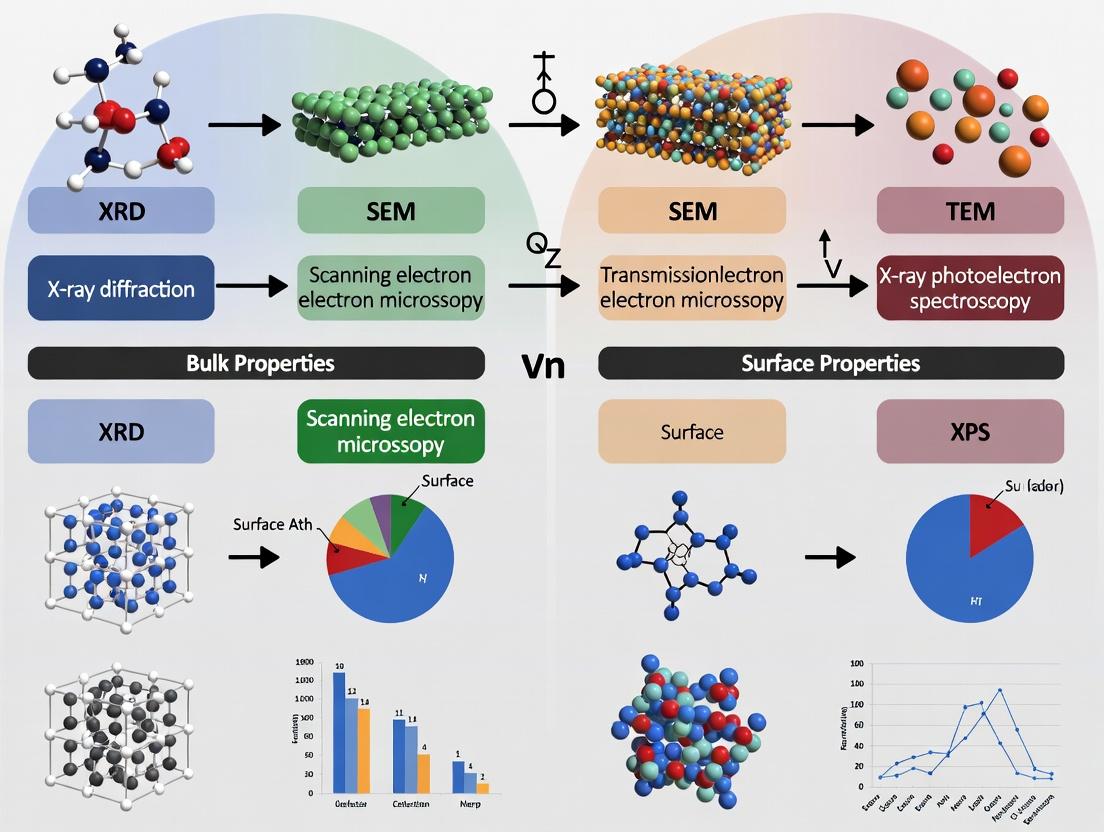
This article provides a comprehensive comparative analysis of bulk and surface characterization methods for catalysts, targeting researchers, scientists, and drug development professionals.
Bulk vs Surface Characterization of Catalysts: A Comparative Guide for Modern Researchers
Abstract
This article provides a comprehensive comparative analysis of bulk and surface characterization methods for catalysts, targeting researchers, scientists, and drug development professionals. It explores the foundational principles distinguishing bulk properties from surface phenomena, details core methodologies and their practical applications in catalyst development, addresses common analytical challenges and optimization strategies, and offers a framework for validating and selecting complementary techniques. The synthesis aims to empower efficient catalyst design and characterization strategy formulation for advanced biomedical and industrial applications.
Core Concepts: Defining Bulk Properties and Surface Phenomena in Catalyst Science
Effective catalyst development hinges on the precise characterization of material properties. A fundamental challenge lies in distinguishing bulk properties from surface properties, as the catalytic activity is almost exclusively governed by the surface and near-surface region. This guide compares bulk and surface characterization techniques, underscoring why surface-sensitive methods are indispensable for accurate performance prediction.
Comparative Analysis of Characterization Techniques
The following table summarizes key techniques, their information depth, and their applicability to bulk versus surface properties.
Table 1: Bulk vs. Surface Characterization Techniques for Catalysts
| Technique | Acronym | Probing Depth | Primary Information | Relevance to Catalysis |
|---|---|---|---|---|
| X-Ray Diffraction | XRD | ~1-10 µm | Bulk crystal structure, phase composition, crystallite size. | Essential for identifying bulk phases but blind to surface structure. |
| X-Ray Photoelectron Spectroscopy | XPS | ~5-10 nm | Elemental surface composition, chemical/oxidation states. | Critical for analyzing active surface species and adsorbates. |
| Transmission Electron Microscopy | TEM | Entire sample thickness (nm-µm) | Local bulk morphology, crystal structure, particle size. | Provides bulk particle data; surface details require specialized modes. |
| Scanning Electron Microscopy | SEM | ~1 µm | Bulk morphology and micro-structure. | Limited to topological surface information; no chemical state data. |
| Nitrogen Physisorption (BET) | BET | N/A | Total surface area, pore volume, pore size distribution. | Measures total (external+internal) surface area accessible to N₂. |
| Chemisorption (e.g., H₂, CO) | - | Atomic monolayer | Active surface area, metal dispersion, active site density. | Directly measures sites available for reactant binding. |
| Temperature-Programmed Reduction | TPR | Surface + near-surface bulk | Reducibility, metal-support interactions. | Probes reactivity of surface and subsurface layers. |
Experimental Data Comparison: The Case of Supported Platinum Catalysts
Consider a study comparing 1 wt% Pt/Al₂O₃ catalysts prepared via different methods. Performance in propane dehydrogenation was correlated with characterized properties.
Table 2: Characterization and Performance Data for Pt/Al₂O₃ Catalysts
| Catalyst Sample | XRD Pt Crystallite Size (nm) | H₂ Chemisorption Pt Dispersion (%) | CO Chemisorption Active Site Density (µmol/g) | XPS Surface Pt/Al Ratio | Propane Conversion @ 550°C (%) |
|---|---|---|---|---|---|
| Impregnation (Standard) | 4.2 | 24 | 12.1 | 0.015 | 38 |
| Strong Electrostatic Adsorption | Not detected | 65 | 32.8 | 0.041 | 72 |
| Colloidal Deposition | 2.1 | 48 | 24.3 | 0.032 | 65 |
Interpretation: XRD indicates bulk crystallite size but failed to detect highly dispersed Pt in Sample 2. Surface-sensitive techniques (Chemisorption, XPS) directly correlated with catalytic performance, demonstrating that surface properties, not bulk averages, dictate activity.
Detailed Experimental Protocols
Protocol 1: H₂ Pulse Chemisorption for Metal Dispersion
Objective: Determine active metal surface area and dispersion. Materials: Catalyst sample (~0.1 g), 10% H₂/Ar gas, thermal conductivity detector (TCD). Workflow:
- Pretreatment: Load sample into a U-shaped quartz tube. Heat at 10°C/min to 350°C in Ar flow (30 mL/min) for 1 hour.
- Reduction: Switch to 10% H₂/Ar at 350°C for 2 hours.
- Purge: Cool to 35°C in Ar. Purge with Ar for 30 minutes to remove physisorbed H₂.
- Calibration: Inject known pulses of 10% H₂/Ar into Ar carrier flow until TCD signal is constant.
- Chemisorption: Switch carrier to 10% H₂/Ar. Inject repeated pulses onto the sample until the peak area stabilizes, indicating saturation.
- Calculation: Use total H₂ consumed (subtracting post-saturation pulses) to calculate metal dispersion assuming a H:Pt stoichiometry of 1:1.
Title: H₂ Pulse Chemisorption Workflow for Catalyst Dispersion
Protocol 2: XPS Surface Analysis
Objective: Determine elemental composition and oxidation states at the catalyst surface (<10 nm). Materials: Powder catalyst pelletized or mounted on conductive tape, XPS instrument with Al Kα source. Workflow:
- Sample Preparation: Mount catalyst to minimize charging. Use a powder pressed into an indium foil or a dedicated holder.
- Introduction & Pump-down: Load into fast-entry lock, evacuate to ultra-high vacuum (UHV, <10⁻⁸ mbar).
- Survey Scan: Acquire a wide energy range scan (e.g., 0-1200 eV binding energy) to identify all elements present.
- High-Resolution Scans: For regions of interest (e.g., Pt 4f, Al 2p, O 1s), acquire high-resolution spectra with high pass energy for better resolution.
- Charge Correction: Reference all spectra to the C 1s peak of adventitious carbon at 284.8 eV.
- Data Analysis: Fit high-resolution peaks using appropriate software (e.g., CasaXPS) to determine peak areas, positions (chemical shifts), and relative concentrations.
Title: XPS Surface Analysis Protocol for Catalysts
The Scientist's Toolkit: Key Research Reagent Solutions
Table 3: Essential Materials for Catalyst Surface/Bulk Characterization
| Item | Function & Importance |
|---|---|
| High-Purity Gases (H₂, O₂, Ar, 10% H₂/Ar) | For pretreatment, reduction, and chemisorption experiments. Purity (>99.999%) is critical to avoid catalyst poisoning. |
| Standard Reference Catalysts (e.g., EUROPT-1, 5.8% Pt/SiO₂) | Benchmarks for validating chemisorption and activity measurement protocols across laboratories. |
| Al Kα X-ray Source | Monochromatic X-ray source for XPS, providing high-resolution spectra for accurate chemical state analysis. |
| Non-Magnetic Sample Holders (Stainless Steel, Au foil) | For XPS analysis of magnetic catalysts to avoid spectral distortion. |
| Quantachrome or Micromeritics Analysis Station | Automated systems for performing precise BET surface area and pore size measurements via N₂ physisorption. |
| Inert Transfer Vessels (e.g., Glove Bags, Vacuum Transfer Modules) | For moving air-sensitive catalysts (e.g., reduced metals) from reactor to XPS without air exposure. |
| Certified Reference Materials for XRD (e.g., NIST Si powder 640d) | For accurate calibration of XRD instrument alignment and diffraction angle. |
| Ultra-High Surface Area Carbon Supports (e.g., Ketjenblack) | Used in preparing calibration samples for metal dispersion measurements and as catalyst supports. |
Within catalyst research, the term "bulk" refers to the intrinsic, volume-specific properties of a material, distinct from its surface characteristics. This guide provides a comparative analysis of primary techniques used for bulk characterization, focusing on their application in catalyst development. The objective is to equip researchers with data to select the optimal method for probing crystalline structure and composition.
Comparative Analysis of Bulk Characterization Techniques
Table 1: Comparison of Key Bulk Characterization Methods
| Technique | Primary Information | Depth of Analysis | Typical Resolution | Key Limitation | Best For |
|---|---|---|---|---|---|
| X-Ray Diffraction (XRD) | Crystalline phase, lattice parameters, crystallite size. | 1-100 μm (bulk-sensitive) | ~0.1° in 2θ (phase ID); 1-100 nm (size) | Amorphous phases not detected. | Phase identification, quantitative analysis. |
| Raman Spectroscopy | Molecular vibrations, crystal structure, disorder. | 1-5 μm (laser-dependent) | 1-2 cm⁻¹ (spectral) | Fluorescence interference; weak signal. | Polymorph discrimination, carbon characterization. |
| X-Ray Fluorescence (XRF) | Elemental composition (Z > 4). | 1 μm - 1 mm | ~100-200 eV (energy) | Light elements (Z < 11) detection is poor. | Quantitative elemental analysis. |
| Bulk Elemental Analysis | Total C, H, N, S, O content. | Entire sample mass. | ~0.3% absolute (for CHNS) | Destructive; no spatial information. | Precise stoichiometry determination. |
Table 2: Performance Comparison for Catalyst Analysis (Hypothetical Mixed Metal Oxide)
| Technique | Detected Phases/Components | Crystallite Size (nm) | Metal Ratio (Nominal: Ni/Co = 1:1) | Analysis Time |
|---|---|---|---|---|
| XRD | NiCo₂O₄ spinel, Co₃O₄ impurity. | 12.4 ± 0.5 | Not directly measured | ~30 min |
| XRF | Ni, Co, O. Major impurities: None. | N/A | Ni/Co = 0.49:0.51 | ~10 min |
| Bulk CHNS | N/A (inorganic oxide) | N/A | N/A | ~15 min |
| Raman | Bands for spinel structure (A₁g, F₂g). | N/A (qualitative disorder) | N/A | ~5 min mapping |
Detailed Experimental Protocols
Protocol 1: Powder X-Ray Diffraction (XRD) for Phase Identification
Objective: Identify crystalline phases and estimate crystallite size in a solid catalyst. Materials: Powdered catalyst sample, flat sample holder, X-ray diffractometer. Procedure:
- Sample Preparation: Finely grind the catalyst powder using an agate mortar and pestle to reduce preferred orientation. Fill a zero-background Si sample holder uniformly and flatten the surface.
- Instrument Setup: Load the sample into the diffractometer. Set parameters (Cu Kα radiation, λ=1.5406 Å, voltage=40 kV, current=40 mA). Configure the scan range (2θ = 5° to 80°), step size (0.02°), and counting time (2 s/step).
- Data Collection: Initiate the scan.
- Data Analysis: Compare obtained diffraction pattern to reference databases (ICDD/PDF). Use the Scherrer equation (D = Kλ / (β cosθ)) on a suitable, isolated peak to estimate crystallite size (D), where K is the shape factor (~0.9), λ is the X-ray wavelength, β is the full width at half maximum (FWHM) in radians after instrumental broadening correction, and θ is the Bragg angle.
Protocol 2: X-Ray Fluorescence (XRF) for Bulk Composition
Objective: Determine the elemental composition of a heterogeneous catalyst. Materials: Powdered catalyst, boric acid for pelleting, hydraulic press, XRF spectrometer. Procedure:
- Sample Preparation: Mix 1.0 g of finely ground catalyst powder with 6.0 g of boric acid binder. Press the mixture into a solid pellet using a hydraulic press at 20-ton pressure for 2 minutes.
- Calibration: Load appropriate calibration curves for expected elements (e.g., transition metals).
- Measurement: Place the pellet in the spectrometer chamber. Evacuate to vacuum. Irradiate with primary X-rays and collect the emitted fluorescent spectra.
- Quantification: Use software to deconvolute spectral peaks and quantify elemental concentrations based on intensity, using fundamental parameters or empirical calibration.
Experimental Workflow Diagram
Diagram Title: Bulk Catalyst Characterization & Analysis Workflow
The Scientist's Toolkit: Key Research Reagent Solutions
Table 3: Essential Materials for Bulk Characterization Experiments
| Item | Function | Example Product / Specification |
|---|---|---|
| Zero-Background Sample Holder | Holds powder samples for XRD to minimize background signal. | Single crystal silicon slice cut at a specific orientation. |
| XRD Reference Standards | Calibrate instrument alignment and correct for instrumental broadening. | NIST SRM 660c (LaB₆) or 1976b (corundum plate). |
| Boric Acid (Powder, ACS Grade) | Binder for preparing mechanically stable pellets for XRF analysis. | ≥99.5% purity, free of heavy metal contaminants. |
| Microbalance (High Precision) | Accurately weigh small amounts of sample for quantitative analysis. | Capacity 2.1g, readability 0.001 mg. |
| Certified Reference Materials (CRMs) | Validate analytical methods and calibrate instruments for XRF/EA. | Certified catalyst powders with known elemental composition. |
| Agate Mortar and Pestle | Grind samples to fine, uniform particle size without contamination. | 100mm diameter, polished agate. |
Within the critical thesis of Comparative analysis of bulk vs surface characterization methods for catalysts research, a fundamental challenge persists: bulk techniques often obscure the molecular-scale activity that governs catalytic efficiency. This guide compares key surface-sensitive characterization methods against traditional bulk techniques, focusing on their ability to define the active site and elucidate catalytic mechanisms.
Comparison of Characterization Techniques for Active Site Analysis
The following table summarizes the performance of selected techniques in probing surface-specific vs. bulk-averaged properties.
Table 1: Performance Comparison of Catalytic Characterization Methods
| Method | Primary Information | Spatial Resolution / Probing Depth | Suitability for In Situ/Operando Studies | Key Limitation for Surface Analysis |
|---|---|---|---|---|
| X-ray Photoelectron Spectroscopy (XPS) | Elemental composition, chemical state, oxidation state of surface atoms. | 5-10 nm (surface-sensitive). | Good (with specialized cells). | Limited to ultra-high vacuum typically; weak for light elements. |
| Scanning Tunneling Microscopy (STM) | Real-space atomic topography of conductive surfaces. | Atomic-scale lateral; 1-2 atomic layers. | Excellent for model studies. | Requires conductive samples; mainly for model single-crystals. |
| Diffuse Reflectance Infrared Fourier Transform Spectroscopy (DRIFTS) | Molecular vibrations of adsorbed reactants/intermediates on catalyst surface. | ~1-10 μm (bulk powder), but signal from surface species. | Excellent for catalytic reaction conditions. | Can be complex to deconvolute gas-phase vs. adsorbed species signals. |
| X-ray Diffraction (XRD) - Bulk | Crystalline phase, lattice parameters, crystallite size. | >100 nm (bulk-averaged). | Good. | Cannot detect surface species or amorphous phases; insensitive to first few atomic layers. |
| Temperature-Programmed Reduction (TPR) | Reducibility, metal-support interaction strength. | Bulk-averaged (entire particle). | No (ex-situ pretreatment). | Does not distinguish surface vs. bulk reduction; indirect surface information. |
| Brunauer-Emmett-Teller (BET) Surface Area | Total specific surface area, pore size distribution. | Macroscopic average. | No. | Provides no chemical or structural data on active sites. |
Experimental Protocols for Key Surface-Sensitive Studies
Protocol 1: Operando DRIFTS-MS for Probing Surface Intermediates
- Objective: To identify reactive surface intermediates during CO₂ hydrogenation over a Cu/ZnO/Al₂O₃ catalyst.
- Materials: High-temperature DRIFTS cell with KBr windows, mass spectrometer (MS), gas dosing system, catalyst powder.
- Procedure:
- Catalyst is loaded into the DRIFTS cell and pre-treated in 5% H₂/Ar at 300°C for 1 hour.
- Temperature is adjusted to reaction condition (e.g., 220°C).
- A flow of reaction mixture (e.g., CO₂:H₂:Ar = 1:3:1) is introduced.
- DRIFTS spectra are continuously collected (e.g., 4 cm⁻¹ resolution, 32 scans) while the effluent gas is analyzed simultaneously by MS.
- Spectral changes (e.g., appearance of formate (HCOO-) bands at ~1350 and 1580 cm⁻¹, or carbonyls at ~2100 cm⁻¹) are temporally correlated with MS signals for products (e.g., CH₄, CO, CH₃OH).
Protocol 2: In Situ XPS Study of Catalyst Activation
- Objective: To track changes in the surface oxidation state of Ni in a Ni/CeO₂ catalyst during reduction.
- Materials: In situ XPS system with a high-pressure reaction cell, annealing stage, Ni/CeO₂ catalyst pellet.
- Procedure:
- The as-prepared catalyst is transferred to the in situ cell under inert atmosphere.
- Initial XPS survey and high-resolution Ni 2p spectra are acquired under UHV.
- The cell is pressurized to 1 mbar with 10% H₂/Ar, and the sample is heated to 500°C for 30 minutes.
- After cooling in the reducing atmosphere, the cell is evacuated, and XPS spectra are re-acquired.
- The shift in the Ni 2p₃/₂ peak from ~856 eV (Ni²⁺) to ~852.5 eV (Ni⁰) quantifies the extent of surface reduction, which often precedes bulk reduction measured by TPR.
Visualization of Experimental and Analytical Workflows
Diagram 1: Operando Surface Analysis Workflow
Diagram 2: Bulk vs. Surface Characterization Data Integration
The Scientist's Toolkit: Key Research Reagent Solutions
Table 2: Essential Materials for Surface & Catalytic Experiments
| Item | Function in Experiment |
|---|---|
| Model Single-Crystal Surfaces (e.g., Pt(111), Cu(110)) | Provides a well-defined, atomically flat surface to study fundamental adsorption and reaction mechanisms without complexity of powders. |
| High-Surface-Area Oxide Supports (e.g., γ-Al₂O₃, SiO₂, TiO₂) | Standardized supports for preparing dispersed metal nanoparticles, mimicking industrial catalysts. |
| Calibration Gases (e.g., 10% H₂/Ar, 5% CO/He) | Precise gas mixtures for temperature-programmed experiments (TPR, TPD) and operando reaction studies. |
| Internal Standard for Spectroscopy (e.g., KBr for IR, Si wafer for XPS) | Provides a reference signal for intensity calibration and binding energy alignment. |
| In Situ/Operando Cell Kits (for XRD, XPS, IR) | Specialized sample holders that allow controlled gas flow and temperature while permitting probe beam access. |
| Metallic Precursor Salts (e.g., H₂PtCl₆, Ni(NO₃)₂, HAuCl₄) | Standard starting materials for synthesizing supported catalysts via impregnation methods. |
| Porous Membranes or Frits | Used in flow reactors and in situ cells to contain catalyst powder while allowing gas permeation. |
Comparative Analysis of Characterization Techniques for Catalysts
Understanding catalyst performance requires a multi-faceted approach, measuring key bulk and surface properties. This guide compares common characterization techniques, focusing on their application in catalyst research.
Comparison of Bulk vs. Surface Characterization Methods
The following table summarizes the primary techniques used to assess the four key properties, distinguishing between bulk-sensitive and surface-sensitive methods.
Table 1: Comparative Overview of Characterization Techniques
| Key Property | Bulk Characterization Method (Primary) | Surface Characterization Method (Primary) | Key Comparative Insight |
|---|---|---|---|
| Composition | X-Ray Fluorescence (XRF); Inductively Coupled Plasma Optical Emission Spectroscopy (ICP-OES) | X-Ray Photoelectron Spectroscopy (XPS); Energy Dispersive X-Ray Spectroscopy (EDS) in SEM/TEM | Bulk methods (XRF) give average composition; surface methods (XPS) reveal composition and chemical state of top 1-10 nm, critical for active sites. |
| Morphology | Scanning Electron Microscopy (SEM) | High-Resolution Transmission Electron Microscopy (HRTEM); Atomic Force Microscopy (AFM) | SEM provides topographical info from microns to ~nm. HRTEM offers atomic-scale lattice imaging, while AFM provides 3D surface topology without vacuum. |
| Porosity | N₂ Physisorption (BET Surface Area, BJH Pore Distribution) | Electron Tomography (3D-TEM) | N₂ physisorption provides statistical average of pore volume/size distribution. Electron tomography visualizes individual pore networks in 3D at the nanoscale. |
| Electronic State | UV-Vis Diffuse Reflectance Spectroscopy (UV-Vis DRS) | X-Ray Photoelectron Spectroscopy (XPS); Electron Energy Loss Spectroscopy (EELS) | UV-Vis DRS probes bulk electronic structure (e.g., band gaps). XPS/EELS determine oxidation states and bonding at the surface, directly linked to catalytic activity. |
Experimental Data Comparison: Surface Area & Porosity Analysis
A study comparing a standard Zeolite Y catalyst with a Mesoporous Silica (SBA-15) and a Metal-Organic Framework (ZIF-8) illustrates how porosity data correlates with function.
Table 2: Comparative Porosity Data for Representative Catalysts
| Catalyst Material | BET Surface Area (m²/g) | Total Pore Volume (cm³/g) | Average Pore Diameter (nm) | Primary Pore Type | Method |
|---|---|---|---|---|---|
| Zeolite Y (Reference) | 780 | 0.32 | 0.74 | Microporous | N₂ Physisorption at 77K |
| SBA-15 | 850 | 1.05 | 6.5 | Mesoporous (Ordered) | N₂ Physisorption at 77K |
| ZIF-8 | 1630 | 0.66 | 1.2 | Microporous | N₂ Physisorption at 77K |
Experimental Protocols
1. N₂ Physisorption for Porosity (BET/BJH Method)
- Sample Preparation: ~100 mg of catalyst is degassed under vacuum at 150°C (or temperature specific to material stability) for 6-12 hours to remove adsorbed contaminants.
- Measurement: The degassed sample is cooled to 77K (liquid N₂ bath). N₂ gas is dosed incrementally onto the sample, and the quantity adsorbed at each relative pressure (P/P₀) is measured volumetrically or gravimetrically.
- Data Analysis: The BET equation is applied to the adsorption data in the relative pressure range 0.05-0.3 P/P₀ to calculate the specific surface area. The BJH method is applied to the desorption branch of the isotherm to calculate the pore size distribution for mesopores (2-50 nm).
2. X-Ray Photoelectron Spectroscopy (XPS) for Surface Composition & Electronic State
- Sample Preparation: Powder catalyst is typically mounted on a conductive carbon tape or pressed into a soft metal (e.g., In) foil. The sample is then introduced into an ultra-high vacuum (UHV) chamber (<10⁻⁸ mbar).
- Measurement: The sample is irradiated with a monochromatic X-ray beam (e.g., Al Kα, 1486.6 eV). Emitted photoelectrons are collected and their kinetic energy is analyzed by a hemispherical analyzer.
- Data Analysis: The binding energy (BE) of characteristic core-level peaks (e.g., Pt 4f, O 1s, C 1s) is determined. Peak positions indicate chemical state (e.g., Pt⁰ vs. Pt²⁺). Peak areas, after sensitivity factor correction, provide atomic percentages of surface elements.
Visualization: Integrated Workflow for Catalyst Characterization
Title: Integrated Workflow for Catalyst Characterization
The Scientist's Toolkit: Essential Research Reagent Solutions
Table 3: Key Reagents & Materials for Catalyst Characterization
| Item | Primary Function in Characterization |
|---|---|
| High-Purity N₂ Gas (99.999%) | Used as the adsorbate in physisorption experiments to determine surface area and porosity without chemical interaction. |
| Al Kα X-Ray Source | Monochromatic X-ray source for XPS, providing precise excitation energy (1486.6 eV) for ejecting core-level electrons. |
| Ultra-High Vacuum (UHV) Compatible Adhesives (e.g., Conductive Carbon Tape) | For mounting powder samples in XPS, SEM, etc., ensuring stability and conductivity without outgassing. |
| ICP Multi-Element Standard Solutions | Calibrated solutions for ICP-OES/MS to quantify the bulk elemental composition of catalysts accurately. |
| Liquid N₂ / He Cryogen | Essential for cooling samples during physisorption (77K) or for cryo-TEM/EDX to reduce beam damage. |
| Certified Reference Materials (e.g., NIST standard powders) | Used to calibrate and validate instruments like BET analyzers, XPS, and particle size analyzers. |
In the context of a comparative analysis of bulk versus surface characterization methods for catalyst research, understanding the catalyst-support interface is paramount. This guide compares the performance of key characterization techniques in probing this critical zone, supported by recent experimental data.
Comparison of Characterization Techniques for Interface Analysis
Table 1: Performance Comparison of Key Characterization Methods
| Technique | Primary Information Obtained | Spatial Resolution (Typical) | Penetration Depth | Key Strength for Interface | Key Limitation for Interface | Typical Experiment Duration |
|---|---|---|---|---|---|---|
| High-Resolution TEM (HR-TEM) | Direct atomic-scale imaging, lattice fringes. | ~0.1 nm (imaging) | Very thin sample (<50 nm) | Direct visualization of interface structure. | Sample preparation artifact risk; local sampling. | 4-8 hours (incl. prep). |
| Scanning TEM - Electron Energy Loss Spectroscopy (STEM-EELS) | Elemental composition, chemical bonding, oxidation states. | ~0.5 nm (spectroscopy) | Very thin sample (<50 nm) | Nanoscale chemical mapping across the interface. | Complex data interpretation; beam-sensitive samples. | 6-12 hours. |
| X-ray Photoelectron Spectroscopy (XPS) | Surface elemental composition, chemical state. | 10-100 µm (lateral); 5-10 nm (depth) | 5-10 nm | Quantitative chemical state analysis of topmost layers. | Limited to near-surface; requires UHV. | 2-4 hours. |
| X-ray Absorption Spectroscopy (XAS) - EXAFS/XANES | Local atomic structure, oxidation state, coordination numbers. | None (averages over beam area) | Microns (transmission mode) | Probes in-situ/operando conditions; bulk-sensitive. | Lacks direct spatial resolution; complex modeling. | 4-10 hours (synchrotron). |
| Diffuse Reflectance Infrared Fourier Transform Spectroscopy (DRIFTS) | Molecular adsorbates, surface functional groups. | None (averages over sample) | µm to mm (diffuse) | Operando probing of adsorbed species at interface. | Indirect interface information; overlapping peaks. | 1-3 hours. |
Detailed Experimental Protocols
Protocol 1: STEM-EELS Line Scan Across a Catalyst-Support Interface Objective: To map elemental distribution and chemical state variations across a metal nanoparticle (e.g., Pt)-oxide support (e.g., TiO₂) interface.
- Sample Preparation: Catalyst powder is dispersed in ethanol and ultrasonicated. A drop is deposited onto a lacey carbon TEM grid and dried.
- Microscope Setup: A probe-corrected (S)TEM equipped with a high-resolution EELS spectrometer is used. The microscope is aligned for high-current, small-probe mode (~0.5 nm probe size).
- Imaging & Alignment: A suitable nanoparticle at the edge of the support is located using high-angle annular dark-field (HAADF) imaging.
- Spectrum Imaging: A line scan is defined perpendicular to the visible interface. At each point, a full EELS spectrum is acquired (core-loss edges: Ti-L₂,₃, O-K, Pt-M₄,₅). Acquisition parameters: Probe dwell time 0.1-0.5 s, energy resolution ~0.8 eV.
- Data Analysis: Spectra are processed (dark current subtraction, deconvolution, background removal). Integrated intensities under specific edges are quantified to create elemental profiles. Chemical shifts in fine-structure are analyzed for oxidation states.
Protocol 2: Operando XAS Study of a Supported Catalyst Objective: To determine the structural evolution of Ni nanoparticles on Al₂O₃ support during reduction and reaction.
- Cell Design: Powder is packed into a capillary operando cell with gas flow and heating capabilities.
- Beamline Setup: At a synchrotron beamline, the cell is aligned in transmission geometry. Energy is calibrated using a metal foil reference.
- Data Collection: a. Reduction: Spectra are collected continuously at the Ni K-edge (8333 eV) while flowing 5% H₂/He and ramping temperature to 500°C. b. Reaction: Under steady-state reaction conditions (e.g., CO₂ methanation), series of spectra are collected.
- Analysis: XANES spectra are analyzed by linear combination fitting to reference spectra (NiO, Ni foil) to quantify oxidation state. EXAFS spectra are fitted to obtain coordination numbers and bond distances for Ni-Ni and Ni-O pairs.
Protocol 3: Interface-Sensitive DRIFTS with Probe Molecules Objective: To characterize acid sites at the interface of a mixed oxide catalyst (e.g., NiO on CeO₂).
- Sample Activation: Catalyst powder is loaded into the DRIFTS environmental cell, heated under inert flow, and cooled to analysis temperature (e.g., 150°C).
- Background Collection: A background spectrum is collected under inert atmosphere.
- Probe Adsorption: A pulse of pyridine (or CO) vapor in inert carrier gas is introduced until saturation.
- Purge & Measurement: The cell is purged with inert gas to remove physisorbed molecules. IR spectra are collected at high resolution (e.g., 4 cm⁻¹).
- Analysis: Difference spectra are generated. Bands at specific wavenumbers (e.g., ~1445 cm⁻¹ for Lewis acid sites on CeO₂, ~1600 cm⁻¹ for sites influenced by Ni at interface) are integrated to compare acid site density and type.
Visualization of Workflow and Concepts
Title: Characterization Strategy for Catalyst-Support Interface
Title: Key Phenomena at the Catalyst-Support Interface
The Scientist's Toolkit: Research Reagent Solutions
Table 2: Essential Materials for Catalyst Interface Characterization
| Item | Function in Characterization | Key Consideration |
|---|---|---|
| Lacey Carbon TEM Grids | Support for electron-transparent catalyst samples for (S)TEM. | Provides thin, stable support with minimal background scattering for high-resolution imaging. |
| High-Purity Probe Gases (H₂, O₂, CO, NO) | For in-situ/operando studies (XAS, DRIFTS) to activate or probe the catalyst under realistic conditions. | Purity (>99.999%) is critical to avoid poisoning surface sites and contaminating UHV systems. |
| Deuterated IR Probe Molecules (e.g., d₃-Acetonitrile) | Used in DRIFTS to distinguish specific surface sites (e.g., Lewis vs. Brønsted acid) via isotope shift. | Reduces spectral overlap, allowing more precise assignment of vibrational bands to interface species. |
| Calibration Reference Foils (e.g., Au, Ni, Cu) | Essential for precise energy calibration in X-ray absorption spectroscopy (XAS). | Must be high-purity metal foil (≥99.9%) to ensure sharp, well-defined absorption edges. |
| UHV-Compatible Sample Holders (for XPS) | Enable transfer and analysis of air-sensitive catalyst samples without exposure to atmosphere. | Prevents surface contamination (e.g., adventitious carbon) that would obscure interface signals. |
| Specific Adsorbates (Pyridine, CO, NH₃) | Molecular probes in spectroscopy (DRIFTS, IR) to titrate and identify surface sites (acidic, metallic) at the interface. | Choice depends on target site strength and selectivity; CO binds to metallic sites, pyridine to acid sites. |
Toolkit Deep Dive: Essential Techniques for Bulk and Surface Analysis
Within the thesis context of Comparative analysis of bulk vs surface characterization methods for catalysts research, this guide objectively compares four foundational bulk characterization techniques. These methods provide essential data on the bulk composition, structure, porosity, and thermal stability of catalytic materials, serving as critical complements to surface-specific analyses.
Technique Comparison & Experimental Data
| Technique | Acronym | Primary Information | Typical Output Metrics | Sample Requirement | Key Limitation |
|---|---|---|---|---|---|
| X-Ray Diffraction | XRD | Crystalline phase, structure, crystallite size | Phase ID, lattice parameters, crystallite size (Scherrer) | 10 mg - 1 g (powder) | Insensitive to amorphous phases; surface-blind. |
| X-Ray Fluorescence | XRF | Elemental composition (Bulk, >~0.1%) | Weight % of elements (Na-U) | 100 mg - several g | Limited light element sensitivity; semi-quantitative without standards. |
| Physisorption (BET) | BET | Surface area, pore size/volume | Specific surface area (m²/g), pore size distribution | 50-200 mg | Models assume homogeneous surface; mesoporous focus. |
| Thermogravimetric Analysis | TGA | Mass change vs. temperature/time | % Mass loss, decomposition temperatures | 5-100 mg | Cannot identify gases evolved without coupled MS/FTIR. |
| Differential Scanning Calorimetry | DSC | Heat flow (endo/exothermic events) | Transition temperatures, enthalpies (J/g) | 1-20 mg | Small sample size may not represent bulk homogeneity. |
Quantitative Data Table: Comparative Analysis of a Model Catalyst (e.g., Alumina-Supported Ni)
| Characterization Goal | XRD Result | XRF Result | BET Result | TGA/DSC Result |
|---|---|---|---|---|
| Phase Identification | γ-Al₂O₃ (broad peaks), NiO crystalline phase detected. | N/A | N/A | N/A |
| Composition | N/A | Ni: 12.4 wt%, Al: 45.1 wt%, O: (balance) | N/A | N/A |
| Surface Area | N/A | N/A | 187 m²/g ± 5 | N/A |
| Pore Volume | N/A | N/A | 0.45 cm³/g | N/A |
| Thermal Stability | N/A | N/A | N/A | TGA: 3.5% loss <150°C (H₂O). DSC: Exotherm at 320°C (NiO reduction). |
| Crystallite Size (NiO) | 8.2 nm (Scherrer eq.) | N/A | N/A | N/A |
Detailed Experimental Protocols
Protocol 1: Powder X-Ray Diffraction (XRD) for Phase Analysis
- Sample Preparation: Finely grind ~200 mg of catalyst powder using an agate mortar and pestle to reduce preferred orientation. Load into a standard flat-plate sample holder, leveling the surface with a glass slide.
- Instrument Setup: Use a Cu Kα X-ray source (λ = 1.5418 Å). Set voltage to 40 kV and current to 40 mA.
- Data Acquisition: Scan 2θ range from 5° to 80° with a step size of 0.02° and a dwell time of 1 second per step.
- Data Analysis: Perform background subtraction and Kα2 stripping. Identify phases by matching peak positions and intensities to reference patterns in the ICDD (International Centre for Diffraction Data) database. Calculate crystallite size using the Scherrer equation on a prominent, isolated peak.
Protocol 2: X-Ray Fluorescence (XRF) for Bulk Composition
- Sample Preparation (Pressed Pellet): Homogeneously mix 2 g of catalyst powder with 0.4 g of wax binder (e.g., SpectroBlend). Press the mixture in a hydraulic press at 20 tons for 2 minutes to form a stable pellet.
- Instrument Calibration: Use a suite of certified standard reference materials with matrices similar to the catalyst for quantitative analysis.
- Measurement: Place the pellet in the spectrometer. Acquire data under vacuum for light elements (Na-Mg) and in air for heavier elements. Use a rhodium tube anode, typically at 50 kV.
- Data Processing: Use instrument software to correct for matrix effects (e.g., via fundamental parameters method) and convert measured intensities to weight percent concentrations.
Protocol 3: N₂ Physisorption for BET Surface Area & Pore Size
- Sample Degassing: Weigh ~100 mg of sample into a pre-weighed analysis tube. Degas under vacuum at 200°C for a minimum of 6 hours (or until stable) to remove adsorbed contaminants.
- Analysis: Transfer the tube to the analysis port. Immerse the sample in a liquid N₂ bath (77 K). Measure the volume of N₂ adsorbed and desorbed at precisely controlled relative pressures (P/P₀) from ~0.01 to 0.99.
- BET Calculation: Use the adsorption data in the relative pressure range of 0.05 - 0.30. Plot P/[V(P₀-P)] vs. P/P₀. The linear region's slope and intercept yield the monolayer capacity, from which the specific surface area is calculated.
- Pore Analysis: Apply the Barrett-Joyner-Halenda (BJH) model to the desorption branch isotherm to calculate pore size distribution and total pore volume.
Protocol 4: Coupled TGA-DSC for Thermal Behavior
- Baseline Calibration: Run an empty, cleaned crucible through the intended temperature program to establish a baseline.
- Sample Loading: Precisely weigh 10-20 mg of sample into an alumina crucible. Place in the TGA-DSC furnace alongside a reference crucible.
- Experiment Setup: Program a temperature ramp (e.g., 10 °C/min) from room temperature to 900°C under a controlled gas flow (e.g., 50 mL/min N₂ for inert, switching to air for oxidation studies).
- Data Acquisition: Simultaneously record mass loss (TGA) and heat flow (DSC) as a function of temperature and time. Key transitions (dehydration, decomposition, reduction, oxidation) are identified from derivative TGA (DTG) peaks and DSC endotherms/exotherms.
Visualizations
Bulk Characterization Workflow for Catalyst Analysis
Bulk & Surface Methods in Catalyst Thesis
The Scientist's Toolkit: Essential Research Reagent Solutions
| Item | Function in Characterization |
|---|---|
| Agate Mortar & Pestle | For dry grinding powder samples to a fine, homogeneous consistency for XRD and XRF pellet preparation, minimizing crystallographic preferred orientation. |
| Wax Binder (e.g., Cellulose, SpectroBlend) | Acts as a binding agent for forming stable, flat pellets from loose powders for XRF analysis, ensuring consistent sample presentation to the X-ray beam. |
| Certified Reference Materials (CRMs) | Standard materials with known, certified compositions. Essential for calibrating XRF instruments and validating quantitative results. |
| High-Purity Gases (N₂, Ar, 10% O₂/He etc.) | Used as purge and analysis atmospheres in BET and TGA/DSC. Gas purity is critical to prevent sample contamination or unwanted reactions. |
| Liquid Nitrogen | Cryogen (77 K) required as the coolant bath for N₂ physisorption (BET) measurements to achieve the necessary gas condensation for surface area analysis. |
| Standard Alumina Crucibles (TGA/DSC) | Inert, high-temperature resistant sample holders for thermal analysis. Must be chemically compatible with the sample and temperature program. |
| Micropipettes & Solvents (e.g., IPA) | For precise slurry preparation if sample dispersion/wetting is required prior to certain analyses, though less common for these bulk techniques. |
In the study of catalysts, understanding surface composition and structure is paramount, as catalytic activity is inherently a surface phenomenon. This guide provides a comparative analysis of four principal surface-sensitive characterization techniques—X-ray Photoelectron Spectroscopy (XPS), Auger Electron Spectroscopy (AES), Transmission/Scanning Transmission Electron Microscopy (TEM/STEM), and Secondary Ion Mass Spectrometry (SIMS)—within the broader thesis of contrasting bulk and surface characterization methods.
The following table compares the core analytical capabilities and typical experimental parameters of the four techniques.
Table 1: Comparison of Key Surface Characterization Techniques
| Parameter | XPS | AES | TEM/STEM | SIMS |
|---|---|---|---|---|
| Primary Information | Elemental ID, Chemical State | Elemental ID (Z≥3) | Morphology, Crystallography, Composition | Elemental/Molecular ID, Isotopes, Depth Profiling |
| Detection Limit (at%) | 0.1 - 1% | 0.1 - 1% | ~0.1% (with EELS/EDS) | ppm - ppb |
| Lateral Resolution | 3 - 10 µm (up to ~10 nm micro) | 10 nm - 1 µm | <0.1 nm (TEM), ~0.1 nm (STEM) | 50 nm - 5 µm |
| Depth Resolution | 2 - 10 nm (information depth) | 2 - 10 nm (information depth) | Atomic (2D projection) | <1 nm (in profiling mode) |
| Typical Probe Beam | Al Kα or Mg Kα X-rays | 3 - 30 keV Electron Beam | 60 - 300 keV Electron Beam | 0.5 - 30 keV Ions (O₂⁺, Cs⁺, Ar⁺, Ga⁺, C₆₀⁺) |
| Sample Environment | Ultra-High Vacuum (UHV) | UHV | High Vacuum (UHV for some) | UHV |
| Sample Damage | Minimal (X-ray induced possible) | High (Electron beam induced) | High (Electron beam induced) | High (Sputtering is destructive) |
Detailed Methodologies and Experimental Data
XPS for Catalyst Oxidation State Analysis
Protocol: A reduced metal catalyst (e.g., Ni on Al₂O₃) is analyzed before and after a mild oxidation treatment.
- Sample Prep: Powder is pressed onto an indium foil or conductive tape and introduced via a load-lock.
- Analysis: Spectrum acquired using a monochromatic Al Kα source (1486.6 eV), pass energy of 20-50 eV for high-resolution scans.
- Charge Neutralization: Use of low-energy electron flood gun for insulating supports.
- Data Processing: Spectra are calibrated to C 1s at 284.8 eV. Ni 2p₃/₂ peaks are deconvoluted using appropriate software (e.g., CasaXPS).
Table 2: XPS Data for Ni Catalyst Oxidation States
| Sample Condition | Peak Center (eV) Ni 2p₃/₂ | Assigned State | Atomic % Ni | FWHM (eV) |
|---|---|---|---|---|
| As-Prepared (Reduced) | 852.5 ± 0.2 | Ni⁰ | 2.1 | 1.5 |
| 855.8 ± 0.2 | Ni²⁺ | 0.7 | 2.8 | |
| After Oxidation | 852.5 (trace) | Ni⁰ | 0.2 | 1.5 |
| 855.9 ± 0.2 | Ni²⁺ | 2.9 | 2.9 | |
| 861.0 (Satellite) | Ni²⁺ Satellite | - | - |
AES for Surface Segregation in Bimetallic Catalysts
Protocol: Mapping surface composition changes in a Pd-Ag catalyst alloy after annealing.
- Sample: Polished bulk Pd₇₀Ag₃₀ alloy.
- Analysis: Scanning Auger Microprobe with 10 keV, 10 nA electron beam, lateral resolution ~20 nm.
- Mapping: Acquire peak-to-peak heights for Pd MNN (330 eV) and Ag MNN (351 eV) across a 10x10 µm area.
- Sputtering: Depth profile using 1 keV Ar⁺ to confirm segregation is surface-limited.
Data: Surface composition shifts from bulk (70/30 Pd/Ag) to ~55/45 Pd/Ag after 600°C anneal, indicating Ag surface segregation.
STEM-EDS for Single-Particle Catalyst Analysis
Protocol: Elemental mapping of a Co-Pt bimetallic nanoparticle catalyst.
- Sample Prep: Catalyst powder ultrasonically dispersed in ethanol, drop-cast onto a lacey carbon TEM grid.
- Imaging/ Analysis: High-Angle Annular Dark-Field (HAADF) STEM imaging at 200 keV. EDS spectral imaging performed with a large solid-angle silicon drift detector (SDD).
- Data Collection: Acquire full spectrum at each pixel; quantify using Cliff-Lorimer k-factors.
- Caution: Use low beam currents and fast scans to minimize particle sintering.
Table 3: STEM-EDS Quantification of a Single Co-Pt Nanoparticle
| Region of NP | Co (at%) | Pt (at%) | Observation |
|---|---|---|---|
| Core | 15 ± 3 | 85 ± 3 | Pt-rich core consistent with synthesis. |
| Shell (2 nm) | 90 ± 5 | 10 ± 5 | Co-rich shell confirmed. |
| Whole Particle | 52 ± 2 | 48 ± 2 | Matches bulk ICP-OES data. |
SIMS for Detecting Trace Dopants and Intermediates
Protocol: TOF-SIMS analysis to identify surface adsorbates on a zeolite catalyst after reaction.
- Sample: H-ZSM-5 zeolite pellet exposed to methanol-to-hydrocarbons feed, quenched and transferred under inert atmosphere.
- Analysis: TOF-SIMS V with 25 keV Bi₃⁺ primary ion beam in static SIMS mode (dose < 10¹² ions/cm²).
- Spectral Acquisition: Collect spectra in both positive and negative ion modes over a 200x200 µm area.
- Data Analysis: Identify hydrocarbon fragments (e.g., CₓHᵥ⁺), aromatics, and oxygenates indicative of reaction intermediates.
Data: Detection of mass peaks corresponding to methylbenzenes (m/z 91, 105, 119) and polyaromatics (m/z 128, 152, 178), providing direct surface evidence for the hydrocarbon pool mechanism.
Visualizations
Title: Surface Analysis Technique Selection Workflow
Title: Role of Surface Tools in Catalyst Thesis
The Scientist's Toolkit: Essential Research Reagents & Materials
Table 4: Key Materials for Surface Analysis of Catalysts
| Item | Function/Brief Explanation |
|---|---|
| Indium Foil | Ductile, conductive substrate for mounting powder samples for XPS/AES/SIMS. |
| Lacey Carbon TEM Grids | TEM support film with holes, allowing particles to be imaged unsupported for optimal resolution. |
| Argon Gas (99.9999%) | High-purity sputtering gas for AES/XPS depth profiling and sample cleaning in UHV. |
| C₆₀⁺ or Gas Cluster Ion Source (e.g., Arₙ⁺) | For organic-sensitive SIMS depth profiling, minimizes fragmentation of molecular species in catalysts. |
| Conductive Carbon Tape | For mounting insulating samples, provides a path for charge dissipation in electron/ion beam techniques. |
| Electron Flood Gun (Charge Neutralizer) | Essential for analyzing insulating catalyst supports (e.g., SiO₂, Al₂O₃) in XPS to obtain accurate binding energies. |
| Calibration Standards (Au, Cu, Graphite) | For energy scale calibration of XPS (Au 4f₇/₂ at 84.0 eV, Cu 2p₃/₂ at 932.7 eV, C 1s at 284.8 eV). |
This guide, framed within a thesis on Comparative analysis of bulk vs surface characterization methods for catalysts research, objectively compares three pivotal surface-sensitive techniques for elucidating catalyst acidity and active site properties.
Comparison of Key Surface Characterization Techniques
| Technique | Primary Probe For | Information Gained | Quantitative Output | Key Limitations |
|---|---|---|---|---|
| NH3-TPD | Acid site strength & density | Acid strength distribution (weak, medium, strong), total acidity | Acid amount (µmol/g), peak temperatures (°C) | Non-specific (Brønsted vs. Lewis), ammonia can induce surface changes. |
| CO/NO Chemisorption | Metal active site count & dispersion | Metal surface area, dispersion (%), average particle size | Uptake (µmol/g), Dispersion (%), Particle Size (nm) | Probe-specific (CO may bridge sites), requires reduction pre-treatment. |
| IR Spectroscopy | Specific site identity & chemistry | Molecular structure of sites (e.g., OH groups, adsorbed complexes), acid type (B vs. L) | Band position (cm⁻¹), intensity, shift | Semi-quantitative, requires reference standards, limited to IR-active species. |
Supporting Experimental Data from Comparative Studies
Table 1: Characterization of a Zeolite (H-ZSM-5) and a Bifunctional Catalyst (Pt/Al₂O₃)
| Catalyst | NH3-TPD Total Acidity (µmol NH₃/g) | NH3-TPD Peak Maxima (°C) | CO Chemisorption (µmol CO/g) | Pt Dispersion (%) | IR Band (Pyridine L-sites, cm⁻¹) |
|---|---|---|---|---|---|
| H-ZSM-5 | 980 | 225, 420 | Not Applicable | Not Applicable | 1454 |
| 1% Pt/Al₂O₃ | 150 | 180 | 25 | 52 | 1447, 1620 |
Detailed Experimental Protocols
1. NH3-Temperature Programmed Desorption (NH3-TPD)
- Pre-treatment: ~0.1 g sample is heated in He/O₂ flow (30 mL/min) to 500°C (10°C/min), held for 1h, then cooled to 100°C in He.
- Ammonia Adsorption: Saturation with 5% NH₃/He for 30-60 min.
- Physisorbed NH₃ Removal: Flushing with He at 100-150°C for 1h to remove weakly bound NH₃.
- Desorption: Heating in He to 700°C (10°C/min) while quantifying desorbed NH₃ via TCD or MS.
- Data Analysis: Peak areas (calibrated) give acid amount; deconvolution of peaks indicates strength distribution.
2. CO Pulse Chemisorption for Metal Dispersion
- Pre-reduction: ~0.05 g sample is reduced in H₂ flow (30 mL/min) at specified temperature (e.g., 350°C for Pt) for 2h, then cooled in He to 35°C.
- Pulsing: Repeated injections (e.g., 50 µL pulses) of 10% CO/He into He carrier gas over the sample.
- Detection: Unadsorbed CO quantified by TCD. Pulses continue until effluent peak areas are constant.
- Calculation: Uptake calculated from total consumed CO. Assuming a stoichiometry (e.g., CO:Pt = 1), dispersion (%) = (atoms surface metal / total atoms) x 100.
3. In Situ IR Spectroscopy of Probe Molecules
- Wafer Preparation: 10-20 mg sample pressed into a self-supporting wafer.
- In Situ Cell Pre-treatment: Wafer heated under vacuum/in gas to desired temperature (e.g., 400°C, 1h) in the IR cell.
- Background Scan: Spectrum of clean catalyst recorded.
- Adsorption: Exposure to probe vapor (e.g., pyridine for acidity, CO for metals) at controlled pressure.
- Measurement: Spectra collected after evacuation at stepwise temperatures to assess strength. Difference spectra reveal adsorbed species bands.
Visualization of Experimental Workflows
Title: NH3-TPD Experimental Procedure
Title: IR Spectroscopy Probes for Different Sites
The Scientist's Toolkit: Key Research Reagent Solutions
| Reagent / Material | Primary Function in Experiments |
|---|---|
| Anhydrous Ammonia (5% NH₃/He) | Probe molecule for quantifying total acid site density and strength distribution in NH3-TPD. |
| Carbon Monoxide (10% CO/He) | Chemisorption probe for titrating surface metal atoms (e.g., Pt, Pd) to determine dispersion and particle size. |
| Nitric Oxide (NO) | Alternative chemisorption probe for metals like Cu and Fe; can also probe redox sites via IR. |
| Deuterated Acetonitrile (CD₃CN) | IR probe molecule with distinct CN stretch frequencies for differentiating Brønsted vs. Lewis acid sites. |
| Pyridine | Classic IR probe; 1540 cm⁻¹ band indicates Brønsted acids, 144-1455 cm⁻¹ indicates Lewis acids. |
| High-Purity Carrier Gases (He, Ar) | Inert gases for pretreatment, purge, and carrier streams in TPD/chemisorption to avoid side reactions. |
| Standard Reference Catalysts | Well-characterized materials (e.g., ASTM-alumina for chemisorption) for calibrating and validating methods. |
This guide compares the performance of two primary approaches—operando and in situ characterization—within the broader thesis examining bulk versus surface characterization methods for catalyst research. Understanding the dynamic behavior of catalysts under realistic reaction conditions is paramount for rational catalyst design in fields ranging from chemical synthesis to pharmaceutical development.
Comparison Guide: Operando vs. In Situ Characterization
While often used interchangeably, in situ and operando represent distinct but overlapping methodologies. In situ ("on site") involves analyzing a catalyst under reactive conditions but without simultaneously measuring its catalytic activity. Operando ("working") couples the characterization technique with simultaneous, real-time measurement of catalytic performance (e.g., conversion, selectivity). This guide objectively compares their application and data output.
Performance Comparison Table
| Feature / Metric | In Situ Characterization | Operando Characterization |
|---|---|---|
| Primary Objective | Observe catalyst structure/composition under controlled reactive environments. | Correlate simultaneously measured catalyst structure with its real-time activity/selectivity. |
| Typical Data Output | Spectra/diffraction patterns at set conditions (T, P, gas). | Time-resolved spectra and catalytic performance data (conversion, yield). |
| Key Advantage | Eliminates air/moisture exposure artifacts; probes active phase formation. | Provides direct structure-activity relationships; identifies true active sites & intermediates. |
| Main Limitation | Indirect correlation to performance; may miss transient states. | Increased experimental complexity; requires specialized reactor cells. |
| Common Techniques | In situ XRD, XPS, FTIR, Raman, TEM. | Operando XRD, XAS, FTIR, Raman, NMR. |
| Information Depth | Can probe bulk (XRD, XAS) or surface (XPS, FTIR-ATR). | Can probe bulk or surface, but must be compatible with reactor cell. |
| Relevance to Thesis | Excellent for tracking bulk phase changes or surface adsorbates under pressure. | Superior for linking specific surface species or bulk defects to measured turnover rates. |
Supporting Experimental Data: Case Study on Cu/ZnO Methanol Synthesis Catalyst
A pivotal study comparing in situ and operando X-ray Absorption Spectroscopy (XAS) for a Cu/ZnO catalyst under methanol synthesis conditions (CO₂/H₂, 220°C, 20 bar) highlights the complementary insights.
Table: Experimental Results from Comparative XAS Study
| Condition | Technique | Observed Cu Oxidation State | Measured CO₂ Conversion | Key Insight |
|---|---|---|---|---|
| Pre-reduction (H₂, 250°C) | In situ XAS | Metallic Cu⁰ | Not Measured | Complete reduction of CuO precursor. |
| Under Reaction (20 bar) | In situ XAS | Mainly Cu⁰, slight Cu⁺ | Not Measured | Suggests Cu⁰ is the active phase. |
| Under Reaction (20 bar) | Operando XAS | Dynamic mix of Cu⁰ & Cu⁺ | 65% | Cu⁺ concentration correlated linearly with methanol formation rate. |
| Steady-State | Operando XAS | ~30% Cu⁺, ~70% Cu⁰ | 72% | The Cu⁺/Cu⁰ ratio is stabilized by the reaction gas mix. |
Experimental Protocols for Cited Studies
1. Protocol for Operando XAS/Reaction Monitoring:
- Reactor Cell: A stainless steel or silica capillary reactor (ID 1-2 mm) with gas feedthroughs, heating jacket, and X-ray transparent windows (e.g., Kapton, boron nitride).
- Catalyst: Sieved powder (150-250 µm) of Cu/ZnO/Al₂O₃, packed into the capillary.
- Procedure:
- Pre-reduce catalyst in 5% H₂/He at 250°C for 2 hours.
- Switch to reactive feed gas (3:1 H₂:CO₂) at defined pressure (e.g., 20 bar) and temperature (220°C).
- Simultaneously collect XAS spectra at the Cu K-edge in transmission/fluorescence mode and analyze effluent gas via online mass spectrometry or gas chromatography.
- Continuously alternate between quick EXAFS scans (for structure) and monitoring the reaction product concentration.
- Use linear combination fitting of XANES spectra to quantify Cu⁰/Cu⁺ fractions over time.
2. Protocol for In Situ TEM of Catalyst Activation:
- Microreactor: A specialized TEM holder with microfabricated gas cells, heating, and gas delivery systems.
- Catalyst: Nanoparticles dispersed on an electron-transparent membrane (e.g., SiN).
- Procedure:
- Load catalyst into the holder in an inert atmosphere glovebox.
- Insert holder into TEM column and establish vacuum.
- Introduce H₂ gas (e.g., 1-10 mbar) to the microreactor cell.
- Ramp temperature to 300°C while acquiring high-resolution TEM images and electron diffraction patterns at intervals.
- Observe in real-time the morphological changes, reduction of metal oxides, and particle sintering.
Diagram: Logical Flow of Catalyst Characterization Approaches
Title: Logical Hierarchy of Catalyst Characterization Methods
Diagram: Generic Operando Experiment Workflow
Title: Operando Characterization Schematic Workflow
The Scientist's Toolkit: Key Research Reagent Solutions
| Item / Reagent | Function in Operando/In Situ Studies |
|---|---|
| Microreactor Cells (Silica Capillary, Stainless Steel with Windows) | Contain catalyst and reactive gases while allowing penetration of probe beams (X-rays, light) for analysis. |
| Calibration Gas Mixtures (e.g., 5% H₂/Ar, 10% CO/He, Certified CO₂/H₂ blends) | For precise reduction, pretreatment, and creating controlled reactive atmospheres during analysis. |
| High-Temperature Adhesives & Sealants (e.g., High-Temp Epoxy, Graphite Ferrules) | To seal reactor cells and gas connections under high-temperature (up to 1000°C) and pressure. |
| Reference Catalysts (e.g., NIST/SRM standards, EUROPT-1 Pt/SiO₂) | Benchmark materials to validate the performance and alignment of operando reactor systems. |
| Thermocouples & Pressure Transducers (Micro-miniature, calibrated) | For accurate in-situ measurement of temperature and pressure within the catalyst bed. |
| Calibrated Mass Flow Controllers (MFCs) | Deliver precise, stable flows of reactant gases to the operando cell for kinetic studies. |
| Online Gas Analyzers (Quadrupole MS, Micro-GC, FTIR Gas Cell) | For real-time, quantitative analysis of reaction products effluent from the operando cell. |
| X-ray Transparent Windows (Kapton, Boron Nitride, Diamond, SiN) | Create sealed, pressure-rated compartments that allow X-ray or optical probe beam access. |
This guide compares characterization techniques for a model bimetallic nanoparticle (BNP) catalyst, specifically a core-shell Pd@Pt nanoparticle, used in the hydrogenation step of a key pharmaceutical intermediate (e.g., Levodopa). The analysis is framed within the thesis that surface-sensitive methods are critical for understanding catalytic performance, which bulk techniques often fail to predict accurately.
Performance Comparison: Characterization Methods
Table 1: Bulk vs. Surface Characterization of Pd@Pt BNPs for Drug Synthesis
| Characterization Method | Type (Bulk/Surface) | Key Metrics for Pd@Pt BNPs | Alternative Method Compared | Performance Insight |
|---|---|---|---|---|
| X-ray Diffraction (XRD) | Bulk | Avg. crystallite size: 5.2 nm; Alloying degree (lattice parameter: 3.890 Å). | X-ray Photoelectron Spectroscopy (XPS) | XRD suggests alloy formation; XPS confirms Pt-rich surface (Pt4f/Pd3d ratio = 4.1) crucial for hydrogen activation. |
| Inductively Coupled Plasma Mass Spectrometry (ICP-MS) | Bulk | Bulk composition: Pd:Pt = 52:48 at%. | Energy-Dispersive X-Ray Spectroscopy (EDS) in TEM | ICP-MS gives average composition; EDS line scan reveals core(Pd)-shell(Pt) structure with ~1 nm shell thickness. |
| Transmission Electron Microscopy (TEM) | Morphology | Particle size distribution: 5.0 ± 0.8 nm. | Scanning Transmission Electron Microscopy (STEM) | TEM shows size/shape; STEM-HAADF provides Z-contrast, visually confirming core-shell architecture. |
| H₂ Chemisorption | Surface | Active surface sites: 85 μmol/g. | CO Pulse Chemisorption | H₂ chemisorption indicates total metal sites; CO chemisorption on Pt selectively probes surface Pt atoms. |
| Catalytic Testing: Hydrogenation | Performance | Conversion: 99.8% (Pd@Pt) vs. 95.1% (Pure Pd) @ 1h; Selectivity: 99.5% vs. 98.2%. | Monometallic Pd & Pt Nanoparticles | Pd@Pt BNPs show enhanced activity and stability over 10 cycles (<2% activity loss) vs. rapid deactivation of pure Pd (-25%). |
Experimental Protocols
Protocol 1: Synthesis of Core-Shell Pd@Pt Nanoparticles (Seed-Mediated Growth)
- Seed Solution: In a 100 mL three-neck flask under N₂, heat 20 mL of 0.2 mM H₂PdCl₄ and 1.5 mL of 10 mM sodium citrate in 15 mL H₂O to 100°C. Rapidly inject 2 mL of fresh 10 mM NaBH₄. Stir for 1 hr to form Pd seeds (~3 nm).
- Shell Growth: Cool seed solution to 80°C. Separately, prepare a growth solution containing 2 mL of 10 mM H₂PtCl₆, 2 mL of 10 mM ascorbic acid, and 1 mL of 10 mM CTAB. Using a syringe pump, add the growth solution to the seed solution at 1 mL/hr under vigorous stirring.
- Purification: Centrifuge the product at 15,000 rpm for 20 min, wash twice with ethanol/water, and redisperse in water.
Protocol 2: Catalytic Hydrogenation Test (Model Reaction)
- Setup: In a 50 mL Parr reactor, add 10 mg of catalyst (supported on carbon) and 0.5 mmol of substrate (e.g., (E)-3-(3,4-diacetoxyphenyl)acrylic acid) in 10 mL of ethanol.
- Procedure: Purge the reactor 3x with N₂, then 3x with H₂. Pressurize to 5 bar H₂ and heat to 50°C with stirring at 800 rpm.
- Analysis: Monitor reaction by withdrawing aliquots at intervals. Analyze via HPLC (C18 column, MeOH/H₂O mobile phase) to determine conversion and selectivity.
Visualizations
Title: Logical Flow from Thesis to Catalyst Design
Title: Experimental Workflow for BNP Synthesis & Testing
The Scientist's Toolkit
Table 2: Essential Research Reagents & Materials for BNP Catalyst Study
| Item | Function in Research |
|---|---|
| H₂PdCl₄ & H₂PtCl₆ | Precursor salts for Pd and Pt metal ions. |
| Sodium Citrate | Capping agent to control nanoparticle growth and stability. |
| Cetyltrimethylammonium Bromide (CTAB) | Structure-directing agent to facilitate controlled shell growth. |
| NaBH₄ & Ascorbic Acid | Reducing agents (strong and mild) for metal ion reduction. |
| High-Surface-Area Carbon Support | Provides a conductive, high-surface-area substrate to disperse and stabilize BNPs. |
| Model Pharmaceutical Intermediate | (e.g., substituted cinnamic acid) Substrate for catalytic hydrogenation performance tests. |
| HAADF-STEM Detector | Critical for Z-contrast imaging to differentiate Pd core from Pt shell. |
| In Situ/Operando Cell | Allows spectroscopic characterization (XAS, IR) under real reaction conditions. |
Overcoming Analytical Challenges: Artifacts, Limitations, and Best Practices
Within a comprehensive thesis on the comparative analysis of bulk versus surface characterization methods for catalyst research, two persistent challenges critically influence data fidelity: electron beam damage in microscopy and surface contamination in ultra-high vacuum (UHV) techniques. This guide objectively compares the performance of different mitigation strategies, supported by experimental data.
Comparative Analysis of Beam Damage Mitigation in Electron Microscopy
Direct imaging of catalysts, especially metal-organic frameworks (MOFs) or supported nanoparticles, is susceptible to electron beam-induced degradation. The following table compares common imaging modes for a hypothetical ZIF-8 MOF catalyst, summarizing key performance metrics.
Table 1: Comparison of EM Techniques for Beam-Sensitive Catalyst Imaging
| Technique | Primary Beam Energy (kV) | Dose Rate (e⁻/Ų/s) | Observed Structural Integrity (Time to Observable Damage) | Key Artifact | Best Use Case for Catalysts |
|---|---|---|---|---|---|
| Conventional TEM (CTEM) | 200 | 100-500 | Low (< 2 s) | Amorphization, nanoparticle sintering | Robust, non-porous supports |
| Low-Dose TEM (LD-TEM) | 200 | 5-20 | Medium (10-30 s) | Reduced amorphization | Initial survey of beam-sensitive materials |
| Cryo-Electron Microscopy (Cryo-EM) | 300 | ~10 | High (60+ s) | Minimal structural change | Preserving porous frameworks, hydrated phases |
| Scanning TEM (STEM) w/ Fast Imaging | 60 | 1-5 (probe) | Very High (minutes) | Minimal mass loss | Atomic-scale imaging of beam-sensitive nanostructures |
Experimental Protocol for Beam Damage Assessment (ZIF-8):
- Sample Preparation: Disperse synthesized ZIF-8 crystals in ethanol and deposit onto a lacey carbon TEM grid.
- Microscopy Setup: Use a probe-corrected (S)TEM equipped with a direct electron detector.
- Dose-Controlled Imaging: Acquire image series at a fixed magnification (e.g., 5Mx) under defined conditions:
- Condition A (CTEM): 200 kV, dose rate ~300 e⁻/Ų/s.
- Condition B (LD-TEM): 200 kV, dose rate ~15 e⁻/Ų/s.
- Condition C (Cryo-EM): Vitrify sample in liquid ethane, transfer to cryo-holder, image at 300 kV, ~100 K, dose rate ~10 e⁻/Ų/s.
- Analysis: Monitor the decay of crystalline diffraction spots in FFT and the loss of sharp pore contrast in real-space images over time to determine the "time to observable damage."
Diagram 1: EM Technique Impact on Beam-Sensitive Catalysts
Comparative Analysis of Contamination Mitigation in UHV Surface Science
For surface characterization techniques like XPS and AES, contamination undermines the accurate assessment of catalyst surface composition. The table compares common UHV chamber conditioning and sample preparation methods.
Table 2: Efficacy of UHV Contamination Mitigation Strategies for Catalyst Analysis
| Strategy | Method Description | Typical Base Pressure Achieved (mbar) | Time to Re-contaminate (min) | Hydrocarbon C 1s Signal (at. %) on Clean Au | Suitability for In Situ Studies |
|---|---|---|---|---|---|
| Standard Baking | Chamber baked at 120-150°C for 12-24h. | 5e-10 | 30-60 | ~15-25% | Low (static conditions only) |
| Prolonged Baking & Glow Discharge | Baking + Argon plasma cleaning of chamber walls. | 1e-10 | 120-180 | ~5-10% | Medium |
| Cryo-Cooled Sample Stage | Sample held at <-120°C during analysis. | 5e-10 (effective) | >300 | <5% | High (for temperature-compatible studies) |
| Combined Cryo & Baking | Integrated use of cryo-stage and baked chamber. | 1e-10 (effective) | >480 | <2% | Very High |
Experimental Protocol for Contamination Rate Measurement:
- Substrate Preparation: Sputter-clean a polycrystalline Au foil in UHV until no carbon is detected by XPS.
- Condition Chamber: Implement one strategy from Table 2 (e.g., standard bake).
- Monitor Contamination: Immediately after cleaning, record a high-resolution C 1s XPS spectrum. Continuously acquire spectra every 15 minutes for 4 hours without ion sputtering.
- Data Analysis: Integrate the C 1s peak area and calculate atomic concentration relative to Au 4f. Plot atomic % C vs. time to determine re-contamination rate.
Diagram 2: UHV Contamination Control for Clean Surfaces
The Scientist's Toolkit: Essential Research Reagents & Materials
Table 3: Key Solutions for Pitfall Mitigation in Catalyst Characterization
| Item | Function in Experiment | Critical Specification |
|---|---|---|
| Lacey Carbon TEM Grids | Support for electron-transparent catalyst particles without a continuous film that can charge or contribute background. | Grid type (e.g., Cu, Au, Ni), mesh size (200, 300). |
| Cryogen (Liquid Ethane/Propane) | For rapid vitrification of catalysts in Cryo-EM to preserve native, hydrated, or beam-sensitive structures. | High-purity (>99.9%) for clean vitrification. |
| UHV-Compatible Sputter Target (Argon Ion Gun) | To clean catalyst surfaces in situ prior to XPS/AES analysis by removing adventitious carbon and oxides. | Target material (e.g., Au, Pt) matching or inert to the sample. |
| UHV-Compatible Cryostat (Closed-Cycle He) | Cools the sample stage to <-120°C, effectively cryo-pumping contaminants away from the catalyst surface during analysis. | Minimum temperature, vibration damping. |
| High-Purity Calibration Gases (e.g., 5% H₂/Ar) | For in situ catalyst reduction or reaction studies within environmental TEM or UHV systems, ensuring well-defined conditions. | Research-grade purity (99.999%), certified mixtures. |
Within catalyst research, the choice of characterization method fundamentally shapes understanding. Bulk techniques, while invaluable, provide data averaged over an entire sample volume, often obscuring critical surface-specific phenomena where catalytic reactions occur. This guide compares the performance of bulk characterization methods with surface-sensitive alternatives, using experimental data to highlight their limitations and appropriate applications.
Comparative Performance: Bulk vs. Surface-Sensitive Techniques
Table 1: Key Characteristics and Capabilities of Characterization Methods
| Method | Type | Probing Depth | Chemical State Sensitivity | Surface Species Sensitivity | Spatial Resolution |
|---|---|---|---|---|---|
| X-Ray Diffraction (XRD) | Bulk | 1-10 µm (whole crystallite) | Low (crystalline phase only) | Very Low | ~0.1 mm (lab source) |
| X-Ray Photoelectron Spectroscopy (XPS) | Surface | 5-10 nm | High (element-specific oxidation states) | High | 10-200 µm |
| Inductively Coupled Plasma (ICP) | Bulk | Entire sample (destructive) | None (total elemental) | Very Low | N/A |
| Diffuse Reflectance Infrared Fourier Transform Spectroscopy (DRIFTS) | Surface/Sensitive | 1-100 µm (can be surface-enhanced) | High (molecular vibrations) | High (with probe molecules) | 100-200 µm |
| Brunauer-Emmett-Teller (BET) Surface Area | Bulk | N/A (derived from physisorption) | None | Low (total area only) | N/A |
| Scanning Tunneling Microscopy (STM) | Surface | Top atomic layer | Low (electronic structure) | High (direct imaging) | Atomic (0.1 nm) |
Table 2: Experimental Results from a Pt/Al₂O₃ Catalyst Study Scenario: Identifying the active species in CO oxidation. A 1 wt% Pt/Al₂O₃ catalyst shows deactivation after mild oxidative treatment.
| Analysis Method | Result Before Deactivation | Result After Deactivation | Interpretation from Method Alone |
|---|---|---|---|
| XRD | Peaks for γ-Al₂O₃ only. No Pt peaks. | Identical to fresh catalyst. | "No change in crystalline phases. Pt particles too small to detect or unchanged." |
| ICP-OES | Pt loading: 1.02 wt% | Pt loading: 1.01 wt% | "No loss of Pt metal." |
| BET Surface Area | 185 m²/g | 183 m²/g | "Surface area unchanged." |
| XPS (Pt 4f) | Peaks at 71.2 eV (Pt⁰) and 72.5 eV (Pt²⁺). | Significant increase in peak at 75.1 eV (Pt⁴⁺). | "Surface Pt atoms have oxidized to PtO₂-like species." |
| CO-DRIFTS | Strong band at ~2070 cm⁻¹ (linear CO on Pt⁰). | Loss of 2070 cm⁻¹ band; appearance of weak band at 2120 cm⁻¹ (CO on Pt²⁺/⁴⁺). | "Catalyst surface is now dominated by oxidized Pt, which poorly adsorbs CO." |
Experimental Protocols
Protocol 1: XPS Analysis of Catalyst Surface State
- Sample Prep: Mount powder catalyst on conductive carbon tape in an ultra-high vacuum (UHV) introduction chamber.
- Pre-treatment: Transfer to preparation chamber, anneal at 300°C under 1 bar H₂/Ar for 1 hour, then evacuate.
- Transfer: Move sample to analysis chamber (base pressure < 5x10⁻¹⁰ mbar).
- Data Acquisition: Irradiate with monochromatic Al Kα X-rays (1486.6 eV). Collect photoelectrons at a take-off angle of 90° for bulk-sensitive, or 20° for more surface-sensitive analysis.
- Calibration: Reference all binding energies to the C 1s peak of adventitious carbon at 284.8 eV.
- Deconvolution: Fit spectra using Shirley background and Gaussian-Lorentzian line shapes.
Protocol 2: In Situ CO-DRIFTS for Probing Surface Sites
- Background Scan: Place catalyst in a high-temperature, environmental DRIFTS cell. Purge with inert gas (He/Ar) at 300°C for 30 min, then cool to 30°C. Collect background spectrum.
- Reduction: Expose to 5% H₂/Ar at 300°C for 1 hour. Cool to 30°C in inert gas.
- CO Adsorption: Introduce 1% CO/He for 15 minutes, then purge with He for 10 minutes to remove gas-phase CO.
- Spectrum Acquisition: Collect IR spectrum (typically 500-4000 cm⁻¹, 4 cm⁻¹ resolution, 64 scans).
- Oxidation Treatment: Expose catalyst to 5% O₂/He at 150°C for 30 min. Cool to 30°C.
- Repeat Adsorption/Acquisition: Repeat steps 3-4. The difference in the CO vibrational region reveals changes in active surface sites.
Diagrams
The Scientist's Toolkit: Key Research Reagent Solutions
Table 3: Essential Materials for Surface-Sensitive Catalyst Characterization
| Item | Function in Experiment |
|---|---|
| Environmental DRIFTS Cell | Allows in situ or operando IR spectroscopy of catalysts under controlled gas flow and temperature, simulating reaction conditions. |
| UHV XPS System with In Situ Reactor | Enables sample treatment (heating, gas exposure) and transfer to analysis without air exposure, preventing surface contamination. |
| Certified Calibration Gas Mixtures | (e.g., 5% H₂/Ar, 1% CO/He, 5% O₂/He). Crucial for reproducible pre-treatment and probe molecule adsorption experiments. |
| Microreactor with Online GC/MS | For precise activity testing (e.g., CO conversion) paired with surface characterization to link performance to surface state. |
| Model Catalyst Supports | Single-crystal metal oxides or well-defined oxide films on metal substrates. Provide simplified systems for fundamental surface studies. |
| Chemical Probe Molecules | CO (for metal sites), NH₃/pyridine (for acid sites), NO (for redox sites). Selectively adsorb to reveal specific surface properties. |
This comparison guide, framed within a thesis on bulk versus surface characterization for catalyst research, objectively evaluates the performance of common surface analysis techniques in addressing depth profiling and quantification. The focus is on X-ray Photoelectron Spectroscopy (XPS) and Secondary Ion Mass Spectrometry (SIMS) as primary surface methods, with comparisons to bulk-averaging techniques and more advanced depth-resolved methods.
Comparison of Depth Profiling Capabilities and Quantification Accuracy
Table 1: Comparative Performance of Characterization Techniques in Depth Profiling
| Technique | Primary Info. Depth | Effective Depth Profiling Range | Depth Resolution | Quantitative Accuracy | Key Limitation for Catalysts |
|---|---|---|---|---|---|
| XPS (with Sputtering) | 5-10 nm | Up to ~1 µm | 5-20 nm (degrades with depth) | Moderate (±10-20%). Matrix effects, preferential sputtering. | Sputtering alters chemical states (reduction, mixing), destroying functional surface layers. |
| Dynamic SIMS | 1-3 nm | >10 µm | 2-10 nm (excellent initial) | Poor to Moderate for unknowns. Requires standards. | Strong matrix effects on ionization yield. Quantification requires identical reference matrices. |
| Bulk XRD | >10 µm (bulk) | N/A (Bulk average) | N/A | High for crystalline phases. | No surface sensitivity; misses amorphous surface phases, thin films, or gradients. |
| TEM-EDX (Cross-section) | Specimen thickness (~100 nm) | Localized line scans | Atomic to nm scale | Semi-quantitative (±5-15%) with standards. | Destructive, complex sample prep. Limited field of view, prone to beam damage. |
| Atom Probe Tomography (APT) | Atomic scale | ~100 nm | Atomic resolution | Quantitative atomic % (with reconstruction artifacts). | Extremely small sample volume (~100 nm needle). Destructive, challenging for porous catalysts. |
Table 2: Quantification Difficulties in Common Surface Methods
| Quantification Challenge | Impact on XPS | Impact on SIMS | Mitigation Strategy (with limitation) |
|---|---|---|---|
| Matrix Effects | Modifies electron escape depth, affecting signal intensity. | Drastically alters secondary ion yield (up to 10⁶x). | Use of relative sensitivity factors (RSFs). RSFs are matrix-dependent. |
| Sputter-Induced Artifacts | Preferential sputtering changes surface composition. Chemical reduction (e.g., oxides to metals). | Ion implantation, atomic mixing, roughening. | Use low-energy ions, rotate sample. Slower process, may not eliminate effects. |
| Surface Roughness | Non-uniform depth analysis, degrades depth resolution. | Same as XPS, severely distuses interface. | Use sample polishing. Not possible for many real-world, porous catalysts. |
| Lack of Reference Standards | Sensitivity factors are generic. | Absolute quantification impossible without a matched standard. | Synthesize custom standards. Time-consuming; may not replicate unknown exactly. |
Experimental Protocols for Cited Comparisons
Protocol 1: Evaluating Sputter-Induced Damage in Catalyst XPS Depth Profiling
- Objective: To assess chemical state alteration during Ar⁺ sputtering of a supported metal oxide catalyst (e.g., NiO/Al₂O₃).
- Method:
- Analyze the unsputtered surface with high-resolution XPS (Ni 2p, O 1s, Al 2p regions).
- Subject the analysis area to incremental Ar⁺ ion bombardment (1 keV, rastered) for set time intervals.
- After each sputter interval, re-acquire high-resolution spectra from the same spot.
- Track the Ni 2p₃/₂ peak position and satellite structure, the O 1s component at ~530 eV (lattice O²⁻), and the Ni/Al atomic ratio.
- Expected Data: A gradual shift of the Ni 2p peak to lower binding energies and loss of its satellite features indicates reduction of Ni²⁺ to metallic Ni⁰. An initial change in the Ni/Al ratio is due to preferential sputtering.
Protocol 2: Quantifying Matrix Effects in SIMS of Zeolite Catalysts
- Objective: To demonstrate the variability of relative sensitivity factors (RSFs) across different zeolite frameworks (e.g., ZSM-5 vs. Beta).
- Method:
- Synthesize or obtain identical concentrations (e.g., 1000 ppm weight) of a probe element (e.g., Co) implanted into slabs of ZSM-5 and Beta zeolites as certified reference materials.
- Perform identical SIMS analyses (primary ion, energy, angle) on both materials.
- Measure the secondary ion count rate (intensity) for Co⁺ and the matrix signal (e.g., Si⁺ or Al⁺).
- Calculate the RSF for Co in each matrix: RSF = (Conc.₍Co₎ * I₍matrix⁺₎) / I₍Co⁺₎.
- Expected Data: The RSF for Co will differ significantly between ZSM-5 and Beta zeolite, demonstrating that quantification using a single universal RSF introduces large errors.
Visualizations
Title: Decision Workflow Highlighting Surface Method Limitations
Title: Depth Profile Distortion from Beam Effects
The Scientist's Toolkit: Key Research Reagent Solutions
Table 3: Essential Materials for Surface Analysis and Calibration
| Item / Reagent | Function in Context | Key Consideration |
|---|---|---|
| Certified Reference Materials (CRMs) | Matched matrix standards for quantifying SIMS or calibrating XPS relative sensitivity factors. | Critical for accuracy. The closer the CRM matches the sample's matrix, the better the quantification. |
| Low-Energy Ion Sources (e.g., Ar⁺, C₆₀⁺, Ar-Cluster⁺) | For depth profiling in XPS and SIMS. Lower energy/cluster sources reduce atomic mixing and chemical damage. | Essential for profiling delicate organic or oxide surfaces but reduces sputter rate. |
| Charge Neutralization Systems (Flood Guns) | Compensates for charging on insulating samples (e.g., catalyst supports) during XPS or SIMS analysis. | Vital for obtaining accurate binding energies and stable signals from non-conductive materials. |
| In-Situ Fracture/Cleavage Stage | Allows creation of pristine cross-sections or interfaces within the UHV analysis chamber for true interface analysis. | Avoids sputter profiling artifacts but is highly sample-specific and complex. |
| Model Catalyst Wafers | Well-defined, flat samples (e.g., thin film on Si wafer) for method development and understanding fundamental limitations. | Provides a benchmark to separate instrument artifacts from real sample complexity. |
Within the thesis "Comparative analysis of bulk vs surface characterization methods for catalysts research," sample preparation is the critical bridge between the catalyst material and the analytical result. This guide compares methods for preparing catalyst samples, emphasizing the preservation of representative chemical and physical properties for both bulk (e.g., XRD, ICP-OES) and surface (e.g., XPS, TEM) analysis. Inadequate preparation can introduce artifacts, skewing data and invalidating comparative studies.
Comparison Guide: Sample Mounting and Dispersion for Electron Microscopy
For surface characterization via TEM and SEM, sample preparation must produce a representative, unaggregated, and undamaged dispersion. Below is a comparison of common dispersion techniques.
Table 1: Comparison of Dispersion Methods for Catalyst Powder Analysis
| Method | Principle | Key Advantages | Key Limitations | Representative Data (Avg. Particle Aggregation %) | Suitability for Electron Microscopy |
|---|---|---|---|---|---|
| Dry Powder Dusting | Direct mechanical transfer of powder onto substrate. | Simple, fast, no solvent interaction. | Poor dispersion, severe aggregation, non-representative. | 65-85% | Poor - high risk of artifacts. |
| Ultrasonic Bath Dispersion | Cavitation in solvent breaks weak agglomerates. | Good for fragile agglomerates, low cost. | Potential for prolonged exposure to damage delicate structures. | 20-40% | Good, with time optimization. |
| Probe Sonicator Dispersion | High-intensity, focused ultrasonic energy. | Powerful, effective for tough agglomerates. | High local heat/energy can fracture primary particles, alter surfaces. | 10-25% | Moderate - risk of particle damage. |
| Controlled Solvent Evaporation | Dispersion in solvent followed by slow drying. | Promotes even deposition on substrate. | Solvent selection critical to avoid dissolution or recrystallization. | 15-30% | Excellent for representative sampling. |
Experimental Protocol for Controlled Solvent Eversion (Optimized Method):
- Weigh 1-2 mg of catalyst powder.
- Add to 10 mL of a suitable, inert solvent (e.g., anhydrous ethanol or isopropanol).
- Subject to ultrasonic bath treatment for 30-60 seconds only.
- Immediately pipette a drop of the suspension onto a TEM grid or SEM stub.
- Allow to dry in a clean, low-vibration environment at ambient temperature.
Comparison Guide: Cross-Sectional Preparation for Surface Analysis
Preparing cross-sections for techniques like XPS depth profiling or SEM-EDS line scans requires maintaining interfacial integrity.
Table 2: Comparison of Cross-Sectional Preparation Techniques for Coated Catalysts
| Method | Principle | Key Advantages | Key Limitations | Surface Damage/Delamination Risk | Best for Analysis Type |
|---|---|---|---|---|---|
| Mechanical Polishing | Sequential grinding with finer abrasives. | Accessible, good for large areas. | High shear stress, smearing, embedding abrasive. | High | Bulk composition (EDS). |
| Focused Ion Beam (FIB) Milling | Site-specific material removal with Ga+ ions. | Precision, creates electron-transparent lamellae. | Gallium implantation, surface amorphization, costly. | Medium-Low (with optimization) | Surface/Site-specific (TEM, Nano-EDS). |
| Ion Beam Etching (Argon) | Broad-beam, low-angle sputtering of surface. | No mechanical stress, cleans surfaces. | Can alter surface chemistry, differential sputtering rates. | Low (chemical artifacts possible) | Surface cleaning pre-XPS/AES. |
| Embedding & Ultramicrotomy | Resin embedding followed by diamond-knife sectioning. | Preserves soft/hard composite interfaces. | Resin may infiltrate pores, knife marks. | Very Low (if resin is compatible) | Soft-coated or fragile catalysts. |
Experimental Protocol for FIB Milling (Site-Specific Cross-Section):
- Apply a conductive Pt or C coating to the region of interest on the catalyst surface.
- Use the SEM column to identify the precise area for cross-sectioning.
- Deposit a protective Pt strap via ion-induced deposition over the area.
- Use a high-current ion beam (e.g., 30 kV, 5-20 nA) to mill trenches on both sides of the strap.
- Undercut and lift out the lamella, transfer to a TEM grid.
- Perform final thinning and cleaning at lower ion currents (e.g., 30 kV, 50 pA to 5 kV, 10 pA).
Workflow: Sample Preparation for Catalyst Characterization Thesis
Controlled Solvent Dispersion for TEM
The Scientist's Toolkit: Key Reagents & Materials
Table 3: Essential Research Reagents for Catalyst Sample Preparation
| Item | Function in Preparation | Critical Consideration for Representative Analysis |
|---|---|---|
| Anhydrous, HPLC-grade Solvents (e.g., Ethanol, Isopropanol) | Dispersing medium for powder samples to prevent re-aggregation and minimize chemical interaction. | Prevents dissolution of support or active phase; low residue prevents surface contamination for XPS/SEM. |
| Low-Viscosity Epoxy Resin (e.g., Spurr's) | For embedding samples prior to microtomy, preserving porous structure and fragile interfaces. | Must be low viscosity to infiltrate catalyst pores without altering morphology under vacuum. |
| Conductive Adhesive Tapes/Carbon Paste | Mounting powder or pieces for SEM/EDS; must be stable under vacuum and beam exposure. | Avoids charging artifacts. High purity prevents extraneous elemental signals in EDS. |
| FIB Deposition Gas Precursors (e.g., Pt, C, W precursors) | Deposits protective conductive layers and weld during FIB lift-out procedures. | Minimizes "curtaining" artifacts; Pt/C layer protects original surface from ion damage. |
| Diamond Knife (for Ultramicrotomy) | Sections resin-embedded samples to create thin slices for TEM or AFM. | Sharpness is critical to avoid smearing or compressing the catalyst microstructure. |
| Certified Reference Material Powders | Used to validate and calibrate particle size/distribution measurements post-dispersion. | Ensures that the preparation method itself does not alter the apparent particle size. |
Within the broader thesis of Comparative analysis of bulk vs surface characterization methods for catalysts research, distinguishing surface-specific signals from bulk or background noise is paramount. This guide compares the performance of key surface-sensitive techniques against bulk methods, using experimental data to highlight their efficacy in catalysts research.
Comparison of Characterization Techniques
Table 1: Key Performance Metrics for Surface vs. Bulk Characterization
| Technique | Primary Information | Probing Depth | Signal Origin | Key Metric (Example Data) | Suitability for Surface Signal Isolation |
|---|---|---|---|---|---|
| X-ray Photoelectron Spectroscopy (XPS) | Elemental identity, oxidation state, chemical environment | 5-10 nm | Surface & near-surface | Detection Limit: ~0.1 at% (e.g., Pt 4f signal on 1 wt% Pt/Al₂O₃) | Excellent. Inelastic mean free path of electrons ensures surface sensitivity. |
| Low-Energy Ion Scattering (LEIS) | Topmost atomic layer composition | 1-2 atomic layers | Extreme surface | Monolayer Sensitivity (e.g., Detects 5% of a Mn monolayer on Pt catalyst) | Superior. Exclusive to outermost layer; minimal bulk contribution. |
| Brunauer–Emmett–Teller (BET) Physisorption | Specific surface area, pore volume | Entire porous structure | Bulk-averaged surface | Surface Area: 250 m²/g for a mesoporous silica support | Good for total area, but cannot distinguish active from inactive surface. |
| X-ray Diffraction (XRD) | Crystalline phase, particle size | Microns (bulk) | Bulk crystalline core | Crystallite Size: 8 nm via Scherrer analysis (e.g., CeO₂ support) | Poor. Dominated by bulk signal; surface amorphous phases are invisible. |
| Inductively Coupled Plasma Optical Emission Spectrometry (ICP-OES) | Bulk elemental composition | Entire sample mass | Bulk averaged | Bulk Loading: 1.05 wt% Pt measured vs. 1.00 wt% nominal | Poor. Provides bulk composition only; no surface specificity. |
Experimental Protocols for Cited Data
1. Protocol for Surface Sensitivity Benchmark (XPS vs. LEIS):
- Objective: Quantify surface enrichment of a promoter (Manganese) on a Pt nanoparticle catalyst.
- Sample Prep: 2 wt% Pt/5 wt% Mn/Al₂O₃ catalyst reduced at 500°C.
- XPS Protocol: Al Kα source (1486.6 eV), pass energy 20 eV, charge neutralizer. Spectra fitted for Pt 4f and Mn 2p regions. Atomic surface concentration calculated using Scofield sensitivity factors.
- LEIS Protocol: ^4He+ beam at 3 keV, scattering angle 145°. Spectra collected until signal stability. Quantification via relative sensitivity factors from standards.
- Result: XPS showed Mn/Pt surface ratio = 0.3. LEIS (top layer only) showed Mn/Pt ratio = 1.2, proving extreme surface segregation masked by XPS's deeper sampling.
2. Protocol for Detecting Surface Amorphous Phase (XRD vs. BET):
- Objective: Assess surface area contribution from non-crystalline phase in a TiO₂ catalyst.
- Sample Prep: Sol-gel synthesized anatase TiO₂, calcined at 400°C.
- XRD Protocol: Cu Kα radiation, 2θ range 20-80°, step size 0.02°. Rietveld refinement performed to determine crystallite size and phase purity.
- BET Protocol: N₂ adsorption at 77 K, pre-degassed at 150°C for 12h. BET model applied in the P/P₀ range 0.05-0.30.
- Result: XRD indicated 15 nm crystalline size (predicting ~60 m²/g). BET measured 120 m²/g. The 60 m²/g excess is attributed to a high-surface-area amorphous phase, undetectable by XRD.
Visualization: Experimental Workflow for Surface Signal Isolation
Diagram 1: Workflow for isolating surface signals via comparative analysis.
Diagram 2: Surface signal and background noise contributing to raw data.
The Scientist's Toolkit: Key Research Reagent Solutions
Table 2: Essential Materials for Surface Characterization Experiments
| Item | Function in Experiment |
|---|---|
| Single Crystal Reference Substrate (e.g., Au(111), TiO₂(110)) | Provides an atomically clean, well-defined surface for calibrating instruments and benchmarking adsorbate signals against a known background. |
| Certified Reference Material (CRM) for XPS/LEIS (e.g., Au foil, SiO₂/Si wafer) | Used for energy scale calibration, resolution checks, and quantifying instrumental transmission functions. |
| Ultra-High Purity (UHP) Gases (e.g., 99.999% H₂, O₂, CO) | Essential for in situ or operando surface studies to avoid contaminant adsorption that creates spurious background signals. |
| Standard Porous Materials for BET (e.g., NIST-certified alumina) | Used to validate the accuracy and precision of surface area measurements, ensuring pore volume data is reliable. |
| Monodisperse Metal Nanoparticle Suspensions (e.g., 10nm ±1nm Au NPs) | Serve as size standards for microscopy techniques (TEM) to calibrate particle size distributions derived from indirect bulk methods like XRD. |
| Ion Sputter Source (Ar⁺/C₆⁺ clusters) | Used for controlled depth profiling in XPS/ToF-SIMS to gradually remove surface layers and distinguish surface signals from sub-surface contributions. |
Strategic Synergy: Validating Data and Choosing the Right Characterization Mix
This comparison guide, situated within a thesis on comparative analysis of bulk vs. surface characterization methods for catalyst research, objectively evaluates key analytical techniques. The data supports material selection for researchers, scientists, and development professionals.
Comparative Data Table
| Technique | Information Depth | Approx. Cost (Per Sample) | Typical Analysis Time | Destructiveness |
|---|---|---|---|---|
| Bulk Techniques | ||||
| X-Ray Diffraction (XRD) | 10 - 100 µm | $50 - $150 | 30 min - 2 hrs | Non-destructive |
| Inductively Coupled Plasma (ICP) | Entire sample | $75 - $200 | 1 - 3 hrs | Destructive |
| Raman Spectroscopy | 1 µm - 1 mm | $40 - $100 | 5 - 30 min | Non-destructive |
| Surface Techniques | ||||
| X-Ray Photoelectron Spectroscopy (XPS) | 1 - 10 nm | $200 - $500 | 1 - 4 hrs | Non-destructive |
| Scanning Electron Microscopy (SEM) | 1 nm - 1 µm | $100 - $300 | 20 min - 2 hrs | Non-destructive* |
| Atomic Force Microscopy (AFM) | Topmost atomic layer | $75 - $200 | 30 min - 2 hrs | Non-destructive |
*Can be destructive with specialized modes (e.g., FIB-SEM).
Experimental Protocols for Cited Data
Protocol 1: X-Ray Diffraction (XRD) for Bulk Crystallography
- Sample Preparation: The catalyst powder is ground finely and evenly packed into a glass or silicon sample holder to ensure a flat surface.
- Instrument Setup: The sample is loaded into a Bragg-Brentano geometry diffractometer. Cu Kα radiation (λ = 1.5418 Å) is typical. Settings: 40 kV voltage, 40 mA current.
- Data Acquisition: A scan is performed over a 2θ range of 5° to 80° with a step size of 0.02° and a dwell time of 1-2 seconds per step.
- Data Analysis: The resulting diffraction pattern is compared to reference patterns in the ICDD database (e.g., PDF-4+) using search/match software to identify crystalline phases. Crystallite size is estimated using the Scherrer equation on peak broadening.
Protocol 2: X-Ray Photoelectron Spectroscopy (XPS) for Surface Composition
- Sample Preparation: Catalyst powder is pressed onto an indium foil or conductive carbon tape mounted on a sample stub. Alternatively, a wafer piece is used.
- Ultra-High Vacuum (UHV): The sample is introduced into the UHV chamber (pressure < 1 x 10⁻⁸ mbar) to minimize surface contamination.
- Charge Neutralization: For insulating samples, a low-energy electron flood gun is used to compensate for surface charging.
- Spectra Acquisition:
- Survey Scan: Wide energy range (e.g., 0-1200 eV binding energy) to identify all elements present.
- High-Resolution Scan: Narrow energy windows around core-level peaks of interest (e.g., C 1s, O 1s, metal peaks). Pass energy of 20-50 eV for optimal resolution.
- Data Analysis: Peaks are fitted using software (e.g., CasaXPS, Avantage) after Shirley background subtraction. Binding energies are referenced to adventitious carbon (C-C/C-H) at 284.8 eV.
Logical Workflow for Technique Selection
Diagram Title: Decision Workflow for Selecting Bulk vs. Surface Techniques
The Scientist's Toolkit: Key Research Reagent Solutions
| Item | Function in Catalyst Characterization |
|---|---|
| Silicon Wafer (P-type, <100>) | An atomically flat, conductive substrate for mounting powder samples for SEM/XPS/AFM to minimize background interference. |
| Indium Foil | A malleable, conductive metal used as a mounting substrate for XPS powder analysis; it binds particles without contaminating the surface. |
| Conductive Carbon Tape | Double-sided adhesive tape with carbon particles used to mount non-conductive samples for SEM to prevent charging. |
| ICP Calibration Standard Solutions | Certified reference materials (e.g., 1000 µg/mL of metal in 2% HNO₃) for quantitative calibration of ICP spectrometers to determine bulk elemental composition. |
| NIST Standard Reference Material (e.g., SiO₂ on Si) | A material with a known, certified surface composition and thickness used for calibrating and validating XPS and ellipsometry instruments. |
| Certified XRD Reference Silicon Powder (NIST 640d) | A high-purity silicon powder with a certified lattice parameter used to calibrate the goniometer of an XRD instrument and correct for instrumental broadening. |
In catalyst research, a comprehensive understanding requires probing both bulk crystalline structure and surface properties. This guide compares the complementary pairing of X-ray Diffraction (XRD) with X-ray Photoelectron Spectroscopy (XPS) and of BET surface area analysis with chemisorption techniques.
Comparison of Paired Characterization Methods
Table 1: Comparison of XRD and XPS for Catalyst Analysis
| Aspect | X-Ray Diffraction (XRD) | X-Ray Photoelectron Spectroscopy (XPS) | Complementary Insight |
|---|---|---|---|
| Primary Information | Bulk crystalline phase identification, crystallite size, lattice parameters. | Surface elemental composition, chemical/oxidation states, empirical formula. | Links bulk active phase (XRD) to its surface chemical state (XPS). |
| Probing Depth | ~10-100 µm (bulk-sensitive). | ~5-10 nm (surface-sensitive). | Reveals differences between catalyst bulk and surface. |
| Quantitative Data | Phase quantification (Rietveld), crystallite size (Scherrer). | Atomic concentration, oxidation state ratios. | Correlate phase concentration with surface enrichment of elements. |
| Example Data (Ni/Al₂O₃ Catalyst) | Identifies NiO phase (2θ = 37.2°, 43.3°); crystallite size: 12 nm. | Shows surface Ni²⁺ species and Al³⁺ from support; Ni/Al ratio = 0.05. | Confirms NiO is present but reveals surface is predominantly Al₂O₃. |
| Key Limitation | Insensitive to amorphous phases; cannot detect surface species. | Limited to ultra-high vacuum; minimal bulk structure data. | Together, they distinguish surface reconstruction from bulk transformation. |
Table 2: Comparison of BET and Chemisorption for Porosity & Active Sites
| Aspect | BET Surface Area Analysis | Chemisorption (e.g., H₂, CO, O₂) | Complementary Insight |
|---|---|---|---|
| Primary Information | Total specific surface area, pore volume, pore size distribution. | Active metal surface area, metal dispersion, active site density. | Distinguishes total porous area (BET) from fraction occupied by active sites. |
| Probed Property | Physical texture (Physisorption of N₂ at 77 K). | Chemical surface sites (Chemisorption at elevated temps). | Relates physical support structure to catalytic function. |
| Quantitative Data | SBET (m²/g), pore volume (cm³/g). | Metal dispersion (%), active metal surface area (m²/g), particle size. | Calculates turnover frequency (TOF) with reaction rate data. |
| Example Data (1% Pt/Al₂O₃) | SBET = 200 m²/g; pore volume = 0.50 cm³/g. | H₂ chemisorption: Dispersion = 60%, Pt particle size = 1.8 nm. | Shows high area support, but only a fraction of surface hosts well-dispersed Pt sites. |
| Key Limitation | Does not identify catalytic sites. | Probe-molecule specific; may count inactive sites. | Combined data corrects for support area, giving true structure-activity relationship. |
Experimental Protocols
Protocol 1: Coupled XRD and XPS Analysis of a Catalyst.
- Sample Preparation: Powder catalyst is lightly pressed into a pellet. Split the pellet into two portions.
- XRD Analysis:
- Mount one portion in a glass or zero-background sample holder.
- Acquire pattern using Cu Kα radiation (λ = 1.5418 Å), typically from 5° to 80° 2θ.
- Identify crystalline phases via ICDD database. Apply Scherrer equation to primary peak to estimate crystallite size: D = Kλ / (β cosθ), where D is crystallite size, K is shape factor (~0.9), λ is X-ray wavelength, β is line broadening (FWHM in radians), and θ is Bragg angle.
- XPS Analysis:
- Mount the second portion on a conductive carbon tab inside the XPS load lock.
- Acquire survey spectra (0-1200 eV binding energy) to identify all elements.
- Acquire high-resolution spectra for regions of interest (e.g., Ni 2p, Al 2p, O 1s).
- Use C 1s (284.8 eV) for charge correction. Quantify using relative sensitivity factors (RSFs).
- Data Correlation: Compare the atomic ratios from XPS with phase ratios from XRD quantification to identify surface segregation.
Protocol 2: BET Surface Area with H₂ Chemisorption for Metal Dispersion.
- Sample Pre-treatment: ~0.1 g of catalyst is loaded into a quartz tube. Reduce in flowing H₂ (50 mL/min) at specified temperature (e.g., 350°C for Pt) for 1-2 hours. Cool in He to analysis temperature (e.g., 40°C).
- BET Surface Area Measurement:
- Using a physisorption analyzer, dose N₂ at 77 K onto the pre-treated sample.
- Apply the BET equation to the adsorption isotherm in the relative pressure (P/P₀) range 0.05-0.30.
- Calculate total pore volume from N₂ adsorbed near P/P₀ = 0.99.
- Static Volumetric H₂ Chemisorption:
- After pre-treatment, evacuate the sample cell.
- Introduce small, calibrated doses of H₂. Measure equilibrium pressure after each dose.
- Construct the total adsorption isotherm.
- Repeat with a second isotherm after brief evacuation at 40°C to determine reversible adsorption. Subtract the reversible isotherm from the total to obtain the irreversible chemisorption isotherm.
- Calculation: From the irreversible H₂ uptake (at STP), calculate:
- Metal Dispersion (%) = (Number of surface metal atoms / Total number of metal atoms) × 100.
- Assuming a H:metal stoichiometry (e.g., H:Pt = 1:1), Active Metal Surface Area (m²/g-metal) = (Dispersion × ɸ) / (100 × ρ), where ɸ is a geometric factor and ρ is metal density.
- Average Particle Size (nm) can be estimated from dispersion using a geometric model.
Visualizations
Title: Complementary data from XRD and XPS for holistic catalyst analysis.
Title: Experimental workflow combining BET and chemisorption.
The Scientist's Toolkit: Essential Reagent Solutions & Materials
Table 3: Key Reagents and Materials for Catalyst Characterization
| Item | Function | Typical Specification/Note |
|---|---|---|
| High-Purity Gases (H₂, N₂, He, O₂) | For sample pre-treatment (reduction/oxidation) and analysis in BET/chemisorption. | 99.999% purity to prevent catalyst poisoning. |
| Quartz/Tubular Sample Cells | To hold catalyst during thermal pre-treatment and gas sorption measurements. | Must be chemically inert and able to withstand high temperatures. |
| Standard Reference Materials (e.g., Al₂O₄, Si) | For calibration of XRD and BET instruments. | NIST-traceable standards for quantitative accuracy. |
| Conductive Carbon Tape | For mounting powder samples for XPS analysis. | Provides electrical contact to prevent charging, must be free of silicone adhesives. |
| Calibration Gases (e.g., 5% H₂ in Ar) | For calibrating gas dosing loops in chemisorption analyzers. | Precise concentration known for accurate uptake calculations. |
| Inert Sample Mounts (e.g., Al cups, Au foil) | For sample transfer and mounting in UHV systems (XPS). | Prevent contamination of the sample surface. |
| Probe Molecules (CO, NH₃, O₂) | For selective chemisorption to probe different active sites (metal, acid). | Research-grade purity; choice depends on catalyst chemistry. |
Correlating Characterization Data with Catalytic Performance Metrics (Activity, Selectivity, Stability)
This guide, framed within a thesis comparing bulk and surface characterization methods for catalyst research, provides a comparative analysis of techniques used to link catalyst properties to performance metrics. For researchers in catalysis and drug development, establishing robust structure-property relationships is paramount for rational catalyst design.
Comparison Guide: Techniques for Correlating Characterization with Performance
Table 1: Comparison of Bulk vs. Surface Characterization Techniques for Performance Correlation
| Characterization Method | Type (Bulk/Surface) | Key Performance Metric Correlated | Typical Resolution/Depth | Example Catalyst System | Correlation Strength (Reported R²) | Key Limitation |
|---|---|---|---|---|---|---|
| X-ray Diffraction (XRD) | Bulk | Activity (Turnover Frequency) | ~1-100 nm (crystalline phases) | Cu/ZnO/Al₂O₃ (methanol synthesis) | 0.85-0.92 (phase purity vs. rate) | Insensitive to amorphous phases/surface species. |
| X-ray Photoelectron Spectroscopy (XPS) | Surface | Selectivity (%) | 2-10 nm | Pt-Sn/Al₂O₃ (dehydrogenation) | 0.78-0.88 (Sn surface ratio vs. alkene selectivity) | Ultra-high vacuum required; limited to ex-situ or quasi-in-situ. |
| N₂ Physisorption (BET) | Bulk (Textural) | Stability (Deactivation rate constant) | Pore structure | Zeolite H-ZSM-5 (MTO reaction) | 0.70-0.82 (mesopore volume vs. coke resistance) | Provides texture, not chemical identity. |
| Temperature-Programmed Reduction (TPR) | Bulk/Surface | Activity (Light-off temperature) | Surface reducible species | CuO/CeO₂ (CO oxidation) | 0.80-0.90 (low-temp reduction peak area vs. activity) | Quantitative interpretation can be complex. |
| Scanning Electron Microscopy (SEM) | Bulk/Surface (Morphology) | Stability (Sintering resistance) | ~1 nm lateral | Supported Pd nanoparticles | Qualitative (particle size distribution vs. lifetime) | Limited chemical information. |
| Operando FTIR Spectroscopy | Surface | Activity & Selectivity | Molecular monolayer | CO oxidation on Pd/Al₂O₃ | 0.90+ (carbonate intermediate band intensity vs. rate) | Requires specialized cell; spectral overlap challenges. |
Table 2: Correlation Data from a Model Study: Supported Metal Catalysts for CO₂ Hydrogenation
| Catalyst | Characterization Data (XPS Atomic % M⁰) | Bulk Data (XRD Crystallite Size, nm) | Activity (mol·g⁻¹·h⁻¹) | Selectivity to CH₄ (%) | Stability (% Activity loss after 100h) |
|---|---|---|---|---|---|
| 5% Ni/SiO₂ (Impregnated) | 65% Ni⁰ | 12.5 | 0.15 | 85 | 45 |
| 5% Ni/SiO₂ (Colloidal) | 92% Ni⁰ | 8.2 | 0.28 | 78 | 25 |
| 5% Co/Al₂O₃ | 58% Co⁰ | 9.8 | 0.22 | 95 | 60 |
| 5% Ru/Al₂O₃ | >95% Ru⁰ | 2.5 | 0.75 | 99 | 10 |
Experimental Protocols for Key Cited Studies
Protocol 1: Correlating XPS Surface Composition with Selectivity (Pt-Sn/Al₂O₃)
- Catalyst Synthesis: Prepare a series of Pt-Sn/Al₂O₃ catalysts via sequential impregnation with varying Sn:Pt molar ratios (0 to 2).
- Surface Characterization (XPS): Analyze reduced catalysts using monochromatic Al Kα source. Record high-resolution spectra for Pt 4f and Sn 3d regions. Calculate surface Sn/(Sn+Pt) ratio after background subtraction and peak deconvolution.
- Performance Testing: Conduct propane dehydrogenation in a fixed-bed reactor at 600°C, atmospheric pressure, with a C₃H₅:H₂:N₂ feed. Analyze effluent via online GC.
- Data Correlation: Plot propylene selectivity at iso-conversion (20%) against the measured surface Sn/(Sn+Pt) ratio. Perform linear regression to establish correlation.
Protocol 2:OperandoFTIR for Activity-Intermediate Correlation (CO Oxidation)
- Reactor Setup: Place catalyst wafer in a controlled-environment operando IR cell reactor equipped with gas flow control and heating.
- Simultaneous Measurement: Feed a mixture of 1% CO, 1% O₂ in He at 150°C. Continuously collect IR spectra (4 cm⁻¹ resolution) while quantifying effluent CO and CO₂ concentrations using a downstream mass spectrometer.
- Kinetic Analysis: Calculate instantaneous turnover frequency (TOF) from MS data.
- Correlation: Integrate the IR band area for a key reactive intermediate (e.g., adsorbed carbonyl at ~2100 cm⁻¹). Plot the band intensity against the simultaneously measured TOF.
Visualizing the Correlation Workflow
Title: Catalyst Characterization-to-Performance Correlation Workflow
Title: Logical Chain from Data to Performance
The Scientist's Toolkit: Key Research Reagent Solutions & Materials
| Item | Function in Catalyst Research |
|---|---|
| High-Purity Metal Precursors (e.g., Nitrates, Chlorides, Acetylacetonates) | Source of active phase (metal, oxide) in catalyst synthesis. Purity dictates reproducibility of performance. |
| Standard Reference Catalysts (e.g., EUROPT-1, NIST benchmarks) | Calibration materials for comparing activity/selectivity data across different labs and setups. |
| Certified Gas Mixtures (e.g., 5% H₂/Ar for TPR, 1% CO/He for pulse chemisorption) | Essential for reproducible and quantifiable characterization of redox properties and active site counting. |
| Operando/In-Situ Cells (IR, Raman, XRD) | Specialized reactors enabling real-time characterization under reaction conditions, bridging the "pressure gap." |
| Calibrated Porous Reference Materials (e.g., for BET surface area, pore size) | Critical for validating the accuracy of physisorption instruments and textural property measurements. |
| Dispersive and Binding Energy Reference Standards (for XPS, e.g., Au, Ag, Cu foils) | Required for accurate charge correction and quantification in surface analysis, enabling cross-study comparison. |
Selecting the appropriate characterization technique is critical in catalyst research, balancing the need for bulk compositional data with surface-specific active site information. This guide compares prominent techniques within the context of a comparative analysis of bulk vs. surface characterization methods.
Comparative Performance of Characterization Techniques
The following table summarizes core techniques, their primary information output, and key performance metrics based on recent experimental studies.
Table 1: Comparative Analysis of Catalyst Characterization Techniques
| Technique | Type | Information Depth | Spatial Resolution | Key Metric (Typical Value) | Key Limitation |
|---|---|---|---|---|---|
| X-ray Diffraction (XRD) | Bulk | Bulk crystal structure, phase identification | ~1-100 nm (crystallite size) | Crystallite Size Detection Limit (~3 nm) | Amorphous phases invisible; surface-insensitive. |
| N₂ Physisorption | Bulk | Surface area, pore volume, pore size distribution | N/A (averaged) | BET Surface Area Accuracy (±10%) | Does not differentiate chemical nature of surface. |
| Temperature-Programmed Reduction (TPR) | Bulk/Surface | Reducibility, metal-support interaction | N/A (averaged) | H₂ Consumption Quantification Accuracy (±5%) | Interpretation can be complex for multi-component systems. |
| X-ray Photoelectron Spectroscopy (XPS) | Surface | Surface elemental composition, chemical states | 5-10 µm lateral; 5-10 nm depth | Detection Sensitivity (~0.1-1 at.%) | Ultra-high vacuum required; limited to near-surface. |
| Scanning Electron Microscopy (SEM) | Morphology | Particle morphology, size distribution | 1-10 nm (imaging) | Resolution at 30 kV (~1 nm) | Primarily morphological; limited chemical data. |
| Transmission Electron Microscopy (TEM/STEM-EDS) | Bulk/Surface | Atomic-scale imaging, localized composition | 0.1-0.2 nm (imaging); ~1 nm (EDS) | Lattice Resolution (0.1 nm) | Sample preparation complex; potential beam damage. |
Experimental Protocols for Key Comparative Studies
Protocol 1: Correlating Bulk Crystallinity with Surface Reactivity Objective: To determine if bulk phase changes (XRD) correlate with surface oxidation state changes (XPS) during catalyst activation. Method:
- Sample Preparation: Split a single batch of Pd/Al₂O₃ catalyst into multiple aliquots.
- In-situ Treatment: Treat aliquots under flowing H₂ at temperatures from 25°C to 500°C in a plug-flow reactor.
- Quench & Transfer: After treatment, samples are passivated and transferred for analysis.
- Parallel Characterization:
- XRD: Analyze using Cu Kα radiation (40 kV, 40 mA) with a scanning rate of 2° min⁻¹ over a 2θ range of 20-80°.
- XPS: Analyze using a monochromatic Al Kα source. Calibrate spectra to the C 1s peak at 284.8 eV. Deconvolute Pd 3d peaks to quantify Pd⁰/Pd²⁺ ratios.
Protocol 2: Assessing Metal Dispersion: Chemisorption vs. Electron Microscopy Objective: Compare metal dispersion calculated from volumetric chemisorption with direct counting from STEM. Method:
- Chemisorption (Bulk Average):
- Pre-reduce catalyst in H₂ at 350°C for 2h.
- Perform H₂ Pulse Chemisorption at 50°C using a calibrated TCD detector.
- Assume a H:Me stoichiometry to calculate metal dispersion (%).
- STEM (Local Direct Imaging):
- Prepare sample via dry dispersion on a Cu grid with holey carbon film.
- Acquire high-angle annular dark-field (HAADF) STEM images at 200 kV.
- Measure particle size distribution from >200 particles. Calculate dispersion as (Σnd²)/(Σnd³), where n=number of particles of diameter d.
- Data Reconciliation: Tabulate dispersion values from both methods and analyze variance.
Visualization of Method Selection Framework
Decision Tree for Catalyst Characterization Method Selection
The Scientist's Toolkit: Key Research Reagent Solutions
Table 2: Essential Materials and Reagents for Catalyst Characterization
| Item | Function in Characterization |
|---|---|
| High-Purity Gases (H₂, O₂, N₂, He, 10% CO/He) | Used for pretreatment, activation (reduction/oxidation), and as carrier gases in TPR, chemisorption, and physisorption experiments. |
| Certified Reference Catalysts (e.g., NIST RM 8852 - 5% Pt/Al₂O₃) | Provides a benchmark for validating the accuracy of metal dispersion measurements via chemisorption or particle sizing in TEM. |
| Quantitative XRD Standard (e.g., NIST SRM 674b) | Used for precise calibration of diffraction line position and intensity, ensuring accurate phase identification and crystallite size calculation. |
| Conductive Adhesive Tape (Carbon, Copper) | Essential for mounting powder catalyst samples for XPS and SEM analysis to prevent charging and ensure reliable data. |
| Lacey Carbon TEM Grids | Support film for high-resolution TEM/STEM analysis, providing minimal background interference for imaging and EDS mapping. |
| Ion Milling System (e.g., Ar⁺) | Used for preparing cross-sectional TEM lamellae from catalyst pellets or coated substrates, revealing internal structure. |
| In-situ Cell/Reactor | Allows for catalyst characterization (e.g., XRD, XAS) under controlled gaseous environments and elevated temperatures, mimicking reaction conditions. |
The comparative analysis of bulk versus surface characterization is foundational in catalysis research, where bulk properties (phase, structure) and surface properties (active sites, adsorbates) collectively dictate performance. This guide compares modern hybrid instruments that integrate complementary techniques to bridge this analytical gap.
Comparative Guide: Hybrid Instrument Performance for Catalyst Characterization
The table below compares the performance of two leading hybrid instrument configurations against the traditional, separate use of their constituent techniques for analyzing a standard Pt/Al₂O₃ catalyst.
Table 1: Performance Comparison of Integrated vs. Separate Techniques
| Metric / Instrument Mode | Traditional Separate Instruments (XRD + FTIR) | Integrated System A (XRD-DRIFTS) | Integrated System B (XPS + AP-MS) |
|---|---|---|---|
| Analysis Type | Bulk crystallinity (XRD) & Surface species (FTIR) | Simultaneous bulk & surface analysis | Near-surface composition & gas products |
| Sample Environment | Ex-situ, requires transfer | In-situ, up to 500°C, 10 bar | In-situ, near-ambient pressure (1-10 mbar) |
| Data Correlation | Temporal & spatial mismatch | Perfect temporal/spatial registration | Direct gas-surface correlation |
| Typical Resolution (Bulk) | 0.01° (20) XRD | 0.02° (20) XRD | N/A |
| Typical Resolution (Surface) | 4 cm⁻¹ FTIR | 8 cm⁻¹ DRIFTS | 0.6 eV XPS |
| Key Advantage | High individual performance | Real-time structure-activity relationship | Direct link between surface state and product |
| Primary Limitation | Transfer artifacts, no simultaneous data | Compromised signal-to-noise in DRIFTS | Limited pressure range for true operando |
| Experiment Duration (for TPO) | ~4-6 hrs (with transfer) | ~2 hrs (continuous) | ~1.5 hrs (continuous) |
Experimental Protocols
1. Protocol for Integrated XRD-DRIFTS (In-situ Catalytic Oxidation)
- Objective: Correlate Pt nanoparticle oxidation state change (bulk) with CO adsorption (surface) during temperature-programmed oxidation (TPO).
- Materials: 1 wt% Pt/Al₂O₃ catalyst, 5% O₂/He gas.
- Procedure:
- Load powder catalyst into the hybrid XRD-DRIFTS reactor cell.
- Pre-treat in He at 300°C for 1 hour.
- Cool to 50°C and acquire background DRIFT and XRD spectra.
- Switch to 5% CO/He for 30 mins, then purge with He.
- Collect DRIFT spectra of adsorbed CO.
- Initiate TPO in 5% O₂/He (10°C/min to 400°C).
- Simultaneously collect XRD patterns (2 sec/scan, 20-80° 2θ) and DRIFT spectra (4 cm⁻¹ resolution, every 30 sec).
- Data Correlation: The decay of the CO linear-bonding IR band (~2070 cm⁻¹) is directly plotted against the lattice expansion observed in the Pt(111) XRD peak shift, revealing the oxidation kinetics.
2. Protocol for Integrated XPS-AP-MS (Near-Ambient Pressure Reaction Monitoring)
- Objective: Link surface chemical state to product evolution during CO₂ hydrogenation on a Cu/ZnO catalyst.
- Materials: Model Cu/ZnO thin-film catalyst, 100 mbar CO₂ + H₂ mixture.
- Procedure:
- Mount catalyst in the NAP-XPS reaction cell.
- Connect the cell's gas effluent line directly to the capillary inlet of an Ambient Pressure Mass Spectrometer (AP-MS).
- Pre-reduce surface in 100 mbar H₂ at 250°C; monitor Cu 2p₃/₂ peak at 932.5 eV (metallic Cu⁰).
- Introduce reaction mixture (CO₂:H₂ = 1:3, total 100 mbar) at 230°C.
- Simultaneously acquire:
- XPS: Core-level spectra of C 1s, O 1s, and Cu LMM Auger every 90 seconds.
- AP-MS: Continuous monitoring of m/z signals for products (e.g., m/z=31 for CH₃OH, m/z=44 for CO₂).
- Calibrate MS signals using standard gas mixtures.
- Data Correlation: The appearance of a C 1s peak at ~283.5 eV (potential CHxO intermediate) is time-synchronized with the rise in the m/z=31 MS signal, providing a direct surface-to-product link.
Visualization
Diagram Title: Hybrid Instrument Synchronized Analysis Workflow
Diagram Title: Thesis Context: Hybrids Bridge the Gap
The Scientist's Toolkit: Key Research Reagent Solutions
Table 2: Essential Materials for Hybrid In-situ Catalyst Characterization
| Item | Function & Importance |
|---|---|
| Model Catalyst Thin Films | Well-defined, flat surfaces essential for techniques like NAP-XPS and SEM-EDS correlation; minimize bulk scattering. |
| Certified Calibration Gas Mixtures | For precise MS quantification and creating reproducible reaction atmospheres in the hybrid cell. |
| High-Temperature DRIFTS Cell Windows | Chemically inert (e.g., CaF₂, ZnSe) windows allowing IR transmission under reactive gas flows at high T. |
| Microreactor Inserts | Small-volume, catalytic bed inserts compatible with multiple detectors (X-ray, IR, gas effluent) in hybrid systems. |
| Calibrated SAXS/Nanoparticle Standards | Essential for validating size/morphology data from combined techniques like TEM-XAFS or XRD-SAXS. |
| Traceable XPS Reference Samples | Gold foil (Au 4f₇/₂ at 84.0 eV), clean Cu foil, for binding energy scale calibration in combined XPS-MS systems. |
| Inert Reference Catalysts (e.g., SiO₂, α-Al₂O₃) | Used as backgrounds or diluents in DRIFTS/XRD experiments to improve signal or manage exotherms. |
Conclusion
Effective catalyst development hinges on a strategic, synergistic application of both bulk and surface characterization methods. While bulk techniques provide essential structural and compositional baselines, surface-sensitive methods are indispensable for elucidating the active-site chemistry governing catalytic performance. The key takeaway is that no single technique is sufficient; validation through complementary data from multiple methods is crucial. For biomedical and clinical research, particularly in pharmaceutical catalyst design, this integrated approach enables the rational design of catalysts with enhanced selectivity and stability for complex synthesis pathways. Future directions point towards the increased use of operando characterization and advanced data analytics (machine learning) to build dynamic, predictive models of catalyst behavior under real-world conditions, accelerating the translation from lab-scale discovery to industrial and therapeutic application.