Competitive Hydrogen Evolution Reactions in Electrochemical Systems: A 2024 Guide for Materials Scientists and Energy Researchers
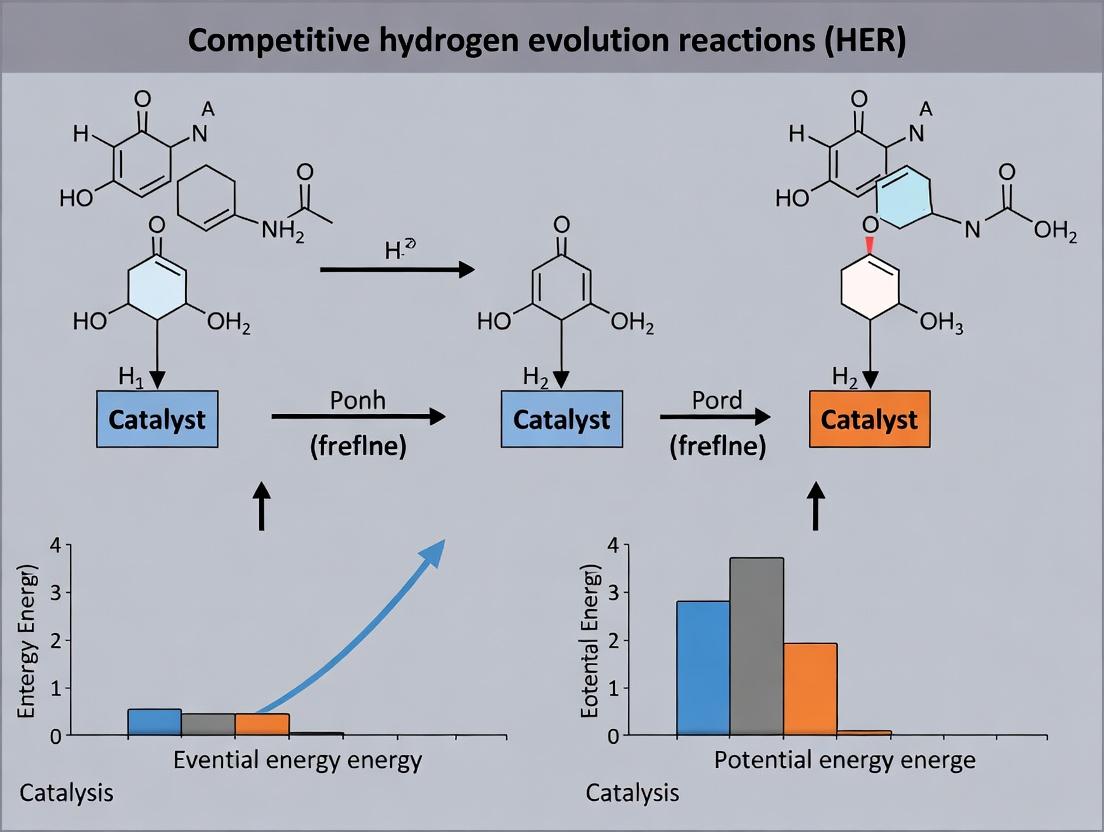
This comprehensive review analyzes the complex challenge of competitive Hydrogen Evolution Reactions (HER) in non-aqueous electrochemical systems, a critical barrier for energy storage and conversion technologies.
Competitive Hydrogen Evolution Reactions in Electrochemical Systems: A 2024 Guide for Materials Scientists and Energy Researchers
Abstract
This comprehensive review analyzes the complex challenge of competitive Hydrogen Evolution Reactions (HER) in non-aqueous electrochemical systems, a critical barrier for energy storage and conversion technologies. We first establish the foundational electrochemistry of parasitic HER, explaining its detrimental impact on coulombic efficiency and device longevity. The article then details current methodological approaches for detecting, quantifying, and suppressing HER, including advanced in situ characterization and electrolyte engineering. A dedicated troubleshooting section addresses common experimental pitfalls and optimization strategies for catalyst and interface design. Finally, we present a comparative validation framework for assessing HER mitigation strategies, evaluating recent breakthroughs in catalyst selectivity and system design. This guide provides researchers and development professionals with a holistic, up-to-date toolkit for advancing efficient electrochemical systems by controlling competitive side-reactions.
Understanding the Competitive HER Landscape: Fundamentals, Thermodynamics, and Impact on Electrochemical Systems
Introduction: In electrochemical research targeting reactions like CO2 reduction (CO2RR) or nitrogen reduction (NRR), the Hydrogen Evolution Reaction (HER) is a ubiquitous competing side reaction. This "Competitive HER" severely limits the Faradaic efficiency, selectivity, and practical viability of these value-added synthesis processes. It constitutes a major research challenge because the thermodynamic potential for HER is often close to or overlaps with that of the desired reaction, and proton reduction kinetics are typically fast. Overcoming it requires precise control of the electrocatalyst's surface properties, the local microenvironment, and mass transport.
Troubleshooting Guides & FAQs
Q1: My CO2 reduction electrocatalyst shows a sudden, irreversible drop in Faradaic efficiency for C2+ products and a corresponding HER increase after 10 hours of operation. What happened? A: This is likely due to catalyst surface reconstruction or poisoning.
- Check: Perform post-mortem X-ray photoelectron spectroscopy (XPS) to check for changes in oxidation state and surface composition. Use scanning electron microscopy (SEM) to look for morphological changes (e.g., agglomeration, dissolution).
- Solution: Consider using a more robust catalyst support (e.g., doped carbon vs. pure metal). Introduce a pulsed electrolysis protocol to allow surface relaxation and mitigate accumulation of poisoning intermediates.
Q2: During nitrogen reduction experiments, I cannot distinguish between produced NH3 and possible contaminant ammonia from lab air or reagents. How do I troubleshoot this? A: Contamination is a critical issue in NRR where yields are low.
- Check: Implement a strict control experiment using isotopically labeled ( ^{15}N2 ) gas as the feed. Use Nuclear Magnetic Resonance (NMR) spectroscopy to detect ( ^{15}NH4^+ ).
- Protocol - ( ^{15}N2 ) Control Experiment:
- Thoroughly purge your electrochemical cell with Argon.
- Switch the feed gas to purified ( ^{15}N2 ) (≥99% isotopic purity) for the duration of the experiment.
- After electrolysis, collect the electrolyte and process it for NMR analysis.
- Prepare the sample by adding a small amount of D2O and an internal standard.
- Analyze via ( ^{1}H )-NMR. A doublet from ( ^{15}NH4^+ ) (due to ( ^{15}N )-( ^{1}H ) J-coupling) confirms NRR, distinguishing it from ( ^{14}NH4^+ ) contamination which shows a triplet.
Q3: The measured HER activity of my catalyst varies dramatically between different electrolyte batches. What's the source of this inconsistency? A: Trace metal impurities (e.g., Fe, Ni, Pb) in the electrolyte are a common culprit.
- Check: Analyze your electrolyte (e.g., KOH, KHCO3 solution) by Inductively Coupled Plasma Mass Spectrometry (ICP-MS).
- Solution: Always use high-purity electrolytes (≥99.99%). Implement a pre-electrolysis purification step using a sacrificial electrode (e.g., a high-purity Hg pool or a large-surface-area Ni foam) at a moderate overpotential for 24-48 hours to deposit out reducible metal impurities before introducing your working electrode.
Q4: My selectivity data seems highly sensitive to the reference electrode placement. Why? A: This indicates a significant uncompensated solution resistance (iR drop), which distorts the true potential at the working electrode, skewing selectivity data between HER and the target reaction.
- Check: Measure your cell's solution resistance using electrochemical impedance spectroscopy (EIS) at open circuit potential.
- Solution: Use a Luggin capillary to position the reference electrode tip close to the working electrode surface. Always apply positive-feedback iR compensation if your potentiostat supports it, and report the compensation level used.
Table 1: Representative Faradaic Efficiencies (FE) and HER Competition
| Target Reaction | Catalyst Material | FE (Target Product) | FE (H2) | Key Operating Condition | Ref. Year |
|---|---|---|---|---|---|
| CO2 to Ethylene | Oxide-derived Cu | 57% | ~30% | -1.2 V vs. RHE, 1M KOH | 2023 |
| CO2 to Methanol | Cu-ZnO/SiO2 | 17.4% | ~75% | -0.9 V vs. RHE, 0.3M KHCO3 | 2024 |
| N2 to Ammonia | Au nanorods | 32% (at low current) | ~65% | -0.5 V vs. RHE, 0.1M LiClO4 | 2023 |
| Benchmark | Pt/C | N/A | >95% | Acidic conditions | - |
Table 2: Common Electrolyte Effects on Competitive HER
| Electrolyte | pH | Typical Use Case | Pro-HER Factor | Mitigation Strategy |
|---|---|---|---|---|
| 0.5 M H2SO4 | ~0.7 | Acidic CO2RR/NRR | High [H+] | Use low-overpotential, HER-inactive catalysts (e.g., Pb, Hg). |
| 0.1 M KHCO3 | 6.8 | Near-neutral CO2RR | Buffer equilibrium (CO2/HCO3-) | Tune local pH with microstructured electrodes. |
| 1.0 M KOH | 14 | Alkaline CO2RR/NRR | Low [H+], but fast H2O dissociation | Engineer catalysts to suppress H* adsorption. |
Experimental Protocol: Assessing HER Competition in CO2RR
Title: Standard 3-Electrode H-Cell Test for CO2RR with Product Analysis
Materials:
- Potentiostat/Galvanostat
- H-type electrochemical cell with Nafion membrane separator.
- Working Electrode: Catalyst-coated gas diffusion layer (e.g., Sigracet 39BB).
- Counter Electrode: Pt mesh or graphite rod (in anodic chamber).
- Reference Electrode: Reversible Hydrogen Electrode (RHE) in the cathodic chamber, connected via Luggin capillary.
- High-purity CO2 gas (≥99.999%) with in-line gas purifier.
- 0.5 M KHCO3 electrolyte, pre-electrolyzed.
Method:
- Cell Assembly & Purge: Fill both chambers with electrolyte. Assemble cell ensuring no leaks. Sparge the catholyte with CO2 for at least 30 minutes to saturate it.
- Electrochemical Setup: Connect the three electrodes to the potentiostat. Place the cell in a temperature-controlled bath (e.g., 25°C).
- Controlled Potential Electrolysis: Apply the desired cathodic potential (e.g., from -0.5 to -1.2 V vs. RHE). Maintain vigorous CO2 bubbling in the catholyte headspace throughout.
- Gas Product Analysis: The outlet gas stream is directed to an online Gas Chromatograph (GC) equipped with a Thermal Conductivity Detector (TCD) and a Flame Ionization Detector (FID). Analyze gas composition (H2, CO, CH4, C2H4, etc.) at regular intervals (e.g., every 15-30 min). Quantify using calibrated peak areas.
- Liquid Product Analysis: After electrolysis, analyze the catholyte via ( ^{1}H )-NMR for formate, acetate, alcohols, etc., using an internal standard (e.g., DMSO).
- Calculation: Faradaic Efficiency (FE) for product i is calculated as: FEi (%) = (z * F * ni) / (Qtotal) * 100%, where *z* is moles of electrons per mole product, *F* is Faraday's constant, *ni* is moles of product, and Q_total is total charge passed.
Visualizations
Diagram 1: Competitive HER at a Catalyst Surface
Diagram 2: HER Troubleshooting Workflow
The Scientist's Toolkit
Table 3: Research Reagent Solutions for Competitive HER Studies
| Item | Function & Importance |
|---|---|
| High-Purity Isotope Gases (¹³CO₂, ¹⁵N₂) | Critical for verifying product origin and ruling out contamination via isotopic tracing (e.g., NMR, MS). |
| Nafion Membranes (e.g., 117, 115) | Separates anodic and cathodic compartments in H-cells to prevent product crossover, crucial for accurate quantification. |
| Gas Diffusion Electrodes (GDEs) | Porous, conductive backings (e.g., carbon paper) that enable high-current gas-fed electrolysis by improving mass transport of CO2/N2. |
| Reversible Hydrogen Electrode (RHE) | Essential reference electrode for reporting potentials in a pH-independent manner, allowing cross-study comparison. |
| Online Micro-GC System | Enables real-time, quantitative analysis of gaseous products (H2, CO, hydrocarbons) during electrolysis for dynamic FE calculation. |
| Deuterated Solvents for NMR (e.g., D₂O) | Required for accurate quantitative ¹H-NMR analysis of liquid-phase products (formate, acetate, ammonia, alcohols). |
Technical Support Center: Troubleshooting Guides & FAQs for HER Experiments
Frequently Asked Questions (FAQs)
Q1: My measured HER overpotential is significantly higher than literature values for the same catalyst in acidic media. What could be the cause? A: This common issue often stems from uncompensated solution resistance (iR drop). Ensure your electrochemical cell uses a Luggin capillary positioned correctly (~2 mm from the working electrode) to minimize resistance. Always perform iR compensation (e.g., 85%) via your potentiostat's software or manually post-experiment. Verify your reference electrode potential and check for catalyst poisoning from trace impurities.
Q2: How do I distinguish whether the Heyrovsky or Tafel step is the rate-determining step (RDS) in my system? A: Analyze Tafel slopes from polarization curves. In acidic media:
- Volmer-limited (120 mV/dec): Slow discharge step.
- Heyrovsky-limited (40 mV/dec): Fast electrochemical desorption.
- Tafel-limited (30 mV/dec): Fast chemical recombination. Deviations occur in non-aqueous or high-pH media. Use kinetic isotope experiments (H₂O vs. D₂O) and varying proton concentrations to further deconvolute.
Q3: I observe unstable current during chronoamperometry for HER in alkaline electrolyte. What should I check? A: Instability often indicates catalyst restructuring, bubble adhesion, or pH drift.
- Bubble Adhesion: Use pulsed or rotating disk electrode (RDE) methods to dislodge H₂ bubbles. Ensure adequate stirring.
- Catalyst Stability: Perform post-experiment SEM/XPS to check for dissolution or morphological change.
- Electrolyte Purity: Use high-grade KOH/NaOH and pre-clean electrodes to avoid organic contamination.
- Reference Electrode: Confirm it is stable in alkaline conditions (e.g., Hg/HgO).
Q4: What are the critical controls for comparing HER activity across different media (aqueous, non-aqueous, biological)? A: Standardize these parameters:
- Reference Scale: Report all potentials vs. RHE (Reversible Hydrogen Electrode) for the specific pH/medium. Calculate using an internal reference (e.g., Fc⁺/Fc).
- Mass Transport: Use identical RDE speeds or flow-cell conditions.
- Catalyst Loading: Normalize by both geometric area and electrochemically active surface area (ECSA).
- Solution Resistance: Report fully iR-compensated data.
Experimental Protocols
Protocol 1: Determining the Rate-Determining Step via Tafel Analysis Objective: To derive the Tafel slope and identify the likely RDS for HER on a given electrode. Materials: Potentiostat, 3-electrode cell (Working: catalyst on glassy carbon, Counter: Pt wire, Reference: Ag/AgCl), 0.5 M H₂SO₄ or 1.0 M KOH, high-purity N₂ or Ar gas. Procedure:
- Purge electrolyte with inert gas for 30 min.
- Perform cyclic voltammetry (CV) at 50 mV/s in a non-Faradaic region to determine double-layer capacitance (Cdl) for ECSA estimation.
- Record a linear sweep voltammetry (LSV) curve from 0.1 V to -0.5 V vs. RHE at a slow scan rate (2-5 mV/s) under continuous stirring.
- iR-compensate the LSV data.
- Plot the overpotential (η) vs. log|current density| (log|j|). The linear region is the Tafel plot.
- Fit the linear region: slope = (2.3RT)/(αF) where α is the transfer coefficient. Compare the experimental slope to theoretical values.
Protocol 2: Kinetic Isotope Effect (KIE) Measurement for HER Mechanism Objective: To probe the involvement of H-O bond breaking in the Volmer step. Materials: Same as Protocol 1, with electrolytes prepared in H₂O and D₂O. Procedure:
- Prepare identical 0.5 M H₂SO₄ solutions in H₂O and D₂O.
- For each electrolyte, perform the LSV measurement as in Protocol 1.
- At a fixed overpotential (e.g., η = 200 mV), extract the current densities jH and jD.
- Calculate the KIE as jH / jD. A KIE > 2 suggests the Volmer step (H₃O⁺ + e⁻ → H*ads + H₂O) is partially or fully rate-limiting.
Data Presentation
Table 1: Theoretical Tafel Slopes and Transfer Coefficients for HER Mechanisms in Acidic Media
| Mechanism Step (RDS) | Reaction Sequence | Tafel Slope (mV/dec) | Transfer Coefficient (α) |
|---|---|---|---|
| Volmer-limited | H₃O⁺ + e⁻ → H*ads + H₂O (slow) | ~120 | 0.5 |
| Heyrovsky-limited | H*ads + H₃O⁺ + e⁻ → H₂ + H₂O (slow) | ~40 | 1.5 |
| Tafel-limited | 2H*ads → H₂ (slow) | ~30 | 2.0 |
Table 2: Essential Research Reagent Solutions for HER Studies
| Reagent / Material | Function & Critical Notes |
|---|---|
| High-Purity N₂/Ar (99.999%) | Electrolyte deoxygenation to remove O₂ interference. Must be passed through a catalytic scrubber. |
| Ultrapure H₂SO₄ or KOH | Standard acidic/alkaline electrolyte. Trace metal impurities can poison catalysts. Use ≥99.99% grade. |
| Nafion Perfluorinated Resin | Binder for catalyst inks. Use 0.5% wt in lower aliphatic alcohols. Can affect proton transport. |
| Potassium Ferricyanide K₃[Fe(CN)₆] | Redox probe for measuring electrode active area and checking cell setup. |
| Platinum Counter Electrode | Inert counter electrode. Must be cleaned by flaming or cycling in H₂SO₄ before use. |
| Hydrogen Reference Electrode (RHE) | In-situ reference. Can be made by bubbling H₂ over a Pt wire in the same electrolyte. |
Visualizations
Title: Volmer-Heyrovsky-Tafel HER Mechanism Pathways
Title: Workflow for Tafel Analysis to Determine HER RDS
Technical Support Center
Troubleshooting Guide: Common HER Interference Issues
Issue 1: Sudden Drop in Coulombic Efficiency (CE)
- Problem: Measured CE for your primary reaction (e.g., CO2 reduction, N2 fixation) has dropped significantly (>10%) from baseline.
- Diagnosis: Likely indicates a rampant competing Hydrogen Evolution Reaction (HER). This consumes electrons/protons, lowering your target product yield.
- Troubleshooting Steps:
- Check Electrolyte pH: A shift towards high acidity or alkalinity can favor HER. Re-measure and adjust to your protocol's specified value.
- Verify Catalyst Surface: Analyze used catalyst via SEM/EDS for morphological changes or deposition of impurities (poisons).
- Test for Contaminants: Run a blank experiment (no substrate) to see if HER current persists. If high, your electrolyte or cell components may be contaminated with metal ions (e.g., Zn²⁺, Ni²⁺) that plate out and form HER-active sites.
- Re-calibrate Reference Electrode: An inaccurate potential can shift your operating point into a region thermodynamically favorable for HER.
Issue 2: Catalyst Deactivation and Poisoning
- Problem: Current density and product selectivity degrade over successive experimental cycles.
- Diagnosis: Catalyst poisoning or reconstruction specifically promoting HER.
- Troubleshooting Steps:
- Identify the Poison: Common poisons include:
- Sulfur-containing species (e.g., from electrolyte salts or impurities): Irreversibly adsorb to precious metal sites.
- Carbon monoxide (CO): A byproduct of many reduction reactions, it blocks active sites.
- Organic cationic surfactants: Used in catalyst synthesis, residual traces can block pores.
- Implement Pre-cleaning: Add an oxidative potential step (e.g., holding at +1.2 V vs. RHE for 60s in clean electrolyte) to desorb organic poisons before each run.
- Switch to Ultra-Pure Reagents: Use electrolytes specifically designed for electrocatalysis (e.g., ≤ 1 ppb metal content).
- Identify the Poison: Common poisons include:
Issue 3: System-Level Performance Degradation
- Problem: Overall reactor performance (conversion rate, stability) declines over time (tens of hours).
- Diagnosis: HER-induced side effects causing systemic failure.
- Troubleshooting Steps:
- Check Membrane Integrity: Sustained local pH changes from HER can degrade polymer membranes (e.g., Nafion), causing crossover and short-circuiting. Inspect for physical damage.
- Monitor Gas Composition: Use inline gas chromatography (GC). A steadily increasing H₂ fraction in the product gas is a direct indicator of escalating HER.
- Inspect for Metal Deposition: HER can alter local pH, causing precipitation of metal hydroxides (from reactor hardware) onto electrodes. Disassemble and inspect.
Frequently Asked Questions (FAQs)
Q1: How can I definitively prove HER is my main competing reaction? A1: Use a combination of techniques:
- Gas Chromatography (GC): Quantify H₂ in your headspace.
- Calculated vs. Measured Charge: Compare the total charge passed to the charge accountable for your target product(s). A large deficit suggests HER.
- Isotope Labeling: Use D₂O in your electrolyte. Detection of HD or D₂ via mass spectrometry confirms protons are sourced from the electrolyte for HER.
Q2: My catalyst is supposed to be HER-inert, but I'm still seeing H₂. Why? A2: "HER-inert" is often conditional. Consider:
- Edge/Defect Sites: Your synthesis may create unexpected active sites.
- In-situ Reduction: Your catalyst material may be reducing to a HER-active form under operating potential.
- Support Material Interference: Your carbon or oxide support might contain trace metal impurities that become active.
Q3: What are the most common, overlooked sources of HER-poisoning contaminants? A3:
- Reference Electrode Filling Solution: KCl leakage can introduce Cl⁻, which poisons many metal catalysts.
- PTFE Tape: Used for sealing, it can decompose at high overpotentials, releasing fluorinated carbon species.
- Water Purification System: Old cartridges or storage tanks can leach ions. Always use fresh, >18 MΩ·cm water.
Q4: How do I calculate the true economic cost of HER in my system? A4: You must account for:
- Lost Feedstock Cost: Value of electrons/protons diverted to H₂ instead of your target product.
- Separation Cost: Energy and capital cost to separate H₂ from your product stream.
- Catalyst Lifetime Cost: HER-induced degradation shortens catalyst lifetime, increasing $/kg-product.
Table 1: Quantitative Impact of Common Poisons on HER Overpotential and CE Loss
| Poison Source | Typical Concentration Observed | Δ Overpotential for HER (mV) | Typical CE Loss for CO2RR (%) | Remediation Action |
|---|---|---|---|---|
| CO (from reaction) | 10-100 ppm in electrolyte | -50 to -150* | 15-40 | Periodic anodic pulses |
| Sulfide (S²⁻) | 1-10 µM | -200 to -500 | 50-90 | Use sulfide-scavenging electrolytes |
| Lead (Pb²⁺) | 0.1-1 ppm | -300 to -600 | 60-95 | Ultra-pure salts, chelating resin |
| Organic Surfactant | Monolayer coverage | -100 to -300 | 20-50 | Solvent Soxhlet extraction |
*Negative Δη indicates HER is easier (occurs at lower overpotential), worsening competition.
Table 2: Key Research Reagent Solutions for HER Mitigation Studies
| Reagent/Material | Function | Key Consideration for HER Research |
|---|---|---|
| Deuterium Oxide (D₂O) | Isotopic tracer for confirming HER via MS detection of D₂/HD. | Ensure electrochemical cell is sealed to prevent H₂O back-exchange. |
| Metal Scavenger Resins (e.g., Chelex 100) | Removes trace transition metal ions from electrolytes. | Must be used in pre-treatment; resin can introduce organic leachates. |
| High-Purity Salts (e.g., "for electrocatalysis" grade) | Minimizes introduction of HER-active metal impurities (Fe, Ni, Co). | Significantly more expensive than standard analytical grade. |
| Single-Chamber Micro-reactor | Allows rapid product quantification (e.g., via inline GC) to calculate real-time CE. | Gas diffusion electrode configuration may differ from your H-cell. |
Experimental Protocol: Quantifying HER Contribution and Catalyst Poisoning
Title: Chronopotentiometry and Post-Mortem Analysis for HER Interference
Objective: To operate an electrochemical system under target conditions, quantify HER via gas analysis, and identify catalyst poisoning.
Materials:
- Potentiostat/Galvanostat
- Air-tight H-cell or flow reactor
- Gas Chromatograph (GC) with TCD detector
- Working Electrode (your catalyst on substrate)
- Counter Electrode (Pt mesh or carbon rod)
- Reference Electrode (e.g., Ag/AgCl)
- High-purity electrolyte (e.g., 0.1 M KHCO₃, purified with Chelex)
- Online mass spectrometer (optional, for isotope studies)
Methodology:
- Cell Preparation: Assemble the cell with fresh electrolyte. Purge with inert gas (Ar, N₂) for 30 minutes to remove dissolved O₂.
- Baseline HER Test: Apply your target current density/voltage to the system with no reactive substrate (e.g., no CO₂). Quantify H₂ produced via GC over 30 minutes. This establishes the "background HER" from the catalyst/support/electrolyte.
- Main Experiment: Introduce your substrate (e.g., CO₂). Operate at your target conditions for a set duration (e.g., 2 hours). Sample headspace gas every 15 minutes for GC analysis to quantify both target products and H₂.
- Coulombic Efficiency Calculation:
- CEproduct = (n * F * molesproduct) / (total charge) * 100%
- CEH₂ = (2 * F * molesH₂) / (total charge) * 100%
- Total CE (CEproduct + CEH₂) should be ~100% in a well-controlled system. A lower total CE indicates unmeasured products or system error.
- Post-Mortem Analysis:
- Carefully disassemble the cell.
- Rinse the working electrode gently with deionized water and dry under inert gas.
- Analyze the catalyst surface using techniques such as XPS (for chemical state and poisons like S, Cl), and SEM/EDS (for morphological changes and impurity deposition).
Visualizations
Diagram 1: HER Impact on System Efficiency
Diagram 2: Troubleshooting Catalyst Poisoning Workflow
Technical Support Center: Troubleshooting Competitive HER in Electrochemical Systems
Frequently Asked Questions (FAQs)
Q1: In my CO2RR experiment, I am detecting only H2 and negligible CO or other hydrocarbons. What is the primary cause and how can I mitigate it? A: This indicates the Hydrogen Evolution Reaction (HER) is dominating. Primary causes and solutions:
- Cause: Low local CO2 concentration at the catalyst surface.
- Solution: Increase CO2 gas flow rate or use a gas diffusion electrode (GDE) to enhance mass transfer. Use a pressurized reactor.
- Cause: Electrolyte pH is too low (acidic), favoring H+ reduction.
- Solution: Switch to a neutral or alkaline electrolyte (e.g., KHCO3, KOH) to suppress free H+ concentration.
- Cause: Catalyst has high inherent HER activity (e.g., Pt-group metals).
- Solution: Use a catalyst selective for CO2RR, such as oxide-derived Cu, Au (for CO), or Sn (for formate). Employ bimetallic alloys or molecular catalysts.
Q2: During NRR testing in aqueous electrolyte, the detected ammonia yield is extremely low and comparable to contamination levels. How do I confirm genuine NRR activity and suppress HER? A: This is a critical challenge. Follow this protocol:
- Isotope Labelling: Perform control experiments using ^15^N2 as the feed gas. Detection of ^15^NH3 via NMR or mass spectrometry is the gold standard for confirming NRR.
- Rigorous Contamination Control: Thoroughly clean the cell, use high-purity electrolytes, and implement strict protocols to exclude environmental ammonia.
- Catalyst Design & Electrolyte Engineering: Use Lewis acidic catalysts (e.g., Bi, Ru) that can activate N2. Employ hydrophobic coatings or ionic liquid-based electrolytes to limit water access to the active site, thereby suppressing HER.
Q3: My zinc-air battery shows high overpotential and poor rechargeability. Could HER or related parasitic reactions be a factor? A: Yes, especially in the charging (oxygen evolution) phase and at the Zn anode.
- At the Air Cathode: Inefficient OER catalysts lead to high charging voltages, which can induce water splitting and HER at the cathode, degrading the electrode.
- At the Zn Anode: Local pH shifts during cycling can promote HER on the Zn surface, leading to hydrogen gas evolution, shape change, and reduced coulombic efficiency.
- Mitigation: Use stable bifunctional catalysts (e.g., Co3O4/N-doped carbon composites) for ORR/OER. Implement anode surface modifications or electrolyte additives (e.g., Bi2O3, In2O3) to increase the HER overpotential on Zn.
Q4: What are the best practices for accurately measuring Faradaic Efficiency (FE) for CO2RR/NRR in the presence of significant HER? A: Accurate product quantification is key.
- Gas Products (H2, CO, CH4, C2H4): Use online gas chromatography (GC) with a thermal conductivity detector (TCD) and a flame ionization detector (FID). Calibrate with standard gas mixtures.
- Liquid Products (Formate, Alcohols, NH3): Use High-Performance Liquid Chromatography (HPLC), NMR, or colorimetric assays (e.g., indophenol blue method for NH3).
- Calculation: Ensure all detectable products are quantified. FE = (n * F * C) / Q * 100%, where n is electrons per mole product, F is Faraday constant, C is moles of product, and Q is total charge passed.
Experimental Protocols
Protocol 1: Assessing HER Suppression in CO2RR using a Gas Diffusion Electrode (GDE) Objective: To achieve high current densities for CO2RR by improving CO2 transport and suppressing HER.
- Catalyst Ink Preparation: Disperse 5 mg of catalyst (e.g., Ag nanoparticles for CO) in 950 µL of isopropanol and 50 µL of 5% Nafion solution. Sonicate for 30 mins.
- GDE Fabrication: Spray-coat the ink onto a hydrophobic carbon paper (e.g., Sigracet 39BB) with a loading of 0.5-1.0 mg cm⁻².
- Electrochemical Testing: Use a flow cell configuration. The GDE is placed so the catalyst layer faces the electrolyte (1M KOH) and the carbon paper backing faces the CO2 gas chamber.
- Conditions: Apply controlled potentials vs. RHE. Continuously flow CO2 (20 sccm) to the back of the GDE and electrolyte across the front.
- Product Analysis: Direct the outlet gas to online GC for analysis every 10-15 minutes.
Protocol 2: ^15^N2 Isotope Labeling Experiment for NRR Validation Objective: To unequivocally confirm the electrochemical reduction of N2 to NH3.
- Cell Preparation: Use an H-type cell separated by a Nafion membrane. Perform extreme cleaning (acid/base washes, DI water).
- Gas Purging: Purge the cathode compartment with high-purity ^15^N2 gas (99.9% isotopic purity) for at least 60 minutes to remove all ^14^N2 and air.
- Electrolysis: Perform potentiostatic electrolysis at the desired potential for 2-6 hours while continuously bubbling ^15^N2.
- NH3 Collection & Analysis: After electrolysis, collect the electrolyte from the cathodic chamber. Use the indophenol blue method with a ^14^NH4Cl standard curve to determine total ammonia concentration. Confirm the presence of ^15^NH3 using ¹H NMR (with a spin-coupling method) or by converting NH3 to N2 and analyzing via mass spectrometry.
Data Presentation
Table 1: Common Catalysts & Selectivity for CO2RR vs. HER
| Catalyst Material | Primary CO2RR Product | Typical FE for Product (%) | Dominant Reaction at Low Overpotential | Key Suppression Strategy |
|---|---|---|---|---|
| Polycrystalline Cu | C2H4, CH4, alcohols | 40-60% (C2H4) | HER at low | Use oxide-derived Cu, control morphology |
| Au nanoparticles | CO | >90% | CO2RR | Highly selective, stable in alkaline media |
| Sn oxide (SnO2) | Formate (HCOO⁻) | 70-85% | HER at low | Maintain Sn in oxidized state |
| Pt nanoparticles | H2 | >99% | HER | Not suitable for CO2RR |
Table 2: Electrolyte Effects on HER Competition in NRR
| Electrolyte Type | Example | HER Activity | NRR Feasibility | Rationale |
|---|---|---|---|---|
| Aqueous Acidic | H2SO4 | Very High | Very Low | High [H+] drives HER. NRR protonation is difficult. |
| Aqueous Neutral | LiClO4, Na2SO4 | Moderate | Low | Limited protons, but mass transfer of N2 is poor. |
| Aqueous Alkaline | KOH | Low (on some catalysts) | Moderate | Low [H+], but OH⁻ can poison catalysts. |
| Ionic Liquid | EMIM-BF4 | Very Low | High | Suppresses H2O activity, stabilizes N2 intermediate. |
| Organic Aprotic | Acetonitrile | Low | High | No proton source, but conductivity and cell design are challenges. |
Visualizations
Diagram 1: Key Pathways in Electrochemical Reduction Systems
Diagram 2: Experimental Workflow for NRR Validation
The Scientist's Toolkit: Key Research Reagent Solutions
| Item | Function & Role in HER Suppression |
|---|---|
| Gas Diffusion Electrode (GDE) | Porous electrode that enables high flux of gaseous reactants (CO2, N2) to the catalyst, increasing their local concentration relative to H+/H2O to favor CO2RR/NRR over HER. |
| Ionic Liquids (e.g., EMIM-BF4) | Serve as co-catalyst or electrolyte; can suppress HER by forming a protective double layer, stabilizing reaction intermediates (like *N2), and reducing water activity. |
| Isotopically Labelled ^15N2 Gas | The definitive standard for confirming N2 reduction. Allows researchers to distinguish electrochemically produced NH3 from environmental contamination, a critical step in credible NRR research. |
| Nafion Membrane (e.g., Nafion 117) | Cation exchange membrane used in divided cells. It prevents crossover of products (e.g., O2 from anode) but can allow H+ migration, affecting local pH. |
| High-Purity Alkaline Electrolyte (KOH, KHCO3) | Shifts the proton source from H+ to H2O, increasing the thermodynamic barrier for HER and favoring pathways that involve proton-coupled electron transfer to CO2 or N2. |
| Metal Salt Additives (e.g., Bi(III), In(III)) | Used in Zn-air batteries. They can alloy with or adsorb on the Zn anode, increasing the overpotential for HER and reducing parasitic hydrogen evolution during charging. |
Troubleshooting Guide & FAQs
Q1: Why is my measured onset potential for HER significantly more negative than the literature value for my catalyst? A: This discrepancy is often due to uncompensated resistance (R_u) or incorrect reference electrode calibration.
- Check: Measure your electrolyte's conductivity. Use electrochemical impedance spectroscopy (EIS) to determine R_u in your cell setup.
- Solution: Apply iR compensation (typically 85-95%) to your potentiostat settings. Always confirm your reference electrode potential vs. RHE (Reversible Hydrogen Electrode) in the specific experimental electrolyte using a reversible redox couple (e.g., Fc⁺/Fc).
Q2: How do I distinguish the Volmer, Heyrovsky, and Tafel step contributions in my HER kinetics? A: Analyze the Tafel slope and its dependence on pH and overpotential (η).
- Diagnostic Table:
Tafel Slope (mV/dec) Rate-Determining Step (RDS) pH Dependence? ~120 Volmer (discharge step: H⁺ + e⁻ → H) Strong ~40 Heyrovsky (electrochemical desorption: H + H⁺ + e⁻ → H₂) Moderate ~30 Tafel (recombination: 2H* → H₂) None - Protocol: Record a series of steady-state polarization curves (cyclic voltammetry at slow scan rates, e.g., 1-5 mV/s) across a pH range (e.g., 1-13). Extract the Tafel slope from the linear region of the log(j) vs. η plot for each condition.
Q3: My cyclic voltammograms show unstable features during HER; what could be causing this? A: This often indicates catalyst instability, surface restructuring, or competing reactions.
- Troubleshooting Steps:
- Check for Bubbling: Excessive H₂ bubble adhesion can block the active surface, causing current oscillations. Use sonication to clean the electrode and consider adding a surfactant (e.g., 0.1 mM SDS) to reduce bubble adhesion.
- Surface Contamination: Re-prepare your working electrode. For metal catalysts, perform standard cleaning protocols (e.g., flame annealing for Pt, electropolishing).
- Potential Window: Ensure you are not exceeding the catalyst's electrochemical stability window. Perform control experiments on the substrate alone.
Q4: How can I spectroscopically identify adsorbed hydrogen (H*) or other intermediates during HER? A: In-situ or operando spectroscopic techniques are required.
- Key Methodologies:
- In-Situ Raman or FTIR: Can detect surface-adsorbed species (e.g., M-H bonds) under potential control.
- Electrochemical Mass Spectrometry (EC-MS): Directly quantifies gaseous H₂ product and can detect volatile intermediates.
- Differential Electrochemical Mass Spectrometry (DEMS) Protocol:
- Use a porous catalyst-coated electrode.
- Place it in a dual-chamber cell separated by a membrane from the MS inlet.
- Apply a linear potential sweep while continuously monitoring the mass signal for H₂ (m/z = 2).
- Correlate the onset of H₂ detection with the applied potential to identify the true onset of HER, free from capacitive currents.
Data Presentation
Table 1: Benchmark HER Catalysts in Acidic and Alkaline Media
| Catalyst | Electrolyte (pH) | Overpotential @ 10 mA/cm² (mV) | Tafel Slope (mV/dec) | Stability (hours @ 10 mA/cm²) |
|---|---|---|---|---|
| Pt/C | 0.5 M H₂SO₄ (0.3) | ~30 | ~30 | >100 |
| Pt/C | 1.0 M KOH (14) | ~50 | ~40 | >100 |
| NiMo | 1.0 M KOH (14) | ~50 | ~40 | >50 |
| MoS₂ | 0.5 M H₂SO₄ (0.3) | ~200 | ~60 | >20 |
Table 2: HER Mechanism Diagnostic Indicators
| Experimental Observation | Likely Implication |
|---|---|
| Tafel slope changes with pH | RDS involves H⁺ (e.g., Volmer or Heyrovsky) |
| Tafel slope is pH-independent | RDS is chemical recombination (Tafel step) |
| H/D kinetic isotope effect (KIE) > 2 | Proton transfer is involved in the RDS |
| Current density scales with H⁺ concentration | Reaction order w.r.t H⁺ is 1 |
Experimental Protocols
Protocol 1: Standard Three-Electrode Setup for HER Measurement
- Cell Preparation: Use a gas-tight H-cell separated by a Nafion membrane. Purge the working electrode compartment with high-purity N₂ or Ar for at least 30 minutes.
- Electrode Preparation:
- Working Electrode: For powder catalysts, prepare an ink (5 mg catalyst, 950 µL solvent, 50 µL Nafion), sonicate, and drop-cast onto a glassy carbon electrode (loading: 0.2-0.5 mg/cm²).
- Counter Electrode: Pt wire or graphite rod.
- Reference Electrode: Calibrated Hg/HgO (alkaline) or Hg/Hg₂SO₄ (acidic) versus RHE.
- Data Acquisition: Record Linear Sweep Voltammetry (LSV) at 5 mV/s under continuous purging. Use slow scan rates to approximate steady-state conditions.
Protocol 2: Determining the Electrochemically Active Surface Area (ECSA)
- For Pt-based catalysts: Perform Cyclic Voltammetry (CV) in 0.5 M H₂SO₄ between 0.05 - 1.2 V vs. RHE at 50 mV/s. Integrate the charge in the hydrogen underpotential deposition (Hupd) region (0.05-0.4 V), subtract the double-layer charge. Use 210 µC/cm² as the conversion factor.
- For non-noble metals (e.g., Ni): Perform CV in a non-Faradaic potential window in your working electrolyte (e.g., -0.2 to +0.2 V vs. OCP). Measure the double-layer capacitance (Cdl) by plotting the current difference (Δj) at the center of the scan window against the scan rate. The slope is Cdl, proportional to ECSA.
Visualizations
Diagram 1: HER mechanistic pathways in acidic and alkaline media.
Diagram 2: Experimental workflow for HER signature analysis.
The Scientist's Toolkit: Research Reagent Solutions
| Item | Function in HER Experiments |
|---|---|
| High-Purity N₂/Ar Gas (99.999%) | To deoxygenate the electrolyte, preventing interference from the Oxygen Reduction Reaction (ORR). |
| Nafion Perfluorinated Resin Solution | Binder for catalyst inks; also used as a proton-conducting membrane in H-cells. |
| Reversible Hydrogen Electrode (RHE) | The ideal reference system for reporting potentials in HER studies, as it is pH-insensitive. In practice, a calibrated Hg/HgO or Ag/AgCl is used and converted. |
| Isotopically Labeled Water (D₂O) | Used for Kinetic Isotope Effect (KIE) studies to probe proton-coupled electron transfer steps. |
| Ferrocene/Ferrocenium (Fc⁺/Fc) Redox Couple | An internal standard for accurate calibration of the reference electrode potential to the RHE scale in any electrolyte. |
| Ionic Liquid Electrolytes (e.g., [BMMIM][OTf]) | Used to study HER in non-aqueous systems or to expand the electrochemical window for intermediate stability studies. |
| Surfactants (e.g., Sodium Dodecyl Sulfate, SDS) | Added in trace amounts (≤0.1 mM) to reduce hydrogen bubble adhesion on the electrode surface, ensuring stable current density. |
Strategies for HER Detection, Suppression, and Controlled Manipulation: 2024 Methodologies
Technical Support Center
Troubleshooting Guides & FAQs
1. Scanning Electrochemical Microscopy (SECM)
Q1: I observe unstable positive feedback currents when approaching a substrate for HER activity mapping. What could be the cause? A: This is often due to a contaminated or deactivated ultramicroelectrode (UME) tip. Hydrogen bubble formation and adsorption of intermediates (H*ads) can foul the Pt or Au tip surface.
- Solution: Implement a periodic cleaning protocol. Retract the tip and apply a high anodic potential pulse (+1.2 V vs. Ag/AgCl for 5-10s) in clean supporting electrolyte to oxidize adsorbed species. Regularly polish the UME with successive alumina slurries (down to 0.05 µm) if drift persists.
Q2: My SECM feedback images show poor spatial resolution and smeared features during operando HER scans. A: This is typically caused by excessive tip-substrate distance or scanning too fast for the kinetics.
- Solution:
- First, perform a precise approach curve on a known insulating area to establish d ≈ 1-2 tip radii.
- Reduce the scan rate. For HER on non-homogeneous electrocatalysts, use ≤ 2 µm/s.
- Ensure robust vibration isolation. Use a pneumatic isolation table and an acoustic enclosure.
2. Shell-Isolated Nanoparticle-Enhanced Raman Spectroscopy (SHINERS)
Q3: My SHINERS signal for adsorbed hydrogen (H*ads) or reaction intermediates is weak or absent during HER. A: This can result from poor “hot spot” generation, shell deterioration, or incorrect potential control.
- Solution:
- Verify Au-core@SiO2 shell integrity via TEM. A pinhole-free, 2-4 nm shell is critical for electrochemical stability.
- Optimize nanoparticle density on the working electrode. Aim for a sub-monolayer, densely packed coverage.
- Ensure the laser spot is focused precisely on the electrode surface in the electrochemical cell. Perform an in-situ CV with a probe molecule (e.g., pyridine) to confirm SERS activity before HER experiments.
Q4: The SHINERS background increases dramatically upon applying cathodic HER potentials, obscoring the spectral features. A: This is likely due to laser-induced hydrogen bubble formation on the SHINERS particles, causing severe light scattering.
- Solution:
- Significantly reduce laser power (e.g., to < 0.5 mW at the sample) to minimize local heating and bubble nucleation.
- Use a roughened but massive electrode (e.g., Au(111) single crystal bead) rather than a flat surface to minimize bubble adhesion.
- Employ a confocal configuration with a small pinhole to reject out-of-focus scattered light.
3. Online Electrochemical Mass Spectrometry (OLEMS)
Q5: The mass spectrometer signal for H₂ (m/z = 2) has a very long response time and is decoupled from the electrochemical current. A: This indicates poor transport efficiency from the electrode to the MS inlet, often due to a thick electrolyte layer or a blocked membrane interface.
- Solution:
- Minimize the gap between the working electrode and the PTFE/Teflon membrane of the inlet capillary (ideally < 50 µm). Use a thin-layer cell design.
- Check the membrane for wetting or damage. Ensure the vacuum side of the membrane is heated to prevent water condensation.
- Calibrate the delay time and response kinetics using a fast redox couple like ferricyanide/ferrocyanide before HER experiments.
Q6: During isotope labeling experiments (e.g., D₂O reduction), I detect significant crossover of H₂ (m/z=2) when measuring HD (m/z=3) or D₂ (m/z=4). A: This is caused by residual H₂O in the system or memory effects from previous experiments.
- Solution:
- Thoroughly flush the entire cell and electrolyte delivery system with dry, inert gas and the deuterated solvent for several hours.
- Implement a rigorous electrochemical pre-treatment protocol: cycle the working electrode in the pure deuterated electrolyte to reduce any trace H₂O.
- Use a dedicated cell for isotope studies to avoid cross-contamination.
Data Presentation: Key HER Metrics from Featured Techniques
| Technique | Measured Parameter | Typical Value Range | Information Gained |
|---|---|---|---|
| SECM | Tip Current (iT) Feedback | +0.5 to +5 x iT,∞ (positive) | Local electrocatalytic activity (H₂ generation rate) map. |
| SECM | Approach Curve Half-Radius (a) | 1-2 x tip radius (rg) | Determines tip-substrate distance (d) for imaging. |
| SHINERS | H*ads Vibration Band | ~ 2090-2020 cm⁻¹ (M-H stretch) | Identifies adsorption sites (on-top, bridge, hollow). |
| SHINERS | Band Intensity vs. Potential | ΔIntensity per 100 mV | Adsorption isotherm & coverage (θ) of key intermediates. |
| OLEMS | H₂ Calibration Constant (K) | 10⁶ - 10¹⁰ A·torr⁻¹ | Quantifies faradaic efficiency for H₂ production. |
| OLEMS | Response Time (τ) | 0.1 - 2.0 seconds | Kinetics of gas product evolution/transport. |
Experimental Protocols
Protocol 1: Operando SECM for Spatially-Resolved HER Activity Mapping
- Fabricate a Pt UME: Seal a 10 µm diameter Pt wire in a glass capillary, cut and polish to a smooth disk geometry.
- Prepare Catalyst Substrate: Drop-cast catalyst ink (e.g., MoS₂ nanosheets) onto a glassy carbon substrate. Characterize loading via SEM.
- SECM Setup: Assemble a 3-electrode cell in 0.5 M H₂SO₄ with the catalyst substrate as WE, Pt counter, and Ag/AgCl reference. Position the UME tip above the substrate.
- Approach Curve: Over an insulating region of the substrate, approach the tip at 0.1 µm/s while holding tip potential at +0.4 V (for mediator regeneration) and substrate at -0.1 V (no HER). Fit curve to theoretical model to determine tip-substrate distance (d).
- Activity Mapping: With tip at determined d, set substrate to HER potential (e.g., -0.3 V vs. RHE). Perform amperometric line scans or area scans at 1-2 µm/s. The tip current (iT) at +0.4 V, proportional to local H₂ flux, maps the HER activity.
Protocol 2: In Situ SHINERS for HER Intermediate Detection
- SHINs Synthesis: Prepare 60 nm Au nanoparticles via citrate reduction. Grow a 2 nm ultra-thin SiO₂ shell via a modified Stöber method with (3-aminopropyl)triethoxysilane (APTES). Confirm shell thickness by TEM.
- Electrode Modification: Drop a concentrated suspension of Au@SiO₂ SHINs onto a cleaned, roughened Au working electrode. Let dry to form a sub-monolayer.
- Spectroelectrochemical Cell: Use a three-electrode cell with a CaF₂ window. Fill with 0.1 M HClO₄. Position the modified WE near the window.
- Operando Measurement: Apply a constant potential (e.g., from 0 to -0.5 V vs. RHE) for HER. Acquire Raman spectra with a 632.8 nm laser at low power (<1 mW) and 10-20 s integration time per spectrum.
- Data Analysis: Subtract background spectra. Fit the bands in the 1800-2200 cm⁻¹ region to identify metal-hydride (M-H) stretches and track their intensity vs. applied potential.
Visualizations
Operando HER Characterization Workflow
Integrated Diagnosis for Competitive HER
The Scientist's Toolkit: Research Reagent Solutions
| Item | Function in HER Characterization | Critical Specification/Note |
|---|---|---|
| Pt Ultramicroelectrode (UME) | SECM tip for local H₂ oxidation feedback. | 10-25 µm diameter, RG (rglass/rPt) = 10 for optimal resolution. |
| Au@SiO2 Core-Shell Nanoparticles | SHINERS substrate for signal enhancement. | 60 nm Au core, 2-4 nm pinhole-free SiO₂ shell. |
| Hydrophobic PTFE Membrane | Interface for OLEMS, separates liquid cell from MS vacuum. | High porosity (~70%), 10-20 µm thickness, chemical inertness. |
| Deuterated Electrolyte (D₂O based) | For isotopic labeling in OLEMS/SHINERS. | 99.9% D atom purity, electrolyte salts dried to remove H₂O. |
| Ferrocenemethanol Redox Mediator | For SECM approach curve calibration. | 1 mM in inert electrolyte; provides known kinetics. |
| Perchloric Acid (HClO₄) Electrolyte | Preferred for SHINERS studies. | Low anion adsorption, minimal interference in Raman fingerprint region. |
Troubleshooting Guides & FAQs
Q1: I am observing unexpectedly high hydrogen evolution reaction (HER) rates in my aqueous electrolyte system, which is interfering with my target CO2 reduction reaction. What are the primary electrolyte-related factors to check?
A: Excessive HER in aqueous systems is often linked to pH, buffer capacity, and cation identity. First, verify your solution's bulk pH and local pH at the cathode surface. HER is favored at low pH. Even if bulk pH is neutral, local proton depletion for reactions like CO2R can cause local acidification. Check your buffer concentration; insufficient buffer capacity leads to large local pH swings. Second, consider the cation. Alkali metal cations (especially Li⁺, Na⁺, K⁺) adsorb differently on the cathode and can promote or suppress HER through field effects and water network structuring. For CO2R in neutral/alkaline conditions, large cations like Cs⁺ can suppress HER by stabilizing *CO2⁻ intermediates.
Q2: When switching from an aqueous to a non-aqueous (aprotic) solvent to suppress HER, I still detect significant H2. What could be the source of protons?
A: In nominally aprotic solvents, trace water is the most common proton source for HER. Commercially sourced "anhydrous" solvents (e.g., acetonitrile, DMSO, DMF) often contain ppm levels of water, which can be sufficient. Other proton sources include:
- Impurities in your electrolyte salt (e.g., LiPF₆ can decompose to HF).
- The solvent itself can act as a weak acid (e.g., DMF decomposition).
- Residual protic additives. Troubleshooting Protocol: Rigorously dry your solvent over molecular sieves. Use a coulometric Karl Fischer titrator to confirm water content (<20 ppm). Purity and dry your supporting electrolyte (e.g., by recrystallization or vacuum drying). Employ a sacrificial pre-electrolysis step with an auxiliary electrode to eliminate trace protic impurities before your main experiment.
Q3: How do I choose an additive specifically to suppress HER while maintaining the activity of my desired electrochemical conversion (e.g., N2 reduction, CO2 reduction)?
A: The mechanism of the additive is critical. Common strategies include:
- Cation Size Engineering: Using bulky cations (e.g., tetraalkylammonium) to form a hydrophobic cation layer that blocks water/proton access to the electrode.
- Proton Scavengers: Adding weak acids (e.g., phenol) to buffer pH but at a potential where they are not readily reduced, or compounds that react with active proton sources.
- Surface Modifiers: Additives that adsorb on the catalyst surface and selectively block HER active sites (e.g., derivatives of ionic liquids, thiols). The choice depends on your catalyst and target reaction's sensitivity to surface blocking. Experimental Protocol: Perform controlled potential electrolysis with varying additive concentrations (1-100 mM). Monitor H2 Faradaic Efficiency via gas chromatography and the target product's efficiency. Plot FE vs. concentration to identify the optimal suppression window before target reaction activity declines.
Q4: My anion choice (e.g., ClO₄⁻ vs. PF₆⁻ vs. BF₄⁻) seems to affect HER onset potential and reaction kinetics. Is this expected, and what is the mechanism?
A: Yes. Anions influence the interfacial electric field, specific adsorption, and the structure of the electrical double layer (EDL). Strongly adsorbing anions (e.g., Cl⁻, Br⁻) can modify the work function of the electrode and directly compete with water/proton adsorption sites, often shifting HER potential. Weakly coordinating anions (e.g., PF₆⁻, BF₄⁻) can lead to a different EDL structure and cation arrangement. The effect is system-specific (solvent, electrode material dependent). Diagnostic Experiment: Perform cyclic voltammetry in a non-aqueous, inert electrolyte (e.g., TBAPF₆ in acetonitrile) to establish a baseline. Then, add incremental amounts of a strong acid with a non-coordinating anion (e.g., HNTf₂). Repeat with acids containing different anions (e.g., HCl, H₂SO₄). Compare HER onset potentials and kinetics.
Table 1: Influence of Alkali Metal Cations on HER & CO2R Selectivity in Aqueous Electrolyte (0.1 M MHCO₃, on Ag Cathode)
| Cation (M⁺) | Ionic Radius (Å) | HER Faradaic Efficiency (%) at -1.0 V vs. RHE | CO Faradaic Efficiency (%) at -1.0 V vs. RHE | Approx. Local pH Shift at Cathode |
|---|---|---|---|---|
| Li⁺ | 0.76 | 85 | 12 | Large (Acidic) |
| Na⁺ | 1.02 | 65 | 32 | Moderate |
| K⁺ | 1.38 | 45 | 52 | Small |
| Cs⁺ | 1.67 | 28 | 68 | Minimal |
Table 2: Effect of Common Aprotic Solvents on HER from Trace Water (1.0 M H₂O, 0.1 M TBAPF₆, on Pt)
| Solvent | Dielectric Constant (ε) | HER Onset Potential (V vs. Fc/Fc⁺) | Practical Potential Window (V) | Common Protic Impurity Sources |
|---|---|---|---|---|
| Acetonitrile (MeCN) | 37.5 | -1.05 | ~6.0 | Acetamide, Ammonia |
| Dimethylformamide (DMF) | 38.3 | -1.15 | ~4.5 | Formic acid, Amines |
| Dimethyl Sulfoxide (DMSO) | 46.7 | -1.30 | ~4.0 | Water, DMSO decomposition |
| Propylene Carbonate (PC) | 64.4 | -1.25 | ~5.0 | Water, Glycols |
Experimental Protocols
Protocol 1: Assessing Local pH Buffering Capacity for HER Suppression
Objective: To determine the ability of a buffer system to maintain a stable local pH during electrolysis, thereby mitigating HER. Materials: Electrochemical cell, working electrode (e.g., glassy carbon), Pt counter electrode, reference electrode (e.g., Ag/AgCl), potentiostat, pH meter. Buffer Solutions: Prepare 0.1 M phosphate buffers at pH 6, 7, and 8. Also prepare unbuffered 0.1 M KCl solutions adjusted to the same pH values with KOH/HCl. Procedure:
- Place the working and reference electrodes in the cell filled with a test solution.
- Position a micro-pH electrode tip as close as possible (<1 mm) to the working electrode surface.
- Record the initial pH.
- Apply a constant current density relevant to your target reaction (e.g., -10 mA/cm²).
- Continuously monitor and record the pH near the electrode surface for 300 seconds.
- Repeat for all buffer and unbuffered solutions. Analysis: Plot pH vs. time. A robust buffer will show minimal pH drift (<0.5 units). The solution demonstrating the smallest drift at your target operational pH is optimal for HER suppression.
Protocol 2: Evaluating Tetraalkylammonium Salts as HER-Suppressing Additives
Objective: To systematically test the efficacy of (CₙH₂ₙ₊₁)₄N⁺ cations in suppressing H₂ evolution in non-aqueous CO2R. Materials: H-cell with gas-tight separation, CO2-saturated anhydrous MeCN, 0.1 M TBAPF₆ baseline electrolyte, CO2R catalyst electrode (e.g., polycrystalline Ag), Pt counter, Ag/Ag⁺ reference, potentiostat, gas chromatograph (GC). Procedure:
- Prepare a stock solution of 0.1 M TBAPF₆ in dry MeCN under CO2 atmosphere.
- Run controlled potential electrolysis (CPE) at -2.2 V vs. Ag/Ag⁺ for 1 hour. Quantify H₂ and CO production via GC. This is your baseline.
- To fresh electrolyte, add tetraethylammonium hexafluorophosphate (TEAPF₆) to a concentration of 0.01 M. Repeat CPE and GC analysis.
- Repeat step 3 with tetrabutylammonium hexafluorophosphate (TBAPF₆) at 0.01 M.
- Repeat step 3 with tetrahexylammonium hexafluorophosphate (THAPF₆) at 0.01 M. Analysis: Calculate Faradaic Efficiency (FE) for H₂ and CO. Plot FE(H₂) and FE(CO) vs. cation alkyl chain length. An effective suppressor will show a sharp drop in FE(H₂) with minimal reduction in FE(CO).
Diagrams
Title: Electrolyte Engineering Workflow for HER Suppression
Title: Interfacial Factors Modulating HER Activity
The Scientist's Toolkit: Essential Research Reagents
Table 3: Key Reagents for Electrolyte Engineering in HER Studies
| Reagent/Category | Example(s) | Primary Function in HER Modulation |
|---|---|---|
| Inert Supporting Salts | Tetrabutylammonium hexafluorophosphate (TBAPF₆), Potassium hexafluorophosphate (KPF₆) | Provides ionic conductivity without participating in reactions; choice determines double-layer structure. |
| Proton Sources | Trifluoroacetic acid (TFA), Phenol, Tetrafluoroboric acid diethyl etherate (HBF₄·OEt₂) | Controlled introduction of protons to study HER kinetics and mechanisms in non-aqueous media. |
| HER Suppressors (Additives) | Tetraalkylammonium salts (TBA⁺, TEA⁺), Ionic liquids ([EMIM][BF₄]), Thiols (e.g., hexanethiol) | Adsorb or form layers at the interface to physically or chemically block proton reduction sites. |
| Ultra-Dry Solvents | Acetonitrile (over molecular sieves), Dichloromethane (distilled from CaH₂) | Minimize HER from trace water; essential for studying intrinsic HER in aprotic systems. |
| Buffer Systems | Phosphate, Carbonate/Bicarbonate, Good's buffers (e.g., HEPES) | Maintain stable pH in aqueous systems to control proton activity and suppress local pH swings. |
| Isotopic Tracers | Deuterated water (D₂O), Deuterated acids (DCl), Deuterated solvents (CD₃CN) | Used in DEMS or NMR to confirm H2 product is from electrolyte vs. other sources, and study kinetics. |
Technical Support Center: Troubleshooting Guides & FAQs
Frequently Asked Questions (FAQs)
Q1: During electrocatalytic testing for a target reaction (e.g., CO2 reduction), my measured Faradaic efficiency (FE) for the desired product is very low. I suspect severe competitive hydrogen evolution reaction (HER). What are the primary design strategies to suppress HER? A1: The primary catalyst design principles for HER suppression are: 1) Morphology Control: Designing nanostructures (e.g., nanopores, hollow structures) that increase local pH or limit proton diffusion. 2) Facet Control: Preferentially exposing crystal facets that bind key reaction intermediates (e.g., COOH for CO2RR) strongly while having high energy barriers for H adsorption. 3) Alloying Effects: Incorporating a second metal to modify the electronic structure of the primary metal, shifting the d-band center to weaken H* adsorption.
Q2: I synthesized a catalyst with a specific morphology (e.g., nanocubes), but HER is still dominant. How can I determine if my exposed facets are the intended ones? A2: Dominant HER on intended morphologies often indicates unintended facet exposure or surface reconstruction. First, perform high-resolution TEM to confirm the exposed lattice fringes and compare interplanar spacings to your target crystal structure. Second, use cyclic voltammetry in a non-Faradaic region (if applicable for your material) to compare the characteristic adsorption/desorption peaks with literature for specific facets. Finally, surface-sensitive techniques like XRD for preferential orientation or advanced synchrotron-based spectroscopy may be required.
Q3: When designing a bimetallic alloy to suppress HER, how do I choose the right secondary element? A3: Selection is guided by the Sabatier principle and electronic structure engineering. Use the following table, based on density functional theory (DFT) predictions and experimental data, as a guide:
| Primary Metal (for e.g., CO2RR) | Recommended Alloying Element | Key Effect on Electronic Structure | Typical ΔG_H* Shift (eV) |
|---|---|---|---|
| Cu (C2+ products) | Ag, Au, Zn | Downshifts d-band center of Cu, weakening H* binding | +0.05 to +0.15 |
| Sn (HCOOH) | Pb, Bi, In | Introduces strain, dilutes active sites, blocks H* formation sites | +0.10 to +0.25 |
| Pd (CO production) | Cu, Pb | Modifies Pd-Pd ensemble size, suppresses hydride formation | +0.15 to +0.30 |
Q4: My alloy catalyst shows promising HER suppression initially but deactivates rapidly. What could cause this? A4: Rapid deactivation often points to: 1) Elemental Leaching: The less noble component dissolves under applied potential. Check electrolyte post-testing via ICP-MS. 2) Surface Reconstruction: The alloy surface segregates or restructures under operation, exposing new facets prone to HER. Use operando XRD or XAS to monitor structure. 3) Poisoning: Impurities in the electrolyte or generated side-products strongly adsorb. Use ultra-pure electrolytes and characterize the used catalyst surface with XPS.
Q5: What are the key quantitative metrics to compare HER suppression effectiveness across different catalyst designs? A5: Compare the following parameters, ideally under identical experimental conditions (electrolyte, potential, cell design):
| Metric | Definition | Measurement Technique | Target for HER Suppression |
|---|---|---|---|
| H2 Faradaic Efficiency (FE_H2) | Percentage of total charge used for H2 production. | Online GC measurement of H2 in outflow gas. | Minimize (e.g., <20% at target potential) |
| HER Onset Potential | Potential required to reach a defined current density for H2 (e.g., -1 mA/cm²). | LSV in H2-saturated electrolyte. | Shift to more negative values vs. RHE. |
| Tafel Slope for HER | Kinetic parameter indicating the HER mechanism on your surface. | Derived from LSV in the low overpotential region. | A higher slope can indicate hindered Volmer or Heyrovsky steps. |
| Ratio jproduct / jtotal | Partial current density for desired product vs. total current density. | Calculated from FE and total current. | Maximize this ratio. |
Experimental Protocols
Protocol 1: Synthesis of Cu-Ag Alloy Nanocubes with Controlled Facets for CO2RR Objective: Synthesize Cu-Ag bimetallic nanocubes to suppress HER via the alloying effect and expose (100) facets favorable for C2+ products. Materials: Copper(II) acetylacetonate, Silver nitrate, Oleylamine, 1-Octadecene, Tert-butylamine borane. Procedure:
- In a 3-neck flask, mix 0.2 mmol Cu(acac)2 and 0.02 mmol AgNO3 in 10 mL oleylamine and 5 mL 1-octadecene.
- Degas the mixture at 100°C under Ar flow for 30 min.
- Heat to 180°C under Ar atmosphere.
- Rapidly inject 2 mL of a tert-butylamine borane solution (0.1 M in oleylamine).
- Maintain at 180°C for 2 hours, then cool to room temperature.
- Purify nanoparticles by centrifugation with ethanol/hexane mixtures. Troubleshooting: If HER remains high, use ICP-OES to verify Ag incorporation ratio. Adjust AgNO3 precursor amount to optimize composition.
Protocol 2: Electrochemical Flow Cell Testing for HER Suppression Assessment Objective: Accurately measure product distribution and HER Faradaic efficiency during CO2RR at high current densities. Materials: Gas diffusion electrode (GDE) coated with catalyst, Anion exchange membrane (e.g., Sustainion), Pt mesh counter electrode, Ag/AgCl reference electrode, 1 M KOH electrolyte, Online gas chromatograph. Procedure:
- Prepare catalyst ink and coat onto GDE to achieve 1 mg_cm/cm² loading.
- Assemble flow cell with catalyst-GDE as cathode, membrane, and Pt anode.
- Circulate 1 M KOH catholyte (CO2-saturated) at 5 mL/min. Circulate 1 M KOH anolyte at 10 mL/min.
- Apply controlled potentials (e.g., -0.5 to -1.2 V vs. RHE) using a potentiostat.
- Quantify gas products (H2, CO, C2H4, etc.) every 5-7 min via online GC. Quantify liquid products via NMR/HPLC post-experiment.
- Calculate FEH2 = (2 * F * nH2) / Qtotal * 100%, where nH2 is moles of H2 from GC, F is Faraday's constant, Q_total is total charge.
The Scientist's Toolkit: Research Reagent Solutions
| Item | Function in HER Suppression Studies |
|---|---|
| Ionomer (e.g., Sustainion, Nafion) | Binds catalyst particles, provides ionic conductivity, and can influence local pH/microenvironment. |
| Gas Diffusion Layer (GDL) | Enables high-current-density experiments by facilitating CO2 mass transport to the catalyst. |
| Anion Exchange Membrane | Separates cathodic and anodic compartments in flow cells, critical for stable operation. |
| Deuterated Solvents (D2O, etc.) | Used in NMR for quantifying liquid products and for isotopic labeling experiments to study proton pathways. |
| 13C-Labeled CO2 | Traces the carbon source in products, confirming they originate from CO2RR and not organics. |
| Single-Crystal Metal Electrodes (Au(111), Pt(111), etc.) | Benchmarks for fundamental studies on facet-dependent HER/HER suppression activity. |
Visualization: Catalyst Design Logic for HER Suppression
Visualization: Experimental Workflow for HER Assessment
Technical Support Center: Troubleshooting HER Research Experiments
FAQ & Troubleshooting Guide
Q1: Our hydrophobic electrode coating (e.g., PTFE) is delaminating during long-term electrolysis for HER. What could be the cause and how can we fix it? A: Delamination is often due to poor substrate adhesion or excessive gas bubble pressure.
- Troubleshooting Steps:
- Surface Pre-treatment: Ensure the electrode substrate (e.g., Ni foam, carbon cloth) is thoroughly cleaned. Protocol: Sonicate in 1M HCl for 15 min, then in ethanol for 15 min. Dry under N₂ flow.
- Coating Method: Switch from simple brush-coating to an air-spraying or vacuum-filtration method for a more uniform layer.
- Binder Integration: Mix the hydrophobic agent (e.g., PTFE dispersion) with a conductive binder like Nafion (5-10 wt%) to improve adhesion.
- Post-treatment: Apply a mild thermal treatment. Protocol: Heat at 280°C (for PTFE) for 30 min in an inert atmosphere to sinter the coating.
Q2: The local pH within our engineered electrode microenvironment shifts dramatically during high-current-density HER, leading to catalyst dissolution. How can we monitor and mitigate this? A: Local pH shift is a critical issue in alkaline HER. Mitigation requires microenvironment control and robust catalysts.
- Troubleshooting Steps:
- In-situ Monitoring: Use a micro-pH electrode positioned near the electrode surface or employ pH-sensitive fluorescent dyes in model cells.
- Buffer Integration: Incorporate weak acid/ base pairs (e.g., phosphate, borate) into the electrolyte. Note: This may affect overall activity.
- Catalyst Selection: Shift to pH-universal or acid-stable catalysts (e.g., Pt, certain metal phosphides/sulfides) if the experiment allows.
- Ionomer Engineering: Coat the catalyst with a cation-exchange ionomer (e.g., Nafion) to create a proton-rich local environment.
Q3: Our 3D-printed electrode structure collapses under the mechanical stress of vigorous bubbling at high current densities (>500 mA/cm²). A: This indicates insufficient mechanical strength of the 3D architecture.
- Troubleshooting Steps:
- Material Reinforcement: Increase the solid loading of conductive material (e.g., carbon nanotubes, graphene) in the printing ink.
- Cross-linking: Introduce a chemical cross-linker (e.g., glutaraldehyde for PVA-based inks) post-printing.
- Thermal Treatment: For carbon-based inks, apply a high-temperature carbonization step (e.g., 800°C, 2h, Ar atmosphere) to enhance integrity.
- Design Optimization: Redesign the 3D structure to include supportive pillars or a gyroid lattice, which offers high mechanical strength-to-volume ratio.
Q4: We observe inconsistent performance between identically fabricated 3D structured electrodes. What are the key control parameters? A: Inconsistency typically arises from variations in fabrication and testing.
- Troubleshooting Steps:
- Fabrication Protocol Standardization:
- Ink Homogenization: Sonicate the electrode ink for a fixed, extended period (e.g., 6 hours) and use it within a set timeframe.
- Curing/Drying: Use a programmable oven with precise temperature and humidity control for all drying steps.
- Testing Protocol Standardization:
- Wetting: Pre-wet all hydrophobic electrodes in ethanol, then electrolyte, under vacuum for 1 hour.
- Activation: Run a fixed number of cyclic voltammetry (CV) cycles (e.g., 50 scans at 50 mV/s) before steady-state measurement.
- IR Compensation: Always apply the same level (e.g., 85%) of iR compensation using electrochemical impedance spectroscopy (EIS)-derived solution resistance.
- Fabrication Protocol Standardization:
Table 1: Impact of Hydrophobicity Agents on HER Performance in 1M KOH
| Hydrophobicity Agent | Contact Angle (°) | Overpotential @ -10 mA/cm² (mV) | Stability @ -100 mA/cm² |
|---|---|---|---|
| None (bare Ni foam) | 35 | 120 | 12 hrs decay 15% |
| PTFE coating | 145 | 98 | 50 hrs decay 8% |
| PVDF coating | 125 | 105 | 45 hrs decay 10% |
| Fluorinated Silane | 152 | 110 | 60 hrs decay 5% |
Table 2: Performance Metrics of Different 3D Electrode Architectures
| Electrode Architecture | Specific Surface Area (m²/g) | Overpotential @ -100 mA/cm² (mV) | Mass Transport Efficiency (Limiting Current, mA/cm²) |
|---|---|---|---|
| 2D Flat Substrate | 0.1 | 320 | 150 |
| Ni Foam (Commercial) | ~0.5 | 250 | 550 |
| 3D Printed Lattice | 12.5 | 195 | 1250 |
| Dealloyed Nano-porous | 65.0 | 180 | 980 |
Detailed Experimental Protocols
Protocol 1: Fabrication of a PTFE-Bound Hydrophobic 3D Electrode
- Ink Preparation: Mix 80 mg of catalyst (e.g., MoS₂), 10 mg of conductive carbon (Super P), and 10 mg of PTFE dispersion (60 wt%) in 2 mL of isopropyl alcohol.
- Homogenization: Sonicate the mixture in an ice bath for 60 minutes to form a homogeneous ink.
- Substrate Preparation: Cut a 1 cm x 2 cm piece of Ni foam. Clean by sonication in 1M HCl (15 min), then ethanol (15 min). Dry at 60°C.
- Coating: Using an airbrush, uniformly spray the ink onto the Ni foam until a loading of ~3 mg/cm² of catalyst is achieved.
- Drying & Curing: Dry at 80°C for 2 hours, then sinter at 280°C under Ar atmosphere for 30 minutes to bind the PTFE.
Protocol 2: In-situ Microenvironment pH Estimation via Reference Electrode
- Setup: Use a standard three-electrode cell with your working electrode (WE) and a Pt counter electrode (CE).
- Probe Placement: Position a reversible hydrogen electrode (RHE) or a micro Luggin-Habber capillary from a standard calomel electrode (SCE) as close as possible (~1 mm) to the WE surface.
- Measurement: During chronopotentiometry (e.g., at -100 mA/cm²), record the potential difference between the RHE placed in the bulk electrolyte and the RHE placed near the surface.
- Calculation: Use the Nernst equation, ΔpH = (ΔE / 0.059) at 25°C, where ΔE is the measured potential difference, to estimate the local pH shift.
Diagrams
Troubleshooting Decision Tree for HER Electrode Issues
Engineered Electrode Components and Interactions
The Scientist's Toolkit: Research Reagent Solutions
Table 3: Essential Materials for Advanced HER Electrode Engineering
| Item | Function/Benefit | Example Product/Brand |
|---|---|---|
| PTFE Dispersion (60 wt%) | Creates a hydrophobic, gas-permeable layer to manage bubble release and enhance catalyst utilization. | Sigma-Aldrich 665800 |
| Nafion Perfluorinated Resin | Binds catalyst particles and acts as a proton-conducting ionomer to tailor the local catalyst microenvironment. | FuelCellStore AS-4 |
| Conductive Carbon Additives | Enhances electronic conductivity within 3D composite electrodes and prevents agglomeration. | Timcal Super P Li |
| Nickel Foam (3D substrate) | Provides a high-surface-area, conductive, and macro-porous 3D scaffold for catalyst loading. | MTI Corporation EQ-bcnf-16m |
| PVDF Binder | Alternative binder for electrodes in non-aqueous or alkaline environments, offers good adhesion. | Sigma-Aldrich 182702 |
| 3D Printing Inks (Graphene/CNT) | Enables precise fabrication of complex 3D electrode architectures with designed porosity. | Black Magic 3D Graphene Filament |
| Reversible Hydrogen Electrode (RHE) | Essential reference electrode for accurate, pH-independent potential measurement in HER studies. | Gaskatel HydroFlex |
| Micro Luggin-Habber Capillary | Allows positioning of a reference electrode near the working electrode surface to minimize IR drop. | ALS Co. Ltd. 012332 |
FAQs & Troubleshooting Guides
Q1: During electrochemical reductive amination, my Faradaic efficiency (FE) for the target amine is consistently below 30%, with excessive hydrogen gas evolution observed. What are the primary levers to suppress the HER? A: This is the core competitive challenge. Key troubleshooting steps include:
- Catalyst Selection & Tuning: Move beyond pure Pt or Ni. Use alloy catalysts (e.g., Pd-Cu, Au-Pd) or transition metal dichalcogenides (MoS₂) that have moderated H* binding energy. Verify your catalyst's hydrogen adsorption free energy (ΔG_H*) via literature or DFT studies; optimal is near 0 eV.
- Potential Control: HER dominates at very negative potentials. Use a potentiostat to carefully tune the working potential. Perform a linear sweep voltammetry (LSV) to identify the "window" where your substrate reduction begins but HER is still kinetically slow.
- Electrolyte & pH: HER kinetics are highly pH-dependent. For many organic reductions, moving to a weakly acidic or neutral buffer (e.g., phosphate buffer, pH 6-7) can favor the proton-coupled electron transfer (PCET) to your organic substrate over H⁺ to H₂.
- Substrate Concentration: Ensure your substrate (e.g., carbonyl compound) is in sufficient excess (typically >0.1M) to out-compete H⁺/H₂O for electrons and catalytic sites.
Q2: My system produces the desired hydrogenation product, but I detect significant by-products from hydrodimerization or over-reduction. How can I improve selectivity? A: This indicates poor control of electron transfer kinetics.
- Check Applied Potential: Over-reduction often occurs if the potential is too negative. Optimize using controlled-potential electrolysis (CPE) at incrementally more positive potentials.
- Catalyst Surface Modification: Consider catalysts with spatially confined active sites (e.g., single-atom catalysts) or those modified with organic ligands that sterically guide substrate binding.
- Electrolyte Composition: Add selective adsorption agents. For example, certain tetraalkylammonium salts can form a hydrophobic layer on the cathode, favoring the adsorption of organic substrates over water.
Q3: I am attempting paired electrolysis, using the HER at the anode to drive a valuable oxidation reaction, but my cell voltage is high and the system overheats. A: High cell voltage indicates large overpotentials or ohmic losses.
- Membrane/Separator Check: Ensure your ion-exchange membrane (e.g., Nafion) is properly hydrated and matched to the electrolyte ions. A mismatch causes high resistance.
- Electrode Spacing: Minimize the distance between anode and cathode (<2 cm) without causing short-circuiting or product crossover.
- Counter Electrode Reaction: If using HER as the paired reaction, confirm your anode catalyst (e.g., Pt for H₂ oxidation, or a stable carbon) is efficient for the reverse reaction or that you have a sustainable proton source.
Q4: My transition metal complex-based molecular catalyst for CO₂ reduction to formate rapidly deactivates, with HER becoming dominant over time. What could cause this? A: This is typically due to catalyst degradation or fouling.
- Operational Stability Test: Run a extended CPE experiment and sample the electrolyte hourly via ICP-MS for leached metal ions. Precipitation of metal particles (e.g., Pd black) on the electrode also deactivates molecular catalysts.
- Ligand Stability: In aqueous or protic media, ensure your catalyst's ligands are not prone to protonation or hydrolysis. Consider adding sacrificial stabilizers or moving to more robust macrocyclic ligands (e.g., porphyrins).
- Potential-Induced Deactivation: The applied potential may be driving the catalyst into an irreversible inactive state. Consult its cyclic voltammogram to avoid potentials beyond its redox-active, stable window.
Experimental Protocol: Benchmarking HER Suppression for Electrocatalytic Nitrobenzene Reduction to Aniline
Objective: Quantify HER competition under varying catalyst materials.
- Electrode Preparation: Coat 1 cm² carbon paper electrodes with 0.5 mg/cm² of catalyst ink (5 mg catalyst, 950 µL isopropanol, 50 µL 5% Nafion). Dry at 60°C.
- Electrochemical Cell Setup: Use an H-cell separated by a Nafion 117 membrane. Catholyte: 10 mL 0.1M phosphate buffer (pH 7) + 10 mM Nitrobenzene. Anolyte: 10 mL 0.1M H₂SO₄. Use Pt mesh anode and Ag/AgCl (sat. KCl) reference electrode.
- Controlled-Potential Electrolysis (CPE): Apply -0.7 V vs. Ag/AgCl to the working electrode for 1 hour under magnetic stirring.
- Product Quantification:
- Gas Phase: Use online gas chromatography (TCD detector) to quantify H₂ volume in the cathode headspace.
- Liquid Phase: Analyze catholyte via HPLC to quantify aniline yield and any intermediates.
- Calculation: Faradaic Efficiency (FE) = (n * F * C * V) / Q, where n= electrons per molecule (6 for nitrobenzene to aniline), F= Faraday constant, C= aniline concentration, V= volume, Q= total charge passed.
Data Presentation: Performance of Catalysts for Nitrobenzene Reduction
Table 1: Catalyst Performance Comparison at -0.7V vs. Ag/AgCl, pH 7
| Catalyst | Aniline FE (%) | H₂ FE (%) | Total Charge Passed (C) | Notes |
|---|---|---|---|---|
| Pt/C (Benchmark) | 22 ± 3 | 75 ± 5 | 15.2 | High HER activity |
| Pd₁/Cu (Alloy) | 68 ± 4 | 28 ± 3 | 14.8 | Moderated H* binding |
| MoS₂ Nanoflowers | 81 ± 2 | 15 ± 2 | 13.5 | Edge sites selective |
| Carbon Felt Only | 5 ± 1 | <5 | 2.1 | Majority side reactions |
Table 2: Effect of Electrolyte pH on Pd₁/Cu Performance
| pH (Buffer) | Applied Potential (V vs. RHE) | Aniline FE (%) | H₂ FE (%) |
|---|---|---|---|
| 3 (Citrate) | -0.4 | 15 ± 2 | 83 ± 4 |
| 5 (Acetate) | -0.6 | 45 ± 3 | 52 ± 3 |
| 7 (Phosphate) | -0.8 | 68 ± 4 | 28 ± 3 |
| 9 (Borate) | -1.0 | 58 ± 5 | 35 ± 4 |
The Scientist's Toolkit: Key Research Reagent Solutions
Table 3: Essential Materials for Controlled HER Experiments
| Item | Function & Rationale |
|---|---|
| Potentiostat/Galvanostat | Provides precise control of electrode potential (to steer selectivity) or current. Critical for kinetic studies. |
| H-cell with Ion Exchange Membrane | Physically separates anode and cathode compartments to prevent product mixing while allowing ion transport. |
| Ag/AgCl Reference Electrode | Stable reference electrode for accurate potential measurement in aqueous systems. |
| High-Surface-Area Carbon Supports (Vulcan XC-72, Carbon Felt) | Provides conductive, high-surface-area support for catalyst nanoparticles, maximizing active sites. |
| Tetraalkylammonium Salts (e.g., TBAPF₆) | Supporting electrolytes; their cations can adsorb on electrodes, modifying the double layer and suppressing HER. |
| Deuterated Solvents (D₂O, CD₃CN) | Used in mechanistic studies to trace proton (deuteron) paths and confirm reaction mechanisms via NMR or MS. |
| Online Gas Chromatograph (GC-TCD) | For real-time quantification of gaseous products (H₂, CO, O₂, etc.) to calculate Faradaic efficiencies. |
Visualizations
Diagram 1: Competitive Pathways at the Catalytic Interface
Diagram 2: Workflow for Diagnosing and Minimizing HER
Diagnosing and Solving HER-Related Failure Modes: A Practical Troubleshooting Guide
Technical Support Center
Troubleshooting Guide: Frequently Asked Questions
FAQ 1: Why is my measured electrocatalytic HER activity (e.g., overpotential) much better than literature values for my catalyst, but not reproducible?
- Likely Cause: Impurity effects, often from metal ions (Fe, Ni, Cu) leaching from cell components, fittings, or counter electrodes, depositing on and artificially enhancing the working electrode's apparent activity.
- Solution: Implement rigorous purification protocols.
- Use a high-purity NAFION membrane to separate anode and cathode compartments.
- Pre-clean all glassware with aqua regia (3:1 HCl:HNO₃) followed by copious Milli-Q water rinsing.
- Use a graphite rod or platinum mesh as the counter electrode instead of nickel or stainless steel.
- Add a chelating resin (e.g., Chelex 100) to your electrolyte, then filter it before use.
- Confirm purity by repeating the experiment with intentionally added impurity ions (control experiment).
FAQ 2: My HER current density plateaus and does not scale with applied potential as expected. What is wrong?
- Likely Cause: Mass transport limitation, not kinetic limitation. The reaction is limited by the rate of proton (H⁺) delivery to the electrode surface.
- Solution: Optimize experimental conditions to ensure kinetic control.
- Use a rotating disk electrode (RDE) setup. Systematically measure activity at different rotation rates (e.g., 400 to 2000 rpm). If the current increases with rotation speed, you were mass-transport limited.
- Ensure your electrolyte is well-buffered (e.g., phosphate buffer pH 7) to provide sufficient proton concentration.
- Reduce catalyst loading on the electrode to form a thin, porous film.
- Always report activity with the rotation rate used, and extrapolate to "infinite rotation" using the Koutecky-Levich analysis to find the kinetic current.
FAQ 3: How can I be sure my reported overpotential (η) for HER is accurate and comparable to other studies?
- Likely Cause: Incorrect use or reporting of the reference electrode.
- Solution: Adopt a standardized referencing and reporting protocol.
- Calibrate: Always calibrate your reference electrode (e.g., Ag/AgCl, Hg/HgO) against a known standard in the same electrolyte used for testing. The standard is the Reversible Hydrogen Electrode (RHE).
- Protocol: Perform calibration in high-purity H₂-saturated electrolyte using a clean Pt wire as both working and counter electrodes. Apply 0 current and measure the open circuit potential. The potential difference versus your reference electrode is the offset to RHE. Example: If your Ag/AgCl reads +0.200 V vs. RHE in pH 7 buffer, then E(RHE) = E(Ag/AgCl) + 0.200 V.
- Report: Clearly state the type of reference electrode used, the electrolyte for calibration, and the conversion formula to RHE. All reported overpotentials should be η = E(applied vs. RHE) - 0 V (for HER at pH 0, adjusted for pH).
FAQ 4: I suspect competitive reactions are interfering with my HER analysis. How do I confirm HER is the dominant process?
- Likely Cause: In non-acidic electrolytes or with certain catalysts, side reactions like metal oxidation, carbon corrosion, or oxygen evolution can occur.
- Solution: Implement quantitative product analysis.
- Use online gas chromatography (GC) to measure the amount of H₂ gas produced versus charge passed. The Faradaic efficiency (FE) should be close to 100% for pure HER.
- Calculation: FE(H₂) = (2 * F * n(H₂)) / Q * 100%, where F is Faraday's constant, n(H₂) is moles of H₂ measured by GC, and Q is the total charge passed.
- If FE < 100%, identify other products using techniques like nuclear magnetic resonance (NMR) or ion chromatography for liquid products.
Data Presentation
Table 1: Impact of Common Impurities on HER Overpotential at 10 mA/cm² for a Model Pt Catalyst
| Impurity Ion (1 ppm) | Overpotential (η) Shift vs. Pure Electrolyte | Likely Mechanism |
|---|---|---|
| Fe²⁺/³⁺ | -30 to -50 mV (artificial enhancement) | Underpotential deposition, co-catalysis |
| Cu²⁺ | -20 mV | Alteration of surface H binding energy |
| Ni²⁺ | -15 mV | Formation of Ni(OH)₂/Pt hybrid sites |
| Zn²⁺ | +5 mV (minor suppression) | Blocking of active sites |
| Pb²⁺ | + >200 mV (severe suppression) | Strong, irreversible site poisoning |
Table 2: Diagnostic Tests for Common HER Experimental Pitfalls
| Pitfall | Diagnostic Experiment | Observation if Pitfall is Present | Corrective Action |
|---|---|---|---|
| Impurity Effects | Repeat test in freshly purified electrolyte with isolated cathode chamber. | Activity (current) decreases significantly. | Implement full cell cleaning and electrolyte purification. |
| Mass Transport Limitation | Linear sweep voltammetry at multiple RDE rotation speeds. | Current density at fixed potential increases with rotation speed. | Increase rotation speed, lower catalyst loading, use buffered electrolyte. |
| Incorrect Reference | Calibrate reference electrode in H₂-saturated test electrolyte. | Offset from theoretical RHE potential is > ±20 mV. | Use calibration offset for all reported potentials. |
| Low Faradaic Efficiency | Measure H₂ gas product via GC vs. charge passed. | FE(H₂) is significantly less than 95-100%. | Identify and suppress side reactions; check catalyst stability. |
Experimental Protocols
Protocol 1: Electrolyte Purification for HER Studies
- Prepare 0.5 M H₂SO₄ or 1.0 M KOH electrolyte using high-purity salts and Milli-Q water (18.2 MΩ·cm).
- Add 5 g/L of Chelex 100 resin to the electrolyte and stir gently for 2 hours.
- Filter the electrolyte through a 0.2 μm PTFE membrane filter to remove resin.
- For the cathode compartment, further purify by pre-electrolyzing for 12-24 hours at a current density of 1 mA/cm² using a high-purity Pt mesh electrode and a NAFION-separated cell.
- Transfer the purified electrolyte to a clean, air-tight cell for immediate use.
Protocol 2: Rotating Disk Electrode (RDE) Measurement for HER Kinetics
- Catalyst Ink: Weigh 5 mg catalyst, add 950 μL isopropanol and 50 μL 5% NAFION solution. Sonicate for 60 min.
- Electrode Preparation: Pipette a precise volume (e.g., 10 μL) of ink onto a polished glassy carbon RDE tip (diameter: 5 mm). Dry under ambient air. Target loading: 0.2 - 0.5 mg/cm².
- Electrochemical Setup: Use a standard 3-electrode cell with purified electrolyte, calibrated reference electrode, and Pt mesh counter. Saturate with N₂ for 30 min (or H₂ for calibration).
- Activation: Perform 50-100 cyclic voltammetry (CV) cycles in the non-Faradaic region to stabilize the surface.
- HER Measurement: Perform linear sweep voltammetry (LSV) from +0.1 to -0.5 V vs. RHE at a scan rate of 5 mV/s and multiple rotation speeds (400, 900, 1600, 2500 rpm). Record iR-compensated data.
Protocol 3: In-situ Reference Electrode Calibration to RHE
- In the main test electrolyte, bubble high-purity H₂ gas for at least 30 minutes.
- Insert two identical, clean Pt wires as working and counter electrodes. Connect your reference electrode.
- On the potentiostat, run a potentiostatic electrochemical impedance spectroscopy (EIS) measurement at 0 current with a 10 mV amplitude to measure the solution resistance (Rₛ). Note the open circuit potential (OCP).
- Alternatively, run a slow CV (1 mV/s) around the OCP. The potential at which the current crosses zero is the equilibrium potential.
- The potential of the RHE in that electrolyte is: E(RHE) = E(Ref. Measured) + OCP. Report this offset value.
Mandatory Visualization
Diagram 1: HER Experimental Pitfall Diagnosis Workflow
Diagram 2: Reliable HER Experiment Protocol Steps
The Scientist's Toolkit: Key Research Reagent Solutions
Table 3: Essential Materials for Mitigating HER Experimental Pitfalls
| Item | Function & Rationale | Example/Specification |
|---|---|---|
| Chelex 100 Resin | Chelating ion-exchange resin to remove trace metal ion impurities (Fe, Ni, Cu) from electrolytes. | Sodium form, 100-200 mesh. |
| NAFION Membrane | Cation-exchange membrane to separate anode and cathode compartments, preventing crossover of dissolved species and impurities. | NAFION 117, pre-boiled in H₂O₂ and H₂SO₄. |
| High-Purity Graphite Rod | Inert counter electrode material to prevent metal ion leaching (alternative to Pt). | 99.999% graphite, 6 mm diameter. |
| Rotating Disk Electrode (RDE) | Enables control of mass transport to the electrode surface, allowing isolation of kinetic current. | Glassy carbon tip (5 mm), PTFE shroud. |
| Hydrogen Reference Electrode | Gold standard for calibration. A reversible hydrogen electrode (RHE) in the test electrolyte itself. | Custom-built with platinized Pt, H₂ bubbling. |
| Online Gas Chromatograph (GC) | For quantitative, real-time measurement of H₂ gas product to determine Faradaic Efficiency. | Equipped with thermal conductivity detector (TCD), molecular sieve column. |
| Aqua Regia | Powerful oxidizing acid mixture for deep cleaning of glassware and cell components to remove organic and metallic contaminants. | Freshly prepared 3:1 (v/v) HCl:HNO₃. EXTREME CAUTION. |
| pH Buffer Salts | Maintains constant proton concentration near electrode surface, mitigating mass transport limitation of H⁺. | e.g., Potassium phosphate for pH 7. |
Technical Support Center: Troubleshooting & FAQs
FAQ 1: Signal Overlap and Peak Deconvolution
Q: In my linear sweep voltammogram, I see a large, poorly resolved cathodic wave. How can I determine if it's HER overlapping with another reduction process (e.g., metal ion reduction)? A: This is a common issue. First, perform CV at multiple scan rates. HER, being a kinetically controlled process, shows a linear increase in peak current with scan rate. Diffusion-controlled reductions (e.g., metal deposition) show a linear increase with the square root of the scan rate. Use this table to compare diagnostic criteria:
| Feature | Hydrogen Evolution Reaction (HER) | Diffusion-Controlled Reduction (e.g., Metal Ion) | Surface-Bound Species Reduction |
|---|---|---|---|
| Peak Current (ip) vs. Scan Rate (ν) | ip ∝ ν (linear) | ip ∝ ν^(1/2) | ip ∝ ν |
| Peak Potential (Ep) vs. Scan Rate | Shifts significantly (~ -59 mV/log ν for reversible) | Constant (reversible) or shifts slightly | Constant |
| Peak Shape | Often drawn-out, sustained current | Sharp, symmetrical peak | Symmetrical peak |
| Post-Peak Current | Steady-state plateau common | Current returns to baseline | Current returns to baseline |
Experimental Protocol: Peak Deconvolution via Scan Rate Study
- Prepare your electrochemical cell (e.g., 0.1 M phosphate buffer with analyte, standard 3-electrode setup).
- Record CVs from a potential positive of the cathodic wave to a negative vertex potential, across a series of scan rates (e.g., 10, 25, 50, 100, 200 mV/s).
- Plot ip vs. ν and ip vs. ν^(1/2).
- The relationship with the better linear fit (higher R² value) indicates the dominant process.
- If inconclusive, use a rotating disk electrode (RDE) to introduce convective control. HER current is largely unaffected by rotation, while mass-transport-limited currents increase.
FAQ 2: Background Current from Buffer/Electrolyte
Q: How do I isolate a weak catalytic reduction signal from the overwhelming background HER current of my aqueous electrolyte/buffer? A: This is the central challenge in studying (electro)catalysts in water. A systematic comparison is required. Experimental Protocol: Baseline Subtraction and pH Dependence
- Record a Blank: Perform an identical CV experiment using only the supporting electrolyte (buffer) at the exact same pH and ionic strength, without your catalyst or target analyte.
- Subtract: Digitally subtract the blank voltammogram from your sample voltammogram. The residual current may reveal your process of interest.
- Exploit pH Dependence: HER onset and rate are strongly pH-dependent. Run experiments at multiple pH values (e.g., 1, 7, 13). The onset potential for HER shifts by approximately -59 mV per pH unit. If your target process is pH-independent or shifts differently, it will separate from the HER wave at certain pH values.
Diagram Title: Workflow for Isolating Signal from HER Background
FAQ 3: Confirming Hydrogen Gas Production
Q: I suspect my catalyst is producing H2, but the voltammogram looks similar to other reductions. How can I confirm HER is occurring? A: Electrochemical data alone can be ambiguous. Use complementary gas detection methods. Experimental Protocol: Controlled-Potential Coulometry with Gas Analysis
- Set up an airtight H-cell with your working electrode in one compartment.
- Purge the headspace above the working electrode with an inert gas (Ar, N2).
- Seal the system and apply a constant potential negative enough to drive the suspected HER for a measured time (e.g., 30 min).
- Use a gas-tight syringe to sample the headspace.
- Inject the sample into a Gas Chromatograph (GC) equipped with a Thermal Conductivity Detector (TCD) and a molecular sieve column to detect and quantify H₂ production.
- Calculate Faradaic Efficiency: (Measured moles H₂ * 2F) / Total charge passed * 100%.
FAQ 4: Distinguishing HER from Catalytic Hydrogenation
Q: My catalyst is meant to hydrogenate an organic substrate (e.g., CO₂, benzaldehyde). How do I prove reduction is happening to the substrate and not just HER? A: This requires product quantification and stoichiometric analysis. Experimental Protocol: Bulk Electrolysis with Product Quantification
- Perform controlled-potential bulk electrolysis (as in FAQ 3) in the presence and absence of the target substrate.
- Quantify H₂ gas produced in both experiments via GC.
- Quantify the reduction product in the solution (e.g., formate from CO₂, benzyl alcohol from benzaldehyde) using techniques like HPLC, NMR, or ion chromatography.
- Compare charge balances. If charge passed > (2 * moles H₂), the excess charge went to substrate reduction. The product yield gives the Faradaic efficiency for the desired reaction.
Diagram Title: Decision Tree: HER vs. Catalytic Hydrogenation
The Scientist's Toolkit: Key Research Reagent Solutions
| Item | Function in HER Distinction Studies |
|---|---|
| pH Buffer Solutions (e.g., 0.1-1.0 M Phosphate, Citrate, Carbonate) | Controls proton activity to systematically shift HER potential and study pH dependence of other processes. |
| Inert Supporting Electrolyte (e.g., Tetramethylammonium hexafluorophosphate, Sodium perchlorate) | Provides ionic strength without participating in redox or adsorption processes, establishing a clean baseline. |
| Internal Standard (e.g., Ferrocene methanol for aqueous, Decamethylferrocene for non-aqueous) | Provides a reliable reference potential (E°), correcting for drift and allowing comparison across conditions. |
| Rotating Disk Electrode (RDE) System | Controls mass transport, helping distinguish kinetic (HER) from diffusion-controlled processes. |
| Gas Chromatograph (GC-TCD) with H₂ column | The definitive tool for quantifying hydrogen gas production and calculating Faradaic efficiency. |
| Deuterated Solvents/Buffers (e.g., D₂O, buffers in D₂O) | Shifts HER potential due to kinetic isotope effect (KIE). A significant positive shift confirms H/D involvement. |
| Non-Complexing Electrolytes (e.g., Trifluoromethanesulfonate salts) | Used when studying metal ion reduction to prevent shifts from complexation, clarifying which wave is metal deposition vs. HER. |
Optimizing Catalyst Loading and Electrode Fabrication to Minimize Parasitic Currents
Technical Support Center: Troubleshooting & FAQs
Q1: During my rotating disk electrode (RDE) testing for an OER catalyst, I observe a significant current increase at potentials below the theoretical OER onset, which I suspect is parasitic HER. How can I verify this and what electrode fabrication factor is most likely the cause?
A: This is a classic symptom of parasitic currents, often from competitive HER. First, verify by conducting control experiments:
- Run linear sweep voltammetry (LSV) in Ar-saturated electrolyte on your catalyst-coated electrode and a bare glassy carbon (GC) electrode. Significant currents on the catalyst electrode not seen on bare GC suggest catalytic HER.
- Use a rotating ring-disk electrode (RRDE) to detect H₂ at the ring if available. The most common fabrication cause is excessive or non-uniform catalyst loading. High loadings create thick, porous films where trapped electrolyte sites experience local pH shifts, promoting HER. Ensure you are using a precise, reproducible method like drop-casting a well-sonicated ink with a fixed volume and controlled drying.
Q2: My membrane electrode assembly (MEA) for water electrolysis shows lower faradaic efficiency for O₂ than expected from half-cell data. I suspect "parasitic currents" or crossover. What fabrication parameters should I audit?
A: In an MEA, parasitic currents often refer to electronic short circuits or gas crossover leading to parasitic reactions. Key parameters to audit are in this table:
| Parameter | Typical Optimal Range | Deviation Leading to Parasitic Current/Loss | Troubleshooting Action |
|---|---|---|---|
| Catalyst Layer Porosity | 30-60% (varies by catalyst) | Too low: Limits ion transport, increases local overpotential for HER. Too high: Promotes gas crossover. | Analyze via SEM; adjust ink solvent composition to modify microstructure. |
| Ionomer-to-Catalyst Ratio | 0.6-1.0 (Nafion/Pt/C in PEM) | Too low: Poor proton conduction, high IR, local pH shifts. Too high: Blocks active sites, creates insulating film. | Perform a ratio optimization study measuring activity & impedance. |
| Electrode Compression in Cell | 20-35% thickness reduction | Insufficient: High contact resistance, poor thermal/electrical conduction. Excessive: Cracks catalyst layer, blocks pores. | Measure thickness pre/post assembly; check compression force uniformity. |
| Gas Diffusion Layer (GDL) Pore Size | 10-30 μm primary pores | Too large: Poor catalyst layer support, possible shorting. Too small: Flooding, impedes gas transport. | Use a GDL with graded porosity; apply a microporous layer. |
Q3: I am using a spray-coating technique for electrode fabrication. My catalyst activity is inconsistent across the substrate. What is the detailed protocol for a standardized spray-coating method to minimize this?
A: Inconsistency often stems from non-uniform deposition. Follow this protocol:
Detailed Protocol: Reproducible Ultrasonic Spray Coating for Thin Catalyst Films Objective: To fabricate uniform, reproducible catalyst layers on conductive substrates. Materials: Catalyst powder (e.g., IrO₂ for OER), ionomer solution (e.g., 5% Nafion), appropriate solvent mixture (e.g., 3:1 v/v isopropanol/water with 0.1% glycerol), ultrasonic spray coater with XY stage, heated substrate holder, gas diffusion layer (GDL) or flat substrate (e.g., Ti felt), mass flow controller, analytical balance.
Steps:
- Ink Formulation: Precisely weigh catalyst and ionomer (for target I/C ratio). Add to solvent mixture. Sonicate in an ice bath for 30-60 min using a probe sonicator (e.g., 300 W, 30% amplitude, pulse 2s on/1s off) to create a homogeneous, agglomerate-free ink.
- Substrate Preparation: Cut substrate to size. Clean ultrasonically in isopropanol, then DI water, each for 10 min. Dry at 80°C.
- Spray Coater Setup: Mount substrate on heated holder (set to 60-80°C). Calibrate spray nozzle height (typically 2-4 cm). Set inert carrier gas (N₂) flow to 2-5 L/min. Set liquid flow rate to 0.1-0.3 mL/min via syringe pump.
- Deposition Program: Program the XY stage for a raster pattern with >50% overlap between passes. Set a slow, consistent speed (e.g., 100 mm/s). The key is multiple thin passes rather than one thick coat.
- Loading Control: Calculate the total ink volume required for target loading (e.g., 0.2 mgₐₜ/cm²). Use the equation: Volume (mL) = [Target Loading (mg/cm²) * Area (cm²)] / [Catalyst Concentration in Ink (mg/mL)]. Spray in cycles, allowing solvent to evaporate between passes.
- Post-treatment: After spraying, hot-press (if applicable, e.g., for PEM MEAs) or heat-treat in a controlled atmosphere as required.
Q4: What are the essential "Research Reagent Solutions" for fabricating electrodes to study HER/OER selectivity?
A: The Scientist's Toolkit:
| Item | Function | Example/Note |
|---|---|---|
| Nafion Perfluorinated Resin Solution | Binds catalyst particles, provides proton conductivity in acidic/neutral media. Critical for triple-phase boundary formation. | Use 5-20 wt% in lower aliphatic alcohols/water. Dilute to ~0.1-0.5% in final ink. |
| Polyvinylidene Fluoride (PVDF) or Polytetrafluoroethylene (PTFE) Binder | Hydrophobic binder for alkaline or neutral media electrodes; provides structural integrity. | Used for gas-evolving electrodes to prevent flooding. |
| Carbon Black (Vulcan XC-72, Ketjenblack) | Conductive additive for non-precious metal or oxide catalysts. Increases electronic conductivity of the catalyst layer. | High surface area types can introduce parasitic carbon oxidation currents at high potentials. |
| Isopropanol / Ethanol / 1-Propanol | Primary ink solvent. Low surface tension aids in wetting catalyst and substrate. | Often mixed with water (3:1 or 4:1 ratio) to modulate drying kinetics. |
| Glycerol or Ethylene Glycol | Ink additive. Slows solvent evaporation, prevents "coffee-ring" effect, and improves film uniformity. | Typical concentration 0.05-0.2% v/v in final ink. |
| Ionic Liquid (e.g., [BMMIm][OTf]) | Advanced ink additive and/or electrolyte component. Can modify interfacial environment, suppress HER, and enhance OER selectivity. | Used in highly controlled studies to tailor the electrode-electrolyte interface. |
Q5: How do catalyst loading and electrode architecture logically influence the pathway towards either the desired OER or parasitic HER?
A: The relationships and decision pathways are summarized in the following diagram.
Diagram Title: Catalyst Loading & Electrode Architecture Impact on Reaction Selectivity
Technical Support Center: Troubleshooting and FAQs
FAQ 1: Why is my measured hydrogen evolution reaction (HER) rate significantly lower than expected under high-pressure conditions?
- Answer: This is often due to inefficient mass transport of dissolved H₂ gas away from the electrode surface, leading to product inhibition and a back-reaction. High system pressure increases H₂ solubility at the catalyst interface.
- Troubleshooting Guide:
- Check Agitation: Ensure your system has vigorous and consistent stirring or uses a rotating disk electrode (RDE) to disrupt the H₂ bubble layer.
- Verify Pressure Seal Integrity: A slow leak can cause underestimation of system pressure, affecting H₂ concentration at the catalyst. Perform a pressure decay test before experiments.
- Calibrate Pressure Transducer: Manually verify transducer readings against a calibrated bourdon gauge.
- Review Experimental Protocol (H-Type Cell, High Pressure):
- Assemble the pressurized H-cell with the working and reference electrodes in one compartment and the counter electrode in the other, separated by a Nafion membrane.
- Purge both compartments with an inert gas (Ar, N₂) for 30 minutes.
- Pressurize the working electrode compartment to the target pressure (e.g., 5-30 bar) using the inert gas, ensuring the electrolyte level in the gas pressurization vessel is sufficient.
- Begin chronoamperometry or linear sweep voltammetry while maintaining constant pressure and stirring.
FAQ 2: How does temperature fluctuation impact the stability of my HER catalyst's Faradaic Efficiency (FE)?
- Answer: Temperature changes alter reaction kinetics, ion mobility, and the equilibrium potential of both HER and any competing reactions (e.g., corrosion, oxidation of catalyst supports). This can lead to shifts in selectivity.
- Troubleshooting Guide:
- Implement Precise Temperature Control: Use a double-jacketed cell connected to a circulating bath with a PID controller. Insulate all lines and the cell.
- Allow for Equilibration: After setting the temperature, allow the system to equilibrate for at least 20-30 minutes before starting measurements.
- Measure Temperature In Situ: Place a calibrated thermometer or thermocouple directly in the electrolyte near the working electrode, not just in the bath.
- Quantitative Data Table: Temperature Effects on HER Metrics for a Model Pt/C Catalyst
| Temperature (°C) | Overpotential @ -10 mA/cm² (mV) | Tafel Slope (mV/dec) | Calculated Apparent Activation Energy (kJ/mol) | Key Observation |
|---|---|---|---|---|
| 25 | 28 | 30 | Reference | Baseline kinetics |
| 40 | 22 | 31 | ~15-20 | Rate increase, stable FE |
| 60 | 18 | 33 | ~15-20 | Possible FE drop if support degrades |
FAQ 3: My electrochemical impedance spectroscopy (EIS) data at elevated temperature/pressure shows an anomalous low-frequency response. What could it be?
- Answer: This often indicates a change in the rate-limiting step or the introduction of a new process, such as:
- Bubble formation/resistance: Increased H₂ bubble coverage at high pressure/temperature.
- Mass transport limitation: As in FAQ 1.
- Catalyst degradation: Accelerated corrosion or sintering at higher temperature.
- Troubleshooting Guide:
- Conduct a Pressure/Temperature Series: Perform EIS at ambient conditions, then at your target condition. Compare the evolution of the Nyquist plot.
- Post-Experiment Characterization: Use SEM/TEM to check for catalyst morphology changes and XPS to check surface oxidation states.
- Experimental Protocol (In-situ EIS under Pressure):
- After stabilizing the current at the desired overpotential under target pressure and temperature, initiate EIS measurement.
- Use a frequency range from 100 kHz to 10 mHz with a small AC amplitude (e.g., 10 mV RMS).
- Ensure the potentiostat's floating ground is properly configured for a pressurized, metallic reactor.
The Scientist's Toolkit: Key Research Reagent Solutions
| Item | Function & Rationale |
|---|---|
| High-Pressure H-Cell (Parr-type) | Allows for safe electrochemical experimentation at system pressures >1 bar, with ports for electrodes, gas in/out, and pressure sensors. |
| Nafion 117 Membrane | Standard proton exchange membrane to separate anode and cathode compartments while maintaining ionic conductivity, preventing product crossover. |
| Rotating Disk Electrode (RDE) with High-Pressure Shaft Seal | Enables controlled hydrodynamics to study intrinsic catalyst kinetics under pressure by mitigating bubble adhesion and mass transport effects. |
| Potentiostat with Floating Ground & EIS | Essential for accurate potential control in pressurized metal reactors. EIS capability is required for diagnosing interfacial processes. |
| PID-controlled Circulating Heater/Chiller | Provides precise (±0.1°C) temperature control for the electrochemical cell, crucial for kinetic and stability studies. |
| 0.5 M H₂SO₄ or 1.0 M KOH Electrolyte (High-Purity) | Standard acidic and alkaline electrolytes for benchmarking HER activity. Must be prepared with ultrapure water (18.2 MΩ·cm) to avoid impurities. |
| Calibrated Hydrogen Reference Electrode (RHE) | The essential reference for all pH values. Must be regularly calibrated vs. a reversible hydrogen electrode in the same electrolyte. |
Visualizations
Diagram 1: HER Experimental Workflow Under Controlled P & T
Diagram 2: Key Factors Influencing HER at System Level
Mitigating pH Fluctuations and Local Environment Changes at the Electrode Interface
Technical Support Center
FAQs & Troubleshooting
Q1: During my electrocatalytic CO2 reduction (CO2R) experiment, my product selectivity (e.g., towards CO vs. formate) shifts dramatically after 30 minutes. Could this be due to local pH changes? A: Yes, this is a classic symptom. CO2R consumes protons, increasing the local pH at the cathode surface. This higher pH favors pathways like CO production over formate and can also promote competing reactions. Monitor the bulk pH over time and implement mitigation strategies like buffered electrolytes or pulsed electrolysis.
Q2: I observe significant hydrogen evolution (HER) even on my non-platinum catalyst, compromising my Faradaic efficiency for the target product. How do I determine if local pH is the culprit? A: HER kinetics are highly pH-dependent. A rising local pH (alkaline) increases the thermodynamic driving force for HER on many materials. To diagnose:
- Perform identical experiments in well-buffered (e.g., phosphate, bicarbonate) vs. unbuffered electrolytes.
- Measure HER Faradaic Efficiency (FE) at different bulk pH values and current densities. If HER FE decreases significantly in buffered conditions or changes non-linearly with bulk pH, local pH effects are likely dominant.
Q3: My electrochemical impedance spectroscopy (EIS) data shows a large, increasing interfacial resistance during long-term chronoamperometry. Is this related to the electrode environment? A: Very likely. Local pH shifts can lead to the precipitation of metal hydroxides/carbonates (from cations in the electrolyte) or the formation of salt layers on the electrode surface, creating a physical barrier. This manifests as a growing charge-transfer resistance in EIS. Post-mortem SEM/EDS analysis of the electrode surface is recommended to confirm precipitation.
Q4: What are the most effective practical methods to stabilize the local pH during HER-competitive reactions like CO2R or N2 reduction? A: Current best-practice methods are summarized below:
| Method | Principle | Key Advantage | Limitation |
|---|---|---|---|
| Buffered Electrolytes | Uses weak acid/base pairs (e.g., KHCO3/K2CO3, phosphate) to resist pH change. | Simple, inexpensive, effective for moderate currents. | Buffer capacity can be exhausted; may not fully stop local gradient. |
| Pulsed Electrolysis | Alternates between reduction and open-circuit periods to allow pH relaxation. | Reduces gradients, can renew surface. | Complex operation; lowers average production rate. |
| Microstructured Electrodes | Uses 3D porous structures (e.g., gas diffusion electrodes) to enhance mass transport. | Improves ion flux, dilutes local OH- buildup. | Design/fabrication complexity. |
| Cation Exchange Membrane | Physically separates cathode chamber, controlling cation flux. | Excellent isolation of cathode environment. | Can increase system resistance and cost. |
Experimental Protocol: Quantifying Local pH Buffering Requirements
Objective: Determine the minimum concentration of buffer species (e.g., bicarbonate) required to maintain stable product selectivity over a 1-hour electrolysis.
Materials:
- Electrochemical workstation (potentiostat/galvanostat)
- H-cell or flow cell with reference electrode
- Working electrode (e.g., Cu foil for CO2R, Au for CO)
- Counter electrode (Pt mesh)
- Electrolyte: 0.1 M KCl (background) with varying concentrations of KHCO3 (e.g., 0.01 M, 0.05 M, 0.1 M, 0.5 M)
- CO2 or N2 gas supply (as required)
- Online gas chromatograph (for product analysis)
Procedure:
- Prepare four separate electrolytes with the specified KHCO3 concentrations in 0.1 M KCl.
- For each electrolyte, perform chronoamperometry at your fixed target potential (e.g., -1.0 V vs. RHE) for 1 hour under constant CO2/N2 purging.
- Use online GC to quantify gaseous products (H2, CO, hydrocarbons) at 5, 15, 30, and 60-minute intervals.
- Calculate the Faradaic Efficiency (FE) for H2 and the target product (e.g., CO) at each time point.
- Plot FE vs. time for each buffer concentration. The concentration where the FE for all products remains constant (<5% relative change) over 1 hour defines your effective minimum buffer strength for that current density.
The Scientist's Toolkit: Key Research Reagent Solutions
| Item | Function in Mitigating pH Fluctuations |
|---|---|
| Potassium Bicarbonate/Carbonate (KHCO3/K2CO3) | The most common buffering system for CO2R, maintaining pH near ~8-10. Also serves as a source of CO2 via equilibrium. |
| Phosphate Buffered Salts (K2HPO4/KH2PO4) | Provides strong buffering capacity across a range of pH values (pKa ~7.2). Useful for fundamental studies on pH effects. |
| Ionomer Binders (e.g., Nafion, Sustainion) | Used in catalyst inks for gas diffusion electrodes. Their charged groups can influence local ion (H+, OH-) transport. |
| Cation Exchange Membranes (e.g., Nafion 117) | Creates a physical barrier for pH control, allowing selective cation (H+, K+) transport to the cathode. |
| pH Microsensors (Unisense) | Critical diagnostic tool. Allows for in situ measurement of pH gradients within the diffusion layer near the electrode surface. |
Diagnosing pH-Related Failure Modes Workflow
Strategies to Counter HER via pH Control
Benchmarking HER Suppression Strategies: Performance Metrics, Comparative Analysis, and Future Standards
Troubleshooting Guides
Issue 1: Inconsistently High or Low Faradaic Efficiency (FE) Measurements
Q: My measured Faradaic Efficiency for the target reaction (e.g., CO₂ reduction) fluctuates significantly between runs or is consistently far from 100%. What could be the cause?
A: Inconsistent FE is often tied to competitive HER. Follow this diagnostic protocol.
- Check for Leaks & Gas Purity: Ensure your electrochemical cell is gas-tight. Use bubble soap on all joints. Trace oxygen ingress can promote side reactions. Verify purity of input gas (e.g., CO₂) and carrier gas.
- Quantify All Products: FE is calculated as:
FE(%) = (n * F * C) / Q * 100%, wheren=electrons transferred,F=Faraday constant,C=moles of product,Q=total charge passed. Low total FE (<95-100%) indicates unaccounted products, likely H₂.- Action: Implement a complete product analysis suite: HPLC for liquid products, GC with TCD (for H₂) and FID (for hydrocarbons), NMR for remaining liquid.
- Calibrate Gas Chromatograph (GC): Inaccurate GC calibration is a primary source of error.
- Protocol: Before each experiment set, run a standard calibration curve for H₂, CO, and all relevant hydrocarbons using certified standard gas mixtures at multiple concentrations.
- Electrolyte & pH Effects: Trace metal impurities in electrolytes can catalyze HER. A rising local pH near the cathode drastically favors HER over CO₂RR.
- Action: Use high-purity electrolytes (e.g., 99.99% KCl). Implement a buffered electrolyte (e.g., KHCO₃) or use a flow cell with continuous electrolyte refresh to stabilize pH.
Issue 2: Rapid Performance Degradation During Stability Tests
Q: My catalyst's activity (current density) or selectivity (FE) degrades by >10% within a few hours during a stability test. How do I diagnose the root cause?
A: Degradation is a multi-faceted problem. Systematically isolate the factor.
- Physical Characterization of Used Catalyst:
- Post-Test Analysis: After the stability test, carefully characterize the catalyst via SEM (for morphology changes), XRD (for phase changes), and XPS (for surface composition/oxidation state).
- Comparison: Directly compare to the fresh catalyst's data.
- Check for Catalyst Detachment: A drop in electrochemical surface area (ECSA) causes current decay.
- Protocol: Measure double-layer capacitance (Cdl) via CV in a non-Faradaic region at different scan rates before and after stability testing. A drop in Cdl suggests loss of active material.
- Investigate Electrolyte Contamination:
- Protocol: After a long-term test, use ICP-MS to analyze the electrolyte for dissolved metal ions from the catalyst or counter electrode.
- Control Experiment - Potential Holding:
- Procedure: Run an identical stability test but without the reactant gas (e.g., under N₂). If the degradation profile matches, the cause is likely catalyst instability or HER-driven degradation, not a reactant-specific deactivation.
Issue 3: Abnormal Tafel Slope Values or Non-Linear Regions
Q: My Tafel plot shows multiple linear regions, an unusually high (>120 mV/dec) or low (<30 mV/dec) slope, or is non-linear. How should I interpret this?
A: Tafel slope (b) reveals the rate-determining step (RDS). Deviations indicate a change in mechanism or experimental artifact.
- Ensure IR-Correction: Uncorrected solution resistance (
R_u) is the most common cause of error, inflating the slope.- Protocol: Measure
R_uvia Electrochemical Impedance Spectroscopy (EIS) at open circuit potential with a 10 mV amplitude. Apply correction to all data:E_corrected = E_measured - i * R_u.
- Protocol: Measure
- Verify Steady-State Conditions: Tafel analysis requires steady-state current.
- Protocol: At each potential step, hold until the current variation is <2% per minute before recording the value.
- Interpret Multiple Slopes:
- Low Potential Region (high slope): May indicate mixed control (kinetics + mass transport).
- Mid Potential Region (diagnostic slope): Reflects the intrinsic RDS (e.g., 118 mV/dec for initial electron transfer, 59 mV/dec for chemical step post-first electron transfer).
- High Potential Region (low slope): Often indicates mass transport limitations.
- Action: Report the slope from the kinetically controlled region and note the current density range it corresponds to.
Issue 4: High or Unreproducible Overpotential Differentials
Q: The overpotential differential (η_diff) between my target reaction and HER is too small, or it varies widely between catalyst batches.
A: ηdiff = ηHER - ηtarget. A small ηdiff means HER is too competitive.
- Accurate Reference Potential: Use a calibrated reversible hydrogen electrode (RHE).
- Calibration Protocol: Clean a Pt working electrode. In H₂-saturated electrolyte, run a CV at 1 mV/s. The average of the two potentials where current crosses zero is the thermodynamic H₂/H⁺ potential vs. your reference. Use this to adjust all reported potentials.
- Define "Onset" Consistently: Overpotential requires a defined current density for onset (e.g., 1 mA/cm², 10 mA/cm²).
- Protocol: For each catalyst, plot current density vs. potential (IR-corrected). Report η at a standard current density (e.g., η@10 mA/cm² for target product). Calculate η_diff at the same current density for both reactions.
- Catalyst Synthesis Reproducibility: Inconsistent η points to variable catalyst properties.
- Action: Implement stringent synthesis controls and characterize every batch for key parameters: ECSA, particle size (from TEM), and crystallographic phase (XRD).
Frequently Asked Questions (FAQs)
Q1: What is the minimum acceptable stability test duration for a publication? A: While 24 hours is common, the trend is toward longer tests (>100 hours) for impactful research. The key is to report metrics over the entire test: final FE, final current density, and % retention of both from the initial value. A table summarizing performance at 1, 10, 24, and 100+ hours is ideal.
Q2: How do I accurately separate and quantify H₂ production from my target reaction during FE measurement? A: Use a Gas Chromatograph (GC) equipped with a Thermal Conductivity Detector (TCD). The TCD is universally sensitive and excellent for permanent gases like H₂. Calibrate with a known H₂/Ar or H₂/N₂ mixture. Ensure your sampling loop volume and gas line volumes are known and that the system is fully purged before sampling.
Q3: My Tafel slope for HER on a new catalyst is ~30 mV/dec. Does this mean it's better than Pt (which is ~30 mV/dec)? A: Not necessarily. A Tafel slope of ~30 mV/dec suggests the Heyrovsky step (electrochemical desorption) is rate-limiting, which is typical for Pt in acidic media. While a similar slope indicates a similar RDS, the absolute activity (current density at a given overpotential) is the key performance metric. A catalyst can have the same Tafel slope but be much less active.
Q4: What is the most common mistake in reporting overpotential?
A: Failing to perform and report iR-correction. This artificially increases reported overpotentials and distorts Tafel analysis. Always report both uncorrected and corrected potentials, along with the method and R_u value used for correction.
Table 1: Diagnostic Tafel Slopes for Common HER Mechanisms in Acidic Media
| Rate-Determining Step (RDS) | Theoretical Tafel Slope (mV/dec) | Typical Catalyst Example |
|---|---|---|
| Volmer Step (H⁺ adsorption) | 120 | Hg, High-η metals |
| Heyrovsky Step (e⁻ + H⁺ → H₂) | 40 | Pt, Pd |
| Tafel Step (H recombination) | 30 | Pt (high coverage) |
| Mixed Control (Volmer-Heyrovsky) | 40-120 | Most non-noble metals |
Table 2: Standard Benchmarking Metrics for CO₂RR vs. HER (in 0.5M KHCO₃)
| Metric | Minimum Viability (Publication) | Good Performance | State-of-the-Art (e.g., Au, Ag) |
|---|---|---|---|
| FE for C₁ product | >50% at one potential | >80% across a >200 mV window | >95% for CO (on Au) |
| Partial Current Density (j_partial) | >10 mA/cm² | >100 mA/cm² | >300 mA/cm² (in flow cells) |
| Stability | >10 hours with <30% decay | >100 hours with <20% decay | >1000 hours (industrial target) |
| Overpotential @10 mA/cm² | <0.8 V | <0.5 V | ~0.3-0.4 V (for CO on Au) |
| η_diff (vs. HER) | >0.2 V | >0.3 V | >0.4 V |
Experimental Protocols
Protocol 1: Faradaic Efficiency Measurement for Gas-Phase Products
Objective: To quantify the FE for all gaseous products (H₂, CO, CH₄, C₂H₄, etc.) from an electrocatalytic reaction.
- Setup: Assemble an airtight H-cell or flow cell. Connect the gas outlet directly to a Gas Chromatograph (GC) sampling loop.
- Purging: Purge the cell with reactant gas (e.g., CO₂) for at least 30 minutes at a high flow rate (e.g., 30 sccm).
- Electrolysis: Set the working electrode potential (IR-corrected). Simultaneously, start electrolysis and begin recording total charge (Q) with a potentiostat.
- Gas Sampling: After a set time (t) or charge, trigger the GC to inject the gas from the sampling loop. Use a calibrated GC-TCD/FID.
- Calculation:
- For each product
i:n_i = (P * V_i) / (R * T), whereV_iis volume from GC calibration. FE_i(%) = (z_i * F * n_i) / Q * 100%, wherez_iis electrons required per molecule (e.g., 2 for H₂, 2 for CO, 8 for CH₄, 12 for C₂H₄).
- For each product
Protocol 2: Determining Electrochemical Surface Area (ECSA) via Double-Layer Capacitance
Objective: To normalize current density to the real surface area of a catalyst.
- CV in Non-Faradaic Region: In a potential window where no Faradaic reactions occur (e.g., 0.1-0.2 V vs. RHE for many metals in acidic media), run cyclic voltammograms at multiple scan rates (e.g., 10, 20, 40, 60, 80, 100 mV/s).
- Plot Charging Current: At a fixed potential in the middle of the window, plot the absolute value of the anodic charging current (
|j_anodic|) vs. scan rate. - Linear Fit: The slope of this line is twice the double-layer capacitance (
2*C_dl). - Calculate ECSA:
ECSA = C_dl / C_s, whereC_sis the specific capacitance for a flat surface of the material (typically 20-60 µF/cm²).
Protocol 3: Measuring Solution Resistance (R_u) via EIS
Objective: To obtain the uncompensated resistance for accurate iR-correction.
- Setup: At open circuit potential (or a relevant applied potential), apply a sinusoidal potential perturbation with a small amplitude (10 mV).
- Frequency Sweep: Perform an impedance measurement over a high frequency range (e.g., 100 kHz to 1 Hz).
- Nyquist Plot: Plot the data on a Nyquist plot (Z'' vs. Z').
- Extract R_u: The high-frequency intercept on the real (Z') axis is the solution resistance,
R_u.
Visualizations
Diagram 1: HER Competition Diagnosis Workflow
Diagram 2: Key Steps in Competitive HER Mechanistic Analysis
The Scientist's Toolkit: Research Reagent Solutions
Table 3: Essential Materials for HER-Competition Studies
| Item | Function & Specification | Key Consideration for HER Research |
|---|---|---|
| High-Purity Electrolyte Salt | Provides ionic conductivity. E.g., KHCO₃ (for CO₂RR), KOH (for OER). | Use 99.99% trace metals basis to minimize HER from impurity metal deposition. |
| Reversible Hydrogen Electrode (RHE) | In-situ reference electrode for accurate potential reporting. | Must be calibrated before each experiment set in the same electrolyte. Critical for η calculation. |
| Gas Chromatograph (GC) | Quantifies gaseous reaction products (H₂, CO, hydrocarbons). | Must have a TCD detector for accurate H₂ quantification. Requires regular calibration with certified standards. |
| Ion-Exchange Membrane (e.g., Nafion) | Separates anode and cathode compartments in an H-cell. | Prevents cross-talk and product oxidation but can alter local pH. Cation-exchange membranes concentrate H⁺ at cathode, favoring HER. |
| Buffer Solution | Maintains constant bulk pH during reaction. E.g., 0.5M KHCO₃ (pH ~7.6). | Suppresses HER driven by local pH increase. Choosing the right pKa is crucial for the target reaction's optimal pH. |
| Metal Salt Precursors | For catalyst synthesis (e.g., H₂PtCl₆, AgNO₃, CuSO₄). | Synthesis method (e.g., electrodeposition, wet-impregnation) drastically affects catalyst morphology and HER activity. |
Technical Support Center
Troubleshooting Guides & FAQs
FAQ 1: Why is my catalyst's Faradaic Efficiency (FE) for HER lower than expected, and how can I improve it?
- Answer: Low FE often indicates competition from unwanted side reactions (e.g., metal dissolution, oxygen reduction) or improper catalyst conditioning.
- Solution A: Verify electrolyte purity. Trace metal ions (e.g., Fe, Ni) can act as adventitious HER sites. Use ultrapure water and high-grade electrolytes. Pre-electrolyze the solution if necessary.
- Solution B: Check for catalyst layer delamination. Ensure proper ink formulation (e.g., Nafion binder ratio) and electrode drying protocol.
- Solution C: For molecular catalysts, verify catalyst stability via post-electrolysis UV-Vis or NMR to rule out decomposition.
FAQ 2: How do I distinguish the active site in my non-precious metal catalyst (e.g., MoS₂, Ni₂P)?
- Answer: Active site identification is critical for selectivity.
- Protocol: Perform controlled poisoning experiments. Introduce a selective poison like KSCN (for metal sites) or CO (for certain metallic centers) into the electrolyte while monitoring HER current. A sharp drop indicates active site blockage. Complement with in-situ Raman or XAS to observe structural changes during operation.
FAQ 3: My molecular catalyst system shows a high overpotential. Is this from the catalyst itself or from poor electron transfer?
- Answer: High overpotential can stem from intrinsic catalytic activity or poor kinetics at the electrode-catalyst interface.
- Diagnosis: Perform electrochemical impedance spectroscopy (EIS) across a range of potentials. A large charge-transfer resistance (R_ct) suggests interfacial electron transfer is the bottleneck.
- Protocol for Immobilization: For surface-immobilized catalysts, use a multi-step protocol: 1) Electrode functionalization (e.g., aryl diazonium grafting for carbon), 2) Catalyst coupling via amide or ester bonds, 3) Thorough rinsing and electrochemical cycling in clean electrolyte to activate.
FAQ 4: How can I accurately measure H₂ production to confirm HER selectivity?
- Answer: Gas chromatography (GC) is the standard for quantitative verification.
- Detailed Protocol: Use an air-tight H-cell or a membrane-less flow cell effluent directly connected to a GC sampling loop. Collect gas samples at regular intervals under controlled potential (chronoamperometry). Calibrate the GC TCD detector using known volumes of Ar/H₂ mixtures. Calculate FE using: FEH₂ = (2 * F * nH₂) / Q, where F is Faraday's constant, n_H₂ is moles of H₂ measured, and Q is total charge passed.
Data Presentation: Key Catalyst Performance Metrics
Table 1: Representative HER Catalyst Performance in Acidic Media (0.5 M H₂SO₄)
| Catalyst Class | Specific Example | Overpotential @ 10 mA/cm² (mV) | Tafel Slope (mV/dec) | Stability (Hours @ 10 mA/cm²) | Key Selectivity Challenge |
|---|---|---|---|---|---|
| Precious Metal | Pt/C (20 wt%) | ~30 | ~30 | >1000 | Cost; competing reactions (ORR, metal oxidation) at varied potentials. |
| Non-Precious Metal | CoP Nanoarray | ~90 | ~46 | ~50 | Phase transformation to oxide/hydroxide; dissolution at low pH. |
| Molecular | [Ni(P₂₋N₂)₂]²⁺ on carbon | ~180 | ~120 | ~12 | Decomposition via demetalation; slow interfacial electron transfer. |
Table 2: Common Characterizations for HER Selectivity Analysis
| Technique | Information Gained | Protocol Summary for HER |
|---|---|---|
| In-situ Raman | Identifies reaction intermediates, phase changes. | Use a spectro-electrochemical cell with a quartz window. Acquire spectra while applying linear potential sweeps. Look for M-H bands (~2000 cm⁻¹). |
| X-ray Absorption (XAS) | Determines oxidation state & local coordination. | Perform at a synchrotron. Collect XANES and EXAFS data on catalyst-coated electrodes under applied potential in a dedicated cell. |
| Online DEMS | Quantifies gaseous products in real-time. | Couple electrochemical cell to mass spectrometer via a porous Teflon membrane. Monitor m/z = 2 (H₂) signal versus potential/time. |
Experimental Protocols
Protocol 1: Standard Three-Electrode Setup for HER Evaluation.
- Cell Assembly: Use a two- or three-compartment glass H-cell separated by a Nafion membrane to prevent product crossover.
- Electrode Preparation:
- Working Electrode (WE): For powder catalysts, prepare an ink: 5 mg catalyst, 750 µL isopropanol, 250 µL water, 20 µL 5 wt% Nafion. Sonicate 30 min. Deposit 10-20 µL onto polished glassy carbon (3 mm diameter). Dry under ambient conditions.
- Counter Electrode (CE): Use a graphite rod or Pt wire. Place in separate compartment if using Pt to avoid contamination.
- Reference Electrode (RE): Use a reversible hydrogen electrode (RHE) in the same electrolyte. For accurate potential, calibrate RHE daily.
- Measurement: Record Linear Sweep Voltammetry (LSV) in N₂-saturated electrolyte at 2-5 mV/s scan rate. Report iR-corrected data.
Protocol 2: Stability Test via Accelerated Degradation.
- Perform continuous cyclic voltammetry (CV) between the open-circuit potential and the potential yielding ~20 mA/cm² at a high scan rate (e.g., 100 mV/s) for 1000 cycles.
- Record an LSV after cycling and compare to the initial LSV. A negative shift in overpotential indicates degradation.
- Analyze post-stability electrolyte via ICP-MS to check for dissolved metal species.
The Scientist's Toolkit: Research Reagent Solutions
Table 3: Essential Materials for HER Selectivity Experiments
| Item | Function/Explanation |
|---|---|
| High-Purity N₂/Ar Gas (99.999%) | For electrolyte deoxygenation to prevent competing oxygen reduction reaction (ORR). |
| Nafion 117 Membrane | Proton exchange membrane for H-cell separation; prevents cathode/anode product mixing. |
| Nafion Binder (5% in aliphatic alcohols) | Binds catalyst particles to electrode surface while allowing proton conduction. |
| Reversible Hydrogen Electrode (RHE) | The essential reference electrode for reporting comparable potentials in different pH electrolytes. |
| Ultra-pure Electrolytes (H₂SO₄, KOH, PBS) | Minimizes interference from trace metal impurities that can plate out and catalyze HER. |
| Carbon Black (Vulcan XC-72) | Conductive support for dispersing precious and non-precious metal catalysts. |
| GC-TCD with Molsieve Column | Gold standard for quantifying H₂ gas product and calculating Faradaic efficiency. |
Visualizations
Diagram 1: HER Catalyst Selection & Characterization Workflow
Diagram 2: Key Pathways in Competitive HER
Technical Support Center
Troubleshooting Guide: Key Issues & Solutions
Issue 1: Sudden Drop in Ethylene Faradaic Efficiency (FE)
- Symptoms: FE(C2H4) decreases by >15% over 2 hours of operation while HER increases proportionally.
- Probable Cause: Local pH shift at the cathode surface due to CO2 depletion or buffer exhaustion.
- Solution: Increase CO2 flow rate to >50 sccm/cm² and verify electrolyte recirculation. Check and replenish potassium phosphate buffer (pH 7.2) concentration to 0.5 M.
Issue 2: Cathode Catalyst Delamination
- Symptoms: Flakes observed in electrolyte, steady increase in overpotential.
- Probable Cause: Poor catalyst ink formulation or inadequate Nafion binder ratio.
- Solution: Reformulate catalyst ink using 1:3 Nafion-to-catalyst ratio (by mass) in 1:1 water/isopropanol. Ensure gas diffusion electrode is pre-cleaned with nitric acid (10% v/v).
Issue 3: Unstable Cell Voltage
- Symptoms: Voltage fluctuations >±0.2V at constant current.
- Probable Cause: Carbonate precipitation on electrode or reference electrode KCl bridge clogging.
- Solution: Perform anodic cleaning cycle (1.8 V vs. RHE for 30s in fresh electrolyte). Replace reference electrode frit and fill with fresh 3.5 M KCl.
Issue 4: Contradictory Product Detection (GC vs. NMR)
- Symptoms: Gas chromatography detects C2H4 but ¹H NMR of catholyte shows only formate.
- Probable Cause: Cross-leakage of products into anolyte compartment or incorrect GC calibration.
- Solution: Perform pressure leak test on membrane assembly. Re-calibrate GC with fresh standard gas mixture containing 1000 ppm C2H4 in CO2.
Frequently Asked Questions (FAQs)
Q1: What is the most critical factor for initial HER suppression when using oxide-derived copper (OD-Cu) catalysts? A1: The pre-electrolysis reduction protocol. An insufficient reduction leaves subsurface oxygen, creating active sites for proton adsorption. Follow a strict protocol: -0.9 V vs. RHE in Ar-saturated 0.1 M KHCO3 for 1 hour, monitoring the current until it stabilizes below 0.1 mA/cm².
Q2: How do I distinguish between HER from water reduction vs. HER from bicarbonate reduction? A2: Use isotope tracing. Perform experiments in 0.1 M KH¹³CO3 prepared with D2O. Analyze gas products with mass spectrometry. The H₂(g) signal at m/z=3 (HD) indicates bicarbonate reduction pathway, while m/z=4 (D₂) indicates direct water reduction.
Q3: Which membrane is superior for C2H4 system longevity: bipolar membrane (BPM) or cation exchange membrane (CEM)? A3: For high-current density (>200 mA/cm²) operation, BPMs (e.g., Fumasep FBM) are superior. They maintain a stable cathode pH by supplying protons, mitigating salt precipitation. However, ensure the BPM's catalyst layer faces the anode to prevent local acidification at the cathode. CEMs (e.g., Nafion 117) are suitable for low-current, fundamental studies but lead to cathode alkalization and carbonate formation.
Q4: Our operando Raman shows persistent CO atop bands. Is this indicative of good C-C coupling? A4: Not necessarily. Persistent, sharp CO atop (≈2050 cm⁻¹) can indicate a saturated surface that blocks further C-C coupling steps. A optimal spectrum for ethylene should show a mixture of CO atop and bridged CO (≈1900 cm⁻¹). Introduce a pulsed potential protocol (e.g., -0.6 V for 10s, -1.0 V for 2s) to periodically reduce the CO atop coverage and refresh active sites.
Table 1: Performance Metrics of State-of-the-art HER-Suppressing Catalysts (0.1 M KHCO3, 25°C)
| Catalyst System | FE(C2H4) (%) | FE(H2) (%) | Total Current Density (mA/cm²) | Stability (hours) | Key HER Suppression Mechanism |
|---|---|---|---|---|---|
| OD-Cu (Standard) | 55-60 | 25-30 | 150 | 10-15 | Residual Oxygen species |
| Cu-Ag Dendrite | 70-75 | 10-12 | 300 | 20 | Ag modulates *H adsorption |
| Cu@N-doped Carbon | 65-70 | 15-20 | 220 | 50+ | N-groups tune proton delivery |
| Polymer-coated Cu | 80-85 | <5 | 120 | 100+ | Hydrophobic layer limits H⁺ diffusion |
Table 2: Impact of Electrolyte Engineering on HER
| Electrolyte Composition | pH (Cathode Surface, modeled) | FE(H2) (%) | Reference Study |
|---|---|---|---|
| 0.1 M KHCO3 (standard) | 8.5 - 9.2 | 30 | Kuhl et al. (2014) |
| 0.1 M KCl + 10 mM EMIM-BF4 | 7.0 - 7.5 | 15 | Li et al. (2020) |
| 3 M KCl + 0.05 M HCl | ~3.0 (bulk) | 40 | Ma et al. (2021) |
| 0.5 M K₂SO₄ + 1 mM CTAB | ~12.0 (local) | 8 | Zhang et al. (2023) |
Experimental Protocols
Protocol 1: Fabrication of Oxide-Derived Cu with Controlled Subsurface Oxygen
- Electropolishing: Polish Cu foil (1cm x 1cm) in 85% H3PO4 at 2 V for 5 min. Rinse with Milli-Q water.
- Thermal Oxidation: Place foil in a tube furnace. Heat to 300°C under 20 sccm O2 for 30 minutes.
- Electrochemical Reduction (Critical Step): Transfer to electrochemical cell with Ar-saturated 0.1 M KHCO3. Apply a constant potential of -0.9 V vs. Ag/AgCl (3.5 M KCl) for 60 minutes. Monitor current until stable.
- Transfer: Remove electrode under potential control, rinse with degassed water, and immediately transfer to the CO2 reduction cell.
Protocol 2: Operando Raman Spectroscopy Setup for HER Monitoring
- Cell Assembly: Use a custom-made spectro-electrochemical cell with a CaF2 window. The working electrode (catalyst on glassy carbon) should be positioned <1 mm from the window.
- Electrolyte: Use 0.1 M KCl in H2O (or D2O for isotope studies) to minimize Raman background from bicarbonate.
- Procedure: Apply a constant potential (e.g., -1.0 V vs. RHE). Begin CO2 purging (20 sccm). Acquire Raman spectra (532 nm laser, 5 mW) every 2 minutes for 1 hour.
- Key Signal: Monitor the H₂ vibration peak (~4150 cm⁻¹ in H2O, ~2990 cm⁻¹ in D2O) intensity increase relative to the Cu-O band at ~530 cm⁻¹.
Visualizations
Diagram Title: Key Competitive Pathways in CO2-to-C2H4 Conversion
Diagram Title: Standard Experimental Workflow for HER Assessment
The Scientist's Toolkit: Research Reagent Solutions
Table 3: Essential Materials for HER-Suppressed CO2-to-C2H4 Experiments
| Item | Function | Example/Product Code | Critical Specification |
|---|---|---|---|
| Copper Foil (OD-Cu Precursor) | Serves as base material for catalyst fabrication. | Alfa Aesar (13382), 0.025mm thick, 99.999% purity. | High purity (>99.99%) to minimize trace metal HER promoters. |
| Nafion Perfluorinated Resin Solution | Binds catalyst particles to gas diffusion layer, provides ionic conductivity. | Sigma-Aldrich (527084), 5% w/w in lower aliphatic alcohols. | Ensure ratio to catalyst is 1:3 by mass for optimal adhesion and gas transport. |
| Gas Diffusion Electrode (GDE) | Supports catalyst and enables triple-phase interface for gas/liquid/electron contact. | FuelCellStore (LT 1200-W) with microporous layer. | Hydrophobic treatment is essential to prevent flooding. |
| Bipolar Membrane (BPM) | Separates catholyte/anolyte while managing pH gradients. | Fumasep (FBM) or Sustainion. | For long-term stability, select with integrated water dissociation catalyst. |
| Potassium Bicarbonate (KHCO3) | Standard CO2R electrolyte; acts as pH buffer and carbon source. | Sigma-Aldrich (237205), ≥99.95% trace metals basis. | Use trace metal grade to avoid Fe/Ni impurities that catalyze HER. |
| Cetyltrimethylammonium Bromide (CTAB) | Cationic surfactant used to modify the electrode-electrolyte interface. | Sigma-Aldrich (H9151), ≥99%. | Concentration is critical (0.1-1.0 mM); forms hydrophobic layer to limit H⁺ access. |
| Deuterium Oxide (D2O) | Solvent for isotope labeling experiments to trace HER proton source. | Sigma-Aldrich (151882), 99.9 atom % D. | Requires careful handling in a glovebox to prevent H2O contamination. |
| Custom Gas Calibration Standard | For accurate quantification of gaseous products (C2H4, H2, CO). | Custom mix from Airgas or Linde: e.g., 1000 ppm C2H4, 1000 ppm H2 in CO2 balance. | Must be certified and match expected concentration range. |
Technical Support Center: HER Catalyst & Reactor Troubleshooting
This support center addresses common issues encountered when scaling hydrogen evolution reaction (HER) catalysts from laboratory synthesis to prototype reactor testing, within the context of advancing competitive HER research.
FAQ & Troubleshooting Guides
Q1: During the scale-up synthesis of our novel NiMoP catalyst, we observe a significant drop in Faradaic Efficiency (from 98% to 72%) compared to the lab batch. What could be causing this? A: This is a common mass-transfer and impurity issue. At lab scale (≤1g), mixing is highly efficient. At pilot scale (≥100g), inefficient stirring leads to localized pH and concentration gradients, causing non-uniform phosphide formation.
- Protocol for Diagnosis: Run a "scale-down" test. Take a sample from your large batch and re-synthesize a 1g batch under vigorous, lab-scale stirring conditions. If performance recovers, mixing is the issue.
- Solution: Implement a stepped mixing protocol. For the first 30 minutes of precursor combination, use an ultra-high-shear mixer (≥2000 rpm), then reduce to standard stirring for the reflux period. Monitor viscosity every 10 minutes.
Q2: Our carbon-nanotube-supported catalyst shows excellent activity in a 1 cm² electrode, but performance collapses when we fabricate a 10x10 cm² catalytic cathode for a flow cell. A: This indicates inadequate electrical conductivity across the larger electrode substrate and/or catalyst layer cracking.
- Troubleshooting Steps:
- Measure Sheet Resistance: Use a four-point probe across the 10x10 cm² electrode. If >50 mΩ/sq, conductivity is insufficient.
- Visual Inspection: Use SEM on multiple sections (center, edges) to check for micro-cracks in the catalyst layer after drying.
- Solution: Reformulate the catalyst ink. Add 0.1% wt conductive binder (e.g., Nafion-ionomer) and a gradual, two-stage drying protocol (30°C at 65% humidity for 1 hr, then 60°C for 2 hrs).
Q3: In our alkaline water electrolyzer prototype, cell voltage drifts upward by >200 mV over 48 hours of testing, though lab-scale half-cells were stable. A: This points to system-level degradation, often from electrolyte contamination or reverse-current decay.
- Diagnostic Protocol:
- Analyze Electrolyte: Use ICP-MS on fresh vs. used 1M KOH. Look for ppm levels of leached catalyst ions (Mo, Ni, Co, etc.).
- Check Membranes/Separators: Inspect for pore blockage. Perform a post-test bubble point pressure test and compare to a new separator.
- Solution: Pre-purify bulk KOH electrolyte by pre-electrolysis for 24 hours using platinum mesh electrodes before introducing your catalyst. Install a 0.2 µm particulate filter in the electrolyte recirculation loop.
Table 1: Cost-Benefit Analysis of Common HER Catalyst Support Materials
| Support Material | Conductivity (S/cm) | Cost ($/kg) | Stability in 1M H₂SO₄ | Stability in 1M KOH | Best Use Case |
|---|---|---|---|---|---|
| Vulcan XC-72 Carbon | 4.5 | 80 | Good (≤ 0.8V) | Excellent | Acidic PEM prototypes |
| Multi-Wall CNTs | 1000 | 500 | Fair (Corrodes >1.0V) | Excellent | Alkaline flow cells |
| Ti Mesh | 1.4 x 10⁴ | 120 | Excellent (Passivates) | Excellent | Long-term acidic testing |
| Ni Foam | 1.5 x 10⁵ | 150 | Poor (Dissolves) | Excellent | Commercial alkaline electrolyzers |
| Graphene Oxide (rGO) | 350 | 1200 | Good | Good | Fundamental high-surface-area studies |
Table 2: Scaling Penalties for Common HER Synthesis Methods
| Synthesis Method | Lab Scale Yield (mg) | Reported Overpotential @10 mA/cm² | Pilot Scale Yield (g) | Typical Overpotential Increase | Primary Scaling Challenge |
|---|---|---|---|---|---|
| Hydrothermal/Solvothermal | 100 | 30-50 mV | 5 | 15-40 mV | Pressure/temperature uniformity, yield consistency |
| Electro-deposition | On 1 cm² substrate | 20-80 mV | On 100 cm² substrate | 20-100 mV | Current density distribution, adhesion |
| Wet Impregnation & Calcination | 200 | 40-120 mV | 10 | 10-60 mV | Precursor diffusion in larger crucibles, sintering control |
| Chemical Vapor Deposition (CVD) | On 2" wafer | 10-30 mV | Not easily scaled | N/A | Precursor gas flow dynamics, substrate heating |
Experimental Protocols
Protocol 1: Standardized Three-Electrode Cell Testing for HER (Lab-Scale Validation)
- Electrode Preparation: Deposit 0.5 mg/cm² of catalyst onto a polished glassy carbon (GC) rotating disk electrode (RDE) using a Nafion/Isopropanol ink.
- Cell Setup: Use a standard 3-electrode H-cell. Working electrode: Catalyst-loaded GC RDE. Counter electrode: Pt wire or graphite rod. Reference electrode: Reversible Hydrogen Electrode (RHE) in the same electrolyte. Electrolyte: 0.5 M H₂SO₄ (acidic) or 1.0 M KOH (alkaline), purged with N₂ for 30 min.
- Measurement: Perform Linear Sweep Voltammetry (LSV) at 2 mV/s scan rate with electrode rotation at 1600 rpm to control mass transfer. Correct all data for iR-drop.
- Key Metrics: Extract overpotential (η) at -10 mA/cm². Calculate Tafel slope from the low-current region of the LSV plot.
Protocol 2: Accelerated Degradation Testing (ADT) for Scalability Assessment
- Purpose: Predict catalyst stability under intermittent industrial operation (on/off cycles).
- Method: In the same 3-electrode setup, apply a cycling protocol between the open circuit potential (OCP) and a potential yielding -50 mA/cm².
- Cycling Parameters: Use a square wave with a 3-second hold at each potential. Run 5,000 cycles.
- Analysis: Record LSV curves every 1,000 cycles. The loss in activity (increase in η@10mA/cm²) and change in Tafel slope indicate susceptibility to scale-up stressors like repeated hydrogen bubble formation/desorption.
Visualization: Experimental Workflows
Title: HER Catalyst Development and Scaling Workflow
Title: Alkaline HER Reaction Pathways on Catalyst Surface
The Scientist's Toolkit: Research Reagent Solutions
Table 3: Essential Materials for Advanced HER Research
| Item | Function & Rationale |
|---|---|
| Rotating Ring-Disk Electrode (RRDE) | Distinguishes between hydrogen produced and other side products (e.g., peroxides). Critical for accurate Faradaic efficiency measurement in complex electrolytes. |
| Ionomer Solution (e.g., Nafion, Fumasep FAA-3) | Binds catalyst particles to substrate and provides proton (acidic) or hydroxide (alkaline) conduction within the catalyst layer for MEA fabrication. |
| High-Purity Alkali Electrolytes (KOH, NaOH) | Essential for alkaline HER studies. Trace Fe/Ni impurities drastically affect results. Use semiconductor or "ACS Plus" grade. |
| Gas Diffusion Layer (GDL) - Carbon or Ti Felt | The porous substrate for gas-evolving electrodes in electrolyzers. Allows H₂ gas to escape and provides electronic contact. Choice depends on electrolyte pH. |
| Reference Electrode (RHE Kit) | A consistent reference potential is non-negotiable. Use a dedicated RHE or a calibrated Hg/HgO/AgCl electrode with daily potential check. |
| Accelerated Stress Test (AST) Software Script | Automated cycling protocols for degradation studies. Standardizes testing for fair comparison between different catalysts. |
Troubleshooting Guide & FAQs for HER Electrocatalysis Experiments
This technical support center addresses common experimental issues in competitive hydrogen evolution reaction (HER) research, framed within the broader thesis of advancing reproducible and comparable electrocatalytic studies.
Frequently Asked Questions (FAQs)
Q1: During linear sweep voltammetry (LSV) for HER in 0.5 M H₂SO₄, my baseline current is unstable and noisy. What could be the cause? A: This is typically due to (i) insufficient electrolyte degassing, leaving dissolved O₂ which gets reduced, (ii) poor electrical connections or a contaminated working electrode surface, or (iii) an unstable reference electrode. Follow Protocol 1 for proper cell preparation and electrode conditioning.
Q2: My catalyst's overpotential at 10 mA cm⁻² varies significantly between replicate experiments. How can I improve reproducibility? A: Variability often stems from inconsistent catalyst ink formulation or electrode film deposition. Ensure precise Nafion binder ratios (see Table 1) and use a standardized drop-casting/electrodeposition protocol with controlled drying conditions (Protocol 2). Inhomogeneous catalyst loading is a major source of error.
Q3: When testing in phosphate buffer (pH 7), my calculated electrochemical surface area (ECSA) is orders of magnitude lower than expected. Is this valid? A: Caution is required. The common double-layer capacitance (Cdl) method using cyclic voltammetry in a non-Faradaic potential window can be unreliable for porous or oxide-derived catalysts in neutral/buffered electrolytes due to pseudocapacitive contributions and varying double-layer structure. Cross-validate with an alternative method (e.g., underpotential deposition of Cu or Pb) if possible.
Q4: How do I definitively confirm that the measured gas product is H₂ and not a result of other reduction processes? A: LSV alone is insufficient. You must employ complementary gas chromatography (online or offline) or use a calibrated mass spectrometer in an airtight H-cell or flow cell. Always perform control experiments with a bare substrate (Protocol 3).
Q5: The stability test (chronoamperometry) shows an initial rapid current decay. Is this catalyst degradation? A: Not necessarily. An initial decay can be due to (i) wetting of the porous catalyst layer, (ii) reduction of surface oxide species on the catalyst, or (iii) reversible pH changes at the electrode-electrolyte interface. Perform post-stability characterization (SEM, XPS) and compare LSV before/after to confirm true catalyst dissolution or deactivation.
Detailed Experimental Protocols
Protocol 1: Standard Three-Electrode Cell Setup for Acidic HER
- Electrolyte Preparation: Prepare 0.5 M H₂SO₄ using high-purity concentrated acid and Milli-Q water (≥18.2 MΩ·cm). Degas with high-purity Ar or N₂ for at least 30 minutes prior to use. Maintain a gentle gas blanket over the electrolyte during measurements.
- Working Electrode (WE) Preparation: For a glassy carbon (GC) electrode, polish sequentially with 1.0, 0.3, and 0.05 μm alumina slurry on a microcloth. Rinse thoroughly with Milli-Q water and ethanol, then sonicate for 1 minute in ethanol and 1 minute in water. Dry under a gentle stream of N₂.
- Reference Electrode (RE) Check: Calibrate your RE (e.g., Ag/AgCl, SCE) against a reversible hydrogen electrode (RHE) in the same electrolyte using a clean Pt wire as WE and counter electrode (CE). Scan near the H₂ oxidation/reduction potential. The expected potential is 0 V vs. RHE.
- Counter Electrode: Use a Pt wire or graphite rod. Clean Pt wire by flame annealing or cycling in H₂SO₄.
- iR Compensation: Always perform positive feedback or current-interruption iR compensation. Measure the uncompensated solution resistance (Ru) via electrochemical impedance spectroscopy (EIS) at open circuit potential before LSV.
Protocol 2: Reproducible Catalyst Ink Deposition for Thin-Film Electrodes
- Ink Formulation: Weigh exactly 5 mg of catalyst powder. Add 1 mL of a 4:1 v/v mixture of high-purity isopropanol and Milli-Q water. Add Nafion binder (5 wt% solution) to achieve a final binder content of 20-30 wt% relative to the catalyst. Example: For 5 mg catalyst, add 30 μL Nafion solution (5%) for ~23 wt% final.
- Dispersion: Sonicate the mixture in an ice-water bath using a probe sonicator at 30% amplitude for 30 minutes to form a homogeneous ink. Caution: Avoid overheating, which can alter catalyst surface properties.
- Deposition: Using a precision micropipette, deposit a calculated volume of ink onto the polished GC electrode (typically 5 mm diameter, 0.196 cm²). The target loading is 0.2-1.0 mg cm⁻². A common volume is 10 μL of ink (5 mg mL⁻¹) for a loading of ~0.255 mg cm⁻².
- Drying: Allow the film to dry slowly at room temperature in a clean, covered Petri dish for 1 hour. Do not use a hotplate, as rapid drying can cause the "coffee-ring effect" and uneven film formation.
Protocol 3: Controlled-Atmosphere H-Cell Experiment for Product Verification
- Cell Assembly: Use a two-compartment H-cell separated by a Nafion 115 membrane (pre-treated by boiling in H₂O₂, 1 M H₂SO₄, and Milli-Q water). Assemble the cell with gas-tight fittings.
- Gas Purging: Fill both compartments with degassed electrolyte. Sparge the WE compartment with Ar for 45 minutes and the CE compartment for 20 minutes. Maintain a slight positive pressure of Ar on the headspace.
- Headspace Sampling: After performing chronoamperometry at a fixed potential for a set duration (e.g., 1 hour), use a gas-tight syringe to extract 500 μL of headspace gas from the WE compartment.
- Gas Chromatography (GC) Analysis: Inject the sample into a GC equipped with a molecular sieve column and a thermal conductivity detector (TCD). Use Ar as the carrier gas. Compare the retention time and peak area to a calibration curve constructed using known H₂/Ar mixtures.
Data Presentation
Table 1: Common Binders & Dispersants for HER Catalyst Inks – Impact on Performance
| Reagent | Typical Concentration (wt%) | Function | Key Consideration for HER |
|---|---|---|---|
| Nafion (perfluorinated) | 20-30% (of catalyst mass) | Binder/Proton Conductor | Can block active sites; essential for proton access in non-acidic media. |
| PVDF (Polyvinylidene fluoride) | 10-15% | Inert Binder | Chemically stable but insulating; can increase charge-transfer resistance. |
| Chitosan | 1-5% (in solution) | Green Binder/Stabilizer | Biodegradable; requires acidic solvents; may influence local pH. |
| Isopropanol | Solvent (80% v/v) | Dispersant | Low surface tension aids film uniformity; evaporates quickly. |
| Ethylene Glycol | Solvent (alternative) | Dispersant/Viscosity Modifier | Higher boiling point allows slower drying for uniform films. |
Table 2: Key Performance Metrics for HER Catalysts (Benchmarking Data)
| Catalyst | Electrolyte | Overpotential (η@10 mA cm⁻²) | Tafel Slope (mV dec⁻¹) | Stability Test Duration (h) | Faraday Efficiency for H₂ (%) |
|---|---|---|---|---|---|
| Pt/C (20 wt%) | 0.5 M H₂SO₄ | ~30 mV | ~30 | >24 | >99 |
| Pt/C (20 wt%) | 1 M KOH | ~50 mV | ~40 | >24 | >99 |
| MoS₂ (basal plane) | 0.5 M H₂SO₄ | ~200 mV | ~60 | 10-20 | ~95 |
| NiMo Cathode | 1 M KOH | ~30 mV | ~40 | >50 | >98 |
| CoP Nanowires | 0.5 M H₂SO₄ | ~50 mV | ~46 | 20 | >98 |
The Scientist's Toolkit: Key Research Reagent Solutions
| Item | Function in HER Research | Critical Specification/Note |
|---|---|---|
| High-Purity Acids/Alkalis (e.g., H₂SO₄, KOH) | Electrolyte for proton/water reduction. | Trace metal basis (<1 ppb Pb), to avoid contamination & deposition. |
| Nafion Perfluorinated Resin Solution (5-20 wt%) | Binder for catalyst inks; facilitates proton transport. | Dilution required; use appropriate alcohol/water mixtures. |
| Carbon Substrates (Vulcan XC-72, BP2000) | Conductive support for catalyst nanoparticles. | High surface area; pre-treatment may be needed to remove impurities. |
| Standard Catalysts (Pt/C, 20 wt%) | Essential benchmark for activity comparison. | Store in inert atmosphere; homogenize before weighing. |
| Ion-Exchange Membranes (Nafion 117, 115) | Separator in H-cells for product isolation. | Requires sequential boiling in H₂O₂, acid, and water for activation. |
| Calibration Gas Mixtures (e.g., 2% H₂ in Ar) | For quantitative GC-TCD analysis of gaseous H₂ product. | Use certified standards. Store properly. |
Diagrams
Diagram 1: HER Experimental Validation Workflow
Diagram 2: Key Pathways in Competitive HER Research
Conclusion
Effectively addressing competitive Hydrogen Evolution Reactions is not merely a challenge to be overcome but a fundamental design criterion for the next generation of electrochemical technologies. As synthesized from the four core intents, success requires a multi-pronged approach: a deep foundational understanding of HER mechanisms, the application of sophisticated in situ characterization methods, rigorous troubleshooting of experimental systems, and the establishment of robust, comparative validation frameworks. The future lies in moving beyond simple suppression towards intelligent management of proton-coupled electron transfer pathways. For biomedical and clinical research, the principles of interfacial control and reaction selectivity explored here have direct implications for implantable bio-electronic devices and electrochemical biosensors, where unwanted side-reactions can compromise performance and biocompatibility. The ongoing convergence of computational materials discovery, advanced operando analytics, and system-level engineering promises to deliver electrochemical systems with unprecedented selectivity, pushing the boundaries of energy storage, sustainable chemical synthesis, and medical technology.