Decoding Catalyst Design: A Comprehensive Guide to SHAP Analysis for Interpretable Descriptor Identification
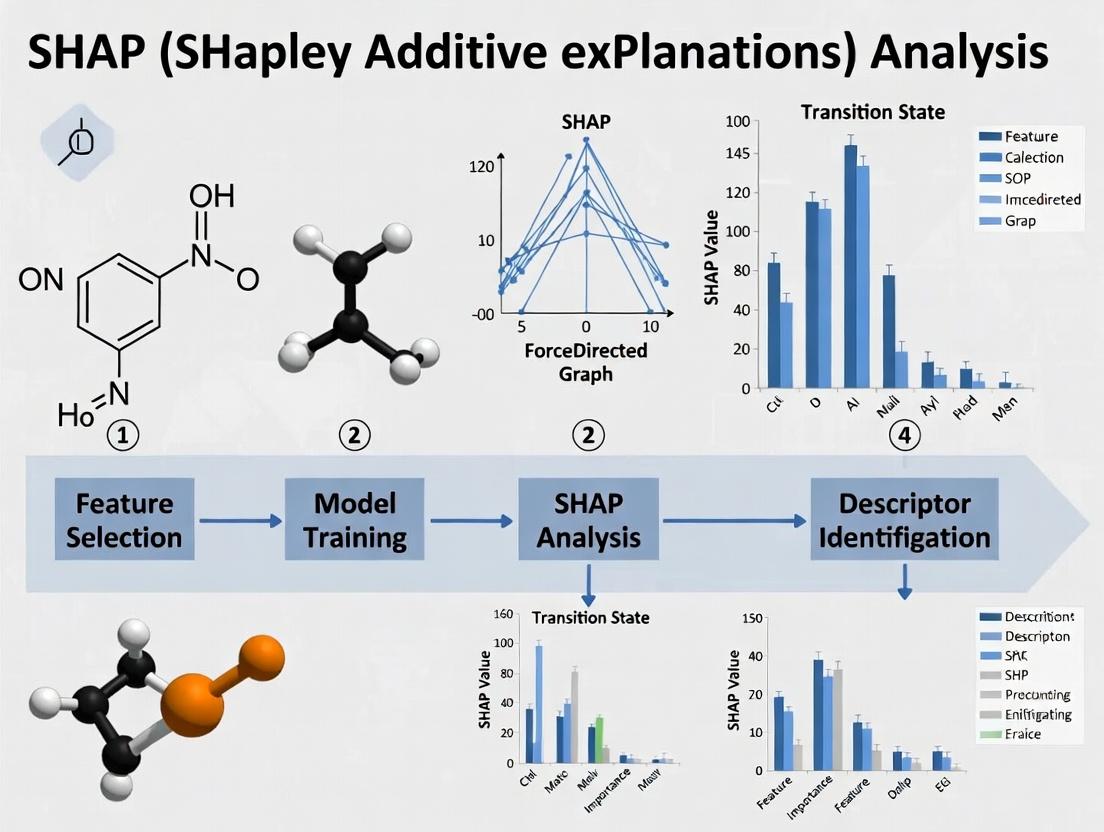
This article provides a complete framework for applying SHAP (SHapley Additive exPlanations) analysis to identify and interpret key molecular and material descriptors in catalyst design.
Decoding Catalyst Design: A Comprehensive Guide to SHAP Analysis for Interpretable Descriptor Identification
Abstract
This article provides a complete framework for applying SHAP (SHapley Additive exPlanations) analysis to identify and interpret key molecular and material descriptors in catalyst design. Aimed at researchers and development professionals in chemistry and drug discovery, we bridge the gap between complex machine learning models and actionable chemical insights. We cover foundational concepts, step-by-step methodologies for application, strategies for troubleshooting common pitfalls, and comparative validation against other interpretability techniques. The goal is to empower scientists to build more transparent, reliable, and efficient workflows for catalyst discovery and optimization.
What is SHAP Analysis? Demystifying Interpretable AI for Catalyst Discovery
The Black Box Problem in Catalyst Machine Learning Models
1. Introduction and Context within SHAP Thesis Research The application of machine learning (ML) to catalyst discovery has accelerated the identification of high-performance materials. However, these models are often "black boxes," where the relationship between input descriptors (e.g., electronic structure, geometric parameters) and catalytic output (e.g., activity, selectivity) is opaque. This black box problem hinders scientific trust and, crucially, the extraction of fundamental chemical insights. This document frames the black box challenge within a broader thesis focused on using SHapley Additive exPlanations (SHAP) analysis to identify interpretable, physically meaningful catalyst descriptors. The goal is to transition from correlative ML models to causally informative tools for catalyst design.
2. Quantitative Data Summary: Model Performance vs. Interpretability Trade-offs
Table 1: Comparison of Common ML Models in Catalyst Informatics
| Model Type | Typical R² (Activity Prediction) | Interpretability Level | Key Black-Box Challenge | SHAP Compatibility |
|---|---|---|---|---|
| Linear Regression | 0.3 - 0.6 | High | Limited by linear assumption | High; direct feature weights |
| Random Forest (RF) | 0.7 - 0.85 | Medium | Complex ensemble of trees | High; native TreeSHAP support |
| Gradient Boosting (XGBoost) | 0.75 - 0.9 | Medium | Dense ensemble of sequential trees | High; native TreeSHAP support |
| Deep Neural Network (DNN) | 0.8 - 0.95 | Very Low | High-dimensional non-linear transformations | Medium; requires KernelSHAP or DeepSHAP |
| Support Vector Machine (SVM) | 0.65 - 0.8 | Low | Kernel-induced high-dimensional space | Low; KernelSHAP computationally expensive |
Table 2: SHAP Value Analysis for a Hypothetical CO2 Reduction Catalyst Dataset
| Catalyst Descriptor | Mean | SHAP Value | (impact on model output) | Descriptor Range in Dataset | Physical Interpretation |
|---|---|---|---|---|---|
| d-band center (eV) | -2.1 | 0.85 | [-3.5, -1.0] | Strongly influences adsorbate binding energy | |
| Oxidation State | +2.3 | 0.52 | [+1, +4] | Linked to metal reactivity and stability | |
| Coordination Number | 5.8 | 0.41 | [4, 8] | Affects site availability and geometry | |
| Electronegativity | 1.8 | 0.15 | [1.3, 2.4] | Moderate impact on electron transfer |
3. Experimental Protocols for SHAP-Driven Descriptor Identification
Protocol 3.1: Building and Interpreting a Catalyst ML Model
- Data Curation: Assemble a consistent dataset. Example: Catalytic turnover frequency (TOF) for methanation on transition metal alloys.
- Descriptor Calculation: Compute atomic and structural features (e.g., using DFT: d-band center, formation energy, Bader charges).
- Model Training: Split data (80/20 train/test). Train a Tree-based model (e.g., XGBoost) using 5-fold cross-validation.
- SHAP Analysis: Calculate SHAP values using the
shapPython library (TreeExplainer). - Insight Extraction: Identify top 5 descriptors by mean absolute SHAP value. Plot SHAP summary and dependence plots to reveal linear/non-linear relationships with the target property.
Protocol 3.2: Validating SHAP-Identified Descriptors Experimentally
- Hypothesis Formulation: Based on SHAP output, hypothesize that "d-band center width" is a key descriptor for selectivity.
- Catalyst Series Synthesis: Prepare a controlled series of M-Cu bimetallic nanoparticles (M = Fe, Co, Ni) via incipient wetness impregnation.
- Descriptor Measurement: Use X-ray photoelectron spectroscopy (XPS) valence band spectra to estimate d-band width.
- Performance Testing: Evaluate catalysts in a fixed-bed reactor under standard conditions (e.g., CO2 hydrogenation, 250°C, 20 bar).
- Correlation Analysis: Plot measured selectivity against the experimental descriptor. A strong correlation validates the SHAP-derived insight.
4. Mandatory Visualizations
Title: SHAP Analysis Workflow for Catalyst ML Interpretability
Title: The Role of SHAP in Bridging Black Box Models to Insight
5. The Scientist's Toolkit: Essential Research Reagents & Solutions
Table 3: Key Tools for Interpretable Catalyst ML Research
| Item | Function/Benefit | Example Tools/Software |
|---|---|---|
| Density Functional Theory (DFT) Code | Calculates electronic structure descriptors as model inputs. | VASP, Quantum ESPRESSO, Gaussian |
| Machine Learning Library | Provides algorithms for building predictive models. | scikit-learn, XGBoost, PyTorch |
| SHAP Library | Computes Shapley values for model interpretation. | shap Python package (Kernel, Tree, Deep explainers) |
| High-Throughput Experimentation (HTE) Rig | Generates consistent, large-scale catalyst performance data. | Automated synthesis and testing reactors |
| Spectroscopic Characterization Suite | Measures experimental descriptors for validation. | XPS, XAFS, FTIR, STEM-EDS |
| Catalyst Database | Source of curated historical data for initial training. | CatApp, NOMAD, ICSD |
Core Theoretical Framework
SHAP (SHapley Additive exPlanations) is an interpretability method rooted in cooperative game theory, adapted for machine learning models. It attributes the prediction of an instance to each input feature fairly, based on their marginal contribution across all possible feature coalitions.
Key Equations:
- Shapley Value (Original Game Theory): For a feature i, its Shapley value is calculated as: (\phii = \sum{S \subseteq N \setminus {i}} \frac{|S|! (|N|-|S|-1)!}{|N|!} [v(S \cup {i}) - v(S)]) where N is the set of all features, S is a subset of features without i, and v(S) is the payoff (model output) for the subset S.
- SHAP Value (ML Adaptation): In SHAP, the payoff v(S) is defined as the expected model prediction conditioned on the feature subset S: (E[f(x) | x_S]).
Summary of SHAP Variants for Catalyst Research:
| SHAP Variant | Model Agnostic? | Best Suited For | Computational Cost | Key Consideration for Catalyst Data |
|---|---|---|---|---|
| KernelSHAP | Yes | Any model, small to medium feature sets (<100) | High | Intractable for exhaustive catalyst descriptor sets. Good for final interpretation of top descriptors. |
| TreeSHAP | No (Tree-based only) | Random Forest, XGBoost, LightGBM | Low | Highly recommended for high-dimensional catalyst screening. Enables fast analysis of 1000s of descriptors. |
| DeepSHAP | No (Deep Learning) | Neural Networks | Medium | Applicable for descriptor-reactivity models using deep neural networks. |
SHAP Analysis Protocol for Catalyst Descriptor Identification
This protocol outlines the process for identifying interpretable physical descriptors from a high-throughput catalyst screening dataset.
A. Experimental Workflow
Diagram Title: SHAP Analysis Workflow for Catalyst Descriptors
B. Detailed Methodology
Protocol 1: Model Training and TreeSHAP Computation Objective: Train a robust predictive model and compute exact SHAP values for interpretability.
- Data Preparation: Split the complete dataset (catalyst samples x descriptors) into 80% training and 20% hold-out test sets using a stratified split if the target property is categorical.
- Model Training: Train an XGBoost Regressor/Classifier using 5-fold cross-validation on the training set to optimize hyperparameters (maxdepth, nestimators, learning_rate). Use the scikit-learn API.
- SHAP Computation: Instantiate a
shap.TreeExplainerwith the trained best model. Calculate SHAP values for the entire hold-out test set usingexplainer.shap_values(X_test).
Protocol 2: Identification and Interpretation of Key Descriptors Objective: Rank and physically interpret the most influential descriptors.
- Descriptor Ranking: Calculate the mean absolute SHAP value (
mean(|SHAP value|)) for each descriptor across the test set. Sort descriptors in descending order to create an importance ranking. - Global Interpretation (Beeswarm Plot): Use
shap.plots.beeswarm(shap_values)to visualize the distribution of SHAP values for the top 20 descriptors. High-density regions indicate the descriptor's typical impact on prediction. - Local & Dependence Analysis:
- Individual Prediction: Use
shap.force_plot(...)to explain a single catalyst's predicted activity. - Dependence Plot: For a top descriptor (e.g., d-band center), use
shap.dependence_plot(...)to plot its SHAP value vs. its feature value, colored by a potentially interacting descriptor (e.g., coordination number).
- Individual Prediction: Use
The Scientist's Toolkit: Essential Research Reagents & Software
| Item Name/Software | Category | Function in SHAP Catalyst Research |
|---|---|---|
| XGBoost / LightGBM | Software Library | Provides high-performance, tree-based models compatible with the exact and fast TreeSHAP algorithm. Essential for handling 1000s of catalyst descriptors. |
| SHAP (shap) Python Library | Software Library | Core toolkit for computing SHAP values and generating all standard interpretability plots (beeswarm, dependence, force plots). |
| pymatgen / ASE | Software Library | Used for generating atomic-scale descriptors (e.g., coordination numbers, elemental properties, structural motifs) from catalyst structures. |
| Catalyst Database (e.g., CatHub, NOMAD) | Data Source | Provides curated experimental or computational datasets for training and validating descriptor-activity models. |
| DFT Software (VASP, Quantum ESPRESSO) | Computational Tool | Generates high-fidelity electronic structure descriptors (d-band center, Bader charges, density of states) and target properties for the training set. |
Application in Interpretable Catalyst Design: A Case Study
Context: Identifying descriptors for the oxygen evolution reaction (OER) activity of perovskite oxides.
Quantitative SHAP Output Example: Table: Top 5 SHAP-Identified Descriptors for OER Overpotential on Perovskites (ABO₃)
| Descriptor Rank | Descriptor Name (Feature) | Physical Meaning | Mean | SHAP Value | Impact Direction (SHAP vs. Feature Value) | |
|---|---|---|---|---|---|---|
| 1 | O 2p-band center (ε_O-2p) | Average energy of oxygen 2p states relative to Fermi level. | 0.142 eV | Lower (more negative) ε_O-2p → Lower (better) overpotential. | ||
| 2 | B-site metal electronegativity (χ_B) | Pauling electronegativity of the B-site transition metal. | 0.098 eV | Higher χ_B → Lower overpotential. | ||
| 3 | Tolerance factor (t) | Measure of structural distortion from ideal cubic perovskite. | 0.076 eV | Optimal ~0.96 minimizes overpotential (U-shaped dependence). | ||
| 4 | B-O bond length | Average bond distance between B-site metal and oxygen. | 0.064 eV | Shorter bond → Lower overpotential. | ||
| 5 | A-site ionic radius | Radius of the A-site cation. | 0.051 eV | Larger radius → Higher overpotential (in this dataset). |
Interpretation Workflow & Logical Relationship:
Diagram Title: From SHAP Output to Catalyst Design Rule
Key Advantages of SHAP for Chemical and Material Science
Application Notes
Within the thesis on SHAP analysis for interpretable catalyst descriptor identification, SHAP (SHapley Additive exPlanations) provides a unified framework for interpreting complex machine learning model predictions in chemical and material science. Its key advantages stem from its rigorous mathematical foundation in cooperative game theory, ensuring consistent and locally accurate attribution of a prediction to each input feature (descriptor).
Primary Advantages:
- Global Interpretability: Identifies the most impactful material descriptors (e.g., adsorption energies, d-band centers, atomic radii) across an entire dataset, guiding fundamental understanding.
- Local Interpretability: Explains individual predictions (e.g., why a specific alloy shows high activity) by quantifying each descriptor's contribution, crucial for diagnosing outliers.
- Model Agnosticism: Applicable to any ML model—from random forests to deep neural networks—used for property prediction (catalytic activity, band gap, yield strength).
- Directionality: Reveals whether a specific increase in a descriptor value (e.g., electronegativity) positively or negatively impacts the target property.
- Descriptor Interaction Detection: Quantifies and visualizes non-linear interactions between descriptors (e.g., between coordination number and valence electron count), uncovering complex design rules.
Table 1: Comparative Analysis of Interpretability Methods in Catalyst Design
| Method | Mathematical Foundation | Local Fidelity | Global Summary | Handles Feature Interaction | Output Type |
|---|---|---|---|---|---|
| SHAP | Cooperative Game Theory (Shapley values) | Yes | Yes (SHAP summary plots) | Yes | Additive feature attributions |
| Permutation Importance | Feature Randomization | No | Yes | No | Importance scores |
| PDP (Partial Dependence Plot) | Marginalization | No | Yes | Limited (typically 2D) | Marginal effect plot |
| LIME | Local Linear Surrogates | Yes | No | Limited | Local surrogate model coefficients |
| Saliency Maps | Gradient-based (for NN) | Yes | No | Limited | Gradient magnitude |
Table 2: Example SHAP Values from a Hypothetical ORR Catalyst Study
| Material Descriptor | Mean | SHAP Value | (Impact) | High Value Effect | Typical Range in Dataset |
|---|---|---|---|---|---|
| d-band center (eV) | -2.5 | 0.85 | Negative (lower is better) | -3.5 to -1.5 | |
| O* adsorption energy (eV) | -1.2 | 0.65 | Volcano relationship | -2.0 to -0.5 | |
| Surface strain (%) | 3.0 | 0.45 | Positive (higher is better) | 0.5 to 5.5 | |
| Pauling electronegativity | 2.1 | 0.30 | Negative (lower is better) | 1.6 to 2.4 |
Experimental Protocols
Protocol 1: SHAP Analysis for Catalytic Activity Model Interpretation
Objective: To identify and rank the most critical physicochemical descriptors governing the predicted overpotential for the oxygen evolution reaction (OER) from a random forest model.
Materials & Software: Python 3.8+, scikit-learn, shap library, pandas, numpy, matplotlib. Dataset of catalyst compositions with calculated/elemental descriptors and target OER overpotential.
Procedure:
- Model Training: Train a validated random forest regressor (
sklearn.ensemble.RandomForestRegressor) to predict the target property (e.g., overpotential) from the descriptor matrix. - SHAP Explainer Initialization: Instantiate a
shap.TreeExplainerfor the trained random forest model. For non-tree-based models, useKernelExplainer(model-agnostic but slower) orDeepExplainerfor neural networks. - SHAP Value Calculation: Compute SHAP values for the entire training/test set using
explainer.shap_values(X), whereXis the (nsamples, ndescriptors) matrix. - Global Analysis (Summary Plot): Generate a
shap.summary_plot(shap_values, X, plot_type="dot"). This plot ranks descriptors by global importance (mean absolute SHAP value) and shows the distribution of each descriptor's impact and directionality via color. - Interaction Analysis: To probe specific interactions, use
shap.dependence_plot("primary_descriptor", shap_values, X, interaction_index="secondary_descriptor"). - Local Explanation: For a specific catalyst of interest, visualize a force plot using
shap.force_plot(explainer.expected_value, shap_values[index], X.iloc[index])to deconstruct its prediction.
Protocol 2: SHAP-Guided Descriptor Selection for Inverse Design
Objective: To reduce descriptor dimensionality and inform a genetic algorithm for the inverse design of novel polymer dielectrics.
Procedure:
- Initial Screening: Perform SHAP analysis on a high-dimensional descriptor set (e.g., 200+ features including compositional, topological, and electronic descriptors) to obtain mean absolute SHAP values.
- Feature Reduction: Select the top k descriptors contributing to 95% of the cumulative SHAP importance. This creates a physically informed, lower-dimensional design space.
- Design Space Definition: Use the ranges of the top k descriptors from the existing dataset to define the boundaries of a search space for inverse design.
- Inverse Design Loop: Integrate the SHAP-informed search space into a genetic algorithm. Use the trained model as the fitness function (predicting dielectric constant) and apply SHAP constraints to penalize candidates with descriptor combinations historically linked to poor performance.
- Validation: Synthesize or simulate top-predicted candidates and validate their properties.
Visualizations
Title: SHAP Analysis Workflow for Catalyst Design
Title: SHAP Additive Feature Attribution Principle
The Scientist's Toolkit
Table 3: Key Research Reagent Solutions for SHAP-Driven Catalyst Research
| Item / Tool | Function & Relevance to SHAP Analysis |
|---|---|
| High-Throughput DFT/DFTB Codes (VASP, Quantum ESPRESSO, DFTB+) | Generate consistent, accurate quantum-mechanical descriptor data (adsorption energies, electronic structure) as primary inputs for the predictive model. |
Machine Learning Libraries (scikit-learn, XGBoost, TensorFlow/PyTorch) |
Provide algorithms to build the complex, high-performance predictive models (target property = f(descriptors)) that SHAP will interpret. |
SHAP Python Library (shap) |
Core computational engine for calculating Shapley values. Offers optimized explainers (Tree, Kernel, Deep) for different model classes. |
| Descriptor Calculation Tools (pymatgen, RDKit, custom scripts) | Compute physicochemical and structural descriptors (compositional, topological, electronic) from atomic structures to build the feature matrix X. |
Data Management & Visualization (pandas, numpy, matplotlib, seaborn) |
Handle, clean, and organize descriptor/target dataframes; create publication-quality plots of SHAP summary, dependence, and force plots. |
Inverse Design Platforms (ASE, GAucsd, custom genetic algorithms) |
Utilize SHAP-derived insights (key descriptors, directionality) to define search spaces and fitness functions for computational discovery of new materials. |
Within the broader thesis on SHAP (SHapley Additive exPlanations) analysis for interpretable catalyst descriptor identification, this article details the primary descriptor spaces—electronic, structural, and compositional—used to represent heterogeneous and homogeneous catalysts. These feature spaces provide the foundational data on which interpretable machine learning (ML) models are built, allowing researchers to decode the "black box" and identify the physicochemical drivers of catalytic performance.
Descriptor Spaces: Definitions and Data
Catalytic descriptors are numerical representations of a catalyst's properties. The following table categorizes and defines key descriptors within the three primary spaces, which are commonly used as input features (X) in ML models predicting catalytic activity, selectivity, or stability (y).
Table 1: Common Catalyst Descriptor Spaces and Key Features
| Descriptor Space | Key Features | Typical Measurement/Calculation | Relevance to Catalytic Function |
|---|---|---|---|
| Electronic | d-band center, work function, ionization potential, electron affinity, Bader charge, density of states (DOS) features. | DFT calculations, XPS, UPS, cyclic voltammetry. | Governs adsorbate binding strength, charge transfer, and activation barriers. |
| Structural | Coordination number, lattice parameters, particle size, surface area (BET), facet exposure, bond lengths/angles, disorder index. | XRD, EXAFS, TEM, STEM, adsorption isotherms. | Determines availability and geometry of active sites, influencing ensemble and ligand effects. |
| Compositional | Elemental identity & ratio, dopant concentration, alloying degree (e.g., Pauling electronegativity, atomic radius). | EDS, ICP-MS, XRF, bulk chemical analysis. | Defines the fundamental chemical nature and synergy in multi-component systems. |
Application Notes & Protocols
Protocol: Calculating d-band Center from Density Functional Theory (DFT)
Purpose: To obtain a fundamental electronic descriptor for transition metal and alloy catalysts, strongly correlated with adsorption energies.
Materials & Reagent Solutions:
- Software: DFT code (e.g., VASP, Quantum ESPRESSO), visualization/analysis tool (e.g., pymatgen, VESTA).
- Computational Resource: High-Performance Computing (HPC) cluster.
- Input File: Catalyst slab or cluster model with optimized geometry.
Methodology:
- Geometry Optimization: Fully relax the catalytic model (slab/cluster) until forces on all atoms are below 0.01 eV/Å.
- Self-Consistent Field (SCF) Calculation: Perform a static calculation on the optimized structure to obtain the converged charge density and wavefunctions.
- Density of States (DOS) Calculation: Run a non-self-consistent calculation with a dense k-point mesh (e.g., > 30 points per Å⁻¹) to obtain a high-resolution projected density of states (PDOS).
- Projection: Project the DOS onto the d-orbitals of the catalytic metal atom(s) of interest.
- d-band Center Calculation: Calculate the first moment (weighted average) of the d-projected DOS relative to the Fermi energy (EF): [ \varepsilond = \frac{\int{-\infty}^{EF} E \cdot \rhod(E) dE}{\int{-\infty}^{EF} \rhod(E) dE} ] where (\rho_d(E)) is the d-projected DOS.
Protocol: Extracting Structural Descriptors from X-ray Absorption Fine Structure (EXAFS)
Purpose: To determine local atomic structure descriptors (coordination number, bond distance, disorder) for supported nanoparticles or amorphous catalysts.
Materials & Reagent Solutions:
- Synchrotron Facility: Beamline capable of X-ray absorption spectroscopy (XAS).
- Sample: Powder catalyst pellet or solid in a suitable holder.
- Software: Data processing suites (e.g., Athena, Demeter, Larch).
Methodology:
- Data Collection: Collect X-ray absorption spectra (XANES and EXAFS regions) at the absorption edge of the active metal.
- Pre-processing: Use
Athenato align, normalize, and background-subtract the raw data. - k-space Conversion: Convert absorption vs. energy to (\chi(k)) vs. photoelectron wavevector (k).
- Fourier Transform: Transform (k)-weighted (\chi(k)) to (R)-space to obtain a radial distribution function.
- Shell Fitting: In
Artemis, fit the EXAFS equation to the Fourier-transformed data using a theoretical model generated byFEFF. Key fitted parameters include:- Coordination Number (N): Number of neighbors in a shell.
- Bond Distance (R): Distance to the neighbor shell.
- Disorder Factor ((\sigma^2)): Debye-Waller factor representing mean-square disorder.
Protocol: Generating Compositional Feature Vectors for High-Throughput Screening
Purpose: To encode multi-component catalyst compositions into a fixed-length numerical vector for ML model input.
Materials & Reagent Solutions:
- Data Source: Composition list (e.g., Pt80Ni20, Fe2O3).
- Software: Python with libraries (pymatgen, matminer, pandas).
- Reference Data: Periodic table properties (atomic number, mass, radius, electronegativity).
Methodology:
- Define Formula: Input catalyst composition in standard chemical formula notation.
- Elemental Property Aggregation: For each element in the formula, retrieve a set of foundational properties (e.g., atomic number, group, period, electronegativity, atomic radius).
- Feature Engineering: Use
matminerfeaturizers to create composition-based descriptors:- Stoichiometric Attributes: Atomic fraction, weight fraction.
- Elemental Property Statistics: For the mixture, compute statistics (mean, range, variance, mode) of the chosen atomic properties across all constituent elements.
- Weighting: Statistics can be weighted by atomic or fractional composition.
- Vector Output: The output is a 1D array where each column is a distinct compositional feature (e.g.,
mean_electronegativity,range_atomic_radius), ready for concatenation with electronic and structural descriptors.
The Scientist's Toolkit
Table 2: Essential Research Reagents & Tools for Descriptor Acquisition
| Item | Function/Description |
|---|---|
| VASP/Quantum ESPRESSO | First-principles DFT software for calculating electronic and geometric descriptors (d-band center, adsorption energy). |
| pymatgen/matminer | Python libraries for materials analysis and automated featurization of compositional/structural data. |
| Synchrotron Beamtime | Enables collection of XAS data for local structural descriptors (EXAFS) and oxidation states (XANES). |
| High-Resolution TEM/STEM | Provides direct imaging for structural descriptors like particle size distribution, shape, and lattice fringes. |
| SHAP Library (Python) | Post-hoc explanation tool for interpreting ML model predictions and ranking descriptor importance. |
| BET Surface Area Analyzer | Measures specific surface area (a key structural descriptor) via gas physisorption isotherms. |
| Inductively Coupled Plasma Mass Spectrometry (ICP-MS) | Provides precise quantitative compositional analysis of bulk and trace elements. |
Visualization of Workflows
Title: Descriptor Acquisition to SHAP Analysis Workflow
Title: SHAP Value Calculation Logic
This document details the essential prerequisites for conducting SHapley Additive exPlanations (SHAP) analysis within a broader research thesis focused on interpretable catalyst descriptor identification. The accurate application of SHAP for identifying key physical, electronic, or compositional descriptors in catalytic materials hinges on rigorous data preparation and model compatibility. This protocol ensures the foundational integrity required for deriving chemically meaningful interpretations from complex machine learning models.
Core Prerequisites for SHAP Analysis
Data Format Specifications
SHAP requires data to be structured in a consistent, numerical format. The following table summarizes the mandatory data characteristics.
Table 1: Data Format Requirements for SHAP Analysis
| Data Attribute | Requirement | Rationale & Catalyst Research Example |
|---|---|---|
| Data Type | Must be numeric (float, integer). Categorical data must be encoded. | Catalytic descriptors (e.g., d-band center, formation energy, coordination number) are inherently numerical. |
| Missing Values | Must be imputed or removed prior to SHAP calculation. | Incomplete characterization data (e.g., missing BET surface area) will cause computation failures. |
| Data Shape | Features matrix X: (nsamples, nfeatures). Target vector y: (n_samples,). |
Aligns with standard ML libraries (scikit-learn). For catalyst screening, n_samples is the number of catalyst compositions/structures. |
| Normalization/Scaling | Recommended, especially for distance- or tree-based models. Not strictly required for tree-based models. | Descriptors like adsorption energy (eV) and particle size (nm) exist on different scales; scaling prevents feature dominance. |
| Data Structure | Pandas DataFrame (with column names) or NumPy array. | DataFrames preserve descriptor names, which are critical for interpreting SHAP output plots. |
| Train/Test Split | SHAP values are typically computed on a held-out test set. | Evaluates interpretability on unseen catalyst data, ensuring robustness of identified key descriptors. |
Model Compatibility Matrix
Not all machine learning models are directly compatible with all SHAP explainers. The choice of explainer is dictated by model type and the desired explanation (global vs. local).
Table 2: SHAP Explainer Compatibility with Common Model Types
| Model Type | Recommended SHAP Explainer | Thesis Application Notes | Computation Speed |
|---|---|---|---|
| Tree-based Models (Random Forest, XGBoost, LightGBM, CatBoost) | TreeExplainer |
Preferred for catalyst property prediction. Exact, fast, and supports interaction effects. | Very Fast |
| Linear Models (Lasso, Ridge, Logistic Regression) | LinearExplainer |
Provides exact SHAP values. Useful for baseline models comparing against more complex non-linear approaches. | Fast |
| Deep Learning Models (Neural Networks) | DeepExplainer (TensorFlow/PyTorch) or GradientExplainer |
For complex descriptor-property relationships learned via neural networks. | Medium-Slow |
| Any Model (Model-Agnostic) | KernelExplainer (uses Lime) |
Fallback for unsupported models. Can be applied to SVMs or custom catalyst models. Warning: Computationally expensive. | Very Slow |
| Any Model (Model-Agnostic) | PermutationExplainer |
A newer, more efficient model-agnostic alternative to KernelExplainer. | Medium |
Experimental Protocols for SHAP Workflow in Catalyst Research
Protocol 3.1: Data Preparation Pipeline
Objective: To preprocess catalyst descriptor and target property data into a format suitable for model training and SHAP analysis.
- Descriptor Consolidation: Compile all calculated/experimental descriptors (e.g., elemental features, structural motifs, computed electronic properties) into a single Pandas DataFrame. Each row is a unique catalyst sample.
- Categorical Encoding: Encode categorical descriptors (e.g., crystal system, primary metal) using one-hot encoding.
- Missing Value Imputation: For numerical descriptors, impute missing values using median imputation (robust to outliers) or a domain-informed value (e.g., DFT calculation failure set to a high-value flag). Document all imputations.
- Train-Test Split: Perform a stratified or random 80/20 split on the data to create
X_train,X_test,y_train,y_test. The test set is reserved for final SHAP evaluation. - Feature Scaling: Standardize
X_trainusingStandardScaler(z-score normalization). Fit the scaler onX_trainonly, then transform bothX_trainandX_test.
Protocol 3.2: Model Training for SHAP Compatibility
Objective: To train a model optimized for both predictive performance and interpretability via SHAP.
- Model Selection: Based on data size and non-linearity, select a compatible model (e.g., XGBoost Regressor for small-to-medium datasets).
- Hyperparameter Tuning: Use
GridSearchCVorRandomizedSearchCVon the training set only to optimize model parameters. Use cross-validation to prevent overfitting. - Model Training: Train the final model with optimal parameters on the entire
X_train,y_train. - Performance Validation: Evaluate the model on the held-out
X_test,y_testusing relevant metrics (RMSE, MAE, R²). A reliable model is a prerequisite for reliable explanations.
Protocol 3.3: SHAP Value Calculation and Visualization
Objective: To compute and visualize SHAP values to identify key catalyst descriptors.
- Explainer Initialization: Instantiate the appropriate SHAP explainer. For an XGBoost model
model:
SHAP Value Calculation: Calculate SHAP values for the test set:
Global Interpretation - Feature Importance: Generate a summary plot of the mean absolute SHAP values:
Local Interpretation - Force Plot: Analyze individual catalyst predictions to understand descriptor contributions for a specific sample:
Visual Workflows and Pathways
Diagram 1: SHAP Analysis Workflow for Catalyst Descriptor Identification
Diagram 2: SHAP Explainer Selection Logic
The Scientist's Toolkit: Essential Research Reagents & Software
Table 3: Key Research Reagent Solutions for SHAP-Driven Catalyst Research
| Item / Reagent / Tool | Function & Role in SHAP Analysis | Example / Specification |
|---|---|---|
| Python SHAP Library | Core computational engine for calculating SHAP values and generating interpretability plots. | shap package (version >=0.44.0). Provides all explainers (Tree, Kernel, Deep, etc.). |
| Compatible ML Library | Trains the predictive model that SHAP will explain. Must be compatible with a SHAP explainer. | scikit-learn, XGBoost, LightGBM, CatBoost, TensorFlow, PyTorch. |
| Jupyter Notebook / IDE | Environment for interactive data exploration, model development, and SHAP visualization. | JupyterLab, Google Colab, or VS Code with Python kernel. |
| Catalyst Descriptor Dataset | The structured numerical input (features) for the model. The subject of interpretation. | DataFrame containing columns for d-band center, oxidation state, atomic radii, etc. |
| Model Persistence Tool | Saves trained models for later SHAP analysis without retraining. | pickle or joblib for serialization. |
| High-Performance Compute (HPC) | Resource for computationally intensive steps (DFT descriptor calculation, neural network training, KernelSHAP). | Access to GPU clusters or cloud computing (AWS, GCP) may be required for large datasets. |
Step-by-Step SHAP Workflow: From Model Training to Descriptor Visualization
Building and Training Your Catalyst Property Prediction Model
This protocol details the construction of a machine learning (ML) model for predicting catalytic properties, a core experimental component within a broader thesis focused on SHAP (SHapley Additive exPlanations) analysis for interpretable catalyst descriptor identification. The workflow generates predictive models that serve as the essential substrates for subsequent SHAP interrogation, enabling the extraction of physically meaningful and actionable chemical insights from complex feature spaces.
Key Research Reagent Solutions & Materials
Table 1: Essential Computational Toolkit for Catalyst ML Model Development
| Item | Function/Brief Explanation |
|---|---|
| Catalyst Dataset (Structured) | A curated, tabular dataset containing featurized catalyst representations (e.g., composition, structural descriptors, reaction conditions) and associated target property labels (e.g., yield, turnover frequency, selectivity). |
| Python 3.8+ Environment | Core programming environment with essential packages: scikit-learn, pandas, numpy, matplotlib, seaborn. |
| Machine Learning Libraries | XGBoost or LightGBM for gradient boosting; CatBoost for categorical feature handling; TensorFlow/PyTorch for deep neural networks. |
| Interpretability Library | SHAP (shap) library for post-model analysis and descriptor importance quantification. |
| Descriptor Generation Software | pymatgen, RDKit, or custom scripts for generating atomic, electronic, and geometric features from catalyst structures. |
| Hyperparameter Optimization Tool | Optuna, Hyperopt, or scikit-optimize for efficient, automated model tuning. |
| Validation Framework | Custom scripts for robust k-fold cross-validation and temporal/holdout set validation to prevent data leakage and overfitting. |
Data Acquisition & Preprocessing Protocol
Protocol: Data Collection and Curation
- Source: Assemble data from heterogeneous sources: internal high-throughput experimentation (HTE), published literature (using text-mining APIs), and public databases (e.g., CatApp, NOMAD).
- Curation: Standardize catalyst representations (e.g., to a unique SMILES or CIF format), unit conversion for targets, and reaction condition normalization.
- Annotate: Log all metadata (e.g., measurement technique, uncertainty, citation).
Protocol: Feature Engineering & Selection
- Generate Descriptors: From standardized catalyst input, compute:
- Compositional: Stoichiometric attributes, elemental properties (electronegativity, valence, radii).
- Structural: Coordination numbers, bond lengths/diameters, symmetry indices.
- Electronic: (DFT-calculated) d-band centers, Bader charges, density of states features.
- Conditional: Temperature, pressure, concentration.
- Feature Reduction: Apply variance threshold filtering, followed by recursive feature elimination (RFE) or correlation analysis to reduce multicollinearity.
Table 2: Exemplar Feature Set for a Bimetallic Catalyst Dataset (Quantitative Summary)
| Feature Category | Specific Descriptor | Mean Value (± Std Dev) | Correlation with Target (r) |
|---|---|---|---|
| Compositional | Atomic % of Metal A | 50.2% (± 28.5) | 0.15 |
| Pauling Electronegativity Difference | 0.34 (± 0.21) | 0.72 | |
| Structural | Average Coordination Number | 10.5 (± 1.8) | -0.41 |
| Lattice Parameter (Å) | 3.89 (± 0.15) | 0.33 | |
| Electronic (DFT) | d-band Center (eV) | -2.10 (± 0.45) | -0.68 |
| Surface Energy (J/m²) | 1.85 (± 0.30) | 0.22 | |
| Conditional | Reaction Temperature (K) | 450.0 (± 75.0) | 0.55 |
Data Preprocessing and Feature Engineering Pipeline
Model Building & Training Protocol
Protocol: Model Selection and Training
- Baseline: Train a simple linear model (Ridge/Lasso) as a performance baseline.
- Ensemble Methods: Train tree-based models: Random Forest (RF), Gradient Boosting Machines (XGBoost/LightGBM). Use 5-fold stratified cross-validation.
- Advanced Models: If data size permits, train a graph neural network (GNN) using atomic graphs as input.
- Hyperparameter Tuning: For the best-performing algorithm, use Bayesian optimization (via Optuna) over 100 trials to tune key parameters (e.g., learning rate, tree depth, regularization).
Protocol: Validation and Evaluation
- Split: Perform an 80/10/10 temporal or cluster-based split to create training, validation, and holdout test sets.
- Metrics: Evaluate using Mean Absolute Error (MAE), Root Mean Squared Error (RMSE), and Coefficient of Determination (R²) on the holdout set only.
- Analysis: Generate parity plots and residual error distributions for diagnostic checking.
Table 3: Model Performance Comparison on Holdout Test Set
| Model Type | Key Hyperparameters | MAE (Target Units) | RMSE (Target Units) | R² |
|---|---|---|---|---|
| Ridge Regression | Alpha = 1.0 | 12.45 | 16.89 | 0.61 |
| Random Forest | nestimators=200, maxdepth=15 | 8.23 | 11.56 | 0.81 |
| XGBoost | learningrate=0.05, maxdepth=7, n_estimators=500 | 6.78 | 9.87 | 0.86 |
| GNN (Attentive FP) | hidden_dim=64, layers=3, epochs=300 | 7.95 | 10.89 | 0.83 |
Model Training and Validation Strategy
Integration with SHAP Analysis for Descriptor Identification
Protocol: SHAP Analysis on Trained Model
- Calculation: Using the trained model (e.g., XGBoost) and the entire training dataset, compute SHAP values via the
TreeSHAPalgorithm. - Global Importance: Generate a bar plot of mean absolute SHAP values to rank descriptor global importance.
- Local Effects: Create SHAP summary plots (beeswarm plots) and dependence plots to reveal feature-target relationships and interaction effects.
Table 4: Top Catalyst Descriptors Identified by SHAP Analysis
| Rank | Descriptor Name | Category | Mean | Absolute SHAP Value | Primary Effect Direction |
|---|---|---|---|---|---|
| 1 | d-band Center | Electronic | -2.10 eV | 2.45 | Negative Correlation |
| 2 | Electronegativity Diff. | Compositional | 0.34 | 1.89 | Positive Correlation |
| 3 | Reaction Temperature | Conditional | 450 K | 1.56 | Positive Correlation |
| 4 | Avg. Coordination Number | Structural | 10.5 | 1.23 | Negative Correlation |
| 5 | Surface Energy | Electronic | 1.85 J/m² | 0.78 | Complex (Interaction) |
SHAP Analysis for Model Interpretation and Insight Generation
This document details the application of SHapley Additive exPlanations (SHAP) for interpretable machine learning in catalyst descriptor identification, a core component of our broader thesis. SHAP values provide a unified measure of feature importance, attributing a model's prediction to each input feature. The selection of the appropriate SHAP algorithm—TreeSHAP, KernelSHAP, or DeepSHAP—is critical for accurate and efficient interpretation in catalyst discovery and drug development pipelines.
Table 1: Quantitative Comparison of SHAP Algorithms
| Algorithm | Model Compatibility | Computational Complexity | Exact/Approximate | Key Assumption/Constraint | Primary Use Case in Catalyst Research |
|---|---|---|---|---|---|
| TreeSHAP | Tree-based models (RF, GBT, XGBoost) | O(TL D²) | Exact for trees | Feature independence | High-speed analysis of descriptor importance from ensemble models. |
| KernelSHAP | Model-agnostic (any black-box) | O(2^M + T M²) | Approximate (Kernel-based) | Linear in SHAP space | Interpreting any custom catalyst property predictor. |
| DeepSHAP | Deep Neural Networks | O(T B) | Approximate (Backprop-based) | DeepLIFT compositional rule | Interpreting deep learning models for complex structure-property relationships. |
Key: T = # of background samples, L = Max tree leaves, D = Max tree depth, M = # of input features, B = # of background samples for DeepSHAP.
Experimental Protocols
Protocol 1: TreeSHAP for Random Forest Catalyst Models
Objective: To compute exact SHAP values for a trained Random Forest model predicting catalyst activity.
- Model Training: Train a Random Forest regressor using a dataset of catalyst descriptors (e.g., elemental properties, coordination numbers, surface energies) and the target property (e.g., turnover frequency).
- Background Data Preparation: Select a representative sample (typically 100-500 instances) from the training dataset to serve as the background distribution.
- SHAP Value Calculation: Instantiate the
shap.TreeExplainer(Python SHAP library) with the trained model and the background dataset. - Explanation Generation: Call the
explainer.shap_values(X)method on the feature matrixXof interest (e.g., test set or novel catalyst candidates). - Aggregation & Analysis: Aggregate absolute SHAP values across the dataset to rank global descriptor importance. Analyze individual predictions for local interpretability.
Protocol 2: KernelSHAP for Black-Box Catalyst Screening Functions
Objective: To approximate SHAP values for a proprietary or complex catalyst scoring function.
- Model Wrapping: Define a wrapper function
f(x)that takes an array of catalyst descriptors and returns the model's predicted score. - Background & Feature Selection: Select a background dataset. Due to combinatorial explosion, use a reduced set of features via prior domain knowledge or a summary technique.
- Kernel Weighting Configuration: The SHAP library's
shap.KernelExplaineruses a specially weighted kernel to approximate Shapley values. The default settings are typically sufficient. - Approximation Computation: Call
explainer.shap_values(X, nsamples="auto"), wherensamplescontrols the number of feature coalition evaluations. A higher number increases accuracy but also computational cost. - Variance Evaluation: Check the
shap_valuesoutput for stability across multiple runs to ensure approximation quality.
Protocol 3: DeepSHAP for Neural Network-Based Descriptor Models
Objective: To efficiently approximate SHAP values for a deep neural network predicting catalyst performance.
- Model Definition: Construct a Deep Neural Network (e.g., Multi-Layer Perceptron or Graph Neural Network) using a framework like PyTorch or TensorFlow.
- Model Training: Train the network to convergence on the catalyst dataset.
- Explainer Initialization: Instantiate
shap.DeepExplainer(model, background_data_tensor). The background data should be a representative subset. - SHAP Value Computation: Pass a tensor of catalyst samples to
explainer.shap_values(input_tensor). DeepSHAP uses a compositional propagation rule based on DeepLIFT. - Pathway Visualization: Use the computed SHAP values to identify which input neurons (and thus, original descriptors) most influenced the final-layer prediction.
Visualization of SHAP Analysis Workflow
Title: SHAP Analysis Workflow for Catalyst Models
The Scientist's Toolkit: Research Reagent Solutions
Table 2: Essential Tools for SHAP-Based Catalyst Research
| Item / Software | Function / Purpose | Typical Specification / Version |
|---|---|---|
| SHAP Python Library | Core library for computing TreeSHAP, KernelSHAP, and DeepSHAP values. | v0.44+ |
| scikit-learn | Provides standard tree-based models (Random Forest, GBDT) for use with TreeSHAP. | v1.3+ |
| XGBoost / LightGBM | High-performance gradient boosting frameworks compatible with TreeSHAP. | Latest stable |
| PyTorch / TensorFlow | Deep learning frameworks required for building models interpretable by DeepSHAP. | v2.0+ |
| Matplotlib / Seaborn | Visualization libraries for creating summary plots (beeswarm, bar) of SHAP values. | v3.7+ |
| RDKit | Cheminformatics toolkit for generating molecular descriptors for catalyst candidates. | 2023.09+ |
| pandas & NumPy | Data manipulation and numerical computation for handling descriptor matrices. | v1.5+ / v1.24+ |
| Jupyter Notebook / Lab | Interactive environment for exploratory SHAP analysis and visualization. | - |
Application Notes: SHAP for Catalyst Descriptor Identification
Conceptual Framework
Within the broader thesis on interpretable machine learning for heterogeneous catalysis, SHapley Additive exPlanations (SHAP) provides a game-theoretic approach to quantify the contribution of each molecular or structural descriptor to a catalyst's predicted performance (e.g., turnover frequency, selectivity). Global feature importance is derived by aggregating SHAP values across an entire dataset, moving beyond single-instance explanations to identify universally critical physicochemical descriptors.
Key Advantages in Catalyst Discovery
- Model Agnosticism: Applicable to complex models (e.g., gradient boosting, neural networks) that capture non-linear descriptor-property relationships.
- Directionality: Distinguishes descriptors that promote or inhibit catalytic activity.
- Ranking Consistency: Provides a mathematically grounded, consistent ranking compared to permutation-based methods.
Table 1: Global SHAP Value Rankings for Catalytic Descriptors (Representative Data)
| Rank | Descriptor Category | Specific Descriptor | Mean | SHAP Value (Absolute) | Direction of Influence |
|---|---|---|---|---|---|
| 1 | Electronic Structure | d-band center (eV) | 0.452 | + | Promotes activity up to optimal value |
| 2 | Geometric | Coordination number | 0.387 | - | Lower coordination generally favorable |
| 3 | Adsorption Energy | *OH adsorption energy (eV) | 0.321 | - | Weaker binding favorable |
| 4 | Atomic Property | Pauling electronegativity | 0.265 | +/ | Complex, non-monotonic |
| 5 | Bulk Property | Molar volume (cm³/mol) | 0.187 | - | Smaller volume favorable |
Table 2: Comparison of Feature Importance Metrics
| Method | Descriptor Rank 1 | Descriptor Rank 2 | Computation Time (Relative) | Notes |
|---|---|---|---|---|
| SHAP (Kernel) | d-band center | Coordination number | High | Gold standard, but computationally expensive |
| SHAP (Tree) | d-band center | *OH energy | Low | Fast, accurate for tree-based models |
| Permutation Importance | Coordination number | d-band center | Medium | Can be unreliable with correlated features |
| Gini Importance | Pauling electronegativity | Molar volume | Very Low | Model-specific (tree-based), biased |
Experimental Protocols
Protocol: SHAP-Based Descriptor Ranking Workflow
Aim: To compute and interpret global feature importance for a trained catalyst performance prediction model.
Prerequisites:
- A trained machine learning model (
model) on catalyst data. - Feature matrix
X(nsamples × ndescriptors) and target vectory. - Test or validation set (
X_test).
Procedure:
- SHAP Explainer Initialization:
- Select explainer based on model type.
- For tree-based models (e.g., Random Forest, XGBoost):
SHAP Value Calculation:
- Compute SHAP values for the evaluation set.
- Compute SHAP values for the evaluation set.
Global Importance Calculation:
- Calculate mean absolute SHAP value per feature.
- Calculate mean absolute SHAP value per feature.
Ranking and Visualization:
- Create a bar plot of sorted
global_importance. - Generate summary plots (
shap.summary_plot(shap_values, X_test)) to show value distributions and effects.
- Create a bar plot of sorted
Protocol: Validation via Targeted Descriptor Screening
Aim: To experimentally validate the SHAP-derived descriptor ranking by synthesizing catalysts that systematically vary the top-ranked descriptor.
Materials: (See Scientist's Toolkit) Procedure:
- Based on SHAP ranking (e.g., Table 1), select the top 2-3 descriptors.
- Design a catalyst library (e.g., 10-15 compositions/alloys) where the primary descriptor (e.g., d-band center) is varied, while secondary descriptors are controlled as tightly as possible.
- Synthesize catalysts using a controlled method (e.g., incipient wetness co-impregnation on a fixed support, followed by standardized calcination/reduction).
- Characterize the electronic/geometric descriptor using XPS (d-band center proxy) or EXAFS (coordination number).
- Evaluate catalytic performance (e.g., rate, selectivity) under identical, standardized reactor conditions.
- Correlation Analysis: Plot the measured descriptor value vs. measured activity. A strong, model-predicted correlation validates the SHAP importance ranking.
Visualizations
Title: SHAP Global Feature Ranking Workflow
Title: Experimental Validation Protocol Flow
The Scientist's Toolkit
Table 3: Essential Research Reagents & Materials
| Item | Function/Brief Explanation |
|---|---|
| SHAP Python Library (v0.44+) | Core computational toolkit for calculating SHAP values with various explainers. |
| scikit-learn / XGBoost | Libraries for building the underlying predictive regression models for catalyst properties. |
| Catalyst Precursor Salts (e.g., H₂PtCl₆, Ni(NO₃)₂, Co(acac)₃) | High-purity metal sources for the controlled synthesis of catalyst libraries. |
| High-Surface-Area Support (e.g., γ-Al₂O₃, TiO₂, Carbon) | Standardized support material to ensure consistent catalyst dispersion and comparison. |
| Tube Furnace with Gas Flow System | For precise calcination and reduction pre-treatments under controlled atmospheres. |
| X-ray Photoelectron Spectroscopy (XPS) | Surface-sensitive technique to characterize electronic descriptors (e.g., oxidation state, approximate d-band shift). |
| X-ray Absorption Fine Structure (EXAFS) | Provides local geometric structure information (e.g., coordination number, bond distance). |
| Bench-Scale Continuous Flow Reactor | Standardized setup for evaluating catalyst performance (conversion, selectivity, rate) under relevant conditions. |
| Standard Analysis Gases (e.g., 5% H₂/Ar, 10% O₂/He, reaction feedstock) | For catalyst pre-treatment and activity/selectivity testing. |
Analyzing Local Explanations for Single Catalyst Candidates
This protocol is framed within a doctoral thesis investigating SHAP (SHapley Additive exPlanations) analysis for interpretable catalyst descriptor identification. The core objective is to move beyond global, population-level model interpretations to local explanations for individual catalyst candidates. This enables the precise attribution of a candidate's predicted activity or selectivity to specific physicochemical, structural, or electronic descriptors, offering actionable insights for iterative design. These methodologies bridge advanced machine learning with fundamental catalyst science, providing a rigorous framework for explainable AI (XAI) in materials and molecular discovery.
Core Experimental Protocol: SHAP-Based Local Explanation Analysis
Prerequisite: Model Training and Global Descriptor Importance
- Objective: Train a predictive model and establish a baseline global feature importance.
- Protocol:
- Dataset Curation: Assemble a dataset of catalyst candidates with validated experimental outcomes (e.g., turnover frequency, yield, selectivity). Each candidate is represented by a vector of n numerical descriptors (e.g., d-band center, coordination number, solvent-accessible surface area, etc.).
- Model Training: Employ a tree-based ensemble model (e.g., Gradient Boosting, Random Forest) or a neural network. Use an 80/20 train/test split with stratified sampling to maintain outcome distribution. Optimize hyperparameters via Bayesian optimization or randomized search with 5-fold cross-validation.
- Global SHAP Analysis: Compute SHAP values for the entire training set using the
TreeSHAP(for tree models) orKernelSHAP(for any model) algorithm. Summarize by taking the mean absolute SHAP value for each descriptor across the dataset to produce a global ranking.
Protocol for Generating Local Explanations
- Objective: Explain the prediction for a single, specific catalyst candidate.
- Step-by-Step Methodology:
- Candidate Selection: Identify the catalyst candidate of interest (e.g., a high-performing outlier, a synthesis failure, a newly proposed candidate).
- Local SHAP Value Calculation: Using the pre-trained model from 2.1, compute the SHAP values specifically for the chosen candidate's descriptor vector. This yields a set of n SHAP values, one per descriptor.
- Explanation Interpretation:
- The sum of the SHAP values plus the model's expected value (base value) equals the candidate's predicted output.
- A positive SHAP value for a descriptor indicates that descriptor's specific value for this candidate pushes the model prediction higher than the average prediction.
- A negative SHAP value indicates the descriptor's value lowers the prediction relative to the average.
- Visualization & Analysis: Generate a force plot or waterfall plot to visualize the local explanation. Analyze which 3-5 descriptors contribute most significantly (positively or negatively) to this specific prediction.
Protocol for Experimental Validation of Local Insights
- Objective: Design experiments to test hypotheses generated from the local explanation.
- Methodology:
- Hypothesis Formulation: From the local explanation, formulate a chemical hypothesis (e.g., "Candidate A is predicted to be highly selective because its local explanation shows a strong positive contribution from a low electrophilicity index").
- Descriptor Perturbation Design: Design a small set (3-5) of related catalyst candidates where the key positively contributing descriptor is systematically varied while attempting to hold others constant (e.g., synthesize analogs with gradually increasing electrophilicity).
- Synthesis & Testing: Synthesize and experimentally test the candidate series under standard catalytic conditions.
- Correlation Analysis: Plot the experimental outcome against the perturbed descriptor value. A strong correlation confirms the local explanation's insight, validating the descriptor's causal role for this catalyst class.
Data Presentation: Comparative Analysis of Local Explanations
Table 1: Local SHAP Explanation for Three Distinct Catalyst Candidates Model predicts Turnover Frequency (TOF) for a hydrogenation reaction. Base Value (Average Prediction) = 12.5 s⁻¹.
| Catalyst ID | Predicted TOF (s⁻¹) | Top Positive Contributor Descriptor (Value) | SHAP Value | Top Negative Contributor Descriptor (Value) | SHAP Value | Experimental TOF (s⁻¹) |
|---|---|---|---|---|---|---|
| Cat-A-103 | 45.2 | d-band Center (-2.1 eV) | +18.7 | Particle Size (8.2 nm) | -4.1 | 41.7 ± 3.1 |
| Cat-B-77 | 5.1 | Metal-O Coordination (4.2) | +1.2 | Work Function (5.4 eV) | -9.8 | 6.0 ± 1.5 |
| Cat-C-12 | 11.8 | Surface Charge Density (0.12 e/Ų) | +0.5 | Lattice Strain (%) | -1.4 | 13.2 ± 2.2 |
Table 2: Key Research Reagent Solutions & Materials
| Item Name | Function/Description | Example Vendor/Product |
|---|---|---|
| SHAP Python Library | Core computational tool for calculating SHAP values and generating local explanation plots. | GitHub: shap/shap |
| Catalyst Dataset | Curated database of catalyst structures, descriptors, and activity data. Essential for model training. | Custom SQL/CSV; possible public sources like CatApp or NOMAD. |
| Descriptor Calculation Software | Computes physicochemical and electronic descriptors from catalyst structures (e.g., DFT outputs, SMILES). | RDKit, pymatgen, ASE, custom DFT scripts. |
| Tree-Based ML Library | Used to train high-performance, SHAP-compatible predictive models. | scikit-learn, XGBoost, LightGBM |
| Jupyter Notebook Environment | Interactive platform for running analysis, visualization, and documentation. | Project Jupyter |
| Standard Catalytic Test Rig | Bench-scale reactor system for experimental validation of predicted catalyst performance. | Custom setup or commercial (e.g., PID Eng & Tech). |
Visualizations
SHAP Analysis Workflow for Catalyst Design
Local Force Plot Explanation for Cat-A-103
Within the thesis "SHAP Analysis for Interpretable Catalyst Descriptor Identification," advanced SHAP visualizations are critical for translating model outputs into chemically intuitive insights. While global feature importance rankings identify key descriptors, summary, dependence, and force plots are essential for probing the nature and context of feature influence on predicted catalytic activity or selectivity, enabling rational catalyst design.
Core Visualization Types: Application Notes
- Purpose: Provides a global overview of feature importance and impact direction across the entire dataset.
- Application Note: In catalyst research, it rapidly prioritizes descriptors (e.g., d-band center, coordination number, adsorption energy) for further investigation. Overlapping points reveal subgroups or clusters in the data, hinting at different catalytic regimes.
Table 1: Interpretation of Summary Plot Patterns in Catalyst Data
| Visual Pattern | Potential Chemical Interpretation |
|---|---|
| High-density vertical strip of one color | Descriptor has a monotonic, uniform effect (e.g., stronger binding always increases activity within studied range). |
| Mixed colors at high SHAP values | Descriptor's optimal effect is context-dependent, requiring synergy with another feature. |
| Distinct horizontal bands | Clustering of catalysts (e.g., metals vs. oxides) with different baseline activities. |
Dependence Plot
- Purpose: Isolates the relationship between a single descriptor's value and its SHAP value, revealing nonlinearities and interactions.
- Application Note: Essential for identifying optimal descriptor ranges (e.g., an optimal d-band center for a Sabatier peak) and probing feature interactions via coloring.
Table 2: Dependence Plot Analysis for Catalyst Descriptor X
| Plot Characteristic | Observation | Inference for Catalyst Design |
|---|---|---|
| Shape | Inverted-U (parabolic) | Confirms Sabatier-type behavior; identifies optimal value. |
Colored by Y |
Clear separation of colors along trend | Descriptor Y strongly interacts with X; design must consider both. |
| Scatter | High variance at mid-range | Effect of X is less deterministic in this region; other descriptors dominate. |
Force Plot (Local Explanation)
- Purpose: Explains a single prediction by deconstructing the model output, showing how each feature pushes the prediction from the baseline (average) value.
- Application Note: For a specific high-performance catalyst prediction, it quantifies the contribution of each descriptor (e.g., "High electronegativity contributed +0.8 log(TOF), while low oxidation state contributed -0.3 log(TOF)").
Table 3: Force Plot Decomposition for a High-Activity Catalyst Prediction
| Feature | Value | SHAP Value (Impact) | Interpretation |
|---|---|---|---|
| Metal-O Bond Strength | 2.1 eV | +1.5 | Primary driver for high activity in this catalyst. |
| Surface Charge | +0.3 | -0.4 | Moderately detrimental, but outweighed by other factors. |
| Coordination # | 4 | +0.6 | Low coordination favors active site formation. |
| Baseline Value | -- | 2.1 (Avg. log(TOF)) | -- |
| Model Output | -- | 3.8 (Predicted log(TOF)) | -- |
Experimental Protocols
Protocol 1: Generating and Interpreting a SHAP Dependence Plot with Interaction Detection
Objective: To elucidate the relationship and key interactions for a top-ranked catalyst descriptor.
- Compute SHAP Values: Using a trained model (e.g., Gradient Boosting, NN) and test set, calculate SHAP values (
shap.Explainer). - Isolate Feature: Select the top-ranked descriptor from the summary plot (e.g.,
Descriptor_A). - Plot Basic Dependence: Execute
shap.dependence_plot('Descriptor_A', shap_values, X_test), whereX_testis the feature matrix. - Identify Interaction: Re-plot, coloring by the feature identified as a potential interactor in the summary plot or via
shap.interaction_values. Usecolor='Descriptor_B'. - Chemical Interpretation: Correlate trends with known catalytic principles (e.g., Brønsted-Evans-Polanyi relations, scaling relationships).
Protocol 2: Creating and Comparing Local Force Plots for Catalyst Classification
Objective: To compare the mechanistic drivers for catalysts classified as "Active" vs. "Inactive."
- Select Exemplars: From the test set, identify one catalyst predicted with high probability as "Active" and one as "Inactive."
- Generate Individual Plots: For each catalyst, generate a force plot using
shap.force_plot(explainer.expected_value, shap_values[instance], X_test.iloc[instance]). - Comparative Analysis: Tabulate the top 3 positive and top 3 negative contributing features for each exemplar.
- Hypothesis Generation: Formulate design rules (e.g., "Active catalysts consistently show moderate
Descriptor_Xwith highDescriptor_Y").
Diagrams
Title: SHAP Analysis Workflow for Catalyst Descriptors
Title: Force Plot Logic: From Baseline to Prediction
The Scientist's Toolkit: Research Reagent Solutions
Table 4: Essential Tools for Advanced SHAP Visualization in Computational Catalysis
| Item / Solution | Function / Purpose | Example (Package/Library) |
|---|---|---|
| SHAP Computation Library | Calculates consistent additive feature attributions for any model. | shap Python library (KernelSHAP, TreeSHAP, DeepSHAP). |
| Model-Specific Explainer | Ensures efficient and exact SHAP value calculation. | TreeExplainer for tree-based models (GBR, RF); DeepExplainer for neural networks. |
| Visualization Backend | Renders interactive plots for detailed inspection. | matplotlib, plotly (for interactive dependence plots). |
| Feature Processing Toolkit | Standardizes and scales descriptors for meaningful comparison. | scikit-learn StandardScaler, MinMaxScaler. |
| Chemical Descriptor Database | Provides the raw input features for the model. | Computational outputs (DFT energies, structural descriptors), materials databases (Citrination, OQMD). |
| Jupyter Notebook Environment | Integrates computation, visualization, and documentation. | Jupyter Lab/Notebook for reproducible analysis workflows. |
Overcoming Challenges: Optimizing SHAP for Robust Catalyst Insights
Handling High-Dimensional and Correlated Descriptor Sets
Application Notes
In the pursuit of interpretable catalyst descriptor identification using SHAP (SHapley Additive exPlanations) analysis, a primary challenge is the preprocessing and analysis of high-dimensional descriptor sets rife with multicollinearity. These sets, often derived from Density Functional Theory (DFT) calculations or complex molecular fingerprints, can contain hundreds to thousands of intercorrelated features, which obscure model interpretability and destabilize regression coefficients.
Key strategies include:
- Dimensionality Reduction: Techniques like Principal Component Analysis (PCA) and Uniform Manifold Approximation and Projection (UMAP) are employed not for feature elimination but for creating orthogonal latent spaces. SHAP values can then be calculated on contributions to these latent dimensions, with back-propagation to original features.
- Regularized Regression: LASSO (L1) and Elastic Net regressions perform automatic feature selection and handle correlation by penalizing coefficient magnitude, providing a more stable ground for subsequent SHAP analysis.
- Tree-Based Methods: Gradient Boosting Machines (e.g., XGBoost, LightGBM) naturally handle multicollinearity by selecting splits based on impurity reduction. Their inherent feature selection makes them excellent models for TreeSHAP, offering fast and accurate Shapley value approximations.
- Descriptor Clustering & Aggregation: Highly correlated descriptors (Pearson |r| > 0.85) are clustered using hierarchical clustering. A single representative descriptor (e.g., the one with the highest mutual information with the target property) is selected from each cluster, drastically reducing dimensionality while preserving information.
Table 1: Impact of Preprocessing on Model Performance and Interpretability for a Catalytic Turnover Frequency (TOF) Dataset (n=150 samples)
| Preprocessing Method | Initial Descriptors | Final Descriptors | Model Type | Test R² | Top 5 SHAP Descriptor Stability* | ||
|---|---|---|---|---|---|---|---|
| None | 320 | 320 | Linear | 0.45 | 35% | ||
| Elastic Net (α=0.01) | 320 | 48 | Linear | 0.78 | 92% | ||
| PCA (95% variance) | 320 | 18 PCs | Linear | 0.82 | 100% (on PCs) | ||
| Correlation Filtering ( | r | <0.9) | 320 | 110 | XGBoost | 0.91 | 88% |
| Clustering & Selection | 320 | 65 | XGBoost | 0.93 | 96% |
Stability measured as the Jaccard index overlap of top 5 features across 50 bootstrap iterations.
Experimental Protocols
Protocol 1: Hierarchical Descriptor Clustering and Selection for SHAP-Ready Datasets
Objective: To reduce multicollinearity in a descriptor matrix by grouping correlated features and selecting a robust representative for each group.
Materials:
- High-dimensional descriptor data (CSV format).
- Computational environment (Python with SciPy, scikit-learn, pandas).
Procedure:
- Data Standardization: Standardize all descriptor columns to have zero mean and unit variance using
StandardScaler. - Correlation Matrix Calculation: Compute the full Pearson correlation matrix (R) for all descriptors.
- Distance Matrix Conversion: Convert the correlation matrix to a distance matrix: D = 1 - |R|.
- Hierarchical Clustering: Apply agglomerative hierarchical clustering using Ward's linkage on distance matrix D. Cut the dendrogram at a height corresponding to a maximum intra-cluster correlation of 0.85 (or a domain-informed threshold).
- Representative Descriptor Selection: For each cluster: a. Calculate the mutual information between each cluster member descriptor and the target catalytic property. b. Select the descriptor with the highest mutual information score as the cluster representative.
- Dataset Compilation: Create a new dataset comprising only the selected representative descriptors. This dataset is now suitable for downstream ML modeling and SHAP analysis.
Protocol 2: Integrated PCA-SHAP Analysis Workflow
Objective: To obtain stable, interpretable feature importance scores from a model trained on orthogonal principal components.
Procedure:
- PCA Transformation: Perform PCA on the standardized descriptor matrix. Retain the number of components (PCs) that explain >95% of cumulative variance.
- Model Training: Train a predictive model (e.g., Ridge Regression, Support Vector Regressor) on the PC scores matrix. Record performance via cross-validation.
- SHAP Analysis on PC Space: Compute SHAP values for the model predictions relative to the principal components. This identifies which PCs are most influential.
- Back-Projection to Original Features: For each influential PC (e.g., top 3 by mean |SHAP|), calculate the absolute contribution of each original descriptor via: Contributionj = |SHAPPCi| * |Loadingij|, where Loading_ij is the PCA loading for descriptor j on PC i. Aggregate contributions across top PCs to rank original descriptors.
The Scientist's Toolkit
Table 2: Essential Research Reagent Solutions for Descriptor Handling & SHAP Analysis
| Item/Software | Function in Workflow |
|---|---|
| RDKit | Open-source cheminformatics library for generating molecular descriptors (Morgan fingerprints, topological indices) and handling chemical data. |
| Dragon | Commercial software for calculating a comprehensive suite (>5000) molecular descriptors for small molecules or catalyst ligands. |
| scikit-learn | Primary Python library for data preprocessing (StandardScaler), dimensionality reduction (PCA), clustering, and implementing core ML models. |
| SHAP Library (Lundberg & Lee) | Unified framework for calculating SHAP values across all model types (KernelSHAP, TreeSHAP, DeepSHAP). Critical for interpretability. |
| XGBoost/LightGBM | Gradient boosting frameworks that provide high-performance, tree-based models which natively handle correlated features and integrate with TreeSHAP for rapid explanation. |
| UMAP | Non-linear dimensionality reduction technique useful for visualizing high-dimensional descriptor spaces and identifying latent clusters before modeling. |
| Graphviz | Tool for rendering pathway and workflow diagrams from DOT scripts, essential for visualizing relationships in descriptor-property models. |
Visualizations
Title: Workflow for Handling Correlated Descriptor Sets
Title: SHAP Back-Projection from Principal Components
Addressing Computational Cost and Scalability for Large Catalyst Libraries
Application Notes: Integrating SHAP Analysis with High-Throughput Virtual Screening
Within the broader thesis on SHAP analysis for interpretable catalyst descriptor identification, a primary challenge is the computational expense of generating the requisite quantum mechanical (QM) data for large, diverse catalyst libraries. This protocol details a multi-fidelity screening approach that combines fast, approximate methods with high-accuracy calculations, guided by SHAP analysis, to enable scalable exploration.
Core Strategy: Implement a tiered computational workflow. An initial library of 50,000 candidate catalysts is screened using semi-empirical methods (e.g., GFN2-xTB) or machine-learned force fields (MACE, CHGNET). The top 5-10% of performers are promoted to Density Functional Theory (DFT) for accurate property calculation (e.g., adsorption energies, activation barriers). SHAP analysis is then applied to the combined dataset (features from both low- and high-fidelity levels) to identify universal, interpretable descriptors that govern performance, thereby informing the design of subsequent iterative library generations.
Table 1: Performance and Cost Benchmark of Computational Methods for Catalyst Pre-Screening
| Method | Avg. Time per Catalyst (CPU-hr) | Typical Error vs. DFT (eV) | Suitable Library Size | Primary Use Case |
|---|---|---|---|---|
| GFN2-xTB | 0.05 - 0.2 | 0.3 - 0.8 | >100,000 | Geometry optimization, rough energy ranking |
| Machine Learning Force Fields (MACE) | 0.01 - 0.1 | 0.05 - 0.2 | >1,000,000 | High-throughput MD & energy evaluation |
| DFT (GGA/PBE) | 10 - 50 | Reference | < 1,000 | Final evaluation, descriptor calculation |
| DFT (Hybrid) | 100 - 500 | Reference | < 100 | High-accuracy benchmarking |
Table 2: SHAP Analysis Output for a Model Trained on Multi-Fidelity Data (Example: CO2 Reduction Catalysts)
| Descriptor | Mean Absolute SHAP Value | Impact Direction | Interpretable Chemical Meaning |
|---|---|---|---|
| d-band center (εd) | 0.45 | Higher value lowers barrier | Metal surface reactivity |
| *Bader charge on active site | 0.38 | Positive correlates with activity | Electrophilicity of the metal center |
| Nearest-neighbor distance | 0.31 | Optimal mid-range value | Strain and ligand effects |
| LUMO energy (from low-fidelity) | 0.28 | Lower energy improves activity | Proxy for electron affinity |
Note: Descriptors like Bader charge require high-fidelity DFT but can be predicted for the full library via a model trained on the high-fidelity subset.
Experimental Protocols
Protocol 1: Tiered High-Throughput Virtual Screening (HTVS) Workflow
Objective: To efficiently screen a catalyst library of >50,000 materials for a target reaction (e.g., oxygen evolution reaction - OER).
Materials & Software:
- Library Database: Materials Project, QM9, or in-house enumerated organocatalyst library.
- Software: ASE (Atomic Simulation Environment), SCALE-MS for workflow orchestration, xTB for semi-empirical calculations, VASP/Quantum ESPRESSO for DFT.
- Computing Resources: High-performance computing (HPC) cluster with CPU nodes and GPU acceleration for MLFF inference.
Methodology:
- Library Pre-processing: Generate initial 3D structures. Apply convex-hull or heuristic stability filters to reduce library size by ~20%.
- Tier 1 - Ultra-Fast Screening:
- Perform single-point energy and force calculations using a pre-trained MACE model.
- Calculate cheap electronic descriptors (e.g., orbital eigenvalues from extended Hückel theory).
- Train a quick surrogate model (Random Forest) on these descriptors against a simple activity proxy (e.g., binding energy of a key intermediate from a minimal cluster model).
- Rank the full library and select the top 5,000 candidates for Tier 2.
- Tier 2 - Refined Evaluation:
- Perform full geometry optimization using GFN2-xTB.
- Extract more accurate descriptors: HOMO/LUMO energies, partial charges, vibrational frequencies.
- Re-evaluate the surrogate model. Select the top 500 candidates for Tier 3.
- Tier 3 - High-Fidelity DFT Validation:
- Execute DFT calculations (PBE functional, medium basis set/pseudopotential) for key reaction intermediates.
- Compute accurate reaction energies and activation barriers.
- Calculate high-quality descriptors (d-band center for metals, Fukui indices, Bader charges).
- Data Integration & SHAP Analysis:
- Create a unified dataset containing all descriptors (low- and high-fidelity) and target properties for the 500 DFT-validated catalysts.
- Train a final ML model (e.g., XGBoost) on this dataset.
- Perform SHAP analysis on this model to identify the most impactful, interpretable descriptors across the entire fidelity spectrum.
Protocol 2: Active Learning for Iterative Library Expansion
Objective: To minimize the number of costly DFT calculations by iteratively selecting the most informative catalysts for computation.
Methodology:
- Start with an initial small set (n=50) of catalysts with DFT-calculated target properties.
- Train an initial Gaussian Process (GP) model on their low-fidelity descriptors and DFT targets.
- For all remaining candidates in the low-fidelity library, use the GP model to predict the target property and its associated uncertainty (standard deviation).
- Apply an acquisition function (e.g., Upper Confidence Bound - UCB):
UCB = μ + κ * σ, where μ is predicted property, σ is uncertainty. - Select the top 20 candidates with the highest UCB scores for DFT calculation.
- Add these new data points to the training set and retrain the GP model.
- Repeat steps 3-6 for 5-10 cycles. Use the final dataset for robust SHAP analysis, ensuring descriptors are identified from a strategically sampled, information-rich dataset.
Workflow and Relationship Diagrams
Diagram 1: Tiered computational screening workflow for large libraries.
Diagram 2: Active learning loop for cost-efficient DFT data generation.
The Scientist's Toolkit: Research Reagent Solutions
Table 3: Essential Computational Tools for Scalable Catalyst Screening & SHAP Analysis
| Tool / Solution | Primary Function | Role in Addressing Cost/Scalability |
|---|---|---|
| MACE (MPNN) | Machine Learning Force Fields | Enables energy/force evaluation ~1,000x faster than DFT for initial library pruning and MD simulations. |
| xtB (GFN2) | Semi-empirical Quantum Chemistry | Provides reasonably accurate geometries and energies at ~0.1% the cost of DFT for intermediate screening tiers. |
| DScribe/Matminer | Descriptor Generation | Automates calculation of hundreds of compositional, structural, and electronic features from atomic structures. |
| SHAP (Shapley) | Model Interpretability Library | Quantifies the contribution of each descriptor to model predictions, identifying robust activity drivers. |
| Gaussian Process (GPyTorch) | Probabilistic Machine Learning | Serves as the surrogate model in active learning, providing uncertainty estimates for sample selection. |
| Workflow Manager (SCALE-MS, FireWorks) | Computational Orchestration | Automates job submission and data management across heterogeneous computing resources (CPU/GPU, HPC/Cloud). |
| High-Performance Computing (HPC) Cluster | Computing Infrastructure | Provides parallel processing capability to run thousands of simulations concurrently, reducing wall-clock time. |
Mitigating Instability and Variance in SHAP Value Estimates
In the pursuit of interpretable machine learning for catalyst discovery, SHapley Additive exPlanations (SHAP) provides a rigorous framework for assigning importance values to material descriptors. However, the estimation of SHAP values, particularly for complex models and high-dimensional descriptor spaces, is prone to statistical instability and high variance. This compromises the reliable identification of critical physicochemical descriptors governing catalytic activity, selectivity, and stability. These Application Notes provide standardized protocols to quantify, mitigate, and report this variance, ensuring robust scientific inference.
Quantifying Variance in SHAP Estimates: Core Metrics
The instability of SHAP values arises from algorithmic approximations (e.g., in KernelSHAP or TreeSHAP), model uncertainty, and data sampling. The following metrics must be calculated to assess reliability.
Table 1: Metrics for Quantifying SHAP Value Instability
| Metric | Formula / Description | Interpretation | Acceptable Threshold (Guideline) | ||
|---|---|---|---|---|---|
| Value Stability Index (VSI) | `VSIi = 1 - (σi / | μ_i | )whereμi, σi` are mean and std. dev. of repeated estimates for feature i. |
Measures relative consistency for a given feature. Closer to 1 is stable. | > 0.8 for high-confidence descriptors. |
| Rank Correlation Stability | Spearman’s ρ between feature ranks from repeated SHAP runs. | Assesses if relative importance ordering is preserved. | ρ ≥ 0.9. | ||
| Bootstrap Confidence Width | 95% CI width from percentile bootstrap (e.g., 1000 resamples). | Absolute uncertainty in the SHAP value magnitude. | Width < 0.1 * (global max SHAP value). | ||
| Convergence Error | For KernelSHAP: L2 norm between successive approximation estimates. |
Indicates if the algorithmic approximation has sufficiently converged. | < 0.001 (normalized). |
Experimental Protocols for Robust SHAP Analysis
Protocol 3.1: Benchmarking SHAP Estimator Stability
Objective: To evaluate and select the SHAP estimation algorithm with the lowest variance for a given catalyst model.
- Input: Trained model (e.g., Gradient Boosting, Neural Network), hold-out test set of catalyst compositions/descriptors.
- Procedure:
a. For each explanation algorithm (
TreeSHAP,KernelSHAPwithnsamples=100, 500, 1000,SamplingSHAP), compute SHAP values for the test set 50 times, varying random seeds. b. For each feature, calculate the VSI and aggregate via mean VSI across all features. c. For each run, compute the global feature importance ranking; calculate the Rank Correlation Stability between all pairwise runs. d. Plot distributions of SHAP values for the top-5 descriptors across runs (box plots). - Output: A table ranking estimators by mean VSI and mean Rank Correlation. Select the estimator with the best trade-off between stability and computational cost.
Protocol 3.2: Bootstrap-Based Confidence Intervals for Descriptor Importance
Objective: To assign confidence intervals to mean absolute SHAP values, filtering out unreliable descriptors.
- Input: Selected SHAP estimator, full dataset.
- Procedure: a. Generate B = 1000 bootstrap samples (with replacement) from the model's training or explanation dataset. b. For each bootstrap sample b, compute SHAP values and the mean absolute SHAP value for each descriptor. c. For each descriptor, construct a 95% percentile bootstrap confidence interval from the distribution of B mean absolute SHAP values. d. Descriptors with a lower confidence bound above a pre-defined threshold (e.g., > 0.01 of the max mean) are considered robustly important.
- Output: A list of robust descriptors with their point estimates and confidence intervals.
Protocol 3.3: Conditional SHAP Convergence for High-Dimensional Descriptor Spaces
Objective: To ensure KernelSHAP approximations are converged when analyzing >50 catalyst descriptors.
- Input: A model for explanation, a representative sample of instances.
- Procedure:
a. Set
nsamplesto auto-converge. Start withnsamples= 100. b. RunKernelSHAPtwice with independent seeds for the same instance. c. Calculate the normalized L2 norm (Convergence Error) between the two SHAP vectors. d. While Convergence Error > 0.001, doublensamplesand repeat steps b-c. e. Record the finalnsamplesrequired for convergence as a benchmark for the entire dataset. - Output: A validated
nsamplesparameter and converged SHAP values.
Visualization of Workflows and Relationships
Title: Workflow for Mitigating SHAP Variance in Catalyst Discovery
Title: Variance Sources Linked to Diagnostic Metrics
The Scientist's Toolkit: Research Reagent Solutions
Table 2: Essential Toolkit for Stable SHAP Analysis in Catalyst Research
| Item / Solution | Function & Rationale | Example / Specification |
|---|---|---|
| SHAP Library (Python) | Core computation engine for SHAP values. Use tree or kernel explainers. |
Version ≥ 0.44.0 with JIT compilation support. |
| Stability Benchmarking Script | Custom script to run Protocol 3.1, automating repeated estimation and metric calculation. | Python script with parallel processing over multiple seeds. |
| Bootstrap Resampling Module | Tool to perform percentile bootstrap confidence interval estimation for SHAP values. | scikit-learn resample or custom NumPy implementation. |
| Convergence Monitor | A wrapper function for KernelSHAP that implements Protocol 3.3's adaptive nsamples logic. |
Python decorator that checks L2 norm between successive runs. |
| High-Performance Computing (HPC) Access | SHAP calculation for large catalyst datasets (>10k instances) is computationally intensive. | Cluster access with SLURM scheduler for parallel explanation jobs. |
| Descriptor Standardization Pipeline | Preprocessing to z-score or normalize descriptors before SHAP analysis. Reduces artifact variance. | scikit-learn StandardScaler in a fixed pipeline. |
| Visualization Dashboard | Interactive dashboard (e.g., Plotly Dash) to explore SHAP value distributions across bootstrap runs. | Displays box plots and confidence intervals for top descriptors. |
Best Practices for Data Quality and Preprocessing
Within a thesis focused on SHAP analysis for interpretable catalyst descriptor identification, data quality and preprocessing are foundational. Catalyst research, particularly in drug development, involves complex datasets from high-throughput experimentation, computational chemistry, and characterization techniques. Poor data quality directly undermines the reliability of SHAP's model-agnostic explanations, leading to incorrect identification of critical molecular or material descriptors.
Core Principles & Quantitative Benchmarks
Effective preprocessing transforms raw, noisy experimental data into a reliable dataset for robust machine learning and subsequent interpretability analysis.
Table 1: Data Quality Benchmarks for Catalyst Datasets
| Quality Dimension | Minimum Benchmark | Optimal Target | Measurement Method | ||||
|---|---|---|---|---|---|---|---|
| Completeness | ≤ 5% missing values per feature | ≤ 1% missing values | Percentage of non-null entries per column | ||||
| Accuracy (vs. Ground Truth) | R² ≥ 0.85 for control replicates | R² ≥ 0.98 for control replicates | Linear regression of known standard values | ||||
| Precision (Repeatability) | RSD ≤ 15% for technical replicates | RSD ≤ 5% for technical replicates | Relative Standard Deviation (RSD) | ||||
| Consistency (Format) | 100% uniform units & nomenclature | 100% with controlled vocabulary | Automated schema validation | ||||
| Feature Correlation Threshold | Inter-feature Pearson | r | < 0.95 | Inter-feature Pearson | r | < 0.90 | Pairwise correlation matrix analysis |
Detailed Preprocessing Protocol for Catalyst Data
This protocol outlines the steps to prepare catalyst performance data (e.g., turnover frequency, yield, selectivity) and associated descriptor data (e.g., elemental properties, structural fingerprints, reaction conditions) for SHAP-analysis-ready model training.
Protocol 3.1: Systematic Data Cleaning and Imputation
Objective: To handle missing data and outliers without introducing bias that could distort SHAP values.
- Audit & Document: Log all missing data points, their features, and associated experimental batches.
- Mechanism Analysis: Classify missingness as Missing Completely at Random (MCAR), at Random (MAR), or Not at Random (MNAR). For catalyst data, MNAR is common (e.g., failed measurement at extreme conditions).
- Strategic Imputation:
- For MCAR/MAR ≤ 5%: Use multivariate imputation (e.g., IterativeImputer) using related descriptor features.
- For MNAR or >5% missing: Create a binary missingness indicator flag and impute using domain knowledge (e.g., median for robust features, or a value outside normal range). Do not impute the primary target variable (e.g., catalyst activity).
- Outlier Treatment: Apply domain-based capping (e.g., physical limits of yield at 100%) followed by IQR-based detection. Flag outliers for review rather than automatic removal.
Protocol 3.2: Domain-Aware Feature Engineering & Scaling
Objective: To create physically meaningful, non-redundant, and scaled features for stable model training.
- Descriptor Creation: Transform raw data into chemically meaningful descriptors.
- Example: From elemental composition, compute
Pauling Electronegativity Differenceord-band center approximationsfor alloy catalysts.
- Example: From elemental composition, compute
- Interaction Terms: Manually add domain-knowledge terms (e.g.,
Pressure * Temperature,Metal Loading * Surface Area). SHAP can later dissect their individual and interactive contributions. - Scaling: Use RobustScaler or StandardScaler for all continuous descriptors. Critical: Fit the scaler only on the training set, then transform validation/test sets to prevent data leakage.
Protocol 3.3: Train-Test Splitting for Interpretability
Objective: To ensure SHAP analysis is performed on a representative, unbiased hold-out set.
- Stratified Splitting: For classification (e.g., high/low activity), use stratified sampling to preserve class distribution.
- Temporal/Conditional Splitting: If data comes from sequential experiments, split by experimental batch or date to assess model generalizability.
- Apply Split: Perform all preprocessing steps (imputation, scaling) after splitting to avoid contamination. The final dataset for SHAP analysis must be the isolated test set or a sufficiently large, uniform validation set.
Visualizations
Title: Data Preprocessing Workflow for Robust SHAP Analysis
Title: Data Leakage in Preprocessing Affects SHAP Integrity
The Scientist's Toolkit: Research Reagent Solutions
Table 2: Essential Tools for Catalyst Data Preprocessing
| Tool/Reagent | Function in Preprocessing | Key Consideration for SHAP |
|---|---|---|
| Python Pandas/NumPy | Core data structures for manipulation, cleaning, and audit logging. | Enables traceability of each data point through the preprocessing pipeline. |
| Scikit-learn SimpleImputer & IterativeImputer | Handles missing data via univariate or multivariate strategies. | IterativeImputer uses feature correlations, which must be stable to not distort SHAP dependencies. |
| Scikit-learn RobustScaler | Scales features using median and IQR, robust to outliers. | Preserves outlier information that may be chemically meaningful for SHAP to highlight. |
| RDKit or Matminer | Generates domain-specific chemical/material descriptors from raw structures. | The choice of descriptors directly dictates the chemical insights SHAP can reveal. |
| SHAP (Python Library) | Calculates Shapley values for model interpretability. | Requires a clean, preprocessed test set completely unseen during model training/fitting. |
| Jupyter Notebooks with Version Control (e.g., Git) | Documents the exact preprocessing sequence and parameters. | Critical for reproducibility of SHAP results, as small changes can alter explanations. |
Interpreting Non-Linear and Interaction Effects Between Descriptors
In the pursuit of interpretable catalyst descriptor identification, moving beyond linear, additive models is paramount. Real catalyst systems exhibit complex behaviors where descriptors (e.g., adsorption energies, d-band centers, coordination numbers) interact and produce non-linear effects on activity or selectivity. SHAP (SHapley Additive exPlanations) analysis provides a unified framework to quantify the contribution of each descriptor, even when the underlying model is non-linear (e.g., gradient boosting, neural networks). This application note details protocols for using SHAP to explicitly interpret non-linear and interaction effects between descriptors, a critical step for rational catalyst design.
Key Concepts & Data Presentation
Table 1: Types of Effects in Descriptor-Based Models
| Effect Type | Mathematical Form | SHAP Interpretation | Example in Catalysis |
|---|---|---|---|
| Linear Additive | y = β₁x₁ + β₂x₂ + c |
SHAP value is proportional to descriptor deviation; no interaction. | Turnover frequency linearly dependent on a single adsorption energy. |
| Non-Linear | y = f(x₁), where f is non-linear (e.g., parabolic). |
SHAP dependence plot shows a curved relationship. | Volcano plot relationship between activity and adsorption energy. |
| Two-Way Interaction | y = f(x₁, x₂) where effect of x₁ depends on value of x₂. |
SHAP interaction values are non-zero; dependence plot for x₁ fans out over x₂. |
Effect of metal electronegativity on activity depends on support oxide basicity. |
| Higher-Order Interaction | y = f(x₁, x₂, x₃, ...) with complex dependencies. |
Identified via clustering of SHAP interaction matrices or global methods. | Cooperative effects in multimetallic clusters involving geometric and electronic descriptors. |
Table 2: SHAP Value Definitions for Effect Interpretation
| SHAP Metric | Calculation (Simplified) | Reveals | ||
|---|---|---|---|---|
| Marginal SHAP Value (φᵢ) | Average contribution of descriptor i across all feature combinations. |
Overall descriptor importance. | ||
| SHAP Dependence Value | φᵢ plotted against the actual value of descriptor i. |
Non-linearity of the main effect. | ||
| SHAP Interaction Value (φᵢⱼ) | φᵢⱼ = (SHAP(f, x with i,j) - SHAP(f, x without j)) / 2 for ordered pairs. |
Strength and sign of pairwise interaction. | ||
| Global Interaction Index | `Σ | φᵢⱼ | ` across all samples. | Total magnitude of all pairwise interactions in the model. |
Experimental Protocols
Protocol 3.1: Model Training for SHAP Analysis of Non-Linear Effects
Objective: Train a model capable of capturing non-linearities and interactions for subsequent SHAP interpretation.
Materials: See "Scientist's Toolkit" (Section 5).
Procedure:
- Data Preparation: Curate a dataset of catalyst compositions/structures with corresponding target property (e.g., turnover frequency, yield). Compute a diverse set of atomic, electronic, and geometric descriptors.
- Train/Test Split: Perform an 80/20 stratified split to ensure representative distribution of the target property.
- Model Selection: Choose a non-linear model. For catalyst datasets of small-to-medium size (n < 10,000), Gradient Boosting Regressors (e.g., XGBoost, LightGBM) are recommended for their strong performance and SHAP compatibility.
- Hyperparameter Tuning: Use 5-fold cross-validation on the training set to optimize parameters controlling complexity (e.g.,
max_depth,learning_rate,n_estimators) to prevent overfitting. - Model Validation: Evaluate the final model on the held-out test set using metrics like R², MAE, and RMSE. A robust model is a prerequisite for meaningful SHAP analysis.
Protocol 3.2: Computing and Visualizing SHAP Values for Interactions
Objective: Calculate and visualize SHAP interaction values to identify and interpret descriptor interactions.
Procedure:
- Compute SHAP Values: Using the trained model and the
shapPython library, calculate theKernelExplainer(model-agnostic) orTreeExplainer(for tree-based models) object on a representative sample (e.g., 1000 instances) from the training data. - Generate SHAP Dependence Plots:
- For a target descriptor
i, plot its feature values against its SHAP values (φᵢ). - Color the points by the value of a potential interacting descriptor
j. - Interpretation: A distinct fanning pattern or color gradient indicates an interaction between
iandj. A simple vertical spread indicates only non-linearity.
- For a target descriptor
- Compute SHAP Interaction Values: Use the
shap.TreeExplainer(model).shap_interaction_values(X)function. This yields a 3D array [samples, i, j] where[n, i, j]is the interaction effect for samplen. - Visualize Interaction Matrix: Create a matrix heatmap of the mean absolute SHAP interaction values (
mean(|φᵢⱼ|)). This identifies the most significant interacting descriptor pairs globally.
Protocol 3.3: Validating Identified Interactions with Domain Knowledge
Objective: Corroborate SHAP-identified interactions with physical/chemical principles or targeted DFT calculations.
Procedure:
- Literature Survey: For the top interaction pairs (e.g.,
d-band center&O adsorption energy), search catalytic literature for known synergistic or compensating effects. - Targeted DFT Validation:
- Select 4-6 catalyst model systems that vary the values of the interacting descriptors.
- Perform DFT calculations to compute the target catalytic property (e.g., reaction energy barrier).
- Compare the non-linear, interacting trend predicted by the ML model and SHAP with the trend from explicit DFT calculations.
- Physical Interpretation: Formulate a mechanistic hypothesis for the interaction (e.g., "High surface charge polarizability (Descriptor A) amplifies the benefit of low coordination sites (Descriptor B) for O-O bond scission").
Mandatory Visualizations
SHAP Analysis for Catalytic Descriptors Workflow
Descriptor Interaction Effect Logic
The Scientist's Toolkit
Table 3: Essential Research Reagents & Computational Tools
| Item Name | Function/Brief Explanation | Example/Provider |
|---|---|---|
| SHAP Python Library | Core package for calculating SHAP values, supporting marginal and interaction values for most model classes. | pip install shap |
| Tree-Based Model Package | High-performance, non-linear models ideal for capturing interactions in structured data. | XGBoost, LightGBm, scikit-learn GradientBoosting |
| Quantum Chemistry Software | Computes accurate electronic structure descriptors as model inputs (e.g., adsorption energies, Bader charges). | VASP, Quantum ESPRESSO, Gaussian |
| Descriptor Generation Library | Automates calculation of geometric/chemical descriptors from catalyst structures. | CatKit, pymatgen, ASE (Atomic Simulation Environment) |
| SHAP Visualization Suite | Generates dependence plots, summary plots, and force plots for interpreting model outputs. | Integrated within shap library (e.g., shap.dependence_plot) |
| High-Performance Computing (HPC) Cluster | Provides resources for parallelized DFT calculations and hyperparameter tuning of ML models. | Local university cluster, cloud-based solutions (AWS, GCP) |
Benchmarking SHAP: Validating Results Against Alternative Interpretability Methods
Within the thesis on SHAP analysis for interpretable catalyst descriptor identification, this application note provides a comparative analysis of two leading model interpretation techniques: SHAP (SHapley Additive exPlanations) and Permutation Importance. For researchers in catalysis and drug development, selecting the appropriate interpretability method is critical for identifying true physical descriptors from complex machine learning models, moving beyond black-box predictions to actionable scientific insight.
Core Concepts & Mathematical Foundations
SHAP (SHapley Additive exPlanations): SHAP is grounded in cooperative game theory, attributing the prediction of a model to its individual features by calculating their Shapley values. For a feature i, the SHAP value is computed as the weighted average of marginal contributions across all possible feature subsets: [ \phii = \sum{S \subseteq F \setminus {i}} \frac{|S|! (|F| - |S| - 1)!}{|F|!} [f(S \cup {i}) - f(S)] ] where F is the full set of features, S is a subset, and f is the model's prediction function.
Permutation Importance: Also known as Mean Decrease in Accuracy (MDA), this method quantifies the importance of a feature by measuring the increase in a model's prediction error after randomly permuting the feature's values, thereby breaking its relationship with the target. The importance score for feature i is: [ \text{Importance}i = s - s{(pi)} ] where *s* is the baseline model score (e.g., R², accuracy) and *s{(p_i)}* is the score after permuting feature i.
Table 1: Methodological & Performance Comparison
| Aspect | SHAP | Permutation Importance |
|---|---|---|
| Theoretical Foundation | Cooperative Game Theory (Shapley Values) | Heuristic (Feature Ablation) |
| Interpretation Scope | Local (per prediction) & Global (aggregated) | Global (overall dataset) |
| Interaction Capture | Yes (via Shapley interaction values) | No (measures isolated effect) |
| Computational Cost | High (exponential in theory, approximated) | Low to Moderate (requires model re-scoring) |
| Model Specificity | Model-agnostic (KernelSHAP) & model-specific (TreeSHAP) | Strictly model-agnostic |
| Handling of Correlated Features | Can allocate value fairly among correlated features | Can be misleading, overestimating importance |
| Output | Signed contribution to prediction (positive/negative) | Unsigned importance score (non-negative) |
Table 2: Typical Results from Catalyst Descriptor Study
| Descriptor | SHAP Mean | Value | Permutation Importance (ΔRMSE) | Consensus Rank | |
|---|---|---|---|---|---|
| Adsorption Energy (ΔE_ads) | 0.42 | 0.087 | 1 | ||
| d-Band Center (ε_d) | 0.38 | 0.075 | 2 | ||
| Surface Charge Density | 0.21 | 0.045 | 3 | ||
| Coordination Number | 0.15 | 0.032 | 4 | ||
| Pauling Electronegativity | 0.09 | 0.012 | 6 |
Experimental Protocols for Catalyst Descriptor Identification
Protocol 4.1: Model Training & Validation for Catalyst Screening
Objective: Train a robust predictive model (e.g., Gradient Boosting Regressor) for catalyst activity (e.g., turnover frequency) using a database of calculated electronic/structural descriptors.
- Data Curation: Assemble dataset of catalyst compositions (e.g., bimetallic surfaces) with corresponding target property and 20-30 computed quantum-chemical descriptors (e.g., from DFT).
- Train/Test Split: Perform a stratified 80/20 split, ensuring representative distribution of the target property across sets.
- Model Training: Use 5-fold cross-validation on the training set to optimize hyperparameters (max depth, learning rate) via grid search, minimizing mean squared error (MSE).
- Performance Evaluation: Calculate R² and RMSE on the held-out test set. A viable model for interpretation requires R² > 0.8 on test data.
Protocol 4.2: Global Descriptor Importance Analysis using SHAP
Objective: Compute and visualize global feature importance and directionality for the trained model.
- SHAP Value Calculation:
- For tree-based models, use the efficient
TreeExplainerfrom theshapPython library. - For other models (NNs, SVMs), use the model-agnostic
KernelExplainer(note: computationally intensive). - Calculate SHAP values for all instances in the test set:
explainer.shap_values(X_test).
- For tree-based models, use the efficient
- Global Importance: Compute mean absolute SHAP value for each descriptor across the test set. Rank descriptors accordingly.
- Summary Plot: Generate a beeswarm plot of SHAP values to show impact and distribution (positive/negative) of each top descriptor.
- Dependence Plots: For top 3 descriptors, create SHAP dependence plots to visualize interaction effects (e.g.,
shap.dependence_plot("d_band_center", shap_values, X_test)).
Protocol 4.3: Global Descriptor Importance Analysis using Permutation Importance
Objective: Compute permutation importance scores to assess the drop in model performance upon feature ablation.
- Baseline Score: Calculate a baseline model performance score (e.g., R²) on the test set using the original data.
- Feature Permutation:
- For each descriptor i in the feature set, create a permuted copy of
X_testwhere the values for column i are randomly shuffled. - Use the trained model to predict on this permuted dataset and compute the new performance score.
- For each descriptor i in the feature set, create a permuted copy of
- Importance Calculation: Compute importance as (Baseline Score - Permuted Score). Repeat permutation 50 times per feature to obtain a stable distribution of importance values.
- Visualization: Plot the mean importance value with error bars representing the distribution spread across permutations.
Protocol 4.4: Validation via Targeted Ablation Experiment
Objective: Experimentally validate the identified top descriptors by synthesizing catalysts predicted to have high/low activity based on these descriptors.
- Design Set: Based on SHAP dependence plots, design 5-10 new catalyst compositions predicted to be high-activity and 5-10 predicted to be low-activity.
- Synthesis & Characterization: Synthesize catalysts (e.g., via incipient wetness impregnation) and characterize key structural properties (e.g., via XRD, XPS).
- Activity Testing: Perform standardized catalytic testing (e.g., fixed-bed reactor for conversion/yield) under identical conditions.
- Correlation Analysis: Correlate measured activity with the predicted activity and the values of the key identified descriptors. A strong positive correlation (Spearman's ρ > 0.7) validates the descriptor's physical relevance.
Visualizations
Diagram Title: Workflow for Descriptor Identification using SHAP and Permutation Importance
Diagram Title: Conceptual Comparison of SHAP vs Permutation Importance Calculation
The Scientist's Toolkit: Research Reagent Solutions
Table 3: Essential Materials & Computational Tools for Interpretable ML in Catalyst Research
| Item / Solution | Function / Purpose | Example Vendor / Library |
|---|---|---|
| Quantum Chemistry Software | Calculates electronic/structural descriptors (e.g., adsorption energies, d-band centers) from first principles. | VASP, Gaussian, Quantum ESPRESSO |
| Machine Learning Library | Provides algorithms for model training and built-in functions for permutation importance. | Scikit-learn (Python) |
| SHAP Library | Specialized library for efficient calculation and visualization of SHAP values. | shap (Python) |
| High-Performance Computing (HPC) Cluster | Runs computationally intensive DFT calculations and model hyperparameter optimization. | Local University Cluster, Cloud (AWS, GCP) |
| Catalyst Precursor Salts | For synthesis of designed catalyst compositions for experimental validation. | Sigma-Aldrich, Alfa Aesar (e.g., metal nitrates, chlorides) |
| Standardized Catalyst Test Rig | Provides consistent experimental activity data for model training and validation. | Custom-built fixed-bed or batch reactor system |
| Data Management Platform | Manages and versions complex datasets linking descriptors, predictions, and experimental results. | Jupyter Notebooks, Git, Data Version Control (DVC) |
SHAP vs. Partial Dependence Plots (PDPs) and Individual Conditional Expectation (ICE)
Within the thesis research on SHAP analysis for interpretable catalyst descriptor identification, the imperative to move beyond predictive accuracy to model interpretability is paramount. The identification of physicochemical descriptors governing catalytic activity and selectivity requires tools that elucidate the non-linear, interacting relationships captured by complex machine learning (ML) models like gradient boosting or neural networks. SHAP (SHapley Additive exPlanations), PDPs, and ICE plots represent three foundational approaches for this global and local interpretability, each with distinct mathematical assumptions, computational trade-offs, and applicability to catalyst discovery workflows.
Core Concepts and Quantitative Comparison
Table 1: Methodological Comparison of Interpretability Techniques
| Feature | SHAP (SHapley Additive exPlanations) | Partial Dependence Plot (PDP) | Individual Conditional Expectation (ICE) |
|---|---|---|---|
| Theoretical Basis | Coalitional game theory; Shapley values. | Marginal effect estimation. | Conditional expectation for single instances. |
| Interpretation Scope | Global & Local: Provides per-prediction explanations that aggregate to global insights. | Global: Shows average marginal effect of a feature. | Local: Shows effect of a feature on prediction for each individual instance. |
| Feature Interaction | Explicitly Captured: KernelSHAP and TreeSHAP account for interactions. | Assumes Independence: Averages over other features, potentially misleading if strong correlations exist. | Can Reveal Heterogeneity: A collection of ICE curves can visually suggest interactions. |
| Computational Cost | High for exact computation; efficient approximations (TreeSHAP) exist for tree models. | Moderate; requires grid traversal and model prediction for all data points at each grid value. | High; similar to PDP but predictions are not averaged. |
| Output | Shapley value per feature per sample; can be visualized via summary, dependence, force, and decision plots. | 1D or 2D plot of average predicted response vs. feature value(s). | Multiple lines (one per instance) on the same axes as a PDP. |
| Key Advantage | Consistent, theoretically grounded local explanations with a solid foundation for aggregation. | Simple, intuitive visualization of the global average relationship. | Reveals subpopulations and heterogeneous relationships hidden in PDP. |
| Key Limitation | Computationally expensive for some models; explanation value is conditional on background data distribution. | Can display non-existent effects if features are correlated (extrapolation issue). | Can become cluttered; lacks a single summary statistic. |
Table 2: Application to Catalyst Descriptor Identification
| Analysis Goal | Recommended Technique | Rationale for Catalyst Research |
|---|---|---|
| Identifying Top Global Descriptors | SHAP Summary Plot | Ranks descriptors by mean absolute SHAP value, showing impact distribution (e.g., identifying if d-band center or adsorption energy is most influential). |
| Understanding a Descriptor's Functional Relationship | PDP + ICE Plot Combination | PDP shows average trend; ICE overlaid reveals if all catalyst compositions follow the same trend or if subgroups exist (e.g., different behavior for noble vs. non-noble metals). |
| Explaining a Single Catalyst's Prediction | SHAP Force/Decision Plot | Explains why a specific bimetallic alloy is predicted to have high activity, listing contribution (positive/negative) of each descriptor (e.g., electronegativity_diff: +0.15 eV). |
| Detecting Descriptor Interactions | SHAP Dependence Plot | Plots a descriptor's SHAP value vs. its value, colored by a second interacting descriptor (e.g., showing how the effect of metal-oxygen bond strength changes with coordination number). |
| Validating Model Linearity/Non-linearity | ICE Plots | A bundle of parallel ICE lines suggests a linear, additive relationship; diverging lines indicate non-linearity or interaction. |
Experimental Protocols
Protocol 3.1: Generating and Interpreting PDP & ICE Plots for Catalyst Descriptors
Objective: To visualize the global average and instance-level marginal effect of a key electronic descriptor (e.g., d-band center, ε_d) on a predicted catalytic performance metric (e.g., turnover frequency, TOF).
Materials: Trained ML model (e.g., Random Forest, Gradient Boosting Regressor), curated dataset of catalyst compositions and their calculated descriptors.
Procedure:
- Feature Selection: Identify the target descriptor for analysis from the model's feature set (e.g.,
d_band_center). - Grid Creation: Define a linearly spaced grid of values for the target descriptor, typically covering its range in the training dataset.
- Marginal Prediction Computation:
- For each grid value
x_S:- Create a temporary dataset where the target descriptor is set to
x_Sfor all instances in the original dataset, while keeping all other descriptor values unchanged. - Use the trained model to predict the output for this entire temporary dataset.
- For PDP: Compute the average prediction across all instances. This point (
x_S, averageprediction) is one point on the PDP curve. - For ICE: Store the vector of predictions for all instances. Each instance contributes one line (
x_S, predictioni for i=1..N).
- Create a temporary dataset where the target descriptor is set to
- For each grid value
- Plotting:
- Plot the averaged predictions against the grid to generate the PDP line.
- Overlay the individual prediction lines for a representative subset (or all) instances to generate the ICE plots.
- Interpretation: Analyze the slope and shape of the PDP. Examine the dispersion and crossing of ICE lines. Convergence suggests a robust global trend; divergence suggests interaction effects or heterogeneity in the catalyst dataset.
Protocol 3.2: Computing and Analyzing SHAP Values for Catalyst ML Models
Objective: To compute consistent, local explanations for catalyst model predictions and aggregate them for global descriptor importance and relationship analysis.
Materials: Trained model (preferably tree-based for efficiency), background dataset (typically a representative sample of training data, ~100-500 instances).
Procedure:
- Background Data Selection: Select a representative sample from the training data. This anchors the SHAP values by providing a baseline for "missing" features.
- SHAP Value Computation:
- For tree-based models (Random Forest, XGBoost, CatBoost, LightGBM), use the TreeSHAP algorithm.
- Instantiate the explainer:
explainer = shap.TreeExplainer(model, background_data, feature_perturbation="interventional"). - Compute SHAP values for the dataset of interest (e.g., test set):
shap_values = explainer.shap_values(X_to_explain).
- Global Importance Analysis (Summary Plot):
- Generate:
shap.summary_plot(shap_values, X_to_explain, plot_type="bar")for a simple descriptor ranking. - Generate:
shap.summary_plot(shap_values, X_to_explain)for a detailed beeswarm plot showing impact distribution and feature value correlation.
- Generate:
- Local Explanation Analysis:
- For a specific high-performing catalyst, use a force plot:
shap.force_plot(explainer.expected_value, shap_values[index], X_to_explain.iloc[index], matplotlib=True)to visualize how each descriptor pushed the prediction from the baseline.
- For a specific high-performing catalyst, use a force plot:
- Interaction and Dependence Analysis (Dependence Plot):
- Investigate a primary descriptor:
shap.dependence_plot("d_band_center", shap_values, X_to_explain, interaction_index="metal_radius"). This visualizes the relationship while coloring by a potential interacting descriptor.
- Investigate a primary descriptor:
Visualization of Workflows and Logical Relationships
Title: Interpretability Techniques Workflow from Catalyst Model
Title: Thesis Questions Mapped to Interpretability Tools
The Scientist's Toolkit: Research Reagent Solutions
Table 3: Essential Software and Libraries for Interpretable ML in Catalyst Research
| Item (Name & Version) | Category | Function/Benefit | Typical Use Case in Catalyst Research |
|---|---|---|---|
| SHAP (v0.45.0+) | Python Library | Unified framework for computing and visualizing SHAP values. Supports TreeSHAP (fast for ensembles) and KernelSHAP (model-agnostic). | Calculating local/global importance of descriptors like d-band width or O* adsorption energy. |
| Scikit-learn (v1.4+) | ML Library | Provides PDP implementation via sklearn.inspection.PartialDependenceDisplay. Foundation for building models. |
Training initial Random Forest models and generating baseline PDPs. |
| PDPbox (v0.3.0+) | Python Library | Specialized for creating PDP and ICE plots with enhanced visualization options. | Creating 2D PDPs to visualize interaction between two synthesis parameters (e.g., calcination temperature & precursor concentration). |
| Matplotlib & Seaborn | Plotting Libraries | Core and statistical plotting for customizing PDP/ICE/SHAP visualizations for publication. | Creating publication-quality figures of descriptor dependence plots. |
| Jupyter Notebook/Lab | Development Environment | Interactive environment for exploratory data analysis, model training, and interpretability visualization. | Prototyping the full workflow from data loading to SHAP analysis. |
| Catalyst Dataset | Data | Curated dataset of catalyst compositions, calculated descriptors, and experimental/DFT-derived performance metrics. | The essential input for training and interpreting models. Must be structured (features/targets) and clean. |
| Tree-based Models (XGBoost, LightGBM) | ML Algorithm | High-performance models with native, fast SHAP value support via TreeSHAP. Often state-of-the-art for tabular catalyst data. | The primary model for which SHAP analysis is most efficiently conducted. |
SHAP vs. Model-Specific Methods (e.g., Coefficient Analysis, Gini Importance)
1. Application Notes
Within catalyst and drug discovery research, identifying interpretable descriptors from complex datasets is critical for rational design. This analysis contrasts SHAP (SHapley Additive exPlanations) with model-specific interpretability methods, contextualized for identifying key catalyst descriptors that govern performance metrics (e.g., activity, selectivity).
Table 1: Comparative Analysis of Interpretability Methods for Catalyst Descriptor Identification
| Aspect | SHAP (Model-Agnostic) | Coefficient Analysis (Linear Models) | Gini/Mean Decrease Impurity (Tree-Based) |
|---|---|---|---|
| Core Principle | Game theory; allocates predictive output credit among features. | Magnitude & sign of fitted linear coefficients. | Total reduction in node impurity (e.g., Gini, MSE) attributed to each feature. |
| Model Compatibility | Any model (e.g., NN, GBM, SVM, ensembles). | Strictly linear/logistic regression. | Specific to tree-based models (RF, GBDT). |
| Interaction Capture | Yes (via SHAP interaction values). | Only if explicitly modeled (e.g., interaction terms). | Indirectly and incompletely, via feature co-occurrence in splits. |
| Descriptor Relationship Direction | Shows positive/negative impact on target (e.g., TOF, yield). | Explicitly shows direction via coefficient sign. | Shows only magnitude of importance, not direction. |
| Local vs. Global | Provides both local (single prediction) and global explanations. | Provides only global model parameters. | Typically provides only global importance. |
| Robustness to Correlated Descriptors | Fair; Shapley value logic divides credit, which can stabilize attribution. | Poor; coefficients become unstable and unreliable. | Poor; importance is split or biased arbitrarily between correlates. |
| Primary Use in Catalyst Research | Identifying non-linear, interacting physicochemical descriptors from black-box models. | Screening primary linear effects in simple descriptor-property relationships. | Rapid ranking of descriptor importance in random forest models. |
Key Insight for Catalyst Research: SHAP is superior for post-hoc analysis of high-performing, complex machine learning models (e.g., gradient boosting) trained on multidimensional descriptor spaces (e.g., electronic, steric, compositional features). It quantifies the contribution of each descriptor to a specific predicted catalytic outcome, enabling the distillation of actionable design rules, even from non-linear and interacting effects. Model-specific methods are valuable for transparent, constrained models but fail to interpret modern predictive pipelines accurately.
2. Experimental Protocols
Protocol 1: SHAP Analysis for Identifying Critical Catalyst Descriptors
Objective: To compute and analyze SHAP values for a trained model predicting catalyst turnover frequency (TOF) from a set of 200+ physicochemical descriptors.
Materials & Software:
- Dataset: Catalyst library with measured TOF and computed descriptors (e.g., adsorption energies, d-band centers, steric parameters, elemental properties).
- Trained Model: High-accuracy gradient boosting regressor (e.g., XGBoost, CatBoost).
- Software: Python with
shap,pandas,numpy,matplotlib,seaborn.
Procedure:
- Model Training & Validation:
- Split data 80/20 into training and hold-out test sets.
- Train the chosen model using cross-validation on the training set. Final model performance must be validated on the test set (R² > 0.8 recommended).
SHAP Value Calculation:
- Initialize a SHAP
Explainerobject for the trained model:explainer = shap.Explainer(model). - Compute SHAP values for the entire training set:
shap_values = explainer(X_train).
- Initialize a SHAP
Global Descriptor Importance Analysis:
- Generate a bar plot of mean absolute SHAP values:
shap.plots.bar(shap_values). - Identify the top 10 descriptors with the highest mean impact on the model output.
- Generate a bar plot of mean absolute SHAP values:
Directionality & Effect Analysis:
- Generate a beeswarm plot:
shap.plots.beeswarm(shap_values). - Analyze the color gradient (descriptor value) to interpret the relationship (e.g., high electronegativity → high TOF).
- Generate a beeswarm plot:
Investigation of Descriptor Interactions:
- Compute SHAP interaction values:
shap_interaction = shap.TreeExplainer(model).shap_interaction_values(X_train). - Plot the strongest interaction pair (e.g., d-band center vs. metal-oxygen bond strength) using a dependence plot with interaction color-coding:
shap.dependence_plot('descriptor_A', shap_values.values, X_train, interaction_index='descriptor_B').
- Compute SHAP interaction values:
Local Explanation for Outlier Catalysts:
- Select a catalyst with exceptionally high or low predicted TOF.
- Generate a force plot for its prediction:
shap.force_plot(explainer.expected_value, shap_values[N,:], X_train.iloc[N,:]). - Decompose the prediction into contributions from key descriptors.
Protocol 2: Benchmarking Against Model-Specific Methods
Objective: To compare descriptor rankings from SHAP with those from linear coefficients and Gini importance on the same dataset.
Procedure:
- Linear Model Baseline:
- Standardize all descriptors.
- Train a Lasso regression model (with L1 regularization to handle correlation).
- Record the non-zero coefficients and their signs. Rank descriptors by absolute coefficient value.
Tree-Based Model Gini Importance:
- Train a Random Forest regressor on the same training set.
- Extract the
feature_importances_attribute (Gini importance). Rank descriptors accordingly.
Comparative Analysis:
- Create a comparison table (see Table 2) for the top 15 descriptors from each method.
- Calculate rank correlation (Spearman's ρ) between the SHAP ranking and each model-specific ranking.
Table 2: Top Descriptor Ranking Comparison for Catalytic TOF Prediction (Hypothetical Data)
| Rank | SHAP (XGBoost) | Coefficient | (Lasso) | Gini Importance (Random Forest) | |
|---|---|---|---|---|---|
| 1 | ΔG_O* (Adsorption) | Metal Electronegativity | Metal d-Band Center | ||
| 2 | Metal d-Band Center | ΔG_O* (Adsorption) | ΔG_O* (Adsorption) | ||
| 3 | Steric Bulk Parameter | Oxophilicity Index | Metal Electronegativity | ||
| 4 | Oxophilicity Index | Metal d-Band Center | Ligand Field Strength | ||
| 5 | Metal Ox. State | Coordination Number | Oxophilicity Index | ||
| ... | ... | ... | ... | ||
| Spearman's ρ vs. SHAP | 1.00 | 0.72 | 0.65 |
Interpretation: Discrepancies (bolded) highlight where non-linearities/interactions (captured by SHAP) diverge from simple linear or split-frequency-based assumptions.
3. Visualizations
Title: Workflow for Comparing Descriptor Identification Methods
Title: Method-Dependent Insight Generation for Catalyst Design
4. The Scientist's Toolkit
Table 3: Research Reagent Solutions for Interpretable ML in Catalyst Discovery
| Item / Solution | Function in Descriptor Identification Research |
|---|---|
SHAP Python Library (shap) |
Core computational engine for calculating Shapley values from any trained model, providing global and local explanations. |
| Tree-Based Models (XGBoost, CatBoost) | High-performance, non-linear algorithms that often serve as the best predictive models for complex catalyst data, subsequently explained by SHAP. |
Lasso Regression (scikit-learn) |
Provides a linear model baseline with built-in feature selection via L1 regularization, yielding sparse coefficient-based interpretations. |
Random Forest (scikit-learn) |
Supplies a benchmark model-specific importance metric (Gini/Mean Decrease Impurity) for comparison with SHAP results. |
| Descriptor Calculation Software (e.g., RDKit, pymatgen, COSMOtherm) | Generates the input feature space (descriptors) from catalyst structures (molecular or solid-state), encompassing electronic, steric, and thermodynamic properties. |
| Spearman's Rank Correlation | Statistical metric used to quantify the agreement or divergence between descriptor importance rankings from different interpretability methods. |
Within the broader thesis on SHAP (SHapley Additive exPlanations) analysis for interpretable catalyst descriptor identification, this application note presents a structured protocol for validating computationally derived molecular descriptors against established domain knowledge. The core challenge in predictive catalyst and drug development is moving from black-box machine learning models to identifying physically meaningful, actionable descriptors. This case study details a methodology for using SHAP values to rank feature importance from a trained model, followed by systematic experimental and literature-based validation to confirm their chemical and biological relevance.
Key Protocols
Protocol 1: SHAP Analysis for Descriptor Identification
Objective: To compute and rank the contribution of molecular features to a predictive model's output for a catalyst or drug activity dataset.
Materials & Software:
- Python environment (v3.8+)
- Libraries:
shap(v0.42.1),pandas,numpy,scikit-learn,matplotlib - A pre-trained machine learning model (e.g., Random Forest, XGBoost, or neural network).
- Dataset: Feature matrix (X) and target vector (y) used for model training.
Procedure:
- Model Training & Evaluation: Train a model on your dataset. Ensure it meets acceptable performance metrics (e.g., R² > 0.7, RMSE below a defined threshold).
- SHAP Value Calculation:
- Instantiate a SHAP explainer appropriate for your model (e.g.,
shap.TreeExplainerfor tree-based models). - Calculate SHAP values for the entire test set or a representative sample:
shap_values = explainer.shap_values(X_test).
- Instantiate a SHAP explainer appropriate for your model (e.g.,
- Descriptor Ranking:
- Compute the mean absolute SHAP value for each feature across all samples.
- Rank features in descending order of mean absolute SHAP value. This list constitutes the "SHAP-derived descriptor candidates."
Protocol 2: Domain Knowledge Validation Workflow
Objective: To validate the top-ranked SHAP-derived descriptors through cross-referencing with established scientific literature and known biochemical principles.
Materials:
- List of top-N SHAP-derived descriptors (from Protocol 1).
- Access to scientific databases (e.g., PubMed, SciFinder, Web of Science, Reaxys).
- Domain-specific review articles and textbooks.
Procedure:
- Descriptor Categorization: Classify each top descriptor into categories: Structural (e.g., presence of a specific functional group, ring system), Electronic (e.g., HOMO/LUMO energy, partial charge), Physicochemical (e.g., logP, polar surface area), or Topological (e.g., molecular connectivity index).
- Literature Mining:
- For each descriptor, perform a targeted literature search using query strings combining the descriptor name/class with the target biological pathway or catalytic reaction (e.g., "[descriptor] AND [target protein] inhibition," "catalyst [descriptor] AND turnover frequency").
- Filter for high-impact journals and review articles.
- Mechanistic Plausibility Assessment:
- Document any direct evidence linking the descriptor to the target activity.
- Propose a plausible mechanism of action or influence based on the descriptor's nature and the established science.
- Correlation with Known Metrics: If applicable, calculate the correlation (Pearson/Spearman) between the SHAP-derived descriptor and well-known domain-specific metrics.
Protocol 3: Experimental Cross-Validation (Example: Enzyme Inhibition)
Objective: To experimentally test predictions made based on SHAP-derived descriptors.
Materials:
- A series of compounds stratified by the value of a key SHAP-derived descriptor (e.g., high, medium, low).
- Target enzyme and relevant assay kit (e.g., Kinase-Glo for kinase activity).
- Microplate reader, pipettes, and standard labware.
Procedure:
- Compound Selection: Select 10-15 compounds that vary significantly in the value of the top electronic descriptor (e.g., dipole moment) but are similar in other key properties to isolate its effect.
- Activity Assay:
- Prepare serial dilutions of each compound in suitable buffer.
- In a 96-well plate, mix enzyme, substrate, and compound dilution. Include negative (no enzyme) and positive (no inhibitor) controls.
- Incubate under optimal conditions (e.g., 30 min, 37°C).
- Initiate detection (e.g., add luminescent substrate, incubate, read luminescence).
- Data Analysis:
- Calculate % inhibition or IC₅₀ for each compound.
- Plot the experimental activity metric against the SHAP-derived descriptor value. A strong trend (e.g., higher dipole moment correlates with higher inhibition) provides experimental validation.
Data Presentation
Table 1: Top SHAP-Derived Descriptors and Validation Outcomes for a Hypothetical Kinase Inhibitor Dataset
| Rank | Descriptor Name (Type) | Mean | SHAP Value | Domain Knowledge Support (Yes/No, Citation Type) | Proposed Mechanistic Role | Experimental Correlation with IC₅₀ (R²) |
|---|---|---|---|---|---|---|
| 1 | Dipole Moment (Electronic) | 0.42 | Yes (Multiple research articles) | Influences binding affinity in polar active site | 0.78 | |
| 2 | SlogP_VSA6 (Physicochemical) | 0.38 | Yes (Review on kinase inhibitor pharmacokinetics) | Modulates membrane permeability & cellular uptake | 0.65 | |
| 3 | Numeric of Aromatic Rings (Structural) | 0.31 | Yes (Textbook on π-stacking in drug design) | Facilitates π-π stacking with conserved tyrosine | 0.81 | |
| 4 | GATSv2_IP (Quantum) | 0.29 | Partial (Theoretical studies) | Possibly related to electron transfer; requires further study | 0.45 | |
| 5 | BCUT2D_CHGH (Topological) | 0.22 | No (Novel identifier) | Unclear; may be a surrogate for complex 3D shape | 0.15 |
Table 2: Research Reagent Solutions Toolkit
| Item Name | Function in Validation Protocol | Example Product / Specification |
|---|---|---|
| SHAP Analysis Library | Computes Shapley values for model interpretation. | shap Python package (v0.42.1+) |
| Molecular Featurization Kit | Generates a comprehensive set of descriptors for model input. | RDKit or Mordred descriptors |
| Target Enzyme | Biological target for experimental validation. | Recombinant Human Kinase (e.g., EGFR), >95% purity |
| Biochemical Assay Kit | Measures enzymatic activity in the presence of inhibitors. | Kinase-Glo Luminescent Kinase Assay (Promega) |
| Positive Control Inhibitor | Validates the experimental assay system. | Known potent inhibitor (e.g., Erlotinib for EGFR) |
| Literature Database Access | Critical for domain knowledge cross-referencing. | Subscription to PubMed, SciFinder, or Web of Science |
| High-Throughput Microplate Reader | Detects luminescent/fluorescent signal from activity assays. | SpectraMax iD5 Multi-Mode Microplate Reader |
Mandatory Visualizations
Diagram 1: SHAP Descriptor Validation Workflow
Diagram 2: Mechanism Linking an Electronic Descriptor to Catalytic Activity
1. Context & Introduction Within a broader thesis on SHAP (SHapley Additive exPlanations) analysis for interpretable catalyst descriptor identification in heterogeneous catalysis or electrocatalysis, identifying key descriptors (e.g., d-band center, coordination number, adsorption energies) is only the first step. This document details the subsequent, critical phase: the rigorous statistical validation of these identified descriptors to quantify confidence in their predictive power and causal relevance, moving beyond correlation to robust, generalizable insights.
2. Statistical Validation Protocols
Protocol 2.1: Bootstrap Resampling for Descriptor Stability Assessment Objective: To assess the stability and confidence intervals of SHAP values for identified top descriptors, ensuring they are not artifacts of a particular data split. Materials: Trained machine learning model, full dataset (features & target property). Procedure:
- Set the number of bootstrap iterations, B (e.g., 1000).
- For i = 1 to B: a. Create a bootstrap sample by randomly drawing n samples from the full dataset with replacement. b. Retrain the model on this bootstrap sample. c. Calculate SHAP values for all samples in the original dataset using the retrained model. d. Record the mean absolute SHAP (|SHAP|) value for each descriptor across the dataset.
- For each descriptor, analyze the distribution of its B recorded |SHAP| values.
- Calculate the 95% bootstrap confidence interval (2.5th to 97.5th percentile) and standard error for each descriptor's |SHAP| importance. Data Output: A table of descriptor stability metrics.
Table 1: Bootstrap Stability Analysis of Top Catalytic Descriptors
| Descriptor | Mean | SHAP | Std. Error | 95% CI Lower Bound | 95% CI Upper Bound | |
|---|---|---|---|---|---|---|
| d-band center (eV) | 0.85 | 0.04 | 0.78 | 0.92 | ||
| Surface O* coverage | 0.62 | 0.07 | 0.49 | 0.75 | ||
| 2nd shell coordination # | 0.45 | 0.05 | 0.36 | 0.54 | ||
| ΔG_OOH (eV) | 0.31 | 0.08 | 0.16 | 0.46 |
Protocol 2.2: Hold-Out Validation with External Test Sets Objective: To validate the generalization power of the descriptor-property relationship. Procedure:
- Initially split data into Model Development (80%) and External Test (20%) sets. The External Test set is held back completely.
- Perform all model training, hyperparameter tuning, and initial descriptor identification using only the Model Development set.
- Train the final model on the entire Model Development set.
- Use this final model to predict the target property for the External Test set.
- Calculate performance metrics (R², MAE) on the External Test set predictions.
- Compute SHAP values for the External Test set only. Correlate the rank order of descriptor importance from this external set with the rank order from the development set using Spearman's rank correlation coefficient (ρ).
Table 2: External Test Set Validation Metrics
| Metric | Model Development Set | External Test Set |
|---|---|---|
| R² | 0.92 | 0.87 |
| MAE (eV) | 0.08 | 0.12 |
| Descriptor Rank Correlation (ρ) | 1.0 (ref) | 0.89 |
Protocol 2.3: Sensitivity Analysis via Ablation Studies Objective: To quantify the causal contribution of a descriptor by observing model degradation upon its removal. Procedure:
- Establish a baseline model performance (e.g., R², MAE) using all candidate descriptors.
- Sequentially remove each top-identified descriptor from the feature set.
- Retrain the model using the identical methodology and hyperparameters.
- Record the percentage increase in MAE (or decrease in R²) on a fixed validation set.
- A significant performance drop upon removal of a specific descriptor indicates its non-redundant, critical role.
Table 3: Feature Ablation Impact on Model Performance
| Ablated Descriptor | MAE on Validation Set (eV) | % Increase in MAE vs. Baseline |
|---|---|---|
| Baseline (All features) | 0.08 | 0% |
| d-band center | 0.18 | 125% |
| Surface O* coverage | 0.14 | 75% |
| 2nd shell coordination # | 0.11 | 37.5% |
3. Visualizing the Validation Workflow
Title: Statistical Validation Workflow for Descriptor Confidence
4. The Scientist's Toolkit: Key Research Reagent Solutions
Table 4: Essential Tools for Statistical Validation of Interpretable ML Descriptors
| Item | Function & Rationale |
|---|---|
| SHAP Library (Python) | Core framework for calculating consistent, game-theory based feature importance values from any ML model. |
| scikit-learn | Provides essential utilities for data splitting (train/test), bootstrapping, and baseline model implementation. |
| SciPy/StatsModels | Libraries for calculating advanced statistical measures (confidence intervals, Spearman's ρ, hypothesis tests). |
| Matplotlib/Seaborn | Used for visualizing bootstrap distributions, confidence intervals, and correlation plots. |
| Jupyter Notebook/Lab | Interactive environment for prototyping analysis, documenting protocols, and sharing reproducible workflows. |
| Domain-Specific Dataset | Curated, high-quality dataset of catalyst compositions, structures, and measured target properties (e.g., activity, selectivity). |
| High-Performance Computing (HPC) Cluster | For computationally intensive steps like repeated model retraining during bootstrap or ablation studies. |
Conclusion
SHAP analysis provides a powerful, mathematically grounded framework for transforming opaque predictive models into engines of discovery for catalyst design. By moving from foundational concepts to practical application, troubleshooting, and rigorous validation, researchers can confidently identify the most critical electronic, structural, and compositional descriptors governing catalytic performance. This interpretability not only validates models but also generates novel, testable hypotheses, accelerating the rational design cycle. Future directions include integrating SHAP into active learning loops for autonomous experimentation, applying it to multi-fidelity datasets, and extending its use to dynamic catalytic processes. Ultimately, SHAP bridges data science and fundamental chemistry, paving the way for more efficient and insightful discovery in biomedicine, energy, and sustainable chemistry.