Essential Catalyst Characterization Methods: A Comprehensive Guide for Research and Drug Development
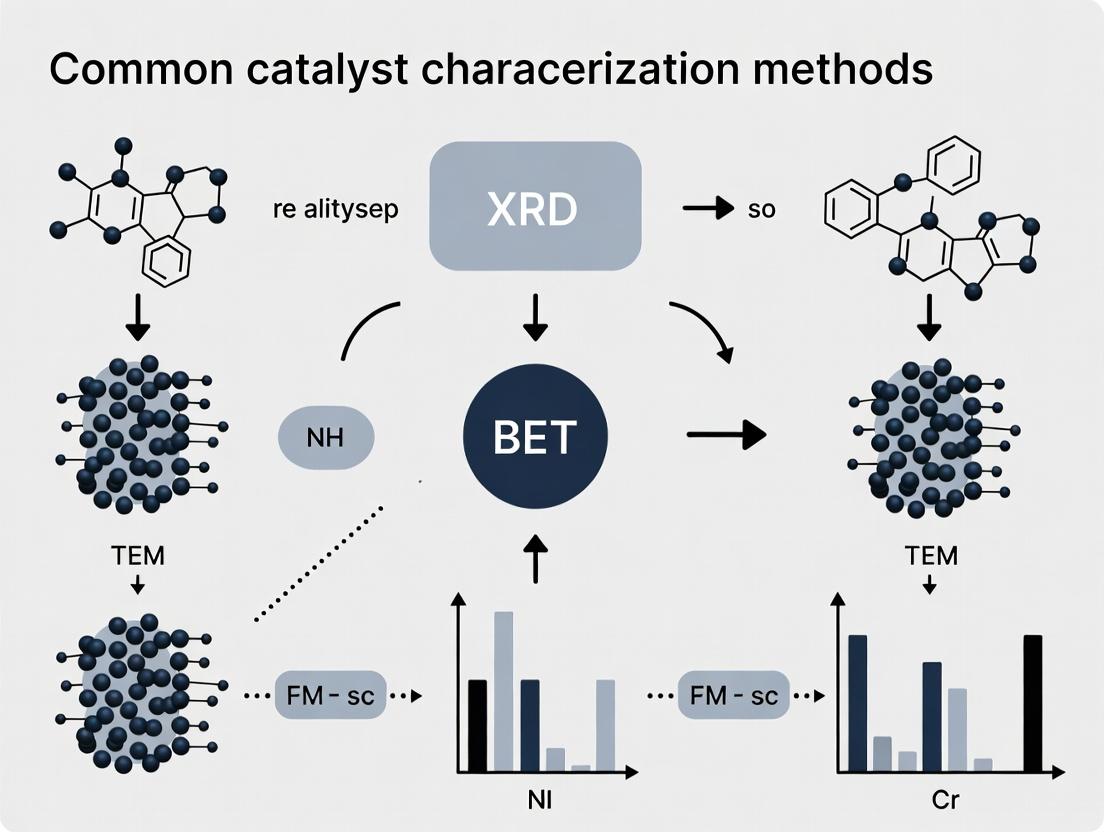
This article provides a detailed overview of the most common catalyst characterization techniques critical for researchers and drug development professionals.
Essential Catalyst Characterization Methods: A Comprehensive Guide for Research and Drug Development
Abstract
This article provides a detailed overview of the most common catalyst characterization techniques critical for researchers and drug development professionals. It explores foundational principles, practical methodologies, troubleshooting strategies, and comparative validation approaches. By understanding these methods, scientists can optimize catalyst performance, ensure reproducibility, and accelerate innovation in biomedical and pharmaceutical applications, from drug synthesis to novel therapeutic agent development.
Understanding Catalyst Characterization: Core Principles and Why It Matters in Research
Within the broader thesis on common catalyst characterization methods, this document provides a foundational definition of the core evaluation framework. Catalyst characterization is the systematic determination of a material's physical and chemical properties to rationalize its performance in accelerating a chemical reaction. The ultimate goal is to establish structure-property-performance relationships. This is achieved by quantifying three interdependent key parameters: Activity, Selectivity, and Stability (often termed the "three S's" of catalysis). This guide details these parameters, their quantitative descriptors, and standard experimental protocols for their measurement.
The Three Pillars of Catalyst Performance
Activity
Activity measures the rate at which a catalyst converts reactants to products under specified conditions. It is the fundamental measure of catalytic potency.
Common Quantitative Descriptors:
- Turnover Frequency (TOF): The number of reactant molecules converted per active site per unit time (s⁻¹ or h⁻¹). The most fundamental measure of intrinsic activity.
- Reaction Rate: The moles (or mass) of reactant consumed or product formed per unit time per unit mass (or volume) of catalyst (e.g., mol·gcat⁻¹·s⁻¹).
- Conversion (%): The fraction (percentage) of a key reactant that is converted.
Experimental Protocol for Activity Measurement (Standard Flow Reactor Test):
- Catalyst Loading: A known mass (typically 50-500 mg) of catalyst (sieve fraction: 150-250 µm) is loaded into a fixed-bed tubular reactor (typically quartz or stainless steel).
- Pre-treatment: The catalyst is activated in situ, often under a flowing gas (e.g., H₂, He) at a defined temperature ramp (e.g., 5 °C/min) to a target temperature (e.g., 300 °C) for a set duration (e.g., 2 h).
- Reaction Conditions: The reactor is brought to desired operating conditions (T, P). Reactant gases/liquids are fed at precisely controlled flow rates using mass flow controllers (gases) or HPLC pumps (liquids).
- Analysis: The effluent stream is analyzed periodically using online analytical equipment (e.g., Gas Chromatograph (GC) with FID/TCD detectors, Mass Spectrometer (MS)).
- Data Calculation: Conversion (X) is calculated as:
X (%) = [(moles_in - moles_out) / moles_in] * 100. TOF requires an independent measurement of the number of active sites (e.g., via chemisorption, see Section 3).
Selectivity
Selectivity defines the catalyst's ability to direct the reaction towards a desired product (D) among multiple possible products. It is critical for atom economy and process cost.
Common Quantitative Descriptors:
- Product Selectivity (S_D): The fraction of converted reactant that forms a specific product D.
- Yield (Y_D): The combined measure of activity and selectivity:
Y_D (%) = X (%) * S_D (%) / 100.
Experimental Protocol for Selectivity Determination:
- Follow the activity test protocol (Steps 1-4 above).
- Product Quantification: Calibrate the analytical system (GC, HPLC) with known standards for all expected reactants and products.
- Data Calculation: For each detected product i, calculate:
S_i (%) = (moles_of_product_i_formed / total_moles_of_reactant_converted) * 100. Carbon balance should be verified (typically 95-105%).
Stability
Stability measures the catalyst's ability to maintain its activity and selectivity over time. Deactivation mechanisms include sintering, coking, poisoning, and leaching.
Common Quantitative Descriptors:
- Lifetime: Total time (hours/days) before activity/selectivity falls below an acceptable threshold.
- Deactivation Rate: The loss of activity per unit time (e.g., % conversion loss per hour).
- Time-on-Stream (TOS) Profile: A plot of conversion/selectivity versus reaction time.
Experimental Protocol for Stability Measurement (Time-on-Stream Analysis):
- Long-Duration Test: The catalyst is tested under standard activity conditions, but the reaction is allowed to proceed continuously for an extended period (e.g., 24-1000+ hours).
- Periodic Sampling: The effluent is analyzed at regular intervals (e.g., every 1-2 hours initially, then less frequently).
- Post-mortem Analysis: After the test, the spent catalyst is characterized (e.g., via Thermogravimetric Analysis (TGA) for coke, Transmission Electron Microscopy (TEM) for particle size) to identify deactivation mechanisms.
Table 1: Core Catalyst Performance Parameters and Metrics.
| Parameter | Key Metric | Typical Unit | Definition/Formula | Ideal Value |
|---|---|---|---|---|
| Activity | Turnover Frequency (TOF) | s⁻¹ or h⁻¹ | (Molecules converted) / (Active site × Time) | High |
| Reaction Rate | mol·gcat⁻¹·s⁻¹ | (Moles converted) / (Catalyst mass × Time) | High | |
| Conversion (X) | % | [(Nin - Nout) / Nin] × 100 | Target-dependent | |
| Selectivity | Product Selectivity (S_D) | % | (Moles of product D) / (Total moles converted) × 100 | High for desired product |
| Yield (Y_D) | % | (X × S_D) / 100 | High | |
| Stability | Deactivation Rate | %·h⁻¹ | (ΔX / ΔTime) | Low (~0) |
| Lifetime | hours | Time to reach X < X_min | Long |
Linking Characterization to Performance: A Logical Workflow
Diagram Title: Catalyst R&D Optimization Cycle
The Scientist's Toolkit: Essential Research Reagent Solutions
Table 2: Key Materials and Reagents for Catalyst Characterization Experiments.
| Item | Function in Characterization | Typical Example/Note |
|---|---|---|
| High-Purity Gases | Used for pretreatment, reaction, and physisorption/chemisorption. | H₂ (reduction), O₂/air (oxidation, TPO), He/Ar (inert carrier, thermal conductivity), N₂ (physisorption), CO (chemisorption for metals). |
| Probe Molecules | Chemisorb to quantify active sites or titrate surface acidity/basicity. | CO (metal dispersion), NH₃ (acid site titration), CO₂ (basic site titration). |
| Catalytic Test Feedstocks | High-purity reactants for activity/selectivity testing. | e.g., Syngas (CO/H₂), Hydrocarbons, Alcohols. Must be contaminant-free. |
| Calibration Standard Mixtures | For quantitative analysis of reactor effluent. | Certified GC/MS calibration mixes for reactants and all expected products. |
| Reference Catalysts | Benchmarks for comparing novel catalyst performance. | e.g., EUROPT-1 (Pt/SiO₂), NIST standards. |
| Thermogravimetric Analysis (TGA) Standards | For calibrating weight-change measurements (coke burn-off, etc.). | Curie point standards (e.g., Alumel, Nickel). |
| Diluent/Support Materials | For catalyst bed management in fixed-bed reactors. | High-purity, inert silicon carbide (SiC) or quartz wool. |
Core Characterization Methods Linked to Key Parameters
Diagram Title: Key Parameters Link to Characterization Techniques
Conclusion Defining catalyst performance through the rigorous quantification of Activity, Selectivity, and Stability provides the essential framework for all subsequent characterization. The experimental protocols and metrics detailed here serve as the standardized language for evaluating catalysts and linking their observable performance to intrinsic material properties, which is the central pursuit of catalyst characterization research.
The Critical Role of Characterization in Rational Catalyst Design and Optimization
Rational catalyst design transcends traditional trial-and-error methodologies by leveraging a fundamental understanding of the relationships between a catalyst's physicochemical properties, its structure, and its resulting performance (activity, selectivity, stability). Characterization provides the essential data to establish these structure-property-activity relationships (SPARs). This whitepaper details the most critical characterization techniques, their protocols, and their quantitative outputs, framed within the thesis that comprehensive, multi-modal characterization is the cornerstone of modern catalyst optimization for applications ranging from chemical synthesis to pharmaceutical development.
Core Characterization Techniques: Methods and Protocols
The following table summarizes key quantitative metrics obtained from common catalyst characterization methods.
Table 1: Common Catalyst Characterization Methods and Key Quantitative Data
| Method (Acronym) | Primary Information Obtained | Key Quantitative Metrics | Typical Measurement Range |
|---|---|---|---|
| X-ray Diffraction (XRD) | Crystalline phase, crystallite size, lattice parameters | Crystallite size (Scherrer), phase composition (%) | Size: 1-100 nm; Detection Limit: ~1-5 wt% |
| Nitrogen Physisorption (BET) | Surface area, pore volume, pore size distribution | Specific Surface Area (m²/g), Pore Volume (cm³/g), Avg. Pore Diameter (nm) | Area: 0.1-1500 m²/g; Pore Size: 0.35-500 nm |
| Temperature-Programmed Reduction/Oxidation/Desorption (TPR/TPO/TPD) | Reducibility, oxidation state, metal dispersion, acid/base site strength & density | Peak Temperature (°C), H2/CO/O2 Consumption (μmol/g), Metal Dispersion (%) | Temp: 25-1000°C; Dispersion: 1-100% |
| Transmission Electron Microscopy (TEM/STEM) | Particle size distribution, morphology, lattice fringes, elemental mapping | Particle Size Distribution (mean ± std dev, nm), Interplanar Spacing (Å) | Size: 0.1-1000 nm; Resolution: ~0.1 nm |
| X-ray Photoelectron Spectroscopy (XPS) | Surface elemental composition, chemical/oxidation states | Atomic Concentration (%), Binding Energy (eV), Peak Area Ratios | Depth: 2-10 nm; Detection Limit: ~0.1 at% |
| Inductively Coupled Plasma Optical Emission Spectrometry (ICP-OES) | Bulk elemental composition | Elemental Concentration (wt%, ppm) | Detection Limit: ppb to ppm range |
Detailed Experimental Protocols
Brunauer-Emmett-Teller (BET) Surface Area Analysis
- Principle: Measures physical adsorption of N₂ gas at liquid nitrogen temperature (77 K) to determine monolayer capacity.
- Protocol:
- Degassing: Pre-treat ~100 mg of catalyst sample in a glass cell at 150-300°C under vacuum (or flowing inert gas) for 3-12 hours to remove adsorbed contaminants.
- Weighing: Accurately weigh the evacuated sample cell.
- Analysis: Place cell on analysis port. The instrument measures adsorbed N₂ volume at incremental relative pressures (P/P₀).
- Data Fitting: Apply BET equation to the linear region of the isotherm (typically P/P₀ = 0.05-0.30) to calculate monolayer volume (Vm). Surface area = (Vm * N * σ) / m, where N is Avogadro's number, σ is cross-sectional area of N₂ (0.162 nm²), and m is sample mass.
H₂ Temperature-Programmed Reduction (H₂-TPR)
- Principle: Monitors consumption of H₂ as temperature is linearly increased, indicating reduction of metal oxides.
- Protocol:
- Pretreatment: Load 50 mg of sample in a U-shaped quartz reactor. Heat in flowing inert gas (Ar) to 150°C for 1 hour to dry.
- Cooling: Cool to 50°C under inert flow.
- Baseline Stabilization: Switch to 5% H₂/Ar mixture (30 mL/min). Allow thermal conductivity detector (TCD) signal to stabilize.
- Temperature Ramp: Heat the reactor at a constant rate (e.g., 10°C/min) to a final temperature (e.g., 800°C).
- Calibration: Inject a known volume of H₂ into the carrier gas for quantitative calibration.
- Data Analysis: Integrate the TCD signal peak. Calculate total H₂ consumption from calibration. Peak temperature indicates reducibility.
Visualizing Characterization-Driven Catalyst Design
Diagram 1: Catalyst Design Characterization Workflow
Diagram 2: Multi-Technique Characterization of a Supported Metal Catalyst
The Scientist's Toolkit: Key Research Reagent Solutions
Table 2: Essential Materials for Catalyst Characterization
| Item | Function & Rationale |
|---|---|
| High-Purity Calibration Gases (5% H₂/Ar, 10% CO/He, etc.) | Essential for TPR, TPD, and chemisorption. Impurities can poison catalyst surfaces and skew quantitative gas consumption data. |
| Certified Reference Materials (e.g., Al₂O₃ for BET, Ag behenate for XRD) | Used to calibrate and validate instrument response, ensuring accuracy and inter-laboratory comparability of data. |
| Ultra-High Purity Solvents (e.g., Acetone, Isopropanol) | For sample preparation (e.g., sonication for TEM grid deposition) without leaving carbonaceous residues that interfere with analysis. |
| Standard Solutions for ICP-OES | Certified elemental standards for creating calibration curves to convert instrument emission intensity into precise concentration (wt%). |
| Specific Probe Molecules (e.g., Pyridine for FTIR, NH₃ for TPD) | Chemisorb selectively to specific site types (e.g., Lewis vs. Brønsted acid sites), allowing quantification of active site density and strength. |
| Micromeritics ASAP Cat Series Reactors | Specialized glassware designed for combined pretreatment and analysis, ensuring sample integrity and reproducible gas flow paths. |
Rational catalyst optimization is an iterative, data-driven cycle powered by characterization. No single technique provides a complete picture; rather, the synergistic integration of bulk, surface, and morphological data—as outlined in the protocols and workflows above—constructs the multidimensional SPAR models necessary for predictive design. By rigorously applying this characterization-centric approach, researchers can systematically advance catalyst performance, accelerating development across energy, chemicals, and pharmaceutical sectors.
Within the broader thesis of identifying the most common catalyst characterization methods in research, this whitepaper details the three primary characterization pillars: Physical, Chemical, and Morphological. These categories encompass the foundational techniques used by researchers and scientists to elucidate the structure-property relationships critical to catalyst performance, with direct analogs in drug development for nanomedicine and delivery systems. Comprehensive characterization is essential for rational design and optimization.
Physical Characterization
Physical characterization assesses intrinsic properties such as size, surface area, porosity, and mechanical strength.
Surface Area and Porosity Analysis (Physisorption)
The Brunauer-Emmett-Teller (BET) method is the standard for determining specific surface area, while pore size distribution is derived from adsorption/desorption isotherms.
Experimental Protocol (BET Surface Area):
- Degassing: A known mass of sample is placed in a sealed tube and heated under vacuum or flowing inert gas to remove adsorbed contaminants (typically 150-300°C for several hours).
- Cooling: The sample is cooled, often to liquid nitrogen temperature (77 K).
- Controlled Adsorption: Incremental doses of an inert gas (typically N₂) are introduced. The quantity adsorbed at each relative pressure (P/P₀) is measured volumetrically or gravimetrically.
- Analysis: Data from the linear region of the isotherm (usually P/P₀ = 0.05-0.30) is fitted to the BET equation to calculate the monolayer adsorbed gas volume, which is converted to surface area.
Quantitative Data: Common Catalyst Materials
Material Typical BET Surface Area (m²/g) Dominant Pore Type Common Application γ-Alumina 150 - 300 Mesoporous Catalyst Support Zeolite Y 600 - 900 Microporous Cracking Catalyst Activated Carbon 900 - 1500+ Micro/Mesoporous Adsorption, Support Silica Gel 300 - 800 Mesoporous Chromatography, Support
X-ray Diffraction (XRD)
XRD identifies crystalline phases, estimates crystallite size, and can determine unit cell parameters.
- Experimental Protocol (Phase Identification):
- Sample Preparation: The catalyst powder is finely ground and packed uniformly into a flat sample holder to ensure a random orientation.
- Measurement: The sample is irradiated with monochromatic X-rays (Cu Kα, λ=1.54 Å) while rotating. The detector scans over a range of 2θ angles (e.g., 5° to 80°).
- Data Analysis: The resulting diffraction pattern (intensity vs. 2θ) is compared to reference patterns in databases (e.g., ICDD PDF-4+). Peak broadening is analyzed using the Scherrer equation to estimate crystallite size.
Chemical Characterization
Chemical characterization identifies elemental composition, oxidation states, surface functionality, and acid-base properties.
X-ray Photoelectron Spectroscopy (XPS)
XPS provides quantitative elemental composition and chemical state information from the top 1-10 nm of a material.
- Experimental Protocol:
- Sample Mounting: Solid samples are mounted on a stub using conductive tape or placed as a powder. In situ treatment (heating, gas exposure) is possible in advanced systems.
- Ultra-High Vacuum (UHV): The chamber is evacuated to ~10⁻⁹ mbar to minimize surface contamination and electron scattering.
- Irradiation & Analysis: The surface is irradiated with a focused X-ray beam (e.g., Al Kα). Emitted photoelectrons are collected by a hemispherical analyzer, which measures their kinetic energy. This is converted to binding energy (BE).
- Fitting: High-resolution spectral regions (e.g., O 1s, C 1s, metal peaks) are deconvoluted using fitting software to assign chemical states (e.g., Mo⁶+ vs. Mo⁴+).
Temperature-Programmed Reduction (TPR)
TPR probes the reducibility of a catalyst and metal-support interactions.
- Experimental Protocol:
- Conditioning: A fixed mass of catalyst (50-100 mg) is loaded into a U-shaped quartz reactor and pre-treated in an inert gas (Ar) flow at a set temperature to clean the surface.
- Reduction: The sample is cooled, then exposed to a reducing gas mixture (e.g., 5% H₂/Ar) at a constant flow rate.
- Temperature Ramp: The reactor temperature is increased linearly (e.g., 10°C/min) up to a target (e.g., 900°C).
- Detection: The hydrogen consumption is monitored in real-time using a thermal conductivity detector (TCD). Peaks in the consumption rate vs. temperature profile correspond to reduction events.
Morphological Characterization
Morphological characterization visualizes the physical structure, particle size, shape, and spatial distribution of components.
Scanning Electron Microscopy (SEM)
SEM provides high-resolution, three-dimensional-like images of surface topography.
- Experimental Protocol:
- Sample Preparation: For non-conductive catalysts (e.g., alumina, zeolites), the sample is coated with a thin layer of conductive material (Au, Pt, or C) via sputter coating to prevent charging.
- Loading & Evacuation: The sample is mounted on a stub and loaded into the microscope chamber, which is evacuated.
- Imaging: A focused electron beam scans the surface. Secondary electrons (SE) emitted from the top few nanometers are collected to form a topographic image. Backscattered electrons (BSE) can be used for compositional contrast.
Transmission Electron Microscopy (TEM)
TEM provides atomic-resolution imaging and crystallographic information via electron diffraction.
- Experimental Protocol (High-Resolution Imaging):
- Ultrathin Sample Prep: Powder samples are dispersed in a solvent (e.g., ethanol) via sonication. A drop of the suspension is deposited on a TEM grid (e.g., lacey carbon film on Cu mesh) and dried.
- Alignment: The grid is loaded into the holder and inserted into the column under high vacuum. The electron gun and lenses are aligned.
- Imaging & Diffraction: The beam is transmitted through thin areas of the sample. For HRTEM, the objective lens defocus is carefully adjusted to achieve phase contrast, revealing lattice fringes. Selected Area Electron Diffraction (SAED) patterns are obtained to identify crystal structures.
Diagram: Characterization Workflow & Interrelationships
Title: Catalyst Characterization Pathways to Performance Properties
The Scientist's Toolkit: Key Research Reagent Solutions
| Item | Primary Function & Explanation |
|---|---|
| High-Purity Gases (H₂, O₂, Ar, N₂, 5% H₂/Ar) | Used for catalyst pre-treatment (activation, oxidation, cleaning), in situ characterization (TPR, TPD), and as carrier gases in analysis. Purity (>99.999%) is critical to avoid poisoning. |
| Liquid Nitrogen (LN₂) | Cryogen for maintaining 77 K temperature during physisorption (BET) measurements and for cooling detectors in various analytical instruments. |
| Reference Catalysts (e.g., NIST standard) | Certified materials with known surface area, particle size, or composition. Used for instrument calibration and validation of experimental protocols. |
| Conductive Coatings (Au, Pt, C) | Thin films sputter-coated onto non-conductive samples for electron microscopy (SEM) to dissipate charge and improve image quality. |
| Quantitative Standard Samples (for XPS, ICP) | Calibration standards with certified elemental concentrations, essential for accurate quantitative analysis in spectroscopic techniques. |
| Ultrasonic Dispersion Bath | Used to properly disperse powdered catalyst samples in solvent for uniform deposition onto TEM grids or other substrates, preventing aggregation. |
Linking Catalyst Properties to Performance in Chemical and Pharmaceutical Synthesis
Within the broader thesis on the most common catalyst characterization methods, this guide establishes a critical link between quantitative catalyst properties and their performance in synthetic applications. For researchers in chemical and pharmaceutical development, this connection is paramount for rational catalyst design and process optimization.
Core Catalyst Characterization Methods
The following table summarizes key characterization techniques, their measured properties, and the performance metrics they influence.
Table 1: Catalyst Characterization Methods and Linked Performance Indicators
| Characterization Method | Primary Property Measured | Linked Performance Metric | Typical Quantitative Data Range |
|---|---|---|---|
| X-ray Diffraction (XRD) | Crystallite size, Phase purity | Activity, Selectivity, Stability | Crystallite Size: 1-100 nm; Phase ID: Qualitative |
| Surface Area Analysis (BET) | Specific Surface Area (SSA) | Activity, Dispersion | SSA: 10-1500 m²/g for heterogeneous catalysts |
| Transmission Electron Microscopy (TEM) | Particle size distribution, Morphology | Activity, Selectivity, Lifetime | Particle Size: 0.5-20 nm (metal nanoparticles) |
| X-ray Photoelectron Spectroscopy (XPS) | Surface composition, Oxidation states | Activity, Selectivity, Poisoning resistance | Atomic %: 0.1-100%; Binding Energy Shifts: ±0.1-4 eV |
| Temperature-Programmed Reduction (TPR) | Reducibility, Metal-support interaction | Activation energy, Stability | Reduction Temp: 50-900°C; H₂ Consumption: µmol/g |
| Chemisorption | Active site concentration, Dispersion | Turnover Frequency (TOF) | Metal Dispersion: 10-100%; Active Site Count: µmol/g |
Experimental Protocols for Key Characterization-Performance Linkages
Protocol 1: Correlating Metal Dispersion (Chemisorption) to Hydrogenation TOF
Objective: Quantify active Pd sites via H₂ chemisorption and correlate to turnover frequency in a model nitroarene hydrogenation. Materials: Pd/Al₂O₃ catalyst (reduced), High-purity H₂ (99.999%), He (99.999%), Chemisorption analyzer, Batch reactor. Procedure:
- Pretreatment: Load ~0.1 g catalyst. Heat to 150°C under He flow (30 mL/min) for 1 hour to remove physisorbed species.
- Reduction: Switch to 5% H₂/He, heat to 400°C (10°C/min), hold for 2 hours. Cool to 35°C under He.
- Pulse Chemisorption: Inject calibrated pulses of H₂ (5% in He) until saturation. Quantify H₂ uptake per pulse via TCD.
- Calculation: Assume H:Psurface = 1:1 stoichiometry. Calculate %Dispersion = (H atoms adsorbed / Total Pd atoms) × 100.
- Performance Test: In a parallel experiment, conduct hydrogenation of nitrobenzene (0.1 M in methanol) at 25°C, 3 bar H₂. Sample periodically for GC analysis.
- Linkage: Calculate TOF = (moles nitrobenzene converted per hour) / (moles of surface Pd from chemisorption).
Protocol 2: Linking Acid Site Strength (NH₃-TPD) to Catalytic Cracking Rates
Objective: Measure acid site density and strength distribution via NH₃-Temperature Programmed Desorption (TPD) and correlate to n-hexane cracking activity. Materials: Zeolite catalyst (H-ZSM-5), 5% NH₃/He, TPD apparatus with mass spectrometer, Microactivity reactor. Procedure:
- Pretreatment: Activate 0.05 g catalyst at 500°C under He for 1 hour.
- Adsorption: Cool to 100°C. Expose to 5% NH₃/He for 30 min. Flush with He for 1 hour to remove physisorbed NH₃.
- TPD Analysis: Heat to 700°C at 10°C/min under He flow. Monitor NH₃ (m/z=16) via MS.
- Quantification: Deconvolute TPD peaks (e.g., ~200°C for weak, ~350°C for medium, ~450°C for strong sites). Calculate acid site density (µmol NH₃/g).
- Performance Test: In a fixed-bed microreactor, pass n-hexane (WHSV = 2 h⁻¹) over 0.1 g catalyst at 400°C. Analyze effluent by online GC.
- Linkage: Plot initial cracking rate constant (k) versus density of strong acid sites (>400°C desorption).
Visualization of Key Relationships and Workflows
Diagram 1: Catalyst Property-Performance Feedback Loop
Diagram 2: Integrated Catalyst Characterization Workflow
The Scientist's Toolkit: Essential Research Reagent Solutions
Table 2: Key Reagents and Materials for Catalyst Characterization
| Item | Function | Example Application |
|---|---|---|
| High-Purity Calibration Gases (H₂, CO, O₂, NH₃ in He/Ar) | Quantifying active sites via chemisorption and TPD. | Pulse chemisorption for metal dispersion; NH₃-TPD for acid site density. |
| Standard Reference Catalysts (e.g., NIST RM 8855 - 2% Pt/Al₂O₃) | Benchmarking and validating characterization equipment and protocols. | Validating H₂ chemisorption measurements. |
| In-situ/Operando Cells (e.g., XRD, IR, XAS) | Monitoring catalyst structure under reaction conditions. | Linking Pd oxidation state (via XANES) to catalytic activity in real-time. |
| Certified Surface Area Standards (e.g., Al₂O₃ powders) | Calibrating BET surface area analyzers. | Ensuring accuracy of specific surface area measurements for porous supports. |
| Deconvolution Software (e.g., for XPS, TPD peaks) | Extracting quantitative information from complex spectroscopic/desorption data. | Quantifying relative abundances of different surface species or acid site strengths. |
The rational design of catalysts for chemical and pharmaceutical synthesis hinges on the robust, quantitative linkage between intrinsic physicochemical properties and observed performance. By systematically applying the characterization methods, experimental protocols, and integrative analysis outlined herein, researchers can move beyond empirical optimization to achieve predictive catalyst design, accelerating development cycles and enhancing process sustainability.
Within the broader thesis on common catalyst characterization methods, the integrity of all subsequent analytical data is irrevocably dependent on the initial steps of sample preparation and handling. This guide details the critical, often overlooked, protocols that precede characterization techniques such as X-ray Photoelectron Spectroscopy (XPS), Transmission Electron Microscopy (TEM), and Nitrogen Physisorption. Neglecting these protocols introduces artifacts, contaminations, and non-representative data, compromising the entire research endeavor.
Core Sample Preparation Principles
The primary objectives are to preserve the catalyst's intrinsic state (oxidation state, morphology, dispersion) and to ensure the sample is representative of the bulk material.
1. Atmosphere Control: Air-sensitive catalysts (e.g., reduced metals, organometallics) require inert atmosphere handling (glovebox, Schlenk line) to prevent oxidation or decomposition.
2. Contamination Minimization: Sources include skin oils, dust, previous analytical residues, and outgassing from containers. Use powder-handling tools (spatulas, micro-scoops) dedicated to single materials.
3. Representative Sampling: For bulk powders, use coning and quartering or a rotary sample divider to obtain a statistically relevant aliquot.
4. Pre-analysis Cleaning/Activation: Many catalysts require in-situ or ex-situ pre-treatment (calcination, reduction, passivation) before characterization. The protocol must be documented precisely.
Table 1: Common Sample Preparation Artifacts in Catalyst Characterization
| Characterization Method | Common Artifact | Root Cause in Preparation | Mitigation Protocol |
|---|---|---|---|
| XPS / Surface Analysis | Carbonaceous contamination, Oxidation state shift | Ambient exposure, improper transfer | In-situ fracture, argon-ion cleaning, inert transfer vessels, fast load-lock introduction. |
| TEM / Microscopy | Agglomeration, Support damage, Contamination | Dispersion solvent interaction, electron beam damage, grid contamination | Use correct solvent (e.g., ethanol vs. water), low-dose imaging, plasma cleaning of grids. |
| BET Surface Area | Degassing artifacts, Micropore collapse | Insufficient/overly aggressive degassing, moisture retention | Temperature-programmed degassing with monitoring; use of recommended pre-treatment temperatures. |
| XRD / Crystallography | Preferred orientation, Amorphous halos | Improper sample packing in holder, contamination | Side-loading into XRD holder, back-pressing, use of zero-background holders. |
| Chemisorption | Over/under-estimation of metal dispersion | Incomplete reduction/oxidation, spillover, sintering during pre-treatment | Follow precise temperature ramps and hold times for pre-treatment; use oxidation-reduction cycles. |
Detailed Experimental Protocols
Protocol 1: Inert Transfer of Air-Sensitive Catalyst for XPS
- Objective: To transfer a pyrophoric reduced metal catalyst from a glovebox to an XPS instrument without air exposure.
- Materials: Glovebox (O₂ & H₂O < 1 ppm), inert transfer vessel (sealable, with KF or ConFlat flanges), XPS with fast-entry load-lock.
- Procedure:
- Inside the glovebox, secure the powder sample onto a standard XPS stub using double-sided conductive carbon tape. Do not compress.
- Place the sample stub into the transfer vessel and seal it inside the glovebox.
- Attach the sealed transfer vessel to the evacuated load-lock of the XPS.
- Open the valve between the transfer vessel and load-lock, allowing pressure equalization.
- Use a magnetic transfer rod to move the sample from the vessel into the XPS introduction chamber.
- Close the load-lock, pump it down, and introduce the sample into the main analysis chamber.
Protocol 2: Preparing a Dispersed TEM Sample from a Supported Catalyst Powder
- Objective: To deposit isolated, non-agglomerated catalyst particles on a TEM grid for accurate size/distribution analysis.
- Materials: Ultrasonic bath, high-purity dispersant solvent (e.g., isopropyl alcohol), lacey carbon TEM grids, plasma cleaner, micropipette.
- Procedure:
- Place ~0.5 mg of catalyst powder into a clean glass vial with 1-2 mL of solvent. The solvent must not react with or degrade the catalyst.
- Sonicate the suspension for 5-10 minutes to break up soft agglomerates.
- While sonicating, plasma-clean the TEM grid for 30 seconds to render it hydrophilic.
- Using a micropipette, place a single drop (5-10 µL) of the well-dispersed suspension onto the grid.
- Allow the solvent to evaporate fully in a clean, dust-free environment.
- For unstable catalysts, a brief (5-second) second sonication of the grid in clean solvent can remove loosely bound particles, preventing pile-up.
Workflow and Relationship Visualizations
Title: Catalyst Sample Preparation Decision Workflow
Title: Sample Threats & Mitigation Methods
The Scientist's Toolkit: Research Reagent Solutions
Table 2: Essential Materials for Catalyst Pre-Characterization
| Item | Function & Importance |
|---|---|
| Anaar/Glovebox | Provides an inert atmosphere (Ar, N₂) for handling air- and moisture-sensitive catalysts, preventing oxidation state changes pre-analysis. |
| Inert Transfer Vessels | Sealable containers (e.g., with KF flanges) that maintain an inert environment during sample transport from glovebox to instrument. |
| Plasma Cleaner | Generates reactive oxygen/hydrogen species to remove hydrocarbon contamination from TEM grids, SEM stubs, and other substrates. |
| Ultra-High Purity Solvents | HPLC or anhydrous grade solvents (e.g., ethanol, isopropanol) minimize inorganic residues when preparing dispersions for TEM or wash-coating. |
| Lacey Carbon TEM Grids | Provide minimal background structure and better particle support than continuous carbon films, crucial for high-resolution TEM. |
| Conductive Carbon Tape/Dag | Provides electrical contact for insulating samples in electron microscopy and XPS, preventing charging artifacts. |
| Sample Crusher/Press (Hydraulic) | For pressing powders into uniform pellets for XPS or XRD analysis, ensuring a flat, representative surface. |
| Micromesh Sieves | Used to isolate specific particle size fractions (e.g., <38 µm) to ensure sample uniformity and reproducibility in packed-bed analyses. |
| Quartz Wool/Tube | Inert, high-temperature material for packing catalysts into U-tubes for pre-treatment (degassing, reduction) prior to chemisorption. |
| Certified Reference Materials | Standard catalysts (e.g., from NIST) with known surface area, dispersion, or crystallite size, used to validate preparation and analysis protocols. |
A Deep Dive into Common Characterization Techniques: How-To and Applications
In the comprehensive study of heterogeneous catalysts, characterizing textural properties—specifically surface area, pore volume, and pore size distribution—is foundational. Among the suite of catalyst characterization methods (including XRD, XPS, TEM, TPR/TPD), gas physisorption analysis, particularly employing the Brunauer-Emmett-Teller (BET) theory, is a cornerstone technique. It provides critical quantitative data on the catalyst's physical structure, which directly influences its activity, selectivity, and stability by dictating reactant accessibility to active sites.
Fundamentals of Gas Physisorption
Gas physisorption involves the reversible adherence of gas molecules (adsorptive, e.g., N₂, Ar, CO₂) to a solid surface (adsorbent) via weak van der Waals forces. The amount adsorbed as a function of relative pressure (P/P₀) at constant temperature (typically 77 K for N₂) yields an adsorption isotherm. The isotherm's shape reveals fundamental information about the material's porosity.
Table 1: IUPAC Physisorption Isotherm Classification & Pore Type
| Isotherm Type | General Shape | Hysteresis Loop | Typical Pore Structure |
|---|---|---|---|
| I | Microporous (Langmuir) | None | Micropores (< 2 nm) |
| II | Non-porous or macroporous | None | Non-porous or macroporous (> 50 nm) |
| IV | Mesoporous | H1, H2, H3 | Mesopores (2-50 nm), ordered or disordered |
| VI | Layered materials | None | Stepwise adsorption on uniform surfaces |
The BET Theory for Surface Area Determination
The BET theory extends the Langmuir model to multilayer adsorption. It is applied within a relative pressure range (typically 0.05-0.30 for N₂) where multilayer formation commences.
The linearized BET equation is: [ \frac{P/P0}{n(1-P/P0)} = \frac{1}{nm C} + \frac{C-1}{nm C} (P/P0) ] Where *n* is adsorbed amount, *nm* is monolayer capacity, and C is the BET constant related to adsorbate-adsorbent interaction.
Table 2: Common Adsorptive Gases for BET Analysis
| Gas | Analysis Temperature | Molecular Cross-Section (Ų) | Typical Application |
|---|---|---|---|
| Nitrogen (N₂) | 77 K (liquid N₂ bath) | 16.2 | Standard surface area & mesoporosity |
| Argon (Ar) | 87 K (liquid Ar bath) | 14.2 | More accurate for microporous materials |
| Krypton (Kr) | 77 K | 20.2 | Very low surface areas (< 1 m²/g) |
| Carbon Dioxide (CO₂) | 273 K (ice bath) | 17.0-18.0 | Ultramicropore (< 0.7 nm) analysis |
Detailed Experimental Protocol for N₂ Physisorption at 77 K
Materials & Sample Preparation:
- Sample Tube: A glass cell with a calibrated bulb for sample containment.
- Sample (~50-200 mg): Must be degassed to remove contaminants.
- Degassing Station: Heated manifold under vacuum or flowing inert gas.
- Physisorption Analyzer: Equipped with high-accuracy pressure transducers, a dosing system, and a 77 K cryostat.
Procedure:
- Sample Preparation & Degassing: Weigh the sample into a clean, dry sample tube. Attach to degassing station. Apply vacuum (< 10⁻³ mbar) and heat (temperature/material dependent, typically 150-300°C for 3-12 hours). This removes physisorbed water and contaminants.
- Tube Taring: After degassing, seal the tube and accurately weigh it to determine the outgassed sample mass.
- Analysis Station Setup: Mount the sample tube on the analysis port. Immerse the sample bulb in a 77 K liquid nitrogen Dewar. The system is evacuated.
- Free Space Measurement: The volume not occupied by the sample (free space) is determined using helium (non-adsorbing at 77 K) or via a measured expansion from a calibrated volume.
- Isotherm Measurement: The system admits precise, incremental doses of high-purity N₂. After each dose, the system equilibrates, and the adsorbed amount is calculated via manometric (volumetric) or gravimetric methods. This continues up to P/P₀ ≈ 0.99 (adsorption branch).
- Desorption Branch: Pressure is reduced in steps from saturation to complete desorption, generating the desorption branch. The hysteresis loop (adsorption vs. desorption) is critical for pore analysis.
- Data Reduction: The instrument software calculates the quantity adsorbed at each pressure point, generating the raw isotherm data.
Data Analysis: From Isotherm to Report
A. BET Surface Area:
- Select the linear region of the BET plot (usually 0.05-0.30 P/P₀).
- Perform linear regression. Calculate monolayer capacity (n_m) from slope and intercept.
- Calculate BET surface area: ( S{BET} = (nm \cdot NA \cdot \sigma) / (M \cdot m) ), where *NA* is Avogadro's number, σ is adsorbate cross-sectional area, M is molar mass, and m is sample mass.
B. Pore Size Distribution (PSD): The Barrett-Joyner-Halenda (BJH) method is standard for mesopores. It applies the Kelvin equation to the desorption branch (or adsorption for some materials) to relate the pressure at which pores fill/empty to their radius.
Table 3: Key Textural Parameters from Physisorption Analysis
| Parameter | Calculation Method | Typical Units | Physical Meaning |
|---|---|---|---|
| BET Surface Area | BET Theory (0.05-0.30 P/P₀) | m²/g | Total specific surface area |
| Total Pore Volume | Amount adsorbed at P/P₀ ~0.99 (as liquid) | cm³/g | Total volume of pores |
| Micropore Volume | t-Plot, α-s-Plot, or DFT | cm³/g | Volume of pores < 2 nm |
| Mesopore Volume | BJH cumulative adsorption | cm³/g | Volume of pores 2-50 nm |
| Average Pore Width | 4V/A by BET (simplified) | nm | Hydraulic mean diameter |
C. Advanced Methods: For microporous materials (zeolites, MOFs), t-plots, α-s-plots, and Non-Local Density Functional Theory (NLDFT) or Quenched Solid DFT (QSDFT) models provide more accurate PSDs.
Visualization of Workflows
BET & Pore Analysis Workflow
BET Theory & Pore Model Logic
The Scientist's Toolkit: Essential Research Reagents & Materials
Table 4: Key Reagent Solutions & Materials for Physisorption Analysis
| Item Name | Function / Purpose | Critical Specifications |
|---|---|---|
| High-Purity Adsorptive Gases (N₂, Ar, Kr, CO₂) | The probe molecules for adsorption measurement. | 99.999% purity or higher to prevent contamination and ensure accurate pressure readings. |
| Liquid Nitrogen / Argon | Cryogen to maintain analysis bath at constant temperature (77 K or 87 K). | Requires a stable, low-loss Dewar flask. Purity not critical for bath cooling. |
| Helium Gas (Grade 5.0 or higher) | Used for free space (dead volume) calibration and sample tube taring. | Non-adsorbing at 77 K under analysis conditions. High purity essential. |
| Sample Tubes with Fill Rods | Hold the solid sample during degassing and analysis. | Calibrated volume (bulb), made of borosilicate glass. Fill rods reduce dead volume for low-SA samples. |
| High-Vacuum Grease (Apiezon H, etc.) | Ensures vacuum-tight seals on glass joints. | Low vapor pressure to prevent outgassing and contamination during degassing/analysis. |
| Microporous Reference Materials (e.g., Alumina, Carbon Blacks) | Used for instrument calibration and validation of BET/PSD calculations. | Certified surface area and pore volume (e.g., from NIST, BAM). |
| Degas Station | Removes adsorbed volatiles from the sample surface prior to analysis. | Capable of high vacuum (<10⁻³ mbar) and controlled heating (ambient to 300+ °C). |
| Regeneration Ovens | For high-temperature (>300°C) removal of stubborn contaminants from samples or tubes. | Used in air or under flow for catalyst pre-treatment beyond standard degassing. |
Within the comprehensive thesis on the most common catalyst characterization methods, X-ray Diffraction (XRD) stands as a cornerstone technique for structural and crystalline phase analysis. It is indispensable for researchers and scientists in fields ranging from heterogeneous catalysis to pharmaceutical polymorph screening. XRD provides definitive information on crystalline structure, phase composition, lattice parameters, crystallite size, and strain. For catalyst development, it identifies active phases, supports, and potential poisons, while in drug development, it is critical for identifying polymorphs, hydrates, and salts, which directly influence bioavailability and stability. This guide details the core principles, modern methodologies, and data interpretation protocols for XRD analysis.
Fundamental Principles
XRD is based on Bragg's Law: nλ = 2d sinθ, where n is an integer (order of reflection), λ is the X-ray wavelength, d is the interplanar spacing, and θ is the angle of incidence. When X-rays interact with a crystalline material, constructive interference occurs only at specific angles where the path difference between waves reflected from successive crystal planes is an integer multiple of the wavelength. The resulting diffraction pattern is a fingerprint of the atomic arrangement within the crystal.
Experimental Protocols
3.1 Sample Preparation
- Powder Samples: The sample must be a fine, homogeneous powder to ensure random orientation of crystallites. Typically, 50-500 mg of material is ground in an agate mortar and pestle to a particle size of <10 μm. The powder is then packed into a flat-sample holder or a capillary to minimize preferred orientation.
- Thin Films & Bulk Solids: For solid catalysts or coated substrates, a specialized stage is used to mount the sample. Measurement may require grazing incidence geometry to enhance signal from the thin film.
3.2 Data Collection (Standard Powder XRD)
- Instrument Setup: A modern Bragg-Brentano geometry diffractometer with a Cu Kα X-ray source (λ = 1.5406 Å) is standard. The tube voltage and current are typically set to 40 kV and 40 mA.
- Measurement Parameters: Data is collected in a continuous scan mode over a 2θ range (e.g., 5° to 80°). A step size of 0.01° to 0.02° and a counting time of 0.5-2 seconds per step provide a good balance between resolution and time.
- Ambient Conditions: Most analyses are performed at ambient temperature and pressure. In situ or operando cells are used for catalyst studies under reactive gas atmospheres and elevated temperatures.
3.3 Phase Identification (Qualitative Analysis)
- The experimental diffraction pattern is processed (background subtraction, Kα2 stripping).
- The positions (2θ) and relative intensities (I/I1) of the peaks are extracted.
- This data is compared to reference patterns in the International Centre for Diffraction Data (ICDD) PDF-4+ database using search-match software (e.g., JADE, HighScore Plus).
3.4 Rietveld Refinement (Quantitative Analysis) For quantitative phase analysis and precise lattice parameter determination, the Rietveld method is employed. This involves fitting a calculated pattern, based on crystal structure models, to the entire observed pattern via least-squares minimization.
Data Presentation
Table 1: Common XRD Parameters for Catalyst & Pharmaceutical Analysis
| Parameter | Typical Value/Range | Function/Purpose |
|---|---|---|
| X-ray Source | Cu Kα (λ=1.5406 Å) | Most common; balances penetration and resolution. |
| Voltage/Current | 40 kV / 40 mA | Standard power for laboratory diffractometers. |
| 2θ Range | 5° - 80° (powder) | Captures major diffraction lines for most materials. |
| Step Size | 0.01° - 0.02° | Determines angular resolution of the pattern. |
| Time per Step | 0.5 - 2 s | Influences signal-to-noise ratio; longer times improve statistics. |
| Crystallite Size (Scherrer) | 1 - 100 nm | Estimated from peak broadening (Size = Kλ / (β cosθ)). |
| Detection Limit | ~0.5 - 2 wt% | Minimum crystalline phase concentration detectable. |
Table 2: Key Information Extracted from XRD Analysis
| Information | Derived From | Significance for Catalysts/Drugs |
|---|---|---|
| Phase Identity | Peak positions (2θ) | Identifies active phase (e.g., CeO₂, ZSM-5), support, impurities, or polymorphic form (e.g., Form I vs. Form II). |
| Phase Quantity | Relative peak intensities/ Rietveld | Determines phase abundance in a mixture (e.g., % anatase vs. rutile TiO₂). |
| Lattice Parameters | Precise peak positions | Indicates doping, solid solution formation, or strain (e.g., Pt alloying in nanoparticles). |
| Crystallite Size | Peak broadening (β) | Relates to active surface area (smaller size = higher area). Critical for nano-catalysts. |
| Crystallinity | Sharpness of peaks | Distinguishes amorphous vs. crystalline content; affects stability and dissolution rate. |
| Preferred Orientation | Deviation in relative intensities | Indicates non-random grain alignment, common in thin films or shaped catalysts. |
Visualization of Workflows
Figure 1: XRD Data Analysis Workflow
Figure 2: Bragg's Law and Diffraction Condition
The Scientist's Toolkit: Research Reagent Solutions
Table 3: Essential Materials for XRD Analysis
| Item | Function/Explanation |
|---|---|
| Agate Mortar & Pestle | For grinding samples to a fine, homogeneous powder without contaminating the sample. |
| Flat-Plane Sample Holder | A metal or glass plate with a cavity to hold powder; ensures a flat, level surface for analysis. |
| Zero-Background Holder (e.g., Silicon) | A single-crystal slice that produces no diffraction peaks, providing a low-background substrate for sparse samples. |
| Standard Reference Materials (e.g., NIST Si 640c) | Certified crystalline material with known lattice parameter for instrument calibration and alignment. |
| Capillary Tubes (Glass/Quartz) | For mounting powders that are air-sensitive or require measurement in transmission geometry. |
| Kα2 Stripping Software | Algorithm to remove the contribution of the Kα2 emission line, simplifying the pattern for analysis. |
| ICDD PDF-4+ Database | Commercial database containing reference diffraction patterns for hundreds of thousands of crystalline phases. |
| Rietveld Refinement Software (e.g., GSAS-II, TOPAS) | Advanced software for full-pattern fitting to extract quantitative structural parameters. |
Within the comprehensive framework of catalyst characterization research, electron microscopy stands as a cornerstone technique for direct, high-resolution visualization of catalyst morphology and particle size distribution. These parameters are intrinsically linked to catalytic activity, selectivity, and stability. This guide details the application of Scanning Electron Microscopy (SEM) and Transmission Electron Microscopy (TEM) for the rigorous analysis of solid catalysts, from nanoparticles to porous supports.
SEM provides topographical and compositional information by scanning a focused electron beam across the surface and detecting secondary or backscattered electrons. TEM transmits electrons through an ultrathin specimen to generate a projection image, offering atomic-scale resolution and crystallographic data.
Table 1: Comparative Analysis of SEM and TEM for Catalyst Characterization
| Parameter | Scanning Electron Microscopy (SEM) | Transmission Electron Microscopy (TEM) |
|---|---|---|
| Primary Information | Surface topology, morphology, bulk composition. | Internal structure, crystallography, atomic arrangement, particle size. |
| Typical Resolution | ~0.5 nm to 5 nm. | <0.05 nm to 0.2 nm (sub-Ångstrom possible). |
| Sample Thickness | Bulk samples (mm scale). | Ultrathin samples (<100 nm). |
| Imaging Mode | Surface scanning. | Transmission through the sample. |
| Key for Catalysis | Pore structure of supports, large-scale aggregation, coating uniformity. | Nanoparticle size/distribution, lattice fringes, core-shell structures. |
| Quantitative Data | Particle size (if on surface), elemental mapping (EDS). | Precise particle size distribution, interplanar spacing, facet analysis. |
Experimental Protocols
Sample Preparation for SEM Analysis
- Goal: To render the catalyst sample conductive and stable under the electron beam.
- Protocol:
- Dispersion: For powder catalysts, disperse lightly onto an adhesive carbon tab mounted on an aluminum stub.
- Drying: Dry thoroughly in a desiccator to remove moisture.
- Sputter Coating (for non-conductive samples): Place the stub in a sputter coater. Deposit a thin layer (5-20 nm) of a conductive material (gold/palladium or carbon) using an argon plasma under low pressure. Carbon coating is preferred if subsequent Energy-Dispersive X-ray Spectroscopy (EDS) is needed.
- Alternative: Carbon Tape: For conductive samples, secure directly with conductive carbon tape.
Sample Preparation for TEM Analysis
- Goal: To produce an electron-transparent region of the catalyst.
- Protocol:
- Dispersion: Suspend a small amount of catalyst powder in a high-purity, volatile solvent (e.g., ethanol or isopropanol). Use sonication for 5-15 minutes to achieve a mild, homogeneous dispersion.
- Deposition: Apply a droplet (3-5 µL) of the suspension onto a lacey carbon film supported on a copper or gold TEM grid. Allow to dry in a clean environment.
- Alternative: Ultramicrotomy: For complex or soft materials, embed catalyst particles in a resin, then slice into 50-70 nm thick sections using a diamond knife.
Image Acquisition and Particle Size Analysis
- Goal: To collect statistically relevant micrographs and derive particle size distribution (PSD).
- Protocol (TEM-based PSD):
- Imaging: Acquire multiple micrographs at different, random locations on the grid at appropriate magnifications (e.g., 200,000x - 600,000x).
- Calibration: Use the image scale bar for spatial calibration.
- Measurement: Using image analysis software (e.g., ImageJ, Gatan DigitalMicrograph, proprietary software), manually or automatically trace the perimeter of at least 200-300 distinct nanoparticles.
- Calculation: For each particle, calculate the diameter (for spherical assumptions) or area. For non-spherical particles, report equivalent circular diameter or major/minor axis lengths.
- Statistics: Generate a histogram and report the mean particle size (d), standard deviation (σ), and dispersion index (σ/d).
Workflow and Data Interpretation
Diagram Title: SEM/TEM Catalyst Analysis Workflow
The Scientist's Toolkit: Essential Reagents & Materials
Table 2: Key Research Reagent Solutions for EM Catalyst Analysis
| Item | Function & Purpose |
|---|---|
| Conductive Carbon Tape/Double-Sided | Securely mounts powder samples to SEM stubs while providing electrical conductivity to prevent charging. |
| Adhesive Carbon Tabs | Placed on SEM stubs; provide a conductive, adhesive surface for easy powder sample mounting. |
| TEM Grids (Cu, Au, Ni) | Micron-scale mesh supports (e.g., 200-400 mesh) coated with a lacey or continuous carbon film to hold the ultrathin sample. |
| High-Purity Solvents (Isopropanol, Ethanol) | For dispersing catalyst powders without introducing impurities that could contaminate the TEM column or obscure sample details. |
| Sputter Coating Targets (Au/Pd, C, Pt) | High-purity metal or carbon sources for depositing a thin, conductive layer on non-conductive samples for SEM. |
| Ultramicrotomy Kit (Resin, Diamond Knife) | For embedding and sectioning soft or composite catalyst materials to create electron-transparent thin sections for TEM. |
| Reference Calibration Standards (e.g., SiO2 spheres, Grating) | Samples with known feature sizes used to calibrate the magnification and spatial measurements of the microscope. |
Advanced Correlative Characterization in Catalysis Research
Modern catalyst characterization integrates EM with other techniques. SEM-EDS provides simultaneous elemental composition mapping. TEM coupled with Selected Area Electron Diffraction (SAED) identifies crystal phases. High-resolution TEM (HRTEM) reveals atomic lattice fringes, critical for understanding active sites.
Diagram Title: EM Role in Integrated Catalyst Characterization
Within the broader thesis investigating common catalyst characterization methods, X-ray Photoelectron Spectroscopy (XPS) stands as an indispensable, quantitative technique for probing surface chemistry. Unlike bulk analysis methods, XPS provides critical information about the elemental composition, chemical state, and electronic structure of the outermost layers (typically 1-10 nm) of a solid catalyst. This surface sensitivity is paramount, as the catalytic activity and selectivity are governed by the atoms present at the interface. When integrated with other core methods such as XRD (bulk structure), TEM (morphology), and BET (surface area), XPS completes a comprehensive picture of catalyst structure-property relationships, essential for researchers and development professionals across chemical synthesis, energy conversion, and pharmaceutical manufacturing.
Core Principles and Quantitative Data
XPS operates on the photoelectric effect. A sample is irradiated with monochromatic X-rays (e.g., Al Kα, 1486.6 eV), ejecting core-level photoelectrons. The measured kinetic energy (KE) of these electrons is used to calculate their binding energy (BE): BE = hν - KE - Φ, where hν is the X-ray photon energy and Φ is the spectrometer work function.
The resulting spectrum presents peaks at characteristic BEs, identifying elements present (except H and He). Chemical state information is derived from chemical shifts—small BE changes due to the formal oxidation state and local chemical environment.
Table 1: Characteristic XPS Binding Energies and Chemical Shifts for Common Catalyst Elements
| Element & Core Level | Metallic State (eV) | Common Oxide State (eV) | Shift (Δ eV) | Key Catalyst Relevance |
|---|---|---|---|---|
| Al 2p | 72.7 (Al metal) | 74.5-75.5 (Al₂O₃) | +1.8 to +2.8 | Alumina support |
| Ti 2p₃/₂ | 454.0 (Ti metal) | 458.5-459.0 (TiO₂) | +4.5 to +5.0 | TiO₂ photocatalyst |
| C 1s | 284.8 (C-C/C-H) | 288.5-290 (O-C=O) | +3.7 to +5.2 | Adventitious carbon, catalyst coke |
| O 1s | 530.0-531.0 (Metal-O) | 531.5-533.0 (C-O, H₂O) | +1.0 to +3.0 | Distinguish lattice vs. adsorbed oxygen |
| N 1s | 398.5-399.5 (Pyridinic N) | 400.5-401.5 (Graphitic N) | +1.0 to +2.0 | N-doped carbon catalysts |
| Pd 3d₅/₂ | 335.1-335.5 (Pd⁰) | 336.5-337.5 (PdO) | +1.5 to +2.5 | Pd oxidation state in catalysis |
| Pt 4f₇/₂ | 71.0-71.2 (Pt⁰) | 72.5-74.5 (PtO₂) | +1.5 to +3.5 | Deactivation via oxidation |
Table 2: Quantitative Data from a Model Bimetallic Catalyst (Pt-Co/Al₂O₃) Analysis
| Measured Parameter | Value | Instrument/Parameters | Interpretation |
|---|---|---|---|
| Surface Atomic % (Survey Scan) | O: 55.2%, Al: 25.1%, C: 12.8%, Pt: 0.9%, Co: 5.0% | Kratos Axis Supra, Pass Energy 160 eV | Confirms Co & Pt surface presence; C is adventitious. |
| Pt 4f₇/₂ BE | 71.3 eV | Monochromatic Al Kα, Spot: 110 μm, Pass Energy 20 eV | BE consistent with metallic Pt⁰. |
| Co 2p₃/₂ BE & Satellite | 780.5 eV (Intense Satellite) | Monochromatic Al Kα, Pass Energy 20 eV | BE and signature satellite indicate Co²⁺ in Co₃O₄ spinel. |
| Estimated Pt:Co Ratio | 1 : 5.6 | From Pt 4f and Co 2p peak area sensitivity factors | Surface enrichment of Co relative to bulk synthesis ratio. |
| In-Depth Composition (After 120s Ar⁺ Sputter) | O: 48.1%, Al: 30.5%, C: 3.5%, Pt: 1.5%, Co: 16.4% | Sputter rate ~0.5 nm/s (SiO₂ equiv.) | Increased Co & Pt at% confirms near-surface layer. |
Experimental Protocols
Standard Protocol for Catalyst Pellet Analysis
Objective: Determine surface composition and metal oxidation states of a powdered catalyst pelletized for UHV analysis.
Materials: See "The Scientist's Toolkit" below. Procedure:
- Sample Mounting: Adhere a double-sided conductive carbon tape to a standard XPS sample stub. Gently press the catalyst powder onto the tape to form a uniform layer. Use a lab wipe or gloved finger to remove excess, non-adhered powder.
- Degassing: Immediately load the stub into the fast-entry load lock chamber of the XPS system. Pump down to a pressure below 1 x 10⁻⁶ mbar to desorb volatile species (e.g., water, solvents) and prevent contamination of the main analysis chamber.
- Transfer & Analysis: a. Transfer the sample to the main analysis chamber (pressure < 5 x 10⁻⁹ mbar). b. Acquire a wide/survey scan (e.g., 0-1200 eV, pass energy 160 eV) to identify all elements present. c. Acquire high-resolution regional scans (e.g., C 1s, O 1s, relevant metal peaks) with high energy resolution (pass energy 20 eV) for chemical state analysis. Use an appropriate step size (e.g., 0.1 eV). d. If charge compensation is needed for insulating supports (e.g., Al₂O₃, SiO₂), engage the low-energy electron flood gun and argon ion source simultaneously, adjusting parameters to achieve optimal peak shape and a known C 1s adventitious carbon reference at 284.8 eV.
- Data Processing: Process spectra using software (e.g., CasaXPS, Avantage). Subtract a Shirley or linear background. Fit high-resolution peaks using a sum of Gaussian-Lorentzian (GL) line shapes (typical GL mixing ~30%). Use relative sensitivity factors (RSFs) provided by the instrument manufacturer to calculate atomic concentrations.
Protocol forIn SituorNear-Ambient Pressure (NAP) XPS
Objective: Probe catalyst surface under reactive gas environments (e.g., H₂, O₂, CO) at elevated pressures (up to ~1 mbar).
Procedure:
- Catalyst Preparation: Mount catalyst as a thin film on a specialized sample holder compatible with in situ cells, often equipped with heating and gas dosing capabilities.
- Baseline Measurement: Acquire standard XPS spectra under UHV conditions at room temperature.
- Gas Exposure: Isolate the analysis chamber or use a dedicated NAP-cell. Introduce the reactive gas (e.g., 0.1 mbar O₂) and heat the sample to the desired temperature (e.g., 300°C).
- In Operando Measurement: Acquire spectra (typically using higher pass energy for speed) while the sample is under the reactive gas environment and at temperature.
- Post-Reaction Analysis: Pump away the reactive gas, cool the sample (if heated), and re-acquire high-resolution spectra under UHV to assess permanent changes.
Visualization of Workflows and Relationships
Title: XPS Catalyst Analysis Workflow
Title: XPS Role in Catalyst Characterization
The Scientist's Toolkit: Essential Research Reagent Solutions & Materials
Table 3: Key Materials and Reagents for XPS Catalyst Analysis
| Item | Function & Explanation |
|---|---|
| Conductive Carbon Tape | Standard adhesive for mounting powdered samples to stubs. Provides a conductive path to minimize charging on insulating catalysts. |
| Indium Foil | Ductile metal foil used as an alternative mounting substrate. Powder can be pressed into it, improving electrical contact and thermal conduction. |
| Argon Gas (High Purity, 99.999%) | Used for (1) Charge Neutralization: Low-energy ions from a flood gun compensate for positive charge build-up on insulators. (2) Sputter Cleaning/Ethereing: Ion gun uses Ar⁺ to remove surface contamination or perform depth profiling. |
| Calibration Standards | Clean foils of Au (Au 4f₇/₂ = 84.0 eV), Ag (Ag 3d₅/₂ = 368.3 eV), and Cu (Cu 2p₃/₂ = 932.7 eV) for periodic verification of spectrometer energy scale calibration. |
| UHV-Compatible Sample Stubs | Standardized metal (often stainless steel) mounts that fit the manufacturer's sample manipulator and transfer system. |
| Adventitious Carbon Reference | The ubiquitous hydrocarbon contamination layer (C-C/C-H bond) on all air-exposed samples, used to reference the C 1s peak to 284.8 eV for charge correction. |
| In Situ Cell with Heating Stage | A specialized sample holder/enclosure that allows catalyst heating (up to 1000°C) under controlled gas environments (up to ~1 mbar) for in situ or operando XPS studies. |
| Monochromated Al Kα X-ray Source | The standard excitation source (1486.6 eV). Monochromation improves energy resolution and reduces background, yielding higher quality spectra. |
Within the comprehensive framework of characterizing solid catalysts—a cornerstone of chemical engineering and pharmaceutical synthesis—temperature-programmed techniques stand out as fundamental, versatile, and information-rich methods. This whitepaper provides an in-depth technical guide to Temperature-Programmed Desorption (TPD), Reduction (TPR), and Oxidation (TPO). These techniques are pivotal for quantifying acid-base site density/strength, determining reducibility, and probing the oxidation state and reactivity of active sites.
Core Principles and Theoretical Background
Temperature-programmed analyses involve linearly ramping the temperature of a solid sample in a controlled gas flow while monitoring the effluent with a suitable detector (typically a thermal conductivity detector or mass spectrometer). The resulting profile (signal vs. temperature) reveals the number, strength, and sometimes the nature of active sites.
- TPD: A probe molecule (e.g., NH₃ for acidity, CO₂ for basicity) is adsorbed onto the catalyst. The temperature is then increased, and desorption is monitored. Stronger binding sites release the probe at higher temperatures.
- TPR: The catalyst is exposed to a reducing gas (e.g., H₂). The consumption of H₂ during temperature ramping identifies reduction events, their temperature, and the quantity of reducible species.
- TPO: A spent or reduced catalyst is heated in an oxidizing flow (e.g., O₂, air). The profile reveals the temperature and extent of oxidation, useful for studying coke combustion or metal oxidation states.
Detailed Experimental Protocols
Generalized Apparatus Setup
A standard setup consists of: a gas delivery system with mass flow controllers, a U-shaped quartz reactor, a furnace with programmable temperature controller, a thermal conductivity detector (TCD), and optionally a downstream mass spectrometer (MS). The TCD reference flow bypasses the reactor.
Protocol: Ammonia TPD for Acidity Measurement
Objective: Quantify the total acid site density and strength distribution of a solid acid catalyst.
Materials & Procedure:
- Pretreatment: ~100 mg of catalyst is loaded and activated in situ (e.g., 500°C in He for 1 hr).
- Adsorption: Cooled to 100°C. Saturated with a pulse or flow of 5% NH₃/He for 30-60 min.
- Physisorbed NH₃ Removal: Flushed with inert gas (He) at the same temperature for 1-2 hrs to remove weakly bound NH₃.
- Desorption: Temperature is ramped (e.g., 10°C/min) to 700°C in He flow. The TCD signal for desorbed NH₃ is recorded continuously.
- Calibration: Post-run, known volumes of NH₃/He are injected into the TCD to quantify the desorbed amount.
Protocol: H₂-TPR for Reducibility Analysis
Objective: Determine the reduction profile of metal oxide species.
Materials & Procedure:
- Pretreatment: ~50 mg of catalyst is oxidized in situ (e.g., 500°C in 5% O₂/He for 1 hr), then cooled to 50°C in inert gas.
- Reduction: A 5% H₂/Ar flow is established. After a stable baseline, the temperature is ramped (e.g., 10°C/min) to 900°C while monitoring H₂ consumption via TCD.
- Quantification: The area under the TPR peak is compared to the area from a known standard (e.g., complete reduction of CuO to Cu⁰).
Data Presentation & Quantitative Analysis
Table 1: Key Quantitative Parameters from Temperature-Programmed Analyses
| Technique | Probe/Reactant Gas | Primary Measured Signal | Derived Quantitative Parameter | Typical Units |
|---|---|---|---|---|
| TPD (e.g., NH₃) | NH₃ (adsorbed), He (desorbing) | Desorption Rate vs. T | Acid Site Density / Total Acidity | µmol NH₃ / g catalyst |
| TPD (e.g., CO₂) | CO₂ (adsorbed), He (desorbing) | Desorption Rate vs. T | Basic Site Density / Total Basicity | µmol CO₂ / g catalyst |
| TPR | 5% H₂/Ar | H₂ Consumption Rate vs. T | A. Reduction Peak Temperature (Tmax) B. Total H₂ Consumption | °C µmol H₂ / g catalyst |
| TPO | 2% O₂/He | O₂ Consumption / CO₂ Production vs. T | A. Oxidation Onset/Temperature B. Carbon (Coke) Burn-off Amount | °C mg C / g catalyst |
The Scientist's Toolkit: Essential Research Reagent Solutions
Table 2: Key Reagents and Materials for Temperature-Programmed Experiments
| Item | Function & Specification |
|---|---|
| Calibrated Gas Mixtures | 5% NH₃/He (for TPD), 5% H₂/Ar (for TPR), 2% O₂/He (for TPO), Ultra-high purity He/Ar carrier gases. Essential for reproducible adsorption and detector calibration. |
| Quartz Reactor Tube | High-purity, U-shaped. Chemically inert at high temperatures, minimizing unwanted interactions with the sample or gases. |
| Thermal Conductivity Detector (TCD) | Universal concentration detector. Measures changes in gas thermal conductivity (e.g., from He to NH₃, H₂ consumption). |
| Reference Catalyst | Well-characterized material (e.g., γ-Al₂O₃ with known acidity, pure CuO for TPR calibration). Used for method validation and instrument performance checks. |
| High-Temperature Furnace | Programmable furnace capable of uniform, linear heating rates (5-20°C/min) up to 1000°C. |
| Mass Spectrometer (MS) | Optional but powerful. Provides species-specific detection (e.g., m/z=18 for H₂O, m/z=44 for CO₂ during TPO), deconvoluting complex desorption/reaction events. |
Workflow and Data Interpretation Visualizations
Title: TPD Experimental Workflow Sequence
Title: Core Techniques and Their Primary Information Outputs
Temperature-programmed techniques (TPD, TPR, TPO) form an indispensable subset of catalyst characterization methods. They provide direct, quantitative insights into the chemical nature of active sites—acidity, reducibility, and oxidative reactivity—which are critical for rational catalyst design and optimization in both chemical manufacturing and advanced pharmaceutical synthesis. When integrated with other characterization tools, they powerfully inform the structure-activity relationships governing catalytic performance.
Within the broader thesis on common catalyst characterization methods, spectroscopic techniques form the cornerstone for identifying functional groups and understanding surface chemistry. Fourier Transform Infrared (FTIR), Raman, and UV-Visible (UV-Vis) spectroscopies are indispensable, non-destructive tools that provide complementary insights into molecular structure, bonding, and electronic properties. This guide details their principles, protocols, and applications in catalyst and materials research, with a focus on functional group analysis.
Fundamental Mechanisms
- FTIR Spectroscopy: Measures the absorption of infrared light, causing bonds to stretch, bend, or vibrate when the IR frequency matches the natural vibrational frequency of a chemical bond. It is highly sensitive to polar functional groups (e.g., -OH, C=O, N-H).
- Raman Spectroscopy: Measures the inelastic scattering of monochromatic light (usually a laser). The energy shift (Raman shift) from the incident light corresponds to vibrational and rotational modes. It is particularly sensitive to non-polar, covalent bonds and symmetric vibrations (e.g., C-C, S-S, aromatic rings).
- UV-Vis Spectroscopy: Measures the absorption of ultraviolet or visible light, promoting electrons from ground state to excited state. It provides information on chromophores, conjugated systems, and electronic transitions in molecules and materials (e.g., d-d transitions in metals, π→π* transitions).
Comparative Quantitative Data
Table 1: Comparative Analysis of FTIR, Raman, and UV-Vis Spectroscopy
| Parameter | FTIR Spectroscopy | Raman Spectroscopy | UV-Vis Spectroscopy |
|---|---|---|---|
| Typical Spectral Range | 4000 - 400 cm⁻¹ (Mid-IR) | 4000 - 50 cm⁻¹ | 190 - 800 nm |
| Probed Phenomenon | Bond vibrational absorption | Inelastic light scattering | Electronic transition absorption |
| Key Functional Groups | Polar bonds: O-H, N-H, C=O, C-O, C-N | Non-polar/Covalent bonds: C-C, C=C, S-S, aromatic rings | Chromophores: Conjugated π-systems, metal complexes, charge-transfer bands |
| Sample Form | Solids (KBr pellets, ATR), liquids, gases | Solids, liquids, gases, aqueous solutions | Liquid solutions, solid films, dispersions |
| Spatial Resolution (Micro) | ~10-20 μm (μ-FTIR) | ~1 μm (Confocal Raman) | Diffraction-limited (~200 nm for UV) |
| Quantitative Capability | Excellent (Beer-Lambert law) | Good (with internal standards) | Excellent (Beer-Lambert law) |
| Major Limitation | Interference from water vapor/CO₂; sample heating in DRIFT | Fluorescence interference; can degrade photosensitive samples | Requires transparent solvent; broad peaks can overlap. |
Table 2: Characteristic Band Positions for Common Functional Groups
| Functional Group | FTIR Range (cm⁻¹) | Raman Shift (cm⁻¹) | UV-Vis Absorption (nm) | Assignment |
|---|---|---|---|---|
| O-H Stretch | 3200-3600 (broad) | 3200-3600 (weak) | - | Alcohol, Water |
| N-H Stretch | 3300-3500 | 3300-3500 | - | Amine, Amide |
| C=O Stretch | 1680-1750 (strong) | 1680-1750 (medium) | - | Ketone, Aldehyde, Ester |
| C=C Stretch | 1620-1680 (weak) | 1600-1650 (strong) | ~210 (π→π*) | Alkene |
| Aromatic Ring | ~1600, 1500 (med) | ~1600, 1580 (strong) | ~260 (π→π*) | Benzene derivatives |
| C≡N Stretch | 2200-2260 (medium) | 2200-2260 (strong) | - | Nitrile |
| S-H Stretch | 2550-2600 (weak) | 2550-2600 (strong) | - | Thiol |
| NO₂ Stretch | 1500-1600, 1300-1400 | 1300-1400, 1500-1600 | - | Nitro compound |
| Charge Transfer | - | - | 300-800 (broad) | Metal-to-Ligand, Ligand-to-Metal |
Detailed Experimental Protocols
Protocol: Diffuse Reflectance Infrared Fourier Transform Spectroscopy (DRIFTS) for Catalyst Surface Analysis
Application: In situ characterization of adsorbed species and surface functional groups on heterogeneous catalysts. Materials: DRIFTS cell with environmental control, high-temperature reactor, KBr or ZnSe windows, FTIR spectrometer with MCT detector, catalyst powder. Procedure:
- Background Collection: Place pure, pre-treated KBr powder (or an inert reference) in the DRIFTS cell. Purge with inert gas (Ar, N₂) at desired temperature. Collect a background single-beam spectrum.
- Sample Loading: Replace the reference with the catalyst sample (~30 mg). Ensure a smooth, level surface.
- In Situ Pretreatment: Subject the sample to the desired pretreatment (e.g., heating in O₂/He to 400°C for 1 hour, then purging with inert gas) inside the cell.
- Adsorption Experiment: Introduce a probe molecule (e.g., 1% CO in He, NH₃, pyridine) at a controlled flow rate and temperature. Allow adsorption to reach saturation.
- Spectral Acquisition: Purge with inert gas to remove physisorbed molecules. Collect interferograms (typically 64-256 scans) at 4 cm⁻¹ resolution. The instrument software converts this to an absorbance spectrum relative to the background.
- Data Analysis: Identify functional groups via band positions (e.g., carbonyls at ~1700-2100 cm⁻¹ for metal carbonyls, acidic OH groups at ~3600 cm⁻¹).
Protocol: Confocal Raman Spectroscopy Mapping of a Composite Material
Application: Spatial distribution of different phases or functional groups in a catalyst pellet or drug formulation. Materials: Confocal Raman microscope, lasers (e.g., 532 nm, 785 nm), microscope slides, composite sample. Procedure:
- Sample Preparation: Mount the sample (e.g., a cross-sectioned catalyst pellet) flat on a microscope slide. Avoid fluorescent substrates.
- Instrument Setup: Select an appropriate laser wavelength (785 nm reduces fluorescence for many organic materials). Calibrate the spectrometer using a silicon wafer (peak at 520.7 cm⁻¹).
- Define Mapping Area: Using the microscope, select a region of interest (ROI).
- Set Acquisition Parameters: Define step size (e.g., 1 μm), integration time per point (e.g., 0.5 s), laser power (e.g., 10 mW at sample).
- Automated Mapping: The system automatically moves the stage and acquires a full Raman spectrum at each pixel.
- Data Processing: Use chemometric analysis (e.g., Classical Least Squares fitting, Principal Component Analysis) to generate false-color maps showing the spatial distribution of specific components based on their characteristic Raman bands.
Protocol: UV-Vis Diffuse Reflectance Spectroscopy (DRS) for Band Gap Determination
Application: Measuring the optical band gap of a semiconductor catalyst. Materials: UV-Vis spectrometer with integrating sphere attachment, BaSO₄ powder (100% reflectance standard), sample holder, catalyst powder. Procedure:
- Baseline Correction: Fill a sample holder with pure BaSO₄ powder. Acquire a baseline (100% R) scan from 800 nm to 200 nm.
- Sample Measurement: Replace the standard with the catalyst powder, ensuring a similar packing density. Acquire the diffuse reflectance spectrum (Rₛₐₘₚₗₑ).
- Data Conversion: Convert reflectance to the Kubelka-Munk function: F(R∞) = (1 - R)² / 2R, where R = Rₛₐₘₚₗₑ / Rₛₜₐₙ𝒹ₐᵣ𝒹.
- Tauc Plot Analysis: For direct band gap semiconductors, plot [F(R∞) * hν]² versus photon energy (hν). For indirect band gap, plot [F(R∞) * hν]¹/² versus hν.
- Band Gap Extraction: Extrapolate the linear region of the plot to the x-axis ([F(R∞) * hν]ⁿ = 0). The intercept gives the optical band gap energy (Eg).
Visualizations
Spectroscopy Workflow for Catalyst Characterization
Complementary Spectral Ranges of Techniques
The Scientist's Toolkit: Essential Research Reagents & Materials
Table 3: Key Research Reagent Solutions for Spectroscopic Characterization
| Item | Function/Brief Explanation | Typical Application |
|---|---|---|
| Potassium Bromide (KBr), Optical Grade | Hygroscopic salt used to create transparent pellets for FTIR transmission measurements of solids. | Preparing solid samples for FTIR analysis. |
| Barium Sulfate (BaSO₄), Spectroscopy Grade | Non-absorbing, high-reflectance standard used for baseline correction in UV-Vis Diffuse Reflectance Spectroscopy. | Calibrating integrating sphere in UV-Vis DRS. |
| Attenuated Total Reflection (ATR) Crystals (Diamond, ZnSe, Ge) | Durable crystals allowing direct measurement of solids/liquids with minimal sample prep via the evanescent wave. | FTIR-ATR analysis of powders, pastes, films. |
| Deuterated Triglycine Sulfate (DTGS) Detector | Pyroelectric detector for FTIR, operating at room temperature. Robust and cost-effective for routine analysis. | General-purpose FTIR detection (Mid-IR). |
| Mercury Cadmium Telluride (MCT) Detector | Photoconductive detector for FTIR, requiring liquid N₂ cooling. Offers much higher sensitivity and speed than DTGS. | In situ FTIR, low-concentration samples, fast kinetics. |
| Silicon Wafer (Single Crystal) | Provides a sharp, standard Raman peak at 520.7 cm⁻¹ for wavelength calibration of the Raman spectrometer. | Daily calibration of Raman instruments. |
| Probe Molecules (CO, NO, NH₃, Pyridine) | Small molecules with distinct spectroscopic signatures used to titrate and quantify specific active sites on catalyst surfaces. | DRIFTS experiments to measure acid site density, metal dispersion. |
| Nujol (Mineral Oil) & Fluorolube | Mulling agents for FTIR. Nujol is a long-chain hydrocarbon (C-H bands); Fluorolube is used for the C-H region as it lacks C-H bonds. | Preparing mulls for FTIR when pelletizing is unsuitable. |
| Spectroscopic Grade Solvents (e.g., CHCl₃, CCl₄, Acetonitrile) | Solvents with minimal interfering absorbance in the spectral region of interest. CCl₄ has no IR bands in the fingerprint region. | Preparing liquid samples for FTIR/Raman/UV-Vis. |
| Neutral Density Filters | Attenuate laser power by a known, calibrated factor without affecting its spectral properties. | Safely reducing laser power in Raman to prevent sample damage. |
Within the comprehensive framework of catalyst characterization research, understanding a material's thermal stability and composition is paramount. Thermogravimetric Analysis (TGA), often coupled with Differential Scanning Calorimetry (DSC), is a cornerstone technique for this purpose. It provides critical data on decomposition temperatures, residual mass, oxidative stability, and enthalpic changes, which are essential for evaluating catalyst lifespan, support integrity, and activation protocols. This guide details the principles, protocols, and applications of TGA/DSC in modern materials research.
Core Principles and Data Interpretation
TGA measures the mass change of a sample as a function of temperature or time in a controlled atmosphere. DSC measures the heat flow difference between the sample and a reference, identifying endothermic (e.g., melting, decomposition) and exothermic (e.g., oxidation, crystallization) events. Combined TGA-DSC provides simultaneous mass and thermal data, offering a comprehensive view of material behavior.
Table 1: Common TGA/DSC Output Parameters and Their Significance in Catalyst Characterization
| Parameter | Description | Typical Units | Catalyst Research Relevance |
|---|---|---|---|
| Onset Temperature | Temperature at which a mass loss or thermal event begins. | °C | Predicts operational temperature limits. |
| Peak Temperature (DSC) | Temperature at maximum heat flow of a thermal event. | °C | Identifies phase transitions or reaction maxima. |
| Mass Loss % | Percentage of initial mass lost during a specific step. | % | Quantifies volatile content, ligand burn-off, or support decomposition. |
| Residual Mass | Mass remaining at the end of the experiment. | % | Indicates inorganic content (e.g., metal loading on support). |
| Enthalpy Change (ΔH) | Integrated heat flow of a DSC peak. | J/g | Quantifies energy of crystallinity loss, melting, or solid-state reactions. |
Table 2: Example TGA Data for Common Catalyst Components (Simulated Data Based on Current Literature)
| Material | Atmosphere | Major Mass Loss Step(s) | Typical Onset Temp. Range | Typical Residual Mass (800°C) | Primary Interpretation |
|---|---|---|---|---|---|
| Carbon Support (Vulcan XC-72) | Air / N₂ | Combustion of amorphous carbon, graphitic carbon. | 350-450°C (in air) | ~0-2% (in air) | Oxidative stability, graphitization degree. |
| γ-Alumina (Al₂O₃) | N₂ / Air | Loss of physisorbed & chemisorbed water. | 25-200°C | ~85-95% | Hydroxyl group density, porosity. |
| Polyvinylpyrrolidone (PVP) Capping Agent | N₂ | Polymer decomposition. | 300-400°C | ~1-5% | Purity, removal temperature for catalyst activation. |
| Metal-Organic Framework (ZIF-8) | N₂ | Framework collapse / ligand pyrolysis. | 500-600°C | ~30-40% (as ZnO) | Thermal stability, potential for deriving porous carbon. |
Experimental Protocols
Standard TGA/DSC Protocol for Catalyst Analysis
Objective: To determine the thermal stability, moisture content, organic fraction, and metallic residue of a heterogeneous catalyst.
Materials & Reagents:
- Analyzer: Simultaneous TGA-DSC instrument (e.g., from NETZSCH, TA Instruments, Mettler Toledo).
- Crucibles: High-temperature Alumina (Al₂O₃) or Platinum (Pt) crucibles (clean, tared).
- Sample: 5-20 mg of finely powdered catalyst.
- Gases: Ultra-high purity Nitrogen (N₂), Synthetic Air (N₂/O₂ mix), or Argon (Ar), with purge and protective gas lines.
- Calibration Standards: Indium, Zinc, Alumel for temperature/enthalpy calibration.
Procedure:
- Instrument Preparation: Power on and purge the system with the chosen inert gas (e.g., N₂ at 50 mL/min) for at least 30 minutes. Ensure the furnace is clean.
- Baseline Acquisition: Run an empty crucible through the intended temperature program to establish a baseline curve. This is subtracted from sample data.
- Sample Preparation: Precisely weigh an empty crucible. Add 5-20 mg of representative sample using a micro-spatula. Record the exact mass.
- Loading: Place the sample crucible on the sample holder and a reference (empty) crucible on the reference holder.
- Method Programming: Define the temperature program. A common method is:
- Step 1: Isotherm at 30°C for 5 min.
- Step 2: Ramp from 30°C to 800°C at a rate of 10°C/min.
- Step 3: (Optional) Isotherm at 800°C for 5-10 min.
- Step 4: Cool down. Note: Atmospheres can be switched mid-experiment (e.g., N₂ to air at 500°C) to study oxidative stability.
- Data Acquisition: Start the method. Monitor real-time mass (TGA) and heat flow (DSC) signals.
- Data Analysis: Use instrument software to analyze onset temperatures, mass loss steps, peak temperatures, and enthalpy changes. Compare to baseline.
Protocol for Determining Carbon Content on Supported Catalysts
Objective: To quantify the amorphous vs. graphitic carbon content on a spent catalyst.
Procedure:
- Follow steps 1-4 from Section 3.1.
- Program: Equilibrate at 40°C in N₂ (80 mL/min). Ramp at 20°C/min to 150°C, hold for 10 min to remove moisture. Continue in N₂ to 550°C, hold for 5 min to pyrolyze unstable carbon. Switch atmosphere to synthetic air (80 mL/min). Ramp at 10°C/min to 800°C. Hold for 10 min.
- Analysis: Mass loss in N₂ up to 550°C corresponds to volatile organics/amorphous carbon. Mass loss in air from 550-800°C corresponds to combustion of graphitic carbon. Residual mass is the inorganic catalyst/support.
The Scientist's Toolkit: Key Reagents & Materials
Table 3: Essential Research Reagent Solutions for TGA/DSC Analysis
| Item | Function / Explanation |
|---|---|
| High-Purity Calibration Standards (In, Zn, Sn, Alumel) | Certified for precise calibration of temperature and enthalpy (DSC) signals. |
| Alumina (Al₂O₃) Crucibles | Inert, high-temperature ceramic crucibles suitable for most materials (up to ~1600°C). |
| Platinum (Pt) Crucibles | Inert, highly conductive crucibles for very high temperatures; must not be used with low-melting metals or alloys that form eutectics. |
| Ultra-High Purity (UHP) Gases (N₂, Ar, O₂, Air) | Control the sample atmosphere (inert, oxidizing, reducing) and prevent unwanted reactions. |
| Microbalance Calibration Weights | For daily verification of the instrument's internal microbalance accuracy. |
| Fine-Point Spatulas & Micro-Scoops | For precise, contamination-free handling of small (mg) sample quantities. |
| Desiccator | For storing samples and crucibles to prevent moisture absorption prior to analysis. |
Workflow and Data Analysis Pathways
TGA/DSC Workflow from Sample to Result
TGA/DSC Data Analysis Decision Pathway
Overcoming Challenges: Troubleshooting and Optimizing Characterization Data
Common Artifacts and Pitfalls in Data Interpretation for Each Major Technique
Within the broader thesis on the most common catalyst characterization methods in research, accurate data interpretation is paramount. Each analytical technique provides a specific lens to view catalyst properties, but each is also accompanied by characteristic artifacts and misinterpretation traps. This guide details these challenges for core techniques, providing protocols for validation and tools for robust analysis.
X-ray Diffraction (XRD)
XRD determines crystalline phase, structure, and size. Common artifacts arise from sample preparation and instrument alignment.
Artifacts & Pitfalls:
- Preferred Orientation: Plate- or needle-like crystals aligning non-randomly during packing, causing disproportionate peak intensities. Can be mistaken for phase abundance changes.
- Amorphous Humps: Broad scattering from amorphous content or substrate, potentially obscuring low-intensity peaks.
- Instrumental Broadening: Insufficient instrument calibration conflated with crystallite size-induced broadening (Scherrer analysis).
- Surface Relaxation: Lattice parameters from bulk diffraction not representing surface layers critical for catalysis.
Experimental Protocol for Mitigation:
- Sample Preparation: Use back-loading or side-loading for flat plates to minimize orientation. For powders, gently grind in an agate mortar and fill the holder without pressing.
- Instrument Calibration: Run a standard reference material (e.g., NIST SRM 660c LaB₆) to measure the instrumental broadening function.
- Data Collection: Use a slow scan speed (e.g., 0.5°/min) for high signal-to-noise in the region of interest.
- Analysis: Perform Rietveld refinement using software (e.g., HighScore Plus, GSAS-II) to model and account for preferred orientation and extract accurate structural parameters.
Table 1: Common XRD Artifacts and Diagnostic Signs
| Artifact/Pitfall | Primary Diagnostic Sign | Confirmation Test | Common Misinterpretation |
|---|---|---|---|
| Preferred Orientation | Intensity ratio of specific peaks (e.g., (00l) to (hkl)) deviates severely from reference. | Rotate sample in plane; intensity changes. | Incorrect phase quantification. |
| Amorphous Content | Broad hump centered ~20-30° 2θ. | Collect data to high angle; hump persists. | Underestimation of crystalline phase. |
| Microstrain vs. Size Broadening | Both cause peak broadening. | Williamson-Hall plot: β cosθ vs. 4 sinθ. | Overestimation of crystallite size. |
| Fluorescence | High background at specific energies (e.g., Fe samples with Cu Kα). | Switch to Co Kα source. | Poor signal-to-noise, missed peaks. |
X-ray Photoelectron Spectroscopy (XPS)
XPS probes surface elemental composition and chemical state. Artifacts are primarily from sample handling, radiation damage, and charge correction.
Artifacts & Pitfalls:
- Charge Referencing Errors: Incorrect binding energy alignment for insulating samples leads to misassignment of chemical states. Common pitfalls: using adventitious C 1s at 284.8 eV without verifying its stability.
- Radiation Damage: Beam-induced reduction of metal oxides or degradation of organic ligands.
- Peak Overlap: Severe overlap of peaks (e.g., Auger lines, adjacent core levels) mistaken for single chemical species.
- Shake-up Satellites: Misidentified as separate chemical species (common in transition metals and polymers).
Experimental Protocol for Mitigation:
- Sample Handling: Use inert transfer (glovebox to ultra-high vacuum) for air-sensitive materials.
- Charge Referencing: For catalysts on insulating supports, use a dual-reference (e.g., adventitious C 1s and a known support component like Al 2p in Al₂O₃ at 74.5 eV).
- Minimizing Damage: Use a defocused X-ray spot, lower power, and shorter acquisition times. Take rapid successive scans to monitor peak shifts/intensity changes.
- Spectral Deconvolution: Use appropriate peak models (Gaussian-Lorentzian sum), constrain spin-orbit splitting and area ratios, and include known satellite structures.
Table 2: Common XPS Artifacts and Diagnostic Signs
| Artifact/Pitfall | Primary Diagnostic Sign | Confirmation Test | Common Misinterpretation |
|---|---|---|---|
| Incorrect Charge Reference | All peaks shifted by constant eV value. | Check for known internal standard (e.g., support element). | Wrong chemical state assignment. |
| X-ray Reduction | Decreasing high BE oxide component, increasing metallic/low BE component over time. | Conduct time-series short scans. | False conclusion of catalyst pre-reduction. |
| Hydrocarbon Contamination | Dominant C 1s peak at ~285 eV. | Ar⁺ sputter cleaning (with caution for reducible oxides). | Obscured low-concentration surface species. |
| Shake-up Satellites | Peaks at fixed distance (5-10 eV) from main peak, asymmetric tailing. | Compare to standard spectra. | Additional oxidation state or species. |
Electron Microscopy (SEM/TEM)
Provides morphological, structural, and compositional data. Artifacts stem from sample-electron interactions and preparation.
Artifacts & Pitfalls:
- Beam Damage: Knock-on displacement, heating, or radiolysis altering or destroying nanostructures.
- Charging: In non-conductive samples, causing image distortion and drift.
- Sample Preparation Artifacts: Agglomeration from drop-casting, amorphous layer from ion milling, or structural collapse from improper drying.
- Representativeness: Images from a few fields of view not representing the bulk sample.
Experimental Protocol for Mitigation (TEM):
- Dispersion: Sonicate powder sample in ethanol for 2-5 minutes. Drop-cast onto a lacey carbon grid. Use plasma cleaning for 30 seconds to improve hydrophilicity.
- Low-Dose Imaging: Use a direct electron detector. Focus on an adjacent area, then shift to the region of interest for exposure.
- Minimizing Damage: Use lower acceleration voltages (e.g., 80-120 kV for beam-sensitive materials) and cryo-holders for hydrated samples.
- Statistical Analysis: Acquire images from >20 different grid squares. Use automated particle analysis software (e.g., ImageJ) to measure size distribution from >500 particles.
Temperature-Programmed Reduction/Oxidation (TPR/TPO)
Probes redox properties and metal-support interactions. Artifacts relate to experimental conditions and baseline effects.
Artifacts & Pitfalls:
- Mass Transport Limitations: Inadequate gas flow or large sample mass causing peak broadening and shifting to higher temperatures.
- Baseline Drift: Changes in thermal conductivity or flow rate during temperature ramp.
- Overlap of Reduction Peaks: Multiple species reducing in similar temperature ranges.
- Hydrogen Consumption via Spillover: H₂ consumption by support mistaken for partial reduction of active phase.
Experimental Protocol for Mitigation (TPR):
- Conditioning: Pre-oxidize catalyst in 5-10% O₂/He at 500°C for 1 hour, then cool in inert gas.
- Sample Mass/Flow: Use 10-50 mg sample. Set total flow rate (e.g., 5% H₂/Ar) to maintain a space velocity preventing transport limitations. Passivate the TCD detector with high flows.
- Calibration: Inject known pulses of H₂ (or other reductant) for quantitative consumption calculation.
- Baseline Stability: Run an empty reactor or inert material (SiC) under identical conditions and subtract.
Table 3: Common TPR Artifacts and Diagnostic Signs
| Artifact/Pitfall | Primary Diagnostic Sign | Confirmation Test | Common Misinterpretation |
|---|---|---|---|
| Mass Transport Limitation | Peak temperature decreases with decreasing sample mass. | Vary sample mass, keep flow constant. | Incorrect reducibility temperature. |
| Baseline Drift | Non-flat baseline sloping up or down. | Subtract blank run. | False small peaks or obscured consumption. |
| Hydrogen Spillover | Very broad, low-temperature consumption tail. | Compare TPR of support alone and metal-loaded support. | Overestimation of active phase reducibility. |
| Water Retention/Release | Negative or wavy signal after main peak. | Use a cold trap or mass spectrometer to detect H₂O (m/z=18). | Complex peak shape misinterpreted. |
Nitrogen Physisorption
Determines surface area, pore volume, and pore size distribution via BET and BJH methods.
Artifacts & Pitfalls:
- Incorrect BET Range: Applying the BET equation outside the valid relative pressure range (typically 0.05-0.30 P/P₀) for microporous or non-porous materials.
- Adsorptive Creep: For micropores, slow uptake leading to premature equilibrium point assumption.
- Hysteresis Loop Artifacts: Low-pressure hysteresis from swelling or chemical interaction; high-pressure hysteresis from tensile strength effect or network percolation.
- Degassing Artifacts: Structural collapse or phase change from excessive outgassing temperature.
Experimental Protocol for Mitigation:
- Sample Degassing: Heat under vacuum at a temperature just above the pretreatment condition (e.g., 300°C for 3 hours for a catalyst calcined at 250°C). Monitor pressure rise.
- Equilibration Time: For microporous samples, increase equilibration time intervals (e.g., 60-120 seconds per point).
- BET Validation: Ensure the BET transform plot is linear with a positive C constant. Check that the term n(1-P/P₀) increases monotonically with P/P₀.
- Hysteresis Analysis: Use appropriate kernel (e.g., NLDFT, QSDFT) based on pore geometry (cylindrical, slit) and material type.
Spectroscopy (IR, Raman)
Provides information on molecular vibrations related to surface sites and adsorbed species.
Artifacts & Pitfalls:
- Fluorescence in Raman: Overwhelming the weak Raman signal, especially for carbon-supported materials.
- Laser-Induced Heating/Decomposition: Local heating from the focused laser altering or destroying the sample.
- Gas-Phase Contributions (IR): Interference from atmospheric CO₂ and H₂O.
- Saturation & Non-Linear Effects (IR): Band saturation in transmission mode for strong absorbers, leading to inaccurate quantification.
Experimental Protocol for Mitigation (DRIFTS under Flow):
- Cell Setup: Load catalyst powder into a high-temperature DRIFTS cell with ZnSe windows.
- Pretreatment: Heat in situ in 20% O₂/He (30 mL/min) at 400°C for 30 min, then purge with He.
- Background: Collect background spectrum at analysis temperature (e.g., 150°C) in flowing He.
- Adsorption: Expose to probe molecule (e.g., 1% CO/He) for 30 min, then purge with He to remove physisorbed species.
- Data Collection: Collect spectra at 4 cm⁻¹ resolution. Use low laser power (e.g., <1 mW) and 532 nm or 785 nm excitation for Raman to minimize fluorescence.
The Scientist's Toolkit: Key Research Reagent Solutions
| Item | Function & Rationale |
|---|---|
| NIST Standard Reference Materials (SRMs) | Certified materials (e.g., LaB₆ for XRD, Au/SiO₂ for XPS) for instrument calibration and method validation. |
| Lacey Carbon TEM Grids | Provide thin, stable support with amorphous carbon-free areas for high-resolution imaging. |
| High-Purity Calibration Gases | Certified mixtures (e.g., 5.0% H₂/Ar, 1.0% CO/He) for quantitative TPR/TPO and adsorption studies. |
| Inert Transfer Holders | Specially designed vessels (e.g., from SPECS or Thermo Fisher) for air-sensitive sample transfer into XPS, SEM. |
| Deuterated Triglycine Sulfate (DTGS) Detector | Standard, room-temperature IR detector for FTIR; robust for routine analysis. |
| Micromeritics ASAP Catalyst Pretreatment Kit | Enables in-situ degassing/pretreatment of samples for physisorption with controlled atmosphere and temperature. |
| High-Temperature DRIFTS Cell | Allows spectroscopic characterization under controlled gas flow and temperatures up to 600°C+. |
| Quantachrome NOVAwin Software | Provides advanced NLDFT/QSDFT models for pore size distribution from physisorption data. |
Visualization of Data Interpretation Workflow
Data Validation Workflow
Multi-Technique Characterization Cycle
Optimizing Experimental Parameters for Reliable and Reproducible Results
Within the broader thesis on common catalyst characterization methods, the reliability and reproducibility of data are paramount. Catalyst characterization, encompassing techniques like X-ray diffraction (XRD), X-ray photoelectron spectroscopy (XPS), and temperature-programmed reduction (TPR), provides the structural, chemical, and functional insights necessary for rational catalyst design. However, the fidelity of this data is intrinsically linked to the meticulous optimization of experimental parameters. Unoptimized or unreported parameters are a primary source of irreproducibility, leading to conflicting conclusions and hindering scientific progress. This guide provides a technical framework for parameter optimization, ensuring that characterization data is both reliable and comparable across laboratories.
Foundational Principles of Parameter Optimization
Optimization seeks to maximize signal-to-noise ratio, resolution, and specificity while minimizing artifacts and sample damage. Key principles include:
- Defining the Figure of Merit: Establish a quantifiable metric for success (e.g., peak intensity, resolution, signal-to-background ratio).
- Systematic Variation: Change one parameter at a time (OVAT) or use design of experiments (DoE) for multi-parameter interactions.
- Calibration and Standards: Use certified reference materials to calibrate instruments and validate protocols.
- Documentation: Meticulously record all parameters, including environmental conditions and instrument state.
Parameter Optimization for Key Characterization Techniques
X-ray Diffraction (XRD)
XRD identifies crystalline phases and measures lattice parameters. Key optimizable parameters include scan speed, step size, and slit apertures.
Detailed Protocol for XRD Parameter Scoping:
- Sample Preparation: Homogeneously grind the catalyst powder and pack it uniformly into a sample holder to minimize preferred orientation.
- Initial Broad Scan: Perform a 2θ scan from 5° to 80° with a fast scan speed (e.g., 5°/min) to identify major phases.
- Optimize for Resolution: For high-resolution patterns of a specific region, reduce scan speed to 0.5-1°/min and step size to 0.01-0.02°.
- Slit Selection: Use narrower divergence and receiving slits for better resolution at the cost of intensity. Anti-scatter slits reduce background.
- Data Collection: Acquire data using the optimized parameters. Repeat for a standard material (e.g., NIST Si 640d) to validate instrumental line broadening.
Table 1: Optimized XRD Parameters for Different Objectives
| Objective | Scan Speed (°/min) | Step Size (°) | Slit Configuration (Div/Rec/Anti-Scat) | Typical Use Case |
|---|---|---|---|---|
| Phase Identification | 2-5 | 0.02-0.05 | Standard/Standard/Standard | Fast screening of bulk crystalline phases. |
| High-Resolution Analysis | 0.5-1 | 0.01-0.02 | Narrow/Narrow/Used | Precise lattice parameter calculation, crystallite size analysis via Scherrer equation. |
| Quantitative Analysis (Rietveld) | 1-2 | 0.01-0.02 | Standard/Standard/Used | Accurate determination of phase abundances; requires internal standard. |
Diagram Title: XRD Parameter Selection Workflow
X-ray Photoelectron Spectroscopy (XPS)
XPS determines elemental composition and chemical states. Critical parameters include pass energy, step size, and number of scans.
Detailed Protocol for XPS Survey & High-Resolution Scans:
- Charge Neutralization: For insulating catalysts, ensure the charge neutralizer (flood gun) is optimized to achieve a known adventitious C 1s peak position at 284.8 eV.
- Survey Scan: Acquire a wide energy range scan (e.g., 0-1200 eV) with a high pass energy (80-160 eV) and large step size (1 eV) to identify all elements present.
- High-Resolution Scan Optimization:
- Set the analyzer pass energy to 20-40 eV for optimal trade-off between intensity and resolution.
- Set step size to 0.05-0.1 eV.
- Determine scan number by monitoring the signal-to-noise ratio (SNR). Acquire successive scans until the peak shape is stable and smooth.
- Depth Profiling (Optional): If using ion sputtering, calibrate the sputter rate using a standard SiO2/Si wafer and optimize ion beam energy to minimize reduction artifacts.
Table 2: Optimized XPS Parameters for Different Scan Modes
| Scan Mode | Pass Energy (eV) | Step Size (eV) | Scan Number (Typical) | Purpose & Outcome |
|---|---|---|---|---|
| Survey (Elemental) | 80-160 | 0.5-1.0 | 2-5 | Identifies all elements present >0.1 at.%; rapid. |
| High-Resolution (Chemical State) | 10-40 | 0.05-0.1 | 10-30 | Resolves chemical shifts (<0.2 eV); quantifies species. |
| Monochromated High-Res | 10-20 | 0.05 | 10-20 | Highest energy resolution; essential for subtle shift analysis. |
Temperature-Programmed Reduction (TPR)
TPR probes reducibility and metal-support interactions. Key parameters are heating rate, gas flow rate, and sample mass.
Detailed Protocol for TPR Experiment:
- Pre-treatment: Load 10-50 mg of catalyst into a U-shaped quartz tube. Purge with inert gas (Ar) at 30 mL/min while heating to 150°C for 1 hour to remove adsorbed water.
- Cool & Stabilize: Cool to room temperature under Ar.
- Set Reduction Conditions: Switch gas to 5-10% H2/Ar mixture. Set a constant flow rate (20-40 mL/min). Calibrate the thermal conductivity detector (TCD) signal with a known standard (e.g., CuO).
- Run Temperature Program: Initiate a linear temperature ramp (5-10°C/min) to a final temperature (e.g., 800°C). Record the H2 consumption via TCD.
- Parameter Optimization Rule: The sample mass (m) and heating rate (β) must satisfy the criterion to avoid mass/heat transfer limitations: m (mg) / β (°C/min) < 2 for typical packed beds.
Table 3: Critical TPR Parameters and Their Impact
| Parameter | Optimized Range | Impact of Low Value | Impact of High Value |
|---|---|---|---|
| Sample Mass | 10-50 mg | Low signal, poor SNR. | Peak broadening, shift to higher T due to mass/heat transfer. |
| Heating Rate (β) | 5-10 °C/min | Long experiment time, peak may be too small. | Peak shift to higher T, loss of resolution between overlapping peaks. |
| Gas Flow Rate | 20-40 mL/min | Inefficient removal of products, broad peaks. | Excessive gas use, may dilute H2 signal, reducing sensitivity. |
| H2 Concentration | 5-10% in Ar | Very slow reduction. | Risk of excessive exotherms, safety hazard with high loadings. |
Diagram Title: TPR Parameter Optimization Logic
The Scientist's Toolkit: Essential Research Reagent Solutions
Table 4: Key Materials & Reagents for Catalyst Characterization
| Item | Function & Role in Optimization |
|---|---|
| Certified Reference Materials (CRMs) | NIST-traceable standards (e.g., Si 640d for XRD, Au/Cu for XPS) for instrument calibration and method validation. Critical for reproducibility. |
| High-Purity Gases | Ultra-high purity (UHP, 99.999%) H2, Ar, O2, He for TPR, TPD, chemisorption. Impurities (e.g., H2O, O2 in H2) poison catalysts and distort results. |
| Standard Catalysts | Well-characterized catalysts (e.g., EuroPt-1, ASTM D3907 for zeolite acidity) as benchmarks to validate the entire experimental protocol. |
| Conductive Adhesive Tape (Carbon or Cu) | For mounting powdered samples in XPS/UPS; ensures consistent electrical grounding and minimizes charging. |
| Quartz Wool & Reactor Tubes | Inert packing material for fixed-bed microreactors (TPR/TPD). Must be pre-cleaned at high temperature to remove contaminants. |
| Internal Standards | Known quantities of inert crystalline phases (e.g., Al2O3, ZnO) added to catalyst powder for quantitative XRD; corrects for instrumental shifts. |
| Calibrated Mass Flow Controllers (MFCs) | Precisely control gas composition and flow rates in temperature-programmed and chemisorption experiments. Regular calibration is essential. |
| Sputter Depth Profiling Standard (SiO2/Si) | Used to calibrate ion gun sputter rates in XPS for accurate depth scale conversion during catalyst depth profiling. |
Handling Air-Sensitive or Unstable Catalysts During Analysis
Catalyst characterization is fundamental to understanding structure-activity relationships. Common methods include X-ray Photoelectron Spectroscopy (XPS), X-ray Absorption Spectroscopy (XAS), Transmission Electron Microscopy (TEM), and chemisorption techniques. However, a significant challenge arises when characterizing air-sensitive catalysts (e.g., organometallic complexes, pyrophoric nanoparticles, reduced metal clusters) as their reactive surfaces degrade upon exposure to ambient conditions, rendering data non-representative of the active state. This guide details strategies to preserve catalyst integrity during transfer, preparation, and analysis within the broader framework of accurate characterization.
Key Transfer and Handling Methodologies
Glovebox-Based Synthesis and Preparation
A rigorously maintained inert-atmosphere glovebox (O₂ & H₂O < 1 ppm) is the cornerstone for handling sensitive catalysts.
Protocol: Catalyst Preparation for Ex-Situ Analysis
- Pre-conditioning: Purge the glovebox antechamber with inert gas (Ar or N₂) for a minimum of 5 cycles.
- Internal Synthesis/Weighing: Synthesize or weigh the catalyst within the glovebox atmosphere.
- Sealed Transfer: Load powder samples into airtight sample holders (e.g., Swagelok-type cells, sealed XPS pouches). For liquids, use sealed NMR tubes or Schlenk flasks.
- Extraction: Remove the sealed container via the antechamber.
Schlenk Line and Air-Free Transfer Techniques
For liquids and solids requiring transfer between vessels.
Protocol: Air-Free Filtration and Washing
- Attach a Schlenk frit to a dual-manifold Schlenk line under positive inert gas flow.
- Under flow, transfer the catalyst slurry from the reaction flask to the frit.
- Apply gentle vacuum to filter, maintaining an inert blanket.
- Wash by introducing degassed solvent from a connected Schlenk flask without breaking the seal.
Characterization Techniques and Adapted Protocols
X-Ray Photoelectron Spectroscopy (XPS)
XPS requires ultra-high vacuum, but sample transfer is critical.
Protocol: In-Situ Transfer for XPS
- Use a dedicated, inert-atmosphere transfer chamber (a "glovebag" or "vacuum suitcase") that directly couples the glovebox to the XPS load lock.
- Mount powder on a stub inside the glovebox and place it in the transfer chamber.
- Evacuate the transfer chamber and introduce it to the spectrometer's load lock without air exposure.
- Alternative: Use a sealed, X-ray transparent pouch (e.g., polymer film) prepared in the glovebox, though this may attenuate signal.
X-Ray Absorption Spectroscopy (XAS)
Often performed at synchrotrons, requiring robust cell design.
Protocol: In-Situ or Operando XAFS Cell Use
- Utilize a modular in-situ cell with gas-tight Kapton or polyimide windows.
- Load the catalyst in a glovebox and seal the cell.
- Connect the cell to gas flow lines for pretreatment (reduction) and analysis under reactive atmospheres, monitoring the catalyst state in-situ.
Electron Microscopy (SEM/TEM)
High-vacuum compatible but beam-sensitive samples require care.
Protocol: TEM Grid Preparation for Air-Sensitive Nanoparticles
- Inside a glovebox, disperse nanoparticles in degassed, anhydrous solvent (e.g., toluene).
- Drop-cast the dispersion onto a TEM grid placed on a filter paper.
- Let the solvent evaporate completely within the glovebox.
- Place the grid into a dedicated TEM holder (e.g., a Gatan vacuum transfer holder) and seal it before removal.
Physisorption and Chemisorption (BET Surface Area, H₂/CO Chemisorption)
Standard equipment requires modification.
Protocol: Chemisorption Analysis of Pyrophoric Catalysts
- Use a quasi-in-situ reduction port: a glass reactor attached to the analysis port where the sample can be reduced and evacuated.
- After reduction, seal the sample cell under vacuum using built-in valves or by flame-sealing (glass ampoules).
- Transfer the sealed cell to the analyzer and reconnect under flow. Break the seal only after system evacuation.
Table 1: Comparison of Common Characterization Methods for Air-Sensitive Catalysts
| Characterization Method | Key Information Obtained | Primary Air-Sensitivity Risk | Recommended Protection Method | Typical Detection Limits/Data |
|---|---|---|---|---|
| XPS | Elemental composition, oxidation states | Surface oxidation (< 10 nm depth) | Dedicated UHV transfer chamber | ~0.1 - 1 at% surface sensitivity |
| XAS (EXAFS/XANES) | Local structure, oxidation state | Bulk oxidation/contamination | Sealed in-situ cell with windows | Concentration: ~100 ppm; R-space resolution: ~0.02 Å |
| TEM/STEM | Particle size, morphology, crystallinity | Oxidation, hydrocarbon deposition | Vacuum transfer holder (e.g., Gatan) | Lattice resolution: ~0.1 nm; EDS: ~0.1-1 at% |
| H₂/CO Chemisorption | Active metal surface area, dispersion | Adsorption of O₂/H₂O blocking sites | Quasi-in-situ reduction & sealing | Typical gas uptake: 10-500 µmol/g |
| FTIR Spectroscopy | Surface adsorbates, functional groups | Reaction with atmosphere | In-situ cell with controlled environment | Wavenumber accuracy: ±0.01 cm⁻¹ |
| Solid-State NMR | Local coordination, structure | Reaction with moisture/air | Rotors packed in glovebox, sealed with caps | Sensitivity: nuclei-dependent (e.g., ¹³C ~ 0.1 mmol) |
Table 2: Performance Metrics of Common Inert Transfer & Handling Systems
| System/Device | Typical O₂/H₂O Levels | Max. Transfer Time to Analyzer | Approx. Cost | Best Suited For |
|---|---|---|---|---|
| Ar-glovebox | < 1 ppm | Minutes to hours (if sealed) | $$$$ | Synthesis, long-term storage, prep for sealed transfer |
| Vacuum Suitcase (Transfer Chamber) | < 0.1 ppm (when evacuated) | < 10 minutes | $$$ | Direct transfer to UHV systems (XPS, AP-XPS) |
| Swagelok-type Sealed Cells | Glovebox level (if sealed well) | Indefinite | $ | XAS, ex-situ transport |
| Kapton-Sealed In-Situ Cells | < 10 ppm (with purge) | N/A (analysis under flow) | $$ | XAS, XRD under reactive gases |
| Vacuum TEM Holders | < 10 ppm (after pump-down) | < 30 mins | $$$$ | TEM/STEM of highly sensitive materials |
Visualization of Workflows
Diagram 1: Primary Workflows for Air-Sensitive Catalyst Analysis
Diagram 2: Decision Logic for Choosing Protection Method
The Scientist's Toolkit: Essential Research Reagent Solutions
Table 3: Key Materials and Equipment for Handling Unstable Catalysts
| Item | Function & Explanation |
|---|---|
| Inert-Atmosphere Glovebox (N₂/Ar) | Primary workspace to maintain O₂/H₂O < 1 ppm for synthesis, weighing, and sample loading. |
| Schlenk Line (Dual Manifold) | For air-free transfers, filtrations, and reactions using vacuum/inert gas cycles. |
| Swagelok-type Sample Cells | Modular, metal-sealed cells for safe transport of powders to spectrometers (XAS, XRD). |
| Vacuum Suitcase (Transfer Chamber) | Portable, sealable chamber that evacuates to attach a UHV system, enabling direct sample transfer. |
| Kapton/Polyimide Film | X-ray and beam-transparent material for sealing windows on in-situ cells (XAS, XRD). |
| Gatan or Similar TEM Vacuum Transfer Holder | Sealed holder that allows TEM grid insertion in a glovebox and transfer into the microscope column without air exposure. |
| Degassed Solvents (in Sure-Seal bottles) | Solvents purified and packaged under inert gas, used for washing and dispersing sensitive materials. |
| Gas Purification Traps | In-line filters (e.g., for O₂, H₂O) to ultra-purify carrier gases used in analysis or pretreatment. |
| Sealable NMR Tubes (J. Young Valve type) | NMR tubes with PTFE valves allowing preparation under inert gas and spectral acquisition without exposure. |
| In-Situ IR/UV-Vis Cells | Spectroscopic cells with gas/liquid ports and transparent windows for studying catalysts under reactive atmospheres. |
Strategies for Deconvolution Complex or Overlapping Spectral Data
Within the broader thesis on common catalyst characterization methods, spectral deconvolution is a critical computational technique. Methods such as X-ray Photoelectron Spectroscopy (XPS), Fourier-Transform Infrared Spectroscopy (FTIR), Raman spectroscopy, and Temperature-Programmed Reduction (TPR) frequently yield complex, overlapping peaks. These convolutions represent multiple chemical states, active sites, or adsorbed species coexisting on the catalyst surface. Effective deconvolution is therefore not merely data processing but a fundamental step in accurately identifying and quantifying these components, directly linking spectral features to catalytic structure, performance, and mechanism.
Foundational Concepts & Mathematical Approaches
Deconvolution aims to resolve a composite signal, y(x), into its individual components, f_i(x). The observed spectrum is typically modeled as a linear combination of basis functions plus noise:
y(x) = Σ [A_i * f_i(x; μ_i, σ_i)] + baseline(x) + ε
Where A_i is the amplitude/area, μ_i is the position (e.g., binding energy, wavenumber), and σ_i is the width parameter for the i-th component.
Core Strategies:
- Curve Fitting (Peak Fitting): The most common approach, using non-linear least-squares algorithms (e.g., Levenberg-Marquardt) to iteratively adjust parameters of predefined peak shapes (Gaussian, Lorentzian, Voigt) to match the data.
- Multivariate Curve Resolution (MCR): A family of factor analysis methods that resolve data into concentration profiles and pure component spectra without a priori knowledge, subject to constraints (non-negativity, unimodality).
- Maximum Entropy (MaxEnt) Methods: Favors the simplest solution (maximum entropy) consistent with the data, useful for severely overlapping bands or low signal-to-noise scenarios.
- Derivative Spectroscopy: Calculating the first or second derivative of a spectrum can enhance resolution of overlapping features by transforming shoulder peaks into distinct extrema.
- Machine Learning (ML) Approaches: Convolutional Neural Networks (CNNs) and other models trained on large spectral libraries can directly identify and quantify components in complex mixtures.
Quantitative Comparison of Core Deconvolution Methods:
| Method | Key Principle | Primary Use Case | Advantages | Limitations |
|---|---|---|---|---|
| Non-Linear Curve Fitting | Iterative optimization of peak parameters. | Well-defined peaks with known shape & count. | Quantitatively robust; provides precise parameters (area, FWHM). | Requires initial guesses; prone to user bias; sensitive to baseline. |
| Multivariate Curve Resolution (MCR) | Factor analysis with constraints. | Complex mixtures with unknown or evolving components. | Minimal a priori knowledge needed; provides pure spectra. | Rotational ambiguities possible; requires appropriate constraints. |
| Maximum Entropy | Maximizes informational entropy of solution. | Severely overlapped bands, low SNR data. | Avoids over-fitting; provides smooth, conservative solutions. | Computationally intensive; less common in routine catalyst analysis. |
| Derivative Spectroscopy | Spectral differentiation. | Preliminary identification of hidden/shoulder peaks. | Simple, rapid visualization of overlaps. | Amplifies noise; not inherently quantitative. |
| Machine Learning (CNN) | Pattern recognition via trained neural networks. | High-throughput screening of known material libraries. | Extremely fast after training; automates analysis. | Requires large, high-quality training datasets; "black box" nature. |
Experimental Protocols for Key Catalyst Characterization Methods
Protocol 1: XPS Peak Deconvolution for Metal Oxidation State Analysis
- Data Acquisition: Acquire high-resolution XPS spectrum of region of interest (e.g., Mo 3d, Ni 2p, C 1s) with appropriate pass energy (20-50 eV) to ensure sufficient resolution.
- Pre-processing:
- Apply a Shirley or Tougaard background subtraction to remove inelastically scattered electrons.
- Calibrate spectrum to adventitious carbon C 1s peak at 284.8 eV.
- Peak Modeling:
- Identify element and expected spin-orbit doublet separation (e.g., 3d5/2 and 3d3/2 for Mo, ~3.1 eV) and area ratio (e.g., 3:2 for d orbitals).
- Define peak shape: Typically a mix of Gaussian (70-90%) and Lorentzian (10-30%) (Voigt function).
- Introduce components based on known binding energies for suspected oxidation states (e.g., Mo4+, Mo5+, Mo6+).
- Fitting & Validation:
- Use non-linear least squares fitting software (e.g., CasaXPS, Avantage).
- Constrain doublet separations, area ratios, and FWHM where chemically justified.
- Assess fit quality via residual plot (flat, featureless) and Chi-squared (χ²) value.
Protocol 2: MCR-ALS Analysis of Time-Resolved Operando FTIR Spectra
- Data Collection: Collect a series of FTIR spectra (e.g., 64 scans, 4 cm-1 resolution) under reaction conditions (operando) as a function of time or temperature.
- Data Matrix Assembly: Assemble data into a 2D matrix D (m x n), where m is number of spectra and n is wavenumber channels.
- Initial Estimation: Use Principal Component Analysis (PCA) to estimate the number of significant independent components. Obtain initial spectral estimates via SIMPLISMA or EFA.
- Alternating Least Squares (ALS) Optimization:
- Iteratively solve D = C ST + E, where C is concentration matrix and S is pure spectra matrix.
- Apply constraints: Non-negativity (concentrations and spectra), Unimodality (concentration profiles have one maximum for transient species), and Closure (if total mass is constant).
- Interpretation: Analyze resolved concentration profiles (C) and pure component spectra (S) to identify intermediate surface species and their evolution during reaction.
Visualization of Workflows and Relationships
Title: Spectral Deconvolution Workflow for Catalysis
Title: Spectral Overlap in Common Catalyst Characterization Methods
The Scientist's Toolkit: Key Research Reagent Solutions & Materials
| Item | Function in Spectral Deconvolution | Example/Note |
|---|---|---|
| Reference Standards | Provide known binding energies (XPS) or Raman shifts for calibration and peak assignment. | Sputter-cleaned Au, Ag, Cu foils; certified SiO2 wafer; pure gas adsorptives (CO). |
| Spectral Databases | Libraries of reference spectra for fingerprint matching and training ML models. | NIST XPS Database, RRUFF Raman Library, Catalyst-specific IR spectra compilations. |
| Curve-Fitting Software | Implements algorithms for non-linear least squares optimization and parameter extraction. | CasaXPS, Avantage, OriginPro, Fityk, Fitti (in Igor Pro). |
| Multivariate Analysis Software | Performs MCR, PCA, and other factor analysis decompositions. | Solo (Eigenvector), PLS_Toolbox, Home-built scripts in MATLAB/Python (scikit-learn). |
| High-Purity Gases & Cells | Enable controlled environment for operando studies, yielding clean, interpretable spectra. | 99.999% H2, O2, CO; operando IR/XPS reaction cells with mass flow controllers. |
| Stable Catalyst Supports | Inert, well-characterized supports minimize background spectral interference. | High-surface-area SiO2, Al2O3, carbon nanotubes. |
Correlating Characterization Data with Catalytic Performance Metrics
Within the broader thesis on common catalyst characterization methods, this guide addresses the critical challenge of linking physicochemical properties, revealed through characterization, to observed catalytic activity, selectivity, and stability. Effective correlation is paramount for rational catalyst design and optimization across heterogeneous, homogeneous, and enzymatic catalysis in chemical and pharmaceutical manufacturing.
Foundational Characterization Methods and Correlatable Metrics
A catalyst's performance is defined by three primary metrics: Activity (turnover frequency, TOF), Selectivity (% desired product), and Stability (lifetime, deactivation rate). These metrics are governed by physicochemical properties accessible via characterization.
Table 1: Core Characterization Techniques and Their Correlatable Properties
| Characterization Technique | Primary Property Measured | Typical Performance Metric Correlation | Key Catalytic Parameter Inferred |
|---|---|---|---|
| X-ray Diffraction (XRD) | Crystallographic phase, crystallite size | Activity, Stability | Active phase identity, sintering resistance |
| Surface Area Analysis (BET) | Specific surface area, pore volume | Activity (for surface-sensitive reactions) | Available active sites per mass |
| Temperature-Programmed Reduction/Desorption (TPR/TPD) | Reducibility, surface acidity/basicity, metal-support interaction | Activity, Selectivity | Strength and quantity of active sites, surface energetics |
| X-ray Photoelectron Spectroscopy (XPS) | Surface elemental composition, oxidation states | Activity, Selectivity, Stability | Chemical state of active sites, surface segregation, poisoning |
| Transmission Electron Microscopy (TEM) | Particle size distribution, morphology, dispersion | Activity, Stability | Metal dispersion, structure-sensitivity, particle growth |
| Infrared Spectroscopy (IR) with probes | Nature and density of surface sites (e.g., acid sites) | Activity, Selectivity | Type (Brønsted/Lewis) and strength of acid sites |
| Chemisorption | Active metal surface area, dispersion | Activity | Number of surface metal atoms |
Experimental Protocols for Correlation Studies
Protocol 3.1: Integrated Workflow for Solid Catalyst Analysis
Objective: To correlate Pt nanoparticle properties with hydrogenation turnover frequency.
- Synthesis: Prepare a series of Pt/Al₂O₃ catalysts with varying Pt loadings (0.5-5 wt%).
- Characterization Suite:
- N₂ Physisorption (BET): Determine surface area and pore size distribution of supports and catalysts.
- H₂ Chemisorption (Pulse or Static Volumetric): Calculate Pt dispersion (%D) and average particle size.
- TEM: Image ≥200 particles per sample to determine particle size distribution histogram.
- XPS: Analyze surface Pt/Al atomic ratio and Pt oxidation state.
- Performance Testing (Kinetic Assay):
- Reactor: Fixed-bed, continuous flow, operated in differential conversion regime (<15%).
- Reaction: Vapor-phase benzene hydrogenation to cyclohexane at 120°C, 1 atm H₂.
- Metrics: Measure reaction rate, normalize by mass of Pt, calculate TOF (mole benzene converted per surface Pt atom per second).
- Data Correlation: Plot TOF vs. TEM-derived particle size and XPS-derived Pt⁰/Pt²⁺ ratio.
Protocol 3.2: Probing Acid Site-Performance Relationships in Zeolites
Objective: To correlate acid site density/strength with cracking selectivity.
- Materials: A set of ZSM-5 zeolites with controlled Si/Al ratios.
- Characterization:
- NH₃-TPD: Quantify total acid site density (mmol NH₃/g) and profile to distinguish weak/strong acid sites via desorption temperatures (e.g., 150-250°C weak, 350-500°C strong).
- Pyridine-IR: Differentiate Brønsted (B, ~1545 cm⁻¹) and Lewis (L, ~1455 cm⁻¹) acid sites; calculate B/L ratio.
- Performance Testing (Microactivity Test):
- Reactor: Fixed-bed, pulse or continuous feed.
- Reaction: n-hexane cracking at 500°C.
- Metrics: Measure conversion, product distribution (C₁-C₅ olefins/paraffins, isomers). Calculate selectivity to propylene.
- Data Correlation: Plot selectivity to light olefins vs. strong acid site density from NH₃-TPD and Brønsted/Lewis ratio from Py-IR.
Data Visualization and Analysis Workflows
Diagram Title: Catalyst Characterization to Performance Correlation Workflow
Diagram Title: Key Property-Method-Performance Correlations
The Scientist's Toolkit: Essential Research Reagent Solutions
Table 2: Key Reagents and Materials for Characterization-Performance Studies
| Item/Category | Function in Characterization/Testing | Example Use Case |
|---|---|---|
| Calibration Gases (e.g., 5% H₂/Ar, 10% CO/He, 5% O₂/He) | Used as probe molecules in chemisorption, TPR, TPD. Quantify active sites, reducibility. | H₂ chemisorption for metal dispersion; O₂ titration. |
| Probe Molecules for Spectroscopy (e.g., Pyridine, CO, NH₃) | Molecular probes to identify and quantify specific surface sites via IR, TPD, or microcalorimetry. | Pyridine-IR for acid site typing; CO-IR for metal site characterization. |
| High-Surface-Area Reference Materials (e.g., NIST Alumina, Silica) | Calibration standards for surface area (BET) and pore size analyzers. Ensure instrument accuracy and inter-lab comparability. | Verifying BET surface area analyzer performance. |
| Certified Reference Catalysts (e.g., EuroPt-1, NIST RM 8852) | Well-defined catalysts with certified properties (dispersion, surface area). Benchmark for validating characterization protocols and kinetic measurements. | Validating a new chemisorption apparatus or kinetic reactor setup. |
| High-Purity Reaction Feedstocks & Internal Standards | Essential for accurate and reproducible catalytic performance testing. Minimizes deactivation from impurities. Quantification in GC/MS analysis. | n-Hexane of >99.9% purity for cracking tests; dodecane as GC internal standard for liquid product analysis. |
| In-situ/Operando Cells (e.g., DRIFTS, XAFS, XRD cells) | Specialized reactors that allow characterization under realistic reaction conditions (high T, P, flowing gases). Links dynamic surface state to performance. | DRIFTS cell to observe surface intermediates during CO₂ hydrogenation. |
Choosing the Right Tool: Comparative Analysis and Multi-Technique Validation
Comparative Strengths and Limitations of Top Characterization Methods
Thesis Context: As part of a broader investigation into the most common catalyst characterization methods in research, this whitepaper provides a comparative analysis of the top techniques. The selection and integration of these methods are critical for elucidating catalyst structure, composition, and activity in fields ranging from industrial chemistry to pharmaceutical drug development.
Core Characterization Techniques: An In-depth Technical Guide
X-ray Photoelectron Spectroscopy (XPS)
Methodology: XPS analyzes surface chemistry by irradiating a solid sample with monochromatic X-rays and measuring the kinetic energy of ejected photoelectrons. The binding energy is calculated, providing elemental and chemical state information from the top 1-10 nm. Protocol: A powdered catalyst is pressed into a pellet or mounted on a conductive tape. The sample is introduced into an ultra-high vacuum (UHV) chamber (<10^-8 mbar). A monochromatic Al Kα (1486.6 eV) or Mg Kα (1253.6 eV) X-ray source is used. The emitted photoelectrons are analyzed by a hemispherical electron energy analyzer. Charge neutralization with a low-energy electron flood gun is essential for insulating samples. Data processing involves Shirley background subtraction and peak fitting with reference to standard binding energy tables.
Transmission Electron Microscopy (TEM)
Methodology: TEM transmits a beam of electrons through an ultra-thin specimen (<100 nm). Interactions between electrons and the sample create an image with atomic-scale resolution, revealing morphology, crystal structure, and elemental composition (when coupled with EDS). Protocol: Catalyst powder is dispersed in ethanol via ultrasonication for 15 minutes. A drop of the suspension is deposited on a lacey carbon-coated copper grid and dried. The grid is loaded into a holder and inserted into the TEM column, which is evacuated to high vacuum. High-resolution imaging is performed at accelerating voltages of 200-300 kV. For EDS analysis, the beam is focused on a particle of interest to collect characteristic X-rays.
N₂ Physisorption (BET Surface Area Analysis)
Methodology: This technique determines the specific surface area, pore size distribution, and pore volume of porous materials by measuring the quantity of nitrogen gas adsorbed onto a solid surface at liquid nitrogen temperature (77 K) across a range of relative pressures. Protocol: Approximately 100-200 mg of catalyst is loaded into a glass sample tube. The sample is degassed under vacuum or flowing inert gas at an elevated temperature (e.g., 300°C for 3 hours) to remove contaminants. The tube is then weighed and attached to the adsorption analyzer. The sample is cooled to 77 K using a liquid nitrogen bath, and the volume of N₂ adsorbed is measured at incremental relative pressures (P/P₀). Data is analyzed using the Brunauer-Emmett-Teller (BET) theory for surface area and the Barrett-Joyner-Halenda (BJH) method for pore size.
X-ray Diffraction (XRD)
Methodology: XRD identifies crystalline phases by directing a monochromatic X-ray beam at a sample and measuring the angles and intensities of the diffracted beams. The resulting pattern is compared to reference databases to determine phase composition, crystallite size, and lattice parameters. Protocol: Catalyst powder is finely ground and packed into a flat sample holder. The holder is placed in a diffractometer aligned with the X-ray source (typically Cu Kα radiation, λ = 1.5418 Å). The detector scans a 2θ range from 5° to 80° with a step size of 0.02° and a count time of 1-2 seconds per step. For crystallite size analysis using the Scherrer equation, the full width at half maximum (FWHM) of characteristic peaks is measured.
Temperature-Programmed Reduction (TPR)
Methodology: TPR probes the reducibility of a catalyst and metal-support interactions by measuring the consumption of hydrogen as the sample temperature is linearly increased in a reducing gas flow. Protocol: 50 mg of catalyst is placed in a U-shaped quartz reactor. The sample is first pre-treated with inert gas (Ar) at 150°C to remove surface species. After cooling to 50°C, a gas mixture of 5% H₂ in Ar is flowed at a constant rate (e.g., 30 mL/min). The temperature is ramped (e.g., 10°C/min) to 800°C or higher. A thermal conductivity detector (TCD) downstream measures the change in hydrogen concentration, producing reduction peaks.
Quantitative Comparison of Key Metrics
Table 1: Comparative Strengths and Limitations of Top Catalyst Characterization Methods
| Method | Primary Information Obtained | Typical Resolution/Detection Limit | Key Strength | Key Limitation | Approximate Cost (Sample Analysis) |
|---|---|---|---|---|---|
| XPS | Elemental & chemical state (surface) | ~0.1-1 at% (depth: 1-10 nm) | Quantitative chemical state analysis; Surface-sensitive | UHV required; Complex data interpretation; Charging effects on insulators | $200 - $500 |
| TEM | Morphology, particle size, crystallinity | Spatial: ~0.05 nm; EDS: ~0.1-1 at% | Direct imaging at atomic scale; Local composition | Sample must be electron-transparent; Potentially destructive; Statistically limited view | $150 - $400 |
| N₂ Physisorption | Surface area, pore volume, pore size | Surface Area: ~0.01 m²/g; Pore Size: 0.35-500 nm | Standardized, reliable pore structure data | Limited to porous materials; Does not probe chemistry | $75 - $200 |
| XRD | Crystalline phase, crystallite size | Phase ID: ~1-5 wt%; Crystallite Size: >3 nm | Rapid, non-destructive phase identification | Amorphous materials invisible; Bulk technique (no surface sensitivity) | $100 - $300 |
| TPR | Reducibility, metal-support interaction | Dependent on sample mass & H₂ uptake | Probes redox properties & interactions | Qualitative/semi-quantitative; Overlapping peaks can complicate analysis | $150 - $250 |
Experimental Workflow for Integrated Catalyst Characterization
Diagram 1: Catalyst Characterization Decision Workflow
The Scientist's Toolkit: Key Research Reagent Solutions
Table 2: Essential Materials and Reagents for Catalyst Characterization
| Item | Function & Application | Example/Key Property |
|---|---|---|
| Lacey Carbon TEM Grids | Support film for TEM samples; Provides minimal background and good stability under the beam. | Copper, 300 mesh. Low background imaging. |
| High-Purity Gases (H₂/Ar, N₂) | Used in TPR, chemisorption, and physisorption. High purity (>99.999%) is critical to avoid poisoning catalyst surfaces. | 5% H₂/Ar mixture for TPR; Ultra-high purity N₂ (Grade 5.0) for BET. |
| XPS Charge Neutralizer (Flood Gun) | Low-energy electron/ion source to neutralize positive charge buildup on insulating samples during XPS analysis. | Essential for accurate binding energy measurement on oxides, zeolites. |
| BET Reference Material | Certified standard with known surface area (e.g., alumina) for calibrating and validating physisorption instruments. | NIST-traceable, ensures data accuracy and inter-lab comparability. |
| Micromeritics Sample Tube | Glass cell for holding powder samples during BET and TPR analyses. Must be precisely sized and pre-cleaned. | Part of a reproducible, standardized measurement setup. |
| ICP-MS Standard Solutions | Certified elemental standards for calibrating ICP-MS instruments used in complementary bulk chemical analysis. | Enables precise quantification of metal loadings in catalysts. |
| Ultrasonic Disperser | Creates homogeneous suspensions of nanoparticles for uniform deposition on TEM grids or other substrates. | Prevents agglomeration for representative imaging. |
| Single Crystal Si XRD Holder | Zero-background holder for XRD sample mounting, minimizing signal interference for highly sensitive measurements. | Provides a clean baseline for detecting low-concentration phases. |
In catalyst research for drug development, single-method characterization is often insufficient to unravel complex structure-activity relationships. A synergistic approach, combining multiple analytical techniques, provides a holistic view of catalyst morphology, composition, surface properties, and performance. This guide details the integration of common characterization methods, forming a complementary suite essential for modern catalytic science.
The most common catalyst characterization methods can be categorized by the physical or chemical property they probe. The following table summarizes their primary functions, typical resolutions, and complementary data outputs.
Table 1: Common Catalyst Characterization Techniques
| Technique | Acronym | Primary Information | Spatial/Temporal Resolution | Key Complementary Pairing(s) |
|---|---|---|---|---|
| X-ray Diffraction | XRD | Crystalline phase, structure, size | ~1-100 nm (size) | BET, XPS, TEM |
| N₂ Physisorption | BET | Surface area, pore volume, size distribution | N/A (bulk average) | XRD, TEM, Chemisorption |
| Scanning/Transmission Electron Microscopy | SEM/TEM | Morphology, particle size/distribution, elemental mapping | SEM: ~1 nm; TEM: <0.1 nm | XRD, EDS, XPS |
| X-ray Photoelectron Spectroscopy | XPS | Surface elemental composition, chemical states | ~5-10 nm depth; ~100 µm area | TEM-EDS, FTIR, XRD |
| Temperature-Programmed Reduction/Desorption | TPR/TPD | Reducibility, surface acidity/basicity, active site density | N/A (bulk measurement) | BET, XPS, FTIR |
| Fourier-Transform Infrared Spectroscopy | FTIR | Surface functional groups, adsorbed species | N/A (surface probe) | XPS, TPD, Raman |
| Chemisorption (e.g., H₂, CO) | - | Active metal surface area, dispersion, particle size | N/A (indirect calculation) | TEM, XRD, BET |
Experimental Protocols for Key Combined Workflows
Protocol 1: Correlating Structure, Morphology, and Surface State (XRD + TEM + XPS)
Objective: To fully characterize a supported metal nanoparticle catalyst (e.g., Pt/Al₂O₃).
- XRD Sample Preparation & Analysis: Grind ~50 mg of catalyst powder to a fine, uniform consistency. Load into a glass or quartz sample holder, ensuring a flat surface. Analyze using a Cu Kα source (λ=1.54 Å), scanning 2θ from 5° to 90° with a slow step size (e.g., 0.02°/s). Identify crystalline phases of support and metal. Use the Scherrer equation on metal peak broadening to estimate average crystallite size.
- TEM Sample Preparation & Analysis: Disperse catalyst powder in ethanol via sonication for 5 minutes. Drop-cast a dilute suspension onto a lacey carbon TEM grid. Analyze using high-resolution TEM (HRTEM) and Scanning TEM (STEM). Acquire images at multiple magnifications to assess particle size distribution, morphology, and dispersion. Perform Energy-Dispersive X-ray Spectroscopy (EDS) mapping to confirm elemental distribution.
- XPS Sample Preparation & Analysis: Mount powder onto double-sided conductive tape or a pressed indium foil. Evacuate in the introduction chamber overnight to remove volatiles. Analyze using a monochromatic Al Kα source (1486.6 eV). Acquire wide survey scans and high-resolution scans for Pt 4f, Al 2p, O 1s, and C 1s (charge reference). Use Shirley backgrounds and Gaussian-Lorentzian curves for peak fitting to determine oxidation states.
Protocol 2: Linking Porosity, Active Sites, and Reactivity (BET + Chemisorption + TPD)
Objective: To quantify active sites and relate them to surface area and acidity for a zeolite catalyst.
- BET Surface Area & Porosity: Degas ~100 mg of sample under vacuum at 300°C for 6 hours. Perform N₂ adsorption-desorption isotherms at 77 K using a volumetric analyzer. Calculate specific surface area using the BET model in the relative pressure (P/P₀) range of 0.05-0.30. Use the BJH method on the desorption branch to determine mesopore size distribution. Use t-plot or NLDFT for micropore analysis.
- NH₃-TPD for Acidity: Load ~50 mg of catalyst in a quartz U-tube reactor. Pretreat in He flow at 500°C for 1 hour. Cool to 100°C, then adsorb NH₃ from a 5% NH₃/He mixture for 30 minutes. Flush with He at 100°C to remove physisorbed NH₃. Perform TPD by ramping temperature to 700°C at 10°C/min under He flow. Quantify desorbed NH₃ with a TCD or mass spectrometer. Peak deconvolution reveals weak, medium, and strong acid site densities.
- H₂ Chemisorption for Metal Sites (if applicable): After in-situ reduction (e.g., 5% H₂/Ar, 400°C, 2h) and evacuation, perform pulsed chemisorption of H₂ at 50°C. Assume a stoichiometry (e.g., H:Pt = 1:1) to calculate metal dispersion and active surface area.
Visualizing Complementary Characterization Pathways
Title: Catalyst Characterization Data Integration Pathway
Title: Sequential Characterization Workflow
The Scientist's Toolkit: Essential Research Reagent Solutions
Table 2: Key Reagents and Materials for Catalyst Characterization
| Item | Function/Application | Key Consideration |
|---|---|---|
| High-Purity Gases (H₂, N₂, O₂, He, Ar, 5% NH₃/He, 10% CO/He) | Used in BET, TPR/TPD, chemisorption, and in-situ pretreatment. Essential for creating controlled atmospheres. | Ultra-high purity (≥99.999%) with in-line traps to remove trace O₂ and H₂O is critical to avoid sample contamination. |
| Quantachrome or Micromeritics Sample Cells | Sealed glass tubes for degassing and analyzing powders in sorptometers. | Must be chemically clean, dry, and of known tare weight. Choose stem length compatible with the analyzer. |
| TEM Grids (e.g., Lacey Carbon on Copper, 300 mesh) | Supports catalyst nanoparticles for electron microscopy imaging and analysis. | Lacey carbon provides thin support with holes for unobstructed imaging. Ensure grids are handled with anti-capillary tweezers to avoid damage. |
| XPS Charge Reference Materials (e.g., Adventitious Carbon, Au Foil) | Used to calibrate and correct binding energy scales for sample charging. | Adventitious C 1s peak is typically set to 284.8 eV. A sputter-cleaned Au foil (Au 4f7/2 at 84.0 eV) provides an alternative standard. |
| In-situ Cell/Reactor (e.g., Harrick, Linkam) | Allows for sample treatment (heat, gas flow) directly in the beam path of FTIR, Raman, or XRD instruments. | Material (e.g., quartz, stainless steel) must be compatible with temperature, pressure, and chemical environment of the experiment. |
| ICP-MS Standard Solutions | For calibrating Inductively Coupled Plasma Mass Spectrometry used to determine exact bulk metal loadings. | Multi-element standards and single-element standards for the metals of interest (e.g., Pt, Pd, Ni) in precise concentrations (e.g., 1000 µg/mL). |
Within the broader thesis on common catalyst characterization methods, this case study demonstrates the imperative of multi-technique validation for establishing robust Structure-Activity Relationships (SARs) in heterogeneous catalysis. SAR analysis seeks to correlate the physicochemical properties of a catalytic material—its structure—with its performance metrics—its activity, selectivity, and stability. Relying on a single analytical method often yields an incomplete or misleading picture. This guide details a synergistic protocol integrating bulk, surface, and in situ characterization to deconvolute the contributions of various structural features to catalytic function.
The Multi-Method Analytical Framework
Effective SAR validation requires probing the catalyst at multiple scales and under relevant conditions. The following integrated workflow is proposed.
Diagram Title: Integrated Multi-Method Catalyst SAR Validation Workflow
Detailed Experimental Protocols & Data Correlation
Protocol: Bulk Structure & Crystallinity Analysis (XRD, BET)
Objective: Determine phase purity, crystallite size, and textural properties.
- X-ray Diffraction (XRD): Grind sample to fine powder. Load into a Bragg-Brentano geometry diffractometer. Scan 2θ from 5° to 80° with a step size of 0.02°. Use Cu Kα radiation (λ = 1.5406 Å). Identify phases via ICDD database. Calculate crystallite size using Scherrer equation on a principal diffraction peak.
- N₂ Physisorption (BET Surface Area): Degas 100-200 mg of sample at 150°C under vacuum for 6 hours. Perform adsorption-desorption isotherm analysis at -196°C. Calculate specific surface area using the BET model in the relative pressure (P/P₀) range of 0.05-0.30. Pore volume and distribution derived from the desorption branch via BJH method.
Table 1: Bulk Characterization Data for Zeolite ZSM-5 Catalysts
| Catalyst ID | SiO₂/Al₂O₃ Ratio | BET Surface Area (m²/g) | Micropore Volume (cm³/g) | Crystallite Size (XRD, nm) | Identified Phases (XRD) |
|---|---|---|---|---|---|
| ZSM-5-A | 30 | 405 ± 10 | 0.18 | 45 | MFI (100%) |
| ZSM-5-B | 80 | 395 ± 8 | 0.17 | 120 | MFI (100%) |
| ZSM-5-C | 30 | 350 ± 12 | 0.15 | 48 | MFI (95%), Amorphous (5%) |
Protocol: Surface Composition & Morphology (XPS, SEM/TEM)
Objective: Analyze elemental oxidation states at the surface and visualize particle morphology.
- X-ray Photoelectron Spectroscopy (XPS): Mount powder on conductive carbon tape. Analyze under ultra-high vacuum (< 5 x 10⁻⁹ mbar) using a monochromatic Al Kα source. Acquire survey scans and high-resolution spectra for all relevant elements (e.g., Si 2p, Al 2p, O 1s). Charge correct spectra using adventitious carbon C 1s peak at 284.8 eV. Quantify surface atomic ratios via peak area sensitivity factors.
- Scanning/Transmission Electron Microscopy (SEM/TEM): For SEM, disperse powder on a carbon stub, sputter-coat with 5 nm Au/Pd. Image at 5-15 kV. For TEM, disperse in ethanol, sonicate, and drop-cast on a lacey carbon Cu grid. Image at 200 kV. Use EDX for local elemental mapping.
Table 2: Surface Analysis Data from XPS
| Catalyst ID | Surface Si/Al (XPS) | Bulk Si/Al (Nominal) | Al 2p Binding Energy (eV) | Assignment (Chemical State) |
|---|---|---|---|---|
| ZSM-5-A | 25 | 30 | 74.5 | Framework Al (Tetrahedral) |
| ZSM-5-B | 90 | 80 | 74.5 | Framework Al (Tetrahedral) |
| ZSM-5-C | 40 | 30 | 74.5, 75.8 | Framework + Extra-framework Al |
Protocol: Acidity & Redox Property Assessment (NH₃-TPD, H₂-TPR)
Objective: Quantify acid site density/strength and reducibility of active metal species.
- Ammonia Temperature-Programmed Desorption (NH₃-TPD): Pre-treat 100 mg catalyst in He flow at 500°C for 1h. Cool to 100°C. Saturate with 10% NH₃/He for 30 mins. Purge with He for 1h to remove physisorbed NH₃. Heat from 100°C to 700°C at 10°C/min in He flow. Quantify desorbed NH₃ via TCD. Deconvolute peaks to assign weak, medium, and strong acid sites.
- Hydrogen Temperature-Programmed Reduction (H₂-TPR): Pre-treat 50 mg catalyst in Ar flow at 300°C. Cool to 50°C. Switch to 5% H₂/Ar flow. Heat from 50°C to 900°C at 10°C/min. Monitor H₂ consumption via TCD.
Table 3: Acidity and Redox Property Measurements
| Catalyst ID | Total Acid Density (NH₃-TPD, μmol/g) | Strong Acid Site Density (μmol/g) | Reduction Peak Temp. (H₂-TPR, °C) | H₂ Consumption (mmol/g) |
|---|---|---|---|---|
| ZSM-5-A | 850 | 320 | N/A | N/A |
| ZSM-5-B | 420 | 150 | N/A | N/A |
| Cu/ZSM-5-A | 800 | 300 | 220, 280 | 1.05 |
Protocol:In Situ/ Operando Spectroscopy (DRIFTS, XAFS)
Objective: Monitor active sites and reaction intermediates under realistic conditions.
- Diffuse Reflectance Infrared Fourier Transform Spectroscopy (DRIFTS): Load catalyst into a high-temperature in situ DRIFTS cell with ZnSe windows. Pre-treat in flowing 10% O₂/He at 450°C. Cool to reaction temperature (e.g., 250°C). Collect background spectrum in flowing He. Introduce reaction mixture (e.g., CO + O₂). Collect time-resolved spectra to monitor adsorbed carbonyls and surface carbonate species.
- X-ray Absorption Fine Structure (XAFS): At a synchrotron beamline, pelletize catalyst with boron nitride. Place in a quartz capillary flow reactor. Collect XANES and EXAFS spectra at the metal K-edge (e.g., Cu, ~8990 eV) under pre-treatment gas (He or O₂) and under reaction mixture flow. Use Athena/Artemis software for linear combination fitting and EXAFS fitting to determine oxidation state and local coordination.
Diagram Title: Operando Techniques Probe Catalytic Cycle Steps
The Scientist's Toolkit: Research Reagent Solutions
Table 4: Essential Materials for Multi-Method Catalyst Characterization
| Item/Category | Example Product/Supplier | Function in SAR Studies |
|---|---|---|
| Reference Catalysts | NIST Standard Reference Materials (e.g., Zeolites), EUROPT | Provide benchmark for method calibration and cross-laboratory data validation. |
| Calibration Gases | Certified 5% H₂/Ar, 10% NH₃/He, 10% O₂/He (Air Products, Linde) | Essential for quantitative TPD, TPR, and in situ reaction studies. |
| XPS Charge Reference | Sputter-cleaned Au foil, Adventitious Carbon Reference | Enables precise binding energy alignment for oxidation state determination. |
| TEM Grids | Lacey Carbon Copper Grids (Ted Pella Inc.) | Provide minimal-background support for high-resolution nanoparticle imaging. |
| In Situ Cells | Harrick Scientific DRIFTS reaction cells, Linkam stages | Enable spectroscopic monitoring under controlled temperature and gas flow. |
| Porous Materials | Micromeritics BET Standard (Alumina) | Used to verify the accuracy of surface area and pore size measurements. |
| Synchrotron Reference Foils | Cu foil (25 µm, Goodfellow) | Required for energy calibration in XAFS experiments at the Cu K-edge. |
The final, critical step is the triangulation of data from all methods. For instance, in a case study on Cu-exchanged ZSM-5 for NOx reduction:
- XRD/BET confirms preserved MFI structure and accessibility after Cu exchange.
- XPS shows the presence of both Cu⁺ and Cu²⁺ species at the surface.
- H₂-TPR quantifies the reducible Cu-oxo clusters, linked to activity.
- NH₃-TPD shows a decrease in strong acid sites, indicating Cu exchange at proton locations.
- Operando XAFS/DRIFTS proves that the catalytically active state under reaction flow is a reduced Cu⁺ site with adsorbed NO.
Only this convergent evidence validates the SAR that isolated, redox-active Cu sites within the zeolite framework are responsible for high activity, not framework Al acid sites or bulk CuO particles. This multi-method paradigm is indispensable for moving beyond correlation to establishing causative SARs in catalyst design.
This guide, framed within a broader thesis on the most common catalyst characterization methods, examines the critical decision points for selecting in-situ (within the operational environment) versus ex-situ (outside the operational environment) characterization techniques. For researchers, scientists, and drug development professionals, this choice directly impacts the validity, relevance, and predictive power of data in fields from heterogeneous catalysis to pharmaceutical solid-form analysis.
Core Principles and Definitions
In-situ Characterization: Analysis performed while the sample is under the influence of its operational environment (e.g., under reaction conditions, in liquid, at temperature/pressure). Ex-situ Characterization: Analysis performed on a sample that has been removed from its operational environment, often after quenching or stabilization.
The central thesis is that while ex-situ methods provide high-resolution, baseline structural and compositional data, in-situ techniques are indispensable for capturing transient states, true active phases, and structure-property relationships under realistic conditions.
Decision Framework: In-situ vs. Ex-situ
Table 1: Decision Matrix for Technique Selection
| Factor | Favor In-situ | Favor Ex-situ |
|---|---|---|
| Objective | Identify active sites, intermediates, & dynamic changes | Determine bulk structure, composition, & post-mortem analysis |
| Sample State | Reactive, transient, environment-dependent | Stable, static, or passivated |
| Information Needed | Operando functionality, kinetics | High-resolution spatial/chemical detail |
| Technical Complexity | Accept higher complexity for relevance | Prioritize simplicity & signal quality |
| Environmental Conditions | Non-ambient (T, P, gas/liquid flow) | Ambient or controlled (UHV, inert) |
| Data Interpretation | Complex, may require modeling | More straightforward, reference libraries available |
Table 2: Comparison of Common Characterization Techniques
| Technique | Typical In-situ Capability | Typical Ex-situ Use | Key Measurable |
|---|---|---|---|
| X-ray Diffraction (XRD) | Yes (HP/HT cells) | Primary | Crystalline phase, lattice parameters |
| X-ray Photoelectron Spectroscopy (XPS) | Limited (NAP-XPS) | Primary | Surface composition, oxidation states |
| Transmission Electron Microscopy (TEM) | Yes (Environmental TEM) | Primary | Morphology, particle size, crystallography |
| Fourier-Transform IR (FTIR) | Yes (flow cells) | Common | Surface functional groups, adsorbed species |
| Raman Spectroscopy | Yes (flow/reactor cells) | Common | Molecular vibrations, phases |
| Nitrogen Physisorption | No | Primary | Surface area, pore volume & distribution |
Experimental Protocols
Protocol 1: In-situ XRD for Catalyst Phase Analysis
- Sample Preparation: Load powdered catalyst into a high-temperature, atmospheric-pressure capillary reactor cell with gas flow capabilities.
- Conditioning: Purge cell with inert gas (He, N₂) at 50 sccm. Ramp temperature to 300°C at 10°C/min and hold for 1 hour.
- Data Collection: Switch gas to reactive mixture (e.g., 5% H₂/Ar). Collect diffraction patterns continuously (e.g., 2 min/scan) while ramping temperature to 500°C under flow.
- Analysis: Use Rietveld refinement to quantify phase fractions as a function of temperature/time.
Protocol 2: Ex-situ XPS for Catalyst Surface Composition
- Post-reaction Quenching: After reaction, flush reactor with inert gas and cool rapidly to room temperature. Seal sample in an inert-atmosphere transfer vessel.
- Transfer: Load sample into XPS load-lock without air exposure.
- Measurement: Acquire survey and high-resolution spectra (C 1s, O 1s, relevant metal peaks) at pass energy of 20-50 eV.
- Analysis: Apply charge referencing (e.g., adventitious C 1s at 284.8 eV). Use sensitivity factors to calculate atomic percentages. Deconvolute peaks to assign oxidation states.
Visualization of Workflows
Decision Workflow for In-situ vs. Ex-situ Techniques
Integrated Characterization Workflow
The Scientist's Toolkit: Key Research Reagent Solutions
Table 3: Essential Materials for In-situ/Ex-situ Experiments
| Item / Reagent | Function / Application | Key Consideration |
|---|---|---|
| In-situ Reaction Cells (e.g., Harrick, Linkam) | Provides controlled environment (T, P, atmosphere) for sample during measurement with optical/X-ray access. | Material compatibility (e.g., SiO₂ windows), maximum pressure/temperature rating. |
| Inert Atmosphere Transfer Vessels | Enables air-sensitive sample movement from reactor to ex-situ analyzer (XPS, SEM). | Leak-tight seals, vacuum/inert gas compatibility. |
| Calibration Gases (Certified mixtures) | Creates precise reactive atmospheres for in-situ studies; calibrates mass specs in operando setups. | Concentration accuracy, gas compatibility with delivery system. |
| Reference Catalysts (e.g., NIST, EURECAT) | Benchmarks for validating ex-situ and in-situ measurement protocols and reactor performance. | Well-defined properties (surface area, dispersion). |
| Single-Crystal Model Surfaces (e.g., MaTeck) | Provides atomically defined substrates for fundamental ex-situ and in-situ (AP-XPS, STM) studies. | Surface orientation, purity, flatness. |
| Temperature Calibration Standards (e.g., melting point standards) | Verifies temperature reading accuracy in in-situ heating stages. | Known melting point, non-reactivity. |
| Spectroscopic Calibration Standards (e.g., Si wafer for Raman, Au for XPS) | Ensures wavelength/energy accuracy and intensity response of spectrometers. | Standard reference material grade. |
Advanced and Emerging Techniques (e.g., AP-XPS, Tomography) for Deeper Insights
Within the broader thesis on common catalyst characterization methods—which typically encompass foundational techniques like X-ray diffraction (XRD), scanning electron microscopy (SEM), and temperature-programmed reduction (TPR)—advanced and emerging techniques address critical limitations. Traditional methods often operate under high vacuum or post-reaction conditions, providing limited insight into a catalyst's operando state. Advanced techniques like Ambient Pressure X-ray Photoelectron Spectroscopy (AP-XPS) and various Tomographic methods bridge this gap, enabling direct observation of catalysts under realistic working conditions with high spatial and chemical resolution.
Core Technique 1: Ambient Pressure X-Ray Photoelectron Spectroscopy (AP-XPS)
2.1 Technical Principle AP-XPS extends traditional XPS by employing differential pumping and specialized electron energy analyzers to maintain a high-pressure environment (up to ~100 mbar) around the sample while detecting emitted photoelectrons. This allows for the direct probing of solid-gas and solid-liquid interfaces, capturing chemical states, adsorbates, and potential gradients during catalytic reactions.
2.2 Experimental Protocol A Typical AP-XPS Experiment for a Metal Oxide Catalyst under CO Oxidation Conditions:
- Sample Preparation: A pressed pellet or well-defined thin film of the catalyst (e.g., CeO₂-supported Pt) is mounted on a heater stage within the AP-XPS analysis chamber.
- Pre-treatment: The sample is cleaned and pre-conditioned under vacuum or a defined gas (e.g., O₂) at elevated temperature (e.g., 400°C).
- Pressure Equilibration: The analysis chamber is backfilled with the reaction gas mixture (e.g., 0.1 mbar CO, 0.2 mbar O₂, balance Ar) using precise leak valves.
- Operando Measurement: The sample temperature is ramped or held constant. X-rays (Al Kα or synchrotron source) illuminate the sample. Photoelectrons from core levels (e.g., Pt 4f, Ce 3d, O 1s, C 1s) are collected using a hemispherical analyzer.
- Data Acquisition: Spectra are acquired as a function of time, temperature, or gas composition. The kinetic energy shift of electrons due to the pressurized environment is calibrated using gas-phase peaks (e.g., O 1s from O₂).
- Analysis: Spectra are fitted to quantify the evolution of oxidation states (e.g., Pt⁰, Pt²⁺, Ce³⁺, Ce⁴⁺) and adsorbate species (e.g., carbonate, hydroxyl groups).
2.3 Quantitative Data Summary
Table 1: Comparison of XPS Techniques for Catalyst Characterization
| Parameter | Conventional XPS (UHV) | Near-Ambient Pressure XPS (NAP-XPS) | Ambient Pressure XPS (AP-XPS) |
|---|---|---|---|
| Operating Pressure | <10⁻⁹ mbar | ~1-25 mbar | Up to ~100 mbar |
| Key Advantage | High surface sensitivity, quantitative elemental/chemical state analysis | Studies adsorbates, minor charging effects | True operando analysis at near-relevant pressures |
| Primary Limitation | Requires UHV, no realistic gas environment | Limited to lower pressures than some industrial processes | Reduced electron mean free path, complex data interpretation |
| Typical Information Gained | Bulk/surface composition, oxidation states (post-reaction) | Surface intermediates, weak adsorption | Active site identification under reaction conditions, potential gradients |
Core Technique 2: Analytical Electron Tomography (AET)
3.1 Technical Principle Analytical Electron Tomography (AET) combines scanning transmission electron microscopy (STEM) with tomography and spectroscopic signals (e.g., Energy-Dispersive X-Ray Spectroscopy, EDS; Electron Energy Loss Spectroscopy, EELS). A series of 2D projection images are acquired as the sample is tilted incrementally. Computational reconstruction generates a 3D voxel map, which can be correlated with 3D compositional or chemical mapping.
3.2 Experimental Protocol A Typical AET Workflow for a Bimetallic Nanoparticle Catalyst:
- Sample Preparation: Catalyst powder is dispersed on a TEM-compatible holder, often a dedicated tomography holder with minimal obscuration over a high tilt range (±70-80°).
- Alignment: The holder is aligned to the microscope's eucentric height to minimize lateral shift during tilting.
- Tilt Series Acquisition (HAADF-STEM): Using High-Angle Annular Dark-Field (HAADF) STEM, which provides atomic number (Z)-contrast, a series of images is acquired at regular tilt increments (e.g., every 1-2° over a ±70° range).
- Spectroscopic Tomography: At each tilt angle, an EDS spectrum image or EELS spectrum image may be acquired for selected regions, building a tilt series of chemical maps.
- Reconstruction: The alignment of the projection images is refined using fiducial markers (gold nanoparticles) or cross-correlation. The 3D volume is reconstructed using algorithms like Simultaneous Iterative Reconstruction Technique (SIRT) or Discrete Algebraic Reconstruction Technique (DART).
- Segmentation & Analysis: The 3D volume is segmented to isolate nanoparticles, pores, or different phases. 3D chemical maps are reconstructed and overlaid with the structural volume to locate elements or specific oxidation states within the 3D architecture.
3.3 Quantitative Data Summary
Table 2: Key Metrics for Analytical Electron Tomography
| Metric | Typical Performance/Value | Impact on Analysis |
|---|---|---|
| Spatial Resolution (3D) | 1-5 nm (routine); <1 nm (state-of-the-art) | Determines smallest distinguishable feature in 3D |
| Tilt Range | ±70° to ±80° | Limited by holder/specimen geometry; affects "missing wedge" of data |
| Acquisition Time | 30 mins to several hours | Limits temporal resolution; induces potential beam damage |
| Chemical Sensitivity (EDS) | ~0.1-1 at.% (dependent on element) | Determines detectability of dopants or minority phases in 3D |
Visualizing Workflows and Relationships
Diagram Title: AP-XPS Operando Experiment Workflow
Diagram Title: Analytical Electron Tomography Process
The Scientist's Toolkit: Essential Research Reagent Solutions
Table 3: Key Reagents and Materials for Advanced Characterization
| Item | Function & Application |
|---|---|
| Single-Crystal Model Surfaces (e.g., Pt(111), CeO₂(111) wafers) | Well-defined substrates for AP-XPS, eliminating complexity of powder catalysts to establish fundamental structure-activity relationships. |
| Calibration Gas Mixtures (e.g., 1% CO/Ar, 10% O₂/He, certified ±1%) | Precise atmospheric control in AP-XPS cells for reproducible operando studies and kinetic measurements. |
| Fiducial Gold Nanoparticles (e.g., 10nm Au colloids) | High-Z markers deposited on TEM samples for accurate tilt-series alignment during tomography. |
| High-Temperature Adhesives (e.g., Ceramic-based pastes) | For mounting powder catalysts to AP-XPS sample holders, ensuring stability under reactive gases and thermal cycling. |
| Microreactor Cells (Compatibly designed for operando spectroscopy) | Miniaturized flow reactors that integrate with AP-XPS or tomography holders, enabling catalyst pretreatment and reaction directly before/during analysis. |
| Eucentric Tomography Holders (e.g., Fischione, Hummingbird) | Specialized TEM holders allowing high-tilt rotation (±70-80°) with minimal image shift, critical for high-resolution 3D reconstruction. |
Conclusion
Mastering common catalyst characterization methods is indispensable for advancing research and drug development. Foundational knowledge ensures clear objectives, while methodological expertise enables accurate data collection. Effective troubleshooting guarantees data integrity, and a comparative, multi-technique validation strategy builds robust structure-activity relationships critical for rational design. For biomedical and clinical research, these methods are pivotal in developing efficient catalysts for scalable API synthesis, novel prodrug activation strategies, and enzymatic mimicry. Future directions point towards increased use of in-situ/operando characterization, machine learning for data analysis, and tailored techniques for biocatalysts and nanomedicines, driving innovation toward more targeted and sustainable therapeutic solutions.