NH3-SCR Catalyst Testing: Comprehensive Protocols for R&D Success
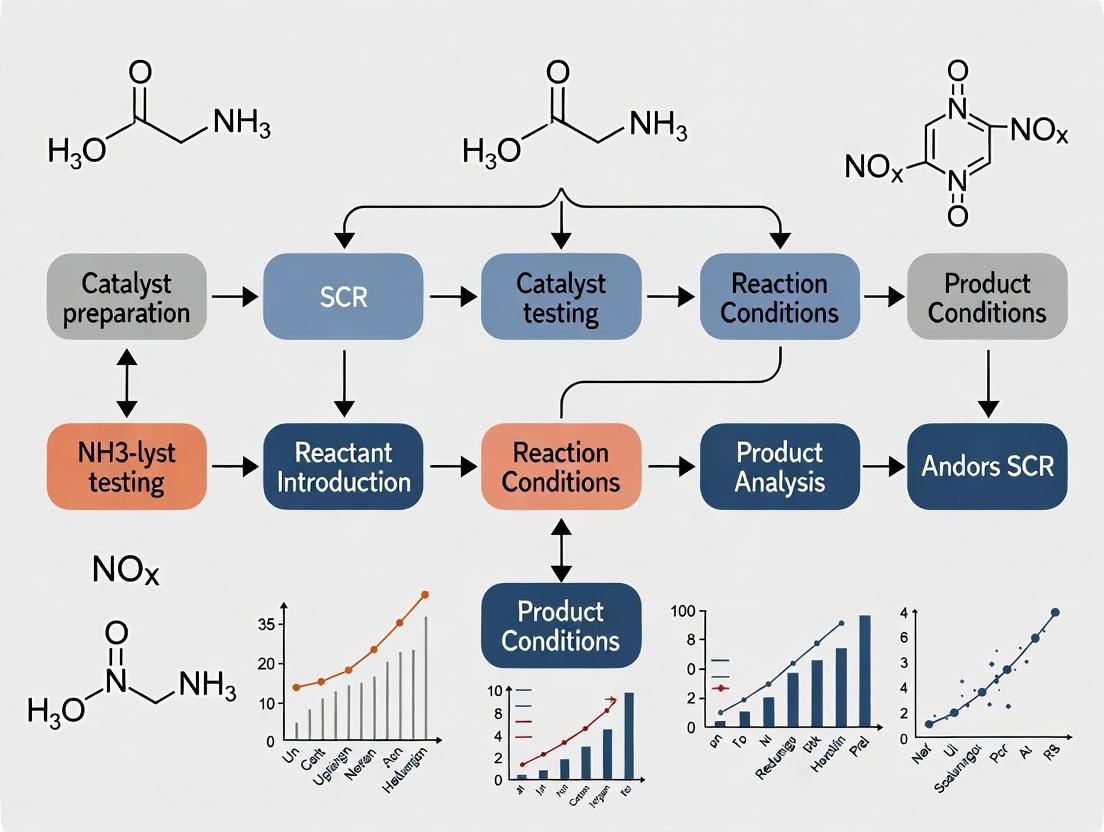
This article provides a detailed framework for developing and executing robust NH3-Selective Catalytic Reduction catalyst test protocols.
NH3-SCR Catalyst Testing: Comprehensive Protocols for R&D Success
Abstract
This article provides a detailed framework for developing and executing robust NH3-Selective Catalytic Reduction catalyst test protocols. Aimed at researchers and development professionals, it covers foundational concepts, step-by-step methodological application, troubleshooting strategies for common challenges, and validation/comparative techniques. The guide synthesizes current best practices to ensure reliable, reproducible performance evaluation for catalyst development and scale-up.
NH3-SCR Catalyst Fundamentals: Principles, Components, and Test Objectives
1. Introduction & Thesis Context Within the broader thesis on standardizing NH3-SCR catalyst test protocols, a precise definition of the technology, its fundamental chemistry, and its performance metrics is essential. Selective Catalytic Reduction using ammonia (NH3-SCR) is the leading technology for abating nitrogen oxides (NOx) from stationary and mobile sources. This document details the core reaction mechanisms and defines the critical metrics used to evaluate catalyst performance, forming the foundational knowledge required for rigorous protocol development.
2. Core Reaction Mechanisms The NH3-SCR process involves the reaction of NOx (typically NO) with NH3 to form N2 and H2O. The specific pathways depend on the catalyst composition and temperature.
2.1 Standard SCR Reaction (The Primary Pathway)
This is the dominant reaction at lower temperatures with NOx comprised of >90% NO.
4 NH3 + 4 NO + O2 → 4 N2 + 6 H2O
2.2 Fast SCR Reaction
Occurs in the presence of significant NO2 (typically a 1:1 NO:NO2 ratio), enhancing low-temperature activity.
2 NH3 + NO + NO2 → 2 N2 + 3 H2O
2.3 NO2 SCR Reaction
Occurs with high NO2 concentrations.
4 NH3 + 3 NO2 → 3.5 N2 + 6 H2O
2.4 Undesired Side Reactions
- NH3 Oxidation:
4 NH3 + 3 O2 → 2 N2 + 6 H2Oor4 NH3 + 5 O2 → 4 NO + 6 H2O - N2O Formation:
2 NH3 + 2 NO2 → N2O + N2 + 3 H2O - Ammonium Sulfate/Nitrate Formation: With SOx present, ammonium salts can form and deactivate the catalyst.
Diagram: NH3-SCR Reaction Network Pathways
3. Key Performance Metrics & Quantitative Data Summary Catalyst performance is evaluated using the following metrics, typically measured in a laboratory fixed-bed flow reactor system.
Table 1: Core NH3-SCR Performance Metrics
| Metric | Definition & Calculation | Typical Target/Desired Range | Significance |
|---|---|---|---|
| NOx Conversion (%) | [1 - (NOx_out / NOx_in)] * 100 |
>90% in operating window | Primary efficiency metric. |
| N2 Selectivity (%) | [N2_formed / (N2_formed + N2O_formed + NO2_from_NH3_ox)] * 100 |
>95% over entire range | Measures unwanted byproduct formation. |
| NH3 Slip (ppm) | Concentration of unreacted NH3 at reactor outlet. | <10 ppm (site-dependent) | Indicates dosing control & complete utilization. |
| Temperature Window (°C) | Temperature range for >80% NOx conversion. | Wide, e.g., 200-550°C for Cu-CHA | Defines operational flexibility. |
| Apparent Activation Energy (kJ/mol) | Determined from Arrhenius plot in kinetically controlled region. | Catalyst-specific; lower value indicates higher low-T activity. | Intrinsic kinetic parameter. |
| Space Velocity (h⁻¹) | GHSV = Total Volumetric Flow Rate / Catalyst Bed Volume |
30,000 - 100,000 h⁻¹ (lab) | Normalizes activity for comparison. |
Table 2: Example Performance Data for Benchmark Catalysts
| Catalyst | T50 (°C) | T90 (°C) | Max NOx Conv. (%) | N2 Sel. @ Max (%) | NH3 Slip @ T90 (ppm) |
|---|---|---|---|---|---|
| V2O5-WO3/TiO2 | ~220 | ~280 | >98 | ~99 | <5 |
| Fe-ZSM-5 | ~300 | ~400 | >95 | ~98 | <10 |
| Cu-Chabazite | ~180 | ~220 | >99 | >95 | <5 |
| Zr-Ce-Oxide | ~250 | ~350 | ~90 | ~97 | <15 |
T50/T90: Temperature for 50%/90% NOx conversion. Data is representative from literature.
4. Experimental Protocol: Standard Steady-State Activity Test Objective: Measure NOx conversion, N2 selectivity, and NH3 slip as a function of temperature for a powdered or monolithic catalyst.
4.1 The Scientist's Toolkit: Key Research Reagent Solutions & Materials
| Item / Solution | Function & Specification |
|---|---|
| Synthetic Gas Mixtures | Cylinders containing balanced blends of NO, NO2, NH3 (in N2), O2, and inert balance (N2). Used as simulated exhaust. |
| Mass Flow Controllers (MFCs) | Precisely control the flow rate of each gas component to the reactor. |
| Tubular Quartz Reactor | Inert vessel to hold catalyst sample. Includes a thermocouple well for accurate temperature measurement. |
| Temperature-Controlled Furnace | Heats the reactor with a programmable temperature ramp (e.g., 5-10°C/min). |
| Fourier Transform Infrared (FTIR) Gas Analyzer | Quantifies multiple species simultaneously (NO, NO2, N2O, NH3, H2O). Essential for selectivity. |
| Chemisorption Analyzer | Measures catalyst properties like surface area, acidity (NH3-TPD), and reducibility (H2-TPR). |
| Catalyst Powder (Sieved, 180-250 µm) | Standardized particle size to minimize internal mass transfer limitations. |
| Dilution Material (Inert Quartz Sand/Sieves) | Used to mix with/dilute catalyst powder to ensure uniform flow and temperature distribution. |
4.2 Detailed Protocol Step 1: Catalyst Preparation. Sieve catalyst to 180-250 µm. Load a precise mass (e.g., 150 mg) into the quartz reactor, diluted 1:3 with inert quartz sand. Plug reactor ends with quartz wool. Step 2: System Pretreatment/Activation. Purge system with N2. Heat to 550°C under 10% O2/N2 flow for 1 hour to clean the surface. Cool to desired starting temperature (e.g., 150°C) under inert flow. Step 3: Establishing Feed. Set MFCs to achieve the standard reaction gas mixture. A typical model gas composition: 500 ppm NO, 500 ppm NH3, 5% O2, 5% H2O (if used), balance N2. Total flow set to achieve desired GHSV (e.g., 60,000 h⁻¹). Step 4: Temperature-Programmed Reaction. Once gas concentrations and reactor pressure stabilize, begin temperature ramp (e.g., 150°C to 550°C at 5°C/min). Continuously monitor effluent gas composition via FTIR. Step 5: Data Collection & Calculation. Record temperature (T) and concentrations of NO, NO2, N2O, and NH3 at 10-15°C intervals. Calculate NOx conversion, N2 selectivity, and NH3 slip at each point using formulas from Table 1. Step 6: Cool-down. After the highest temperature, cool the reactor in inert or oxidative flow.
Diagram: Standard Steady-State SCR Test Workflow
5. Protocol: NH3 Temperature-Programmed Desorption (NH3-TPD) Objective: Quantify the acidity (amount, strength) of the catalyst, a critical property for NH3 adsorption.
5.1 Detailed Protocol Step 1: Pre-treatment. Place ~100 mg of catalyst in U-shaped quartz tube. Heat to 550°C in He flow (30 mL/min) for 1 hour to remove impurities. Step 2: NH3 Saturation. Cool to 100°C. Switch to a flow of 1% NH3/He for 30-60 minutes. Step 3: Physisorbed NH3 Removal. Switch to pure He flow at 100°C for 1-2 hours to remove weakly bound (physisorbed) NH3. Step 4: TPD Run. Heat the sample from 100°C to 700°C at a ramp rate (e.g., 10°C/min) under He flow. Monitor desorbed NH3 using a thermal conductivity detector (TCD) or mass spectrometer (MS). Step 5: Analysis. Integrate the NH3 desorption signal versus temperature. Peaks at lower temperatures correspond to weaker acid sites, and peaks at higher temperatures correspond to stronger acid sites. The total area is proportional to the total acid site density.
This foundational document provides the mechanistic and metric framework upon which specific, advanced test protocols for durability, sulfur poisoning, and kinetic modeling—as explored in the broader thesis—can be reliably constructed and compared.
Application Notes
Zeolite-Based Catalysts
Zeolites, particularly copper (Cu) and iron (Fe)-exchanged small-pore frameworks like CHA (e.g., SSZ-13, SAPO-34), are the state-of-the-art catalysts for mobile NH3-SCR applications. Their high hydrothermal stability and excellent activity in the 200-550°C range make them ideal for diesel aftertreatment systems. The active sites are isolated Cu or Fe ions within the crystalline aluminosilicate or silicoaluminophosphate framework, which facilitate the redox cycle crucial for the SCR reaction (4NO + 4NH3 + O2 → 4N2 + 6H2O).
Key Challenges: Hydrothermal degradation above 750°C, susceptibility to poisoning by sulfur and hydrocarbons, and N2O formation at high temperatures.
Vanadia-Titania (V2O5-WO3/TiO2 or V2O5-MoO3/TiO2) Catalysts
These are the benchmark catalysts for stationary source NOx abatement from power plants and industrial boilers. The typical composition is 1-3% V2O5, 10% WO3 or MoO3, supported on high-surface-area TiO2 (anatase). WO3/MoO3 act as structural and chemical promoters, increasing thermal stability, surface acidity, and preventing the crystallization of TiO2 into the inactive rutile phase.
Key Advantages: High resistance to sulfur poisoning (when using MoO3), excellent activity in the 300-400°C window, and proven long-term stability in flue gas containing H2O and SO2.
Key Challenge: Volatilization of vanadia at temperatures exceeding 450°C, leading to catalyst deactivation and environmental concerns.
Comparative Performance Data
Table 1: Comparative Performance of Key NH3-SCR Catalyst Formulations
| Catalyst Type | Typical Composition | Optimal Temp. Range | N2 Selectivity | Key Strength | Major Vulnerability |
|---|---|---|---|---|---|
| Cu-Zeolite (CHA) | Cu-SSZ-13 (Si/Al=12, Cu ~2-4 wt%) | 200 - 550°C | >98% at T<500°C | Excellent low-T activity, Hydrothermal stability | Hydrocarbon poisoning, High-temp. N2O formation |
| Fe-Zeolite (MFI) | Fe-ZSM-5 (Si/Al=20-40, Fe ~1-3 wt%) | 350 - 600°C | ~95% at 450°C | Excellent high-T activity, Cost-effective | Poor low-T activity, Hydrothermal instability |
| Vanadia-Titania | 2% V2O5, 10% WO3/TiO2 (Anatase) | 300 - 400°C | >99% | SO2 resistance, High selectivity | Vanadia volatility, Narrow temp. window |
Table 2: Quantitative Activity Comparison (Pseudo-First-Order Rate Constant k, 350°C, 500 ppm NO, 500 ppm NH3, 10% O2, 5% H2O)
| Catalyst | BET Surface Area (m²/g) | k (cm³/g·s) | Activation Energy Ea (kJ/mol) |
|---|---|---|---|
| Cu-SSZ-13 | 650 | 280 | 65 |
| Fe-ZSM-5 | 400 | 120 | 75 |
| V2O5-WO3/TiO2 | 80 | 95 | 85 |
Experimental Protocols
Protocol: Synthesis of Cu-SSZ-13 Zeolite Catalyst
Objective: To prepare a model Cu-exchanged SSZ-13 catalyst for NH3-SCR testing. Materials: Tetraethyl orthosilicate (TEOS), Aluminum isopropoxide, NaOH, N,N,N-Trimethyl-1-adamantammonium hydroxide (TMAdaOH, structure-directing agent), Copper(II) acetate, Deionized water.
Procedure:
- Gel Preparation: Dissolve aluminum isopropoxide (0.043 g) in a solution of TMAdaOH (25 wt%, 8.0 g) and NaOH (0.024 g). Add TEOS (1.67 g) dropwise under stirring. Stir the mixture at room temperature for 6 hours.
- Hydrothermal Synthesis: Transfer the homogeneous gel to a 45 mL Teflon-lined stainless steel autoclave. Heat in an oven at 160°C for 5 days under static conditions.
- Recovery & Calcination: Cool the autoclave, collect the solid product by centrifugation, and wash repeatedly with deionized water. Dry at 100°C overnight. Calcine in static air at 600°C for 8 hours (ramp rate: 2°C/min) to remove the organic template, obtaining Na-form SSZ-13.
- Ion Exchange: Stir 1.0 g of Na-SSZ-13 in 100 mL of 0.1 M aqueous copper(II) acetate solution at 80°C for 12 hours. Repeat the exchange process twice. Wash, dry (100°C), and finally calcine in air at 550°C for 4 hours.
Protocol: Washcoat Deposition of V2O5-WO3/TiO2 on Cordierite Monolith
Objective: To prepare a monolithic catalyst for scaled reactor testing. Materials: TiO2-P25 (anatase), Ammonium metatungstate hydrate, Ammonium metavanadate, Oxalic acid, Deionized water, Ceramic cordierite monolith (400 cpsi).
Procedure:
- Slurry Preparation: Mill 10 g of TiO2-P25 in 30 mL deionized water with 0.5 g of ammonium metatungstate for 24 hours. Separately, dissolve 0.2 g of ammonium metavanadate and 0.4 g of oxalic acid in 10 mL of warm water (~60°C).
- Impregnation: Mix the two solutions and continue ball milling for 2 hours to form a stable, viscous slurry.
- Washcoating: Immerse the dried cordierite monolith (pre-weighed) into the slurry for 2 minutes. Remove, blow excess slurry from channels with compressed air, and dry at 120°C for 1 hour. Repeat to achieve a target washcoat loading of ~2.0 g/in³.
- Calcination: Finally, calcine the coated monolith in air at 500°C for 5 hours (ramp: 1°C/min) to decompose the ammonium and oxalate salts, forming the active V2O5-WO3/TiO2 phase.
Protocol: Standardized Bench-Scale NH3-SCR Activity Test
Objective: To quantify NOx conversion and N2 selectivity under controlled conditions. Reaction Conditions: 500 ppm NO, 500 ppm NH3, 5% O2, 5% H2O, balance N2; GHSV = 100,000 h⁻¹; Temperature ramp: 150-600°C at 5°C/min. Apparatus: Fixed-bed quartz microreactor (ID=6 mm), Mass flow controllers, Online FTIR or Chemiluminescence NOx analyzer, Quadrupole mass spectrometer (for N2O, NH3 slip).
Procedure:
- Catalyst Loading: Sieve catalyst to 180-250 µm. Load 0.2 mL (diluted 1:2 with inert quartz sand) into the isothermal zone of the reactor.
- Pretreatment: Purge with N2, then pretreat in 5% O2/N2 at 550°C for 1 hour to clean the surface.
- Activity Test: Cool to 150°C in reaction feed (without NH3). Introduce NH3 and start the temperature program. Continuously monitor effluent concentrations of NO, NO2, NH3, N2O, and CO2.
- Data Analysis: Calculate NOx conversion: XNOx (%) = (1 - [NOx]out/[NOx]in) * 100. Calculate N2 selectivity: SN2 (%) = (1 - 2*[N2O]out/([NOx]in+[NH3]in - [NOx]out - [NH3]_out)) * 100.
Visualizations
Title: Cu-Zeolite SCR Redox Cycle
Title: Catalyst R&D Workflow
Title: Unified NH3-SCR Reaction Mechanism
The Scientist's Toolkit
Table 3: Essential Research Reagent Solutions for NH3-SCR Catalyst Testing
| Reagent/Material | Function / Role in Experiment | Typical Specification/Purity |
|---|---|---|
| SSZ-13 Zeolite (Na-form) | Core microporous support providing shape selectivity and ion-exchange sites. | Si/Al = 6-20, BET > 600 m²/g, >99% CHA phase purity. |
| N,N,N-Trimethyl-1-adamantammonium Hydroxide (TMAdaOH) | Structure-directing agent (SDA) for synthesizing CHA-type zeolites. | 25 wt% in water, Electronic Grade. |
| Copper(II) Acetate Monohydrate | Precursor for introducing isolated Cu²⁺ active sites via aqueous ion exchange. | ≥99.99% trace metals basis. |
| TiO2 (Anatase) | High-surface-area support for vanadia-based catalysts, provides active phase dispersion. | P25 or similar, BET ~50 m²/g, >80% anatase phase. |
| Ammonium Metavanadate (NH4VO3) | Precursor for the active V2O5 phase. Dissolves in oxalic acid solution. | ≥99.95% trace metals basis. |
| Ammonium Metatungstate Hydrate | Precursor for the WO3 promoter, enhancing acidity and stability. | (NH4)6H2W12O40·xH2O, 99.99% (W basis). |
| Standard SCR Feed Gas Cylinder | Provides consistent reactant mixture for activity testing (NO, NH3, O2, N2 balance). | 500 ppm NO, 500 ppm NH3, 5% O2, balance N2. Certified ±1%. |
| Online FTIR Gas Analyzer | For real-time, simultaneous quantification of multiple gas species (NO, NO2, N2O, NH3, H2O). | Spectral resolution ≤ 0.5 cm⁻¹, equipped with heated gas cell. |
Within the comprehensive thesis on standardizing NH3-SCR (Selective Catalytic Reduction with Ammonia) catalyst evaluation, defining the essential test objectives is paramount. The core triumvirate of Activity, Selectivity, and Stability forms the foundational framework for assessing catalytic performance, enabling reliable comparison between novel materials and established benchmarks. This document details the application notes and experimental protocols for quantifying these objectives, providing a standardized methodology for researchers and development professionals in environmental catalysis and related fields.
Core Test Objectives: Definitions and Quantitative Metrics
Activity
Activity measures the catalyst's efficiency in promoting the target reaction (NOx reduction) under specified conditions. It is quantified as the rate of reactant consumption or product formation.
Primary Metrics:
- Conversion (%): The percentage of a key reactant (typically NOx) converted.
- Reaction Rate (μmol·g⁻¹·s⁻¹): The rate of NOx conversion normalized by catalyst mass.
- Turnover Frequency (TOF, s⁻¹): The number of reaction events per active site per unit time.
Selectivity
Selectivity defines the catalyst's ability to direct the reaction towards the desired product (N₂) while minimizing unwanted by-products (e.g., N₂O, NH₃ slip).
Primary Metrics:
- N₂ Selectivity (%): The fraction of converted NOx that forms N₂.
- N₂O Yield (%): The fraction of inlet NOx converted to N₂O.
- NH₃ Slip (ppm): The concentration of unreacted ammonia exiting the catalyst bed.
Stability
Stability evaluates the catalyst's resistance to deactivation over time under operational or accelerated aging conditions, including thermal, hydrothermal, and chemical poisoning (e.g., by SO₂, alkali metals).
Primary Metrics:
- Conversion Decay Rate (%/h): The loss of activity per unit time.
- Half-life (h): Time for activity to decrease to 50% of its initial value.
- Final Activity Retention (%): The percentage of initial activity remaining after a defined aging period.
Table 1: Benchmark Performance Targets for State-of-the-Art Cu-SSZ-13 NH3-SCR Catalysts
| Test Objective | Metric | Target Value (Fresh Catalyst, 250°C) | Acceptable Range | Measurement Protocol |
|---|---|---|---|---|
| Activity | NOx Conversion | >95% | 90-100% | ISO 21283-2 |
| Selectivity | N₂ Selectivity | >98% | 95-100% | Microreactor GC-MS |
| Selectivity | N₂O Yield | <1% | 0-2% | Microreactor FTIR |
| Stability | Activity Retention after 64h @ 700°C, 10% H₂O | >90% | 85-100% | Accelerated Hydrothermal Aging |
| Stability | Activity Retention after 24h @ 200°C, 100 ppm SO₂ | >80% | 75-100% | Chemical Poisoning Test |
Table 2: Key Performance Indicators (KPIs) for Catalyst Evaluation
| KPI ID | Objective | Calculation Formula | Unit |
|---|---|---|---|
| KPI-A1 | Activity | ( X{NOx} = \frac{[NOx]{in} - [NOx]{out}}{[NOx]_{in}} \times 100 ) | % |
| KPI-S1 | Selectivity | ( S{N2} = \left(1 - \frac{2[N2O]{out}}{[NOx]{in} - [NOx]{out}}\right) \times 100 ) | % |
| KPI-ST1 | Stability | ( Rt = \frac{X{t}}{X_0} \times 100 ) (after time t) | % |
Detailed Experimental Protocols
Protocol 4.1: Standard Steady-State Activity & Selectivity Test
Purpose: To determine NOx conversion and N₂ selectivity as a function of temperature. Apparatus: Fixed-bed quartz microreactor, mass flow controllers, furnace, FTIR/GC-MS for gas analysis.
- Catalyst Preparation: Sieve catalyst to 180-250 μm. Load 150 mg into reactor diluted with 300 mg inert quartz sand.
- Pretreatment: Heat to 550°C under 10% O₂/N₂ for 1 hour, then cool to desired start temperature (e.g., 150°C).
- Feed Gas Composition: Establish feed: 500 ppm NO, 500 ppm NH₃, 10% O₂, 5% H₂O, balance N₂. Total GHSV = 200,000 h⁻¹.
- Measurement: Stabilize for 45 min at each temperature step (150, 175, 200, 225, 250, 300, 350, 400, 450, 500°C). Analyze inlet/outlet gas via FTIR for NO, NO₂, N₂O, NH₃. Use GC-TCD for N₂ quantification.
- Data Analysis: Calculate KPI-A1 and KPI-S1 at each temperature. Plot conversion & selectivity vs. temperature.
Protocol 4.2: Accelerated Hydrothermal Aging (Stability Test)
Purpose: To evaluate long-term thermal stability under simulated exhaust conditions.
- Aging Procedure: Place catalyst monolith core sample in a flow of 10% H₂O, 10% O₂, balance N₂.
- Conditions: Heat to 700°C ± 5°C and hold for 64 hours.
- Post-Aging Evaluation: Cool, then perform Protocol 4.1 on aged sample.
- Analysis: Calculate activity retention (KPI-ST1) at 250°C and 450°C relative to fresh sample.
Protocol 4.3: N₂O Yield Specific Test
Purpose: Accurately quantify low-concentration N₂O byproduct formation.
- Setup: Use reactor from Protocol 4.1. Ensure FTIR is calibrated specifically for low-range N₂O (0-50 ppm).
- Focused Conditions: Run at temperatures of high N₂O risk: 250°C, 350°C, and 450°C.
- Feed: Use standard feed (as 4.1) and a second feed with NO₂:NO ratio of 1:1.
- Measurement: Report N₂O concentration (ppm) and N₂O Yield (( Y{N2O} = \frac{[N2O]{out}}{[NOx]{in}} \times 100 )).
Visualization of Protocols and Relationships
Diagram 1: Test Protocol Workflow for SCR Catalyst Evaluation
Diagram 2: SCR Reaction Pathways and Selectivity Determinants
The Scientist's Toolkit: Research Reagent Solutions & Essential Materials
Table 3: Essential Materials for NH3-SCR Catalyst Testing
| Item Name | Function/Brief Explanation | Example Specification/Note |
|---|---|---|
| Cu-SSZ-13 Reference Catalyst | Benchmark material for comparing novel catalyst performance. | SiO₂/Al₂O₃ = 20, Cu loading = 2.5 wt.%, commercially sourced. |
| Certified Gas Calibration Mixtures | For accurate analyzer calibration across relevant concentration ranges. | 500 ppm NO/N₂, 500 ppm NH₃/N₂, 50 ppm N₂O/N₂, 10% O₂/N₂. |
| High-Temperature Quartz Reactor Tube | Inert vessel for containing catalyst bed during reaction. | ID = 8 mm, OD = 10 mm, with porous quartz frit. |
| Quartz Wool & Inert Sand | Used for catalyst bed packing and pre-heating of feed gases. | Acid-washed, calcined prior to use to ensure inertness. |
| Mass Flow Controllers (MFCs) | Precisely control the flow rates of individual gas streams. | Bronkhorst or equivalent, calibrated for N₂, O₂, and blend gases. |
| Online FTIR Analyzer | Real-time quantification of multiple gas species (NO, NO₂, N₂O, NH₃, H₂O). | Gas cell heated to 191°C to prevent condensation and NH₄NO₃ formation. |
| Gas Chromatograph with TCD | Essential for direct measurement of N₂ product for selectivity calculation. | Equipped with MS-5A and PoraPLOT Q columns. |
| Steam Generator | Introduces precise and stable amounts of water vapor into the feed stream. | Vaporization of ultrapure water via a controlled syringe pump and heating tape. |
| Tube Furnace with 3-Zone Heating | Provides uniform, programmable temperature control for reactor and aging. | Capable of stable operation up to 900°C. |
| Data Acquisition Software | Logs temperature, pressure, flow rates, and analyzer signals synchronously. | LabVIEW or custom Python scripts for integrated data collection. |
Within the broader thesis on standardizing NH3-SCR catalyst test protocols, this document establishes detailed application notes for the three most critical reaction parameters: temperature windows, space velocity, and gas composition. Consistent, accurate characterization of these parameters is foundational for catalyst development, kinetic modeling, and translating laboratory performance to real-world application. These protocols are designed for researchers and scientists engaged in catalyst development and evaluation.
Temperature Windows
Core Concept and Importance
The operational temperature window defines the range over which a Selective Catalytic Reduction (SCR) catalyst maintains high NOx conversion and N2 selectivity. It is intrinsically linked to catalyst formulation (e.g., Cu/SSZ-13, Fe/ZSM-5) and determines application suitability (e.g., light-duty vs. heavy-duty diesel exhaust).
Key Quantitative Data
Table 1: Typical Temperature Windows for Common NH3-SCR Catalysts
| Catalyst Type | Low-Temperature Light-off (T50, °C) | High-Temperature Peak (°C) | Optimal Window (°C) | Primary Application |
|---|---|---|---|---|
| Vanadia-based (V2O5-WO3/TiO2) | ~250 | 350-450 | 300-400 | Stationary sources, legacy mobile |
| Cu/SSZ-13 (Chabazite) | ~175 | 350-550 | 200-500 | Light-duty diesel, cold-start focus |
| Fe/Zeolite (e.g., ZSM-5) | ~300 | 400-600 | 350-550 | Heavy-duty diesel, high-temp stability |
| Cu/SAPO-34 | ~175 | 350-500 | 200-450 | Automotive, similar to Cu/SSZ-13 |
| Mn-based Mixed Oxides | <150 | 150-300 | 100-250 | Low-temperature potential |
Experimental Protocol: Determining the Temperature Window
Objective: To measure NOx conversion as a function of temperature and define the catalyst's operational window.
Materials & Equipment:
- Fixed-bed quartz or stainless-steel tubular reactor
- Mass Flow Controllers (MFCs) for gases
- Feed gas cylinders (NO, NH3, O2, balance N2/Ar)
- Saturation system for H2O (if required)
- Temperature-controlled furnace with programmable ramp
- Downstream analytical system: FTIR or Chemiluminescence NOx analyzer, NH3 analyzer (e.g., FTIR or NDUV).
Procedure:
- Catalyst Preparation: Sieve catalyst to 180-250 µm mesh. Load a known mass (typically 50-200 mg) into the reactor, supported by quartz wool.
- Pre-Treatment: Purge system with inert gas (N2). Activate catalyst under 10% O2/N2 at 550°C (or as per formulation) for 1 hour.
- Set Baseline Conditions: Establish standard feed conditions. Example: 500 ppm NO, 500 ppm NH3, 10% O2, 5% H2O (optional), balance N2. Set a constant Gas Hourly Space Velocity (GHSV). Common GHSV: 80,000 - 100,000 h⁻¹.
- Temperature Program: Cool reactor to starting temperature (e.g., 100°C). Stabilize feed for 30 mins.
- Light-off Test: Increase furnace temperature in steps (e.g., 25-50°C increments). At each setpoint, allow system to stabilize for 20-30 minutes before recording analyzer data.
- Data Collection: Record steady-state concentrations of NO, NO2, N2O, and NH3 at each temperature.
- Calculation: Calculate NOx conversion: X_NOx (%) = ([NOx]in - [NOx]out) / [NOx]in * 100.
- Analysis: Plot NOx conversion vs. temperature. Determine T50 (temperature at 50% conversion) and T90. The window between T50 and the point where conversion falls below 90% (or selectivity degrades) defines the operational range.
Diagram: Temperature Window Determination Workflow
Space Velocity (GHSV)
Core Concept and Importance
Gas Hourly Space Velocity (GHSV) is the volumetric flow rate of reactant gas divided by the catalyst bed volume (unit: h⁻¹). It is a critical scaling parameter that impacts residence time, reaction kinetics, and mass transfer effects. Testing at varying GHSV allows deconvolution of intrinsic kinetic rates from transport limitations.
Key Quantitative Data
Table 2: Effect of Space Velocity on NH3-SCR Performance
| GHSV Range (h⁻¹) | Typical Reactor Scale | Residence Time | Primary Testing Purpose |
|---|---|---|---|
| 20,000 - 60,000 | Micro-reactor (mg scale) | Longer | Intrinsic kinetic studies, mechanism elucidation |
| 80,000 - 120,000 | Bench-scale reactor (g scale) | Standard | Standard catalyst screening and comparison |
| 200,000 - 500,000+ | Bench-scale reactor | Shorter | Assessing mass transfer limits, simulating high-load conditions |
Experimental Protocol: Kinetic Rate Measurement via GHSV Variation
Objective: To determine the apparent reaction rate constant while checking for mass transfer limitations.
Materials & Equipment: (As in Section 1.3, with precise control over mass flow controllers).
Procedure:
- Catalyst Loading: Accurately measure catalyst bed volume and mass.
- Constant Condition: Fix temperature at a mid-window value (e.g., 300°C for Cu/zeolite). Fix gas composition.
- GHSV Variation: Systematically vary the total gas flow rate to achieve a series of GHSV values (e.g., 50,000; 100,000; 200,000; 400,000 h⁻¹). Keep feed composition constant.
- Steady-State Measurement: At each GHSV, allow the system to reach steady state (20-30 mins) and measure outlet concentrations.
- Data Analysis: For a first-order approximation with excess O2 and NH3, the rate constant k can be related to conversion X and space time τ (1/GHSV): k = - (1/τ) * ln(1-X).
- Plotting: Plot the calculated apparent rate constant k vs. GHSV (or catalyst weight). A constant k indicates kinetic control. A decreasing k at high flow rates suggests onset of external mass transfer limitations.
Diagram: Space Velocity Test Logic Flow
Gas Composition
Core Concept and Importance
Gas composition simulates exhaust conditions and probes catalyst robustness. Key variables include NO/NO2 ratio (Fast SCR), water vapor (inhibitor), SO2 (poison), and CO2 (inert). Systematic variation is required to understand reaction pathways, inhibition effects, and long-term stability.
Key Quantitative Data
Table 3: Impact of Key Gas Components on NH3-SCR Performance
| Gas Component | Typical Concentration | Effect on NH3-SCR | Protocol Purpose |
|---|---|---|---|
| NO / NO2 Ratio | NO:NO2 = 1:0 (Standard), 1:1 (Fast) | Fast SCR (NO+NO2+2NH3) is significantly faster below 300°C. | Assess low-temperature activity enhancement. |
| H2O (vapor) | 5 - 10% vol. | Reversible inhibition, especially at low-T; can affect hydrothermal stability. | Test real-world feasibility and stability. |
| SO2 | 10 - 50 ppm | Irreversible poisoning via sulfate formation on active sites; competes with NOx. | Evaluate poisoning resistance and durability. |
| CO2 | 5 - 10% | Typically inert; can affect adsorption in some materials. | Baseline for simulating real exhaust. |
Experimental Protocol: Fast SCR and H2O Inhibition Test
Objective: To quantify the enhancement from Fast SCR conditions and the reversible inhibition effect of water.
Materials & Equipment: (As in Section 1.3, with additional MFCs for NO2 and a calibrated humidification system).
Procedure – Part A (Fast SCR):
- Standard SCR Baseline: At 200°C, with 5% H2O, set feed: 500 ppm NO, 500 ppm NH3, 10% O2, balance N2. Measure steady-state NOx conversion.
- Fast SCR Condition: Maintain all conditions, but change feed to: 250 ppm NO, 250 ppm NO2, 500 ppm NH3, 10% O2, 5% H2O, balance N2.
- Comparison: Record the increase in NOx conversion. The enhancement is most pronounced at 150-250°C.
Procedure – Part B (H2O Inhibition):
- Dry Baseline: At 200°C, run standard SCR feed (500 ppm NO, 500 ppm NH3, 10% O2, balance N2) without H2O. Measure steady-state NOx conversion.
- Introduce H2O: Introduce 5-10% H2O vapor into the feed. Stabilize for 60+ minutes.
- Measure Wet Conversion: Record the new, typically lower, steady-state NOx conversion.
- Reversibility Check: Remove H2O from the feed. Monitor conversion recovery over 1-2 hours. Full recovery indicates reversible inhibition.
Diagram: Gas Composition Testing Pathways
The Scientist's Toolkit: Key Research Reagent Solutions
Table 4: Essential Materials for NH3-SCR Catalyst Testing
| Item/Chemical | Function in Protocol | Typical Specification/Note |
|---|---|---|
| Cu/SSZ-13 or Fe/ZSM-5 Catalyst | Primary test material. | Sieved to 180-250 µm; known Si/Al ratio and metal loading. |
| Certified Calibration Gas Mixtures | For accurate feed and analyzer calibration. | 1000-5000 ppm NO/N2, NO2/N2, NH3/N2, 10% O2/N2. |
| High-Purity Balance Gases | Diluent and system purge. | N2 or Ar, 99.999% purity. |
| Mass Flow Controllers (MFCs) | Precise control of individual gas flow rates. | Calibrated for specific gases; appropriate flow range. |
| Humidification System | Introduces precise, consistent H2O vapor. | Saturation bubbler with temperature control or vapor generator. |
| Fixed-Bed Quartz Reactor | Houses catalyst during reaction. | Inert, minimal wall effects; fitted with thermowell. |
| Online FTIR Analyzer | Simultaneous measurement of multiple gases (NO, NO2, N2O, NH3). | Requires calibrated cell and spectral libraries. |
| NOx Chemiluminescence Analyzer | Specific, sensitive detection of NO and total NOx. | Used with a downstream converter (for NO2). |
| SO2 Gas Cylinder | For poisoning resistance studies. | 1000 ppm SO2 in N2 balance; use corrosion-resistant lines. |
Application Notes
Within the framework of a thesis on NH3-SCR (Selective Catalytic Reduction with Ammonia) catalyst test protocols, the progression from bench-scale to pilot-scale testing is a critical pathway to commercialization. This transition is designed to de-risk scale-up by systematically evaluating catalyst performance, durability, and process economics under increasingly realistic conditions.
Bench-Scale Testing serves as the fundamental research and primary screening stage. It is characterized by the use of small catalyst masses (typically 0.1-5 g) in fixed-bed microreactors. The primary objectives are to establish intrinsic kinetics, ascertain optimal operational windows (temperature, space velocity, NO/NH3 ratio), and conduct accelerated aging studies. Data generated is used for preliminary mechanistic modeling and initial economic assessments. The environment is highly controlled, allowing for the isolation of variables but lacking the flow dynamics and thermal gradients of larger systems.
Pilot-Scale Testing represents a significant leap towards industrial reality. It involves larger catalyst volumes (often in monolithic form) within a slipstream or fully integrated pilot unit processing a portion of real or simulated flue gas (1-100 Nm³/h). The goals shift towards validating bench-scale models, assessing hydrodynamic effects (flow distribution, pressure drop), confirming long-term stability under realistic poison exposure (e.g., SOx, alkali metals, particulates), and evaluating operational protocols (e.g., start-up/shutdown, load-following). This stage provides essential data for the final design of the full-scale commercial reactor.
The Development Pipeline is iterative. Findings from pilot-scale testing often necessitate a return to bench-scale for targeted catalyst reformulation or deeper mechanistic study to address unforeseen challenges, such as poisoning or attrition, observed at the larger scale.
Data Presentation
Table 1: Comparative Summary of Test Scales for NH3-SCR Catalyst Development
| Parameter | Bench-Scale (Laboratory) | Pilot-Scale | Primary Objective of Stage |
|---|---|---|---|
| Catalyst Form | Powder, crushed pellets, granules | Full-size monoliths, structured elements | Form-dependent performance & pressure drop |
| Catalyst Mass | 0.1 – 5 g | 1 – 100 L (volume) | Material requirements & cost scaling |
| Reactor Type | Fixed-bed microreactor (isothermal) | Slipstream reactor, integrated pilot unit | Hydrodynamics & thermal management |
| Gas Flow Rate | 0.1 – 2 L/min | 1 – 100 Nm³/h | Process throughput scaling |
| Space Velocity (GHSV) | 10,000 – 200,000 h⁻¹ | 1,000 – 10,000 h⁻¹ | Establishing design residence time |
| Test Duration | Hours to several hundred hours | Hundreds to thousands of hours | Long-term stability & deactivation |
| Gas Composition | Synthetic, simplified mixtures | Real or simulated flue gas with poisons | Poison resistance & real-world efficacy |
| Key Data Outputs | Intrinsic kinetics, mechanism, initial selectivity | Pressure drop, flow distribution, long-term durability | Commercial reactor design & OPEX forecast |
Table 2: Typical Protocol Parameters for NH3-SCR Catalyst Evaluation
| Protocol Phase | Bench-Scale Standard | Pilot-Scale Standard | Notes |
|---|---|---|---|
| Activity Screening | Temperature ramp (150-450°C) at fixed GHSV (~50k h⁻¹) | Isothermal testing at design temperature ± window | Bench finds optimum; pilot validates at scale. |
| Selectivity (N2O) | Measured during activity screening | Continuous monitoring over long-term test | Critical for environmental compliance. |
| SO2/H2O Poisoning | Accelerated exposure: high [SO2] at low temp | Long-term, low [SO2] exposure in wet gas | Bench predicts mechanism; pilot confirms real rate. |
| Thermal Aging | Calcination in air or steam, 550-700°C, 2-24h | In-situ exposure to high temp excursions | Bench screens stability; pilot tests under stress. |
| NH3 Storage Capacity | Temperature-programmed desorption (TPD) | Transient response analysis | Key for dynamic operation modeling. |
Experimental Protocols
Protocol 1: Bench-Scale Activity & Kinetics Measurement for Powder Catalysts
Objective: To determine the intrinsic NOx conversion activity and apparent activation energy of a novel NH3-SCR catalyst formulation. Materials: See "The Scientist's Toolkit" below. Procedure:
- Catalyst Preparation: Sieve catalyst powder to 180-250 µm. Load 100 mg into a quartz U-tube reactor, supported by quartz wool plugs.
- Pretreatment: Purge reactor with inert gas (N2) at 500°C for 1 hour to remove adsorbates.
- Activity Test: Cool to 150°C. Introduce standard reactant gas mixture: 500 ppm NO, 500 ppm NH3, 5% O2, 5% H2O (optional), balance N2. Set total flow to achieve a desired GHSV (e.g., 100,000 h⁻¹).
- Temperature Program: Ramp reactor temperature from 150°C to 450°C at a rate of 5°C/min, holding for 20 min at each 50°C increment.
- Analysis: Use FTIR or Chemiluminescence analyzer to measure inlet and outlet concentrations of NO, NO2, and N2O. Use Mass Spectrometry for NH3 breakthrough.
- Data Calculation: Calculate NOx conversion (%) = [(NOxin - NOxout) / NOx_in] * 100. Plot conversion vs. temperature.
Protocol 2: Pilot-Scale Long-Term Durability Test for Monolithic Catalysts
Objective: To evaluate the performance stability and deactivation of a full-size catalyst monolith under simulated flue gas containing poisons. Materials: Pilot-scale slipstream reactor, real or simulated flue gas source, full-size catalyst monolith (e.g., 5.66" diameter x 3" length), continuous emission monitoring system (CEMS). Procedure:
- Reactor Integration: Install the catalyst monolith into the insulated pilot reactor vessel, ensuring proper sealing.
- Baseline Performance: With clean simulated flue gas (500 ppm NO, 500 ppm NH3, 5% O2, 10% CO2, 5% H2O, balance N2) at the design space velocity (e.g., 3,000 h⁻¹), measure NOx conversion at the design temperature (e.g., 350°C) for 72 hours to establish baseline.
- Poison Introduction: Introduce low levels of SO2 (e.g., 20 ppm) and fly ash simulant (optional) into the gas stream. Maintain continuous operation.
- Monitoring: Record NOx conversion, N2O formation, NH3 slip, and pressure drop across the catalyst daily.
- Periodic Regeneration: Every 500 hours, perform a thermal regeneration cycle (e.g., cut NH3, increase temperature to 400°C for 2 hours) to assess activity recovery.
- Test Duration: Continue the test for a minimum of 2,000-5,000 hours.
- Post-Test Analysis: Remove catalyst monolith. Core samples are taken for subsequent bench-scale characterization (BET, XRD, XPS, TPD) to identify deactivation mechanisms (e.g., sulfation, pore plugging).
Diagrams
Title: NH3-SCR Catalyst Development Pipeline Workflow
Title: Comparative Test Protocols: Bench vs. Pilot
The Scientist's Toolkit
Table 3: Key Research Reagent Solutions & Materials for NH3-SCR Testing
| Item | Function & Description | Typical Specification/Example |
|---|---|---|
| Fixed-Bed Microreactor System | Core bench-scale apparatus for controlled activity testing. Includes reactor tube, furnace, mass flow controllers, and temperature programmer. | Quartz or stainless steel U-tube; Isothermal furnace (±1°C). |
| Synthetic Gas Mixtures | Provide precise, reproducible reactant and background gases for bench-scale tests. | Cylinders of NO/N2, NH3/N2, O2, SO2/N2, balanced with high-purity N2. |
| Fourier Transform Infrared (FTIR) Analyzer | For real-time, simultaneous measurement of multiple gas species (NO, NO2, N2O, NH3, H2O). | Gas cell with heated sample line to prevent condensation. |
| Chemiluminescence NO/NOx Analyzer | High-sensitivity, specific detection of NO and total NOx. | Used as a standard for cross-validation with FTIR. |
| Mass Flow Controllers (MFCs) | Precisely regulate the volumetric flow rate of individual gases to create desired mixtures. | Calibrated for specific gases; 0-500 mL/min range for bench. |
| Catalyst Monolith (Pilot-Scale) | The structured catalyst form used in pilot and commercial units. | Cordierite or metallic honeycomb washcoated with catalytic material. |
| Slipstream Pilot Reactor | Small-scale industrial reactor that processes a side-stream of real or simulated flue gas. | Insulated, with ports for temperature and pressure measurement. |
| Continuous Emission Monitoring System (CEMS) | Suite of analyzers for round-the-clock measurement of flue gas components in pilot tests. | Includes paramagnetic O2, FTIR or CLD for NOx, laser for NH3 slip. |
| Temperature Programmed Desorption (TPD) System | Bench-scale tool to quantify ammonia storage capacity and acid site strength. | Micromeritics AutoChem or equivalent; coupled with MS or TCD. |
Step-by-Step NH3-SCR Catalyst Test Protocol: Setup, Execution, and Data Collection
1. Introduction and Thesis Context Within a broader thesis on standardizing NH₃-Selective Catalytic Reduction (SCR) catalyst test protocols, the configuration of the fixed-bed, flow reactor system is the critical foundation. This document provides detailed application notes and protocols to ensure experimental rigor, reproducibility, and generation of high-fidelity kinetic and mechanistic data essential for catalyst development and scale-up.
2. System Components and Best Practice Configuration A properly configured laboratory fixed-bed flow reactor system consists of integrated subsystems for gas delivery, reaction, and analysis. Key considerations include material compatibility, dead volume minimization, and precise temperature control.
Table 1: Typical System Configuration Specifications for NH₃-SCR Studies
| Subsystem | Component | Best Practice Specification | Rationale |
|---|---|---|---|
| Gas Delivery | Mass Flow Controllers (MFCs) | Capacity: 0-500 mL/min (for each reactant), Accuracy: ±1% of full scale | Ensures precise and stable feed composition (NO, NH₃, O₂, balance gas). |
| Gas Mixing Chamber | Heated (>150°C), inert material (glass, coated metal), low volume | Prevents adsorption/desorption issues and premature reaction. | |
| Pre-reactor Heater | Capable of heating feed to reactor inlet temperature | Eliminates cold spots before catalyst bed. | |
| Reactor Core | Reactor Tube | Typically quartz or Inconel; ID 6-12 mm | Chemically inert, withstands high temps; ID minimizes wall effects. |
| Catalyst Bed | Particle size: 150-250 µm, Dilution with inert SiC common, Bed length-to-particle diameter ratio >50 | Minimizes pressure drop and internal diffusion limitations. | |
| Temperature Control | Three-zone furnace with PID controller, Thermocouple in direct contact with catalyst bed | Provides isothermal reaction zone (±1°C). | |
| Post-Reactor | Heated Transfer Line | Maintained at 200-250°C | Prevents condensation of reaction products (e.g., ammonium salts). |
| Analysis | Primary Analyzer | FTIR or Chemiluminescence NO/NOx analyzer, NDIR for N₂O | Quantifies key species (NO, NH₃, N₂O) in real-time. |
| Supplementary Analysis | MS (Hiden HPR-20) or GC for N₂, H₂O | Enables complete mass balance closure. |
3. Detailed Experimental Protocols
Protocol 3.1: Catalyst Loading and Pretreatment for NH₃-SCR Objective: To prepare a reproducible, well-defined catalyst bed. Materials: Catalyst powder (sieved to 150-250 µm), inert diluent (SiC of similar size), quartz wool, micro-spatula, fixed-bed U-tube reactor. Procedure:
- Weigh the desired mass of catalyst (typically 50-200 mg) accurately.
- Mix the catalyst thoroughly with an inert diluent (SiC) at a 1:2 to 1:5 (catalyst:diluent) volume ratio in a vial.
- Place a small plug of quartz wool at the reactor tube isotherm.
- Using a micro-spatula or a funnel, gently add the catalyst-diluent mixture to form a fixed bed.
- Place another quartz wool plug atop the bed to prevent displacement.
- Connect the reactor to the system and perform a leak check under helium flow.
- Activate the catalyst in-situ under a flow of 5% O₂ in N₂ (100 mL/min) by heating to 500°C (ramp: 10°C/min) and holding for 2 hours.
Protocol 3.2: Standard Steady-State Activity Test (Light-Off Curve) Objective: To determine catalyst conversion as a function of temperature. Reaction Conditions: 500 ppm NO, 500 ppm NH₃, 5% O₂, balance N₂; Total flow: 1000 mL/min; GHSV: 60,000 h⁻¹ (adjust based on catalyst volume). Procedure:
- Following pretreatment, cool the reactor to 150°C under the reaction feed.
- Begin analysis, allowing 30-45 minutes at each temperature for the system to reach steady-state (monitor outlet concentrations until stable).
- Record the average outlet concentrations of NO, NH₃, and N₂O over the final 5 minutes.
- Increase temperature to the next set point (e.g., 175, 200, 225, 250, 300, 350, 400°C).
- Calculate conversions and selectivities: NO Conversion (%) = (1 - [NO]ₒᵤₜ/[NO]ᵢₙ) × 100 N₂ Selectivity (%) = ([NO]ᵢₙ + [NH₃]ᵢₙ - [NO]ₒᵤₜ - [NH₃]ₒᵤₜ - 2[N₂O]ₒᵤₜ) / ([NO]ᵢₙ + [NH₃]ᵢₙ - [NO]ₒᵤₜ - [NH₃]ₒᵤₜ) × 100
Protocol 3.3: Transient Response Method (Step Change Experiment) Objective: To probe reaction mechanisms and surface intermediates. Procedure:
- Stabilize the catalyst under a baseline flow (e.g., 5% O₂ in N₂) at the desired temperature.
- Using automated valves, rapidly switch the feed to a reactive mixture (e.g., add 500 ppm NH₃ to the baseline).
- Monitor the outlet concentration of all species (NH₃, NO, N₂, H₂O) via MS or FTIR with high time resolution (≥1 Hz).
- After stabilization, step the feed back to baseline or to a different mixture (e.g., add NO).
- Analyze the transient responses (adsorption, desorption, reaction rates) to infer surface coverage and elementary steps.
4. Visualization of Protocols and System Logic
Workflow for NH3-SCR Catalyst Testing
Fixed-Bed Flow Reactor System Schematic
5. The Scientist's Toolkit: Essential Research Reagent Solutions & Materials
Table 2: Key Reagents and Materials for NH₃-SCR Catalyst Testing
| Item | Typical Specification/Form | Primary Function in Experiment |
|---|---|---|
| Catalyst Powder | Zeolite (e.g., Cu-SSZ-13, Fe-ZSM-5) or metal oxide (V₂O₅-WO₃/TiO₂), sieved to 150-250 µm. | The material under investigation; active phase and support define activity/selectivity. |
| Inert Diluent | Silicon Carbide (SiC) or Quartz Sand, same particle size as catalyst. | Improves flow distribution, minimizes hot spots, and aids in temperature control within the bed. |
| Calibration Gas Mixtures | Certified bottles: e.g., 5000 ppm NO in N₂, 5000 ppm NH₃ in N₂, 10% O₂ in N₂. | Used to calibrate MFCs and analytical instruments, ensuring accurate concentration measurements. |
| Internal Standard Gas | 5000 ppm Ar or He in N₂ (chemically inert). | Can be introduced to check for system leaks and monitor flow stability via MS detection. |
| Quartz Wool & Reactor Tube | High-purity quartz, annealed. | Provides physical support for the catalyst bed; inert material prevents undesired side reactions. |
| On-line FTIR Gas Cell | Heated multi-pass gas cell (2-16 m path length), with KBr windows. | Enables real-time, simultaneous quantification of multiple gas-phase species (NO, NH₃, N₂O, H₂O). |
| Mass Spectrometer (MS) | Quadrupole MS with capillary inlet, capable of detecting m/z 28 (N₂), 30 (NO), 17 (NH₃), 44 (N₂O). | Essential for transient experiments and for closing the nitrogen mass balance by detecting N₂. |
Within the broader thesis on advancing NH3-SCR (Selective Catalytic Reduction) catalyst test protocols, the precise preparation of standard gas feeds is paramount. Reproducible, accurate simulation of real exhaust compositions—from diesel engines, gas turbines, or industrial processes—is the foundational step in generating reliable catalytic performance data. This application note details protocols for preparing synthetic gas mixtures that mirror the complex, dynamic compositions of real exhaust streams, enabling the rigorous evaluation of SCR catalyst activity, selectivity, and durability under controlled laboratory conditions.
Key Gas Components & Target Concentrations
Synthetic exhaust gas must replicate the major and minor constituents found in real emissions. The following table summarizes typical base gas compositions used for benchmarking NH3-SCR catalysts, with ranges reflecting various engine operating conditions (e.g., lean-burn diesel).
Table 1: Standard Synthetic Exhaust Gas Composition for NH3-SCR Testing
| Component | Symbol | Typical Concentration Range | Primary Role in SCR Testing | Common Source Gas |
|---|---|---|---|---|
| Nitrogen | N₂ | Balance (70-90%) | Bulk carrier/diluent gas | Pre-purified N₂ cylinder |
| Oxygen | O₂ | 3-15% | Oxidizing agent | Pre-purified O₂ cylinder |
| Carbon Dioxide | CO₂ | 3-10% | Representative exhaust component | Pre-purified CO₂ cylinder |
| Water Vapor | H₂O | 1-10% (vol.) | Critical for catalyst hydrothermal aging & reaction kinetics | Vaporizer/Sat generator |
| Nitric Oxide | NO | 50-1000 ppm | Primary NOx reactant | Cylinder (N₂ balance) |
| Nitrogen Dioxide | NO₂ | 0-50% of total NOx | Affects "Fast SCR" reaction pathways | Cylinder (N₂ balance) |
| Ammonia | NH₃ | 50-1000 ppm (NH₃/NOx = 0.8-1.2) | Reductant agent | Cylinder (N₂ balance) |
| Sulfur Dioxide | SO₂ | 0-50 ppm | Poisoning agent for durability studies | Cylinder (N₂ balance) |
| Carbon Monoxide | CO | 0-1000 ppm | Representative of incomplete combustion | Cylinder (N₂ balance) |
| Hydrocarbons | C₃H₆ / C₃H₈ | 0-500 ppm C₁ | Representative of unburned fuel; can affect reactions | Cylinder (N₂ balance) |
Core Experimental Protocols
Protocol 3.1: Preparation of a Standard Steady-State SCR Test Feed
This protocol details the setup for creating a continuous, well-mixed synthetic gas feed for catalyst core testing.
Materials & Apparatus:
- Mass Flow Controllers (MFCs), calibrated for each gas.
- Thermally insulated gas mixing chamber.
- Heated transfer lines (maintained at >150°C to prevent water condensation).
- Saturation bottle system or precision vapor generator for H₂O.
- Online analyzers (FTIR, Chemiluminescence NO/NOx, NDIR for CO/CO₂).
- Fixed-bed tubular reactor placed in a temperature-controlled furnace.
Methodology:
- System Calibration: Calibrate all MFCs using a primary standard (e.g., soap bubble meter) for the specific gas to be used.
- Dry Gas Mixing: Calculate required flow rates for all dry components (N₂ balance, O₂, CO₂, NO, NH₃, SO₂, etc.) based on target concentrations and total desired feed flow rate (e.g., 1-10 L/min). Set the MFCs to deliver these flows into a common mixing chamber.
- Water Vapor Introduction:
- Sat Generator Method: Pass a controlled fraction of the total N₂ flow through a temperature-controlled water saturator. The saturation temperature determines the partial pressure of H₂O (Use Antoine equation). Mix this saturated stream with the main dry gas flow.
- Direct Vapor Injection Method: Use a calibrated syringe pump to feed deionized water into a vaporization chamber heated to ~200°C, where it is instantly vaporized and mixed with the main dry gas stream.
- Homogenization & Delivery: Route the combined wet gas stream through a heated mixing chamber (with inert packing) to ensure homogeneity. Maintain all lines from the mixer to the reactor inlet at 150-200°C.
- Feed Verification: Before introducing gas to the catalyst, sample the feed stream using online analyzers to verify all component concentrations. Allow ≥ 1 hour for the system to reach full steady state.
Protocol 3.2: Simulating Transient Cycles (e.g., FTP-72, WHTC)
Testing catalyst response to dynamic feed composition is critical.
Methodology:
- Cycle Definition: Program the MFCs and vapor generator via a central automation system to follow the time-resolved concentration profiles of NOx, NH₃, H₂O, and temperature defined by the target cycle (e.g., Federal Test Procedure, World Harmonized Transient Cycle).
- Rapid Response Components: Use fast-response MFCs for key varying components (NO, NH₃). Pre-mix slow-changing components (CO₂, O₂) to simplify control.
- Data Synchronization: Synchronize timestamps of the gas feed command signals with analytical measurements from the reactor outlet. Use a space-velocity high enough to minimize system residence time lag.
Protocol 3.3: Protocol for Accelerated Hydrothermal Aging of Catalyst Samples
A key durability test using simulated exhaust.
Methodology:
- Prepare a standard gas feed per Protocol 3.1, but typically without NOx and NH₃ (to isolate aging effects). A common aging feed is 10% H₂O, 10% O₂, balance N₂.
- Set reactor temperature to the target aging temperature (e.g., 700°C for zeolite-based SCR catalysts).
- Expose the catalyst sample to this feed at the desired space velocity for a defined period (e.g., 64 hours).
- Periodically cool the reactor to a standard test temperature (e.g., 200°C) and run a performance evaluation using the full SCR test feed (Protocol 3.1) to track degradation of NOx conversion and N₂ selectivity over cumulative aging time.
Visualization of Workflows
Title: Gas Feed Preparation & SCR Testing Workflow
Title: SCR Test Protocol Decision Logic
The Scientist's Toolkit: Essential Research Reagent Solutions
Table 2: Key Materials & Reagents for Exhaust Simulation
| Item | Function & Rationale | Critical Specifications |
|---|---|---|
| Calibrated Gas Cylinders | Primary source of reactive and carrier gases. Accuracy dictates experiment validity. | High purity (≥99.999% for diluents, ≥99.5% for analytes). NIST-traceable certification for concentration (±1% preferred). Stable balance gas (typically N₂). |
| Mass Flow Controllers (MFCs) | Precisely control the volumetric flow rate of each gas component. | Appropriate flow range (e.g., 0-500 sccm for analytes, 0-5 slm for balance). Material compatibility (stainless steel for most, special coatings for NH₃, SO₂). Fast response time for transient tests. |
| Heated Vapor Generation System | Introduces precise, stable concentrations of water vapor, a critical and challenging component. | Capable of generating 1-15% H₂O by volume. Stable output (±0.1% H₂O). Minimal delay in step changes (for transient tests). |
| Heated Transfer Lines | Transport gas mixture from mixer to reactor without condensation of water or ammonium salts. | Inert material (e.g., SilcoNert coated stainless steel). Maintained at constant temperature (150-200°C). |
| Online FTIR Analyzer | Simultaneously quantifies multiple gas species (NH₃, N₂O, NO, NO₂, H₂O, etc.) in real-time. | Equipped with heated, low-volume multi-pass gas cell. Spectral resolution ≤ 0.5 cm⁻¹. Validated quantification methods for each target species. |
| Chemiluminescence Detector (CLD) | Gold-standard for sensitive, specific measurement of NO and total NOx (with converter). | Low ppb detection limit. Built-in NOx converter for measuring NO₂ via difference. |
| Fixed-Bed Reactor System | Houses the catalyst sample under controlled temperature and gas environment. | Quartz or stainless steel tube. Isothermal heating zone (furnace or oven). Upstream pre-heating zone for gas. Temperature measurement at catalyst bed. |
| Reference Catalyst | Benchmarks the performance of the experimental setup and protocol. | Widely accepted standard (e.g., commercial V₂O₅-WO₃/TiO₂ or Cu-zeolite). Provides validation of activity measurements against published data. |
Catalyst Pre-Treatment and Conditioning Protocols
Within the broader thesis on standardized NH3-Selective Catalytic Reduction (SCR) catalyst test protocols, pre-treatment and conditioning represent a critical, yet often variable, preparatory step. This variability can significantly impact the assessment of catalyst performance metrics such as initial activity, selectivity, and long-term stability. These Application Notes outline definitive protocols for the pre-treatment of common NH3-SCR catalysts, including vanadia-tungsta-titania (VWT), Cu/CHA, and Fe/CHA zeolites, to establish a consistent and activated state prior to kinetic or durability testing.
Table 1: Standardized Catalyst Pre-Treatment Protocols for NH3-SCR Testing
| Catalyst Type | Temperature Regime | Gas Composition | Duration | Primary Purpose |
|---|---|---|---|---|
| VWT (V₂O₅-WO₃/TiO₂) | 450°C, Ramp: 5°C/min | 10% O₂, 5% H₂O in N₂ balance | 2 hours | Oxidize catalyst, remove surface carbonates, stabilize V⁵⁺ species. |
| Cu/SSZ-13 | 550°C, Ramp: 10°C/min | 10% O₂ in N₂ balance | 1 hour | Ensure complete oxidation of Cu ions to Cu²⁺, remove organics. |
| Cu/CHA (Aged) | 600°C, Ramp: 5°C/min | 10% O₂, 5% H₂O in N₂ balance | 2 hours | Remove hydrocarbon deposits, re-oxidize Cu, without causing dealumination. |
| Fe/ZSM-5 | 500°C, Ramp: 5°C/min | 10% O₂ in N₂ balance | 2 hours | Activate Fe sites, ensure iron is in a consistent oxidized state. |
| General Calcination | 550°C, Ramp: 2°C/min | Static Air (Muffle Furnace) | 5 hours | Post-synthesis treatment for catalyst powder pre-reactor loading. |
Detailed Experimental Protocols
Protocol 3.1: In-situ Pre-Treatment for a Bench-Scale Flow Reactor
This protocol is applied to catalyst powder or monolith cores loaded in a quartz tubular reactor.
Objective: To clean and activate the catalyst surface in a controlled oxidizing environment prior to introducing SCR reactant gases.
Materials & Setup:
- Catalytic reactor system with mass flow controllers (MFCs) for N₂, O₂, and optionally H₂O vapor.
- Temperature-controlled furnace.
- On-line gas analyzer (e.g., MS, FTIR) optional for monitoring effluent.
- High-purity gases (≥99.999%).
Procedure:
- Loading: Weigh and load catalyst sample into reactor. Pack with quartz wool.
- Initial Purge: At room temperature, purge reactor with dry N₂ at a high flow rate (e.g., 500 mL/min) for 30 minutes to displace air.
- Temperature Ramp: Under continuous N₂ flow (100 mL/min), ramp furnace temperature to the target pre-treatment temperature (see Table 1) at the specified rate (e.g., 5°C/min).
- Introduction of Oxidizing Atmosphere: Once the target temperature is stable, switch the gas feed to the pre-treatment mixture (e.g., 10% O₂ in N₂). If humid treatment is required, introduce H₂O via a controlled evaporator mixer (CEM) or saturator.
- Hold: Maintain the catalyst under these conditions for the specified duration (e.g., 2 hours).
- Cool Down: After the hold period, switch the gas flow back to dry N₂ (100 mL/min) and cool the reactor to the desired starting temperature for the subsequent SCR activity test (e.g., 200°C).
- System Baseline: The catalyst is now conditioned. Establish a stable baseline for NOx and NH₃ measurement with N₂ flow before introducing the SCR reaction mixture.
Protocol 3.2: Ex-situ Calcination (Muffle Furnace)
Objective: To pre-treat catalyst powders or coated substrates after synthesis or before reactor loading.
Procedure:
- Place the catalyst sample in a shallow ceramic crucible.
- Position the crucible in a cold muffle furnace.
- Heat the furnace to the target temperature (e.g., 550°C) at a slow ramp rate (e.g., 2°C/min) to prevent thermal shock.
- Hold at the target temperature for 5 hours in static air.
- Allow the furnace to cool naturally to room temperature.
- Transfer the calcined catalyst promptly to a desiccator or directly to the reactor for loading.
Visualization: Pre-Treatment Decision Workflow
Decision Workflow for Catalyst Conditioning
The Scientist's Toolkit: Key Research Reagent Solutions
Table 2: Essential Materials and Reagents for Pre-Treatment Experiments
| Item | Function/Description | Typical Specification |
|---|---|---|
| High-Purity Nitrogen (N₂) | Inert carrier gas for purging, temperature ramping, and balance gas. | ≥99.999%, with oxygen trap. |
| High-Purity Oxygen (O₂) | Oxidizing agent for pre-treatment gas mixture. | ≥99.995%. |
| Deionized (DI) Water | Source for generating H₂O vapor for humid pre-treatment protocols. | 18.2 MΩ·cm resistivity. |
| Controlled Evaporator Mixer (CEM) | Precisely vaporizes and mixes liquid water into the gas stream at a defined concentration. | Capable of 0-20% H₂O by volume. |
| Quartz Wool / Beads | Used for catalyst bed support and void filling in tubular reactors to improve flow dynamics. | Acid washed, catalytic grade. |
| Quartz Tubular Reactor | Inert vessel for holding catalyst during in-situ treatment and reaction. | High-temperature grade, custom IDs. |
| Mass Flow Controller (MFC) | Precisely controls and measures the volumetric flow rate of individual gases. | Calibrated for specific gas, ±1% F.S. accuracy. |
| Temperature Programmer | Controls the furnace ramp rate, hold times, and cool-down profiles automatically. | Multi-segment programming capability. |
Within the broader thesis on standardizing NH3-Selective Catalytic Reduction (SCR) catalyst test protocols, the execution of the test run itself is critical. Variations in temperature ramping rates, isothermal hold durations, and cycling procedures directly impact the assessment of catalytic activity, selectivity, and durability. These parameters must be rigorously controlled and documented to enable reproducible, comparable results across research laboratories. This application note details standardized protocols for these core operational phases, framed within the context of establishing a robust testing framework for advanced NH3-SCR catalyst development.
Foundational Experimental Protocol: The Standard Activity Test
This protocol forms the baseline for evaluating catalytic performance under controlled temperature conditions.
Objective: To determine the NOx conversion efficiency and N2 selectivity of an NH3-SCR catalyst as a function of temperature.
Materials & Apparatus:
- Synthetic gas blending system (mass flow controllers for N2, O2, NO, NH3, H2O).
- Tubular quartz or stainless-steel fixed-bed reactor (typically 6-10 mm ID).
- Furnace with programmable temperature controller (±1°C).
- Catalyst sample (sieved to 150-250 µm), diluted with inert quartz sand.
- Online analytical instruments: FTIR or Chemiluminescence NOx analyzer, NH3 analyzer (FTIR or Laser-based), Quadrupole Mass Spectrometer (QMS) for N2 and by-products (N2O).
Procedure:
- Catalyst Loading: Weigh a precise amount of catalyst (e.g., 100 mg) and mix with inert quartz sand. Load into the reactor bed, plugging ends with quartz wool.
- Pretreatment: Purge the system with inert gas (N2). Activate the catalyst under a specified flow (e.g., 10% O2 in N2) at 500°C for 1 hour, followed by cooling to the starting temperature (e.g., 150°C) in the reaction feed.
- Feed Establishment: Establish the standard reaction feed. A typical model gas composition is:
- 500 ppm NO
- 500 ppm NH3
- 5% O2
- 5% H2O (introduced via a vapor saturator)
- Balance N2
- Total Flow Rate: Adjusted to achieve a desired Gas Hourly Space Velocity (GHSV), e.g., 100,000 h⁻¹.
- Temperature Ramping: Initiate the temperature ramp. The recommended standard ramp rate is 5°C/min from the lower (e.g., 150°C) to the upper temperature limit (e.g., 550°C). Data points (concentrations) should be recorded at a minimum frequency of 1 Hz.
- Data Analysis: Calculate NOx conversion (%) and N2 selectivity (%) at each temperature point.
Table 1: Standard Reaction Feed Conditions for Protocol 2
| Component | Concentration | Function |
|---|---|---|
| NO | 500 ppm | Primary reactant (NOx source) |
| NH3 | 500 ppm (1:1 NH3/NO) | Reductant |
| O2 | 5 vol% | Essential oxidant for SCR reaction |
| H2O | 5 vol% | Simulates realistic exhaust conditions |
| N2 | Balance | Carrier gas |
| Total Flow | e.g., 500 mL/min | To achieve target GHSV |
| GHSV | 100,000 h⁻¹ | Standard space velocity |
Protocol for Isothermal Holds: Stability & Kinetics
Objective: To assess catalyst stability, deactivation rates, or collect kinetic data at a constant, relevant temperature.
Procedure:
- Follow steps 1-3 from the Standard Activity Test (Section 2).
- Instead of a continuous ramp, program the furnace to heat from the pretreatment temperature to the target isothermal temperature (e.g., 300°C) at a rate of 10°C/min.
- Once the setpoint is reached, hold the temperature for a prolonged, defined period (e.g., 10, 20, or 50 hours).
- Maintain constant feed composition. Monitor and record the effluent gas concentrations continuously throughout the hold.
- Post-hold, a temperature-programmed desorption (TPD) or surface analysis step may be incorporated to probe changes in catalyst surface state.
Table 2: Example Isothermal Hold Conditions for Durability Screening
| Target Temperature | Hold Duration | Key Metrics Monitored |
|---|---|---|
| 300°C | 50 hours | NOx conversion trend over time, NH3 slip |
| 450°C | 20 hours | N2 selectivity stability, potential N2O formation |
| 200°C | 10 hours | Low-temperature activity retention |
Protocol for Advanced Temperature Cycling
Objective: To simulate thermal aging and stress induced by rapid temperature transients typical of real-world exhaust cycles, evaluating catalyst durability.
Procedure:
- Follow steps 1-3 from the Standard Activity Test.
- Program a cyclical temperature profile. A proposed standard cycle is:
- Ramp from 200°C to 550°C at 10°C/min.
- Hold at 550°C for 5 minutes (simulating regeneration/aggressive conditions).
- Ramp down to 200°C at 15°C/min.
- Hold at 200°C for 15 minutes (assessing low-T performance post-stress).
- Repeat this cycle for a defined number of iterations (e.g., 50 or 100 cycles).
- Perform a Standard Activity Test (Section 2) on the fresh catalyst and after every 20 cycles to quantify performance degradation.
Table 3: Proposed Standard Thermal Cycling Profile
| Cycle Phase | Parameter | Value | Purpose |
|---|---|---|---|
| Heating | Rate | 10°C/min | Simulate fast warm-up |
| High-T Hold | Temperature / Time | 550°C / 5 min | Induce thermal aging/sintering |
| Cooling | Rate | 15°C/min | Simulate rapid cooling |
| Low-T Hold | Temperature / Time | 200°C / 15 min | Probe low-temperature activity retention |
| Repetition | Cycles | 50-100 | Accelerated durability test |
Data Presentation and Analysis
Table 4: Comparative Performance Metrics Across Test Protocols
| Test Protocol | Primary Output | Key Performance Indicator (KPI) | Data for Catalyst A (Example) |
|---|---|---|---|
| Standard Activity (Ramp) | Light-off curve | T50 (Temp. at 50% NOx Conv.) | T50 = 225°C |
| Max NOx Conversion (%) | Max Conv. = 98% @ 350°C | ||
| N2 Selectivity @ Max Conv. (%) | Sel. = 95% | ||
| Isothermal Hold | Stability Profile | Conversion Loss (% points after 20h) | Loss @300°C = 2% points |
| Deactivation Rate | % Conv. lost per hour | 0.1%/hour | |
| Temperature Cycling | Durability Profile | % Max Conv. Retention after N cycles | 95% retention after 50 cycles |
| Shift in T50 after N cycles | ΔT50 = +15°C |
The Scientist's Toolkit: Essential Research Reagent Solutions
Table 5: Key Research Reagents and Materials for NH3-SCR Testing
| Item | Function / Rationale |
|---|---|
| Synthetic Model Gas Mixtures (NO/N2, NH3/N2, O2, etc.) | Provide precise, reproducible reactant feeds. Certified calibration gases are essential for analyzer validation. |
| Inert Quartz Sand (SiO2) | Used as a diluent for catalyst beds to ensure isothermal conditions and prevent channeling. |
| Quartz Wool & Tubing | Chemically inert at high temperatures; used for reactor packing and gas transfer lines to minimize surface reactions. |
| Reference Catalyst (e.g., Commercial V2O5-WO3/TiO2) | A benchmark material essential for inter-laboratory protocol validation and performance comparison. |
| Deionized (DI) Water (High Purity) | For generating precise H2O vapor concentrations via a temperature-controlled saturator or vapor pump. |
| On-Line Analytical Standards (e.g., 100 ppm NO in N2) | Required for daily calibration of FTIR, CLD, or other analyzers to ensure quantitative accuracy. |
Process Visualization
Title: NH3-SCR Test Run Execution Workflow
Title: Thermal Cycling Procedure with Periodic Checks
This application note details standardized protocols for the real-time evaluation of NH₃-SCR (Selective Catalytic Reduction) catalysts, a core component of thesis research on advanced catalyst test methodologies. The accurate, simultaneous measurement of NOx conversion efficiency, N₂ selectivity, and NH₃ slip is critical for the development of next-generation emission control systems for diesel engines and industrial processes. This document provides researchers and scientists with explicit experimental workflows, reagent specifications, and data visualization methods to ensure reproducibility and robust cross-comparison of catalyst performance.
Core Definitions & Performance Metrics
The performance of an NH₃-SCR catalyst is quantified by three primary metrics, calculated from real-time concentration data.
| Metric | Formula | Description | Ideal Target |
|---|---|---|---|
| NOx Conversion (%) | ([NOx]ₐₓᵢₐₗ - [NOx]ₒᵤₜₗₑₜ) / [NOx]ₐₓᵢₐₗ * 100% |
Efficiency in removing nitrogen oxides (NO+NO₂). | >90% across the operating temperature window. |
| N₂ Selectivity (%) | (1 - (2 * [N₂O]ₒᵤₜₗₑₜ + [NO]ₒᵤₜₗₑₜ) / ([NOx]ₐₓᵢₐₗ + [NH₃]ₐₓᵢₐₗ - [NOx]ₒᵤₜₗₑₜ - [NH₃]ₒᵤₜₗₑₜ)) * 100% |
Fraction of removed NOx converted to harmless N₂ vs. N₂O or NO. | >95% at all temperatures. |
| NH₃ Slip (ppm) | [NH₃]ₒᵤₜₗₑₜ |
Concentration of unreacted ammonia exiting the catalyst. | <10 ppm under steady-state conditions. |
Key Research Reagent Solutions & Materials
The following table catalogs essential materials and reagents required for constructing a reliable NH₃-SCR test bench.
| Item | Function & Specification | Example Supplier/Product |
|---|---|---|
| Synthetic Gas Mixtures | Calibration and feed gases (e.g., 1000 ppm NO in N₂, 1000 ppm NH₃ in N₂, 10% O₂ in N₂, balanced N₂). High purity (>99.999%) is essential. | Linde, Air Liquide, Praxair |
| Mass Flow Controllers (MFCs) | Precise volumetric control of individual gas streams to create the desired reactant feed composition. | Bronkhorst, Alicat, Sierra Instruments |
| Tubular Quartz Reactor | Inert vessel to hold catalyst powder/pellet/coated monolith. Must withstand high temperatures (up to 700°C). | Technical Glass Products, Quartz Scientific |
| Temperature-Controlled Furnace | Provides precise, programmable heating profile for the catalyst bed. | Carbolite Gero, Thermcraft, Lindberg/Blue M |
| Heated Sampling Line | Prevents condensation of species (esp. NH₃ and HNO₃) between reactor outlet and analyzer. Maintained at ~190°C. | S.S. or SilcoNert tubing with heating jacket. |
| FTIR or NDIR Gas Analyzer | For real-time, simultaneous measurement of NO, NO₂, N₂O, NH₃, and H₂O concentrations. | MKS MultiGas 2030, Thermo Fisher Antaris IGS |
| Chemiluminescence NO/NOx Analyzer | High-sensitivity detection of NO and total NOx (with converter). Often used in parallel for validation. | Teledyne API T200, Eco Physics CLD 822 |
| Laser-Based N₂ Analyzer | Direct, quantitative measurement of N₂ production for definitive selectivity calculation (not always standard). | Cambridge Sensotec Laser N₂ Analyzer |
| Data Acquisition (DAQ) Software | Logs all data (MFC setpoints, temperatures, analyzer readings) for synchronized, time-resolved analysis. | National Instruments LabVIEW, Emerson DeltaV |
Detailed Experimental Protocol for Steady-State Testing
Objective: To measure catalyst performance metrics (NOx conversion, N₂ selectivity, NH₃ slip) as a function of temperature under controlled steady-state conditions.
Materials: Catalyst sample (e.g., 150 mg sieved to 180-250 μm), test bench equipped with items from Section 3.
Procedure:
- Catalyst Preparation: Load catalyst into quartz reactor between quartz wool plugs. For monolithic catalysts, use a core sample of precise dimensions.
- System Conditioning: With all lines heated, flow inert gas (N₂) through the system. Ramp furnace temperature to 550°C and hold for 1 hour to clean the catalyst surface.
- Calibration: Calibrate all gas analyzers using certified calibration gas mixtures spanning the expected concentration ranges.
- Establish Baseline Feed: Set the desired standard feed conditions using MFCs. A typical model gas for diesel SCR simulation is:
- NO: 500 ppm
- NH₃: 500 ppm (for NH₃/NO = 1.0)
- O₂: 10%
- H₂O: 5% (via a vaporizer)
- CO₂: 5%
- Balance: N₂
- Total flow rate: Adjust to achieve a desired Gas Hourly Space Velocity (GHSV, e.g., 60,000 h⁻¹).
- Temperature Ramp Test: Starting at the lowest temperature (e.g., 150°C), introduce the reaction gas mixture. Allow the system to stabilize for 30-45 minutes, monitoring the outlet concentrations until they reach steady state.
- Data Acquisition: Record the last 5 minutes of stable outlet concentrations from all analyzers. Log the corresponding reactor bed temperature.
- Increment Temperature: Increase the furnace setpoint to the next target temperature (e.g., in 50°C steps). Repeat steps 5-6.
- Cool-down & Purge: After the highest temperature point (e.g., 550°C), switch feed back to pure N₂ and cool the system.
Data Analysis:
- Using the steady-state concentration data at each temperature, calculate the three performance metrics using the formulas in Section 2.
- Plot NOx conversion %, N₂ selectivity %, and NH₃ slip (ppm) all on the same graph against temperature for comprehensive evaluation.
Detailed Protocol for Transient (NH₃ Step) Testing
Objective: To evaluate the catalyst's dynamic NH₃ storage capacity and its impact on NOx conversion and NH₃ slip during changes in feed conditions.
Materials: As per Section 4.
Procedure:
- Pre-saturation: At the target temperature (e.g., 200°C), expose the catalyst to a feed containing NH₃ (e.g., 500 ppm) and O₂ (10%) in N₂, without NO, for 30 minutes to fully saturate surface NH₃ storage sites.
- NH₃ Cut-off: Switch the feed to a mixture containing NO (500 ppm) and O₂ (10%) in N₂, removing NH₃ completely. This step initiates the desorption and reaction of stored NH₃.
- Real-Time Monitoring: Intensively monitor (1 Hz data logging) the outlet concentrations of NO, NO₂, N₂O, and NH₃ throughout the transient.
- Return to Baseline: Once outlet concentrations stabilize (typically when NO at outlet equals NO at inlet), re-introduce NH₃ to the feed to return to standard conditions.
- Data Analysis: Calculate the total amount of NH₃ consumed during the rich phase and released/reacted during the lean phase by integrating the concentration curves over time.
Diagram Title: NH₃ Step Transient Test Workflow
System Schematic & Data Flow
The logical and physical relationships in a standard test setup are depicted below.
Diagram Title: SCR Test Bench Schematic & Data Flow
Diagnosing Common NH3-SCR Catalyst Test Issues and Performance Optimization
Within the scope of thesis research on standardized NH3-SCR catalyst test protocols, a systematic understanding of deactivation mechanisms is paramount. This application note details the identification, quantification, and mitigation of three primary deactivation pathways—poisoning, sintering, and fouling—relevant to vanadia-tungsta-titania and zeolite-based SCR catalysts. The protocols are designed for researchers and scientists engaged in catalyst development and longevity assessment.
Deactivation Mechanisms: Definitions and Quantitative Impact
Catalyst Poisoning involves the strong chemisorption of impurities onto active sites, rendering them inactive. Common poisons in NH3-SCR include alkali/alkaline earth metals (K, Na, Ca), phosphorus, and heavy metals (As, Pb) from fuel/lube oil.
Sintering is the loss of active surface area due to thermal degradation, encompassing both the agglomeration of metallic crystallites (Ostwald ripening) and the collapse of support pore structure.
Fouling is the physical deposition of materials (e.g., carbonaceous coke, sulfate-ammonium salts like ABS) on the catalyst surface, blocking access to pores and active sites.
Table 1: Common Deactivants in NH3-SCR Systems & Their Effects
| Deactivation Type | Typical Species | Source | Primary Effect on Catalyst | Typical Activity Loss* |
|---|---|---|---|---|
| Poisoning | K⁺, Na⁺ | Fuel, Ash, Urea | Neutralizes acid sites | 50-80% (for 1 wt.% K) |
| Poisoning | P | Lube Oil Additives | Forms phosphate coatings | 30-60% |
| Poisoning | SO₂ | Fuel | Forms sulfates; can promote or poison | Complex |
| Sintering | High Temp | >650°C operation | Collapse of zeolite structure, V₂O₅ agglomeration | Irreversible loss |
| Fouling | (NH₄)₂SO₄, NH₄HSO₄ | SO₃ + NH₃ + H₂O | Pore plugging, mass transfer limitation | 20-50% (low-T) |
| Fouling | Coke (Carbon) | Incomplete combustion | Pore blocking, site coverage | Variable |
*Activity loss estimates are for illustrative comparison under specific lab conditions and depend on exposure level, temperature, and catalyst formulation.
Experimental Protocols for Deactivation Study
Protocol 2.1: Accelerated Laboratory Poisoning & Activity Testing
Objective: To quantitatively assess the poisoning resistance of an NH3-SCR catalyst formulation to alkali metals. Materials: Fresh catalyst monolith/core, aqueous solutions of KCl or K₂CO₃, tube furnace, synthetic gas bench (500 ppm NO, 500 ppm NH₃, 5% O₂, balance N₂), FTIR/chemisorption analyzer. Procedure:
- Impregnation: Submerge catalyst sample in 0.1M KCl solution for 1 hour. Dry at 110°C for 2 hours, then calcine at 550°C for 4 hours in air. Vary concentration to create a poisoning gradient (e.g., 0.5, 1.0, 2.0 wt.% K).
- Activity Test: Perform standard NH3-SCR light-off test on fresh and poisoned samples in synthetic gas bench. Ramp temperature from 150°C to 550°C at 5°C/min. Monitor NOx and NH₃ concentrations via FTIR.
- Characterization: Perform NH₃-TPD (Temperature Programmed Desorption) to measure loss of acid site density. Perform XPS to confirm surface K concentration.
- Data Analysis: Calculate NOx conversion as a function of temperature. Report T₅₀ (temperature for 50% conversion) shift. Correlate with acid site density loss from NH₃-TPD.
Protocol 2.2: Thermal Aging to Induce & Evaluate Sintering
Objective: To simulate and quantify thermal deactivation (sintering) of an NH3-SCR catalyst. Materials: Fresh catalyst (powder or monolith), high-temperature furnace, BET surface area analyzer, XRD, TEM. Procedure:
- Aging: Age catalyst samples in a flowing air/steam atmosphere (10% H₂O in air) in a tube furnace. Use a range of temperatures (e.g., 700°C, 750°C, 800°C) for a fixed duration (e.g., 24 hours).
- Surface Area/Porosity: Measure BET surface area and pore volume distribution of fresh and aged samples using N₂ physisorption.
- Crystallite Size: Analyze samples via XRD; use Scherrer equation to estimate crystallite size growth of active phases (e.g., V₂O₅). Use TEM for direct imaging of particle agglomeration.
- Performance Test: Conduct SCR activity test as in Protocol 2.1. Correlate activity loss with specific surface area loss and crystallite growth.
Protocol 2.3: Fouling by Sulfate Formation & Regeneration
Objective: To study low-temperature fouling by ammonium sulfate/bisulfate and evaluate regeneration protocols. Materials: SCR catalyst, SO₂ and NH₃ gas sources, humidity-controlled reactor, TGA, DRIFTS cell. Procedure:
- Fouling Cycle: Expose catalyst to a gas mixture containing 50 ppm SO₂, 50 ppm NH₃, 5% O₂, 10% H₂O, balance N₂ at 250°C for 4-8 hours. This promotes formation of surface sulfates and ammonium sulfates.
- In-situ Analysis: Use DRIFTS to monitor the formation of surface sulfate (bands ~1360-1400 cm⁻¹) and adsorbed NH₄⁺ species.
- Activity Measurement: Perform a low-temperature SCR activity test (200-300°C) pre- and post-fouling.
- Regeneration: Subject the fouled catalyst to a temperature ramp to 450°C in dry air or a lean (high O₂) environment. Use TGA-MS to monitor weight loss (SO₂, H₂O release).
- Efficacy Check: Re-measure SCR activity to determine recovery percentage.
The Scientist's Toolkit: Key Reagents & Materials
Table 2: Essential Research Reagent Solutions
| Item | Function/Application | Example & Rationale |
|---|---|---|
| Potassium Chloride (KCl) | Model poison for alkali poisoning studies. | Used in aqueous impregnation to simulate irreversible poisoning of acid sites. |
| Anhydrous Sulfur Dioxide (SO₂) | Key reactant for studying sulfate-based fouling and sulfur poisoning. | Introduced in ppm levels in synthetic gas to simulate real flue gas conditions. |
| Ammonia (NH₃) | Reductant for SCR reaction and component in fouling salt formation. | Used for activity testing and, with SO₂, for generating ammonium sulfate deposits. |
| Steam Generator | Provides H₂O vapor for realistic aging and fouling experiments. | Critical for hydrothermal aging (sintering) and low-T ABS formation studies. |
| Temperature Programmed Desorption (TPD) Setup | Quantifies acid site density and strength. | Uses NH₃ or CO₂ as probe molecules to assess active site loss from poisoning/sintering. |
| Thermogravimetric Analyzer (TGA) | Measures weight changes from fouling/regeneration. | Quantifies coke burn-off or sulfate decomposition during regeneration cycles. |
Visualization of Deactivation Pathways & Protocols
Diagram Title: NH3-SCR Catalyst Deactivation Pathways (80 chars)
Diagram Title: Experimental Workflow for Deactivation Study (67 chars)
Within the broader research on NH3-SCR catalyst test protocols, diagnosing suboptimal NOx conversion is a critical task. This application note provides detailed protocols for systematically investigating three primary failure domains: inlet gas composition, operational temperature, and the NH3/NOx ratio. The procedures are designed for researchers and scientists to ensure reproducible and accurate catalyst performance assessment.
The following table consolidates typical target ranges and failure indicators for key parameters affecting NOx conversion efficiency in standard NH3-SCR systems.
Table 1: Key Operational Parameters for NH3-SCR NOx Conversion
| Parameter | Optimal Target Range | Indicator of Potential Issue | Common Impact on NOx Conversion |
|---|---|---|---|
| Inlet NOx Concentration | 200-500 ppm (model gas) | Deviation > ±10% from setpoint | Alters reaction kinetics & NH3 demand |
| Inlet [SO₂] | < 1 ppm (for low-S tests) | > 5 ppm | Catalyst poisoning & pore blockage |
| Inlet [H₂O] | 5-10% (vol.) | Extreme deviation (>±3%) | Competes for adsorption sites; affects kinetics |
| Inlet [O₂] | 5-10% (vol.) | < 2% | Limits oxidation steps (NO→NO₂); reduces fast SCR |
| Catalyst Temperature | Defined by catalyst light-off curve | Deviation from optimal window (>±20°C) | Drastic loss at low T; NH3 oxidation at high T |
| NH₃/NOx Molar Ratio (α) | 0.9-1.05 | < 0.85 or > 1.1 | Slip (high α) or insufficient reducer (low α) |
| Space Velocity (GHSV) | Per test protocol (e.g., 30,000 h⁻¹) | Uncontrolled increase | Reduced residence time & conversion |
Experimental Protocols
Protocol A: Inlet Gas Composition Analysis & Verification
Objective: To verify the accuracy and stability of the synthetic gas feed entering the SCR catalyst test rig.
Methodology:
- Bypass Sampling: Temporarily divert the gas feed from the reactor inlet to a calibrated FTIR or Chemiluminescence NOx analyzer.
- Multi-Component Calibration: Use NIST-traceable calibration gases for NO, NO₂, NH₃, SO₂, O₂, and H₂O. Perform a 5-point calibration for each relevant species.
- Stability Test: At the desired test condition, sample the bypass gas for 60 minutes. Record concentrations every 30 seconds.
- Data Analysis: Calculate the mean, standard deviation, and drift over time for each component. Compare to Table 1 targets.
Protocol B: Temperature Profile Mapping
Objective: To map the axial and radial temperature distribution within the catalyst bed and identify maldistributions.
Methodology:
- Instrumentation: Equip the reactor with multiple thermocouples (Type K, calibrated). Place at least three axially (inlet, middle, outlet) and, if reactor diameter > 1", radially.
- Isothermal Setup: Set furnace to target temperature (e.g., 200°C, 350°C, 450°C). Flow inert gas (N₂) at test GHSV.
- Equilibration: Allow system to stabilize for 45 minutes.
- Mapping: Record temperatures from all thermocouples simultaneously at 1-minute intervals for 15 minutes. Calculate average and max deviation at each position.
- Under Reaction: Introduce standard SCR gas mixture and repeat stabilization and recording.
Protocol C: NH₃/NOx Ratio (α) Titration Experiment
Objective: To empirically determine the optimal NH₃/NOx ratio for maximum NOx conversion and to identify NH₃ slip onset.
Methodology:
- Baseline Condition: Establish stable NOx conversion at a standard condition (e.g., 350°C, 500 ppm NO, 10% O₂, 5% H₂O, balance N₂, GHSV=50,000 h⁻¹). Fix inlet NOx.
- NH₃ Ramp: Incrementally increase the NH₃ concentration to achieve α from 0.7 to 1.2 in steps of 0.05.
- Steady-State Measurement: Hold each α step for 30-45 minutes to reach steady state.
- Analysis: Measure outlet NOx and NH₃ concentrations. Calculate NOx conversion and NH₃ slip.
- Optimal α Identification: Plot NOx conversion and NH₃ slip vs. α. The optimal α is typically at the intersection where NOx conversion plateaus and NH₃ slip remains < 5-10 ppm.
Visualization of Troubleshooting Workflow
Title: SCR Troubleshooting Decision Pathway
The Scientist's Toolkit: Essential Research Reagents & Materials
Table 2: Key Research Reagent Solutions for NH3-SCR Protocol Testing
| Item | Function/Application | Critical Specification |
|---|---|---|
| NIST-Traceable Calibration Gas Cylinders | Calibration of MFCs and analytical instruments for NO, NO₂, NH₃, SO₂. | ±1% certified accuracy, balance N₂ or synthetic air. |
| Synthetic Air (20.9% O₂ in N₂) | Source of O₂ for SCR reaction; used as balance/dilution gas. | High purity (>99.999%), hydrocarbon < 0.1 ppm. |
| Anhydrous Ammonia (NH₃) Source | Reductant for the SCR reaction. | 1% NH₃ in N₂ common for safety; high-pressure cylinder. |
| Deionized (DI) Water & Vaporizer | Source of H₂O vapor to simulate flue gas conditions. | 18.2 MΩ·cm resistivity; precise temperature-controlled evaporator. |
| Reference SCR Catalyst (e.g., V₂O₅-WO₃/TiO₂) | Benchmark material to validate test rig and protocol performance. | Well-characterized, commercially available powder or monolith. |
| Thermocouple Calibration Bath | To ensure accurate temperature measurement within the catalyst bed. | Liquid bath with certified reference thermometer (range: 50-500°C). |
| On-Line FTIR or Chemiluminescence Analyzer | Real-time measurement of inlet/outlet NOx and NH₃ concentrations. | Multi-component capability, low ppm detection limits. |
1.0 Introduction & Thesis Context This Application Note is a component of a broader thesis research program dedicated to standardizing and elucidating NH3-SCR catalyst test protocols. A critical challenge in the development of commercial SCR catalysts, particularly for low-temperature applications and with complex feed gases, is the undesired formation of nitrous oxide (N2O) at the expense of dinitrogen (N2) selectivity. N2O is a potent greenhouse gas and ozone-depleting substance. This document provides current protocols and analytical frameworks for diagnosing and mitigating poor N2 selectivity and high N2O formation during catalyst evaluation and development.
2.0 Quantitative Data Summary: Key Factors Influencing N2O Formation
Table 1: Influence of Catalyst Composition and Feed Conditions on N2 Selectivity and N2O Yield
| Factor | Typical Test Range | Effect on N2 Selectivity | Effect on N2O Formation | Key Mechanism Implicated |
|---|---|---|---|---|
| Reaction Temperature | 150-450°C | Often peaks in mid-temperature range (250-350°C) | Increases at both low (<200°C) and high (>400°C) temps | Low-T: NH4NO3 formation/decomposition. High-T: Direct NH3 oxidation. |
| Cu Loading in CHA | 0.5 - 3.0 wt% | Optimal at moderate loading (e.g., 2-2.5%) | Increases with over-exchange, especially at high temps | Aggregated Cu-oxo species promote non-selective pathways. |
| NH3/NOx Ratio (α) | 0.8 - 1.2 | Maximum near stoichiometry (α=1) | Increases at high α (NH3-slip) and low α (oxidizing conditions) | Excess NH3 leads to nitrosamide (NNH) pathway; low α favors NO2-based N2O. |
| Feed Gas [NO2/NOx] | 0.0 - 0.5 | Max for "Fast SCR" (ratio ~0.5) | Can increase significantly at high ratios, esp. at low T | NH4NO3 formation from NO2 + NH3, followed by decomposition. |
| Presence of H2O | 0 - 10 vol% | Can slightly enhance or maintain | Generally suppresses, especially from nitrate pathways | Inhibits nitrate stability and alters Cu redox dynamics. |
| Presence of SOx | 0 - 50 ppm | Can be poisoned long-term | May cause transient spikes during sulfation/desorption | Formation of ammonium sulfates/bisulfates blocking sites or reacting with NOx. |
Table 2: Common N2O Formation Pathways in NH3-SCR Over Cu-CHA Catalysts
| Pathway Name | Chemical Sequence | Prevailing Conditions |
|---|---|---|
| Ammonium Nitrate | 2NH3 + 2NO2 → NH4NO3 + N2 + H2O; NH4NO3 → N2O + 2H2O | Low Temperature (<200°C), high NO2/NOx ratio. |
| Nitrosamide (NNH) | NH2 + NO → NNH + OH; NNH + NO → N2O + NH2 | High NH3/NOx, presence of gaseous or weakly adsorbed NH3. |
| Direct NH3 Oxidation | 4NH3 + 4O2 → 2N2O + 6H2O | High Temperature (>400°C), oxidizing conditions. |
| HNO Decomposition | HNO + HNO → N2O + H2O | Proposed intermediary in various cycles, esp. on Fe-zeolites. |
3.0 Experimental Protocols
Protocol 3.1: Standard SCR Activity & Selectivity Test with Isotopic Labeling Objective: To quantify N2 selectivity and apportion N2O formation to specific pathways using ¹⁵NO/NH3 and ¹⁴NO/NH3. Materials: Fixed-bed microreactor, mass flow controllers, online FTIR/MS, 10% O2/He, 1000 ppm ¹⁴NO/He, 1000 ppm ¹⁵NO/He (98%+ enrichment), 1000 ppm NH3/He, He carrier.
- Catalyst Preparation: Sieve catalyst to 180-250 µm, load 50 mg into quartz reactor, diluent with inert SiC.
- Pretreatment: Heat to 550°C in 10% O2/He (50 ml/min) for 1 hour, then cool to target start temperature (e.g., 150°C) in He.
- Standard SCR Feed: Establish feed of 500 ppm NH3, 500 ppm ¹⁴NO, 10% O2, balance He. Total flow 200 ml/min (GHSV ~200,000 h⁻¹).
- Temperature Program: Ramp from 150°C to 450°C at 5°C/min, holding at 50°C intervals for 30 min for steady-state measurement.
- Online Analysis: FTIR quantifies NH3, NO, NO2, N2O. Mass Spectrometer (MS) monitors m/z=28 (¹⁴N2), 29 (¹⁴N¹⁵N), 30 (¹⁵N2), 44 (N2O), 45 (N²¹⁵NO), 46 (¹⁵N2O).
- Isotopic Switch: At a fixed temperature of interest (e.g., 250°C), switch from ¹⁴NO to ¹⁵NO while maintaining all other conditions. Monitor transient MS signals.
- Data Analysis: Calculate N2 selectivity = (1 - 2*[N2O]out / ([NOx]in - [NOx]out)) * 100%. Use isotopic distributions to determine if N2O originates from "NO+NO" (giving ¹⁴N¹⁵N2O) or "NH3+NO2" (giving mixed ¹⁴,¹⁵N2O) pathways.
Protocol 3.2: Transient Isothermal N2O Pathway Deconvolution Objective: To distinguish between surface nitrate-derived and Eley-Rideal-derived N2O formation. Materials: Same as 3.1, plus capability for rapid feed switching.
- Catalyst Sulfation/Pretreatment: Pre-treat catalyst as in 3.1.
- Nitrate Pre-formation at Low-T: At 150°C, expose catalyst to 500 ppm NO2 + 10% O2 + He for 30 min. Flush with He for 15 min.
- Temperature-Programmed Desorption (TPD): Ramp in He to 450°C at 10°C/min, monitoring MS signals (N2O m/z=44, NO m/z=30, NO2 m/z=46).
- NH3 Titration of Pre-formed Nitrates: Repeat step 2. At 150°C, switch to 500 ppm NH3 in He (no O2). Monitor N2 and N2O evolution via MS.
- Steady-State N2O Yield vs. NO2/NOx: At fixed temperatures (150, 200, 250°C), perform steady-state tests with varying NO2/NOx ratios (0, 0.25, 0.5, 0.75, 1) while keeping total NOx=500 ppm, NH3=500 ppm, 10% O2.
4.0 Visualization: Pathways and Workflow
Title: Key N2O Formation Pathways in Cu-CHA SCR
Title: Diagnostic Protocol for N2O Source Apportionment
5.0 The Scientist's Toolkit: Research Reagent Solutions
Table 3: Essential Materials for SCR Selectivity Studies
| Item / Reagent | Function & Rationale |
|---|---|
| Cu-Chabazite (CHA) Zeolite (e.g., SSZ-13, SAPO-34) | Benchmark catalyst material. Cu ion exchange level and distribution are critical variables affecting selectivity. |
| Isotopically Labeled ¹⁵NO Gas (98%+ enrichment) | Enables tracing of N-atom sources in reaction products (N2, N2O) to differentiate between mechanistic pathways. |
| Certified Gas Calibrants (N2O in N2, NO, NO2, NH3) | Essential for accurate quantitative analysis by FTIR, MS, or chemiluminescence detectors. |
| Online Mass Spectrometer (MS) with Cryo/Turbo Pump | For real-time monitoring of reactants and products, especially critical for transient isotopic experiments (m/z 28-30, 44-46). |
| FTIR Spectrometer with Gas Cell (Heated, flow-through) | For simultaneous, quantitative measurement of multiple gas-phase species (NH3, NO, NO2, N2O, H2O). |
| Precision Mass Flow Controllers (MFCs) | To accurately create complex gas mixtures with varying NO2/NOx ratios, NH3/NOx ratios, and space velocities. |
| Microreactor System with Bypass Lines | Allows for catalyst testing under precise temperature control and rapid switching between different gas feeds for transient studies. |
| Inert SiC Diluent | Mixed with catalyst to improve flow dynamics, prevent channeling, and ensure isothermal conditions in the catalyst bed. |
Optimizing Catalyst Formulation and Reactor Conditions for Peak Performance
Application Notes
Within the framework of a doctoral thesis on NH₃-SCR catalyst test protocols, the optimization of catalyst formulation and reactor conditions is paramount for translating lab-scale performance to real-world application. This research addresses the critical interplay between material composition and operational parameters to achieve peak NOx conversion, N₂ selectivity, and durability. The following notes synthesize current industry and academic best practices.
Key Findings from Recent Studies (2023-2024):
- Formulation Synergy: Advanced Cu-SSZ-13 formulations with controlled Cu ion exchange levels and secondary metal dopants (e.g., Ce, Fe) demonstrate superior hydrothermal stability (aging at 800°C for 16h) and widened operational temperature windows.
- Reactor Condition Sensitivity: Peak N₂ selectivity (>98%) is highly sensitive to the NH₃/NOx ratio (α), with an optimal α = 1.0-1.05 at 250°C for modern small-pore zeolites. Deviation beyond this range promotes N₂O formation.
- Space Velocity Impact: Laboratory testing at high space velocities (GHSVs > 300,000 h⁻¹) can mask diffusion limitations, underscoring the need for multi-GHSV protocols to accurately model catalyst behavior under varied exhaust flow conditions.
Table 1: Performance of Optimized Catalyst Formulations Under Standard Reactor Conditions
| Catalyst Formulation | Cu Loading (wt.%) | Secondary Dopant | Peak NOx Conversion (%) @ 250°C | T₅₀ Window (°C) | N₂ Selectivity @ Peak (%) | Hydrothermal Aging Stability (NOx Conv. Retention %) |
|---|---|---|---|---|---|---|
| Cu-SSZ-13 (Reference) | 2.5 | None | 96.5 | 200 - 450 | 97.2 | 78.3 |
| Cu-SSZ-13 (Optimized) | 3.2 | None | 98.8 | 180 - 500 | 98.5 | 85.1 |
| Cu/Ce-SSZ-13 | 2.8 | Ce (1.0 wt.%) | 99.1 | 175 - 525 | 99.0 | 92.4 |
| Cu/Fe-SAPO-34 | 3.5 | Fe (1.5 wt.%) | 97.9 | 225 - 475 | 96.8 | 89.7 |
Conditions: 500 ppm NO, 500 ppm NH₃, 5% O₂, 5% H₂O, balance N₂; GHSV = 100,000 h⁻¹. Aging: 800°C, 16h in 10% H₂O/air.
Table 2: Effect of Key Reactor Conditions on Catalyst Performance
| Reactor Condition Parameter | Tested Range | Optimal Value for Peak N₂ Selectivity | Effect on T₅₀ Window | Notes |
|---|---|---|---|---|
| NH₃/NOx Ratio (α) | 0.8 - 1.2 | 1.05 | ± 15°C change for Δα=0.1 | α > 1.1 leads to NH₃ slip; α < 0.9 reduces low-T activity. |
| Gas Hourly Space Velocity (GHSV) | 30,000 - 400,000 h⁻¹ | Protocol Dependent | Narrowing at high GHSV | Critical for intrinsic kinetics (high GHSV) vs. bulk performance (low GHSV). |
| Reaction Temperature | 150 - 600°C | 250°C (for peak selectivity) | N/A | High-T (>450°C) leads to NH₃ oxidation and selectivity loss. |
| Water Vapor Content | 0 - 10% | 5-10% (realistic) | Minor suppression at low-T | Essential for stability assessment; inhibits activity at <150°C. |
Experimental Protocols
Protocol 1: Hydrothermal Aging & Steady-State Performance Evaluation
- Objective: To assess the durability and steady-state NOx conversion performance of formulated catalysts.
- Materials: Catalyst powder/pellets, tube furnace, fixed-bed quartz microreactor, gas blending system, FTIR or Chemiluminescence NOx analyzer, mass flow controllers.
- Procedure:
- Pre-treatment: Load 0.2g of catalyst (60-80 mesh) into microreactor. Purge with N₂ at 150°C for 30 minutes.
- Hydrothermal Aging (Accelerated Aging): In a separate furnace, age catalyst samples in a flow of 10% H₂O/air at 800°C for 16 hours. Cool to room temperature in dry air.
- Steady-State Test: Place fresh or aged catalyst in microreactor. Heat to 550°C in N₂, then cool to desired starting temperature (e.g., 150°C) in reaction gas.
- Measurement: At each setpoint (e.g., 150, 175, 200, 250, 300, 350, 400, 450, 500°C), introduce standard gas mix (500 ppm NO, 500 ppm NH₃, 5% O₂, 5% H₂O, balance N₂) at a fixed GHSV (e.g., 100,000 h⁻¹). Hold for 30 min at temperature to reach steady state.
- Analysis: Measure inlet and outlet NO/NO₂/N₂O/NH₃ concentrations via analyzers. Calculate NOx conversion and N₂ selectivity.
Protocol 2: NH₃/NOx Ratio (α) Optimization Protocol
- Objective: To determine the optimal α for maximizing N₂ selectivity at peak conversion temperature.
- Materials: As per Protocol 1, with precise control over NH₃ and NO flow rates.
- Procedure:
- Base Condition: Set reactor to peak temperature (e.g., 250°C) using standard gas mix with α = 1.0.
- α Variation: Systematically vary the NH₃ concentration while holding NO constant (e.g., α = 0.8, 0.9, 1.0, 1.05, 1.1, 1.2). Allow 20-30 min stabilization at each new condition.
- Data Collection: Record steady-state outlet concentrations of NOx, NH₃, and N₂O for each α value.
- Calculation: Plot N₂ selectivity and NOx conversion versus α. The optimal α is identified at the maximum of the N₂ selectivity curve, often where NH₃ slip is minimal (<5 ppm).
Visualizations
NH3-SCR Reaction Pathway
Catalyst Testing Workflow
The Scientist's Toolkit: Research Reagent Solutions
Table 3: Essential Materials for NH₃-SCR Catalyst Testing
| Item | Function / Rationale |
|---|---|
| Cu-SSZ-13 Zeolite (Reference) | Benchmark small-pore catalyst for comparing novel formulation performance and stability. |
| Cerium(III) Nitrate Hexahydrate | Precursor for Ce doping to enhance hydrothermal stability and high-temperature activity. |
| Ammonium Acetate | Used for ion-exchange processes to control the Cu²⁺ loading and distribution in zeolites. |
| Certified Gas Cylinders (NO/NH₃/O₂/Ar) | High-precision gas blends for creating reproducible simulated exhaust feed streams. |
| Quartz Wool & Microreactor Tubes | Inert packing and reactor material to prevent unwanted catalytic reactions at high temperatures. |
| N₂O FTIR Analyzer | Critical for quantifying low concentrations of the undesired byproduct N₂O to calculate selectivity. |
| Mass Flow Controller (MFC) Set | Provides precise, automated control of individual gas flows for creating complex gas mixtures and varying GHSV. |
This document presents detailed application notes and protocols for evaluating the resistance of NH3-Selective Catalytic Reduction (SCR) catalysts to harsh operational conditions. This work is framed within a broader doctoral thesis research focused on standardizing and advancing catalyst test protocols to bridge the gap between idealized laboratory assessments and real-world, durable catalyst performance. The specific poisons investigated—SO2, H2O, and alkali metals (e.g., K, Na)—represent critical challenges from fuel impurities, exhaust moisture, and ash deposition, respectively. Robust, comparative testing under these conditions is essential for developing next-generation, durable SCR catalysts for diesel and stationary applications.
Table 1: Typical Concentrations of Poisons in Real Exhaust and Laboratory Test Conditions
| Poison Source | Real Exhaust Typical Concentration | Recommended Laboratory Test Concentration (Accelerated) | Common Exposure Duration |
|---|---|---|---|
| Sulfur Dioxide (SO₂) | 5 - 50 ppm (ULS fuel) | 50 - 200 ppm | 12 - 72 hours |
| Water Vapor (H₂O) | 5 - 15 vol.% | 5 - 15 vol.% (for inhibition) 10 vol.% + condensation cycles (for stability) | Continuous or Cyclic |
| Alkali Metals (K, Na) | Ash: 0.1 - 2 wt.% on catalyst | 0.5 - 3.0 wt.% (via impregnation) | Pre-loaded, then tested |
Table 2: Key Performance Metrics for Resistance Evaluation
| Metric | Formula/Description | Acceptable Degradation Threshold (Example) |
|---|---|---|
| NOx Conversion (η) | [(NOxin - NOxout) / NOx_in] x 100% | < 10% drop from fresh catalyst |
| N₂ Selectivity (S) | [2N₂out / (NOxin - NOx_out)] x 100% | > 95% maintained |
| Mid-Temperature T₅₀ | Temperature at which η = 50% | ΔT₅₀ < 20°C after poisoning |
| Deactivation Rate (k_d) | -ln(η/η₀) / t (over time t) | k_d < 0.01 h⁻¹ under poison flow |
Detailed Experimental Protocols
Protocol 3.1: SO₂ Resistance Testing (Transient Poisoning)
Objective: To assess the reversible and irreversible deactivation caused by SO₂ exposure under operating temperatures. Materials: Fixed-bed reactor system, mass flow controllers, 500 ppm SO₂/N₂ cylinder, 10% O₂/N₂, 500 ppm NO/N₂, 500 ppm NH₃/N₂, balance N₂, water vapor saturator, FTIR or chemiluminescence analyzer. Procedure:
- Baseline Activity: Stabilize catalyst (e.g., 0.2g, 40-60 mesh) at 300°C in standard SCR feed (500 ppm NO, 500 ppm NH₃, 10% O₂, 5% H₂O, balance N₂). Measure NOx conversion every 50°C from 150°C to 500°C.
- SO₂ Exposure: At a target temperature (e.g., 250°C), introduce 100 ppm SO₂ into the standard SCR feed. Monitor NOx conversion continuously for 12 hours.
- Poison Removal & Recovery: Stop SO₂ flow. Maintain catalyst at 400°C in standard SCR feed (with H₂O) for 2 hours to desorb sulfates. Repeat temperature-programmed activity test (Step 1).
- Data Analysis: Calculate % activity loss during exposure and % recovery after regeneration. Characterize sulfur species via post-mortem FTIR or TPD.
Protocol 3.2: High H₂O & Hydrothermal Aging
Objective: To evaluate the stability of the catalyst structure and active sites under high steam and elevated temperature. Materials: Tube furnace, quartz reactor, steam generator, precise temperature controller. Procedure:
- Pre-aging Activity: Perform full light-off activity test on fresh catalyst sample (Protocol 3.1, Step 1).
- Hydrothermal Aging: Place a separate sample of the same catalyst in a quartz boat within the furnace. Flow a gas mixture of 10% H₂O in air (or simulated exhaust) over the catalyst at a high space velocity (GHSV > 100,000 h⁻¹). Ramp temperature to 700°C, hold for 16 hours, then cool.
- Post-aging Activity: Perform the identical light-off activity test on the aged catalyst.
- Data Analysis: Compare T₅₀ and maximum conversion before and after aging. Calculate the loss in volumetric activity. Perform XRD/BET to correlate activity loss with structural collapse.
Protocol 3.3: Alkali Metal Poisoning via Wet Impregnation
Objective: To simulate ash deposition and quantify the neutralization of acid sites. Materials: Catalyst powder, KNO₃ or NaNO₃ solution (aqueous), drying oven, muffle furnace. Procedure:
- Poison Loading: Calculate the volume of solution needed for incipient wetness impregnation. Prepare a KNO₃ solution of precise molarity to yield 1.0 wt.% K on the catalyst. Add dropwise to catalyst powder while mixing. Seal and age for 12 hours.
- Calcination: Dry impregnated catalyst at 110°C for 2 hours, then calcine in air at 500°C for 5 hours.
- Activity Testing: Pelletize, sieve, and test the poisoned catalyst alongside a pristine sample using Protocol 3.1, Step 1.
- Characterization: Perform NH₃-TPD to quantify the loss of Brønsted and Lewis acid sites. Perform XPS to confirm surface alkali concentration.
Diagrams
Workflow for Catalyst Poisoning Resistance Testing
Deactivation Mechanisms by Poison Type
The Scientist's Toolkit: Research Reagent Solutions
Table 3: Essential Materials for Harsh Condition SCR Testing
| Item | Function & Specification | Key Consideration |
|---|---|---|
| Fixed-Bed Microreactor System | Core testing platform with precise temperature control (±1°C) and multiple gas inlet lines. | Must be constructed of inert materials (e.g., quartz) to prevent unwanted adsorption/reactions. |
| Mass Flow Controllers (MFCs) | To deliver precise, reproducible flows of reactant and poison gases. | Require calibration for specific gas mixtures; corrosion-resistant MFCs recommended for SO₂. |
| Calibrated Gas Cylinders | Sources of NO/NH₃ (reactants), O₂, SO₂ in N₂ (poison), and balance N₂. | Use dilute mixtures (500-1000 ppm) for safety and accuracy; certify concentration tolerance < ±2%. |
| Water Vapor Saturator/Generator | Introduces precise and stable concentrations of H₂O into the feed gas. | Temperature-controlled bubbler or direct liquid injection system; requires careful condensation prevention. |
| Online Analytical Instruments | FTIR or Chemiluminescence NOx Analyzer for real-time conversion monitoring. | FTIR allows simultaneous detection of multiple species (NO, NO₂, NH₃, N₂O, SO₂); requires dry gas for CLD. |
| Alkali Precursor Salts | High-purity KNO₃, NaNO₃, or KCl for preparing aqueous impregnation solutions. | Nitrates preferred for cleaner decomposition; must be ACS reagent grade to avoid impurity effects. |
| Temperature-Programmed Desorption (TPD) System | To quantify acid site density and strength before/after poisoning (especially for alkali). | Equipped with a calibrated TCD or MS detector; essential for mechanistic deactivation studies. |
Validating NH3-SCR Catalyst Performance: Benchmarking, Standards, and Reproducibility
Within the broader thesis on standardizing NH₃-SCR (Selective Catalytic Reduction) catalyst test protocols, establishing rigorous validation criteria is paramount. This document outlines application notes and protocols centered on three foundational pillars of experimental validation: Repeatability (intra-laboratory precision), Reproducibility (inter-laboratory precision), and Statistical Significance. These criteria ensure that performance metrics for novel catalyst formulations—such as NOx conversion efficiency, N₂ selectivity, and operational temperature window—are reliable, comparable, and scientifically defensible.
Core Concepts & Definitions
- Repeatability: The precision under conditions where independent test results are obtained with the same method on identical test items in the same laboratory by the same operator using the same equipment within short intervals of time.
- Reproducibility: The precision under conditions where test results are obtained with the same method on identical test items in different laboratories with different operators using different equipment.
- Statistical Significance: A determination of whether an observed effect (e.g., difference in catalyst activity between two formulations) is likely due to a real cause rather than random chance, typically assessed via hypothesis testing (e.g., t-tests, ANOVA).
Table 1: Example Repeatability & Reproducibility Data for a Reference V₂O₅-WO₃/TiO₂ SCR Catalyst
Data based on a round-robin study measuring NOx conversion at 350°C under standardized conditions (500 ppm NO, 500 ppm NH₃, 5% O₂, balance N₂, GHSV: 40,000 h⁻¹).
| Validation Metric | Parameter Measured | Mean Value (%) | Standard Deviation (σ) | Relative Standard Deviation (RSD, %) | Acceptance Criterion (Typical) |
|---|---|---|---|---|---|
| Repeatability | NOx Conversion | 92.5 | ±0.8 | 0.86 | RSD ≤ 2.0% |
| (Within-lab, n=10) | N₂ Selectivity | 98.2 | ±0.5 | 0.51 | RSD ≤ 1.5% |
| Reproducibility | NOx Conversion | 92.5 | ±2.5 | 2.70 | RSD ≤ 5.0% |
| (Between 5 labs) | N₂ Selectivity | 98.2 | ±1.2 | 1.22 | RSD ≤ 3.0% |
Table 2: Common Statistical Tests for Catalyst Evaluation
| Test Objective | Statistical Method | Typical Application in SCR Testing | Significance Threshold (p-value) |
|---|---|---|---|
| Compare two means | Student's t-test | Activity of Catalyst A vs. Catalyst B at a specific temperature. | p < 0.05 |
| Compare >2 means | Analysis of Variance (ANOVA) | Comparing NOx conversion across multiple formulations or temperature points. | p < 0.05 |
| Assess correlation | Linear Regression | Relating BET surface area to catalytic activity. | R² (Goodness of fit) |
| Identify outliers | Grubbs' Test | Detecting anomalous data points in replicate activity measurements. | p < 0.05 |
Experimental Protocols
Protocol 4.1: Assessing Repeatability of NH₃-SCR Catalyst Activity
Objective: To determine the internal precision of a single catalyst testing apparatus. Materials: See Scientist's Toolkit. Procedure:
- Catalyst Preparation: Sieve the catalyst powder to 150-180 μm. Precisely load 0.20 g into the quartz reactor tube, supported by quartz wool plugs.
- System Conditioning: Under a flow of pure N₂ (100 mL/min), heat the reactor to 500°C at 10°C/min and hold for 1 hour. Cool to the desired starting test temperature (e.g., 150°C).
- Standard Reaction Mixture: Establish a gas feed of 500 ppm NO, 500 ppm NH₃, 5% O₂, balance N₂. Set the total flow to achieve a Gas Hourly Space Velocity (GHSV) of 40,000 h⁻¹.
- Measurement Cycle: a. At each temperature point (e.g., 150, 200, 250, 300, 350, 400°C), allow the system to stabilize for 45 minutes. b. Measure outlet NO/NO₂ concentrations via FTIR or chemiluminescence analyzer. c. Calculate NOx conversion: % Conversion = [1 - (NOxout / NOxin)] * 100.
- Replication: Without changing the catalyst sample, cool the reactor to the starting temperature under N₂. Repeat the entire measurement cycle (Steps 3-4) nine more times over a period of five days.
- Data Analysis: For each temperature point, calculate the mean, standard deviation, and Relative Standard Deviation (RSD) of the NOx conversion from the ten runs.
Protocol 4.2: Assessing Statistical Significance of Performance Differences
Objective: To determine if a new catalyst formulation (B) is significantly more active than a reference catalyst (A). Materials: Catalyst A (reference), Catalyst B (novel), standard testing apparatus. Procedure:
- Experimental Design: Perform Protocol 4.1 five times (n=5) for Catalyst A and five times for Catalyst B, using fresh catalyst loadings for each replicate.
- Focused Measurement: Conduct testing at a single, crucial temperature (e.g., 250°C, typical for low-temperature activity).
- Data Collection: Record the NOx conversion value at 250°C for each of the five independent runs for both catalysts.
- Statistical Analysis: a. Perform an F-test to compare the variances of the two datasets. b. Based on the variance comparison, select the appropriate two-sample t-test (equal or unequal variance). c. Execute the t-test (using software like Excel, R, or Prism) with a significance level (α) of 0.05. d. The null hypothesis (H₀) is that the mean activity of Catalyst A equals that of Catalyst B.
- Interpretation: If the calculated p-value is less than 0.05, reject H₀ and conclude the performance difference is statistically significant. Report the mean difference and its 95% confidence interval.
Visualization of Workflows
Title: Validation Criteria Decision & Workflow Map
Title: SCR Catalyst Test Bench Schematic
The Scientist's Toolkit: Essential Research Reagents & Materials
Table 3: Key Materials for NH₃-SCR Catalyst Validation Experiments
| Item | Function/Brief Explanation | Example Specifications/Notes |
|---|---|---|
| Reference Catalyst | Provides a benchmark for comparing repeatability and reproducibility across labs. | e.g., Certified V₂O₅-WO₃/TiO₂ powder, specific surface area ~50 m²/g. |
| High-Purity Gases | Form the reactant stream; purity is critical to avoid poisoning or side reactions. | NO (5000 ppm in N₂), NH₃ (5000 ppm in N₂), O₂ (≥99.999%), N₂ (≥99.999%). |
| Mass Flow Controllers (MFCs) | Precisely control the volumetric flow rate of each gas, ensuring accurate space velocity. | Calibrated for specific gases, typical range 0-100 mL/min, accuracy ±1% full scale. |
| Fixed-Bed Microreactor | The core vessel where the catalytic reaction takes place under controlled temperature. | Quartz or stainless steel U-tube, typically 6-8 mm internal diameter. |
| Quartz Wool | Used to position and retain the catalyst bed within the reactor. | High-temperature grade, inert under reaction conditions. |
| Gas Analyzer | Quantifies inlet and outlet concentrations of key species (NO, NO₂, N₂O, NH₃). | FTIR spectrometer or chemiluminescence NO/NOx analyzer. |
| Statistical Software | Performs calculation of RSD, t-tests, ANOVA, and other statistical analyses. | e.g., R, Python (SciPy), GraphPad Prism, JMP, or advanced Excel. |
Benchmarking Against Commercial Catalysts and Reference Materials
Application Notes Within the broader thesis on standardizing NH3-SCR catalyst test protocols, benchmarking against established commercial catalysts and certified reference materials is a critical step for validating experimental setups, ensuring data comparability across laboratories, and accurately contextualizing the performance of novel catalyst formulations. This process transforms relative activity measurements into absolute, industry-relevant metrics.
The core principle involves subjecting the candidate catalyst and the benchmark material to identical, protocol-controlled conditions. Key performance indicators (KPIs) include the temperature window of operation, the temperature at 50% conversion (T₅₀), the NOx conversion efficiency at a standard temperature (e.g., 350°C), and the N₂ selectivity. Stability is assessed via long-term exposure under reaction conditions and resistance to poisons like SO₂ and H₂O.
Table 1: Benchmarking Data for Representative NH3-SCR Catalysts
| Catalyst Type | Commercial/Reference Example | Typical T₅₀ (°C) | NOx Conversion at 350°C (%) | N₂ Selectivity (%) | Key Stability Notes |
|---|---|---|---|---|---|
| V₂O₅-WO₃/TiO₂ | BASF DT-52 (Ref.) | 300 - 320 | >95 | >98 | Good SO₂ resistance, high-temp volatility |
| Cu-Chabazite (SSZ-13) | Cummins/Johnson Matthey Ref. | 200 - 220 | >98 | >99 | Excellent hydrothermal stability, sensitive to SO₂ |
| Fe-Zeolite (MFI) | Commercial Reference | 350 - 400 | ~90 (at 400°C) | >97 | High-temp stability, lower low-temp activity |
| Novel Catalyst (e.g., Cu-SSZ-13) | Lab-Synthesized Sample | 210 - 230 | 97-99 | >99 | Must be compared directly against Cu-Chabazite benchmark |
Experimental Protocols
Protocol 1: Standardized Activity Test for Benchmarking Objective: To measure the steady-state NOx conversion efficiency of a catalyst as a function of temperature against a benchmark.
- Catalyst Preparation: Sieve and press both the test and benchmark catalyst powders. Crush and sieve to obtain a 180-250 μm fraction. Load exactly 0.150 g mixed with 0.350 g inert quartz sand into a fixed-bed tubular quartz reactor.
- Reaction Conditions: Use a simulated diesel exhaust feed: 500 ppm NO, 500 ppm NH₃, 5% O₂, 5% H₂O (balanced with N₂). Total flow rate: 500 mL/min (GHSV ≈ 200,000 h⁻¹).
- Temperature Program: Stabilize at 150°C for 30 min. Ramp temperature to 550°C in increments of 25 or 50°C. Hold at each step for a minimum of 30 min to reach steady state.
- Analysis: Measure inlet and outlet NOx concentrations via a calibrated chemiluminescence analyzer (CLA). Measure NH₃ slip with FTIR or secondary CLA. Calculate NOx conversion and N₂ selectivity at each temperature point.
- Data Normalization: Report conversions normalized to catalyst mass or volume. Directly plot conversion vs. temperature for both test and benchmark catalysts on the same axis.
Protocol 2: Hydrothermal Aging for Stability Benchmarking Objective: To assess the durability of a catalyst relative to a benchmark under simulated accelerated aging conditions.
- Aging Setup: Place fresh samples of test and benchmark catalysts in a tube furnace equipped with a water vapor delivery system.
- Aging Conditions: Expose catalysts to a flow of 10% H₂O in air at a space velocity representative of the catalyst monolith form (e.g., equivalent to ~100,000 h⁻¹).
- Temperature & Duration: Age at 700°C for 16 hours (simulates ~100,000 miles of on-road use for Cu-zeolites).
- Post-Treatment: Cool the aged catalysts in dry air. Re-evaluate the catalytic activity using Protocol 1.
- Performance Retention: Calculate the percentage loss in activity (e.g., shift in T₅₀ or conversion at 350°C) for both catalysts. The candidate with the smaller performance loss demonstrates superior hydrothermal stability.
Visualization
Title: NH3-SCR Catalyst Benchmarking Workflow
Title: Key NH3-SCR Reaction Pathways on Catalyst
The Scientist's Toolkit: Key Research Reagent Solutions
| Item | Function in Benchmarking Experiments |
|---|---|
| Certified Reference Catalyst (e.g., V-W-Ti, Cu-CHA) | Provides the baseline performance standard. Essential for validating reactor setup and analytical accuracy. |
| Calibration Gas Cylinders (NO, NO2, NH3, SO2 in N2) | Ensures accurate concentration measurements by analytical instruments (CLA, FTIR). Traceable certification is critical. |
| Quartz Wool & Sand (Inert) | Used for catalyst bed packing in fixed-bed reactors to ensure proper gas flow, mixing, and temperature distribution. |
| Deionized & Ultrapure Water Generator | Produces precise H2O vapor for simulated gas feeds and hydrothermal aging tests via a controlled saturation system. |
| Gas Mass Flow Controllers (MFCs) | Deliver highly precise and reproducible flows of individual gas components to create the simulated exhaust mixture. |
| Chemiluminescence NO/NOx Analyzer (CLA) | The gold-standard instrument for continuous, sensitive measurement of NO and total NOx concentrations. |
| Fourier Transform Infrared (FTIR) Spectrometer | Used for simultaneous measurement of multiple gases (NH3, N2O, NO, NO2, H2O) to assess selectivity and slip. |
| Tube Furnace with Temperature Controller | Provides the controlled high-temperature environment required for catalyst pretreatment and accelerated aging studies. |
Protocols for Accelerated Aging and Long-Term Durability Assessment
1. Introduction and Thesis Context Within the framework of a doctoral thesis on NH3-SCR catalyst test protocol standardization, this document establishes rigorous Application Notes and Protocols for Accelerated Aging and Long-Term Durability Assessment. The objective is to define controlled, reproducible methodologies that simulate years of field operation under various stressors, enabling predictive lifetime modeling and failure mode analysis for catalytic materials and chemical reagents critical to environmental and pharmaceutical applications.
2. Key Stress Protocols and Quantitative Data Summary
Table 1: Summary of Accelerated Aging Protocols for Catalyst/Reagent Assessment
| Stress Protocol | Primary Target | Standard Conditions | Key Measured Outputs | Typical Duration (Accelerated) |
|---|---|---|---|---|
| Thermal Hydroaging | Hydrothermal Stability | 10% H₂O, Balance Air, 600-800°C | BET Surface Area, Crystallite Size, Phase Change (XRD) | 10-100 hours |
| Chemical Poisoning | Alkali/Phosphorus Resistance | Impregnation with K, Na, P, or Ca salts | NH₃ Storage Capacity, Active Site Density (Chemisorption) | 24-72 hours (exposure) |
| Sulfur Aging | SO₂ Poisoning & Sulfation | 50-100 ppm SO₂, 5-10% H₂O, 250-400°C | Low-Temperature Activity, SO₃ Generation, S-content (TGA) | 20-50 hours |
| Thermal Cycling | Mechanical Integrity & Sintering | Rapid cycles between 200°C and 750°C | Adhesion Strength, Particle Size Distribution (SEM) | 100-500 cycles |
| Long-Term Steady-State | Overall Durability | Simulated exhaust/Reaction conditions at target temperature | Activity (Conversion %), Selectivity, Pressure Drop | 500-2000 hours |
Table 2: Key Degradation Metrics and Analytical Techniques
| Degradation Metric | Analytical Technique | Protocol Frequency |
|---|---|---|
| Catalytic Activity Loss | Bench Reactor Testing (NH₃-SCR, etc.) | Pre, during, and post-aging |
| Morphological Change | N₂ Physisorption (BET), Scanning Electron Microscopy (SEM) | Pre and post-aging |
| Structural Change | X-ray Diffraction (XRD), Raman Spectroscopy | Pre and post-aging |
| Chemical State Change | X-ray Photoelectron Spectroscopy (XPS), FTIR | Pre and post-aging |
| Mechanical Failure | Attrition/Ultrasonic Testing, Coating Adhesion Test | Post-aging |
3. Detailed Experimental Protocols
Protocol 3.1: Standardized Thermal Hydroaging Objective: To assess the hydrothermal stability of a catalyst or solid reagent. Materials: Tube furnace, quartz reactor, mass flow controllers, water vapor saturator/bubbler, thermocouple, sample holder. Procedure:
- Pre-aging Characterization: Weigh catalyst monolith or powder sample. Record initial weight (W₀). Perform baseline activity test and characterize key physical properties (BET, XRD).
- Aging Setup: Place sample in isothermal zone of quartz reactor. Connect gas lines: dry air (balance gas) passes through a temperature-controlled water saturator set to achieve 10% vol. H₂O.
- Aging Execution: Heat reactor to target temperature (e.g., 750°C) under dry air. Introduce humidified air at the setpoint. Maintain total gas flow for a space velocity of 30,000 - 100,000 h⁻¹.
- Duration: Maintain conditions continuously for a defined period (e.g., 24, 50, 100 hours).
- Post-aging Analysis: Cool sample in dry air. Record final weight (W_f). Perform identical activity test and physical characterization as in Step 1. Calculate percent loss in surface area and activity.
Protocol 3.2: Chemical Poisoning via Wet Impregnation Objective: To simulate alkali/ash poisoning in a controlled manner. Materials: Precursor salts (e.g., KNO₃, Na₂SO₄, (NH₄)₂HPO₄), heating mantle, rotary evaporator, drying oven, muffle furnace. Procedure:
- Solution Preparation: Dissolve calculated mass of precursor salt in deionized water to achieve target poison loading (e.g., 0.5, 1.0, 2.0 wt% K on catalyst).
- Impregnation: Add catalyst powder or crushed monolith to the solution. Use incipient wetness or excess solution method. Stir for 2 hours at room temperature.
- Drying & Calcination: Remove water via rotary evaporation at 60°C. Dry sample overnight at 110°C. Calcine in static air at 500°C for 5 hours.
- Assessment: Evaluate poisoned sample’s activity, NH₃-TPD (Temperature Programmed Desorption), and compare to fresh reference.
4. The Scientist's Toolkit: Essential Research Reagent Solutions
Table 3: Key Research Reagent Solutions & Materials
| Item / Reagent | Function / Role in Protocol |
|---|---|
| Zeolite-based SCR Catalyst (e.g., Cu-SSZ-13) | Primary material under test; model system for NH₃-SCR reactions. |
| Potassium Nitrate (KNO₃) Solution | Standardized chemical poison source for simulating ash poisoning. |
| 1000 ppm SO₂ in N₂ Gas Cylinder | Standard source for sulfur poisoning and sulfation studies. |
| Certified NO/NH₃ Gas Cylinders | Reactant gases for precise activity benchmarking before/after aging. |
| Thermocouple (Type K) | Accurate temperature measurement within aging reactor or furnace. |
| Quartz Wool & Reactor Tubes | Inert sample support and containment during high-temperature aging. |
| Deionized Water (18.2 MΩ·cm) | Solvent for impregnation and source for high-purity water vapor. |
| N₂ Physisorption Reference Material | Standard for calibrating BET surface area and pore volume analyzers. |
5. Workflow and Relationship Diagrams
Diagram Title: Accelerated Aging Assessment Workflow
Diagram Title: Stressor to Performance Impact Pathway
Application Notes
Within the broader thesis on NH₃-SCR catalyst test protocols, robust comparative analysis frameworks are essential for evaluating performance across disparate catalyst formulations (e.g., Cu-CHA, Fe-ZSM-5, vanadia-based). These frameworks move beyond singular metrics like NOₓ conversion, integrating multi-dimensional data to deconvolute activity, selectivity, hydrothermal stability, and poisoning resistance. This allows for the rational design of next-generation catalysts by linking compositional and structural properties to function under realistic exhaust conditions.
Experimental Protocols
Protocol 1: Standardized Steady-State Activity & Selectivity Test
Objective: To quantitatively compare NOₓ conversion efficiency and N₂ selectivity of different catalyst formulations under identical, controlled conditions.
- Catalyst Preparation: Sieve and pelletize catalyst powders to a defined particle size range (e.g., 180-250 µm). Load a fixed mass (e.g., 150 mg) into a quartz tubular reactor, diluted with inert SiC to ensure isothermal conditions.
- Reaction Conditions: Utilize a simulated diesel exhaust gas mixture: 500 ppm NO, 500 ppm NH₃, 10% O₂, 5% H₂O, balance N₂. Total flow rate adjusted for a Gas Hourly Space Velocity (GHSV) of 200,000 h⁻¹.
- Procedure: Heat reactor to 150°C under N₂ flow. Introduce reactant gas mixture. Ramp temperature from 150°C to 550°C in increments of 50°C, holding for 45 minutes at each step to reach steady state.
- Analysis: Monitor inlet and outlet concentrations using FTIR for NO, NO₂, N₂O, and NH₃. Calculate NOₓ conversion (%) and N₂ selectivity (%) at each temperature.
Protocol 2: Hydrothermal Aging (HTA) Durability Assessment
Objective: To evaluate the stability of catalyst formulations under high-temperature, steam-rich environments.
- Aging Procedure: Place fresh catalyst samples in a furnace with a flow of 10% H₂O in air. Ramp temperature to 750°C at 10°C/min and hold for 16 hours.
- Post-Aging Analysis: Perform Standardized Steady-State Activity Test (Protocol 1) on aged samples. Calculate the percentage loss in peak NOₓ conversion temperature or activity at a reference temperature (e.g., 250°C) compared to fresh catalyst.
Protocol 3: Transient Response & NH₃ Storage Capacity
Objective: To probe surface chemistry and ammonia storage characteristics, critical for low-temperature performance.
- NH₃ Adsorption: At 150°C, expose catalyst to a flow of 500 ppm NH₃ in N₂ until saturation (outlet equals inlet concentration, monitored by FTIR). Switch to pure N₂ to remove physisorbed NH₃.
- Temperature-Programmed Desorption (TPD): Ramp temperature to 550°C at 10°C/min under N₂ flow. Monitor desorbed NH₃ via FTIR or MS. Integrate the desorption peak to calculate total NH₃ storage capacity (µmol/g-cat).
Data Presentation
Table 1: Comparative Performance of Fresh NH₃-SCR Catalyst Formulations
| Formulation | Peak NOₓ Conv. Temp. (°C) | NOₓ Conv. at 200°C (%) | N₂ Selectivity at 400°C (%) | NH₃ Storage (µmol/g) |
|---|---|---|---|---|
| Cu-CHA (Si/Al=15) | 225 | 85 | 99.5 | 450 |
| Fe-ZSM-5 (Si/Al=25) | 375 | 30 | 98.0 | 520 |
| V₂O₅-WO₃/TiO₂ | 325 | 65 | 95.5 | 380 |
Table 2: Impact of Hydrothermal Aging (750°C, 16h, 10% H₂O)
| Formulation | Δ in Peak Temp. (°C) | Activity Loss at 250°C (%) | N₂O Formation Increase (ppm) |
|---|---|---|---|
| Cu-CHA (Si/Al=15) | +15 | 10 | +2 |
| Fe-ZSM-5 (Si/Al=25) | +45 | 35 | +5 |
| V₂O₅-WO₃/TiO₂ | >+100 | >80 | +15 |
Diagrams
Title: Comparative Analysis Framework Workflow
Title: Core NH₃-SCR Reaction Network
The Scientist's Toolkit: Key Research Reagent Solutions & Materials
| Item | Function in Experiment |
|---|---|
| Bench-scale Tubular Reactor System | Core flow apparatus for testing catalyst pellets under controlled gas and temperature environments. |
| Synthetic Gas Mixing System (Mass Flow Controllers) | Precisely blends high-purity gases (NO, NH₃, O₂, N₂) to create simulated exhaust feeds. |
| Water Vapor Delivery System | Introduces and controls precise concentrations of H₂O (steam) for wet feed and aging tests. |
| Fourier Transform Infrared (FTIR) Spectrometer | Online, quantitative analysis of multiple gas-phase species (NO, NO₂, N₂O, NH₃) simultaneously. |
| Mass Spectrometer (MS) | Complementary to FTIR for tracking molecules like N₂, O₂, and for TPD experiments. |
| Temperature-Programmed Setup (TPD/TPR) | Automated system for performing NH₃-TPD, NO-TPD, or H₂-TPR to characterize surface sites. |
| Hydrothermal Aging Furnace | Oven with steam delivery for accelerated catalyst aging under harsh, controlled conditions. |
| Reference Catalyst Materials (e.g., Commercial Cu-CHA) | Critical benchmark materials to validate test protocol performance and enable cross-lab comparison. |
| High-Purity Gas Cylinders (NO/NH₃ balance N₂, O₂, N₂) | Essential for reproducible feedstocks free of contaminants that could poison catalyst surfaces. |
Reporting Standards and Best Practices for Publishing & Regulatory Submission
The rigorous evaluation of selective catalytic reduction (SCR) catalysts using ammonia (NH3) is critical for meeting global emission regulations. This research directly informs drug development, particularly for inhaled therapeutics, where exhaust particulates are a significant environmental respiratory toxicant. Consistent, transparent reporting of catalytic performance data is essential for both scientific advancement and regulatory submissions to agencies like the EPA and EMA, which assess environmental impact as part of the drug approval continuum.
Application Note 1: Standardized Reporting of Catalytic Activity Data
Core Quantitative Metrics Table
| Metric | Definition | Preferred Unit | Reporting Requirement |
|---|---|---|---|
| NOx Conversion | (Cin - Cout)/C_in * 100% | % | Mandatory at multiple temperatures |
| N2 Selectivity | Proportion of NOx converted to N2 vs. N2O/NH3 | % | Mandatory for full assessment |
| Light-Off Temperature (T50) | Temperature at 50% NOx conversion | °C or K | Core performance indicator |
| Full Conversion Temperature (T90) | Temperature at 90% NOx conversion | °C or K | Recommended |
| NH3 Slip | Unreacted ammonia exiting the catalyst | ppm | Critical for regulatory safety |
| Space Velocity (GHSV) | Gas Hourly Space Velocity | h⁻¹ | Must be specified for reproducibility |
Experimental Protocol: Steady-State Activity Test
Objective: Determine NOx conversion efficiency as a function of temperature.
- Catalyst Preparation: Sieve catalyst to 100-200 mesh. Load 150 mg into a fixed-bed quartz reactor (6 mm ID) between quartz wool plugs.
- Reaction Feed Composition: Simulate diesel exhaust using mass flow controllers:
- 500 ppm NO
- 500 ppm NH3
- 5% O2
- 10% H2O (via saturator)
- Balance N2
- Procedure: Condition catalyst at 550°C in feed gas for 1 hr. Cool to 150°C. Measure conversion from 150°C to 550°C in 25-50°C increments.
- Analysis: Use FTIR or chemiluminescence analyzer for NOx concentration upstream and downstream. Allow 30 min stabilization at each temperature before measurement.
- Data Reporting: Report all parameters from the Core Quantitative Metrics Table. Include full feed gas specification and catalyst bed geometry.
Diagram Title: Steady-State Catalyst Test Workflow
Application Note 2: Durability & Stability Testing for Regulatory Dossiers
Accelerated Aging Protocol and Data Reporting
Objective: Assess catalyst performance degradation over simulated operational lifetime.
- Aging Protocol: Expose catalyst to high-temperature hydrothermal aging (e.g., 700°C for 24 hours in 10% H2O/air). Alternatively, use chemical poisoning protocols (e.g., exposure to SO2, alkali metals).
- Pre- vs. Post-Test Analysis: Perform identical steady-state activity tests (Protocol 1) on fresh and aged catalysts.
- Quantitative Degradation Metrics:
Degradation Metric Calculation Tolerance for Submission ΔT50 (Shift) T50(aged) - T50(fresh) Report absolute shift Conversion Loss at Ref. Temp X(fresh) - X(aged) Report %-point loss N2 Selectivity Change S(aged) - S(fresh) Report %-point change
The Scientist's Toolkit: Essential Research Reagent Solutions
| Item | Function in NH3-SCR Testing |
|---|---|
| Fixed-Bed Reactor System | Bench-scale setup for controlled catalyst testing under flow conditions. |
| Mass Flow Controllers (MFCs) | Precisely control the concentration of NO, NH3, O2, and balance gas. |
| Water Vapor Saturator | Introduces precise and consistent concentrations of H2O into the feed stream. |
| FTIR Gas Analyzer | Simultaneously quantifies multiple gas species (NO, NO2, N2O, NH3) in real-time. |
| Reference Catalyst (e.g., V2O5-WO3/TiO2) | Standardized material for inter-laboratory comparison and method validation. |
| Certified Calibration Gas Mixtures | Essential for calibrating analyzers; requires traceable certificates for regulatory work. |
Best Practices for Publication and Submission
- Data Transparency: Provide full light-off curve data, not just selected points. Share raw data or supplemental information when possible.
- Experimental Replication: State the number of experimental replicates (minimum n=2). Report mean values with standard deviation.
- Material Characterization: Include baseline characterization (BET surface area, XRD, ICP-MS for composition) in submissions. Link performance changes to structural properties.
- Error Analysis: Quantify and report measurement uncertainty for key performance indicators.
- Regulatory Alignment: For environmental submissions, explicitly test and report performance under conditions specified in relevant guidelines (e.g., EPA CFR Title 40).
Diagram Title: Data Integration Path for Reporting
Conclusion
A rigorous, standardized NH3-SCR catalyst test protocol is the cornerstone of effective research and development. By integrating foundational knowledge with meticulous methodology, proactive troubleshooting, and robust validation, researchers can generate reliable, comparable data critical for catalyst optimization and scale-up. Future advancements will depend on protocols that address emerging challenges, such as low-temperature performance for cold-start conditions and resilience to complex real-world exhaust streams, ultimately accelerating the translation of laboratory discoveries into effective emission control technologies.