Pore Blockage in Catalyst Characterization: A Comprehensive Guide for Accurate Analysis
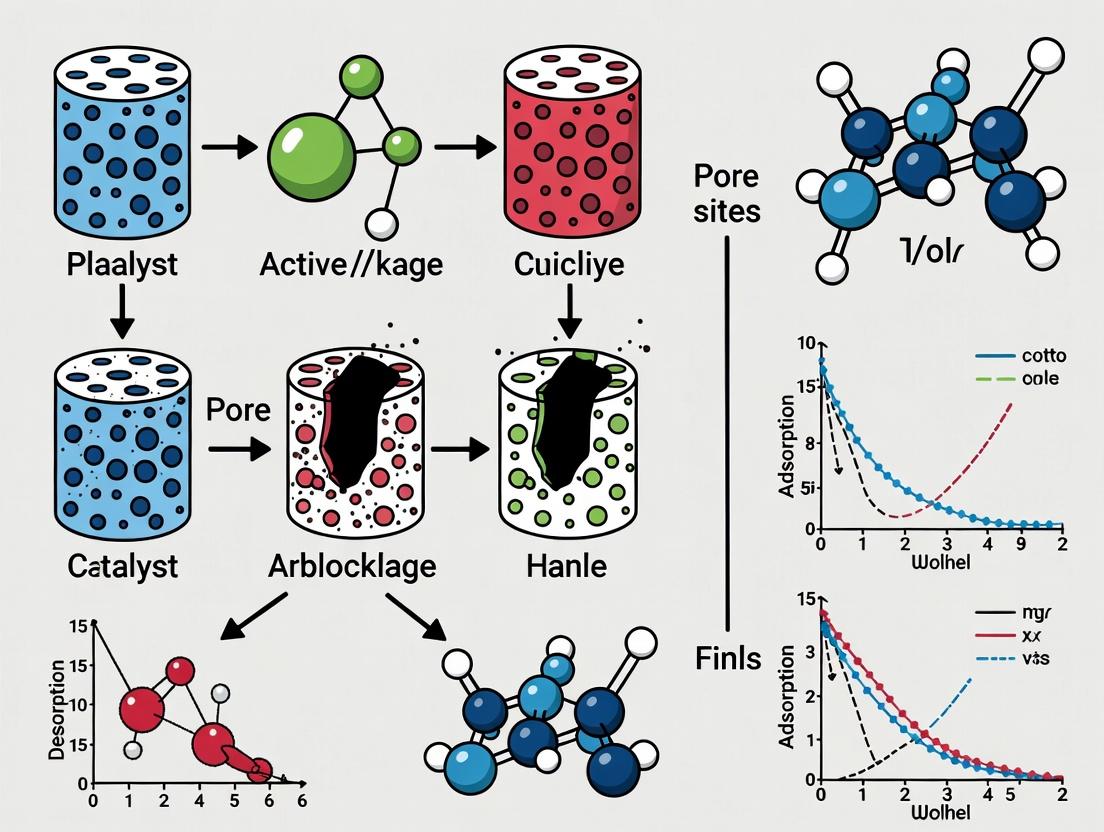
This article provides a systematic guide for researchers and scientists on identifying, troubleshooting, and preventing pore blockage issues during catalyst characterization.
Pore Blockage in Catalyst Characterization: A Comprehensive Guide for Accurate Analysis
Abstract
This article provides a systematic guide for researchers and scientists on identifying, troubleshooting, and preventing pore blockage issues during catalyst characterization. Covering foundational concepts, methodological best practices, practical troubleshooting protocols, and validation techniques, it addresses the critical challenge of obtaining accurate pore structure and surface area data. The scope includes insights into common pitfalls in techniques like gas physisorption and mercury porosimetry, with targeted solutions for professionals in drug development and materials science.
What is Pore Blockage? Understanding the Fundamentals for Accurate Analysis
Technical Support Center: Troubleshooting Pore Blockage in Catalyst Characterization
Frequently Asked Questions (FAQs)
Q1: After running a reaction, my BET surface area measurement has dropped by over 50%. Is this definitive proof of pore blockage? A: A significant drop in BET surface area is a strong indicator of pore blockage, but not definitive proof. It must be correlated with other data. You must also check:
- Pore Volume Distribution (from BJH/DFT): A shift from smaller to larger pore diameters confirms blockage of micropores/mesopores.
- Adsorption/Desorption Isotherm Shape: A change from Type IV to Type II, or a reduction in the hysteresis loop size, indicates pore access issues.
- Catalytic Activity Data: A disproportionate loss in activity compared to surface area loss suggests blockage of active sites within pores.
- Elemental Analysis (EDX/XPS): To confirm the presence of foreign, non-catalyst material (e.g., carbon deposits, reactant residues) causing the blockage.
Q2: My gas physisorption data suggests pore blockage, but my catalytic activity is unaffected. How is this possible? A: This is a common observation that points to the nature of the blockage.
- Pore Mouth Blockage vs. Uniform Deposition: Blockage may only occur at the pore entrance, sealing a volume that is still measured as "pore space" but is inaccessible to the probe gas (N₂, Ar). However, if the active sites are primarily on the external surface or in larger, unblocked pores, activity may remain high.
- Probe Molecule Size: The probe molecule (N₂, 0.36 nm) may be excluded from pores that are still accessible to smaller reactant molecules.
- Recommended Action: Perform physisorption using a range of probe gases (e.g., CO₂ at 273K for ultramicropores) and conduct Thermogravimetric Analysis (TGA) to quantify the amount of deposited blocking material.
Q3: What is the most effective experimental protocol to distinguish between "soft" (carbonaceous) and "hard" (sintered/metallic) pore blockage? A: A sequential characterization protocol is required.
| Technique | Purpose in Diagnosing Blockage Type | Expected Outcome for "Soft" Blockage (Coking) | Expected Outcome for "Hard" Blockage (Sintering/Fouling) |
|---|---|---|---|
| Thermogravimetric Analysis (TGA) | Quantify burn-off of carbonaceous deposits. | Significant weight loss in air/O₂ at 300-600°C. | Minimal weight loss. |
| Temperature-Programmed Oxidation (TPO) | Identify combustion temperature of deposits. | Distinct CO₂ peak between 300-600°C. | No major CO₂ peaks. |
| Transmission Electron Microscopy (TEM) | Visualize particle size and pore structure. | Amorphous layers on surface; pore structure intact underneath. | Particle coalescence, pore collapse, or crystalline aggregates. |
| Chemisorption (e.g., H₂, CO) | Measure active metal surface area. | Metal dispersion may be restored after TGA/TPO. | Metal dispersion remains low post-oxidation. |
Experimental Protocol: Combined TGA-MS for Blockage Analysis Title: Quantifying and Identifying Blocking Species. Method:
- Sample Prep: Load 10-50 mg of used catalyst into a TGA crucible.
- Pretreatment: Under inert gas (Ar, 50 mL/min), heat to 150°C at 10°C/min, hold for 30 min to remove moisture.
- Oxidation Step: Switch gas to 20% O₂/Ar (50 mL/min). Ramp to 900°C at 10°C/min. Hold for 10 min.
- Mass Spectrometry (MS): Simultaneously monitor mass-to-charge (m/z) ratios for H₂O (18), CO₂ (44), and SO₂ (64).
- Analysis: Correlate weight loss steps with MS peaks. CO₂ evolution at ~500°C indicates coke; low-temperature H₂O is physisorbed water; SO₂ indicates sulfate deposits.
Q4: How can I design an experiment to proactively test a catalyst's susceptibility to pore blockage? A: Implement an Accelerated Deactivation Test. Protocol:
- Baseline Characterization: Perform BET, chemisorption, and a standard activity test (e.g., conversion at T₁).
- Stress Test: Run the catalyst under severe conditions known to cause blockage:
- For coking: Use a high concentration of olefins or aromatics at a lower temperature.
- For fouling: Introduce a known contaminant (e.g., organosilicon, metal impurities) at a trace concentration into the feed.
- Controlled Regeneration: Attempt in-situ regeneration (e.g., H₂ treatment for reduction, O₂ for coke burn-off).
- Post-Test Characterization: Repeat baseline characterization. Compare isotherms, pore size distributions, and activity.
- Key Metric: Calculate the Activity Recovery (%) after regeneration. Low recovery indicates irreversible "hard" blockage.
Research Reagent Solutions & Essential Materials
| Item | Function in Troubleshooting Pore Blockage |
|---|---|
| High-Purity Probe Gases (N₂, Ar, CO₂) | For accurate physisorption. CO₂ is critical for analyzing micropores blocked for N₂. |
| Calibrated Mass Spectrometry (MS) System | Coupled to TGA or TPD/TPR for evolved gas analysis during regeneration. |
| Micromeritics ASAP 2460 or Equivalent | Automated surface area and porosity analyzer for high-quality, reproducible isotherms. |
| Standard Reference Material (e.g., Alumina Powder) | To regularly calibrate porosity equipment and verify measurement integrity. |
| Non-Porous Silica or Tungstic Oxide | Used in chemisorption experiments to validate and calibrate the metallic surface area measurement. |
| In-Situ Cell/Reactor for XRD or XAS | Allows monitoring of structural changes (sintering, phase change) under reactive conditions. |
Diagnostic Workflow for Pore Blockage
Title: Pore Blockage Diagnosis Decision Tree
Experimental Protocol for Correlative Characterization
Title: Sequential Protocol for Blockage Analysis
Technical Support Center: Troubleshooting Pore Blockage in Catalyst Characterization
Troubleshooting Guides
Guide 1: Diagnosing Reduced Surface Area & Pore Volume Issue: BET surface area and pore volume measurements are significantly lower than expected. Procedure:
- Step 1 - Verify Pre-Treatment: Confirm the sample outgas temperature and duration match the material's thermal stability. Excessive heat can sinter pores.
- Step 2 - Analyze Isotherm Shape: Check for a truncated nitrogen adsorption isotherm. A sharp knee and low uptake indicate micropore blockage.
- Step 3 - Perform TGA-MS: Run a coupled Thermogravimetric Analysis-Mass Spectrometry to identify contaminants (e.g., carbonaceous deposits, sulfates) burning off at specific temperatures.
- Step 4 - Conduct Elemental Analysis: Use XPS or EDX to detect surface contaminants (Si, S, Na) not originating from the catalyst itself.
Guide 2: Resolving Inconsistent Chemisorption Results Issue: Metal dispersion and active site counts vary widely between replicates. Procedure:
- Step 1 - Standardize Reduction Protocol: Ensure the temperature ramp rate, hold time, and reducing gas flow (H₂) are identical. Use a calibrated thermocouple.
- Step 2 - Check for Incomplete Reduction: Perform Temperature-Programmed Reduction (TPR) to see if the main reduction peak is fully resolved under your standard protocol.
- Step 3 - Purge Inert Gas Lines: Install and regularly replace gas line filters (0.5 µm) to remove oil or water from compressor lines.
- Step 4 - Validate Titration Method: For H₂ or CO chemisorption, ensure the chosen titration method (pulse, static, dynamic) is appropriate for your metal loading.
Frequently Asked Questions (FAQs)
Q1: Our catalyst's pores appear blocked after calcination. What are the likely causes? A: The primary causes are (1) Carbonaceous Residue: Incomplete removal of organic templates or precursors due to insufficient O₂ flow or too rapid temperature ramp. (2) Sintering: Exceeding the material's thermal stability threshold, causing pore collapse. (3) Surface Migration: Mobile species (e.g., chlorides from metal precursors) migrating and condensing at pore mouths during heating.
Q2: How can we distinguish between physical pore blockage and chemical poisoning of active sites? A: Use a combination of techniques. Physical blockage reduces total pore volume (seen in physisorption) and may not affect the bulk crystal structure (XRD). Chemical poisoning often leaves pore volume intact but eliminates specific active sites, which can be detected via selective chemisorption (e.g., CO on metals vs. H₂) or a drastic drop in catalytic activity with minimal surface area change.
Q3: What is the recommended pre-treatment for moisture-sensitive catalysts before BET measurement? A: For zeolites or metal-organic frameworks, use a low-temperature vacuum outgassing protocol (e.g., 150-200°C for 12+ hours) with a slow ramp (1-2°C/min). For supported metals, a gentle reduction (e.g., 300°C under H₂/Ar) followed by an inert gas purge and cool-down under vacuum is often required. Always consult stability data.
Q4: Our TPR profile shows a broad, shifting reduction peak. What does this indicate? A: A broad and/or shifting peak suggests incomplete or hindered reduction, often due to: (1) Strong Metal-Support Interaction that requires higher temperatures, (2) Diffusion Limitations of H₂ into blocked pores, or (3) The presence of multiple, interacting species. Increasing reduction temperature incrementally in subsequent experiments can help resolve the issue.
Table 1: Impact of Common Contaminants on Catalyst Characterization Data
| Contaminant Source | Typical Level (wt%) | Observed Effect on BET SA | Effect on Pore Volume (cm³/g) | Diagnostic Technique |
|---|---|---|---|---|
| Carbonaceous Residue | 2-5% | Decrease of 20-50% | Decrease of 15-40% | TGA (burn-off >400°C) |
| Sodium (Na) from Support | 0.1-1% | Decrease of 10-30%* | Decrease of 5-20%* | ICP-OES, XPS |
| Sulfur Poisoning | 0.5-2% | Minimal Change | Minimal Change | XPS, Drastic drop in H₂ chemisorption |
| Physisorbed Water | Variable | Overestimation then collapse | Overestimation | TGA-MS (loss <150°C) |
*Effect is via pore mouth plugging or inducing sintering during treatment.
Table 2: Standard Pre-Treatment Protocols for Common Catalyst Types
| Catalyst Type | Recommended Outgas Temp (°C) | Time (hrs) | Atmosphere | Critical Warning |
|---|---|---|---|---|
| Mesoporous Silica (SBA-15) | 200 | 6 | High Vacuum (<10⁻³ Torr) | >250°C can degrade silanol groups. |
| Zeolite (ZSM-5) | 300 | 12 | High Vacuum | Must be fully calcined prior. Ramp slowly to avoid steam damage. |
| Alumina-Supported Metal | 200 | 3 | Flowing Inert Gas | Follow by in-situ reduction at specified temp for chemisorption. |
| Activated Carbon | 150 | 24 | High Vacuum | Higher temps can cause off-gassing and BET artifacts. |
Experimental Protocols
Protocol 1: Temperature-Programmed Reduction (TPR) for Reducibility Assessment Objective: Determine the reduction profile and optimal activation temperature of a supported metal catalyst. Methodology:
- Load 50-100 mg of sample into a U-shaped quartz reactor.
- Pre-treat at 150°C under flowing Ar (30 mL/min) for 1 hour to remove moisture.
- Cool to 50°C under Ar.
- Switch gas to 5% H₂/Ar (30 mL/min) and stabilize flow.
- Heat the reactor from 50°C to 800°C at a ramp rate of 10°C/min.
- Monitor H₂ consumption using a thermal conductivity detector (TCD).
- The main peak temperature indicates the required reduction condition. Integrate peak area for quantitative H₂ uptake.
Protocol 2: Sequential Chemisorption for Discriminating Site Blockage Objective: Differentiate between total metal surface area and accessible, unpoisoned metal sites. Methodology:
- Reduce catalyst sample in-situ using the optimized TPR protocol.
- Cool to chemisorption temperature (e.g., 35°C for CO, 100°C for H₂) under flowing Ar.
- Perform first chemisorption using your standard probe molecule (e.g., H₂). This measures all accessible metal sites.
- Evacuate the system thoroughly to remove physisorbed and weakly chemisorbed species.
- Expose the sample to a potential poisoning agent (e.g., 100 ppm H₂S in H₂ for 5 mins) at low temperature.
- Purge with inert gas.
- Perform a second chemisorption with the same probe molecule under identical conditions. This measures remaining unpoisoned sites.
- The difference in uptake quantifies the fraction of sites selectively poisoned/blocked.
The Scientist's Toolkit
Table 3: Research Reagent Solutions for Pore Blockage Mitigation
| Item | Function & Relevance |
|---|---|
| High-Purity In-Situ Cell | A reactor cell allowing pre-treatment and analysis without air exposure, preventing contamination between steps. |
| On-Line Gas Purifier/Moisture Trap | Removes O₂ and H₂O from inert and reactive gas streams (e.g., He, H₂, CO) to below 1 ppm, preventing oxidation or hydroxylation during treatment. |
| Certified Calibration Mixture (e.g., 5% H₂/Ar) | Essential for accurate quantification in TPR and chemisorption. Uncalibrated mixtures lead to incorrect dispersion calculations. |
| Micromeritics Quantachrome | Software for advanced isotherm analysis (e.g., DFT, t-plot, α-s-plot) to deconvolute micro/meso pore volume and identify blockage type. |
| Non-Porous Silica/Alumina Reference | Used in t-plot analysis to determine external surface area, helping confirm if micropores are blocked. |
| Ultrasonic Bath with Ethanol | For disaggregating loosely sintered powder particles before analysis, ensuring representative sampling. |
Diagrams
Title: Diagnostic Workflow for Pore Blockage
Title: Catalyst Activation & Analysis Workflow with Risks
Troubleshooting Guides & FAQs
Q1: Why does my physisorption isotherm show a low nitrogen uptake and an absence of a hysteresis loop, even for a known mesoporous material? A: This is a classic symptom of pore blockage at the entrance. Blocked pores prevent nitrogen from accessing the internal pore volume, leading to underestimated surface area and pore volume. The absence of a hysteresis loop indicates that the mesopores are not being filled/emptied due to inaccessible pore necks.
Q2: How can I distinguish between a microporous material and a mesoporous material with blocked entrances using t-plot analysis? A: A true microporous material will show a linear t-plot region passing through the origin after micropore filling. For a mesoporous material with blocked entrances, the t-plot may show an apparent linear region at low thickness, but the calculated external surface area will be anomalously low, and the calculated micropore volume will be falsely high, as the nitrogen uptake is attributed to "micropore filling" instead of monolayer-multilayer formation on a now-inaccessible surface.
Q3: What pre-treatment errors most commonly lead to pore blockage in catalyst samples? A: Inadequate or overly aggressive outgassing is a primary cause. Low temperature or short duration fails to remove heavy hydrocarbons, while excessive temperature can sinter the sample or melt/redistribute surface species, physically sealing pores. Another common error is the condensation of residual moisture during cooling prior to analysis.
Q4: My BJH pore size distribution shows a sharp peak at ~3.8 nm. Could this indicate an artifact? A: Yes. A very sharp, narrow peak near 3.8-4.0 nm is often an artifact of pore blockage or cavitation in the mesopore network during desorption, not a true reflection of the pore size. It suggests that nitrogen is becoming trapped in pores and then spontaneously evaporating (cavitation) due to blocked connections to the external surface.
Q5: What is the single most diagnostic check for pore blockage when reviewing BET data? A: Examine the C constant from the BET transformation. An abnormally high C value (e.g., >300) often indicates strong adsorbate-adsorbent interactions, which can be caused by contaminants or condensed species within pores—a sign of incomplete cleaning or pore narrowing/blockage.
Data Presentation: Impact of Blockage on Calculated Parameters
Table 1: Comparison of Characterization Results for a Mesoporous Catalyst Before and After Simulated Pore Blockage
| Parameter | Unblocked Sample | Artificially Blocked Sample | % Deviation | Primary Skewed Method |
|---|---|---|---|---|
| BET Surface Area (m²/g) | 350 | 142 | -59% | BET |
| Total Pore Volume (cm³/g) | 0.85 | 0.31 | -64% | Single-point pore volume |
| Micropore Volume (t-plot) (cm³/g) | 0.05 | 0.22* | +340%* | t-plot |
| External Surface Area (m²/g) | 320 | 85 | -73% | t-plot |
| BJH Adsorption Avg. Pore Width (nm) | 9.7 | 4.1* | -58%* | BJH |
| Hysteresis Loop Type | H1 (cylindrical pores) | H3 (slit-like) / None | N/A | Isotherm shape |
Note: These values are artifacts of the blockage, not true material properties.
Experimental Protocols
Protocol 1: Diagnostic Pre-treatment to Minimize Blockage
- Sample Mass: Use an appropriate mass (typically 50-200 mg) to ensure a measurable signal while avoiding bed depth effects.
- Outgassing: Use a staged temperature ramp under high vacuum (<10µm Hg). Example: 1 hr at 90°C to remove physisorbed water, then 3-6 hrs at 300°C (or below the sample's thermal stability limit) to remove chemisorbed species. A heating rate of 5°C/min is recommended.
- Cooling: After outgassing, backfill the sample tube with ultra-high-purity (UHP) nitrogen or helium and seal. Allow to cool to room temperature before immersing in the analysis cryostat (typically liquid N2 at 77 K). This prevents air (and moisture) from re-entering the pores.
Protocol 2: Comparative Analysis to Detect Blockage
- Analyze the sample using the standard N2 physisorption at 77 K.
- Perform CO2 physisorption at 273 K. CO2 has higher kinetic energy at this temperature and can often diffuse into pores blocked to N2.
- Calculate micropore volumes from both the N2 (t-plot) and CO2 (Dubinin-Radushkevich) isotherms.
- A significantly higher micropore volume from CO2 analysis suggests N2-accessible pore entrances are blocked, while the CO2 can still probe the ultramicroporosity.
Diagrams
Title: Workflow Leading to Skewed Results from Pore Blockage
Title: Diagnostic Decision Tree for Pore Blockage
The Scientist's Toolkit: Research Reagent Solutions
Table 2: Essential Materials for Preventing Pore Blockage
| Item | Function | Key Consideration |
|---|---|---|
| High-Vacuum Degasser | To remove physisorbed and chemisorbed contaminants from pores without sintering. | Must achieve vacuum <10 µm Hg with precise, programmable temperature ramps up to 350°C. |
| Ultra-High Purity (UHP) Gases | Analysis gas (N2, Ar, CO2) and backfill/purge gas (He). | 99.999% purity or higher to prevent contamination by moisture or hydrocarbons during transfer and analysis. |
| Heated Vacuum Grease | To seal joints on sample preparation ports. | Use a minimal amount of high-temperature, low-vapor-pressure grease to avoid hydrocarbon contamination. |
| Sample Cell Seals | High-temperature ferrules and valves. | Must maintain seal integrity under high vacuum and temperature; prefer metal seals over polymer where possible. |
| Thermal Stability Reference | Thermogravimetric Analysis (TGA) data. | Critical. Determines the safe maximum outgassing temperature to avoid structural collapse or active phase sintering. |
| Micromeritics Restrictor | A narrow capillary for controlled gas introduction. | Prevents rapid pressure changes that can disturb the sample bed or cause condensation in fine pores. |
Within catalyst characterization research, accurate pore architecture data (size, volume, distribution) is non-negotiable for predicting performance metrics like activity, selectivity, and lifetime. This technical support center focuses on troubleshooting pore blockage issues—a primary culprit for erroneous data—that obscure the true structure-function relationship. Resolving these issues is critical for researchers and development professionals reliant on precise material properties.
Troubleshooting Guides & FAQs
Q1: Our BET surface area analysis consistently shows lower values than expected after repeated reaction cycles. What could be causing this, and how can we confirm pore blockage? A: This is a classic indicator of pore blockage, often from coke deposition, sintering, or physisorbed contaminants.
- Diagnostic Protocol:
- Pre- and Post-Analysis: Perform N₂ physisorption isotherms on fresh and spent catalyst samples under identical conditions.
- Isotherm Shape Check: Compare isotherm shapes (IUPAC classification). A shift from Type IV (mesoporous) toward Type II (non-porous) suggests pore filling.
- Pore Size Distribution (PSD) Analysis: Use the BJH (Barrett-Joyner-Halenda) method for mesopores or NLDFT (Non-Local Density Functional Theory) for micro/mesopores. A significant reduction in pore volume, especially in specific size ranges, confirms blockage.
- Complementary Technique - TGA/DSC: Perform Thermogravimetric Analysis (TGA) in air. A weight loss between 300°C-600°C typically indicates combustion of carbonaceous deposits (coke), quantifying the blocking agent.
Q2: During mercury intrusion porosimetry (MIP), we observe a high "ink-bottle effect" hysteresis. Does this always mean our catalyst has complex pore geometry, or could it be an artifact? A: While hysteresis can indicate complex pore networks, it can be exaggerated by sample preparation artifacts leading to apparent blockage.
- Troubleshooting Steps:
- Sample Drying: Ensure complete, gentle drying (e.g., oven drying at 120°C for 12+ hours) to remove moisture that can block pores and cause cavitation during intrusion.
- Outgassing: Implement rigorous vacuum outgassing prior to analysis to remove trapped air.
- Low-Pressure Data Validation: Cross-reference the low-pressure intrusion data (for large macropores) with data from optical or electron microscopy to check for consistency.
- Washcoat Consideration: For supported catalysts, consider that MIP may crush fragile pore structures, creating false data. Use complementary, non-destructive methods like X-ray computed tomography (XCT) if possible.
Q3: We suspect precursor salt residues are blocking micropores during catalyst synthesis. How can we optimize the washing protocol without collapsing the pore structure? A: Incomplete removal of synthesis precursors is a common source of microporosity loss.
- Optimized Washing Protocol:
- Solvent Selection: Use a solvent with high solubility for the salt but low surface tension (e.g., ethanol/water mixtures) to minimize capillary forces during drying.
- Wash Method: Employ repeated dispersion-and-centrifugation cycles (e.g., 5 cycles) instead of filtration, which can compress the wet cake and trap impurities.
- Supercritical Drying: For ultra-high-surface-area aerogel or xerogel catalysts, follow washing with supercritical CO₂ drying to preserve pore integrity by avoiding the liquid-vapor interface.
- Validation Test: Monitor the conductivity of the wash effluent until it reaches the baseline of the pure solvent, indicating complete salt removal.
Data Presentation: Impact of Pore Blockage on Catalytic Performance
Table 1: Comparative Characterization Data for Fresh vs. Coked Catalyst
| Parameter | Fresh Catalyst (Zeolite Y) | Spent Catalyst (After 100h Reaction) | % Change | Implication |
|---|---|---|---|---|
| BET Surface Area (m²/g) | 780 | 520 | -33.3% | Significant active site loss. |
| Micropore Volume (cm³/g) | 0.28 | 0.14 | -50.0% | Direct blockage of primary active pores. |
| Mesopore Volume (cm³/g) | 0.20 | 0.18 | -10.0% | Some blockage in secondary pore network. |
| Avg. Pore Diameter (nm) | 4.1 | 5.8 | +41.5% | Micropores are preferentially blocked. |
| Catalytic Conversion @ 24h (%) | 95 | 62 | -34.7% | Direct correlation with surface area loss. |
Experimental Protocols
Protocol 1: Comprehensive Pore Blockage Diagnosis via Physisorption and TGA Objective: To quantify and identify the nature of pore-blocking species. Materials: See "The Scientist's Toolkit" below. Procedure:
- Sample Prep: Weigh ~0.1g of spent catalyst. For comparison, use fresh catalyst of identical mass.
- Degassing: Degas both samples at 300°C under vacuum for 12 hours to remove physisorbed volatiles.
- N₂ Physisorption: Analyze using a 7-point BET protocol for surface area. Collect a full adsorption-desorption isotherm at 77 K for PSD analysis (using NLDFT/BJH models).
- TGA Analysis: Transfer a portion of the spent sample to a TGA pan. Run a temperature program from 30°C to 800°C at 10°C/min in synthetic air (20% O₂/ balance N₂).
- Data Correlation: Overlay the PSD loss profile with the temperature of burn-off from TGA (DTG peak) to associate blockage with a specific contaminant.
Protocol 2: Regeneration Procedure for Coke-Blocked Catalysts Objective: To restore pore accessibility via controlled oxidation. Warning: This protocol must be optimized for each catalyst to prevent thermal damage. Procedure:
- Controlled Oxidation: Place the spent catalyst in a tube furnace under a slow flow of 2% O₂ in N₂ (100 mL/min).
- Ramped Temperature: Increase furnace temperature from ambient to 450°C at a very slow rate (1°C/min). Hold at 450°C for 4-6 hours.
- Cooling: Cool to room temperature under inert N₂ flow.
- Re-characterization: Perform a BET surface area check to verify pore volume recovery. Compare to fresh catalyst baseline.
Mandatory Visualizations
Title: Pore Blockage Diagnosis and Mitigation Workflow
Title: How Pore Data Links to Catalyst Performance
The Scientist's Toolkit: Key Research Reagent Solutions
| Item | Function in Pore Characterization | Critical Note |
|---|---|---|
| High-Purity N₂ (99.999%) Gas | Adsorptive gas for physisorption measurements. | Impurities (e.g., H₂O) can block pores and skew low-pressure data. |
| Liquid N₂ Dewar | Maintains bath at 77 K for N₂ physisorption. | Bath level must be stable during isotherm measurement. |
| Krypton Gas | Adsorptive gas for ultra-low surface area (< 1 m²/g) materials. | Required for accurate analysis of dense or non-porous supports. |
| High-Purity He Gas | Used for dead volume calibration and as carrier gas. | Essential for accurate quantification in physisorption and TGA. |
| Reference Standard (e.g., Alumina) | Material with certified surface area for instrument calibration. | Must be run regularly to validate instrument performance. |
| Low-Surface-Tension Solvents (e.g., Ethanol) | For washing catalysts without pore collapse. | Reduces capillary stress during drying vs. water. |
| Supercritical CO₂ Dryer | For drying gel-based catalysts while preserving porosity. | Prevents xerogel formation and pore collapse. |
Best Practices in Sample Preparation and Characterization to Minimize Blockage
Technical Support Center: Troubleshooting Gas Sorption Experiments
Troubleshooting Guides
Issue 1: Low or No Surface Area/BET Calculation Failure
Problem: Analysis software fails to calculate a valid BET surface area or returns an improbably low value.
Diagnosis & Solution:
- Check for Probe Molecule Inadequacy: This is often due to using a probe molecule too large for the material's primary pore size.
- Action: Refer to the Probe Molecule Selection Table below. For ultramicroporous materials (< 0.7 nm), consider switching from N₂ at 77 K to Ar at 87 K or Kr at 77 K.
- Check for Kinetic Restrictions: Micropores may not fill/empty within standard equilibration times when using N₂.
- Action: Increase the equilibration time for each pressure point, especially in the low-pressure (P/P₀ < 0.01) region.
- Verify Sample Preparation: Incomplete outgassing can cause pore blockage.
- Action: Review and ensure the outgassing protocol (see Experimental Protocols section) was strictly followed. Consider a more aggressive (higher temperature, longer time) outgassing if the sample is stable.
Issue 2: Hysteresis Loop Artifacts or Irregularities
Problem: The adsorption-desorption isotherm shows unexpected shapes, sharp closures, or low-pressure hysteresis.
Diagnosis & Solution:
- Check for Thermistor Malfunction: Improper cryogen level or faulty temperature sensor can cause artificial jumps.
- Action: Ensure the Dewar is filled with the correct cryogen (liquid N₂ for 77 K, liquid Ar for 87 K) to the proper level. Calibrate the thermistor.
- Suspect Diffusion Limitations: Using N₂ on narrow micropores can lead to non-equilibrium, causing desorption branch distortions.
- Action: Re-run the analysis using Ar at 87 K, which has higher diffusivity.
- Identify Chemical Interaction: Some materials may have specific interactions with N₂.
- Action: Use inert Ar or Kr to obtain a purely physisorptive isotherm.
Issue 3: Poor Reproducibility Between Runs
Problem: Successive measurements on the same sample material yield different pore size distributions.
Diagnosis & Solution:
- Inconsistent Outgassing: This is the most common cause. Residual contaminants block pores variably.
- Action: Implement a strict, documented outgassing SOP (see Experimental Protocols). Use the same mass of sample (±0.5 mg) each time.
- Probe Molecule Saturation Pressure (P₀) Instability: Fluctuations in the cryogen bath temperature affect P₀ for N₂ at 77 K.
- Action: For the highest reproducibility in micropore analysis, use Ar at 87 K, where the temperature of a saturated liquid Ar bath is more stable than a liquid N₂ bath under atmospheric pressure variations.
- Sample Degradation: The sample may be hygroscopic or reactive.
- Action: Perform sample handling in a glovebox. Use a sealed sample cell transfer kit.
FAQs
Q1: Why should I use Krypton instead of Nitrogen for low-surface-area samples? A: Nitrogen, at its saturation pressure (P₀) of ~760 Torr at 77 K, requires a relatively large amount of gas adsorbed for accurate measurement. For surfaces areas below ~5 m²/g, the adsorption signal becomes too low for precision. Krypton has a much lower P₀ (~1.7 Torr at 77 K), meaning the relative pressure (P/P₀) range is achieved with absolute adsorbed amounts 400-500 times smaller. This magnifies the measurement sensitivity for low-surface-area materials.
Q2: My catalyst contains both micropores and mesopores. Which probe gas should I use? A: For a full characterization, you likely need two experiments:
- Argon at 87 K: Provides the most accurate assessment of micropore size distribution and volume due to its lack of quadrupole moment and higher diffusivity.
- Nitrogen at 77 K: Remains the standard for mesopore (2-50 nm) size distribution via the BJH or DH method and for total surface area via the BET method across the full range. Report data from both gases, specifying which was used for each analysis.
Q3: How does probe molecule choice directly help troubleshoot pore blockage issues? A: Apparent "pore blockage" in characterization data can be an artifact of using an inappropriate probe. If N₂ molecules cannot access or equilibrate within ultramicropores due to size or kinetic limitations, the data will falsely indicate blocked or absent pores. Switching to the smaller, more diffusive Ar atom can "reveal" these pores, distinguishing true blockage (e.g., by coke or contaminants) from a characterization artifact.
Data Presentation: Probe Molecule Comparison
Table 1: Key Properties and Application Ranges of Common Probe Molecules
| Probe Molecule | Typical Analysis Temperature | Kinetic Diameter (nm) | Saturation Pressure (P₀, Torr) | Optimal Application Range | Primary Advantage for Troubleshooting |
|---|---|---|---|---|---|
| Nitrogen (N₂) | 77 K (LN₂) | 0.364 nm | ~760 | Mesopores (2-50 nm); BET surface area > 5 m²/g | Standard method, extensive reference databases. |
| Argon (Ar) | 87 K (LAr) | 0.340 nm | ~280 | Ultra- & Super-micropores (< 0.7 nm, 0.7-2 nm) | No quadrupole moment, higher diffusivity, reveals N₂-inaccessible pores. |
| Krypton (Kr) | 77 K (LN₂) | 0.360 nm | ~1.7 | Very low surface area (< 1-5 m²/g) | High sensitivity for low uptake, excellent for dense solids. |
Experimental Protocols
Protocol 1: Standard Outgassing Pre-Treatment for Microporous Catalysts
- Purpose: To remove physisorbed contaminants (H₂O, CO₂, solvents) from pores without altering the catalyst structure.
- Materials: Sample tube, heating mantle/vacuum oven, high-vacuum system.
- Steps:
- Weigh an appropriate sample mass (e.g., 50-100 mg) into a clean, pre-weighed analysis tube.
- Attach tube to the outgassing port of the sorption analyzer or a dedicated manifold.
- Apply a vacuum (< 10⁻² Torr) and gradually heat to the target temperature (e.g., 150°C for zeolites, 300°C for metal oxides). Caution: Temperature must be below the sample's structural collapse temperature.
- Hold at temperature and vacuum for a minimum of 6 hours, often overnight (12+ hours) for microporous materials.
- Cool to ambient temperature under continuous vacuum.
- Back-fill with inert gas (He) and re-weigh to confirm mass stability.
Protocol 2: Dual-Probe Molecule Isotherm Measurement for Pore Blockage Diagnosis
- Purpose: To distinguish between true pore blockage and probe molecule artifact.
- Materials: Pre-outgassed sample, sorption analyzer capable of 77 K and 87 K measurements, LN₂, LAr.
- Steps:
- Complete outgassing per Protocol 1.
- Experiment A: Immerse sample cell in LN₂ bath (77 K). Collect a high-resolution (≥ 30 points) adsorption-desorption isotherm using ultra-high-purity (UHP) N₂ from P/P₀ 10⁻⁷ to 0.995.
- Re-outgas the sample completely (e.g., 300°C, 3 hours) to remove N₂.
- Experiment B: Immerse sample cell in LAr bath (87 K). Collect a high-resolution adsorption-desorption isotherm using UHP Ar over a similar P/P₀ range.
- Analysis: Compare the low-pressure (< 0.01 P/P₀) adsorption data and cumulative pore volumes from both isotherms. A significantly higher uptake with Ar indicates that N₂ was unable to access/equilibrate in the smallest pores.
Mandatory Visualization
Title: Troubleshooting Flowchart for Probe Molecule Selection
The Scientist's Toolkit: Research Reagent Solutions
Table 2: Essential Materials for Probe Molecule Sorption Experiments
| Item | Function & Relevance to Troubleshooting |
|---|---|
| Ultra-High-Purity (UHP) Gases (N₂, Ar, Kr) | Minimizes artifacts from impurities that can adsorb and block pores. Essential for low-pressure micropore measurements. |
| Liquid Cryogens (LN₂, LAr) | Provide stable, low-temperature baths. LAr (87 K) offers more stable temperature than LN₂ for high-reproducibility micropore work. |
| Sealed Sample Cell Transfer Kit | Allows transport of outgassed samples from prep station to analyzer without air exposure, preventing contamination/hydration. |
| Micropore-Rated Sample Tubes | Designed with narrow stems to minimize dead volume, which is critical for accurate low-pressure measurements. |
| High-Vacuum Grease (Apiezon H) | Used sparingly on joints; vacuum-stable at cryogenic temperatures to prevent leaks. |
| Temperature-Sensor Calibration Kit | Ensures the bath temperature (and thus P₀) is measured accurately, a common source of error. |
| Reference Material (e.g., Alumina, Carbon) | A well-characterized microporous/mesoporous standard used to validate instrument performance and protocol accuracy. |
This guide details the critical steps for obtaining accurate gas physisorption isotherms, a cornerstone technique for characterizing porous materials like catalysts. The process is framed within a thesis focused on troubleshooting pore blockage issues, which can severely skew surface area, pore volume, and pore size distribution results in catalyst characterization research.
Standard Workflow
Diagram Title: Gas Physisorption Analysis Workflow
Experimental Protocols
Protocol 1: Sample Degassing
Purpose: To remove physically adsorbed contaminants (water, vapors) from the sample surface and open pores without altering the material's structure.
- Place a clean, dry sample tube (with filler rod if needed) on the degas station.
- Weigh the empty tube/rod assembly. Add the sample (typically 50-200 mg for catalysts).
- Attach the tube to the degas port and apply a gentle vacuum (~10⁻² Torr). Use a slow heating ramp (2-5°C/min) to the target temperature. Critical: The degas temperature must be below the sample's thermal stability limit (e.g., 150°C for many metal oxides, 300°C for zeolites).
- Hold at the target temperature for a minimum of 3 hours, often 6-12 hours for microporous materials.
- Allow the sample to cool to ambient temperature under continuous vacuum.
- Backfill the tube with inert gas (He or N₂) and seal.
Protocol 2: Free Space Measurement (He Calibration)
Purpose: To determine the volume of the sample tube not occupied by the solid sample, which is crucial for accurate gas uptake calculations.
- After degassing and cooling, weigh the sample tube with the prepared sample.
- Mount the tube on the analysis port of the physisorption analyzer.
- Immerse the sample tube in a cryogen (liquid N₂ for N₂ adsorption at 77 K).
- Introduce a known amount of helium (a non-adsorbing gas at 77 K) into the calibrated dosing volume.
- Expand the helium into the sample tube and measure the equilibrium pressure. The system uses the ideal gas law to calculate the free space volume.
- Remove the tube from the analysis port and install the filler rod to reduce dead volume (for micropore analysis).
Protocol 3: N₂ Isotherm Measurement at 77 K
Purpose: To measure the quantity of gas adsorbed as a function of relative pressure to derive textural properties.
- After free space measurement, evacuate the sample tube.
- Re-immerse the tube in liquid nitrogen to maintain a constant 77 K bath.
- Begin dosing small, incremental quantities of N₂ gas.
- After each dose, allow the system to reach thermal and adsorptive equilibrium. Record the equilibrium pressure (P) and adsorbed volume.
- Continue dosing from low relative pressure (P/P₀ ~10⁻⁷) up to saturation pressure (P/P₀ ~0.99) for the adsorption branch.
- Reverse the process by gradually evacuating gas to measure the desorption branch.
- The analyzer compiles the (P/P₀) vs. Volume (STP) adsorbed data to form the isotherm.
Troubleshooting Guides & FAQs
Q1: Our BET surface area results are consistently and significantly lower than expected for our catalyst. What could be the cause? A: This is a classic symptom of pore blockage.
- Primary Suspect: Incomplete Degassing. Contaminants, especially moisture, remain in the pores, preventing N₂ access. Troubleshoot: Increase degas temperature (if material stability allows) and/or extend degas time. Use a moisture trap on the degas station inlet.
- Secondary Suspect: Condensed Volatiles. If analysis is performed immediately after a wet chemical synthesis step, residual solvent may be present. Troubleshoot: Implement a rigorous pre-degas washing/drying protocol. Consider a solvent exchange to a more volatile liquid.
- Other Checks: Verify the sample mass is correct and that the free space measurement was successful (no leaks).
Q2: The desorption branch of our isotherm shows a large, sharp hysteresis loop that closes at an anomalously low P/P₀ (e.g., ~0.42). What does this indicate? A: This often indicates "tensile strength effect" or network-percolation effects, but in the context of pore blockage, it can signal "ink-bottle" pores where the pore body is wide but the neck is narrow and potentially obstructed.
- Troubleshoot: Compare isotherms using different probe gases (e.g., Ar at 87 K). If the low-pressure closure disappears, it suggests physisorption artifacts rather than permanent blockage. Consider conducting a CO₂ adsorption at 273 K to probe ultramicropores that N₂ at 77 K cannot access due to diffusion limitations (kinetic blockage).
Q3: After repeated analysis cycles on the same catalyst sample, the measured pore volume decreases. Why? A: This points to irreversible alteration or contamination during the analysis cycle.
- Check 1: Ensure your degas temperature for subsequent cycles does not exceed the initial activation temperature, which could cause sintering.
- Check 2: The liquid nitrogen Dewar or the gas supply may be contaminated, leading to condensation of impurities (e.g., air, oils) on the sample during analysis. Action: Use high-purity (≥99.999%) gases and ensure liquid N₂ is from a sealed source.
Q4: The isotherm appears "noisy" or shows irregular, unexpected steps. What system issues should I investigate? A: This is typically an instrument or experimental setup issue.
- Leak Test: Perform a system leak check. A leak rate of <10⁻⁵ mbar·L/s is acceptable for micropore analysis.
- Temperature Stability: Ensure the cryogen bath is stable and topped up. Fluctuations of more than ±0.5 K can cause significant noise.
- Dosing Volume: Verify that the correct dosing volume is selected for the expected surface area. A volume too large leads to poor resolution at low pressure.
Table 1: Common Degassing Conditions for Different Catalyst Types
| Catalyst Type | Typical Degas Temperature Range | Minimum Hold Time | Special Considerations |
|---|---|---|---|
| Silica/Alumina | 150 - 200°C | 3 hours | Hydroxyl groups stable; avoid >300°C. |
| Zeolites (H-form) | 300 - 350°C | 6-8 hours | Use slow ramp (1-2°C/min) to prevent framework damage. |
| Activated Carbon | 250 - 300°C | 6-12 hours | Can hold for extended periods (up to 24h) under high vacuum. |
| Metal-Organic Frameworks (MOFs) | 120 - 150°C | 8-12 hours | CRITICAL: Must be below framework collapse temperature; use ultra-high vacuum. |
| Supported Metal Catalysts | 150 - 200°C | 3-4 hours | Avoid temperatures that reduce the active metal phase. |
Table 2: Troubleshooting Pore Blockage: Symptom vs. Likely Cause & Solution
| Observed Symptom | Likely Cause | Recommended Diagnostic Action | Solution |
|---|---|---|---|
| Low BET surface area | Incomplete contaminant removal | TGA-MS of sample after standard degas | Increase degas T/time; add pre-treatment step. |
| Low pore volume, Type I isotherm shape remains | Micropore blockage by tars/organics | Perform CO₂ 273 K isotherm; compare pore volumes | Solvent wash (e.g., THF) prior to degassing. |
| Hysteresis loop with low P/P₀ closure | Kinetic limitations or neck blockage | Compare Ar 87 K vs. N₂ 77 K isotherms | Use smaller probe molecule (Ar, CO₂); extend equilibration time per dose. |
| Non-reproducible isotherms | Re-adsorption of atmospheric moisture | Weigh sample after degassing, expose to air, re-weigh | Store and handle sample in glovebox; use airtight transfer pods. |
The Scientist's Toolkit: Key Research Reagent Solutions
| Item | Function | Critical Notes |
|---|---|---|
| High-Purity N₂ Gas (≥99.999%) | Primary adsorbate for analysis at 77 K. | Impurities (e.g., H₂O, hydrocarbons) condense and block pores. Use in-line filters. |
| Helium Gas (≥99.999%) | Used for free space (dead volume) calibration. | Must be ultra-pure; He adsorbs in ultramicropores at 77 K, potentially skewing results. |
| Liquid Nitrogen | Cryogen for maintaining constant 77 K bath. | Must be from a pressurized, sealed source to prevent O₂ condensation, which acts as a contaminant. |
| Sample Tubes with Filler Rods | Hold sample during analysis. | Rods reduce dead volume, crucial for low-surface-area and micropore analysis. Must be scrupulously clean. |
| Regenerable Moisture/Oil Trap | Purifies gas lines entering degas and analysis stations. | Prevents contamination of sample during preparation and measurement. Must be regenerated regularly. |
| Micromeritics ASAP 2020 or Equivalent | Automated physisorption analyzer. | Calibrate dosing volumes regularly. Ensure P₀ tube is ice-free for accurate relative pressure. |
| Vacuum Grease (Apiezon H or equivalent) | Seals joints on vacuum manifolds. | Use sparingly. Apply only to outer joint to prevent vapors from contaminating the sample. |
| Ultra-High Vacuum Degas Station | Prepares sample by removing adsorbed contaminants. | Must achieve ultimate vacuum <10⁻² mbar. Heating must be uniform and controllable. |
Technical Support Center: Troubleshooting Pore Blockage in Catalyst Characterization
Troubleshooting Guides & FAQs
Q1: After successive characterizations, our mercury porosimetry intrusion curve shows a significant reduction in total pore volume compared to the fresh sample. What is the most likely cause and how can we confirm it?
A1: This is a classic indicator of irreversible pore blockage from residual mercury or condensed contaminants. Mercury can become trapped in fine pores or react with certain catalyst components.
- Confirmation Protocol: First, perform a low-pressure nitrogen physisorption (BET) analysis on the same post-porosimetry sample. A similarly reduced BET surface area and pore volume confirm permanent blockage. Next, use Scanning Electron Microscopy with Energy Dispersive X-ray Spectroscopy (SEM-EDS) on a cross-section of a particle. Map for mercury (Hg) signatures. Its presence confirms entrapped mercury.
- Preventative Methodology: Always begin with the least invasive technique. Sequence your experiments: 1) NMR, 2) Electron Microscopy (on a separate aliquot), 3) Mercury Porosimetry (on a final, dedicated sample). For susceptible materials, consider using a lower maximum pressure or a protective coating protocol prior to porosimetry.
Q2: Our NMR relaxometry data suggests a bimodal pore size distribution, but mercury porosimetry shows a single, dominant pore family. How do we resolve this contradiction?
A2: This discrepancy often points to "ink-bottle" pore geometry or closed porosity inaccessible to mercury.
- Root Cause: NMR (especially T₂ relaxometry) is sensitive to all fluid-filled pores. Mercury porosimetry requires a continuous pathway for mercury to intrude. Narrow necks (ink-bottles) can block mercury access to larger bodies, while NMR detects the larger bodies if they contain water/oil.
- Resolution Workflow: Use Focused Ion Beam Scanning Electron Microscopy (FIB-SEM) tomography. Create a 3D reconstruction of the pore network. This will visually identify pore throats, isolated pores, and connectivity issues that explain the instrumental disagreement. Correlate the pore throat sizes from FIB-SEM with the mercury intrusion threshold pressure.
Q3: We observe a hysteresis loop in the mercury porosimetry extrusion curve that does not close. Does this indicate pore blockage or another artifact?
A3: A non-closing hysteresis loop primarily indicates trapped mercury due to pore geometry (ink-bottle effect, tortuosity), not necessarily contamination-based blockage. However, it confirms that pores are being blocked during the experiment itself.
- Troubleshooting Steps:
- Analyze the Shape: A large hysteresis loop with similar intrusion and extrusion slopes suggests complex, interconnected networks. A very steep extrusion suggests cavitation (mercury breaking rather than retreating).
- Correlative Evidence: Check SEM images of the extruded sample. If mercury micro-droplets are visible on the particle surfaces, it confirms physical trapping.
- Quantitative Check: The volume of trapped mercury is quantified by the difference between intrusion and extrusion curves at the starting pressure. Use this value to correct your total porosity calculations.
Q4: How can we distinguish between true chemical poisoning (coke deposition) and physical pore blockage from sample preparation (e.g., grinding, embedding resin) using these techniques?
A4: A multi-technique differentiation protocol is required.
Table 1: Differentiating Pore Blockage Causes
| Technique | Signal for Chemical Poisoning (e.g., Coke) | Signal for Physical Blockage (e.g., Resin) | Differentiating Factor |
|---|---|---|---|
| Mercury Porosimetry | Gradual, shifted intrusion curve; possible reduced volume. | Sharp reduction in accessible volume, especially in larger pores. | Pore size range most affected. Physical blockers often affect larger entry pores first. |
| Solid-State NMR | New aromatic/alkyl carbon peaks (¹³C CP/MAS); changed catalyst surface sites. | Loss of signal intensity, but no new chemical shifts. Signal may return if blocker is removed. | Detection of new molecular species vs. mere signal attenuation. |
| SEM/TEM-EDS | May see amorphous layers; EDS shows mainly carbon. | Visible foreign material in pore mouths; EDS shows resin components (Si, Cl, etc.). | Visual identification and elemental composition of the blocking agent. |
Experimental Protocol for Differentiation:
- Perform SEM-EDS first on the blocked catalyst to visually and chemically identify the blocker.
- If EDS is inconclusive, conduct ¹³C NMR to detect coke signatures.
- Use Mercury Porosimetry on a separate, carefully cleaned (e.g., solvent-extracted) aliquot to see if the blockage is reversible (suggesting physical/condensed blocker) or permanent (suggesting coke or chemical reaction).
The Scientist's Toolkit: Research Reagent Solutions
Table 2: Essential Materials for Integrated Porosity Analysis
| Item | Function & Rationale |
|---|---|
| High-Purity, Dry Silane Coupling Agents | Used to hydrophobize sample surfaces before mercury porosimetry for moisture-sensitive catalysts, preventing artifact-forming reactions between Hg and surface hydroxyls. |
| Deuterated Solvents (e.g., D₂O, deuterated toluene) | For NMR porosimetry, they provide a lock signal and prevent interference from protonated solvents, allowing accurate pore fluid quantification. |
| Low-Viscosity, UV-Curable Embedding Resin | For EM sample prep, it provides structural support during sectioning with minimal intrusion into nanopores, preserving the native pore structure for imaging. |
| Non-Wetting Porosimetry Fluids (e.g., Galden HT-270) | A perfluorinated fluid used as a lower-surface-tension alternative to mercury for preliminary intrusion tests on fragile or highly wetting materials to assess pore connectivity without risk of permanent trapping. |
| Certified Reference Materials (CRMs) for Porosity | Materials with traceable pore volume and size (e.g., certified alumina pellets). Used to calibrate and validate the entire measurement chain across all three techniques. |
Experimental Protocols
Protocol 1: Pre-Porosimetry Sample Drying and Preparation Objective: Remove adsorbed water without sintering the pore structure.
- Place 0.2-0.5g of sample in a pre-weighed porosimetry penetrometer.
- Do not oven-dry. Use a vacuum degassing station.
- Heat gradually to 150°C (or temperature appropriate for material stability) under vacuum (<10 μmHg) for a minimum of 12 hours.
- Isolate the penetrometer under vacuum and transfer to the porosimeter.
- Rationale: Slow, vacuum-based removal prevents steam generation and capillary forces that can collapse delicate mesopores.
Protocol 2: Correlative NMR and Porosimetry on the Same Sample Objective: To directly compare accessible and total fluid-fillable porosity.
- Fully saturate a dried, weighed catalyst sample with D₂O under vacuum.
- Perform NMR T₂ relaxometry to obtain a pore size distribution from the fluid perspective.
- Carefully remove the sample from the NMR tube and freeze-dry to sublime the D₂O without capillary stress.
- Transfer the exact same sample to a mercury porosimeter and run the low- and high-pressure intrusion analysis.
- Analysis: Overlay the pore size distributions. Differences highlight pores accessible to liquid (NMR) but not to mercury (non-wetting intrudant), indicating connectivity issues.
Protocol 3: FIB-SEM Tomography for Pore Network Verification Objective: Obtain a 3D model of pore connectivity.
- Deposit a protective carbon/platinum layer on the region of interest.
- Use a focused Ga⁺ ion beam to mill away sequential slices (e.g., 10-20 nm thick).
- After each mill, image the newly exposed cross-section using the SEM beam.
- Repeat for several hundred slices.
- Use segmentation software (e.g., Avizo, Dragonfly) to align images and binarize pores vs. solid.
- Output: 3D model from which connectivity, tortuosity, and pore throat size distributions can be computed and compared to porosimetry data.
Visualization: Integrated Workflow & Data Correlation
Title: Integrated Workflow for Porosity Analysis
Title: Troubleshooting Logic for Conflicting PSD Data
Diagnosing and Solving Pore Blockage: A Practical Troubleshooting Toolkit
Troubleshooting Guide
Q1: What does a Type H1 hysteresis loop shifting to a Type H4 shape indicate in my nitrogen physisorption isotherm for a zeolite catalyst?
A: This shift is a major red flag for pore blockage. A Type H1 loop (associated with uniform cylindrical pores) indicates well-defined mesoporosity. A shift towards a Type H4 (with a nearly horizontal plateau at higher P/P₀) suggests the formation of slit-like pores or, critically, blockage of mesopores, restricting nitrogen access and altering the desorption path. This is common in catalyst research when coking or sintering blocks the entrance to mesopores within a zeolite matrix, leaving only micropores and small mesopores accessible.
Experimental Protocol to Confirm:
- Pre-treatment: Degas the fresh and spent catalyst samples identically (e.g., 300°C, 12 hours under vacuum).
- Measurement: Obtain N₂ physisorption isotherms at 77 K for both samples.
- Analysis: Compare the hysteresis loops. Use NLDFT or QSDFT methods on the adsorption branch to calculate the pore size distribution (PSD) for both.
- Correlation: Correlate the PSD shift with activity data from a test reaction (e.g., cracking). A loss in mesopore volume concurrent with a drop in activity for bulky molecules confirms pore blockage.
Q2: My isotherm shows an unexpected "kink" or step in the adsorption branch at mid-relative pressure (P/P₀ ~0.4-0.5). What does this mean?
A: This anomaly often signals mechanistic pore filling issues. In ordered mesoporous materials (e.g., MCM-41, SBA-15), this step corresponds to capillary condensation. A distorted or broadened step suggests:
- Pore Blockage/Connectivity Loss: Partial blockage prevents uniform condensation.
- Pore Size Non-uniformity: From deposition of foreign material (e.g., coke, metal aggregates).
Experimental Protocol to Diagnose:
- Repeat with Kr: For materials with low surface area, use Kr adsorption at 77 K for higher precision at low P/P₀.
- TEM Imaging: Perform Transmission Electron Microscopy on the same sample batch to visually confirm pore ordering and potential blockage.
- Thermogravimetric Analysis (TGA): Run TGA in air to quantify the amount of combustible blockage (e.g., carbon).
Q3: I observe low-pressure hysteresis (LPH) where the adsorption and desorption branches don't close at P/P₀ < 0.4. What is the cause?
A: Low-pressure hysteresis is a critical red flag. It is not an instrument artifact. It indicates micropore swelling or irreversible uptake by the adsorbent.
- In catalyst characterization, this can mean the framework (e.g., certain MOFs, activated carbons) is structurally flexible or chemically reacting with the adsorbate.
- It can falsely inflate micropore volume calculations. For spent catalysts, it may suggest residue in micropores that causes swelling during adsorption.
Experimental Protocol to Investigate:
- Use a Different Probe: Perform CO₂ adsorption at 273 K. CO₂'s higher saturation pressure allows better characterization of micropores without inducing swelling.
- In-situ Analysis: Couple adsorption with in-situ FTIR or calorimetry to detect chemical interactions between the adsorbate and the catalyst surface.
- Extended Degassing: Attempt a more aggressive, longer degas cycle (higher temperature if the material is stable) to remove potential residual volatiles causing the effect.
Data Presentation Tables
Table 1: Interpretation of Hysteresis Loop Anomalies as Red Flags
| Hysteresis Anomaly | Typical P/P₀ Range | Associated Pore Geometry (IUPAC) | Primary Red Flag Interpretation | Common Catalyst Issue |
|---|---|---|---|---|
| H1 to H4 Shift | 0.4 - 1.0 | Cylindrical → Slit-like | Mesopore entrance blockage | Coking, Sintering |
| Distorted Capillary Condensation Step | 0.4 - 0.5 | Ordered Mesoporous | Pore size uniformity loss, partial blockage | Pore-mouth poisoning, non-uniform deposition |
| Low-Pressure Hysteresis (LPH) | < 0.4 | Micropores | Swelling, chemical interaction, irreversible adsorption | Framework degradation, strong chemisorbed residues |
| No Closure Point | 0.4 - 1.0 | All types | Experimental error, leak, insufficient equilibration time | Sample preparation artifact |
Table 2: Recommended Complementary Techniques for Diagnosis
| Isotherm Red Flag | Primary Diagnostic Technique | Key Metric to Measure | Supporting Technique |
|---|---|---|---|
| Hysteresis Shape Shift | NLDFT/QSDFT PSD | Change in mesopore volume/distribution | TEM, Reactivity Test with bulky molecules |
| Low-Pressure Hysteresis | CO₂ adsorption at 273 K | Micropore volume comparison | In-situ FTIR, TGA-MS |
| General Shape Anomaly | TGA-MS | Weight loss profile & evolved gases | XPS, XRD for crystallinity |
The Scientist's Toolkit: Research Reagent Solutions
| Item | Function in Isotherm Analysis |
|---|---|
| High-Purity N₂ (99.999%) & He (99.999%) | Primary adsorbate and carrier gas; impurities affect isotherm accuracy, especially at low pressure. |
| Liquid N₂ Dewar (77 K) | Maintains constant bath temperature for adsorption; level stability is critical. |
| Reference Material (e.g., Alumina Std.) | Validates instrument performance and analysis model accuracy. |
| Micropore Analysis Adsorbate (CO₂) | Characterizes micropores (< 2 nm) without diffusion limitations present with N₂ at 77 K. |
| Smart Vacuum Grease (Apiezon) | Ensures leak-free manifold connections; hydrocarbon-based greases have low vapor pressure. |
| Sample Cell Seals (Swagelok ferrules) | Provide a reliable, high-integrity seal for the sample tube under vacuum. |
| Degas Station | Removes physisorbed contaminants from the sample surface prior to analysis via heat and vacuum. |
Experimental Workflow & Diagnostic Pathways
Workflow for Diagnosing Isotherm Red Flags
Impact of Pore Blockage on Isotherm Data
FAQs
Q: Can I trust the BET surface area if my isotherm has hysteresis anomalies?
A: Proceed with extreme caution. The BET theory assumes multilayer adsorption on open surfaces. Hysteresis anomalies, especially LPH or shape shifts, indicate restricted access or pore deformation. Applying the BET model across the standard range (usually P/P₀ 0.05-0.30) to such an isotherm can give a mathematically apparent but physically meaningless number. Always report the isotherm graph alongside the BET number.
Q: How do I rule out instrument error as the cause of a hysteresis loop anomaly?
A: Follow this protocol:
- Run a Standard: Analyze a certified reference material with known surface area and pore size. If its isotherm is normal, the instrument is likely fine.
- Check for Leaks: Monitor the pressure during the leak check/dosing steps. An unstable pressure baseline indicates a leak.
- Verify Equilibration: Ensure your analysis method allows sufficient equilibration time at each pressure point, especially for microporous materials. Too fast a scan rate causes artificial distortions.
- Repeat the Measurement: Analyze the same sample again. Reproducible anomalies confirm a sample issue.
Q: What is the single most important step in sample preparation to avoid isotherm artifacts?
A: Consistent and thorough outgassing/degassing. Incomplete removal of adsorbed contaminants (water, solvents) is the leading cause of poor data reproducibility and false anomalies. Follow material-specific guidelines for temperature and time under vacuum, and document the conditions precisely for every sample in a series. For catalyst studies, always treat fresh and spent catalysts identically in the degas step.
Frequently Asked Questions (FAQs)
Q1: During BET surface area analysis, my adsorption isotherm shows a low nitrogen uptake and a lack of a clear plateau at high P/P0. Is this due to pore blockage?
A1: Not necessarily. While pore blockage from contaminants (e.g., heavy organics, salts) can cause this, similar patterns arise from:
- Degradation: Loss of microporous structure due to humidity or thermal damage reduces total uptake.
- Instrument Error: A leak in the sample tube or a faulty pressure transducer can mimic low adsorption.
- Insufficient Degassing: Incomplete removal of adsorbates during sample prep is the most common cause of artificially low uptake.
Action: First, verify your degassing protocol (time, temperature, flow). Re-run the analysis. If the issue persists, proceed to the diagnostic flowchart.
Q2: My catalyst's activity has dropped sharply. How do I determine if it's deactivation (degradation) or reactor/filter blockage?
A2: Simultaneously monitor pressure drop across the reactor and product yield/conversion.
- Steady pressure drop with declining yield: Suggests active site degradation (e.g., coking, sintering).
- Increasing pressure drop with declining yield: Indicates physical blockage of reactor bed or filters.
- Sudden loss of yield with no pressure change: Could point to instrument error (e.g., failed GC detector, incorrect gas flow controller setting).
Action: Correlate performance data with post-mortem characterization (see Table 1 and protocols below).
Q3: In chemisorption experiments, my metal dispersion calculation is anomalously low. What's the primary diagnostic step?
A3: The first step is to perform a blank titration on the support material alone. This determines if the instrument's baseline and response are correct, or if the support is actively adsorbing the titrant, leading to calculation errors.
Troubleshooting Guides
Diagnostic Flowchart for Characterization Data Anomalies
Follow this logic to isolate the root cause.
Title: Diagnostic Flow for Characterization Problems
Post-Mortem Analysis Workflow
A systematic protocol to distinguish blockage from chemical degradation after an experiment.
Title: Post-Mortem Analysis to Identify Deactivation Mode
Table 1: Key Indicators for Different Failure Modes in Common Experiments
| Experiment | Symptom | Likely Blockage Indicator | Likely Degradation Indicator | Likely Instrument Error Indicator |
|---|---|---|---|---|
| BET Surface Area | Low N₂ Uptake | Uptake increases after oxidative clean. Micropore volume disproportionately low. | Micropore & mesopore volume both reduced. Crystallinity change (XRD). | Fails calibration with standard (e.g., Al₂O₃). No signal drift. |
| Chemisorption (H₂, CO) | Low Gas Uptake | Uptake increases after reduction/clean. Particle size (TEM) normal. | Particle size increased (TEM). Oxidation state changed (XPS). | Blank titration fails. Pressure not stable during equilibration. |
| Catalytic Reactor Test | Declining Conversion | ∆P across bed increases. Activity recovers after regeneration. | ∆P stable. Activity does not recover. Selectivity changes. | All measured flows/gas compositions are abnormal. Controller fault. |
| Thermogravimetric Analysis (TGA) | Unexpected Mass Change | Mass loss step in O₂ at low T (~400°C). | Mass loss/gain step in inert gas. Permanent structural change. | Baseline drift without sample. Temperature calibration off. |
Experimental Protocols
Protocol 1: Standardized Degassing for BET Samples
Objective: Remove physisorbed contaminants without altering sample structure.
- Weigh 100-200 mg of sample into a clean, pre-weighed analysis tube.
- Attach to degas port of preparation station.
- Purge under flowing N₂ (99.999%) at 30 mL/min while heating to 90°C. Hold for 60 minutes.
- Increase temperature to the material-specific safe temperature (e.g., 150°C for many oxides, 300°C for carbons) under vacuum (<10 µmHg).
- Hold at final temperature under dynamic vacuum for a minimum of 6 hours (overnight for microporous materials).
- Back-fill with dry N₂ and transfer to analysis port immediately.
Protocol 2: Chemisorption Blank Titration & Calibration
Objective: Verify instrument response and rule out support interference.
- Load an accurate weight (~0.1 g) of the pure, degassed support material (e.g., γ-Al₂O₃, SiO₂) into the sample tube.
- Follow the identical reduction/oxidation pretreatment protocol intended for the catalyst.
- Perform the chemisorption pulse or isotherm experiment as planned.
- Quantify the total uptake of gas (H₂, CO) by the support.
- Calculate the expected uptake for your catalyst based on metal loading. The difference between theoretical and measured uptake on the real catalyst must be significantly greater than the uptake by the blank support.
The Scientist's Toolkit: Research Reagent Solutions
Table 2: Essential Materials for Pore Blockage & Degradation Studies
| Item | Function in Troubleshooting |
|---|---|
| Micromeritics BET Standard (Alumina, 210 m²/g) | Calibrates surface area analyzers. A known result confirms instrument health. |
| High-Purity Calibration Gas Mixtures | (e.g., 5% H₂/Ar, 10% CO/He). Ensures accurate chemisorption and reactor feed concentrations. |
| Non-Porous Silica Glass Balls (60-80 mesh) | Used as a diluent in fixed-bed reactors to improve flow distribution and identify channeling. |
| Thermogravimetric Analysis (TGA) Reference Materials | (e.g., Curie point standards: Ni, Perkalloy). Verifies exact temperature calibration critical for degradation studies. |
| Certified Pore Size Reference Materials | (e.g., ordered mesoporous silicas like MCM-41). Validates pore volume and size distribution measurements. |
| Inert High-Temperature Sieves (SS 316L) | For sieving catalyst particles to ensure uniform size and prevent bed blockage. |
| On-Line Micro Filter (0.5 µm) | Placed before sensitive instruments (GC, mass spec) to capture particulates and protect from downstream blockage. |
Advanced Regeneration and Cleaning Procedures for Contaminated Catalysts
Technical Support Center
Troubleshooting Guides & FAQs
Q1: During N2 physisorption analysis, our catalyst shows a Type II isotherm with no distinct plateau, suggesting severe meso/macropore blockage. What is the first-step regeneration procedure we should attempt?
A: Perform a low-temperature oxidative treatment. This targets carbonaceous deposits blocking larger pores.
- Protocol: Place the catalyst in a tubular reactor. Heat to 350°C under a flow of 2% O2 in N2 (50 mL/min) at a ramp rate of 5°C/min. Hold for 2 hours. Cool under inert gas.
- Expected Outcome: Partial recovery of mesopore volume (10-30% increase). A post-treatment isotherm may shift towards Type IV.
Q2: After oxidative treatment, micropore volume (DFT analysis) remains below 50% of the fresh catalyst value. What advanced procedure targets micropore regeneration?
A: A controlled ozone (O3) treatment is highly effective for micropore cleaning.
- Protocol: Generate O3 using a laboratory ozone generator fed with pure O2. Pass a continuous stream of 50 g/Nm³ O3 in O2 over the catalyst at 150°C for 45 minutes. Ensure the setup includes a destructive ozone scrubber (catalytic or thermal) for the effluent gas.
- Expected Outcome: Significant recovery of micropore volume (>70% of fresh catalyst). Monitors via in-situ FTIR for the removal of carboxylate and polyaromatic species.
Q3: Our catalyst is deactivated by inorganic residues (e.g., P, S, Ca). Which chemical cleaning method is appropriate, and how do we avoid damaging the catalyst support?
A: Use a targeted acidic or chelating wash. The choice depends on the contaminant.
- Protocol for Phosphate (P) Removal: Prepare a 0.1M ammonium citrate ((NH4)2HC6H5O7) solution. Immerse the catalyst (5 g) in 100 mL of solution. Stir gently at 60°C for 1 hour. Filter and wash thoroughly with deionized water. Dry at 110°C.
- Caution: Always perform a test on a small sample to check for support stability (e.g., alumina dissolution in acid).
Q4: Post-regeneration, how do we systematically verify pore network recovery beyond standard physisorption?
A: Employ a combination of techniques. Thermogravimetric Analysis (TGA) post-treatment quantifies remaining coke. Mercury Porosimetry assesses macropore integrity. Most critically, use Toluene Porosimetry as a probe for connectivity.
- Toluene Porosimetry Protocol: Saturate the catalyst with liquid toluene under vacuum. Apply controlled nitrogen pressure to displace toluene from pores. The pressure-volume relationship indicates the accessibility and size distribution of the interconnected pore network, directly informing on blockage.
Table 1: Efficacy of Regeneration Techniques on Pore Volume Recovery
| Technique | Target Contaminant | Typical Conditions | Avg. Micropore Vol. Recovery | Avg. Mesopore Vol. Recovery | Key Limitation |
|---|---|---|---|---|---|
| Thermal Oxidation | Coke, Tars | 2% O2, 350-450°C, 2h | 40-60% | 50-80% | Sintering risk >500°C |
| Ozone (O3) Treatment | Stubborn Coke, PAHs | 50 g/Nm³ O3, 150°C, 45min | 70-95% | 60-75% | Specialized equipment required |
| Steam Treatment | Soft Coke, Volatiles | 10% H2O/N2, 400°C, 1h | 20-40% | 30-50% | Can hydroxylate/hydrolyze support |
| Chelating Wash | Inorganics (P, Ca) | 0.1M Citrate, 60°C, 1h | Varies | Varies | Potential ion exchange on zeolites |
| Supercritical CO2 | Heavy Hydrocarbons | 250 bar, 60°C, 4h | 50-70% | 55-85% | High-pressure system needed |
Table 2: Diagnostic Signals for Pore Blockage in Common Characterization Methods
| Characterization Method | Signal Indicating Blockage | Alternative Signal Indicating Cleared Pores |
|---|---|---|
| N2 Physisorption | Low uptake, Type II isotherm, H4 hysteresis loop | Increased uptake, Type I/IV isotherm, H1 hysteresis loop |
| Mercury Intrusion | High intrusion at very high pressure only | Bimodal distribution matching fresh catalyst |
| Chemisorption (e.g., H2, CO) | Drastically reduced active site count | Site count returning to baseline |
| TEM/STEM | Amorphous layers on particle surfaces, filled pores | Distinct particle edges, clear pore channels |
| FTIR (Pyridine) | Reduced Brønsted/Lewis acid site ratio | Acid site ratio restored; new bands from contaminants absent |
Experimental Protocols
Protocol 1: Sequential Oxidative Regeneration for Hierarchical Pore Analysis
- Pre-Analysis: Characterize the contaminated catalyst via N2 physisorption and TGA.
- Step 1 - Mild Oxidation: Treat 0.5 g sample in a fixed-bed reactor under 5% O2/He (30 mL/min), ramp to 300°C (2°C/min), hold 2h. Cool in He.
- Intermediate Analysis: Repeat physisorption. Calculate recovered pore volume.
- Step 2 - Ozone Treatment: Place the sample from Step 1 in a U-tube. Flush with O2. Activate O3 generator (100 mg O3/h). Treat at 120°C for 30 min under O3/O2 flow. Flush with O2.
- Post-Analysis: Perform full N2 physisorption, chemisorption, and FTIR to assess regeneration completeness.
Protocol 2: Acid Leaching for Metal Oxide Deposit Removal
- Solution Preparation: Prepare 100 mL of a mild oxalic acid solution (0.05M, pH ~2.5).
- Leaching: Add 2 g of spent catalyst. Sonicate for 15 minutes to ensure wetting.
- Reaction: Heat to 80°C with constant stirring for 2 hours.
- Work-up: Filter through a 0.22 µm membrane. Wash the solid with 500 mL hot DI water until filtrate pH is neutral.
- Drying & Calcination: Dry at 120°C for 12h. Optionally, calcine in static air at 400°C for 2h to restore oxide phases. Analyze filtrate via ICP-MS for leached metals.
Diagrams
Diagram 1: Decision Workflow for Catalyst Regeneration Strategy
Diagram 2: Catalyst Pore Accessibility Assessment Workflow
The Scientist's Toolkit: Research Reagent Solutions
Table 3: Essential Materials for Catalyst Regeneration Studies
| Item | Function/Application | Key Consideration |
|---|---|---|
| Temperature-Programmed Oxidation (TPO) System | To precisely control oxidative regeneration and quantify burn-off via COx detection. | Must have calibrated mass flow controllers and a sensitive TCD or MS detector. |
| Laboratory Ozone Generator | To produce O3 for low-temperature, radical-based oxidation of stubborn coke in micropores. | Requires a compatible ozone-resistant flow system and a catalytic destruct unit for safety. |
| Ammonium Citrate Dibasic | A chelating agent for selective removal of phosphate and other inorganic deposits without severe acid damage. | Effective at near-neutral pH; preferred over strong acids for sensitive supports. |
| Supercritical CO2 Reactor | For solvent-based extraction of heavy hydrocarbon contaminants using non-polar, supercritical CO2. | Ideal for thermally sensitive catalysts; allows recovery of extracts for analysis. |
| Toluene (for Porosimetry) | A probe molecule with appropriate kinetic diameter (~0.67 nm) to assess micropore and mesopore accessibility and connectivity. | Requires a dedicated, safe setup for vapor handling and pressure control. |
| Calibration Gas Mixtures | Certified mixtures of O2 in N2, H2 in Ar, etc., for reproducible regeneration and subsequent chemisorption. | Essential for quantitative comparison of active site density pre- and post-regeneration. |
Technical Support Center
Troubleshooting Guides & FAQs
Q1: After outgassing my catalyst sample at the recommended 300°C, my measured BET surface area is abnormally low. What could be the cause?
A: This is a classic symptom of pore blockage due to improper outgassing. The likely cause is either insufficient outgassing time or temperature, leaving adsorbed contaminants (often water or organics) that block nitrogen access during analysis. Alternatively, excessive temperature may have sintered the material's microstructure. Protocol: First, verify the sample's thermal stability via TGA. For a new material, perform a stepwise outgassing protocol: 150°C for 2 hrs, 250°C for 4 hrs, then 300°C for 6 hrs, with surface area measurement after each step to identify optimal conditions. Always use a slow heating ramp (2-5°C/min) under high vacuum (<10^-2 Torr).
Q2: How do I correct BET surface area data from a sample that was under-outgassed?
A: Direct mathematical correction is not reliable. The required action is to re-outgas the sample. Data Correction Protocol: 1) Re-load the sample into the analysis port. 2) Outgas at a higher temperature (after confirming stability) or for a significantly longer duration (e.g., 12-24 hours). 3) Re-run the full adsorption isotherm. 4) Compare the new isotherm with the original. A successful re-outgas will show increased nitrogen adsorption across all relative pressures. Report both the initial flawed data and the corrected data with a clear note on the outgassing parameters used for correction.
Q3: My physisorption isotherm shows a low-pressure hysteresis "kink" indicative of micropore blockage. What outgassing parameters should I adjust?
A: Micropore blockage often requires longer outgassing times at moderate temperatures. Experimental Protocol: Implement a "hold-and-soak" method. Instead of a single high-temperature step, hold at 120°C for 8-12 hours to slowly remove water without causing structural collapse (e.g., in zeolites or MOFs), then slowly ramp to the final target temperature (e.g., 250°C) for an additional 4-6 hours. Monitor the vacuum level; a continuous rise in pressure indicates ongoing desorption, signaling the need for more time.
Key Data from Recent Case Studies
Table 1: Impact of Outgassing Parameters on Measured BET Surface Area of a Mesoporous Silica Catalyst (SBA-15)
| Outgassing Temp (°C) | Outgassing Time (hours) | Measured BET SA (m²/g) | Pore Volume (cm³/g) | Notes |
|---|---|---|---|---|
| 150 | 6 | 480 | 0.85 | Low temp, incomplete H₂O removal. |
| 250 | 6 | 680 | 1.15 | Near-optimal for this material. |
| 250 | 12 | 695 | 1.18 | Maximum achievable value. |
| 350 | 6 | 550 | 0.95 | Structural collapse/sintering. |
Table 2: Data Correction Results for an Under-Outgassed Zeolite (ZSM-5)
| Outgassing Sequence | Cumulative Time (hrs) | Micropore Volume (cm³/g) | Apparent BET SA (m²/g) | Vacuum at Sample (Torr) |
|---|---|---|---|---|
| Initial (200°C) | 4 | 0.08 | 220 | 1.2 x 10^-2 |
| + Additional 200°C | 10 | 0.14 | 380 | 8.5 x 10^-3 |
| + Ramp to 300°C | 12 | 0.18 | 405 | 2.1 x 10^-3 |
Experimental Protocols
Protocol: Stepwise Optimization of Outgassing for Unknown Materials
- Pre-characterization: Run Thermogravimetric Analysis (TGA) to determine decomposition/ dehydration profile.
- Initial Outgas: Select a temperature 50°C below the first major weight loss from TGA. Outgas for 6 hours under vacuum <10^-2 Torr.
- Physisorption Analysis: Obtain a full N₂ adsorption/desorption isotherm at 77K.
- Iterative Re-outgas: Increase temperature in 25-50°C increments, holding for 6-10 hours each time, and re-analyze until the surface area/pore volume plateaus.
- Final Validation: Perform a long-duration outgas (12-24 hrs) at the plateau temperature to confirm sufficiency.
Protocol: Salvaging a Blocked Sample
- Interrupt Analysis: Stop the physisorption run if the isotherm shape indicates blockage (low uptake).
- In-Situ Regeneration: On the analysis station, heat the sample under dynamic vacuum to a safe temperature (e.g., 150°C) for 1-2 hours to desorb the analysis gas (N₂).
- Re-outgas: Apply a more aggressive outgassing regimen (higher temp or longer time, based on TGA stability) on the same sample.
- Re-analyze: Cool to analysis temperature and repeat the isotherm measurement.
- Compare: Overlay the new isotherm over the old to visualize the removal of the blockage.
Diagrams
Title: Outgassing Parameter Optimization Workflow
Title: Pore Blockage Diagnostic Decision Tree
The Scientist's Toolkit: Research Reagent Solutions
Table 3: Essential Materials for Outgassing & Porosity Studies
| Item | Function/Benefit |
|---|---|
| High-Vacancy Grease (Apiezon H) | Creates vacuum-tight seals on joints and stopcocks; temperature stable. |
| Molecular Sieves (3Å or 4Å) | Traces water from analysis gas (N₂) lines to prevent sample rehydration. |
| Liquid Nitrogen Dewar (50L) | Maintains constant 77K bath for isotherm measurement; large volume ensures stability. |
| Thermogravimetric Analyzer (TGA) | Critical. Determines safe outgassing temperature by identifying decomposition points. |
| High-Purity Analysis Gases (N₂, 99.999%) | Minimizes impurities that could adsorb and skew the isotherm. |
| Sample Tubes with Pre-calibrated Volume | Ensures accurate determination of dead space volume for precise quantification. |
| Vacuum Gauge (Pirani/Cold Cathode) | Monitors vacuum level at the sample port to confirm effective contaminant removal. |
| Heating Mantle with Precise Ramp Control | Allows for slow, controlled heating (2-5°C/min) to prevent structural damage. |
Validating Pore Structure Data: Cross-Technique Verification and Quality Control
Technical Support Center: Troubleshooting & FAQs
Context: This support center is part of a broader thesis on Troubleshooting pore blockage issues in catalyst characterization research. It addresses common challenges when cross-validating gas physisorption data with microscopy (SEM/TEM) and X-ray diffraction (XRD) results.
Frequently Asked Questions (FAQs)
Q1: My BET surface area from N₂ physisorption is significantly lower than the surface area estimated from SEM/TEM particle size analysis. What could be the cause? A: This common discrepancy often indicates pore blockage or inaccessibility. Gas molecules cannot access the entire internal surface area, while microscopy measures external particle dimensions. Other causes include:
- Micropore Blockage: Contaminants or residual solvent blocking micropores.
- Non-porous Aggregates: Particles are agglomerated, and interparticle voids are not probed by the adsorbate.
- Assumption Error: The spherical particle model used in microscopy calculation is inaccurate.
Q2: The pore size distribution (PSD) from physisorption shows a peak at 4 nm, but TEM reveals larger, irregular mesopores (10-20 nm). Why the mismatch? A: Physisorption PSD, especially from NLDFT/BJH methods, can be misleading for ink-bottle pores or cavities with narrow necks. The desorption branch correlates with the neck diameter (e.g., 4 nm), while TEM images the larger cavity. Always use the adsorption branch for PSD and correlate with direct imaging.
Q3: XRD shows a crystalline phase, but the physisorption isotherm is Type I (microporous), suggesting an amorphous material. Is this a contradiction? A: No. This indicates a microporous crystalline framework (e.g., Zeolite, MOF). XRD confirms long-range order and phase identity, while the Type I isotherm confirms microporosity. Cross-validate by checking the calculated crystallite size from XRD Scherrer analysis against the physisorption-derived surface area for consistency.
Q4: After repeated physisorption analysis on the same catalyst sample, the measured pore volume decreases. What is happening? A: This is a direct sign of experiment-induced pore blockage. Potential causes:
- Incomplete Degassing: Residual adsorbate blocks pores in subsequent runs.
- Sample Contamination: Exposure to atmosphere during transfer adsorbs vapors.
- Structural Collapse: Some materials are sensitive to the degassing conditions (temperature/vacuum).
Q5: How do I determine if low pore volume is due to synthesis failure or analysis artifact? A: Implement this cross-validation protocol:
- Image First: Perform SEM on the as-synthesized powder.
- Analyze Crystallinity: Perform XRD on a separate aliquot.
- Measure Porosity: Then perform physisorption on a fresh sample.
- Correlate: If SEM shows well-defined particles and XRD confirms phase, but physisorption shows low porosity, the issue is likely pore blockage during sample prep or analysis.
Troubleshooting Guides
Guide 1: Diagnosing Pore Blockage in Physisorption Measurements
| Symptom | Possible Cause | Cross-Validation Check | Corrective Action |
|---|---|---|---|
| Low BET area vs. microscopy | Micropore blockage, incomplete activation | TEM of post-degassed sample | Extend degassing time, use higher T (if stable), solvent exchange. |
| Hysteresis loop distortion | Chemical alteration, pore collapse | Compare XRD pre/post analysis | Lower degas temperature, use static vs. dynamic degassing. |
| Irreproducible isotherms | Contamination, insufficient degassing | Repeat degas/analysis cycle | Improve transfer protocol, ensure leak-free system. |
| PSD peak absent in TEM | Model artifact, neck-controlled pores | Use adsorption branch PSD, STEM tomography | Apply more advanced DFT kernels, image in multiple orientations. |
Guide 2: Resolving Discrepancies Between XRD Crystallite Size and Physisorption Data
Issue: Scherrer analysis of XRD peak broadening gives a crystallite size (DXRD) that does not align with the particle size from microscopy (DTEM) or the surface area from BET (S_BET).
Protocol for Correlation:
- Calculate the spherical-equivalent diameter from BET: DBET = 6000 / (ρ * SBET), where ρ is the skeletal density (g/cm³).
- Compare DBET, DXRD, and D_TEM in a table (see below).
- Interpret the pattern:
Table: Interpreting Size Discrepancy Patterns
| D_XRD | D_BET | D_TEM | Likely Interpretation | Action |
|---|---|---|---|---|
| Small (~5 nm) | Large (>50 nm) | Large (>50 nm) | Polycrystalline Particles: Particles in TEM are aggregates of smaller crystallites. | Use high-resolution TEM (HRTEM) to confirm crystallite boundaries. |
| Large (>50 nm) | Large (>50 nm) | Small (~5 nm) | Measurement Error: TEM may be imaging fragments. XRD may have significant strain broadening. | Re-measure XRD with standard to deconvolute size/strain. Check TEM sample prep. |
| Large (>50 nm) | Small (~10 nm) | Large (>50 nm) | Severe Porosity/Pore Blockage: High internal surface area (low D_BET) within large particles. XRD sees large coherent domains. | Perform t-plot analysis on physisorption data to separate micro/mesoporosity. Use BJH/DFT on adsorption branch. |
| Similar Values | Similar Values | Similar Values | Ideal, non-porous, monocrystalline material. | No action required. |
Experimental Protocols
Protocol A: Pre-Physisorption Sample Activation to Prevent Blockage
Objective: Remove physisorbed contaminants without altering pore structure.
- Solvent Exchange: For sol-gel or wet-chem samples, exchange water/organic solvent with low-surface-tension CO₂ (in a critical point dryer if available).
- Degassing:
- Temperature: Use the minimum temperature required for desorption, typically 150°C for oxides, 120°C for MOFs, 300°C for carbons. Consult thermal stability data (TGA).
- Duration: Minimum 6 hours, often 12-24 hours for microporous materials.
- Method: Prefer static vacuum degassing over flowing gas for delicate structures to prevent capillary condensation in pores.
- Transfer: Use a sealed, evacuated transfer pod if the analyzer is separate from the degas station. Minimize exposure to ambient air.
Protocol B: Correlative Microscopy & Physisorption Workflow
Objective: Image the exact same sample region before/after physisorption analysis.
- Step 1 - Initial Imaging: Deposit powder on a TEM finder grid. Acquire low-mag SEM/TEM maps and high-resolution images of specific regions/particles.
- Step 2 - Controlled Porosimetry: Place the imaged grid in a microliter-scale porosimeter cell designed for TEM grids. Perform a full N₂ 77K isotherm.
- Step 3 - Post-Analysis Imaging: Carefully transfer the grid back to the microscope. Re-locate the exact same particles and acquire images.
- Analysis: Look for structural changes, contamination, or collapse. Directly compare the imaged pore network with the measured PSD.
Diagram: Cross-Validation Workflow for Pore Analysis
Title: Workflow for Correlating Physisorption, Microscopy, and XRD Data
The Scientist's Toolkit: Research Reagent Solutions
Table: Essential Materials for Cross-Validation Experiments
| Item | Function | Key Considerations |
|---|---|---|
| High-Purity N₂ & Ar (99.999%) | Adsorptives for physisorption. | Use Ar for ultramicropores (<0.7 nm). Ensure gas lines have proper filters. |
| Liquid N₂ Dewar | Cryogen for maintaining 77K bath. | Keep full to ensure stable temperature; use a metal rod for consistent immersion depth. |
| Critical Point Dryer | Sample preparation for wet materials. | Prevents pore collapse by replacing solvent with CO₂ before drying. |
| TEM Finder Grids | Grids with coordinate markings. | Enables precise location and re-location of particles for pre/post analysis. |
| Microliter Analysis Cell | Physisorption cell for minute samples. | For analyzing TEM grids or <10mg of precious catalyst. |
| Non-Corrosive Degas Tubes | For sample outgassing. | Use tubes compatible with high temp; ensure frits are intact to prevent powder loss. |
| NIST SRM 1898 | BET Surface Area Standard. | (e.g., Titanium dioxide) for instrument calibration and method validation. |
| Inert Transfer Pod | Sealed vessel for sample transfer. | Maintains vacuum/inert atmosphere between degas station and analyzer. |
Technical Support Center: Troubleshooting Guides & FAQs
Context: This support center addresses common issues encountered during catalyst characterization experiments, specifically framed within the broader research thesis on troubleshooting pore blockage issues. Proper calibration using certified reference materials (CRMs) is critical for accurate pore analysis.
FAQ & Troubleshooting
Q1: Our measured surface area for a zeolite catalyst is consistently 15-20% lower than the certified value when using N₂ physisorption. What could cause this discrepancy?
A: This is a classic symptom of pore blockage or incomplete activation. Follow this protocol:
- Pre-treatment Verification: Ensure the degassing protocol matches the CRM's certificate. Typical protocol: Heat to 300°C under vacuum (<10⁻² mbar) for a minimum of 12 hours. Inadequate degassing leaves adsorbates blocking micropores.
- Check for "Cold Spots": Verify uniform temperature in your sample tube oven. A cold spot can prevent proper outgassing.
- Re-calibration: Perform a two-point calibration of your dosing volume using the certified reference material immediately before analyzing your unknown sample.
Q2: After several calibration runs, the measured BET surface area of our CRM began to drift. How should we respond?
A: Drift indicates instrument or sample handling issues.
- Leak Test: Perform a system leak test. Pressure rise in the evacuated analysis port should be <5 µbar/min.
- Contamination Check: Inspect and clean the sample holder. Replace glass wool if contaminated.
- Regeneration: Some CRMs, like alumina, may require periodic regeneration. Consult the certificate. If drift persists, the CRM may be compromised by atmospheric contaminants—consider a fresh aliquot.
Q3: How do we differentiate between true micropore filling and pore blockage artifacts in our adsorption isotherm?
A: Compare the isotherm shape and quantitative data against the CRM's expected isotherm.
Table 1: Differentiating Pore Filling vs. Blockage in N₂ Isotherms at 77K
| Feature | Expected Micropore Filling | Pore Blockage Artifact |
|---|---|---|
| Low-Pressure Uptake | Sharp, vertical rise at P/P₀ < 0.01 | Sluggish, reduced uptake |
| Hysteresis Loop | Often none (Type I) | May appear irregular or "pinched" |
| BET C-Constant | High (>200) | Abnormally low or negative |
| t-Plot Analysis | Positive intercept, linear region | Upward curvature, non-linear |
Protocol for t-Plot Analysis:
- Acquire isotherm of CRM and sample.
- Use the Harkins-Jura thickness equation for N₂ on the CRM.
- Plot adsorbed volume vs. statistical thickness.
- A linear region indicates unrestricted adsorption. Deviation at low thickness suggests blockage.
Q4: Our CRM's pore size distribution (PSD) from DFT analysis shows a secondary peak not listed on the certificate. What does this mean?
A: This is likely an analytical artifact, not a material property.
- Kernel Selection: Ensure you are using the correct DFT kernel (e.g., N₂ at 77K on carbon slit pores for activated carbon CRM). An incorrect kernel creates false peaks.
- Isotherm Smoothing: Over-smoothing experimental data can introduce artifacts. Re-process with minimal smoothing.
- Equilibration Time: Insufficient equilibration time at each pressure point creates noisy data that DFT misinterprets. Increase equilibration criteria until consecutive measurements differ by <0.01%.
Experimental Protocol: Calibrating for Pore Volume Analysis
Title: Protocol for Benchmarking Micropore Analysis Using Certified Catalysts
Purpose: To establish a validated workflow for characterizing unknown catalyst samples by first calibrating the instrument and method with a CRM.
Materials:
- Certified Reference Material (e.g., NIST RM 8852 - Zeolite Y, IRMM-443 - Mesoporous Silica)
- High-purity analysis gases (N₂, Ar, 99.999% minimum)
- Sample tubes with appropriate filler rods
- High-vacuum degassing station
Procedure:
- CRM Activation: Weigh (to 0.01 mg) ~100 mg of CRM into a clean, tared sample tube. Degas using the exact conditions on the certificate.
- Blank Run: Perform a full analysis (adsorption/desorption) on the empty, clean sample holder to establish the system void volume.
- CRM Analysis: Transfer the activated tube to the analysis port. Execute the adsorption/desorption isotherm using the same parameters (equilibration time, P/P₀ points) for all future samples.
- Data Validation: Calculate the BET surface area, pore volume, and PSD. Results must fall within the certificate's uncertainty range. If not, troubleshoot before proceeding.
- Unknown Sample Analysis: Using the identical instrument configuration and parameters, analyze your unknown catalyst sample.
- Comparative Reporting: Report the unknown's data alongside the CRM's certified values and your measured CRM values from the same session.
Visualization: Calibration & Troubleshooting Workflow
Diagram Title: Workflow for Catalyst Pore Analysis Calibration
The Scientist's Toolkit: Research Reagent Solutions
Table 2: Essential Materials for Catalyst Pore Characterization Calibration
| Item | Function & Importance for Calibration |
|---|---|
| Certified Reference Material (CRM) | Provides ground-truth data for surface area, pore volume, and size. Critical for instrument calibration and method validation. |
| High-Purity (6.0 grade) Analysis Gas | Minimizes contamination of catalyst pores and ensures accurate partial pressure calculations for P/P₀. |
| Precision Sample Tubes | Tared, uniform tubes ensure consistent dead volume, a key variable in quantitative adsorption. |
| Microbalance (0.01 mg precision) | Accurate sample mass is the foundation for all specific (per-gram) surface area and pore volume calculations. |
| Non-Porous Calibration Standard | Used to verify the system's void volume measurement, which is essential for accurate quantification. |
| Ultra-High Vacuum Grease & Fittings | Ensures a leak-free system. Even minor leaks compromise low-pressure micropore measurements. |
| Validated DFT/NLDFT Kernel Library | Essential for correct pore size distribution analysis from adsorption isotherms. Must match the CRM/adsorptive pair. |
Comparative Analysis of Commercial vs. Lab-Synthesized Catalyst Pore Integrity
Technical Support Center: Troubleshooting Catalyst Pore Integrity Analysis
FAQs & Troubleshooting Guides
Q1: During nitrogen physisorption analysis, our commercial catalyst shows a Type II isotherm with no distinct plateau, suggesting minimal micro/mesoporosity, while the lab-synthesized analogue shows a Type IV isotherm. What does this imply about pore integrity and how can we verify? A: This indicates potential pore blockage or collapse in the commercial sample, possibly due to harsh activation, improper storage, or inherent synthesis scale-up issues. The Type II isotherm suggests non-porous or macroporous material. To verify:
- Protocol: Perform t-plot or α-s-plot analysis on the physisorption data to quantify external surface area versus micropore area.
- Troubleshooting: Compare the cumulative pore volume curves from the BJH (mesopores) and/or HK/DFT (micropores) methods. A significant shift in pore size distribution peak to larger diameters in the commercial catalyst confirms pore widening or blockage of smaller pores.
Q2: We suspect carbonaceous deposits are blocking pores in our commercial catalyst, skewing BET surface area results. How can we clean the pores without altering the native structure? A: Controlled oxidative treatment followed by careful outgassing is standard.
- Protocol: Place the sample in the physisorption analyzer tube. Using the degas port, heat at 5°C/min to 300°C under a continuous flow of ultra-high purity helium (20 mL/min) for 2 hours. Then, introduce a 5% O₂/He mixture for 1 hour. Finally, revert to pure helium flow for another hour before cooling. This gently removes light deposits.
- Troubleshooting: Compare BET area pre- and post-treatment. An increase >10% suggests successful deposit removal. Caution: Temperature must be kept below the catalyst's phase transition temperature.
Q3: Mercury Intrusion Porosimetry (MIP) data for identical catalyst types shows high-pressure intrusion for the lab sample but not the commercial one. What is the failure point? A: This suggests the commercial catalyst's mechanical strength is lower, causing compressibility or "crushing" of the porous network under high mercury pressure, which masks true porosity.
- Troubleshooting: Use MIP in conjunction with helium pycnometry.
- Measure skeletal density (ρₛ) with helium pycnometry.
- Obtain apparent density (ρb) from MIP bulk volume at low pressure.
- Calculate porosity: φ = 1 - (ρb/ρₛ).
- Compare this φ to the total pore volume from nitrogen adsorption. A large discrepancy (>15%) for the commercial sample indicates compressibility. Always examine the MIP intrusion-extrusion hysteresis loop; a non-closing loop indicates pore collapse.
Q4: In our TEM analysis, lab-synthesized catalysts show clear, ordered pore channels, but commercial samples appear amorphous or sintered. Is this a sample preparation artifact? A: Sintering and amorphization are common scale-up issues, not preparation artifacts. To rule out preparation damage:
- Protocol: Use ultra-sonication for less than 30 seconds when dispersing catalyst powder on TEM grids. Use a low-energy (80-100 kV) beam and focus quickly on an area adjacent to your target area to minimize electron beam damage before imaging.
- Troubleshooting: Complement TEM with Powder X-ray Diffraction (PXRD). A significant broadening of diffraction peaks and decrease in intensity for the commercial sample quantitatively confirms crystallite growth (sintering) and loss of structural integrity.
Table 1: Representative Characterization Data for Zeolite Y Catalysts
| Parameter | Lab-Synthesized (Reference) | Commercial Batch A | Commercial Batch B | Analysis Method |
|---|---|---|---|---|
| BET Surface Area (m²/g) | 780 ± 15 | 650 ± 20 | 520 ± 25 | N₂ Physisorption |
| Micropore Volume (cm³/g) | 0.28 ± 0.01 | 0.22 ± 0.02 | 0.15 ± 0.02 | t-plot |
| Mesopore Volume (cm³/g) | 0.10 ± 0.02 | 0.09 ± 0.02 | 0.05 ± 0.01 | BJH Adsorption |
| Primary Pore Size (nm) | 0.74 | 0.74 | 0.74 & Broad ~20nm | NLDFT |
| Crystallite Size (nm) | 50 ± 5 | 55 ± 8 | 120 ± 15 | PXRD Scherrer |
| Acid Site Density (mmol/g) | 1.45 ± 0.05 | 1.40 ± 0.1 | 1.10 ± 0.1 | NH₃-TPD |
Table 2: Common Failure Modes & Diagnostic Signals
| Failure Mode | Primary Diagnostic Tool | Key Observable | Typical in Commercial Catalysts? |
|---|---|---|---|
| Pore Blockage | N₂ Physisorption | Low micropore volume, altered hysteresis loop shape | Yes |
| Pore Collapse | MIP + He Pycnometry | Non-closing hysteresis, high compressibility | Yes |
| Sintering | PXRD / TEM | Increased crystallite size, loss of lattice fringes | Yes |
| Surface Contamination | XPS / TGA-MS | High C 1s signal, low-temperature weight loss | Yes |
| Framework Dealumination | ²⁷Al MAS NMR | Loss of tetrahedral Al signal | Sometimes |
Experimental Protocols
Protocol 1: Combined TGA-MS for Detecting Pore Blockers Objective: Identify and quantify carbonaceous or volatile deposits blocking pores. Methodology:
- Load 10-20 mg of catalyst into an alumina TGA crucible.
- Heat from 30°C to 900°C at 10°C/min under dry air (50 mL/min).
- Coupled Mass Spectrometer monitors mass-to-charge ratios (m/z): 18 (H₂O), 44 (CO₂), 30 (NOx - if nitrates present).
- Weight loss steps are correlated with specific MS signals to identify the chemical nature of the deposit.
Protocol 2: NH₃-Temperature Programmed Desorption (NH₃-TPD) for Acid Site Accessibility Objective: Probe the accessibility of active sites within pores. Methodology:
- Pre-treat 100 mg catalyst in He at 500°C for 1h.
- Cool to 120°C and adsorb ammonia via a 10% NH₃/He stream for 30 min.
- Flush with He at 120°C for 1h to remove physisorbed NH₃.
- Heat from 120°C to 700°C at 10°C/min under He flow, detecting desorbed NH₃ via TCD or MS (m/z=16).
- Deconvolution of desorption peaks quantifies acid sites of varying strength. A significant reduction in peak area vs. lab samples indicates pore blockage limiting access.
Visualizations
Diagram 1: Catalyst Pore Integrity Diagnostic Workflow
Diagram 2: Nitrogen Physisorption Isotherm Interpretation Logic
The Scientist's Toolkit: Key Research Reagent Solutions
| Item | Function in Pore Integrity Analysis |
|---|---|
| Ultra High Purity Gases (N₂, He, O₂/He mix) | Essential for physisorption and TPD; impurities can adsorb and block pores during analysis. |
| Reference Non-Porous Silica/Alumina | Used for t-plot and α-s-plot calculations to determine external surface area. |
| Quantachrome or Micromeritics Certified Standards | (e.g., Alumina powder with known surface area) for calibrating physisorption analyzers. |
| Anhydrous Ammonia (10% in He) | Probe molecule for Temperature Programmed Desorption (TPD) to measure acid site accessibility. |
| High-Temperature Epoxy | For preparing robust, vacuum-tight mounts for mercury intrusion porosimetry samples. |
| Low-Background Quartz/Silicon XRD Sample Holders | To minimize background noise in PXRD for accurate crystallite size analysis. |
| Lacey Carbon TEM Grids | Provide minimal background interference for high-resolution imaging of porous structures. |
Establishing Standard Operating Procedures (SOPs) for Reliable, Reproducible Characterization
Technical Support Center: Troubleshooting Pore Blockage in Catalyst Characterization
FAQs & Troubleshooting Guides
Q1: During N₂ physisorption analysis, my catalyst shows a Type II isotherm with no hysteresis loop, suggesting non-porous material, but TEM confirms a porous structure. What is the issue? A: This discrepancy strongly indicates complete pore blockage. The blockage prevents nitrogen from accessing the internal pores, so the isotherm only reflects external surface area. Common causes are:
- Improper pre-treatment: Incomplete removal of moisture, solvents, or organic templating agents.
- Hydrothermal/thermal instability: Pore collapse or sealing during aggressive degassing.
- Contaminant deposition: Condensation of volatile impurities from the sample manifold onto the sample.
Q2: My chemisorption results (H₂/CO pulse chemisorption) show unexpectedly low metal dispersion. How can I determine if pore blockage is the cause? A: Pore blockage can prevent probe gases from reaching active sites within pores. Perform this diagnostic:
- Compare the BET surface area from N₂ physisorption with the total surface area calculated from chemisorption metal dispersion (assuming spherical particles). A much higher BET area suggests sites are hidden.
- Conduct CO vs. H₂ chemisorption; a significant discrepancy in site count can indicate pore size restrictions affecting the larger CO molecule.
- Implement a stepwise pre-treatment SOP (see protocol below) to ensure controlled reduction without sintering or pore sealing.
Q3: After repeated reaction-regeneration cycles, my catalyst loses activity but characterization shows no sintering. Could pore blockage be the culprit? A: Yes. This is a classic symptom of in-situ coke deposition or precursor infiltration blocking pore mouths. Characterize spent catalysts using:
- TGA-MS to quantify and identify carbonaceous deposits.
- Comparison of fresh and spent pore size distributions from physisorption. A shift to smaller pore diameters or a loss of specific pore volumes indicates blockage.
Detailed Experimental Protocols
Protocol 1: Standardized Catalyst Pre-Treatment for Physisorption/Chemisorption
- Objective: Ensure complete, reproducible removal of contaminants without altering pore structure.
- Materials: High-vacuum degassing station, turbo molecular pump, heating mantle with PID controller, liquid N₂ trap, high-purity (99.999%) carrier gas (He, N₂).
- Procedure:
- Accurately weigh (to 0.01 mg) 100-200 mg of sample into a clean, pre-weighed analysis tube.
- Attach tube to the degassing station. Apply a gentle flow (20 mL/min) of pure carrier gas.
- Heat to 120°C at 5°C/min. Hold for 60 minutes to remove physisorbed water.
- Ramp to the final target temperature (e.g., 300°C for oxides, 150°C for supported metals) at 3°C/min. Hold for 180-360 minutes.
- During heating and hold, activate the high-vacuum system (<10⁻³ mbar). Use a liquid N₂ trap to protect the pump and capture volatiles.
- After the hold, cool to ambient temperature under dynamic vacuum.
- Back-fill with dry, inert gas and immediately seal or transfer to the analysis port.
Protocol 2: Diagnostic Pore Volume & Surface Area Analysis
- Objective: Quantify textural properties and identify blockage via comparative analysis.
- Materials: Surface area & porosimetry analyzer, high-purity N₂ (77 K) and Ar (87 K) gases, dedicated calibration standard.
- Procedure:
- Pre-treat sample per Protocol 1.
- Perform N₂ physisorption at 77 K across a relative pressure (P/P₀) range of 5x10⁻⁷ to 0.995.
- Calculate BET surface area (using Rouquerol criteria for linear region), total pore volume (at P/P₀ ~0.995), and NLDFT/QSDFT pore size distribution.
- For microporous materials (<2 nm), repeat analysis using Ar physisorption at 87 K for improved resolution.
- Compare values against theoretical expectations or benchmark materials.
Data Summary Tables
Table 1: Diagnostic Signatures of Pore Blockage in Common Characterization Techniques
| Technique | Observation Indicative of Blockage | Confirming Complementary Experiment |
|---|---|---|
| N₂/Ar Physisorption | Type II isotherm instead of IV; Drastic reduction in pore volume; Loss of hysteresis loop. | TEM/SEM imaging; Comparison of Ar (87K) vs. N₂ (77K) isotherms. |
| Gas Chemisorption | Low metal dispersion; Disagreement between H₂ and CO uptake. | Chemisorption at different temperatures; Analysis of spent vs. fresh catalyst. |
| Mercury Porosimetry | High pressure intrusion with low volume, indicating only inter-particle voids. | Comparison with physisorption-derived pore volume. |
| TEM/STEM | Visible deposits at pore entrances; Clear porous structure but low surface area. | Elemental mapping (EDX/EELS) of pore mouths. |
Table 2: Common Contaminants and Recommended Pre-Treatment Conditions
| Contaminant Type | Example Sources | Recommended Removal Condition | Maximum Safe Temperature* |
|---|---|---|---|
| Physisorbed H₂O | Ambient storage, precipitation. | Dynamic vacuum, 120°C, 1-2 hrs. | Varies by material. |
| Organic Solvents | Synthesis, impregnation. | Flowing dry gas, 150-250°C, 3-4 hrs. | < Catalyst calcination temp. |
| Carbonaceous Coke | Reaction, decomposition. | Flowing 5% O₂/He, 450-500°C, 2 hrs. | < Catalyst sintering temp. |
| Volatile Binders | Pelletizing aids (e.g., stearic acid). | Slow ramp in air, 400°C, 4 hrs. | < Phase change temp. |
*Must be determined experimentally for each material.
Visualizations
Title: Diagnostic Workflow for Pore Blockage Issues
The Scientist's Toolkit: Research Reagent Solutions
| Item | Function & Importance for Preventing Blockage |
|---|---|
| High-Purity Dry Carrier Gases (He, N₂, Ar) | Minimize introduction of O₂/H₂O impurities during pre-treatment that can oxidize or condense in pores. Use in-line filters and moisture traps. |
| Liquid Nitrogen Cold Trap | Placed between sample manifold and vacuum pump. Captures volatiles (solvents, water) evolved from sample, preventing back-streaming and redeposition. |
| Calibrated Thermo-couple | Accurate, direct sample temperature measurement is critical for reproducible thermal pre-treatment and avoiding under/over-heating. |
| Certified Surface Area/Porosity Standards (e.g., alumina, silica) | Used for regular instrument validation. Ensures data reliability before analyzing unknown samples. |
| Non-Porous Sample Tubes & Frits | Chemically inert, high-temperature tubes with fine-pored frits (e.g., 2-10 µm) to retain sample without contributing to adsorption. |
| In-Situ Cell Reactors | Allow controlled pre-treatment, reaction, and analysis without air exposure, preventing contamination between steps. |
Conclusion
Accurate catalyst characterization hinges on recognizing and mitigating pore blockage, a pervasive yet manageable challenge. By mastering foundational principles, adhering to rigorous methodological protocols, employing systematic troubleshooting, and validating data across multiple techniques, researchers can ensure the reliability of critical pore structure parameters. For biomedical and clinical research, particularly in drug delivery catalyst design or enzymatic reaction systems, these practices are paramount for linking material properties to in-vivo performance. Future directions point towards the development of in-situ characterization methods and AI-assisted anomaly detection in isotherm analysis to further preempt analytical artifacts.