Revolutionizing MRI: How Scientists Achieved Ultra-Sensitive Imaging with Safer Hyperpolarization
The Invisible Made Visible: A Quantum Leap for Medical Imaging
Imagine a medical imaging technique that could detect the earliest signs of cancer by tracking specific metabolic processes in real-time, rather than just showing static anatomical structures. This isn't science fiction—it's the promise of hyperpolarized magnetic resonance imaging (MRI), a technology that makes MRI signals thousands of times stronger. For years, scientists have faced a major obstacle: creating these hyperpolarized materials in forms safe for human use. Today, we explore a groundbreaking solution that achieves spectacular signal enhancement in water-based solutions while removing potentially toxic components, bringing us closer to a new era of medical diagnosis.
The Sensitivity Problem: Why MRI Needs a Boost
The Fundamental Limitation
Conventional MRI and NMR (Nuclear Magnetic Resonance) are powerful tools used across chemical and biological sciences for everything from drug development to disease screening. These techniques exploit a fundamental property of atomic nuclei called "nuclear spin," which makes them behave like tiny magnets when placed in a magnetic field. Under normal conditions, these nuclear magnets are randomly oriented, but in a strong magnetic field, a slight excess—roughly 5 in every 100,000 protons—align with the field. This tiny imbalance is what generates the detectable NMR signal 3 .
This inherent inefficiency is why MRI requires powerful magnets and why detecting low-concentration molecules remains challenging. For less sensitive nuclei like carbon-13 (13C) or nitrogen-15 (15N), the problem is even more pronounced, with only about 1 in 1,000,000 spins contributing to the signal at common field strengths 3 .
The Hyperpolarization Solution
Hyperpolarization techniques solve this sensitivity problem by artificially creating much larger population differences between nuclear spin states. Think of it like going from having 5 people cheering in a stadium of 100,000 to having 50,000 cheer simultaneously—the "signal" becomes dramatically louder.
Several methods exist, including:
- Dissolution Dynamic Nuclear Polarization (d-DNP): Uses electron spins at cryogenic temperatures (near absolute zero) to polarize nuclei, often achieving polarization levels above 50% 1 4 .
- Parahydrogen-Induced Polarization (PHIP): Relies on the special quantum properties of parahydrogen during chemical reactions 1 .
- Signal Amplification by Reversible Exchange (SABRE): The focus of our story—a remarkably efficient method that works at room temperature 5 .
Key Insight
Hyperpolarization boosts MRI signals by thousands of times, enabling detection of molecules at much lower concentrations and opening new possibilities for medical diagnostics.
Understanding SABRE: The Molecular Carousel
What is Parahydrogen?
Regular hydrogen gas (H₂) exists in two main nuclear spin forms: orthohydrogen (with parallel nuclear spins) and parahydrogen (with antiparallel spins). Parahydrogen is a "silent" spin isomer with a total nuclear spin of zero, making it undetectable by NMR. However, this silent state contains potentially enormous polarization that can be transferred to other molecules 1 9 .
The SABRE Process
Developed in 2009, SABRE works like a molecular carousel where target molecules take a ride on a special iridium-based catalyst 3 . The process involves three key players:
- Parahydrogen - The source of polarization
- The target molecule - The substance to be hyperpolarized
- An iridium catalyst - The platform where polarization transfer occurs
Binding
The catalyst temporarily binds both parahydrogen (as two hydride ligands) and the target molecule.
Polarization Transfer
While they're together on the catalyst in a microtesla magnetic field, the polarization from parahydrogen is transferred to the target molecule's nuclei (1H, 13C, or 15N).
Dissociation
The now-hyperpolarized molecule then dissociates from the catalyst, while new parahydrogen and fresh target molecules bind for the next cycle 3 6 9 .
Repetition
Through this reversible exchange, the solution gradually builds up a detectable concentration of hyperpolarized molecules.
Visualization of molecular structures in hyperpolarization research
The Contamination Challenge: A Roadblock to Medical Applications
Catalyst Contamination Problem
Despite SABRE's efficiency, a significant barrier prevented its clinical translation: catalyst contamination. The iridium-based polarization transfer catalyst, while essential for the hyperpolarization process, is potentially cytotoxic and unsuitable for injection into living organisms 9 .
Early SABRE experiments were typically conducted in methanol, which itself isn't biocompatible. Removing the catalyst from the final solution proved challenging, as conventional filtration methods weren't always sufficient and could lead to polarization losses during processing.
The Breakthrough: CASH-SABRE - Clean Hyperpolarization Through Phase Separation
An Elegant Solution
In 2017, researchers announced a clever solution called Catalyst Separated Hyperpolarization through SABRE (CASH-SABRE). This approach uses a simple but brilliant principle: phase-transfer catalysis 5 8 .
Instead of trying to remove the catalyst after hyperpolarization, the process occurs in a biphasic mixture—two immiscible liquid layers, like oil and water:
- Organic phase: Chloroform or dichloromethane containing the iridium catalyst
- Aqueous phase: Heavy water (D₂O) containing the target molecules
The target molecules must be soluble in both phases, while the catalyst remains exclusively in the organic phase. During the SABRE process, molecules shuttle between the two phases, becoming hyperpolarized in the organic layer before returning to the aqueous phase. The catalyst, being insoluble in water, never enters the aqueous layer 9 .
CASH-SABRE Process Visualization
The two-phase system ensures catalyst separation while allowing hyperpolarization to occur.
Remarkable Results
The CASH-SABRE method achieved spectacular signal enhancements for various substrates in aqueous media:
| Substrate | ¹H Signal Enhancement (fold) | Polarization Percentage (%) |
|---|---|---|
| Pyrazine | 790 | ~2.5% |
| 5-Methylpyrimidine | 340 | ~1.1% |
| 4,6-d₂-methyl nicotinate | 3000 | ~9.7% |
| 4,6-d₂-nicotinamide | 260 | ~0.8% |
| Pyridazine | 380 | ~1.2% |
Table 1: Signal Enhancements Achieved with CASH-SABRE in Aqueous Media 5
Step-by-Step: The CASH-SABRE Experiment
Sample Preparation
Create a biphasic mixture with CDCl₃ (organic phase) and D₂O (aqueous phase).
Catalyst Activation
Bubble parahydrogen through the mixture at specific temperature and pressure conditions.
Polarization Transfer
Place the sample in a microtesla magnetic field to enable efficient polarization transfer.
Phase Separation
Allow phases to separate naturally and extract hyperpolarized aqueous solution.
Real-World Impact: From Lab to Medicine
Case Study: Hyperpolarized Metronidazole for Cancer Detection
The power of CASH-SABRE has been demonstrated with biologically relevant molecules. In 2024, researchers produced hyperpolarized [¹⁵N₃]metronidazole—an FDA-approved antibiotic with potential as a hypoxia-sensing agent—in aqueous media using this method 9 .
| Parameter | Result |
|---|---|
| Nitrogen-15 Polarization | >2.2% on all three ¹⁵N sites |
| Production Time | <2 minutes |
| ¹⁵N Polarization T₁ at 1.4 T | ~12 minutes for ¹⁵NO₂-group |
| Residual Ir Concentration | ~100 µM |
| Biocompatibility | Confirmed via MTT test on HEK293T cells |
Table 2: Performance of CASH-SABRE for Metronidazole Hyperpolarization 9
Medical Significance
This application is particularly significant because hypoxic (oxygen-starved) tissues are characteristic of aggressive cancers. The ability to detect hypoxia non-invasively using a hyperpolarized, biocompatible agent could revolutionize cancer diagnosis and treatment monitoring 9 .
Potential Applications
- Early cancer detection through metabolic imaging
- Monitoring treatment response in real-time
- Studying metabolic processes in neurological diseases
- Drug development and pharmacokinetic studies

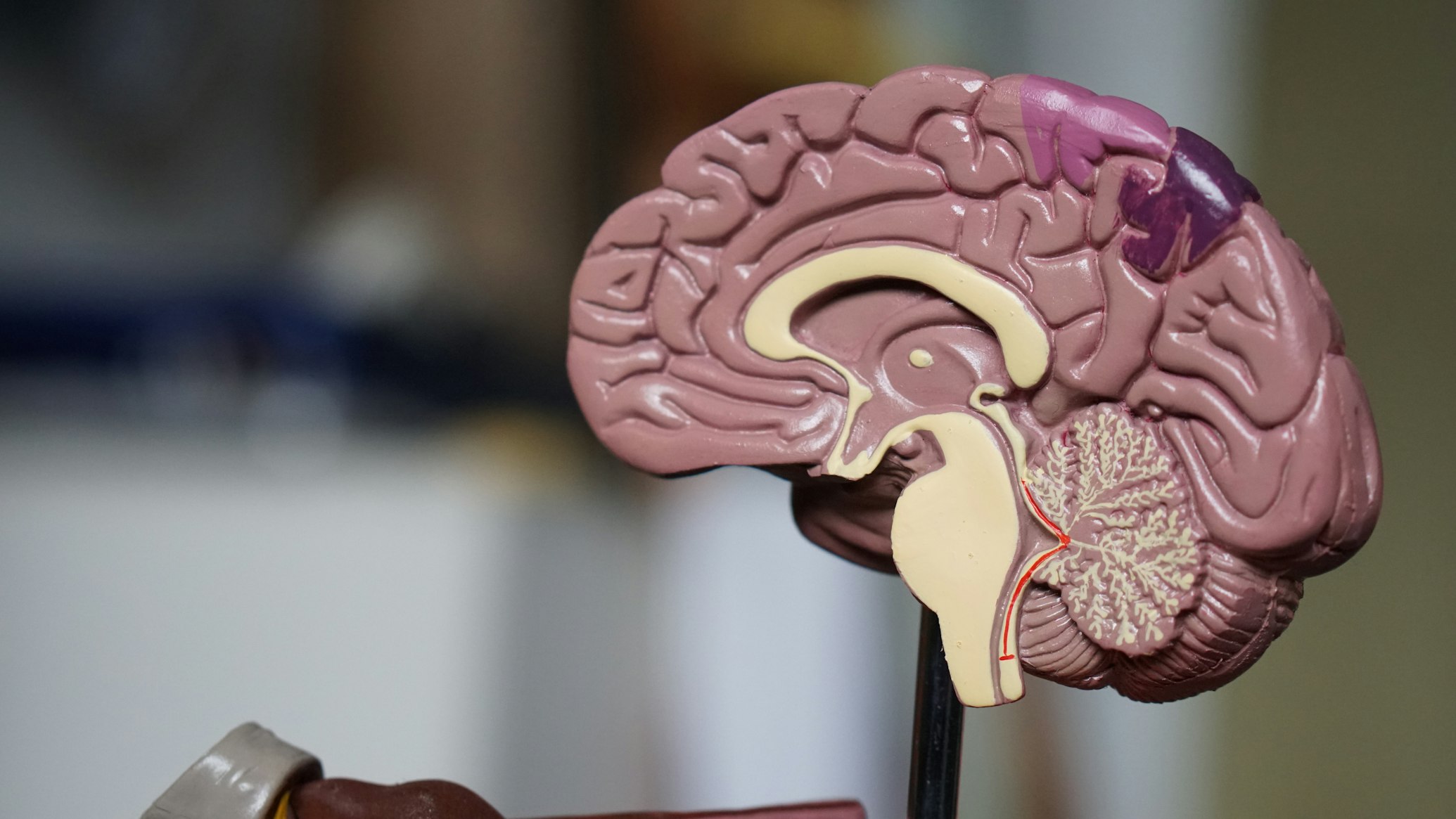
Advanced medical imaging technology enabled by hyperpolarization techniques
The Scientist's Toolkit: Key Components for SABRE Hyperpolarization
| Component | Function | Examples |
|---|---|---|
| Parahydrogen Source | Provides the initial spin order for hyperpolarization | Parahydrogen gas (typically 50-100% enriched) |
| Polarization Transfer Catalyst | Enables reversible binding of parahydrogen and substrate | Ir-IMes complexes; Various Ir-NHC catalysts 3 |
| Target Substrate | The molecule to be hyperpolarized | Pyruvate, metronidazole, nicotinamide, various N-heterocycles 3 5 9 |
| Solvent System | Medium for the hyperpolarization process | Methanol-d₄, acetone/water mixtures, biphasic systems (e.g., CDCl₃/D₂O) 3 7 |
| Co-ligands | Modulate catalyst activity and selectivity | DMSO, pyridine derivatives 3 |
| Magnetic Field Control System | Creates optimal conditions for polarization transfer | Mu-metal shields, electromagnets (for μT fields) 3 6 |
Table 3: Essential Research Reagents for SABRE Experiments
The Future of Hyperpolarization: Where Do We Go From Here?
The development of CASH-SABRE represents a pivotal moment in the journey toward clinical applications of hyperpolarized MRI. Recent advances continue to build on this foundation.
Ace-SABRE
Using acetone/water solvent systems to produce injectable hyperpolarized pyruvate with up to 17% polarization 7 .
High-Pressure SABRE
Operating at pressures up to 400 bar to increase dissolved hydrogen concentration and boost polarization levels 4 .
Pulsed Methods
Applying precisely timed magnetic field pulses to improve polarization transfer efficiency 2 .
New Catalyst Designs
Developing iridium complexes with specialized carbene ligands to optimize performance for specific substrates 3 .
Clinical Translation
These innovations collectively address the remaining challenges of cost, scalability, and polarization levels, gradually removing the barriers to widespread clinical implementation.
Development Timeline
2009
SABRE method first developed, enabling efficient hyperpolarization at room temperature 3 .
2017
CASH-SABRE introduced, solving the catalyst contamination problem through phase separation 5 8 .
2020s
Multiple improvements including Ace-SABRE, high-pressure methods, and specialized catalysts 2 4 7 .
2024
Successful hyperpolarization of medically relevant compounds like metronidazole with confirmed biocompatibility 9 .
Future
Clinical trials and eventual integration into standard medical imaging protocols.
Conclusion: A Clearer Vision of Life's Processes
The achievement of high-level NMR hyperpolarization in aqueous media with minimal catalyst contamination represents far more than a technical milestone—it opens a window into the intricate molecular dance of life itself. By enabling real-time observation of metabolic processes with unprecedented sensitivity, techniques like CASH-SABRE promise to transform how we diagnose diseases, monitor treatments, and understand fundamental biology.
As this technology continues to evolve, we move closer to a future where a simple, non-invasive scan could reveal not just what our tissues look like, but what they're doing at a molecular level—detecting diseases like cancer in their earliest stages and personalizing treatments based on individual metabolic profiles. The quantum revolution in medical imaging has begun, and it's happening in water-based solutions safe for human use.