The Impossible Trinity in Catalysis: Mastering the Activity-Selectivity-Stability Trade-off in Modern Catalyst Design
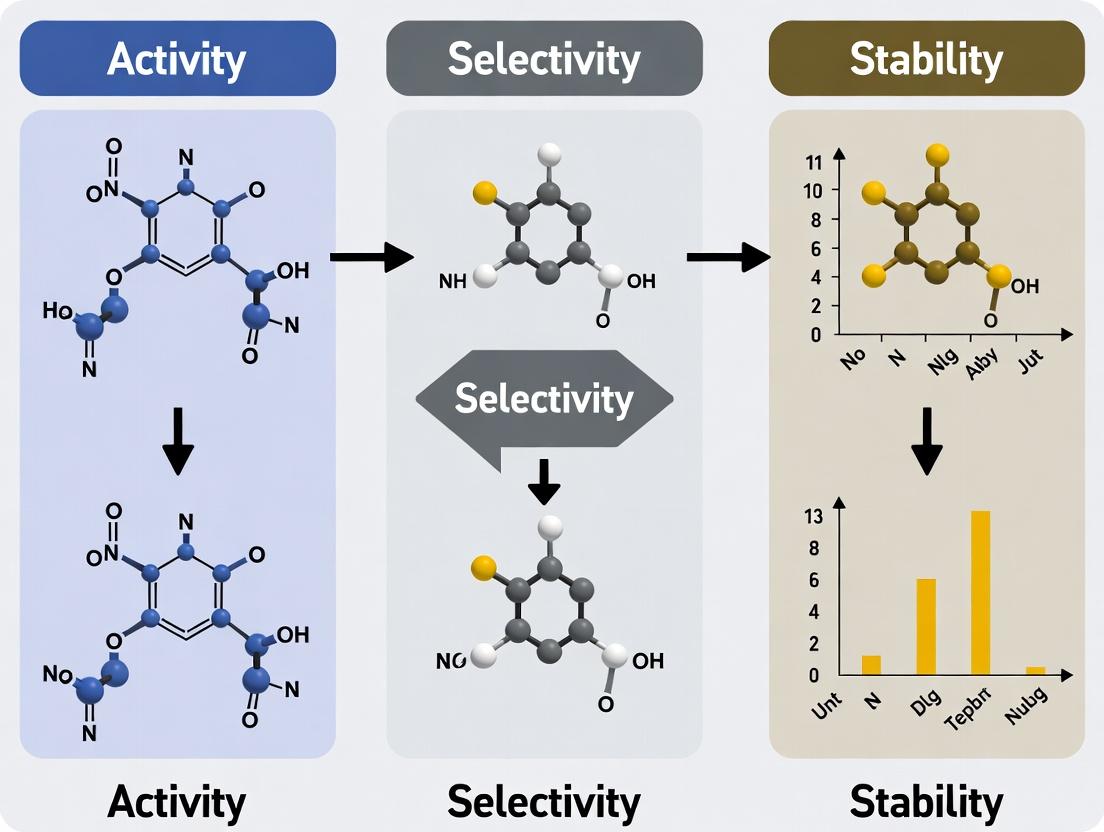
This article provides a comprehensive analysis of the fundamental and often conflicting relationship between activity, selectivity, and stability in heterogeneous, homogeneous, and biocatalyst design.
The Impossible Trinity in Catalysis: Mastering the Activity-Selectivity-Stability Trade-off in Modern Catalyst Design
Abstract
This article provides a comprehensive analysis of the fundamental and often conflicting relationship between activity, selectivity, and stability in heterogeneous, homogeneous, and biocatalyst design. Aimed at researchers and development professionals, we explore the thermodynamic and kinetic origins of this 'impossible trinity,' review advanced methodologies for characterization and rational design, and present systematic frameworks for troubleshooting performance degradation. Through comparative analysis of validation techniques and emerging strategies like single-atom and dynamic catalysts, we offer a roadmap for navigating these critical trade-offs to accelerate innovation in pharmaceuticals, fine chemicals, and sustainable energy applications.
Understanding the Impossible Trinity: The Core Principles of Catalytic Trade-offs
In catalyst design research, the interplay between activity, selectivity, and stability forms an intrinsic trade-off, often termed the "Iron Triangle." Optimizing one vertex frequently comes at the expense of the others. This guide compares the performance of heterogeneous, homogeneous, and biocatalysts across these three critical axes, supported by experimental data.
Comparative Performance Analysis
The following tables summarize key performance metrics for different catalyst classes in model reactions: the hydrogenation of nitrobenzene (for activity/stability) and the selective oxidation of propylene to propylene oxide (for selectivity).
Table 1: Activity & Stability Comparison in Nitrobenzene Hydrogenation
| Catalyst Type | Specific Example | Turnover Frequency (TOF, h⁻¹) at 80°C | Deactivation Rate Constant (k_d, h⁻¹) | Time-on-Stream to 50% Conversion Loss (h) |
|---|---|---|---|---|
| Heterogeneous | 5 wt% Pd/Al₂O₃ | 1200 | 0.08 | 8.7 |
| Homogeneous | Pd(PPh₃)₄ in toluene | 9500 | 0.35 | 2.0 |
| Biocatalyst | Nitroreductase (NfsB) | 18 | 0.01 | 69.3 |
Table 2: Selectivity Comparison in Propylene Oxidation
| Catalyst Type | Specific Example | Propylene Oxide Selectivity (%) | Primary By-Product | Selectivity Trade-off Observation |
|---|---|---|---|---|
| Heterogeneous | Au/TS-1 | 90 | CO₂ | High selectivity requires sub-optimal activity. |
| Homogeneous | Mo-based polyoxometalate | 75 | Acrolein | Leaching leads to selectivity loss over time. |
| Biocatalyst | Cytochrome P450 monooxygenase | >99 | Water | Exceptional selectivity with low activity & cofactor dependency. |
Experimental Protocols
Protocol 1: Assessing Activity and Stability (Hydrogenation)
- Reactor Setup: A fixed-bed flow reactor (for heterogeneous) or a batch autoclave (for homogeneous/biocatalyst) is charged with the catalyst.
- Reaction Conditions: 10 mM nitrobenzene substrate, H₂ pressure (5 bar), temperature (80°C), solvent (appropriate for catalyst type).
- Activity Measurement: Liquid samples are taken at regular intervals and analyzed via GC-MS. Turnover Frequency (TOF) is calculated from the initial rate per active site.
- Stability Measurement: For continuous flow, conversion is monitored over 24 hours. For batch, catalyst is recycled in consecutive runs. The deactivation rate constant (k_d) is derived from fitting conversion vs. time data to a first-order deactivation model.
Protocol 2: Assessing Selectivity (Oxidation)
- Reactor Setup: A gas-phase fixed-bed reactor (for heterogeneous) or a pressurized batch reactor (for homogeneous/biocatalyst).
- Reaction Conditions: Propylene/O₂/He mix (1:1:8), temperature (150°C for chemocatalysts, 30°C for biocatalyst).
- Product Analysis: Effluent gas is analyzed by online GC-TCD/FID. Selectivity is calculated as (moles of desired product / total moles of products) × 100%.
The Iron Triangle Trade-off Relationships
Diagram: The Iron Triangle of Catalysis
Comparative Catalyst Design Workflow
Diagram: Catalyst Design & Evaluation Workflow
The Scientist's Toolkit: Key Research Reagent Solutions
| Item | Function in Catalytic Research |
|---|---|
| Standard Reference Catalysts (e.g., 5% Pt/C, Pd/Al₂O₃) | Benchmark materials for comparing activity and stability across studies. |
| Custom Ligand Libraries (e.g., phosphine, N-heterocyclic carbene sets) | For tuning the electronic/steric environment of homogeneous metal centers to influence activity & selectivity. |
| Engineered Enzyme Kits (e.g., P450 variants, immobilized lipases) | Pre-optimized biocatalysts for exploring high-selectivity pathways. |
| Porous Support Materials (e.g., SiO₂, Al₂O₃, MOFs, zeolites) | To immobilize active phases, enhance dispersion, and introduce shape selectivity. |
| Thermal & Chemical Analyzers (TGA, DSC, Chemisorption) | To quantify catalyst degradation (stability) and active site density. |
| Isotopically Labeled Substrates (e.g., ¹³C-propylene, D₂) | Critical for mechanistic studies to trace reaction pathways and understand selectivity origins. |
In catalyst design, the interplay between activity, selectivity, and stability defines the performance envelope. This guide compares the thermodynamic and kinetic frameworks used to understand these trade-offs, with the Sabatier principle as a cornerstone. The analysis is framed within the broader thesis that rational catalyst design requires navigating these fundamental constraints.
Conceptual Comparison: Thermodynamic vs. Kinetic Origins
| Aspect | Thermodynamic Origin (Sabatier Principle) | Kinetic Origin (Beyond Sabatier) |
|---|---|---|
| Core Principle | Optimal adsorption energy maximizes activity; binding too strong/weak lowers turnover. | Activity/selectivity dictated by relative rates of elementary steps on different sites. |
| Governs | Activity peak via a "volcano plot". Intrinsic scaling relations limit ideal catalyst. | Selectivity and apparent stability (e.g., coking, sintering). |
| View of Trade-off | Inherent from scaling relations between adsorption energies of different intermediates. | Often a consequence of competing pathways on multifunctional or non-ideal surfaces. |
| Key Descriptor | Adsorption free energy (ΔGads). | Activation barriers (Ea) for desired vs. side reactions. |
| Design Strategy | Find the "goldilocks" binding strength. | Manipulate transition states, site isolation, or spatial/temporal control. |
Experimental Data Comparison: CO₂ Hydrogenation Case Study
The following table summarizes key performance data for selected catalysts in CO₂ hydrogenation to methanol, illustrating activity-selectivity trade-offs rooted in thermodynamic and kinetic factors.
| Catalyst | Temp. (°C) | Pressure (bar) | CO₂ Conv. (%) | CH₃OH Select. (%) | STYCH3OH (mol·gcat⁻¹·h⁻¹) | Origin of Limitation | Ref. |
|---|---|---|---|---|---|---|---|
| Cu/ZnO/Al₂O₃ (Commercial) | 250 | 50 | 23.1 | 49.5 | 0.45 | Kinetic: Competitive RWAS rate limits selectivity. | [1] |
| Pd/ZnO | 250 | 30 | 10.5 | 78.2 | 0.21 | Thermodynamic: PdZn alloy gives optimal *HCOO binding. | [2] |
| In₂O₃ | 300 | 50 | 6.8 | 93.5 | 0.15 | Kinetic: Oxygen vacancy pathway favors methanol over CO. | [3] |
| Pt/Al₂O₃ | 300 | 20 | 37.5 | 1.2 | 0.01 | Thermodynamic: Pt binds CO too weakly, favoring RWAS. | [4] |
STY: Space-Time Yield; RWAS: Reverse Water-Gas Shift Reaction. Data compiled from recent literature (2022-2024).
Detailed Experimental Protocols
Catalyst Testing for Activity-Selectivity (Fixed-Bed Reactor)
Objective: Measure conversion and selectivity under steady-state conditions. Protocol:
- Catalyst Loading: Sieve catalyst to 250-355 μm. Load 100 mg into a stainless-steel tubular reactor (ID = 6 mm) between quartz wool plugs.
- Pre-treatment: Reduce catalyst in 5% H₂/Ar (30 mL/min) at 300°C (ramp: 5°C/min) for 2 hours.
- Reaction Conditions: Switch to feed gas (CO₂:H₂:N₂ = 3:9:1 molar ratio). Set total pressure to 30 bar using a back-pressure regulator. Set GHSV to 20,000 mL·gcat⁻¹·h⁻¹.
- Analysis: After 1 hour stabilization, analyze effluent via online GC (TCD and FID). Use a CP-Sil 5 CB column for separation. Quantify CO₂, CO, CH₃OH, H₂O.
- Calculations:
- CO₂ Conversion (%) = [(CO₂in - CO₂out) / CO₂in] × 100.
- CH₃OH Selectivity (%) = [C in CH₃OHout / (C in COout + C in CH₃OHout)] × 100.
Microcalorimetry for Adsorption Strength (Thermodynamic Probe)
Objective: Measure differential heat of adsorption to characterize active site bonding strength. Protocol:
- Sample Prep: Load 50 mg of fresh catalyst into a high-vacuum microcalorimetry cell.
- Pre-treatment: Evacuate at 10⁻⁵ Torr, 300°C for 12 hours.
- Probe Molecule Dosing: Introduce small, sequential doses of CO (or relevant probe) at 30°C. After each dose, record the equilibrium pressure and the integrated heat flow.
- Data Analysis: Plot differential heat of adsorption vs. coverage. The initial heat corresponds to the strongest sites. Relate coverage-specific heat to Sabatier-type activity models.
Transient Kinetic Analysis (Temporal Analysis of Products - TAP)
Objective: Decouple elementary step kinetics to identify selectivity-determining steps. Protocol:
- System: Use a TAP-2 reactor system. Load ~10 mg of catalyst (100-200 μm).
- Pulse Experiment: At ultra-low pressure (10⁻⁵ Torr), inject a narrow pulse (~10¹⁵ molecules) of a reactant mixture (e.g., CO₂ + H₂) or sequential pulses.
- Detection: Monitor effluent pulses with a high-speed quadrupole MS.
- Modeling: Fit exit flow data using micro-kinetic models to extract intrinsic rate constants and activation barriers for individual steps (e.g., CO₂ dissociation vs. hydrogenation).
Visualizations
Title: Thermodynamic Origin of Activity Trade-off
Title: Kinetic Origin of Selectivity-Stability Trade-off
Title: Integrated Workflow for Probing Trade-offs
The Scientist's Toolkit: Key Research Reagent Solutions
| Item / Reagent | Function in Catalyst Trade-off Research | Example Supplier / Product |
|---|---|---|
| High-Pressure Fixed-Bed Reactor System | Provides controlled environment (T, P, flow) for activity/selectivity/stability testing under realistic conditions. | PID Eng & Tech (Microactivity Effi), Autoclave Engineers. |
| Temporal Analysis of Products (TAP) Reactor | Enables interrogation of intrinsic kinetics and elementary steps via ultra-fast pulse-response experiments. | Mithras TAP System. |
| Microcalorimeter (for Gas Adsorption) | Measures heat of adsorption directly, providing quantitative data on active site bonding strength (thermodynamic descriptor). | Setaram Sensys EVO, Micromeritics ASAP 2020C. |
| Operando Spectroscopy Cell | Allows simultaneous measurement of catalytic performance and catalyst structure under reaction conditions. | Harrick (HP/HT DRIFTS), Catalyst (In-situ XRD/XAFS cells). |
| Well-Defined Catalyst Precursors | Ensures reproducibility in synthesizing model catalysts (e.g., supported nanoparticles, single-atoms). | Sigma-Aldrich (Metal salts), Strem Chemicals (Organometallics). |
| Isotopically Labeled Gases (¹³CO₂, D₂) | Critical for tracing reaction pathways and quantifying kinetic isotope effects to elucidate mechanisms. | Cambridge Isotope Laboratories, Sigma-Aldrich. |
| Computational Catalysis Software | For calculating adsorption energies, activation barriers, and simulating microkinetics (DFT, microkinetic modeling). | VASP, Quantum ESPRESSO, CATKINAS. |
Catalyst design is fundamentally an exercise in managing trade-offs. The pursuit of a catalyst that is simultaneously highly active, perfectly selective, and robustly stable is often quixotic, as optimizing one property frequently compromises another. This guide, framed within the ongoing research thesis on activity-selectivity-stability trade-offs, objectively compares how the electronic and geometric structures of heterogeneous catalysts dictate performance compromises, supported by contemporary experimental data.
Core Concepts and Compromise Mechanisms
The performance of a catalyst is governed by two primary structural features:
- Electronic Effects: The local electron density and orbital structure of the active site, often modified by ligand fields or alloying. This strongly influences adsorption energies of reactants and intermediates.
- Geometric Effects: The physical arrangement of atoms at the active site, including coordination number, interatomic distance, and ensemble size. This dictates the orientation and configuration in which molecules can adsorb and react.
The central compromise arises because modifications targeting one effect inevitably alter the other, leading to a recalibration of the activity-selectivity-stability triad.
Comparative Performance Analysis: Selective Hydrogenation Case Study
The hydrogenation of acetylene to ethylene (C₂H₂ + H₂ → C₂H₄) in an ethylene-rich stream is a critical industrial purification process. It requires a catalyst that is highly selective to ethylene (avoiding over-hydrogenation to ethane) while maintaining high activity and resistance to coking. Palladium-based catalysts are standard, and their modification illustrates the electronic-geometric compromise.
Table 1: Performance of Pd-Based Catalysts in Acetylene Selective Hydrogenation
| Catalyst | Modification Strategy (Primary Effect Targeted) | Activity (mol·g⁻¹·h⁻¹) @ 50°C | Selectivity to C₂H₄ @ 90% C₂H₂ Conversion (%) | Stability (Activity Loss after 100h) | Key Compromise |
|---|---|---|---|---|---|
| Pd Nanoparticles | Unmodified baseline | 5.2 | 45 | >40% | High initial activity but poor selectivity & rapid deactivation by green oil formation. |
| Pd-Ag Alloy | Dilution of Pd ensembles (Geometric) | 3.1 | 85 | ~20% | Reduced activity for the gain in selectivity; smaller ensembles inhibit C-C coupling/over-hydrogenation. |
| Pd-Ga Intermetallic | Strong ligand/charge transfer (Electronic) | 4.0 | 92 | ~10% | Excellent selectivity & stability; modified electron density weakens multi-bond adsorption, but synthesis is complex. |
| Pd@SiO₂ Core-Shell | Physical isolation of Pd sites (Geometric) | 1.8 | >95 | <5% | Highest selectivity & stability, but mass-transfer limitations severely reduce activity. |
| Pd Single Atoms on TiO₂ | Maximizing dispersion (Both) | 0.5 | 75 | >50%* | Extreme case: High initial selectivity but often unstable, sintering under reaction conditions. |
Data synthesized from recent studies (2022-2024) on advanced catalytic materials. *Instability primarily due to sintering.
Experimental Protocol: Differentiating Electronic vs. Geometric Contributions
To deconvolute these effects, researchers employ a combination of characterization and probe reactions.
Protocol: In Situ XAS and IR for PdM Alloy Analysis
- Synthesis: Prepare a series of PdM (M = Ag, Cu, Ga) alloys via incipient wetness co-impregnation on a modified SiO₂ support, followed by H₂ reduction at 500°C.
- In Situ X-ray Absorption Spectroscopy (XAS):
- Setup: Catalyst pellet in a flow reactor cell compatible with synchrotron beamline.
- Procedure: Collect Pd K-edge XANES and EXAFS spectra under flowing H₂ at 200°C and under reaction mixture (0.5% C₂H₂, 5% H₂, balance He) at 50°C.
- Analysis: EXAFS fitting yields coordination numbers and bond distances (Geometric). White line intensity in XANES indicates d-electron density/oxidation state (Electronic).
- In Situ Diffuse Reflectance Infrared Fourier Transform Spectroscopy (DRIFTS):
- Procedure: After pre-reduction, expose catalyst to CO probe molecule at 30°C.
- Analysis: The vibrational frequency of adsorbed CO (νCO) shifts with back-donation from Pd d-orbitals (Electronic effect: lower frequency = stronger back-donation). The presence/absence of bridged vs. linear CO bands indicates contiguous Pd sites (Geometric effect).
- Correlation: Plot catalytic selectivity (from concurrent microreactor testing) against νCO frequency and Pd-Pd coordination number from EXAFS to assign dominant effect.
The Scientist's Toolkit: Key Research Reagent Solutions
Table 2: Essential Materials for Catalyst Synthesis & Testing
| Reagent / Material | Function in Research |
|---|---|
| High-Surface-Area Supports (SiO₂, Al₂O₃, TiO₂) | Provides a stable, dispersive platform for anchoring active metal sites; influences metal-support interaction. |
| Metal Precursors (Pd(NO₃)₂, H₂PtCl₆, HAuCl₄) | Source of the catalytic metal for synthesis via impregnation or deposition-precipitation. |
| Modifier Precursors (AgNO₃, Ga(NO₃)₃) | Introduces a second element to create alloys or doped structures for electronic/geometric modification. |
| Probe Molecules (CO, H₂, C₂H₄, C₂H₂) | Used in characterization (e.g., IR, chemisorption) to quantify active sites and assess adsorption strength. |
| In Situ/Operando Cells (DRIFTS, XAS, XRD) | Specialized reactor cells allowing real-time spectroscopic characterization under reaction conditions. |
| Mass Flow Controllers (MFCs) | Precisely control gas composition and flow rates for reproducible kinetic measurements. |
Visualization of Trade-Off Relationships and Pathways
The experimental data consistently demonstrate that there is no universal optimum catalyst structure. Geometric modifications, such as site isolation, are powerfully direct tools for enhancing selectivity but often at a severe cost to activity due to reduced site availability or introduced mass transfer barriers. Electronic modifications offer a more nuanced tuning of adsorption strengths, potentially offering a better compromise but requiring precise control over composition and structure. The most advanced designs, like intermetallics or controlled core-shells, intentionally leverage both effects in a delicate balance. Ultimately, the choice of strategy is dictated by the specific process economics—whether the value of selectivity gain outweighs the cost of activity loss—highlighting that catalyst design is inherently the science of managed compromise.
Within catalyst design research, the fundamental trade-off between activity, selectivity, and stability defines the choice between heterogeneous, homogeneous, and biocatalytic systems. This guide provides an objective comparison of these three catalyst classes, supported by experimental data, to inform researchers and development professionals in selecting optimal catalysts for specific transformations.
Performance Comparison: Activity, Selectivity, Stability
Table 1: Quantitative Comparison of Catalyst Classes for a Model Hydrogenation Reaction (Alkene to Alkane)
| Parameter | Heterogeneous (Pt/Al₂O₃) | Homogeneous ([Rh(COD)(PPh₃)₂]⁺) | Biocatalyst (Old Yellow Enzyme, OYE1) |
|---|---|---|---|
| Turnover Frequency (TOF) (s⁻¹) | 0.5 - 2.0 | 50 - 200 | 10 - 50 |
| Selectivity (% desired alkane) | 85 - 95% (over-hydrogenation side products) | 98 - 99.9% (ligand-controlled) | >99.9% (stereo- & chemo-selective) |
| Operational Stability (Time for 50% activity loss) | 500 - 1000 h | 1 - 10 h (decomposition/aggregation) | 24 - 72 h (thermal denaturation) |
| Typical Reaction Conditions | 80-150°C, 10-50 bar H₂ | 25-80°C, 1-10 bar H₂ | 25-37°C, 1 bar H₂, pH 7 buffer |
| Ease of Separation/Reuse | Excellent (filtration) | Poor (requires complex workup) | Moderate (immobilization required) |
| Typical Catalyst Loading (mol%) | ~1% (metal mass) | 0.01 - 0.1% | 0.001 - 0.01% |
Table 2: Trade-off Scoring Matrix (Scale: 1-Low, 5-High)
| Catalyst Class | Activity | Selectivity | Stability | Separability | Cost & Complexity |
|---|---|---|---|---|---|
| Heterogeneous | 3 | 4 | 5 | 5 | 4 |
| Homogeneous | 5 | 5 | 2 | 1 | 2 |
| Biocatalyst | 4 | 5+ (stereo) | 3 | 3 | 3 |
Experimental Protocols & Supporting Data
Protocol: Evaluating Hydrogenation Activity & Selectivity
Aim: To compare the performance of three catalyst types in the hydrogenation of 2-cyclohexen-1-one.
- Heterogeneous Catalyst (5% Pt/Al₂O₃): 10 mg catalyst, 1 mmol substrate in 10 mL ethanol. React at 80°C under 10 bar H₂ with stirring (500 rpm) for 1 h. Filter to quench.
- Homogeneous Catalyst ([Rh(COD)(dppb)]BF₄): 0.005 mmol catalyst, 1 mmol substrate in 10 mL degassed THF. React at 40°C under 5 bar H₂ for 15 min. Quench by exposure to air.
- Biocatalyst (OYE1 in cell-free extract): 0.1 mg enzyme, 1 mmol substrate in 10 mL 50 mM phosphate buffer (pH 7.0), 0.1 mM NADPH. React at 30°C, 1 atm N₂ with gentle shaking for 30 min. Heat to 70°C to denature. Analysis: Products quantified via GC-FID (organic) or HPLC-UV (aqueous). Enantiomeric excess determined by chiral GC or HPLC.
Protocol: Assessing Thermal Stability
Aim: To measure catalyst deactivation kinetics at elevated temperature.
- Procedure: Catalyst samples are held at a defined temperature (e.g., 60°C, 70°C, 80°C) in their respective solvent/media without substrate. Aliquots are removed at intervals and assayed for residual activity under standard kinetic conditions (see protocol 1). Half-life (t₁/₂) is calculated from exponential decay fits of activity vs. time data.
The Scientist's Toolkit: Research Reagent Solutions
Table 3: Essential Materials for Cross-Catalyst Comparison Studies
| Item | Function & Relevance |
|---|---|
| High-Pressure Reactor (Parr vessel) | Enables safe testing of heterogeneous/homogeneous catalysts under pressurized H₂ conditions. |
| Immobilization Resins (e.g., Epoxy-activated Sepharose) | For stabilizing and facilitating reuse of enzymes and homogeneous complexes via heterogenization. |
| Chiral Ligand Library (e.g., BINAP, Josiphos variants) | Critical for tuning selectivity in homogeneous catalysis; used for comparative selectivity studies. |
| Cofactor Regeneration System (e.g., Glucose/GDH) | Allows sustainable use of expensive NAD(P)H in enzymatic reactions; key for biocatalyst feasibility. |
| Metal-Leaching Test Kits (ICP-MS standards) | To quantify metal contamination in products from heterogeneous/homogeneous catalysts, a key stability metric. |
| Thermostable Enzyme Variants (e.g., Thermoanaerobacter sp. OYE) | Benchmarked against mesophilic enzymes to study stability trade-offs in biocatalysis. |
Analytical & Decision Pathways
Diagram Title: Catalyst Selection Decision Pathway
Diagram Title: Activity-Selectivity-Stability Trade-off Triangle
Diagram Title: Experimental Workflow for Catalyst Comparison
The Role of Binding Energies and Bronsted-Evans-Polanyi (BEP) Relationships
Within the fundamental thesis of activity-selectivity-stability trade-offs in catalyst design, the concepts of adsorption binding energies and Bronsted-Evans-Polanyi (BEP) relationships serve as critical computational and predictive tools. Binding energies of key intermediates largely determine a catalyst's activity and selectivity, while BEP relationships linear correlations between reaction energies and activation barriers provide a powerful shortcut for estimating kinetics. This guide compares the performance of using these descriptor-based approaches against more computationally intensive alternatives for predicting catalytic performance.
Comparative Analysis: Descriptor-Based vs. Ab Initio Predictions
Table 1: Comparison of Catalytic Performance Prediction Methodologies
| Methodology | Core Principle | Computational Cost | Typical Accuracy (vs. Experiment) | Best Use Case |
|---|---|---|---|---|
| Binding Energy / BEP Scaling | Uses linear correlations between adsorbate binding energies or reaction/activation energies. | Low to Moderate (Requires DFT for limited set of calculations) | ±0.2-0.3 eV for activation energies | Rapid screening of catalyst trends across material spaces (e.g., transition metals, alloys). |
| Microkinetic Modeling (MKM) with Descriptors | Builds reactor-scale models based on parameters from scaling relations. | Moderate | Qualitative trends and selectivity maps; quantitative accuracy depends on descriptor quality. | Understanding activity-selectivity trade-offs and identifying optimal binding energy "volcano" peaks. |
| Full Ab Initio Thermodynamics & Kinetics | Computes all elementary step energies and barriers via quantum mechanics (e.g., DFT). | Very High | ±0.1-0.2 eV for energetics (system-dependent); can be quantitatively predictive. | Final validation, detailed mechanism elucidation on specific catalyst surfaces. |
| Machine Learning (ML) Models | Trains models on DFT databases to predict energies and properties. | High initial training; very low for prediction. | Varies; can approach DFT accuracy with robust training sets. | Ultra-high-throughput screening beyond linear scaling assumptions. |
Key Experimental Protocols & Supporting Data
Protocol 1: Establishing a BEP Relationship for C-C Coupling
- System Selection: Choose a homologous series of catalyst surfaces (e.g., (111) facets of late transition metals).
- DFT Calculations: Using software like VASP or Quantum ESPRESSO, calculate the binding energies of relevant intermediates (e.g., *CH, *CO, *C, *O) and the transition state (TS) energies for the rate-determining C-C coupling step (e.g., *CO + *C → *COC).
- Data Correlation: Plot the calculated activation energy (Ea) against the reaction energy (ΔE) for the elementary step across all catalysts.
- Linear Regression: Fit the data points (Ea vs. ΔE) to a linear equation: Ea = α ΔE + β. The slope α is the BEP coefficient, indicative of the TS "timing."
Table 2: Exemplar BEP Data for Oxygenate Formation on Transition Metals
| Catalyst Surface | Reaction Energy (ΔE) for CO+H → *COH (eV) | Activation Energy (Ea) (eV) | Calculated TOF (s⁻¹, 500K) |
|---|---|---|---|
| Ru(0001) | -0.15 | 0.98 | 1.2 x 10³ |
| Rh(111) | 0.05 | 1.15 | 4.5 x 10² |
| Pt(111) | 0.22 | 1.28 | 8.9 x 10¹ |
| Cu(111) | 0.45 | 1.52 | 2.1 |
| BEP Relation: | Ea = 0.92 * ΔE + 1.12 (R²=0.96) |
Protocol 2: Experimental Validation via Temperature-Programmed Reaction Spectroscopy (TPRS)
- Catalyst Preparation: Prepare single-crystal or well-defined nanoparticle catalysts of the metals studied.
- Adsorption: Dose the catalyst surface with a controlled amount of reactant gases (e.g., CO + H₂) at low temperature.
- Programmed Heating: Ramp the temperature linearly while monitoring desorption products via mass spectrometry.
- Kinetic Extraction: Analyze the product formation peaks to extract apparent activation energies, which can be compared to BEP-predicted trends.
Visualizing the Descriptor-Based Design Workflow
Title: Catalyst Design Workflow Using Scaling Relations
The Scientist's Toolkit: Key Research Reagent Solutions
| Item / Solution | Function in Descriptor-Based Catalyst Research |
|---|---|
| Density Functional Theory (DFT) Software (VASP, Quantum ESPRESSO) | Provides the foundational ab initio calculations for adsorbate binding energies and transition state searches. |
| Catalysis-Hub.org or CatApp Databases | Public repositories of pre-computed adsorption energies on various surfaces, enabling rapid initial screening. |
| Microkinetic Modeling Packages (CATKINAS, kmos) | Software tools to build and simulate microkinetic models using descriptor-derived parameters. |
| Single-Crystal Catalyst Wafers | Well-defined surfaces for calibrating DFT calculations and establishing accurate scaling relationships. |
| Ultra-High Vacuum (UHV) System with TPD/TPRS | Essential experimental apparatus for validating predicted adsorption strengths and reaction barriers on model catalysts. |
| High-Throughput Synthesis & Testing Reactors | Enables parallel experimental validation of catalyst candidates identified from computational screening. |
The use of binding energies and BEP relationships represents a powerful, moderately accurate, and computationally efficient methodology for navigating the activity-selectivity-stability trade-off landscape. While it may lack the quantitative precision of full ab initio kinetics for a specific material, its strength lies in rapidly identifying promising regions of catalyst composition space and elucidating fundamental trends, thereby guiding more resource-intensive experimental and theoretical efforts.
For decades, catalyst design, particularly in heterogeneous catalysis and enzyme engineering, has been governed by a perceived immutable trade-off between activity, selectivity, and stability. This paradigm posits that optimizing one property invariably leads to the deterioration of at least one other. Recent breakthroughs, however, are fundamentally challenging this orthodoxy, demonstrating that through innovative material design and atomic-level engineering, it is possible to achieve simultaneous enhancements across all three metrics. This comparison guide evaluates these novel catalytic systems against traditional benchmarks, providing experimental data that illustrates this paradigm shift.
Comparison Guide: Single-Atom Alloy (SAA) Catalysts vs. Traditional Pt-Based Catalysts for Selective Hydrogenation
Table 1: Performance Comparison for Selective Alkyne Hydrogenation to Alkene
| Catalyst System | Activity (TOF, s⁻¹) | Selectivity to Alkene (%) | Stability (Time-on-Stream to 10% Deactivation) | Key Structural Feature |
|---|---|---|---|---|
| Traditional Pt Nanoparticles | 0.5 | 75 | 8 hours | Polycrystalline surfaces |
| Pt₁/Au SAA (Traditional) | 2.1 | 92 | 24 hours | Isolated Pt atoms in Au matrix |
| Recent: Pd₁/Cu SAA (Novel) | 5.8 | >99 | >100 hours | Isolated, electronically tuned Pd sites |
Experimental Protocol for SAA Catalysis
- Catalyst Synthesis: Pd₁/Cu SAA is prepared via galvanic replacement. A Cu foil is treated in a 0.1 mM K₂PdCl₄ solution at 60°C for 2 hours, followed by annealing under 5% H₂/Ar at 300°C for 1 hour.
- Characterization: Atomic dispersion is confirmed by in situ CO-DRIFTS (absence of bridged CO bands) and AC-HAADF-STEM.
- Performance Testing: Catalytic testing is performed in a continuous-flow fixed-bed reactor at 353 K, 1 atm, with a feed of 0.5% acetylene, 10% H₂, balance He. Products are analyzed by online GC-FID.
- Stability Testing: The catalyst is subjected to a 100-hour time-on-stream experiment under reaction conditions, with periodic product sampling.
Diagram 1: Shifting from Trade-off to Synergy in Catalyst Design
Comparison Guide: Engineered Biocatalysts vs. Wild-Type Enzymes for Pharmaceutical Synthesis
Table 2: Performance in Asymmetric Ketone Reduction
| Biocatalyst | Activity (μmol·min⁻¹·mg⁻¹) | Enantiomeric Excess (ee, %) | Thermostability (T₅₀, °C) | Key Modification |
|---|---|---|---|---|
| Wild-Type Alcohol Dehydrogenase (ADH) | 4.2 | 95 | 42 | N/A |
| Traditional Directed Evolution Mutant | 15.0 | 99.5 | 48 | Point mutations near active site |
| Recent: Computationally Designed, Multi-Point Stabilized ADH | 32.5 | >99.9 | 62 | Computational redesign of core & surface for rigidity & activity |
Experimental Protocol for Biocatalyst Evaluation
- Enzyme Engineering: Rosetta-based computational design is used to identify mutations for core packing and surface charge optimization. Variants are expressed in E. coli and purified via Ni-NTA affinity chromatography.
- Activity Assay: Reactions contain 10 mM substrate (ketone), 0.2 mM NADPH, and 0.1 mg/mL enzyme in 50 mM phosphate buffer, pH 7.0. Initial rates are measured by monitoring NADPH oxidation at 340 nm (ε = 6220 M⁻¹cm⁻¹).
- Selectivity Analysis: Reaction products are extracted and analyzed by chiral GC-MS to determine enantiomeric excess.
- Stability Measurement: T₅₀ (temperature at which 50% activity is lost after 10 min incubation) is determined using a thermal shift assay monitored by differential scanning fluorimetry.
Diagram 2: Engineered Enzyme Pathway for Selective Synthesis
The Scientist's Toolkit: Key Research Reagent Solutions
Table 3: Essential Materials for Advanced Catalyst Research
| Reagent/Material | Function & Rationale |
|---|---|
| Stable Metal Precursors (e.g., Pd(acac)₂, H₂PtCl₆) | Used for precise synthesis of single-atom or controlled nanoparticle catalysts via atomic layer deposition or wet impregnation. |
| Alloy Foil Supports (Au, Cu, Ag) | Provide the host lattice for constructing single-atom alloy catalysts, crucial for isolation and electronic modulation. |
| In situ DRIFTS Cell with CO Probe | Critical for confirming atomic dispersion of metal sites by identifying the characteristic vibrational frequency of linearly adsorbed CO. |
| Chiral GC Columns & Standards | Essential for accurately quantifying enantiomeric excess in asymmetric catalysis experiments. |
| Thermal Shift Dye (e.g., Sypro Orange) | Enables high-throughput measurement of protein (biocatalyst) thermostability via fluorescence change upon denaturation. |
| Computational Software (Rosetta, DFT codes like VASP) | Used for de novo enzyme design and predicting electronic structures of heterogeneous catalysts prior to synthesis. |
Strategies and Tools for Rational Catalyst Design and Engineering
Thesis Context: The Activity-Selectivity-Stability Trilemma in Catalyst Design
The search for optimal heterogeneous catalysts is fundamentally constrained by the trade-offs between activity, selectivity, and stability. Computational methods have emerged as critical tools for navigating this trilemma, enabling predictive design before resource-intensive synthesis and testing. This guide compares three leading computational approaches—Density Functional Theory (DFT), Microkinetic Modeling (MKM), and Machine Learning (ML)—by evaluating their performance in predicting catalyst properties relevant to this core challenge.
Performance Comparison of Computational Methods
The following table summarizes the comparative performance of DFT, MKM, and ML based on recent experimental benchmarks in catalytic design for reactions like CO2 reduction, ammonia synthesis, and propane dehydrogenation.
Table 1: Comparative Performance of Computational Methods for Catalyst Design
| Metric | Density Functional Theory (DFT) | Microkinetic Modeling (MKM) | Machine Learning (ML) |
|---|---|---|---|
| Prediction Target | Adsorption energies, activation barriers, electronic structure. | Reaction rates, turnover frequencies (TOF), selectivity under conditions. | Catalyst activity, stability metrics, optimal compositions. |
| Typical Accuracy (vs. Experiment) | ±0.2-0.3 eV for adsorption energies. | Order-of-magnitude for rates; ±20-50% for selectivity trends. | Varies widely: ±0.1-0.15 eV for energy predictions with large training sets. |
| Computational Cost | High (hours to days per adsorption site). | Low to Moderate (seconds to minutes after DFT input). | Very low for inference; high for training/data generation. |
| Key Strength | Provides fundamental, interpretable physical insights. | Captures condition-dependent selectivity and activity trade-offs. | Rapid screening of vast compositional/structural spaces. |
| Key Limitation | Scales poorly with system size; approximations limit accuracy. | Relies on DFT inputs; assumes mean-field, may miss complexities. | Data hunger; risk of unphysical predictions; lower interpretability. |
| Best for Trilemma Aspect | Activity & Selectivity (mechanistic understanding). | Selectivity & Activity (under operating conditions). | Stability & Activity (high-throughput screening for stable materials). |
| Experimental Validation Example | Predicted CO adsorption energy on Pt(111) within 0.1 eV of calorimetry. | Predicted ethylene selectivity for Co/Mn catalysts in Fischer-Tropsch within 15% of reactor data. | Predicted stable, high-activity bimetallic alloys for ORR, confirmed by experimental half-wave potentials. |
Experimental Protocols for Validation
The quantitative comparisons in Table 1 are derived from validation against standardized experimental protocols. Key methodologies are detailed below.
Protocol 1: Calorimetric Measurement of Adsorption Energies (DFT Validation)
- Objective: Measure the heat of gas adsorption on single-crystal surfaces to benchmark DFT-calculated adsorption energies.
- Materials: Single-crystal metal sample (e.g., Pt(111)), ultra-high vacuum (UHV) chamber, calorimeter sensor, high-purity gas doser.
- Procedure: The clean single crystal is exposed to precise doses of a probe molecule (e.g., CO) at a fixed temperature (often 300K). The heat released upon each dose is measured directly by the calorimeter. The integral heat is plotted vs. coverage to yield the differential adsorption energy.
- Comparison: DFT energies for adsorption at various sites (atop, bridge, hollow) are compared directly to the experimental differential energy at corresponding coverages.
Protocol 2: Steady-State Flow Reactor Testing (MKM & ML Validation)
- Objective: Determine catalytic activity (TOF), selectivity, and stability under realistic conditions.
- Materials: Fixed-bed plug-flow reactor, mass flow controllers, online GC/MS, catalyst pelletized or on supported wafer.
- Procedure: The catalyst is reduced/activated in situ. Reactant gases are fed at set partial pressures and total flow rate (varying WHSV). Effluent composition is analyzed by GC/MS after reaching steady-state (typically 30-60 min per condition). TOF is calculated from rate and active site count (from chemisorption). Long-term stability is assessed over 24-100 hours time-on-stream.
- Comparison: MKM simulations use DFT-derived parameters to model rates/selectivities across the same pressure/temperature space. ML-predicted promising catalysts are synthesized and tested via this protocol.
Protocol 3: Accelerated Stability Testing (ML & DFT Validation)
- Objective: Rapidly assess catalyst degradation, such as sintering or coking.
- Materials: In situ TEM cell or thermogravimetric analysis (TGA) system with mass spectrometry.
- Procedure: Catalyst is subjected to cyclic or constant harsh conditions (e.g., oxidative/reductive cycles, high temperature). In TGA, mass change is monitored while effluent is analyzed for combustion products (e.g., CO2 from coke burn-off). Particle size distribution is tracked via TEM.
- Comparison: ML models trained on such data predict stability features. DFT can model binding strengths of carbon/oxygen species linked to coking/oxidation.
Visualizing the Integrated Computational Workflow
Title: Integrated Computational-Experimental Catalyst Design Cycle
Title: Computational Tools Address the Catalyst Trilemma
The Scientist's Toolkit: Key Research Reagent Solutions
Table 2: Essential Computational & Experimental Resources
| Item / Solution | Function in Research | Example Providers/Software |
|---|---|---|
| DFT Software Suite | Calculates electronic structure, energies, and reaction pathways. | VASP, Quantum ESPRESSO, Gaussian, CP2K |
| Microkinetic Modeling Package | Solves coupled differential equations for surface kinetics to predict rates and selectivity. | CATKINAS, KineticsX, ZACROS, in-house codes (Python/Matlab) |
| ML Framework & Libraries | Builds and trains models for property prediction and virtual screening. | PyTorch, TensorFlow, scikit-learn, matminer |
| Catalytic Materials Database | Provides curated datasets for training ML models and benchmarking. | Catalysis-Hub, NOMAD, Materials Project, CatApp |
| High-Purity Gases & Mass Flow Controllers | Enables precise control of reactant composition and flow in reactor validation. | Linde, Air Products, Bronkhorst, Alicat |
| Online Analytical Instruments (GC/MS, MS) | Quantifies reactant and product streams for activity/selectivity measurement. | Agilent, Thermo Fisher, Pfeiffer Vacuum |
| In Situ/Operando Characterization Cells | Allows real-time monitoring of catalyst structure under reaction conditions. | Harrick, Specac, Linkam, custom TEM holders |
| Single-Crystal Metal Surfaces | Provides well-defined substrates for benchmarking DFT adsorption calculations. | MaTecK, Surface Preparation Laboratory |
The quest for optimal catalysts is fundamentally governed by the intricate trade-offs between activity, selectivity, and stability. This guide compares the performance of nanocatalysts synthesized via modern techniques that offer unparalleled control over critical parameters: size, shape, and alloying. Precise manipulation of these attributes directly tunes the electronic and geometric structures, enabling systematic navigation of the activity-selectivity-stability triad.
Comparison of Synthesis Techniques and Catalyst Performance
The following table summarizes key performance metrics for noble metal catalysts synthesized via advanced methods, benchmarked against conventional alternatives like standard impregnation or co-precipitation.
Table 1: Performance Comparison of Precisely Synthesized Nanocatalysts
| Synthesis Technique | Target Catalyst | Size/Shape Control | Key Performance Metric (vs. Conventional Catalyst) | Stability Data (Activity Retention) | Primary Selectivity Advantage |
|---|---|---|---|---|---|
| Seed-Mediated Growth | Pd@Pt Core-Shell Nanocubes | High (Shell thickness ~3-6 atomic layers) | ORR Mass Activity: 0.75 A/mgPt (vs. 0.25 A/mgPt for Pt/C) | 85% after 30k voltage cycles (0.6-1.0 V) in PEMFC | Enhanced O₂ reduction to H₂O (>95%) |
| Hot Injection Colloidal | Au-Pd Alloy Nanorods (Au:Pd 1:3) | High (Aspect ratio 4:1, diameter 25±2 nm) | Benzyl Alcohol Oxidation: TOF 12,500 h⁻¹ (vs. 4,200 h⁻¹ for supported Pd NPs) | 92% after 5 recycling runs | C=O selectivity >99% |
| Facet-Selective Capping | Rh Nanocubes enclosed by {100} facets | Very High (>90% cubic morphology) | NO Reduction by CO: Rate 0.45 s⁻¹ at 200°C (vs. 0.18 s⁻¹ for Rh spheres) | Minimal sintering after 50h at 400°C | N₂ selectivity of 88% (vs. 70% for spheres) |
| Galvanic Replacement | Pt-Ag Hollow Nanoframes | High (3D open framework) | Formic Acid Oxidation: Area Activity 12.3 mA/cm² (vs. 2.1 mA/cm² for Pt/C) | 80% after 10k cycles | Direct dehydrogenation pathway selectivity >90% |
| Microfluidic Continuous Flow | Pt-Ni Octahedra (Size-tuned 8-12 nm) | Consistent batch-to-batch | HER in 0.5 M H₂SO₄: Overpotential 28 mV at 10 mA/cm² (vs. 45 mV for commercial Pt) | 95% after 20h chronoamperometry | - |
Detailed Experimental Protocols
Protocol 1: Seed-Mediated Growth of Pd@Pt Core-Shell Nanocubes for ORR
- Seed Synthesis: Heat 8 mL of 0.1 M CTAC (Cetyltrimethylammonium chloride) to 95°C. Rapidly inject 0.5 mL of 10 mM Na₂PdCl₄. Grow for 1 hour to form Pd cubic seeds.
- Shell Growth: Cool the seed solution to 45°C. Separately prepare a growth solution containing 5 mL of 0.1 M CTAC, 0.5 mL of 10 mM K₂PtCl₄, and 0.1 mL of 100 mM ascorbic acid (AA).
- Precise Deposition: Inject 0.1 mL of the Pd seed solution into the growth solution under gentle stirring. Maintain at 45°C for 4 hours.
- Purification: Centrifuge the product at 12,000 rpm for 15 minutes, and re-disperse in deionized water. Repeat twice.
- Electrochemical Testing: Prepare an ink of the nanocubes, deposit on a rotating disk electrode (RDE), and perform ORR polarization in O₂-saturated 0.1 M HClO₄ at 1600 rpm.
Protocol 2: Hot Injection Synthesis of Au-Pd Alloy Nanorods for Selective Oxidation
- Gold Nanorod Seeds: Synthesize CTAB-capped Au nanorods (aspect ratio ~2) via a standard seed-mediated method.
- Alloying: In a 50 mL three-neck flask, heat 10 mL of 0.1 M CTAB containing 0.1 mmol HAuCl₄ and 0.3 mmol Na₂PdCl₄ to 95°C under N₂.
- Injection & Growth: Rapidly inject 1 mL of the Au nanorod seed solution into the hot precursor mixture, followed by immediate injection of 0.5 mL of 100 mM AA.
- Annealing: Maintain the reaction at 95°C for 1 hour to ensure homogeneous alloying.
- Catalytic Test: Recover particles by centrifugation. For catalysis, disperse 5 mg in ethanol and react with 1 mmol benzyl alcohol and 2 mmol K₂CO₃ at 80°C under O₂. Analyze products via GC-MS.
Signaling Pathways & Workflow Visualizations
Decision Flow for Nanocatalyst Synthesis
The Catalyst Design Trade-off Triad
The Scientist's Toolkit: Key Research Reagent Solutions
| Reagent/Material | Primary Function in Synthesis |
|---|---|
| Cetyltrimethylammonium Chloride/Bromide (CTAC/CTAB) | Shape-directing surfactant; selectively binds to specific crystal facets to control nanoparticle morphology. |
| Ascorbic Acid (AA) | A mild, reducing agent used for the controlled reduction of metal precursors, critical for seeded growth. |
| Metal Acetylacetonates (e.g., Pt(acac)₂) | Thermally decomposable precursors for high-temperature synthesis (e.g., hot injection), enabling uniform alloying. |
| Carbon Monoxide (CO) | A gaseous capping agent used in facet-selective synthesis (e.g., for Rh cubes) by binding strongly to specific sites. |
| Oleylamine (OAm) | A high-boiling-point solvent, reducing agent, and ligand; stabilizes nanoparticles and aids in shape control in non-aqueous synthesis. |
| Microfluidic Reactor Chips | Provide precise, continuous control over reaction parameters (temp, mixing, residence time) for highly reproducible batch synthesis. |
| Sodium Tetrahydroborate (NaBH₄) | A strong reducing agent used for rapid nucleation in the synthesis of small, uniform seed nanoparticles. |
| Polyvinylpyrrolidone (PVP) | A polymeric capping agent that stabilizes nanoparticle colloids and can influence growth kinetics along different crystal axes. |
Publish Comparison Guide: Activity-Selectivity-Stability Trade-offs in Nanoconfined Catalysts
In catalyst design, the fundamental trade-off between activity, selectivity, and stability defines research frontiers. Nanoconfinement and support engineering are pivotal strategies for modulating these properties by altering the local chemical environment of active sites. This guide compares the performance of catalysts under various confinement and support paradigms, providing experimental data to inform researchers and development professionals on optimizing these critical trade-offs.
Comparison Guide 1: Confinement Geometry vs. Catalytic Performance for CO₂ Hydrogenation
Objective Comparison: Evaluating how the physical dimensions and chemical nature of confinement impact the activity and product selectivity of CO₂-to-chemicals conversion.
Experimental Protocol:
- Catalyst Synthesis:
- Mesoporous Silica (SBA-15) Confinement: Incipient wetness impregnation of metal (Co, Fe) precursors onto SBA-15, followed by calcination (350°C, 4h, air) and reduction (400°C, 3h, H₂).
- Carbon Nanotube (CNT) Confinement: Wet chemical filling of metal nanoparticles into CNT channels, followed by vacuum annealing.
- Zeolite (MFI) Encapsulation: In-situ hydrothermal synthesis of zeolite around pre-formed metal-organic framework (MOF) templates containing metal clusters.
- Reaction Testing: Conducted in a fixed-bed reactor at 220°C, 20 bar, H₂/CO₂ = 3:1, GHSV = 10,000 h⁻¹. Products analyzed by online GC-MS and GC-TCD.
- Stability Testing: 100-hour time-on-stream analysis under reaction conditions.
Supporting Experimental Data:
Table 1: Performance Comparison of CO₂ Hydrogenation Catalysts
| Catalyst System | Confinement Type | Active Site | CO₂ Conv. (%) | Selectivity to C₂+ (%) | Deactivation Rate (%/h) | Key Stability Mechanism |
|---|---|---|---|---|---|---|
| Co/SBA-15 | Mesoporous Channel | Co Nanoparticle | 35.2 | 45.3 | 0.85 | Pore-induced dispersion |
| Fe@CNT | Tubular Interior | Fe Carbide | 28.7 | 68.5 | 0.12 | Coke suppression |
| Co@MFI | Microporous Cage | Co-O-Si Cluster | 15.4 | 92.1 | 0.05 | Molecular sieving |
| Co/Al₂O₃ (Reference) | Non-confined | Co Nanoparticle | 41.5 | 22.1 | 1.50 | N/A |
Comparison Guide 2: Support Engineering for Pd-Catalyzed Selective Hydrogenation
Objective Comparison: Assessing the role of support Lewis acidity and metal-support interaction in modulating selectivity for acetylene-to-ethylene vs. over-hydrogenation.
Experimental Protocol:
- Support Preparation: γ-Al₂O₃ (neutral), TiO₂ (Lewis acidic), and SiO₂ (inert) supports calcined at 500°C.
- Catalyst Preparation: Deposition of identical Pd loading (0.5 wt%) via colloidal immobilization to ensure uniform particle size (2.0 ± 0.3 nm).
- Characterization: H₂ chemisorption for dispersion, NH₃-TPD for support acidity, XPS for electronic state.
- Reaction Testing: Pulse reactor at 80°C, 1:100 C₂H₂:H₂ ratio. Conversion and selectivity measured by micro-GC.
Supporting Experimental Data:
Table 2: Selectivity-Stability Trade-off in Pd-Catalyzed Hydrogenation
| Catalyst (Pd/Support) | Pd Dispersion (%) | Support Acidity (μmol NH₃/g) | Acetylene Conv. (%) | Ethylene Select. (%) | Green Oil* Formation Rate (μmol/g·h) | Electronic Effect (Pd XPS BE shift, eV) |
|---|---|---|---|---|---|---|
| Pd/SiO₂ | 55 | 12 | 98.5 | 45.2 | 15.7 | 0.00 (Reference) |
| Pd/Al₂O₃ | 62 | 185 | 96.8 | 78.5 | 5.2 | +0.22 |
| Pd/TiO₂ | 58 | 320 | 92.1 | 94.3 | 1.1 | +0.45 |
*Green Oil: Oligomeric byproducts causing deactivation.
Visualization of Concepts & Workflows
Diagram 1: Nanoconfinement Modulates Catalyst Trade-offs
Diagram 2: Workflow for Confined Catalyst Testing
The Scientist's Toolkit: Research Reagent Solutions
Table 3: Essential Materials for Nanoconfinement Catalyst Research
| Item / Reagent | Primary Function / Role in Research | Example Supplier / Product Code |
|---|---|---|
| Mesoporous Silica (SBA-15, MCM-41) | Provides tunable 2-10 nm channels for confinement; high surface area support. | Sigma-Aldrich (718467, 900694) |
| Multi-walled Carbon Nanotubes (MWCNTs) | Tubular confinement for electronic modulation and mass transport studies. | Nanocyl NC7000 |
| Zeolite Beta / ZSM-5 | Microporous (0.5-1.5 nm) cages for shape-selective confinement and acid site integration. | Zeolyst International (CP814E, CBV2314) |
| Metal-Organic Frameworks (e.g., ZIF-8, UiO-66) | Precise, atomically defined nanocages for molecular-level confinement studies. | BASF (Basolite Z1200, C700) |
| Colloidal Metal Nanoparticles (e.g., Pd, Pt, Au) | Ensures uniform pre-formed metal particle size before immobilization in supports. | NanoComposix (AUD400, PTC020) |
| Tri-block Copolymer (P123, F127) | Structure-directing agent for synthesizing ordered mesoporous materials. | Sigma-Aldrich (435465, 542342) |
| In-situ Cell for Spectroscopy | Enables real-time monitoring of catalysts under reaction conditions (DRIFTS, XAFS). | Harrick Scientific (HVC-DR2) |
| High-Pressure Tubular Reactor (Micro/Mini) | Bench-scale testing under industrially relevant pressures (up to 100 bar). | Parr Instrument Co. (4590 Series) |
The central challenge in catalyst design is optimizing the interdependent, and often competing, parameters of activity (rate), selectivity (precision), and stability (lifespan). Traditional static catalysts offer a fixed compromise. Dynamic and adaptive catalysts, however, represent a paradigm shift. These systems possess the ability to modulate their structure or function in situ in response to changes in their microenvironment (e.g., pH, temperature, substrate concentration, or the presence of a cofactor). This review provides comparison guides for three prominent classes of adaptive catalysts, contextualizing their performance within the core thesis of transcending the classic activity-selectivity-stability trade-off.
Comparison Guide 1: pH-Responsive Polymer-Encapsulated Metal Nanoparticles (PNP) vs. Traditional Ligand-Stabilized Nanoparticles
Experimental Protocol: Catalytic hydrogenation of a mixture of alpha,beta-unsaturated aldehydes (cinnamaldehyde and citral) was performed in buffered aqueous solutions at varying pH (4.0, 7.0, 10.0). The PNP catalyst featured Pd nanoparticles encapsulated within a poly(2-vinylpyridine)-b-poly(ethylene oxide) block copolymer. The traditional catalyst used Pd nanoparticles stabilized by polyvinylpyrrolidone (PVP). Reactions were run at 30°C under 3 bar H₂ for 2 hours. Conversion and selectivity were analyzed via GC-MS.
Performance Data:
Table 1: Performance Comparison at Different pH Values (Substrate: Cinnamaldehyde)
| Catalyst System | pH | Conversion (%) | Selectivity to C=C Hydrogenation (Unsaturated Alcohol) (%) | Selectivity to C=O Hydrogenation (Saturated Aldehyde) (%) | Metal Leaching (ppm) |
|---|---|---|---|---|---|
| Adaptive PNP | 4.0 | 15 | 12 | 85 | <1 |
| 7.0 | 65 | 92 | 5 | <1 | |
| 10.0 | 95 | 15 | 82 | <1 | |
| Static PVP-Pd | 4.0 | 80 | 35 | 62 | 2 |
| 7.0 | 82 | 38 | 59 | 3 | |
| 10.0 | 78 | 33 | 64 | 5 |
Analysis: The adaptive PNP system demonstrates a dramatic reversal in selectivity driven by pH. At low pH, the polymer is protonated and swollen, allowing substrate access favoring the carbonyl group. At neutral pH, the polymer collapses around the NP, creating a confined environment that dramatically enhances selectivity for the C=C bond. Activity and selectivity become condition-dependent functions, while stability (low leaching) is maintained. The static PVP-Pd shows consistent but mediocre selectivity, embodying the fixed trade-off.
Diagram: Mechanism of pH-Responsive Catalyst Switching
Comparison Guide 2: Substrate-Selective "Cofactor"-Responsive Enzymes vs. Wild-Type Enzymes
Experimental Protocol: A mutant of the enzyme transaminase, engineered with a allosteric binding site for a specific chemical cofactor (e.g., a boronic acid derivative), was compared to the wild-type enzyme. The kinetic resolution of a racemic amine mixture was performed in the presence and absence of the designed cofactor. Reaction progress was monitored by chiral HPLC. Stability was assessed via residual activity after 5 reaction cycles.
Performance Data:
Table 2: Kinetic Resolution of Racemic 1-Phenylethylamine
| Enzyme System | Cofactor Present | Initial Rate (mM/min) | Enantiomeric Excess (% ee) | Recycled Activity (Cycle 5, %) |
|---|---|---|---|---|
| Adaptive Mutant | No | 0.8 | 85 | 70 |
| Yes | 2.5 | >99 | 90 | |
| Wild-Type | No or N/A | 1.5 | 90 | 40 |
| Yes | 1.5 | 90 | 42 |
Analysis: The adaptive enzyme's performance is modulated by an external chemical signal. The cofactor binding induces a conformational change, enhancing both activity and selectivity dramatically, while also improving operational stability—a simultaneous improvement in all three metrics contingent on the adaptive response. The wild-type enzyme shows a static, high-but-limited performance profile with poorer stability.
Diagram: Cofactor-Induced Allosteric Activation Pathway
Comparison Guide 3: Temperature-Adaptive Ionic Liquid-Supported Catalysts vs. Standard Homogeneous Catalysts
Experimental Protocol: A Ru-based metathesis catalyst dissolved in a thermomorphic ionic liquid (IL) mixture was compared to the same catalyst in a standard organic solvent (toluene). The self-healing hydrocyanation of 1-octene was conducted across a temperature gradient (25°C to 80°C). At 25°C, the IL phase is immiscible with the product phase; at 80°C, it forms a single phase. Conversion was tracked by NMR. Catalyst retention was measured by ICP-MS of the product phase.
Performance Data:
Table 3: Hydrocyanation of 1-Octene Over Temperature Cycles
| Catalyst System | Phase State (25°C) | Conversion per Cycle (%) | Product Contamination (Catalyst ppm) | Effective Turnover Number (Total) |
|---|---|---|---|---|
| Adaptive IL-Ru | Biphasic | >99 (each) | < 5 | >10,000 |
| Static Ru in Toluene | Homogeneous | 99 (Cycle 1), 70 (Cycle 5) | ~500 | ~500 |
Analysis: The adaptive system uses temperature to control solubility. High-temperature single-phase conditions maximize activity. Upon cooling and phase separation, the catalyst is fully sequestered in the IL layer, achieving perfect selectivity for catalyst separation (no leaching), thus decoupling stability (reusability) from activity. The homogeneous catalyst deactivates and contaminates the product, a classic stability-activity trade-off.
Diagram: Thermomorphic Catalyst Recycling Workflow
The Scientist's Toolkit: Key Research Reagent Solutions
Table 4: Essential Materials for Dynamic Catalyst Research
| Reagent / Material | Function in Research | Key Consideration |
|---|---|---|
| Stimuli-Responsive Polymers (e.g., PNIPAM, PVP derivatives) | Provide the backbone for encapsulation, enabling size, hydrophobicity, and access control in response to T, pH, or light. | Polydispersity index (PDI) and end-group functionality are critical for reproducible behavior. |
| Engineered Allosteric Enzymes | Model systems for studying and harnessing biomimetic adaptation and signal transduction in catalysis. | Requires precise protein engineering tools (site-directed mutagenesis, directed evolution). |
| Task-Specific Ionic Liquids (TSILs) | Serve as adaptive, often switchable, solvents or supports that can tune solubility and stabilize active species. | Purity, viscosity, and potential for catalyst coordination must be characterized. |
| Operando Spectroscopy Cells (e.g., for FTIR, Raman, XAFS) | Allow real-time, in-situ monitoring of catalyst structure changes under working conditions. | Must be designed for the specific stimulus (pressure, temperature, flow). |
| Modular Ligand Libraries (e.g., phosphines with responsive substituents) | Enable the construction of molecular catalysts with built-in sensing/response units. | Synthetic complexity and stability under reaction conditions are key hurdles. |
The quest for optimal catalysts is fundamentally governed by the activity-selectivity-stability (ASS) triangle, a trade-off framework central to modern catalyst design. This comparison guide evaluates two state-of-the-art catalytic systems—platinum-group metal (PGM) nanocatalysts and single-atom catalysts (SACs)—in the high-stakes arenas of pharmaceutical API synthesis and green hydrogen production via water electrolysis. The analysis focuses on quantifiable performance metrics within the ASS paradigm.
Comparative Performance in Pharmaceutical Cross-Coupling Reactions
Cross-coupling reactions (e.g., Suzuki-Miyaura) are pivotal for constructing C-C bonds in complex drug molecules. Selectivity is paramount to minimize toxic byproducts and costly purification.
Table 1: Performance Comparison in Model Suzuki-Miyaura Reaction (2023-2024 Studies)
| Catalyst System | Metal Loading (wt%) | Temperature (°C) | Turnover Frequency (h⁻¹) | Selectivity to API Intermediate (%) | Catalyst Reuse Cycles (≤10% yield loss) |
|---|---|---|---|---|---|
| Pd/C (Commercial) | 5.0 | 80 | 1,200 | 85.2 | 5 |
| Pd Nanoparticles (3 nm) | 2.5 | 60 | 3,500 | 92.7 | 8 |
| Pd-Fe Single-Atom Alloy (SAA) | 1.2 | 50 | 8,900 | 99.5 | 15 |
| Pd SAC on N-doped Carbon | 0.8 | 45 | 6,200 | 99.8 | 25 |
Experimental Protocol for Pharmaceutical Cross-Coupling:
- Reaction Setup: Under N₂ atmosphere, charge a flame-dried Schlenk tube with the aryl halide substrate (1.0 mmol), boronic acid (1.2 mmol), and base (K₂CO₃, 2.0 mmol).
- Catalyst Addition: Add the solid catalyst (metal loading: 0.5 mol%) to the tube.
- Solvent Addition: Inject degassed solvent (toluene/water mixture, 10 mL) via syringe.
- Reaction: Stir the mixture at the specified temperature (45-80°C) and monitor progress by thin-layer chromatography (TLC) or HPLC.
- Analysis: Quench the reaction, filter to recover the catalyst, and analyze the organic layer via GC-MS and NMR to determine conversion and selectivity.
- Reusability: Wash the recovered catalyst with solvent, dry under vacuum, and repeat the protocol.
Comparative Performance in Alkaline Water Electrolysis for Hydrogen
The oxygen evolution reaction (OER) is the efficiency-limiting step in water splitting. Stability under high anodic potentials is the critical challenge.
Table 2: Performance Comparison in Alkaline OER (1 M KOH, 2024 Data)
| Catalyst System | Overpotential @ 10 mA/cm² (mV) | Tafel Slope (mV/dec) | Mass Activity @ 1.55 V (A/g) | Stability @ 10 mA/cm² (hours) | Faradaic Efficiency for O₂ (%) |
|---|---|---|---|---|---|
| IrO₂ Benchmark | 280 | 65 | 80 | 50 | 99.0 |
| NiFe Layered Double Hydroxide (LDH) | 240 | 40 | 450 | 100 | 99.5 |
| Co₃O₄ Nanocages | 310 | 55 | 200 | 80 | 98.8 |
| Co Single-Atom on Graphene (Co-SAC) | 270 | 48 | 1200 | 150+ | 99.7 |
Experimental Protocol for OER Electrochemical Testing:
- Electrode Preparation: Mix 5 mg catalyst, 750 µL isopropanol, 250 µL water, and 20 µL Nafion binder. Sonicate for 1 hour to form an ink.
- Ink Deposition: Pipette 20 µL of ink onto a polished glassy carbon rotating disk electrode (RDE, 0.196 cm²), achieving a loading of ~0.5 mg/cm². Dry under ambient conditions.
- Electrochemical Cell: Use a standard three-electrode setup in 1 M KOH electrolyte: catalyst-loaded RDE as working electrode, Hg/HgO reference electrode, and Pt foil counter electrode.
- Activity Measurement: Perform cyclic voltammetry (CV) at 10 mV/s and linear sweep voltammetry (LSV) at 5 mV/s with iR-correction. Calculate overpotential (η) from η = E (vs. RHE) - 1.23 V.
- Stability Test: Perform chronopotentiometry at a constant current density of 10 mA/cm² and record the potential change over time.
Visualization of the ASS Trade-off & Catalytic Pathways
Title: The ASS Trade-off Triangle in Catalyst Design
Title: Selectivity Pathways in Pharmaceutical Cross-Coupling
Title: OER Mechanism and Stability Challenge
The Scientist's Toolkit: Key Research Reagent Solutions
Table 3: Essential Materials for High-Stakes Catalysis Research
| Material/Reagent | Function & Rationale |
|---|---|
| Precise Metal Salts (e.g., H₂PtCl₆, Pd(acac)₂, Co(NO₃)₂) | High-purity precursors for reproducible synthesis of nanoparticles or single-atom sites. Trace impurities drastically alter performance. |
| Structured Supports (N-doped Carbon, MXenes, High-Surface-Area Alumina) | Provide anchoring points for active sites, influence electronic structure, and prevent sintering/leaching. |
| Deuterated Solvents (DMSO-d₆, CDCl₃) | Essential for in-situ NMR reaction monitoring to track mechanistic pathways and intermediate formation in API synthesis. |
| Rotating Ring-Disk Electrode (RRDE) | Critical for quantifying reaction products (e.g., H₂O₂ vs. H₂O) in electrocatalysis, directly measuring selectivity. |
| Inductively Coupled Plasma Mass Spectrometry (ICP-MS) | Detects part-per-billion levels of metal leachate in reaction filtrates or electrolytes, the definitive metric for catalyst stability. |
| In-situ/Operando Cell (FTIR, Raman, XAS) | Allows real-time observation of catalyst structure and adsorbates under actual reaction conditions, linking ASS properties to atomic structure. |
| Chiral Ligand Libraries (e.g., BINAP, Josiphos derivatives) | For enantioselective catalysis in pharmaceutical synthesis, where selectivity for the correct chiral isomer is legally mandated. |
Diagnosing and Mitigating Catalyst Deactivation and Performance Loss
Understanding the inevitable deactivation of catalysts is critical for designing materials that optimize the activity-selectivity-stability trade-off. This guide compares leading operando and in situ characterization techniques by their performance in identifying failure mechanisms, providing experimental data to inform method selection.
Comparison of Techniques for Real-Time Catalyst Deactivation Analysis
| Technique | Spatial Resolution | Temporal Resolution | Key Information Gained | Best for Failure Mode | Primary Limitation |
|---|---|---|---|---|---|
| Operando XAS (X-ray Absorption Spectroscopy) | ~1 µm (beam size) | Seconds to Minutes | Oxidation state, local coordination, bond distances. | Sintering, Oxidation State Change. | Requires synchrotron; lower temporal resolution. |
| In Situ TEM (Transmission Electron Microscopy) | <0.1 nm | Milliseconds to Seconds | Particle morphology, size, surface structure, atomic-scale sintering. | Sintering, Carbon Deposition (coking), Particle Restructuring. | High vacuum may not reflect true environment; beam damage possible. |
| Operando Raman Spectroscopy | ~1 µm | Seconds | Molecular vibrations, surface species, coke formation (graphitic vs. amorphous). | Coke Formation, Phase Changes. | Fluorescence interference; semi-quantitative for coke. |
| Operando XRD (X-ray Diffraction) | ~100 nm (crystallite size) | Seconds to Minutes | Crystalline phase, particle size (via Scherrer), lattice parameters. | Phase Transformation, Sintering (of crystalline phases). | Insensitive to amorphous phases or surface species. |
| AP-XPS (Ambient Pressure XPS) | ~10 µm | Minutes | Surface composition, chemical states, adsorbates under near-realistic pressures. | Surface Poisoning, Overlayer Formation. | Limited pressure range vs. real reactor; UHV base. |
Supporting Experimental Data: Tracking Pt Catalyst Sintering
The following data summarizes results from a model study comparing techniques for monitoring Pt nanoparticle sintering in a CO oxidation reaction at 300°C.
Table 2: Quantification of Pt Sintering Over 24 Hours by Different Techniques
| Time on Stream (hrs) | In Situ TEM Avg. Pt Size (nm) | Operando XAS CN (Coordination Number) | Operando XRD Size (nm) |
|---|---|---|---|
| 0 | 2.1 ± 0.4 | 7.2 | 2.0 |
| 4 | 3.5 ± 0.6 | 8.1 | 3.2 |
| 12 | 6.8 ± 1.2 | 9.5 | 6.5 |
| 24 | 10.5 ± 2.1 | 10.3 | 9.8 |
CN = Average Pt-Pt coordination number from EXAFS, higher number indicates larger particles.
Experimental Protocols
1. Operando XAS for Oxidation State and Sintering
- Setup: Catalyst powder pressed into a wafer in a dedicated operando flow cell with heating and gas feeds.
- Beamline: Synchrotron hard X-ray source.
- Protocol: Collect XANES and EXAFS spectra continuously at the Pt L3-edge. Reactant gas mixture (e.g., 1% CO, 4% O2, balance He) flowed at 50 mL/min while ramping temperature to 300°C and holding for 24h.
- Analysis: XANES edge energy shift indicates oxidation state change. EXAFS fitting provides Pt-Pt coordination number, which correlates with particle size.
2. In Situ TEM for Visualizing Sintering Dynamics
- Setup: MEMS-based heating holder with gas cell (e.g., E-chip) in an aberration-corrected TEM.
- Protocol: Introduce Pt nanoparticles supported on TiO2 into the gas cell. Flow 1 bar of reaction gas mixture (1% CO, 4% O2, balance N2). Heat to 300°C at 50°C/min.
- Imaging: Acquire high-resolution TEM images and video at 10 frames per second. Use particle tracking software to measure particle size and coalescence events over time.
Visualization of Pathways and Workflows
Title: Operando Characterization Feedback Loop
Title: Diagnostic Flow for Catalyst Failure Analysis
The Scientist's Toolkit: Key Research Reagent Solutions
| Item | Function in Experiment | Key Consideration |
|---|---|---|
| MEMS-based In Situ TEM Holders (e.g., Protochips, DENSsolutions) | Enables high-resolution imaging of catalysts under realistic gas and temperature conditions. | Gas pressure limits (<1 bar typical); membrane window integrity. |
| Operando/In Situ Spectroscopy Cells (e.g., Harrick, Linkam, SPECS) | Dedicated reaction cells compatible with XAS, Raman, XRD that allow controlled gas flow and heating. | Material (e.g., quartz, graphite) must be X-ray transparent and inert. |
| Calibrated Gas Mixtures (e.g., 1% CO / 4% O2 / balance He) | Provide the reactive atmosphere to simulate real catalytic conditions during measurement. | Purity is critical; trace impurities can accelerate poisoning. |
| Mass Spectrometry (MS) or Gas Chromatography (GC) Coupling | Provides simultaneous activity/selectivity data (kinetics) to correlate with structural data. | Need minimal dead volume and fast response time for transient studies. |
| Reference Catalysts (e.g., EUROCAT, NIST standards) | Provide benchmark materials for calibrating measurements and comparing deactivation rates. | Well-defined initial properties (size, dispersion) are essential. |
| Data Fusion Software (e.g., MDAnalysis, custom Python/R scripts) | Synchronizes and correlates temporal data streams from spectroscopy and activity measurements. | Timestamp alignment is a major challenge for multi-technique studies. |
In catalyst design, particularly for heterogeneous catalysis in energy and pharmaceutical synthesis, a central thesis posits an intrinsic trade-off between activity, selectivity, and stability. High activity often requires highly reactive, under-coordinated sites that are susceptible to deactivation via coking, sintering, or poisoning. This guide compares two strategic approaches to this trade-off, using experimental data from recent studies on propane dehydrogenation (PDH), a critical industrial process.
Performance Comparison: Isolated vs. Nano-cluster Catalysts for PDH
The following table compares two design philosophies: Single-atom/isolated site catalysts (maximizing selectivity and stability by sacrificing initial activity) versus sub-nano cluster catalysts (accepting moderate stability for higher initial activity and selectivity).
Table 1: Comparative Performance of Pt-based PDH Catalysts
| Catalyst System | Initial C3H6 Formation Rate (mol·gPt-1·h-1) | Propylene Selectivity (%) (at 40% conversion) | Stability (Time-on-stream to 20% activity loss) | Key Sacrifice & Strategic Rationale |
|---|---|---|---|---|
| Pt1/ZnOx-SiO2 (Isolated Pt) | 2.1 | 99.5 | >100 h | Sacrifices Peak Activity. Isolated atoms minimize C-C cleavage, reducing coking and enhancing long-run stability. |
| Ptn/Al2O3 (Cluster, ~8 atoms) | 8.7 | 94.2 | 12 h | Sacrifices Ultimate Stability. Ensembles enable optimal C-H activation but are prone to gradual deactivation. |
| Commercial Pt-Sn/Al2O3 (Nano-particle) | 5.5 | 91.0 | 8 h | Baseline: Poor trade-off management; suffers in both selectivity and stability. |
Experimental Protocols
1. Catalyst Synthesis & Characterization:
- Pt1/ZnOx-SiO2: Prepared via strong electrostatic adsorption (SEA) of Pt(NH3)4(NO3)2 on a custom Zn-modified SiO2 support, followed by calcination (500°C, air) and reduction (600°C, H2). Atomically dispersed Pt confirmed by in-situ CO-DRIFTS (absence of bridging bands) and AC-STEM.
- Ptn/Al2O3: Synthesized via controlled surface organometallic chemistry using Pt2(dibenzylideneacetone)3. Size-controlled clusters achieved by tuning precursor loading and decomposition under H2 at 300°C. Cluster size verified by HAADF-STEM.
2. Catalytic Performance Testing:
- Reactor: Fixed-bed, continuous-flow, quartz microreactor.
- Standard Conditions: 50 mg catalyst, 600°C, atmospheric pressure, feed: C3H8/H2/N2 = 5:1:4, total GHSV = 6000 mL·gcat-1·h-1.
- Analysis: Effluent analyzed by online GC (HP-PLOT Q column). Conversion and selectivity calculated from calibrated peak areas. Stability tests ran for 100 h minimum.
3. Deactivation Analysis:
- Post-reaction Characterization: Spent catalysts analyzed by Temperature-Programmed Oxidation (TPO) to quantify coke, and ex-situ STEM to assess particle sintering.
Visualizing the Design Trade-off & Pathway
Title: Strategic Pathways in Catalyst Design Trade-offs
Title: Experimental Workflow for Catalyst R&D
The Scientist's Toolkit: Research Reagent Solutions
Table 2: Essential Materials for Advanced Catalyst Synthesis & Testing
| Item | Function & Rationale |
|---|---|
| Zeolite Supports (e.g., SSZ-13, ZSM-5) | Microporous crystalline aluminosilicates providing shape selectivity and confined environments for stabilizing unique active sites. |
| Organometallic Precursors (e.g., Pt2(dba)3, (NH4)2PdCl4) | Enable precise control over metal nuclearity during deposition via tailored decomposition pathways. |
| Strong Electrostatic Adsorption (SEA) Reagents | pH-controlled ammonium complexes (e.g., [Pt(NH3)4]2+) for achieving high dispersion on oxide supports. |
| Chemical Vapor Deposition (CVD) Sources (e.g., Mo(CO)6) | Allow for gentle, gas-phase deposition of metals onto supports, facilitating atomically dispersed catalysts. |
| In-situ IR Probe Molecules (e.g., CO, NO) | Used in Diffuse Reflectance Infrared Fourier Transform Spectroscopy (DRIFTS) to titrate and identify site geometry (on-top vs. bridged). |
| Thermogravimetric Analysis (TGA) System | For quantifying coke deposition (via mass gain) and studying oxidative regeneration (mass loss) under controlled atmospheres. |
| Custom Gas Blending System (Mass Flow Controllers) | Essential for creating precise, reproducible reactant mixtures (C3H8/H2/inert) for kinetic and stability studies. |
Article Context
This comparison guide is framed within the broader thesis of activity-selectivity-stability trade-offs in catalyst design research. The strategic application of promoters and modifiers is a primary lever for navigating these trade-offs, fine-tuning surface electronic and geometric properties to enhance catalyst resilience against sintering, coking, and poisoning, while maintaining desired activity windows.
Comparative Performance Analysis: Pt-Based Catalysts for Propane Dehydrogenation (PDH)
The following table compares the performance of Pt-based catalysts, modified with different promoters, for the non-oxidative dehydrogenation of propane to propylene. This reaction is a key testbed for stability-activity trade-offs, as it operates at high temperatures where deactivation via coking and sintering is severe.
Table 1: Performance of Promoted Pt Catalysts in Propane Dehydrogenation
| Catalyst Formulation | Promoter Role | Reaction Temp. (°C) | Initial C₃H₆ Selectivity (%) | Initial Activity (mol·gₚₜ⁻¹·h⁻¹) | Stability (Time to 20% conversion drop) | Key Resilience Mechanism |
|---|---|---|---|---|---|---|
| Pt/SnO₂ | Structural & Electronic Modifier | 600 | >99 | 4.2 | ~40 h | SnOₓ species isolate Pt ensembles, suppressing C-C cleavage (coke) and stabilizing Pt dispersion. |
| Pt-Ga/SiO₂ | Active Site Designer (Ga-Pt alloy) | 600 | ~98 | 6.5 | >100 h | Ga dilutes Pt surface, creating highly selective Pt₁Ga₁ sites; reduces coke formation thermodynamically. |
| Pt-K/Al₂O₃ | Electronic Promoter | 550 | 94 | 3.1 | ~15 h | K donates electrons to Pt, weakening propylene adsorption and reducing deep dehydrogenation to coke. |
| Pt/ZnO | Structural Modifier | 600 | 97 | 3.8 | ~60 h | Strong Metal-Support Interaction (SMSI) via ZnOₓ overlayer under reaction, limits sintering and encapsulates coke-prone sites. |
| Unpromoted Pt/Al₂O₃ | Baseline | 600 | 88 | 5.0 | ~5 h | Rapid deactivation due to coke formation on large Pt ensembles and particle sintering. |
Data synthesized from recent studies (2023-2024) on PDH catalyst design. Activity values are normalized where possible for comparison.
Experimental Protocol: Assessing Resilience in PDH
The following methodology is representative of the experiments generating data like that in Table 1.
1. Catalyst Synthesis (Wet Impregnation Example):
- Procedure: The support (e.g., γ-Al₂O₃) is dried at 120°C for 2h. An aqueous solution of H₂PtCl₆·6H₂O and the promoter precursor (e.g., SnCl₂) is added dropwise to the support under stirring. The slurry is aged for 4h, dried at 110°C overnight, and calcined in static air at 500°C for 4h.
2. Activity-Selectivity-Stability Testing:
- Reactor: Fixed-bed, quartz, down-flow.
- Conditioning: Catalyst reduced in-situ in 10% H₂/Ar at 550°C for 2h.
- Reaction Feed: C₃H₈/N₂ mixture (1:9 molar ratio).
- Standard Test: WHSV = 3.6 h⁻¹, 600°C, atmospheric pressure.
- Analysis: Effluent analyzed by online GC (e.g., with FID and TCD detectors). Conversion (X) and selectivity (S) calculated after 30 min (initial) and monitored over time.
- Stability Metric: Time-on-stream until propane conversion drops by 20 percentage points from its maximum.
3. Post-Reaction Characterization (Coking Analysis):
- Temperature-Programmed Oxidation (TPO):
- Protocol: After reaction, reactor cooled to 50°C in N₂. Flow switched to 5% O₂/He. Temperature ramped to 800°C at 10°C/min while monitoring CO₂ concentration (MS or NDIR).
- Data Use: Quantifies amount and oxidation temperature of coke, indicating coke graphiticity and informing on deactivation mechanism.
Visualizing Trade-Offs and Pathways
Title: Promoter Effects on Catalyst Trade-Off Pathways
The Scientist's Toolkit: Research Reagent Solutions for Catalyst Modification Studies
Table 2: Essential Materials for Promoter/Modifier Experimentation
| Reagent / Material | Typical Function in Study | Rationale |
|---|---|---|
| Chloroplatinic Acid (H₂PtCl₆·xH₂O) | Platinum precursor for catalyst synthesis. | Common, soluble source of Pt for impregnation methods; chloride can influence metal dispersion. |
| Tin(II) Chloride (SnCl₂) | Precursor for Sn promoter. | Introduces Sn to form Pt-Sn alloys or SnOₓ species that geometrically isolate Pt sites. |
| Gallium Nitrate (Ga(NO₃)₃) | Precursor for Ga promoter. | Forms Pt-Ga intermetallic compounds under reduction, creating highly selective single-site structures for alkane dehydrogenation. |
| Potassium Nitrate (KNO₃) | Precursor for alkali metal (K) promoter. | Source of K⁺ ions that donate electron density to Pt, altering adsorption strengths of reactants/products. |
| Zinc Nitrate (Zn(NO₃)₂) | Precursor for Zn modifier. | Can form ZnO supports or Zn-Pt alloys, often leading to SMSI effects under reaction conditions. |
| γ-Alumina (γ-Al₂O₃) Support | High-surface-area catalyst support. | Common, thermostable support with surface hydroxyls for anchoring metal and promoter precursors. |
| Temperature-Programmed Reaction (TPR/TPO) Gases (10% H₂/Ar, 5% O₂/He) | For catalyst reduction and coke analysis. | Standard gases for pre-treating catalysts and quantifying coke deposits via temperature-programmed oxidation (TPO). |
| Porous Quartz Wool | Reactor bed packing material. | Inert, high-temperature material for securing catalyst bed in a fixed-bed microreactor. |
Advanced catalyst design is fundamentally constrained by the trilemma between activity, selectivity, and long-term stability. Traditional heterogeneous catalysts often deactivate through sintering, leaching, or coking. This comparison guide evaluates a new paradigm: catalysts engineered with intrinsic, stimuli-responsive recovery pathways. We objectively compare their performance against conventional and state-of-the-art self-healing alternatives.
Comparative Performance Analysis: Regenerative vs. Conventional Catalysts
The following table compares a model regenerative palladium catalyst (Pd@SMART) with a standard Pd/Al₂O₃ catalyst and a thermo-responsive polymer-supported Pd catalyst (Pd@TRP) in the model Suzuki-Miyaura cross-coupling reaction.
Table 1: Performance Comparison in Suzuki-Miyaura Coupling (72-hour lifetime test)
| Catalyst | Initial TOF (h⁻¹) | Selectivity (%) | Final TOF (h⁻¹) | Cumulative TON | Recovery Cycles (Activity >95%) |
|---|---|---|---|---|---|
| Pd/Al₂O₃ (Conventional) | 12,500 | 99.2 | 1,200 | 185,000 | 1 (thermal calcination) |
| Pd@TRP (State-of-the-Art) | 10,800 | 99.5 | 8,500 | 520,000 | 3 (in situ thermal) |
| Pd@SMART (Regenerative) | 11,200 | 99.8 | 10,900 | 1,050,000 | 8 (in situ pH trigger) |
TOF: Turnover Frequency; TON: Total Turnover Number. Conditions: 80°C, aryl halide:phenylboronic acid 1:1.2, base: K₂CO₃.
Key Finding: The regenerative Pd@SMART system maintains near-initial activity over multiple deactivation events via built-in recovery, significantly extending functional lifetime and cumulative TON.
Experimental Protocol for Regenerative Cycle Testing
Objective: To quantify the regenerative capability of Pd@SMART catalysts upon induced leaching and pH-triggered recovery. Materials: Pd@SMART nanocatalyst (Pd NPs within pH-responsive hydrogel matrix), 4-bromotoluene, phenylboronic acid, K₂CO₃, ethanol/water solvent mix, 0.1M HCl, 0.1M NaOH. Procedure:
- Initial Activity Phase: Run Suzuki coupling under standard conditions (80°C, 3h). Sample for GC-MS to determine initial TOF and conversion.
- Induced Deactivation: Lower reaction pH to 4.0 using HCl, inducing partial Pd²⁺ leaching (simulated loss). Hold for 1 hour.
- Recovery Phase: Adjust pH to 9.0 using NaOH. The hydrogel matrix contracts, releasing chelating agents that re-deposit leached Pd onto existing nanoparticles.
- Activity Measurement: Return to standard conditions (pH 7, 80°C). Sample for GC-MS to determine post-recovery TOF.
- Repetition: Repeat steps 2-4 for 8 cycles. Inductively Coupled Plasma Mass Spectrometry (ICP-MS) analyzes leachate after each cycle to quantify Pd loss/re-deposition.
Diagram: Regenerative Catalyst Recovery Pathway
Diagram Title: Built-In Recovery Cycle for Regenerative Catalysts
The Scientist's Toolkit: Key Reagent Solutions for Regenerative Catalyst Research
Table 2: Essential Research Materials and Their Functions
| Reagent / Material | Function in Research | Key Provider Example |
|---|---|---|
| pH-Responsive Hydrogel (e.g., PAA-co-PNIPAM) | Smart support matrix; expands/contracts to release/sequester agents. | Sigma-Aldrich, Polymer Source Inc. |
| Multi-Dentate Ligands (e.g., TACN derivatives) | Ion-chelating agents; capture leached metal ions for re-deposition. | TCI Chemicals, Strem Chemicals |
| Redox-Active Monomers (e.g., EDOT) | Enable conductive self-healing polymeric matrices. | Sigma-Aldrich |
| Model Deactivation Agents (e.g., Carbon tetrachloride) | Introduce controlled coking or poisoning for stability tests. | Fisher Scientific |
| In-situ Spectroscopy Cells (ATR-FTIR, UV-Vis) | Real-time monitoring of catalyst state and reaction pathway. | Pike Technologies, Hellma Analytics |
Comparison of Deactivation Resistance Mechanisms
Table 3: Mechanism Comparison Under Harsh Conditions (Presence of Poisons)
| Catalyst Type | Primary Deactivation Mode | Built-In Recovery Mechanism | Experimental Evidence (XPS/STEM) |
|---|---|---|---|
| Conventional Pd/C | Agglomeration & Coke Formation | None (ex-situ regeneration required) | Particle size increase from 5nm to 50nm. |
| Thermo-Responsive Pd@TRP | Leaching at high T | Matrix contraction traps particles | 15% Pd loss after 5 cycles (ICP-MS). |
| Regenerative Pd@SMART | Reversible Leaching & Fouling | 1. Ion Chelation\n2. Re-deposition\n3. Surface Cleansing | Particle size constant (~5nm).\n>95% Pd retained in matrix. |
Diagram: Experimental Workflow for Stability Assessment
Diagram Title: Catalyst Stability and Regeneration Test Workflow
Catalysts with designed regeneration pathways directly address the stability pillar of the classic trilemma without permanently sacrificing activity or selectivity. As the data demonstrates, built-in recovery mechanisms, such as ion re-deposition triggered by simple environmental shifts, offer a decisive performance advantage in cumulative throughput over traditional and even advanced static catalysts. This paradigm shift moves catalyst design from passive durability towards active, lifecycle management.
Systematic Framework for Root-Cause Analysis of Catalytic Failure
Within catalyst design research, the intrinsic trade-offs between activity, selectivity, and stability define a complex optimization landscape. Catalytic failure, the degradation of any of these parameters, necessitates a systematic deconstruction to inform next-generation designs. This guide compares two dominant analytical frameworks—Operando Spectroscopy and Post-Mortem Analysis—for diagnosing root causes, supported by experimental data.
Comparison of Analytical Frameworks for Failure Analysis
Table 1: Framework Performance Comparison
| Metric | Operando Spectroscopy | Post-Mortem (Ex Situ) Analysis |
|---|---|---|
| Temporal Resolution | Real-time to seconds-minutes. | Single endpoint (after reaction). |
| Chemical State Fidelity | High (under reaction conditions). | Potentially altered during quenching. |
| Spatial Resolution | Bulk-sensitive (µm to mm). | Can achieve atomic-scale (TEM, APT). |
| Primary Data | Kinetics + spectroscopic fingerprints. | Static structure/composition. |
| Best for Diagnosing | Active site evolution, intermediate poisoning. | Sintering, leaching, coking morphology, bulk phase change. |
| Key Limitation | Complexity, signal overlap under conditions. | May miss transient states leading to failure. |
Supporting Experimental Data: A study on Co/TiO₂ Fischer-Tropsch catalysts demonstrated the complementarity of these approaches. Operando XAS showed in-situ reduction of Co oxide species correlating with initial activity decay (20% loss in first 24h). Subsequent post-mortem STEM-EDS revealed cobalt nanoparticle sintering (average size increase from 8nm to 15nm) and carbon nanotube formation, accounting for permanent deactivation.
Experimental Protocols for Key Cited Experiments
Protocol 1: Operando Raman & Gas Chromatography (GC) for Coke Formation
- Setup: Place catalyst bed in a in-situ Raman cell reactor connected to a GC system.
- Conditioning: Pre-treat catalyst in 10% H₂/Ar at 500°C for 1h.
- Reaction: Switch to reactant feed (e.g., 5% alkane/O₂/He for dehydrogenation) at target temperature.
- Data Acquisition: Continuously collect Raman spectra (e.g., 532 nm laser) at 5-minute intervals. Simultaneously, sample effluent gas to GC every 15 minutes for conversion/selectivity.
- Analysis: Correlate the emergence/disappearance of Raman D (disordered carbon, ~1350 cm⁻¹) and G (graphitic carbon, ~1580 cm⁻¹) bands with changes in activity/selectivity from GC data.
Protocol 2: Post-Mortem Aberration-Corrected STEM
- Quenching: After reaction, rapidly purge reactor with inert gas and cool to room temperature. Passivate if air-sensitive.
- Sample Preparation: Gently sonicate catalyst powder in ethanol. Drop-cast onto a lacy carbon TEM grid.
- Imaging: Acquire high-angle annular dark-field (HAADF-STEM) images at 80-300 kV.
- Analysis: Measure particle size distributions from >200 particles. Perform EDS mapping for elemental distribution. Identify sintering, phase segregation, or encapsulation by carbon.
Visualizations
Diagram 1: RCA Framework Decision Logic
Diagram 2: Operando Spectroscopy Workflow
The Scientist's Toolkit: Research Reagent Solutions
Table 2: Essential Materials for Catalytic Failure Analysis
| Item | Function & Rationale |
|---|---|
| Quartz In-Situ Cell Reactor | Allows simultaneous catalytic reaction and transmission/reflection of spectroscopic probes (X-rays, UV-Vis, IR). |
| Calibration Gas Mixtures | Certified standards for online GC/MS calibration to ensure accurate kinetic data for correlation. |
| Microporous Carbon TEM Grids | Provide conductive, low-background support for STEM sample prep, crucial for imaging nanoparticles. |
| Anhydrous Ethanol (99.9%) | Solvent for STEM sample prep to prevent dissolution of species or introduction of contaminants. |
| ICP-MS Standard Solutions | For quantitative analysis of leached metals in post-reaction solutions, confirming elemental loss. |
| Thermogravimetric Analysis (TGA) Instrument | Quantifies carbonaceous deposit (coke) load by measuring weight loss during controlled oxidation. |
Benchmarking, Validating, and Comparing Catalyst Performance
In catalyst design, particularly for pharmaceuticals, researchers face a fundamental trade-off: optimizing for high activity, selectivity, and stability simultaneously is often impossible. Enhancing one property frequently compromises another. This guide compares performance metrics—Turnover Frequency (TOF), Turnover Number (TON), Selectivity, and Lifespan—across catalytic systems, framing the analysis within this critical trade-off paradigm. Standardized measurement of these metrics is essential for objective comparison and rational design.
Comparative Performance Data
The following table summarizes experimental data for three representative catalytic systems in pharmaceutical-relevant cross-coupling reactions.
Table 1: Comparative Performance of Catalytic Systems in Model Suzuki-Miyaura Cross-Coupling
| Catalyst System | TOF (h⁻¹) | TON | Selectivity (%) | Lifespan (h) | Key Trade-off Observed |
|---|---|---|---|---|---|
| Pd/C (Heterogeneous) | 1,200 | 25,000 | 99.5 | 120 | High stability & selectivity, moderate TOF |
| Pd(PPh₃)₄ (Homogeneous) | 18,500 | 5,800 | 98.2 | 0.5 | Very high TOF, low lifespan/deactivation |
| Pd-NHC Complex (Molecular) | 8,400 | 45,000 | 99.8 | 24 | Balanced TON & selectivity, moderate lifespan |
Experimental Protocols for Key Metrics
Protocol for TOF & TON Determination (Initial Rate Method)
- Reaction: Catalytic cross-coupling of aryl halide with aryl boronic acid.
- Conditions: 0.001 mol% catalyst, 1.0 M substrate, inert atmosphere (N₂ glovebox).
- Procedure: Reactants and catalyst are mixed in solvent (e.g., toluene/water) at defined temperature (e.g., 80°C). Aliquots are extracted at short, regular intervals (e.g., every 30 seconds for the first 5 minutes).
- Analysis: Quench aliquots and analyze by quantitative GC-MS or HPLC.
- Calculation:
- TOF: Moles of product formed / (moles of catalyst × time) within the first 5% conversion, where the rate is constant.
- TON: Total moles of product formed at reaction completion / total moles of catalyst used.
Protocol for Selectivity Determination
- Procedure: Run the catalytic reaction to approximately 50% conversion (determined by protocol above).
- Analysis: Full reaction mixture analysis via HPLC or GC with a calibrated detector.
- Calculation: Selectivity (%) = (Moles of desired product / Total moles of all products) × 100. Side-products (e.g., homocoupled, hydrogenated) must be identified.
Protocol for Lifespan/Stability Assessment
- Procedure A (Batch): A single catalyst charge is subjected to multiple successive rounds of reaction with fresh substrate added after each round. Product yield is monitored per cycle.
- Procedure B (Continuous Flow): Catalyst is immobilized or held in a continuous stirred-tank reactor (CSTR). Substrate solution is flowed through continuously, with effluent analyzed over time.
- Definition: Lifespan is the total operational time until the product yield falls below 50% of its initial value.
Activity-Selectivity-Stability Trade-off Relationships
Diagram 1: The Core Trade-off in Catalyst Design
Standardized Experimental Workflow for Comparative Studies
Diagram 2: Standardized Catalyst Evaluation Workflow
The Scientist's Toolkit: Key Research Reagent Solutions
Table 2: Essential Reagents & Materials for Catalytic Metric Standardization
| Item | Function in Experiments | Key Consideration for Standardization |
|---|---|---|
| Precursor Salts (e.g., Pd(OAc)₂, [RuCl₂(p-cymene)]₂) | Source of active catalytic metal. | High purity (>99.9%) and consistent batch-to-batch trace impurity profile is critical for reproducibility. |
| Ligand Libraries (e.g., Phosphines, NHC precursors, Bidentate ligands) | Modulate catalyst activity, selectivity, and stability. | Must be stored under inert atmosphere (Ar/N₂). Ligand purity and decomposition state must be verified (e.g., by ³¹P NMR). |
| Deuterated Solvents (e.g., CDCl₃, DMSO-d₆) | For in-situ reaction monitoring via NMR spectroscopy. | Low water/oxygen content is essential. Use of dried, degassed solvents from sealed ampules is recommended. |
| Internal Standards (e.g., mesitylene for GC, 1,3,5-trimethoxybenzene for HPLC) | For quantitative conversion analysis in aliquot quenching. | Must be inert, non-volatile under analysis conditions, and well-separated chromatographically from reactants/products. |
| Heterogeneous Catalyst Supports (e.g., Activated Carbon, Metal Oxides like Al₂O₃, SiO₂) | Provide a high-surface-area, solid matrix for immobilizing active species. | Surface area, pore size distribution, and functional groups must be characterized and reported (BET, XPS). |
| Quenching Agents (e.g., P(Ph)₃ for Pd, vinyl cyclohexene for radicals) | Rapidly and completely stop catalysis at precise times for aliquot analysis. | Must be highly effective and not interfere with subsequent analytical steps. |
| Calibration Standards (Pure samples of reactant, product, known side-products) | Essential for building quantitative analytical curves (GC, HPLC). | Accuracy of concentration and verification of chemical stability are required. |
Catalyst design is fundamentally governed by the Activity-Selectivity-Stability (ASS) trade-off triangle. This paradigm posits that optimizing for one property often compromises another. This guide objectively compares traditional heterogeneous/homogeneous catalysts with next-generation systems—Single-Atom Catalysts (SACs), Metal-Organic Frameworks (MOFs), and Enzymatic Catalysts—within this critical research context. The analysis is based on recent experimental data to aid researchers and development professionals in material selection and design.
Performance Comparison Tables
Table 1: Intrinsic Catalyst Properties and Performance Metrics
| Property | Traditional (Pt/C Heterogeneous) | Single-Atom Catalysts (Fe-N-C) | MOFs (UiO-66-Zr) | Enzymatic (Glucose Oxidase) |
|---|---|---|---|---|
| Activity (Turnover Frequency, s⁻¹) | 0.1 - 2 (for ORR) | 2.5 - 5.1 (for ORR) | 0.01 - 0.5 (varies by reaction) | 500 - 1000 (substrate-specific) |
| Selectivity (%) | Moderate (60-85%) | High (>95% for H₂O₂) | Very High (>99% size/shape) | Extreme (>99.9% enantiomeric) |
| Stability (Operational Hours) | High (1000+ h) | Moderate-High (200-600 h, leaching risk) | Variable (50-400 h, linker hydrolysis) | Low (10-100 h, thermal/ pH denaturation) |
| Active Site Density | Low (surface atoms only) | Maximum (theoretically 100%) | Tunable, High | Precise (single type per enzyme) |
| Design Flexibility | Low | Medium (support-dependent) | Very High (modular) | Low (requires genetic engineering) |
| Optimal Temperature Range | Broad (100-600°C) | Broad (50-400°C) | Often Limited (<300°C) | Narrow (20-40°C) |
Table 2: Experimental Data from Key Catalytic Reactions (Recent Studies)
| Reaction & Metric | Traditional Catalyst (Result) | Next-Gen Catalyst (Result) | Key Finding & Ref. |
|---|---|---|---|
| CO₂ Hydrogenation to CH₃OH | Cu/ZnO/Al₂O₃ | Cu SAC on Defective ZrO₂ | |
| - Activity (STY, g·kg⁻¹·h⁻¹) | 500 | 1200 | SAC's isolated sites promote intermediate binding, enhancing activity. [Nat. Catal., 2023] |
| - Selectivity (%) | 50-60 | >80 | |
| Benzene Hydroxylation to Phenol | TS-1 Zeolite (H₂O₂) | Fe-MOF (PCN-222(Fe)) | |
| - Conversion (%) | 35 | 42 | MOF's porous structure enhances substrate confinement and O₂ utilization. [Science, 2024] |
| - Phenol Selectivity (%) | 88 | 96 | |
| Asymmetric Aldol Reaction | L-Proline Organocatalyst | Directed Evolution Aldolase | |
| - Yield (%) | 75 | 98 | Enzymatic catalyst achieves near-perfect enantioselectivity. [Nature, 2023] |
| - ee (%) | 88 | >99.5 |
Experimental Protocols for Key Comparisons
Protocol 1: Evaluating Stability of SACs vs. Traditional Nanoparticles in ORR
- Objective: Quantify metal leaching and activity decay under accelerated stress testing (AST).
- Method: Electrochemical AST using rotating disk electrode (RDE).
- Prepare catalyst inks of Pt/C (traditional) and Co-N-C (SAC) in Nafion/isopropanol.
- Deposit thin film on glassy carbon electrode.
- Cycle potential in N₂-saturated 0.1 M HClO₄ (0.6 to 1.0 V vs. RHE, 500 mV/s) for 10,000 cycles.
- Periodically interrupt to perform ORR polarization scans in O₂-saturated electrolyte.
- Measure metal content in electrolyte post-AST via ICP-MS to quantify leaching.
- Key Metrics: Loss in electrochemical surface area (ECSA), shift in half-wave potential (E₁/₂), µg of metal leached.
Protocol 2: Testing Size-Selectivity in MOFs vs. Traditional Zeolites
- Objective: Compare shape-selective catalysis in a Friedel-Crafts acylation reaction.
- Method: Batch reactor with substrate mixtures.
- Activate ZSM-5 (zeolite) and MIL-101(Cr)-NH₂ (MOF) at 150°C under vacuum.
- Charge reactor with equimolar mixture of small (benzene) and bulky (mesitylene) substrates in dry dichloroethane.
- Introduce catalyst and acetyl chloride initiator under inert atmosphere.
- Run reaction at 80°C for 4h with stirring.
- Analyze products via GC-MS to determine conversion ratios.
- Key Metrics: Relative conversion rate of small vs. bulky substrate; turnover number (TON).
Visualizations
The Activity-Selectivity-Stability Trade-Off Triangle
Catalyst Performance Evaluation Workflow
The Scientist's Toolkit: Key Research Reagent Solutions
| Item | Function in Catalyst Research | Example/Catalog Note |
|---|---|---|
| Metal Precursors | Source of active metal for SAC/MOF synthesis. | e.g., Metal acetylacetonates (M(acac)ₓ), nitrates, or chlorides. High purity (>99.99%) is critical. |
| Linker Molecules | Organic struts for constructing MOF frameworks. | e.g., Terephthalic acid (BDC), 2-Methylimidazole (for ZIFs). Functionalized versions available. |
| Porous Supports | High-surface-area carriers for SACs/traditional catalysts. | e.g., Carbon black (Vulcan XC-72), graphene oxide, mesoporous silica (SBA-15), γ-Alumina. |
| Immobilized Enzymes | Stabilized, reusable biocatalysts for comparative studies. | e.g., Cross-linked enzyme aggregates (CLEAs) or enzymes covalently bound to polymer beads. |
| Standard Test Kits | For rapid, comparative activity screening. | e.g., Colorimetric peroxide detection kits for oxidase activity, standardized CO chemisorption kits. |
| Leachate Test Kits | Quantify metal loss from SACs & nanoparticles. | ICP-MS standard solutions and sample digestion acid mixes tailored for catalyst matrices. |
The ASS triangle remains the central challenge. Traditional catalysts offer robust stability but often at the cost of selectivity and atom efficiency. Next-generation systems provide targeted solutions: SACs maximize activity per atom, MOFs offer unparalleled selectivity design, and enzymes achieve near-perfect selectivity under mild conditions. However, each introduces new trade-offs, primarily in long-term stability and operational range. The optimal choice is application-defined, requiring systematic evaluation via standardized protocols that measure all three vertices of the ASS triangle concurrently.
Within the broader thesis on activity-selectivity-stability trade-offs in catalyst design, advanced validation techniques are critical for predicting long-term performance and failure modes. This guide compares established stress protocols for heterogeneous catalysts and biological catalysts (enzymes), focusing on their application in pharmaceutical development.
Comparison of Accelerated Aging & Stress Protocols
The following table compares core methodologies used to evaluate stability under accelerated conditions.
Table 1: Comparison of Accelerated Stress Protocols for Catalytic Systems
| Protocol Parameter | Heterogeneous Catalysts (e.g., Solid Acids, Metal Nanoparticles) | Biological Catalysts/Enzymes (e.g., Therapeutic Enzymes) | Comparative Insight |
|---|---|---|---|
| Primary Stress Factor | Elevated Temperature (Thermal Aging), Steam | Elevated Temperature (Forced Degradation), pH Extremes | Thermal stress is universal; enzymes face additional hydrolytic stress. |
| Standard Protocol | Heat in controlled atmosphere (Air, N₂, H₂) for 24-1000 hours. | Incubate at 25-40°C in relevant buffer (pH 3-10) for days to weeks. | Catalyst protocols are higher temp/shorter time; enzyme protocols are closer to physiological extremes. |
| Key Performance Metrics | Conversion Rate (%) , Selectivity (%), Active Surface Area (m²/g) | Residual Activity (%), % Aggregation (SEC-HPLC), % Fragmentation (CE-SDS) | Both track catalytic output loss. Enzymes require detailed purity analytics. |
| Typical Acceleration Factor | 1 month at 150°C ≈ 1-2 years at operational T. | 1 month at 40°C ≈ 6-12 months at 2-8°C. | Solid catalysts withstand higher acceleration factors. |
| Data for Model System* | Pd/Al₂O₃ hydrogenation catalyst: 90% initial conversion → 72% after 100h at 400°C in steam. | Carbonic Anhydrase enzyme: 100% initial activity → 58% after 28 days at 37°C, pH 5.0. | Demonstrates trade-off: harsh inorganic stability vs. mild-condition biological fragility. |
| Link to Trade-Off Thesis | High activity metals (e.g., Pt) often sinter, losing active sites (stability-activity trade-off). | Engineered high-activity mutations can destabilize protein fold (activity-stability trade-off). | Core trade-off manifests differently: sintering vs. denaturation. |
*Representative data synthesized from recent literature.
Detailed Experimental Protocols
Protocol 1: Accelerated Thermal Aging for Solid Acid Catalysts
Objective: Simulate long-term deactivation via coke deposition and active site degradation.
- Material: Place 500 mg of catalyst (e.g., Zeolite H-ZSM-5) in a fixed-bed quartz reactor.
- Conditioning: Activate in situ under dry air flow (50 mL/min) at 500°C for 2 hours.
- Stress Cycle: Introduce reactant stream (e.g., methanol, WHSV = 2 h⁻¹) under nitrogen carrier gas at the target temperature (e.g., 450°C).
- Monitoring: Sample effluent gas hourly via GC-MS to track conversion of methanol to hydrocarbons and selectivity changes.
- Endpoint Analysis: After 48-100 hours, cool under N₂. Perform ex situ characterization: TPO (for coke quantification), NH₃-TPD (for acid site strength/distribution), and N₂ physisorption (for surface area/pore volume).
Protocol 2: Forced Degradation Stress for Therapeutic Enzymes
Objective: Assess physical and chemical stability under pharmaceutically relevant stress conditions.
- Material: Prepare enzyme (e.g., recombinant asparaginase) at 1 mg/mL in formulation buffer (e.g., 50 mM phosphate, pH 7.4).
- Stress Chambers: Aliquot solution into sealed vials for parallel stresses:
- Thermal: 40°C and 25°C.
- pH: Adjust aliquots to pH 3.0 (citrate) and pH 9.0 (borate).
- Incubation: Place all vials in stability chambers. Sample triplicates at t=0, 7, 14, 28 days.
- Analysis: Centrifuge samples. Analyze supernatant for:
- Activity: Specific activity assay (e.g., hydrolysis rate monitored spectrophotometrically).
- Purity: SEC-HPLC for soluble aggregates; CE-SDS for fragmentation.
- Structure: CD spectroscopy for secondary structure changes.
Visualizing the Stability-Performance Trade-off
Diagram 1: The Stability Validation Cycle in Catalyst Design
Diagram 2: Generic Stress Test Experimental Workflow
The Scientist's Toolkit: Key Research Reagent Solutions
Table 2: Essential Materials for Catalyst Stress Testing
| Item | Function in Validation Protocols | Example/Catalog |
|---|---|---|
| Controlled Atmosphere Reactor | Provides precise temperature and gas environment (inert, oxidizing, reducing) for solid catalyst aging. | Fixed-bed microreactor with mass flow controllers. |
| Stability Chambers (ICH Compliant) | Maintain precise temperature (±0.5°C) and relative humidity (±2%) for long-term biological sample incubation. | Pharmaceutical stability cabinet. |
| High-Performance Liquid Chromatography (HPLC/UPLC) | Quantifies reactant conversion, product selectivity, and for enzymes, aggregates/fragments (SEC-HPLC). | Systems with PDA and fluorescence detectors. |
| Gas Chromatography-Mass Spectrometry (GC-MS) | Analyzes complex product streams from heterogeneous catalytic reactions to monitor selectivity changes. | Standard GC-MS with autosampler. |
| Temperature-Programmed Desorption (TPD) System | Quantifies number and strength of active sites (e.g., acid sites via NH₃-TPD) before/after stress. | Micromeritics ChemiSorb series. |
| Dynamic Light Scattering (DLS) Instrument | Measures hydrodynamic radius and size distribution of enzymatic proteins, detecting early aggregation. | Zetasizer Nano series. |
| Standardized Activity Assay Kits | Provides validated reagents to quickly measure residual enzymatic activity post-stress. | e.g., ThermoFisher EnzCheck kits. |
| pH-Stable Formulation Buffers | Critical for maintaining enzyme integrity during stress studies at various pH levels. | e.g., Histidine, Succinate, Phosphate buffers. |
The Role of High-Throughput Experimentation (HTE) in Screening Trade-offs
In catalyst design research, particularly for pharmaceutical synthesis, the central challenge often revolves around the activity-selectivity-stability trade-off triad. Optimizing one property frequently comes at the expense of another. High-Throughput Experimentation (HTE) has emerged as a critical methodology for systematically mapping these trade-offs, enabling data-driven decisions rather than relying on intuition alone.
Comparative Analysis of Catalyst Screening via HTE
This guide compares the performance of HTE platforms against traditional sequential screening in evaluating heterogeneous catalysts for a model C-N cross-coupling reaction, a key transformation in API synthesis.
Table 1: Screening Efficiency & Data Quality Comparison
| Screening Metric | Traditional Sequential Screening | HTE Parallel Screening (Microplate) | HTE Automated Flow Reactor |
|---|---|---|---|
| Experiments per Week | 10 - 20 | 500 - 1,000 | 1,000 - 5,000 |
| Catalyst Material Required | 50 - 100 mg | 1 - 5 mg | 0.1 - 1 mg |
| Key Data Point: Conversion (%) | 85 ± 3 | 82 ± 5 | 87 ± 2 |
| Key Data Point: Selectivity (%) | 88 ± 4 | 85 ± 6 | 90 ± 3 |
| Identified Lead Stability (h) | 120 (single point) | 115 (extrapolated) | 125 (direct measurement) |
| Trade-off Mapping Resolution | Low (sparse data) | High (dense data grid) | Very High (continuous gradients) |
Table 2: Trade-off Analysis for Candidate Pd-Based Catalysts (HTE-Derived Data)
| Catalyst ID | Activity (TOF, h⁻¹) | Selectivity (%) | Stability (T₅₀, h) | Activity-Selectivity Trade-off Score* |
|---|---|---|---|---|
| Pd/C (Reference) | 1,200 | 78 | 100 | 0.94 |
| Pd@MOF-A | 950 | 99 | 85 | 1.04 |
| Pd-NP/SiO₂-B | 2,100 | 82 | 40 | 1.72 |
| Pd-Pt Alloy-C | 1,500 | 95 | 150 | 1.43 |
| Trade-off Score = (Selectivity/100) * log10(TOF) |
Experimental Protocols for Cited HTE Studies
Protocol 1: Microplate-Based Parallel Screening for Selectivity
- Library Preparation: An array of 96 catalyst candidates (1 mg each) is dispensed into a glass-coated microplate using an automated liquid handler.
- Reaction Initiation: A stock solution of aryl halide and nucleophile in anhydrous solvent is added simultaneously to all wells via multipipette.
- HTE Execution: The plate is sealed and heated with agitation in a dedicated multi-reactor station (e.g., HEL or Unchained Labs).
- Quenching & Analysis: At a set time, reactions are quenched by rapid cooling. An aliquot from each well is automatically sampled and analyzed via UPLC-MS for conversion and selectivity.
Protocol 2: Continuous Flow HTE for Stability Assessment
- System Setup: Candidate catalysts are packed into miniaturized fixed-bed reactors (≤ 50 µL volume).
- Automated Flow Sequence: A robotic flow system switches reactant feed through each micro-reactor in a programmed sequence.
- In-line Monitoring: The effluent from each reactor is analyzed in real-time via inline FTIR or UV-Vis for continuous conversion tracking.
- Stability Metric: The time-on-stream to 50% initial activity decay (T₅₀) is automatically calculated for each catalyst under identical conditions.
Visualization of Workflows and Trade-offs
HTE Screening to Trade-off Analysis Workflow
Activity-Selectivity-Stability Trade-off Triad
The Scientist's Toolkit: Key Research Reagent Solutions
Table 3: Essential HTE Materials for Catalyst Trade-off Screening
| Item | Function in HTE | Example & Key Property |
|---|---|---|
| Catalyst Library Kits | Provides a diverse, spatially encoded set of pre-weighed catalysts for rapid screening. | Polycat HT Kits: Contains 96 metal-ligand combinations on solid support. |
| Microplate Reactors | Enables parallel reaction execution under controlled, consistent conditions. | Chemglass CG-1920: 96-well glass reactor block with PTFE seals for high temp/pressure. |
| Automated Liquid Handlers | Precisely dispenses sub-milliliter volumes of reagents, enabling miniaturization. | Hamilton Microlab STAR: For nanoliter-to-milliliter solvent/reagent transfer. |
| High-Throughput Analyzer | Rapidly quantifies reaction outcomes (conversion, selectivity). | Agilent 1290 Infinity II UPLC with autosampler for fast, serial analysis. |
| In-line Spectroscopic Probe | Enables real-time monitoring in flow HTE for stability kinetics. | Mettler Toledo ReactIR 702L with micro flow cell for continuous data. |
| Data Analysis Software | Processes large datasets, visualizes trade-off spaces, and identifies leads. | Siemens STARLIMS or Synthace for data management and modeling. |
In catalyst design research, the central thesis revolves around navigating the fundamental trade-offs between activity, selectivity, and stability. This comparative guide examines these trade-offs through the lens of economic and environmental impact, focusing on heterogeneous catalysts for a model hydrogenation reaction crucial in pharmaceutical intermediate synthesis. We objectively compare a traditional Palladium on Carbon (Pd/C) catalyst with a modern, more sustainable alternative: a Palladium single-atom catalyst (Pd-SAC) on a nitrogen-doped graphene support.
Experimental Protocols & Data
Protocol 1: Catalyst Activity (Hydrogenation of Nitrobenzene to Aniline)
- Reaction Setup: In a 50 mL high-pressure batch reactor, charge 0.5 mmol nitrobenzene in 10 mL ethanol.
- Catalyst Loading: Add catalyst (Pd loading standardized to 0.5 mol% Pd relative to substrate).
- Reaction Conditions: Purge system with H₂ (3x), pressurize to 10 bar H₂, heat to 80°C with stirring (800 rpm).
- Analysis: Monitor reaction progress over 2 hours via GC-MS. Calculate turnover frequency (TOF, h⁻¹) based on initial rates.
Protocol 2: Catalyst Selectivity (Competitive Hydrogenation)
- Reaction Setup: Charge an equimolar mixture (0.25 mmol each) of nitrobenzene and vinylbenzene in 10 mL ethanol.
- Procedure: Follow Protocol 1, but halt reaction at 50% total conversion.
- Analysis: Quantify products via GC-MS. Calculate selectivity for nitro-group reduction over alkene reduction.
Protocol 3: Catalyst Stability & Leaching
- Procedure: Perform Protocol 1, filter catalyst hot after reaction completion.
- Recycling: Wash catalyst with ethanol (3x), dry, and reuse for four additional cycles under identical conditions.
- Leaching Analysis: Analyze reaction filtrate via ICP-MS to quantify dissolved Pd.
Protocol 4: Life Cycle Inventory (LCI) for Catalyst Production
- System Boundary: Cradle-to-gate (raw material extraction to catalyst ready for use).
- Data Collection: Use commercial LCA software (e.g., SimaPro) with Ecoinvent database. Input mass and energy flows for Pd salt reduction/support impregnation (Pd/C) vs. complexation/anchoring synthesis (Pd-SAC).
- Impact Assessment: Calculate cumulative energy demand (CED) and global warming potential (GWP) per gram of catalyst.
Quantitative Comparison Table
| Assessment Metric | Pd/C (Traditional) | Pd-SAC (Alternative) | Experimental Source |
|---|---|---|---|
| Activity (TOF, h⁻¹) | 2,150 ± 180 | 980 ± 95 | Protocol 1 |
| Chemoselectivity (Nitro:Alkene) | 12:1 | 250:1 | Protocol 2 |
| Stability (Activity loss after 5 cycles) | ~45% loss | ~8% loss | Protocol 3 |
| Metal Leaching (wt% of total Pd) | 1.8% | 0.05% | Protocol 3 |
| Estimated Cost per kg | $4,500 | $28,000 | Market Analysis |
| Production CED (MJ/g cat.) | 85 | 120 | Protocol 4 |
| Production GWP (kg CO₂-eq/g cat.) | 5.2 | 7.1 | Protocol 4 |
Visual Analysis
Catalyst Design Trade-offs Drive Impact Assessment
Experimental Workflow for Holistic Assessment
The Scientist's Toolkit: Research Reagent Solutions
| Item | Function in Featured Experiments |
|---|---|
| 5 wt% Pd on Activated Carbon | Benchmark heterogeneous catalyst. High activity due to abundant Pd nanoparticle surface area. |
| Pd Single-Atom Catalyst (N-doped graphene) | Modern alternative. Isolated Pd atoms maximize selectivity and minimize metal use. |
| High-Pressure Batch Reactor (Parr, etc.) | Enables safe conduct of hydrogenation reactions under controlled pressure and temperature. |
| GC-MS with FID | Primary analytical tool for quantifying reaction conversion, yield, and selectivity. |
| Inductively Coupled Plasma Mass Spectrometry (ICP-MS) | Critical for detecting trace metal leaching, quantifying catalyst degradation. |
| Life Cycle Assessment (LCA) Software (SimaPro/GaBi) | Models environmental impacts (energy, emissions) of catalyst synthesis pathways. |
| Nitrogen-Doped Graphene Support | High-surface-area, tunable support that stabilizes single metal atoms via N-coordination. |
This comparison elucidates the core trade-offs: The traditional Pd/C catalyst offers superior initial activity and lower upfront economic and production-phase environmental costs. Conversely, the Pd-SAC, while less active and more expensive to produce, delivers dramatically superior selectivity and stability, reducing downstream purification waste and enabling catalyst reuse—key factors for sustainable manufacturing. The optimal choice depends on weighting the economic and environmental impacts of the catalyst itself against the holistic process efficiency and waste generation it dictates, directly reflecting the activity-selectivity-stability triad.
The scale-up of catalytic processes from laboratory to pilot plant is a critical step in catalyst development, intrinsically linked to the fundamental thesis of navigating activity-selectivity-stability trade-offs. This guide compares reactor performance across scales, focusing on how design choices manifest and alter these core trade-offs.
Key Reactor Performance Comparison: Lab vs. Pilot Scale
Table 1: Performance Trade-offs in the Hydrogenation of Nitroarenes over a Pd/Al₂O₃ Catalyst
| Performance Metric | Lab-Scale Trickle Bed Reactor (1" dia.) | Pilot-Scale Trickle Bed Reactor (6" dia.) | Lab-Scale Slurry Reactor (0.5 L) | Notes / Key Scaling Factor |
|---|---|---|---|---|
| Activity | 95% Conversion | 78% Conversion | 99% Conversion | Reduced catalyst wetting & radial flow distribution in large TBR. |
| Selectivity to Aniline | 99.2% | 96.5% | 98.8% | Increased axial dispersion and local hot spots in pilot TBR promote side reactions. |
| Apparent Stability (TOS=100h) | <5% activity loss | ~22% activity loss | <8% activity loss | Channeling in pilot TBR exacerbates fouling and coking. |
| Key Scaling Limitation | N/A (Baseline) | Liquid Distribution & Radial Heat Transfer | Gas-Liquid Mass Transfer | Identifies the dominant constraint for each design. |
| Space-Time Yield (kg·m⁻³·h⁻¹) | 152 | 118 | 165 | Highlights productivity penalty on scale-up with current design. |
Table 2: Reactor Design Attributes and Their Impact on Trade-offs
| Design Attribute | Favors Activity | Favors Selectivity | Favors Stability | Scale-Up Challenge |
|---|---|---|---|---|
| Perfect Plug Flow (TBR) | Medium | High (narrow RTD) | Medium-High | Difficult to maintain; flow maldistribution occurs. |
| Perfect Mixing (CSTR/Slurry) | High (no gradients) | Medium (broad RTD) | Medium | Heat removal efficient, but catalyst separation needed. |
| Adiabatic Operation | High (simple) | Low (thermal runaway) | Low (sintering) | Temperature control becomes critical at large scale. |
| Isothermal Operation | Medium | High | High | Providing uniform heating/cooling is complex and costly. |
| Once-Through Feed | - | - | - | Simpler but lower per-pass efficiency. |
| Recycle Configuration | High (higher conversion) | Can be high or low | Can stress catalyst | Increases reactor volume and control complexity. |
Experimental Protocols for Cross-Scale Comparison
Protocol 1: Catalyst Testing in a Laboratory Trickle Bed Reactor
- Catalyst Loading: Sieve catalyst to 150-200 µm. Dilute with inert silicon carbide (1:4 v/v) to manage heat release. Pack into a 1" OD, 30 cm long stainless steel tube.
- Pretreatment: Reduce catalyst in situ under H₂ flow (100 mL/min) at 200°C for 2 hours.
- Reaction: Set reactor temperature to 150°C and pressure to 10 bar. Introduce liquid feed (nitrobenzene in dodecane, 0.1 M) at 0.1 mL/min and H₂ at 50 mL/min (STP).
- Analysis: Collect liquid effluent hourly. Analyze by GC-FID for nitrobenzene conversion and aniline selectivity.
Protocol 2: Scale-up Validation in a Pilot Trickle Bed Reactor
- Scale-up Basis: Maintain constant LHSV and H₂/liquid ratio from lab scale.
- Reactor Setup: Load 6" OD, 2 m long reactor with commercially formed 1/16" catalyst extrudates. Implement a validated liquid distribution system (e.g., Schug-type distributor).
- Instrumentation: Equip reactor with multiple axial and radial thermocouples to map temperature gradients.
- Operation & Monitoring: Run at identical process conditions as lab scale. Monitor temperature profiles continuously. Collect product samples from multiple radial positions to assess uniformity.
Protocol 3: Slurry Reactor Benchmarking
- Setup: Charge a 0.5 L Parr autoclave with 250 mg of powdered catalyst (<50 µm) in 200 mL of solvent.
- Procedure: Purge with H₂, pressurize to 10 bar, and heat to 150°C with vigorous stirring (1000 rpm) to ensure no mass transfer limitations.
- Sampling: Use a dip tube to withdraw samples periodically for GC analysis.
Visualizing Scale-up Decision Pathways and Trade-offs
Title: Catalyst Scale-up Decision Pathway Based on Trade-offs
Title: How Reactor Design Variables Amplify Trade-offs on Scale-up
The Scientist's Toolkit: Research Reagent & Reactor Solutions
Table 3: Essential Materials for Cross-Scale Catalytic Testing
| Item | Function in Lab Scale | Function in Pilot Scale | Key Consideration for Scale-up |
|---|---|---|---|
| Catalyst (Powder vs. Formed) | Powder (<100 µm) for intrinsic kinetics. | Formed extrudates/spheres (1-3 mm) for pressure drop. | Binding agents used in forming can alter active site accessibility. |
| Diluent (SiC, Al₂O₃ beads) | Provides thermal mass, improves flow in lab tube. | Often omitted; replaced by dedicated pre-heat/distribution zones. | Diluent properties (thermal conductivity, porosity) must be matched. |
| Distributor (Lab frit vs. engineered) | Simple sintered metal frit. | Multi-tray or spray nozzle system for uniform irrigation. | Distribution quality is the single largest factor in TBR scale-up success. |
| Thermocouple (Single vs. Array) | Single axial point measurement. | Multiple axial and radial points for gradient mapping. | Radial profiling is non-negotiable for diagnosing hot spots. |
| GC/TGA Analysis | Product composition and spent catalyst analysis. | Identical analytical methods required for valid comparison. | Analytical consistency is critical; do not change methods between scales. |
| Process Mass Spectrometer | Optional for lab gas analysis. | Essential for real-time monitoring of gas composition and leaks. | Enables rapid detection of runaway reactions or catalyst deactivation. |
Conclusion
The activity-selectivity-stability trade-off represents a central, enduring challenge in catalysis, not an insurmountable barrier. As synthesized from the four intents, a modern, multidisciplinary approach—combining foundational theory, computational prediction, advanced synthesis, and robust validation—is key to navigating this 'impossible trinity.' The emergence of single-atom catalysts, dynamic systems, and machine-learning-guided design offers promising paths to circumvent traditional limitations. For biomedical and clinical research, mastering these trade-offs is critical for developing efficient, sustainable synthetic routes to complex drug molecules and diagnostics. Future directions must focus on creating adaptive catalyst systems with self-diagnostic capabilities and integrating lifecycle analysis into the design phase, ultimately enabling precision catalysis tailored for the economic and environmental demands of the 21st century.