The Invisible Dance: How Metal Surfaces Transform Chemistry
Exploring the energetic interplay between molecules and metal surfaces that powers modern chemistry
Catalysis
Energetics
Surface Science
Introduction
Imagine a world without fertilizers to grow crops, without fuels to power vehicles, or without environmentally friendly methods to produce everyday chemicals.
This would be our reality without the hidden world of metal-surface reactions—an intricate dance between molecules and metal surfaces that makes modern life possible. Every day, countless chemical processes occur not in flasks or beakers, but on the invisible landscapes of metal surfaces, where atoms arrange themselves in intricate patterns of hills, valleys, and terraces.
At the heart of this hidden world lies reaction energetics—the study of how energy flows and transforms during chemical reactions on surfaces. This field explains why some metals accelerate reactions while others halt them, why certain processes become more efficient at specific temperatures, and how we can design better catalysts for a sustainable future 4 .
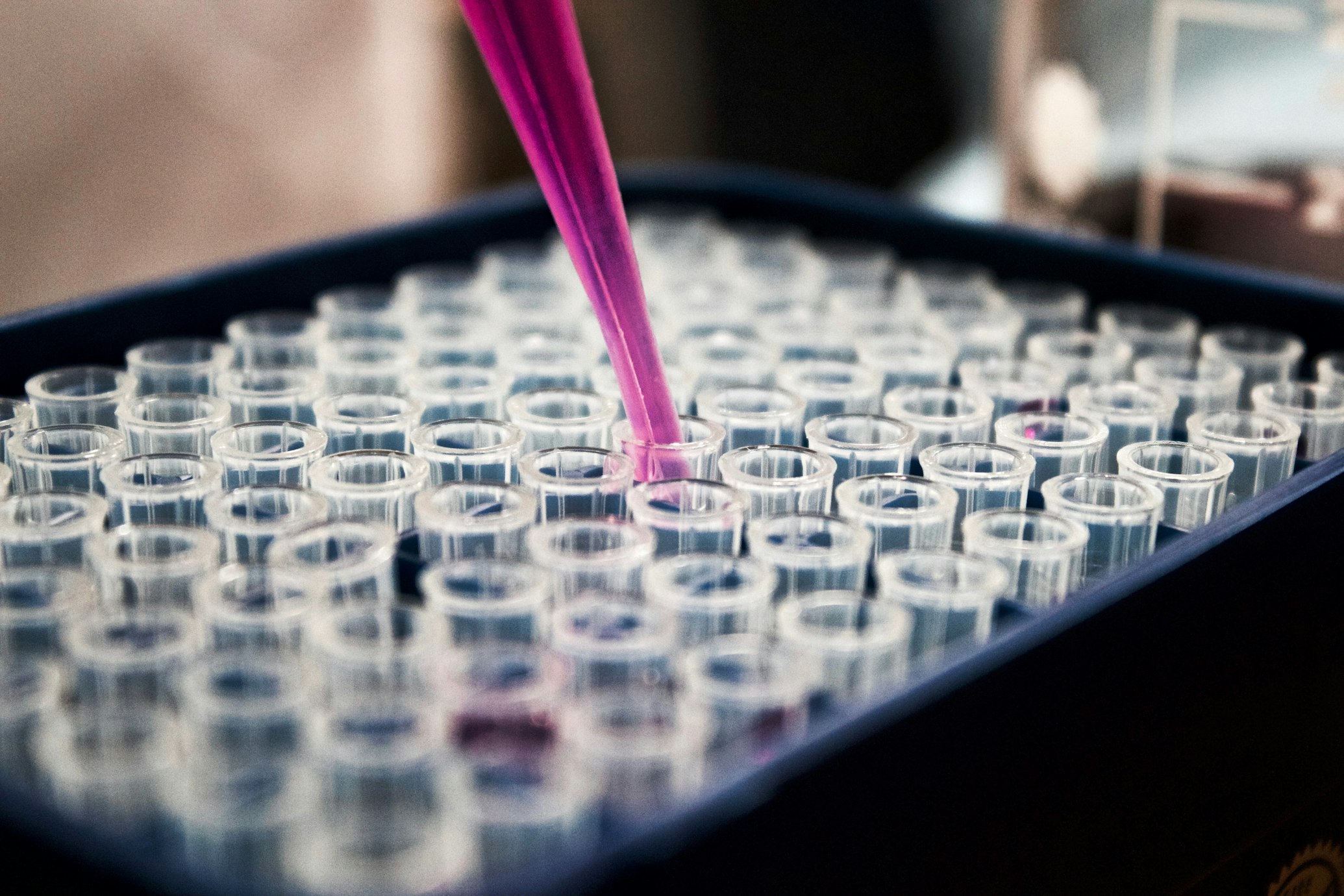
Atomic-scale visualization of surface interactions showing molecular adsorption on metal surfaces.
The Microscopic Dance: Molecules Meet Metal
Key Insight
Metal surfaces function as chemical shortcuts by providing alternative pathways with lower energy barriers, dramatically accelerating reactions that would otherwise be impractically slow 4 .
The Five Steps of Surface Reaction
1. Diffusion
Reactant molecules travel through the gas or liquid phase to reach the metal surface 3 .
2. Adsorption
The molecules attach themselves to the metal surface, forming temporary bonds 3 .
3. Reaction
The adsorbed molecules rearrange their atoms, often breaking and forming new chemical bonds 3 .
4. Desorption
The newly formed product molecules detach from the surface 3 .
5. Diffusion
The products move away from the surface into the surrounding environment 3 .
Activation Energy Comparison
Metals lower activation energy by providing alternative reaction pathways 4 .
The Energy Landscape: Mapping Reaction Pathways
The Sabatier Principle
In the early 20th century, French chemist Paul Sabatier discovered that the most effective catalysts form bonds that are neither too strong nor too weak with reactants—a concept now known as the Sabatier principle 4 .
This principle creates the familiar volcano plot relationship, where catalytic activity rises to an optimal point then decreases as the adsorption strength increases.
Optimal Catalysts
- Iron: Ammonia synthesis
- Platinum: Vehicle exhaust treatment
- Silver: Ethylene oxide production
Sabatier Principle Visualization
Catalytic activity follows a volcano-shaped relationship with adsorption strength 4 .
Designing Active Sites
Edges and Steps
On crystalline surfaces where atoms have fewer neighbors, creating highly reactive sites 4 .
Atomic Vacancies
Missing atoms create highly reactive patches that serve as effective catalytic centers 4 .
Single-Atom Catalysts
Isolated metal atoms anchored to supports provide uniform active sites 4 .
A Revealing Experiment: Tracing the Atomic Pathway
Methodology: Step-by-Step
To understand how scientists unravel surface reaction mechanisms, let's examine a landmark experiment that visualized the dissociation of oxygen molecules on a silver surface—a reaction crucial for many industrial oxidation processes 3 .
Experimental Procedure
- Surface Preparation: A pure silver crystal was cleaned and placed in an ultra-high vacuum chamber
- Oxygen Introduction: Molecular oxygen (O₂) was carefully introduced into the chamber
- Adsorption Observation: The STM was used to image the oxygen molecules
- Reaction Triggering: A short electric field pulse was applied to trigger dissociation
- Product Monitoring: The resulting oxygen atoms were tracked across the surface

Scanning Tunneling Microscope (STM) used to observe atomic-scale surface reactions 3 .
Results and Analysis
| Parameter | Before Dissociation | After Dissociation |
|---|---|---|
| Molecular Appearance | Elliptical shapes | Spherical dots |
| Surface Mobility | Limited movement | Significant migration |
| Bond Length | 1.21 Å (O=O bond) | N/A (atoms separated) |
| Activation Energy | ~0.35 eV for migration | ~0.75 eV for dissociation |
Key Finding
The most striking finding was the precise location where dissociation occurred most readily—at specific atomic steps on the silver surface where the local electronic environment particularly favored the breaking of the oxygen-oxygen bond. This demonstrated that not all surface atoms are equal; certain privileged sites serve as the true workhorses of catalysis.
The Chemist's Toolbox: Essential Research Tools
Surface Imaging
STM, AFM for visualizing atomic arrangements and tracking individual molecules
VisualizationComposition Analysis
XPS, SIMS for identifying surface elements and chemical states
AnalysisTheoretical Modeling
DFT, Molecular Dynamics for calculating adsorption energies and predicting pathways
SimulationReactivity Assessment
TPD, Microcalorimetry for measuring adsorption strength and activation energies
MeasurementFuture Horizons: Smart Catalysts and Sustainable Chemistry
Single-Atom Catalysis
The ongoing miniaturization of active sites has reached its ultimate limit: single-atom catalysts (SACs) where isolated metal atoms anchored to supports act as exceptionally well-defined and efficient active centers 4 .
These systems maximize efficiency by ensuring that every metal atom participates in catalysis while minimizing the use of often-expensive materials.
Dynamic Systems
Future catalysts may adapt to changing conditions, much as enzymes do in biological systems. Researchers are developing materials that respond to external stimuli such as light, magnetic fields, or electric currents to modulate their catalytic properties on demand 4 .
These smart catalysts could enable unprecedented control over chemical processes.
Hybrid Systems
An exciting frontier involves integrating synthetic metal catalysts with living cells to create hybrid biological-synthetic systems .
These approaches could enable manufacturing of complex molecules using engineered biological systems or create novel therapeutics that perform chemistry unknown to nature.
The Silent Engine of Modern Life
Metal-surface reaction energetics represents one of the most fascinating and impactful fields in modern science. What begins as a simple molecule approaching a metal surface unfolds into an intricate ballet of energy transfer, bond breaking, and bond formation that literally fuels our civilization.
From the ammonia synthesis that supports global agriculture to the catalytic converters that protect our environment, the practical applications of surface reactions touch nearly every aspect of modern life.