The Invisible Dance: How Surface Science Powers Our World
In the unseeable realm where materials meet, a microscopic ballet dictates everything from the food we eat to the fuel that powers our cars.
Imagine a world without fertilizers to grow crops, without clean fuels to power our industries, or without efficient systems to purify our water. This would be our reality without the hidden magic of surface science and heterogeneous catalysis—a field that studies the intricate chemical reactions occurring at the boundaries between solids, liquids, and gases. It is a discipline that has quietly shaped modern civilization, with an estimated 35% of the world's GDP influenced by catalytic processes 8 . From the early insights of Nobel laureates to the cutting-edge algorithms of artificial intelligence, the journey to understand and manipulate the atomic dance at surfaces is one of the most compelling stories in modern science. This article pulls back the curtain on this invisible world, exploring how the mastery of surfaces allows us to create, transform, and protect the world around us.
The Fundamentals: It All Happens at the Surface
At its heart, heterogeneous catalysis is the process where a catalyst in one phase—usually a solid—accelerates a chemical reaction between reagents in another phase, typically gases or liquids 8 . The catalyst itself remains unchanged, serving as a molecular meeting place where reactions can proceed faster and more efficiently.
The Cycle of Surface Reactions
The magic unfolds in a series of precise steps 8 :
Adsorption
Reactant molecules adhere to the catalyst surface
Migration & Reaction
Molecules move to active sites and react
Desorption
Product molecules release from the surface
Physisorption
A weak attachment via van der Waals forces, like a molecule gently landing on the surface. This is often a precursor state.
Chemisorption
A stronger bond where the adsorbate and catalyst share electrons, truly activating the reactant molecules for the ensuing chemical transformation.
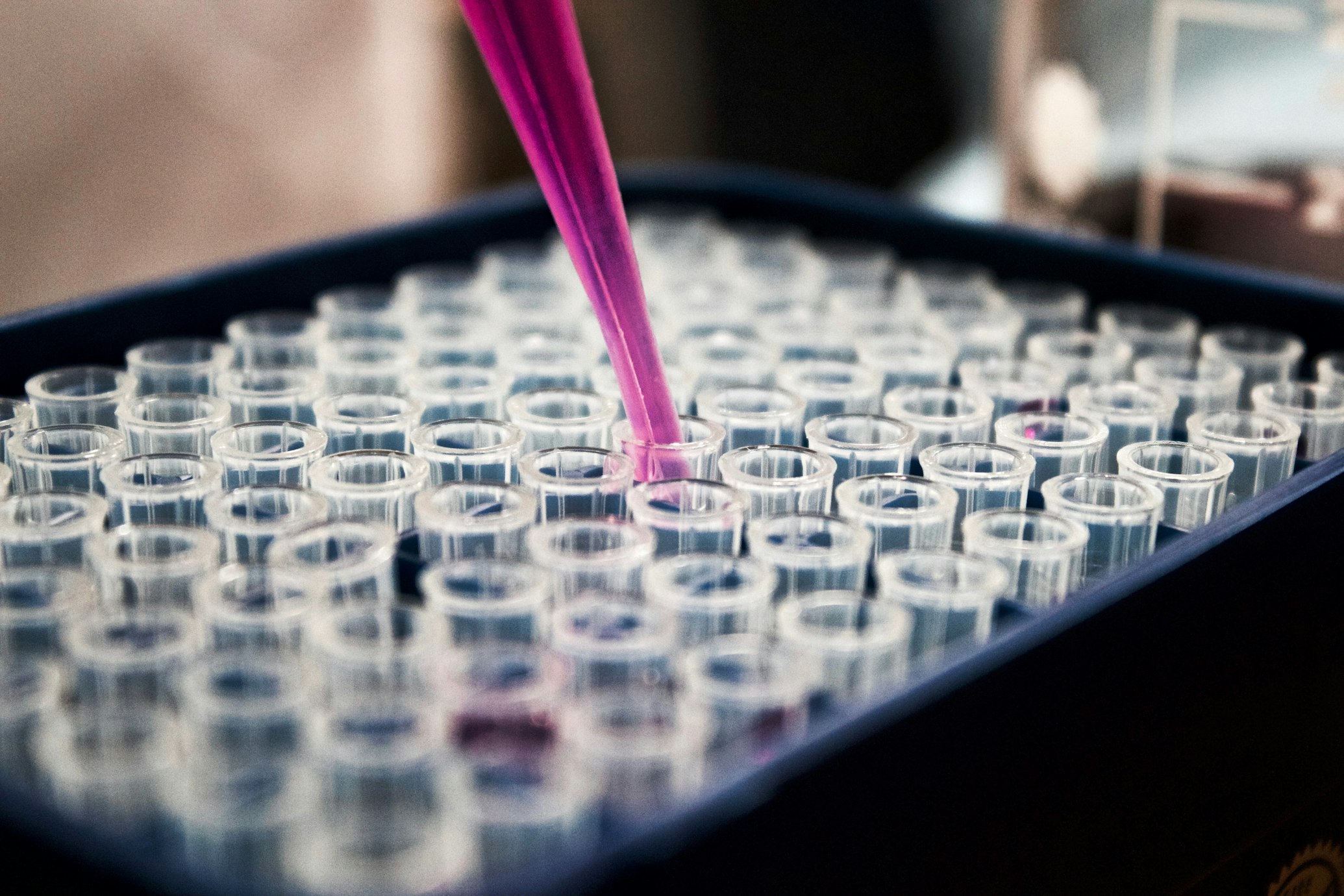
Molecular Interactions
The intricate dance of molecules at catalyst surfaces enables chemical transformations that power our world.
Key Insight
The development of surface science has bridged the gap between idealized models in ultra-high vacuum and complex real-world reactions 7 .
The AI Revolution: Designing Catalysts with Generative Models
The conventional approach to catalyst discovery is slow and computationally expensive, relying on trial-and-error and laborious calculations. A paradigm shift is now underway with the rise of artificial intelligence 3 .
Generative models, similar to those that create images and text, are being trained to imagine new, high-performance catalyst structures. These models learn from vast datasets of known materials and their properties to generate novel candidates with desired characteristics 3 .
AI-Driven Catalyst Discovery Impact
AI-generated catalysts for CO₂ reduction achieving remarkable efficiency 3
Traditional vs. AI-Driven Catalyst Design
| Aspect | Traditional Approach | AI-Driven Approach |
|---|---|---|
| Process | Manual enumeration, trial-and-error | Automated, inverse design based on target properties |
| Speed | Slow (months to years) | Rapid (days to weeks) |
| Exploration | Limited to known chemical spaces | Extrapolative, can discover structures beyond existing data |
| Key Tools | DFT calculations, experimental testing | Diffusion models, Transformers, Variational Autoencoders (VAEs) |
Researchers used a model called a crystal diffusion variational autoencoder (CDVAE) to generate over 250,000 candidate structures for the CO₂ reduction reaction (CO2RR) 3 . From this AI-generated shortlist, five novel alloy compositions were synthesized, with two achieving a remarkable ~90% Faradaic efficiency in converting CO₂ into valuable products 3 .
A Landmark Experiment: The LEED Revolution in Surface Crystallography
To truly appreciate how surface science works, it is illuminating to examine a historical breakthrough that allowed us to "see" surface structures for the first time: the development of Low-Energy Electron Diffraction (LEED) surface crystallography 4 .
The Problem: Seeing the Invisible
In the early days, scientists knew that surfaces were critical, but they had no way to determine the exact arrangement of atoms at the interface. The phenomenon of electron diffraction was known since the 1927 Davisson and Germer experiment, but turning it into a reliable tool for determining complex surface structures was a monumental challenge 4 . The key obstacles were maintaining perfectly clean surfaces and filtering out "noisy" inelastically scattered electrons to get a clear signal 4 .
The Experimental Breakthrough
The solution came from a combination of experimental and theoretical ingenuity 4 :
Ultra-High Vacuum (UHV) Technology
Researchers developed UHV chambers to create and maintain atomically clean surfaces, free from contamination.
The LEED Apparatus
A clever instrument was built, featuring a fluorescent screen and concentric grids. The grids filtered out inelastically scattered electrons, while the elastically scattered ones were accelerated onto the screen, producing a clear diffraction pattern that revealed the surface symmetry.
The I-V Curve
The real quantitative information came from measuring the I-V curve—how the intensity of a diffracted beam changed with the incident electron energy 4 .
LEED Crystallography Process
Sample Preparation
A single crystal is cut, polished, and repeatedly cleaned in UHV via ion sputtering and annealing to create a well-ordered, atomically clean surface.
Data Collection
A beam of low-energy electrons is directed at the surface, and I-V curves are recorded for multiple diffraction beams.
Model Proposing
A trial structure is proposed based on the symmetry of the diffraction pattern and chemical intuition.
Theory/Experiment Comparison
The theoretical I-V curves for the trial structure are calculated using multiple scattering theory and compared to the experimental data.
Refinement
The atomic positions in the model are adjusted until the theoretical and experimental I-V curves match.

This experiment exemplifies the powerful synergy between theory and experiment that defines surface science. It was not just better hardware, but superior theoretical models that unlocked a new world of atomic-level understanding.
The Scientist's Toolkit: Essential Reagents and Materials
The study and application of surface science rely on a sophisticated toolkit. Below is a selection of key materials and reagents essential for both fundamental research and industrial application.
Zeolites (e.g., ZSM-5)
Microporous crystals with precise pore sizes; act as "molecular sieves" for size- and shape-selective catalysis.
Semiconductor Nanoparticles (e.g., TiO₂ P25)
Absorbs light to generate electron-hole pairs that drive photocatalytic oxidation and reduction reactions.
Promoters (e.g., Al₂O₃, K₂O)
A substance added to a catalyst to enhance its activity, selectivity, or stability.
From the intricate theoretical models that decoded the first surface structures to the generative AI designing the next generation of catalysts, surface science is a testament to human curiosity and ingenuity. This invisible dance of atoms and molecules at interfaces is not merely an academic pursuit; it is the bedrock of our chemical industry, a guardian of our environment, and a key to a sustainable future. As we continue to peer into the atomic realm, we gain not just understanding, but also the power to create a world with cleaner energy, purer water, and smarter materials.