Understanding Catalyst Deactivation: A Comprehensive Guide for Biomedical Researchers and Drug Development Professionals
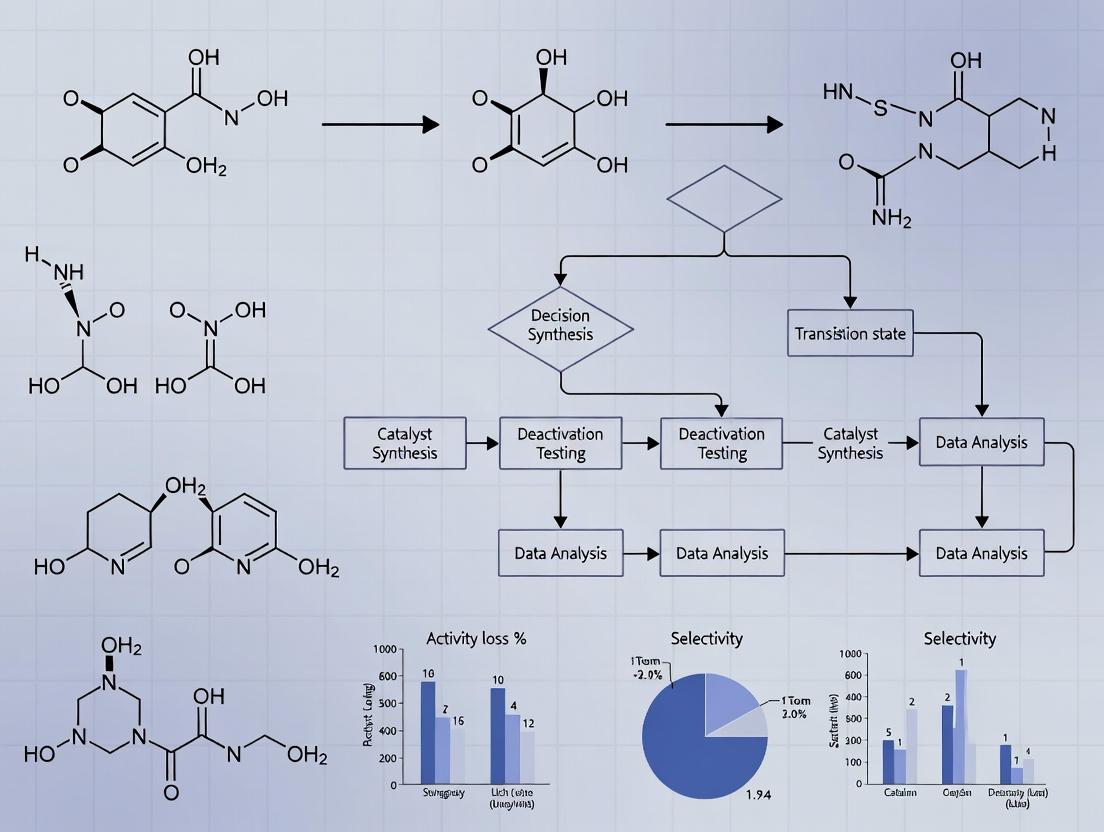
This article provides a detailed overview of catalyst deactivation studies, focusing on their critical role in drug development and biomedical research.
Understanding Catalyst Deactivation: A Comprehensive Guide for Biomedical Researchers and Drug Development Professionals
Abstract
This article provides a detailed overview of catalyst deactivation studies, focusing on their critical role in drug development and biomedical research. We explore the foundational causes of deactivation, from poisoning to sintering, and examine advanced methodologies for characterization and analysis. The guide offers practical troubleshooting and optimization strategies to mitigate deactivation, alongside validation and comparative frameworks to assess catalyst performance. Aimed at researchers and scientists, this resource synthesizes current knowledge to enhance the design, durability, and efficacy of catalytic systems in pharmaceutical applications.
Catalyst Deactivation 101: Core Mechanisms, Causes, and Impact on Drug Development
Catalyst deactivation, the loss of catalytic activity and/or selectivity over time, represents a paramount challenge in pharmaceutical catalysis. Within the CatTestHub research thesis framework, understanding deactivation is not merely an operational concern but a fundamental requirement for developing robust, scalable, and economically viable synthetic routes. Deactivation leads to increased catalyst loading, reduced yield, compromised purity, and higher costs—critical factors in drug development. This document provides application notes and standardized protocols for systematic deactivation studies.
Quantitative Data on Common Deactivation Modes in Pharma Catalysis
The following table summarizes prevalent deactivation mechanisms, their causes, and quantitative impacts observed in pharmaceutical model reactions.
Table 1: Primary Deactivation Mechanisms in Heterogeneous and Homogeneous Pharma Catalysis
| Mechanism | Typical Catalyst Systems Affected | Primary Cause(s) | Common Impact on Turnover Number (TON) | Typical Timeframe for Significant Activity Loss |
|---|---|---|---|---|
| Poisoning | Pd/C, PtO2, Enzymes | Strong chemisorption of species (e.g., S, Pb, Hg, heavy metals, catalyst inhibitors). | TON drop of 50-95% | Minutes to hours |
| Fouling/Coking | Solid acids (Zeolites), Ni catalysts, Pd on supports | Physical deposition of carbonaceous polymers or byproducts. | TON drop of 70-99% | Hours to days |
| Sintering/Ostwald Ripening | Supported metal NPs (Pd, Pt, Au), Nano-catalysts | Thermal degradation or particle coalescence. | TON drop of 40-80% (due to ↓ surface area) | Hours at elevated T |
| Leaching | Supported metal complexes, immobilized organocatalysts | Dissolution of active metal or species into reaction medium. | TON drop of 60-100% | One batch to several cycles |
| Phase Change/ Vaporization | Metal oxides, Lewis acids (AlCl3), Low-m.p. complexes | Formation of inactive crystalline phases or physical loss. | TON drop of 30-100% | Process-dependent |
| Chemical Degradation | Homogeneous organometallics (e.g., Ru, Pd complexes), Ligands | Oxidation, hydrolysis, or irreversible side-reactions of ligand/metal center. | TON drop of 80-100% | One to several batches |
The Scientist's Toolkit: Key Research Reagent Solutions
Essential materials for conducting catalyst deactivation studies in pharmaceutical contexts.
Table 2: Essential Reagents and Materials for Deactivation Studies
| Item | Function in Deactivation Studies |
|---|---|
| Model Substrate Spikes (e.g., Thiophene, Quinoline) | Deliberately introduced poisons to study catalyst tolerance and poisoning kinetics. |
| Chemisorption Probe Molecules (CO, NH3, Pyridine) | Used in spectroscopic studies (IR, NMR) to quantify active site loss and characterize changes. |
| ICP-MS Standard Solutions | For precise quantification of trace metal leaching into reaction products (critical for API purity). |
| Stable Isotope-Labeled Substrates (e.g., 13C-labeled) | To trace the fate of carbon in coking/fouling processes via GC-MS or NMR. |
| In Situ IR/UV-Vis Reaction Monitoring Cells | Enable real-time observation of catalyst state and intermediate formation during reaction. |
| Thermogravimetric Analysis (TGA) Coupon | To directly measure weight changes from coke deposition or precursor decomposition. |
| Microreactor with Online Sampling Port | Allows for continuous operation and sampling for time-on-stream activity profiles. |
Experimental Protocols for Deactivation Analysis
Protocol 3.1: Time-on-Stream (TOS) Analysis for Heterogeneous Catalysts
Objective: To quantify activity decay under continuous flow conditions mimicking scale-up.
Materials: Catalyst bed microreactor, HPLC pump, controlled temperature oven, online GC/MS or HPLC, back-pressure regulator.
Method:
- Catalyst Conditioning: Load catalyst (50-100 mg) into fixed-bed reactor. Condition under inert gas (N2) at reaction temperature for 1 hour.
- Baseline Activity: Introduce reaction feed at set conditions (e.g., 1 mL/min, 100°C, 10 bar). Measure conversion of key substrate every 15 min for first 2 hours until steady-state is achieved. Record this as X₀ (initial conversion).
- Long-Term TOS Run: Continue reaction for a minimum of 24-48 hours (or target batch number equivalent). Sample effluent at defined intervals (e.g., every 1-2 hours).
- Data Analysis: Plot Normalized Activity (X/X₀) vs. Time-on-Stream. Fit decay curve to common models (e.g., exponential, linear) to estimate deactivation rate constant (k_d).
- Post-Mortem Analysis: Recover catalyst. Analyze via:
- BET Surface Area: For sintering/fouling.
- TGA: For % coke burn-off.
- XPS/TEM: For surface composition and particle size distribution changes.
Protocol 3.2: Leaching Study via "Hot Filtration" Test
Objective: To distinguish between homogeneous and heterogeneous catalysis and quantify metal leaching.
Materials: 3-neck round-bottom flask, magnetic stirrer, heating mantle, filtration cannula or hot filtration apparatus, ICP-MS.
Method:
- Reaction Setup: Perform catalytic reaction (e.g., cross-coupling) under standard conditions in flask A.
- Initial Sampling: At approximately 50% conversion (time = t₁), withdraw a small sample (S₁). Analyze for yield/conversion (Conv₁) and metal content via ICP-MS (Metal₁).
- Hot Filtration: Rapidly heat-filter the entire reaction mixture under positive inert gas pressure into a second pre-heated flask B, separating it completely from the solid catalyst.
- Filtrate Continuation: Continue to heat and stir the filtrate in flask B under identical reaction conditions.
- Post-Filtration Sampling: From flask B, take samples at time intervals equivalent to the original rate (e.g., t₁ + Δt). Analyze for conversion (Conv₂) and metal content (Metal₂).
- Interpretation:
- If Conv₂ increases significantly: Active soluble leached species are present.
- If Conv₂ plateaus: Reaction is primarily surface-mediated. Leaching is minimal or inactive.
- Calculate % Leached Metal = (Metal₂ / Metal₁ in catalyst charge) * 100.
Visualization of Deactivation Pathways & Workflows
Within the research framework of CatTestHub for catalyst deactivation studies, understanding the primary mechanisms of deactivation is paramount for developing robust industrial and pharmaceutical catalytic processes. This application note provides detailed protocols and analyses for studying four fundamental deactivation pathways: poisoning, sintering, fouling, and leaching.
Table 1: Common Catalyst Poisons and Their Threshold Concentrations
| Poison | Catalyst Typically Affected | Critical Concentration (ppm) | Primary Deactivation Mode |
|---|---|---|---|
| Sulfur (H₂S) | Ni, Pt, Pd | 0.1 - 10 | Strong chemisorption, active site blocking |
| Lead (Pb) | Automotive Three-Way | 5 - 50 | Formation of surface alloys |
| Chlorine (HCl) | Cu-based, Zeolites | 10 - 100 | Corrosion, active phase volatilization |
| CO | Pt/Al₂O₃ (Low-T) | 100 - 1000 | Competitive strong adsorption |
| Iron Groups (Fe, Ni, V) | Fluid Catalytic Cracking | > 1000 | Pore blockage, site masking |
Table 2: Sintering Temperatures and Particle Growth Kinetics
| Catalyst System | Onset Temperature (°C) | Common Model | Rate Constant (n) | Notes |
|---|---|---|---|---|
| Pt/Al₂O₃ | 450 - 550 | Ostwald Ripening | 4-7 | Highly dependent on support acidity |
| Pd/CeO₂ | 600 - 700 | Particle Migration & Coalescence | 3-5 | Enhanced stability with redox support |
| Au/TiO₂ | 300 - 400 | Smoluchowski (Coalescence) | 6-10 | Sensitive to moisture |
| Ni/Al₂O₃ (Methanation) | 500 - 600 | Atomic Migration | 2-4 | Accelerated by steam |
Table 3: Leaching Rates in Liquid-Phase Reactions
| Catalyst | Reaction Medium | Temp. (°C) | Measured Leach Rate (wt%/h) | Analysis Technique |
|---|---|---|---|---|
| Pd/C (5%) | Aqueous Acid (pH 3) | 80 | 0.05 - 0.2 | ICP-MS of filtrate |
| Homogeneous Pd Complex | Heck Coupling | 120 | 0.5 - 2.0 | In situ UV-Vis |
| Cu/ZnO/Al₂O₃ | Methanol Synthesis (with traces of HCl) | 220 | 1.0 - 5.0 | Post-mortem XRF |
| Co/Mn/Br (Homogeneous) | PTA Production | 195 | < 0.01 (with HBr stabilizer) | Ion Chromatography |
Detailed Experimental Protocols
Protocol P-01: Assessing Poisoning via Pulse Chemisorption
Objective: To quantify active site loss due to a specific poison. Materials: Micromeritics AutoChem II or equivalent, UHP gases, 0.5% H₂S in H₂ balance. Procedure:
- Pretreatment: Reduce 0.1g catalyst sample in flowing H₂ (50 sccm) at 500°C for 1h.
- Active Site Count: Perform standard H₂ or CO pulse chemisorption at 35°C to determine initial metal dispersion (Di).
- Controlled Poisoning: Expose catalyst to 10 pulses of 0.5% H₂S/H₂ mixture at 300°C.
- Post-Poisoning Count: Cool to 35°C under inert flow. Repeat pulse chemisorption (step 2) to determine poisoned dispersion (Dp).
- Calculation: % Site Blockage = [(Di - Dp) / Di] x 100. Safety: Use gas-specific scrubbers for H₂S effluent.
Protocol S-02:In SituTEM for Sintering Kinetics
Objective: To visualize and measure particle growth under controlled atmospheres. Materials: In situ TEM holder with gas cell, H₂ (5%)/Ar mixture, Pt/Al₂O₃ catalyst powder. Procedure:
- Sample Prep: Disperse catalyst powder in ethanol and deposit on MEMS-based TEM chip.
- Baseline Imaging: Insert holder into TEM. Acquire HAADF-STEM images at 300°C under high vacuum to record initial particle size distribution (d0).
- In Situ Aging: Introduce H₂/Ar gas mixture (1 atm). Ramp temperature to 550°C at 10°C/min and hold for 0-24h.
- Time-Lapse Imaging: Acquire image series at fixed intervals (e.g., every 30 min).
- Image Analysis: Use software (e.g., ImageJ) to measure particle diameters (dt). Fit data to kinetic model: dtn - d0n = k t.
Protocol F-03: Quantifying Carbonaceous Fouling via TPO
Objective: To characterize coke amount, type, and combustion temperature. Materials: Fixed-bed reactor with mass spectrometer (MS), 5% O₂/He, spent catalyst from reaction. Procedure:
- Load: Place 0.05g spent, coked catalyst in quartz U-tube.
- Purge: Flow He (30 sccm) at 200°C for 30 min to remove volatiles.
- TPO Ramp: Switch to 5% O₂/He (30 sccm). Heat from 200°C to 900°C at 10°C/min.
- MS Monitoring: Track m/z=44 (CO₂) and m/z=18 (H₂O) signals.
- Analysis: Integrate CO₂ peak. Calculate coke wt% from total CO₂ evolved. Deconvolution of low- (300-450°C) and high-temperature (>600°C) peaks indicates soft vs. graphitic coke.
Protocol L-04: Leaching Test in Batch Slurry Reactor
Objective: To determine metal leaching under reaction conditions. Materials: Parr batch reactor, Teflon liner, ICP-MS, 0.1 wt% Pd/C catalyst, reaction solvent. Procedure:
- Reaction: Conduct the target reaction (e.g., hydrogenation) per standard conditions in the batch reactor.
- Hot Filtration: At reaction temperature/pressure, rapidly sample slurry and pass through a 0.2 µm heated filter into a cooled, depressurized vial.
- Liquid Analysis: Acidify filtrate and analyze via ICP-MS for metal content ([M]filtrate).
- Solid Analysis: Digest the filtered catalyst solids and analyze via ICP-MS for residual metal ([M]solid).
- Leach Calculation: % Leached = [M]filtrate / ([M]filtrate + [M]solid) x 100. Test must be performed at multiple time points.
Visualizations
The Scientist's Toolkit
Table 4: Essential Research Reagent Solutions for Deactivation Studies
| Item / Reagent | Primary Function in Deactivation Studies | Example Brand/Type |
|---|---|---|
| UHP Gas Mixtures (e.g., 0.5% H₂S/H₂) | Provides precise, low-concentration poison streams for controlled poisoning experiments. | Custom blends from Airgas or Linde. |
| Calibrated MS/GC Standards | Quantifies gaseous products (CO₂, H₂S) during TPO/TPSR to measure coke or sulfur uptake. | RESTEK Certified Calibration Mixtures. |
| ICP-MS Single-Element Standards | Creates calibration curves for ultra-trace metal analysis in leachate solutions. | Inorganic Ventures (1000 µg/mL stocks). |
| High-Temperature MEMS Chips | Enables in situ TEM studies of sintering under reactive gases at high temperatures. | Protochips Atmosphere or DENSsolution systems. |
| Certified Reference Catalysts (e.g., EuroPt-1) | Provides benchmark materials with known dispersion for method validation across labs. | Provided by European Reference Materials. |
| Temperature-Programmed Reaction (TPR/TPO) Systems | Automated systems for quantifying adsorbates, metal dispersion, and coke content. | Micromeritics AutoChem, BelCat. |
| Heated Filtration Kits | Allows for immediate separation of catalyst from slurry for leaching tests under reaction conditions. | Parr Instrument Company series. |
Within the CatTestHub research framework for systematic catalyst deactivation studies, understanding the tangible, multi-faceted impact on Active Pharmaceutical Ingredient (API) synthesis is paramount. Catalyst deactivation is not merely a laboratory curiosity; it directly erodes key process metrics: yield, purity, and cost. This application note details the mechanistic pathways of deactivation, provides quantitative impact data, and offers standardized protocols for deactivation analysis to support robust process development.
Mechanisms of Catalyst Deactivation & Impact Pathways
Catalyst deactivation in API synthesis typically occurs via poisoning, fouling/coking, sintering, and leaching. Each mechanism uniquely compromises the catalytic cycle.
Diagram: Catalyst Deactivation Impact Pathways
Quantitative Impact Analysis
The following table consolidates data from recent studies on heterogeneous metal-catalyzed cross-couplings (e.g., Suzuki, Heck) common in API synthesis.
Table 1: Impact of Catalyst Deactivation on Key API Synthesis Metrics
| Deactivation Mechanism | Example Catalyst System | Yield Drop (%) | Purity Impact (Main API) | Estimated Cost Increase* |
|---|---|---|---|---|
| Poisoning | Pd/C by Thiol Impurities | 40-60 | ↓ 15-20% | 30-50% |
| Fouling/Coking | Pd on Alumina, High-T Rx | 25-40 | ↓ 10-15% (more byproducts) | 20-35% |
| Leaching | Supported Pd NPs in C-N Coupling | 50-75 | ↓ 5-10% (plus metal contamination) | 40-70% (including purification) |
| Sintering | Pt/Co Hydrogenation Catalyst | 20-35 | Minimal direct effect | 15-25% |
*Cost increase factors include catalyst replacement, extended cycle time, and downstream purification burdens.
Experimental Protocols for Deactivation Analysis
Protocol 4.1: Accelerated Deactivation Test & Yield/Purity Correlation
Objective: To simulate extended catalyst lifetime and quantify its impact on reaction yield and product purity.
Materials: See Scientist's Toolkit below. Procedure:
- Baseline Reaction: In a parallel reactor setup, charge substrate (10 mmol), fresh catalyst (2 mol%), and solvent (20 mL, degassed). Run the standard cross-coupling reaction to establish baseline conversion (by HPLC) and yield.
- Catalyst Aging: In a separate flask, subject the same catalyst charge (without substrate) to simulated harsh conditions (e.g., elevated temperature, presence of a known impurity) for a defined period (e.g., 2-6 h).
- Aged Catalyst Test: Charge the aged catalyst with fresh substrate and solvent. Perform the identical reaction.
- Analysis:
- Yield: Isolate and weigh the product from both runs. Calculate percentage yield.
- Purity: Analyze crude product via HPLC. Quantify the area percentage of the main API peak and key impurities.
- Catalyst Characterization: Recover aged catalyst. Analyze via ICP-MS for leaching and BET/XRD for surface area/crystallite size.
Protocol 4.2: Leaching Analysis & Metal Contamination Quantification
Objective: To determine metal leaching extent and its contribution to product purity issues.
Procedure:
- Hot Filtration Test: Run a catalytic reaction (e.g., 50% conversion). Quickly filter the hot reaction mixture through a 0.45 µm PTFE syringe filter to remove all solid catalyst.
- Filtrate Reaction: Immediately continue heating the clear filtrate. Monitor conversion over time. A significant increase indicates active soluble metal species.
- ICP-MS Sample Prep: Take a sample of the final reaction mixture post-catalyst removal. Digest with concentrated nitric acid (microwave digester recommended).
- Quantification: Analyze digested sample via ICP-MS against standard curves. Report leached metal (ppm) in the reaction mixture and calculate total metal loss from catalyst.
The Scientist's Toolkit: Key Research Reagent Solutions
| Item/Category | Function in Deactivation Studies |
|---|---|
| Model Catalyst Systems (e.g., 5% Pd/C, Pd/Al₂O₃) | Well-characterized, reproducible catalysts for baseline deactivation studies. |
| Selective Poisoning Agents (e.g., Thiophene, Quinoline) | Introduce controlled, predictable poisoning to study its specific effects. |
| High-Pressure/Temperature Parallel Reactors | Enable accelerated aging tests and replicate industrial process conditions. |
| ICP-MS Standard Solutions | Precisely quantify trace metal leaching and contamination in API streams. |
| HPLC Columns for Reaction Monitoring (C18, Phenyl) | Separate and quantify API from complex byproduct mixtures generated during deactivation. |
| Nitrogen/Argon Glovebox & Schlenk Line | Maintain inert atmosphere for air-sensitive catalyst handling and reactions. |
| Microwave Digestion System | Prepare solid catalyst and product samples for accurate elemental analysis. |
Diagram: Experimental Workflow for Deactivation Impact Study
Integrating systematic deactivation studies, as championed by the CatTestHub thesis, into API process development is critical for economic and quality outcomes. The provided data and protocols enable researchers to proactively diagnose deactivation pathways, quantify their direct impact on yield and purity, and design more resilient synthetic processes, ultimately controlling development and manufacturing costs.
This application note is a component of the broader CatTestHub thesis, a research initiative dedicated to systematic catalyst deactivation studies. Within biocatalysis, deactivation undermines process efficiency and economic viability. This document details common deactivation culprits—biomolecular poisons and adverse process conditions—providing protocols for their study and mitigation, specifically for researchers in pharmaceutical development.
Table 1: Common Biomolecular Poisons and Their Impact on Enzymes
| Poison Class | Example Compounds | Typical Source | Primary Target Enzyme Class | Reported Activity Loss (%)* | Key Inhibition Mechanism |
|---|---|---|---|---|---|
| Heavy Metals | Hg²⁺, Pb²⁺, Cd²⁺ | Leaching from equipment, raw materials | Hydrolases, Oxidoreductases | 70-95 | Binding to cysteine thiols, disrupting active site geometry |
| Phenolics | Guaiacol, vanillin | Lignin degradation, feedstocks | Peroxidases, Laccases | 50-80 | Competitive binding at substrate pocket, radical quenching |
| Aldehydes | Formaldehyde, furfural | Feedstock pretreatment | Most enzyme classes | 60-90 | Schiff base formation with lysine, cross-linking |
| Chaotropic Agents | Urea, guanidine HCl | Denaturation studies | Proteases, Kinases | 80-99 | Disruption of hydrogen bonding, protein unfolding |
| Detergents (Ionic) | SDS, CTAB | Extraction processes | Membrane-associated enzymes | 75-95 | Disruption of lipid-protein interactions, denaturation |
*Ranges derived from recent literature (2022-2024) on immobilized enzyme systems under industrial conditions.
Table 2: Detrimental Process Conditions and Observed Effects
| Process Parameter | Critical Threshold* | Common Enzyme Impact | Reversibility |
|---|---|---|---|
| Temperature | > Optimum + 10°C | Aggregation, covalent modification | Irreversible |
| pH | < pKa-2 or > pKa+2 | Protonation state change, unfolding | Partially reversible |
| Shear Stress | > 10⁴ s⁻¹ (in reactors) | Mechanical unfolding, support abrasion | Irreversible |
| Organic Solvent (% v/v) | > 20% (log P < 2) | Essential water stripping, conformational rigidity | Often reversible |
| Gas-Liquid Interfaces (in sparging) | High bubble surface area | Interfacial unfolding | Irreversible |
*Thresholds are generalized; specific values are enzyme-dependent.
Experimental Protocols
Protocol 1: Assessing Poison-Induced Deactivation Kinetics
Objective: Quantify the rate and extent of enzyme deactivation by a suspected biomolecular poison. Materials: Purified enzyme (free or immobilized), standardized activity assay reagents, poison stock solution, appropriate buffer, controlled-temperature reactor. Procedure:
- Baseline Activity: In triplicate, assay enzyme activity under optimal conditions (T, pH, substrate saturation). Record initial velocity (V₀).
- Poison Exposure: Incubate the enzyme with a range of poison concentrations (e.g., 0.1x, 1x, 10x expected process concentration) in a reaction buffer without substrate. Use a stirred reactor to mimic process conditions.
- Time-Course Sampling: At defined intervals (e.g., 1, 5, 15, 30, 60 min), withdraw an aliquot.
- Residual Activity Assay: Immediately dilute the aliquot into the standard activity assay mixture to quench further poison action. Measure residual velocity (Vᵢ).
- Data Analysis: Calculate residual activity (%) = (Vᵢ / V₀) * 100. Plot vs. exposure time for each poison concentration. Fit data to a first-order deactivation model: A = A₀ * e^(-k_d * t), where k_d is the deactivation rate constant.
- IC₅₀ Determination: Plot residual activity after a fixed exposure time (e.g., 30 min) against log[poison]. Fit a sigmoidal curve to determine the concentration causing 50% inhibition.
Protocol 2: Evaluating Process Condition Stressors in a Miniaturized Reactor
Objective: Systematically test the impact of combined process conditions (e.g., temperature, shear, interfaces) on biocatalyst half-life. Materials: Immobilized enzyme preparation, miniature stirred-tank or bubble column reactor system, pH and temperature probes, substrate feed pump. Procedure:
- Experimental Design: Use a factorial design (e.g., 2³) varying temperature (Optimum, Optimum+15°C), shear rate (Low, High), and presence/absence of air sparging.
- Continuous Operation: Load reactors with immobilized catalyst. Initiate continuous substrate feed at a dilution rate below V_max.
- Monitoring: Periodically sample effluent. Assay for product concentration to calculate conversion (%) over time.
- Half-life Determination: Plot conversion (%) vs. operational time (hours). Define deactivation as the time for conversion to drop to 50% of its initial steady-state value. Compare half-lives across condition sets.
- Post-Mortem Analysis: Recover catalyst. Analyze for protein leaching (Bradford assay), particle fragmentation (microscopy), and secondary structure changes (ATR-FTIR).
Visualization
Title: Mechanism of Enzyme Poisoning in Bioprocessing
Title: CatTestHub Deactivation Analysis Workflow
The Scientist's Toolkit: Research Reagent Solutions
Table 3: Essential Materials for Deactivation Studies
| Item | Function in Deactivation Studies | Example/Catalog Consideration |
|---|---|---|
| Immobilized Enzyme Kit | Provides a standardized, reusable catalyst format for stress tests, mimicking industrial use. | Chitosan- or epoxy-functionalized carrier beads with immobilized lipase or protease. |
| Chaotrope & Inhibitor Set | Standardized poisons for controlled, comparative deactivation kinetics. | Set including urea, guanidine HCl, SDS, azide, and heavy metal salts (e.g., HgCl₂). |
| Activity Assay Fluorogenic Substrate | Enables rapid, sensitive, and continuous measurement of residual enzyme activity post-exposure. | e.g., 4-Methylumbelliferyl-derived substrates for hydrolases; Amplex Red for oxidases. |
| Miniature Stirred-Tank Reactor (STR) | Allows precise control and monitoring of process conditions (shear, T, pH) on a small scale. | Commercially available 15-50 mL working volume reactors with automated control loops. |
| Quenching Buffer | Instantly stops deactivation reaction during sampling to obtain a precise "snapshot" of residual activity. | Typically contains chelators (EDTA for metals), substrate analogs, or dilution agents. |
| ATR-FTIR Accessory | For post-mortem analysis of secondary structural changes in the enzyme (α-helix, β-sheet loss). | Diamond ATR crystal suitable for analyzing solid immobilized catalyst samples. |
| Protein Leachate Assay Kit | Quantifies enzyme desorption from support, distinguishing true deactivation from simple leaching. | Fluorescent dye-based assay (e.g., Qubit) compatible with process buffers. |
Foundational Terminology and Key Metrics for Deactivation Studies (e.g., Half-life, Activity Loss Rate)
Within the integrated research framework of CatTestHub, systematic characterization of catalyst deactivation is paramount. This document provides foundational terminology, key quantitative metrics, and standardized protocols essential for robust and reproducible deactivation studies. The focus is on generating kinetic data that can inform mechanistic understanding and predictive modeling of catalyst lifetime.
Foundational Terminology and Key Metrics
Deactivation studies rely on precise definitions and quantifiable parameters. The core metrics are summarized below.
Table 1: Core Terminology and Metrics for Deactivation Studies
| Term | Symbol/Formula | Unit | Definition & Interpretation |
|---|---|---|---|
| Catalytic Activity (Initial) | ( A_0 ) | mol·g⁻¹·s⁻¹ (or context-specific) | The initial rate of the catalytic reaction per mass (or surface area) of catalyst under defined conditions. |
| Catalytic Activity (at time t) | ( A_t ) | mol·g⁻¹·s⁻¹ | The catalytic reaction rate at a given time t during operation. |
| Relative Activity | ( a = At / A0 ) | Dimensionless | Normalized activity, ranging from 1 (fresh) to 0 (fully deactivated). |
| Deactivation Rate Constant | ( kd ) (from ( da/dt = -kd \cdot a^n )) | time⁻¹ | Rate constant for the loss of relative activity; order n depends on the mechanism. |
| Deactivation Half-life | ( t{1/2} = \ln(2) / kd ) (for first-order) | time | The time required for the catalyst's relative activity to decrease to half of its initial value. |
| Time-on-Stream (TOS) | TOS | time | The total operational duration of the catalyst under reaction conditions. |
| Activity Loss Rate | ( -da/dt ) or ( -dA/dt ) | time⁻¹ | The instantaneous rate of activity decline at a given TOS. |
| Total Turnover Number (TTON) | TTON = ∫₀ᵗ A(t)dt | mol product·mol cat⁻¹ | Total moles of product formed per mole of active sites until time t. Measures total useful output. |
| Residual Activity | ( A{final} / A0 ) | Dimensionless | The fraction of initial activity remaining after a defined stress test or operational period. |
Application Notes and Experimental Protocols
Protocol A: Determination of Deactivation Half-life and Rate Constant
Objective: To quantify the kinetic parameters of catalyst deactivation under controlled, accelerated conditions.
Materials & Equipment:
- Fixed-bed or tubular plug-flow reactor system
- Mass flow controllers for gases
- Liquid feed pump and vaporizer (if needed)
- Online analytical system (e.g., GC, MS)
- Temperature-controlled oven
- Data acquisition system
Procedure:
- Catalyst Conditioning: Load catalyst (sieved fraction) into reactor. Activate in situ under specified gas flow (e.g., H₂, He) and temperature ramp.
- Baseline Activity (A₀): Set standard reaction conditions (T, P, feed composition, WHSV). Achieve steady-state (typically 1-2 hours). Measure product formation rate repeatedly to establish a precise A₀.
- Time-on-Stream (TOS) Experiment: Maintain constant reaction conditions. Continuously or at fixed intervals (e.g., every 30 min), quantify key reactant conversion and/or product yield.
- Data Acquisition: Record TOS, conversion (X), and selectivity (S). Calculate ( A_t ) based on known catalyst mass and flow rates.
- Termination: After significant deactivation (e.g., a < 0.3) or fixed TOS, stop feed and cool under inert flow.
Data Analysis:
- Plot relative activity ( a(t) ) vs. TOS.
- Fit deactivation kinetic model. For a first-order deactivation assumption: [ \ln(a) = -kd \cdot t ] The slope of the linear regression of ( \ln(a) ) vs. ( t ) gives ( -kd ).
- Calculate half-life: ( t{1/2} = \ln(2) / kd ).
Protocol B: Accelerated Stress Test (AST) for Comparative Stability
Objective: To rank catalyst formulations or predict long-term stability using severe, short-term conditions.
Procedure:
- Define AST Conditions: Establish conditions (e.g., higher temperature, presence of poisons, cyclic feeds) known to exacerbate the primary deactivation mode (e.g., coking, sintering).
- Pre-AST Baseline: Measure A₀ for each catalyst under standard conditions (Protocol A, steps 1-2).
- Apply Stress: Expose catalysts to AST conditions for a fixed, relatively short duration (e.g., 24-72 hours).
- Post-AST Activity: Return to standard conditions and measure residual activity ( A_{residual} ).
- Calculate Metric: Determine Residual Activity (( A{residual} / A0 )).
Visualization of Key Concepts
Diagram 1: Relationship Between Core Deactivation Metrics (64 chars)
Diagram 2: Workflow for Deactivation Kinetics Experiment (86 chars)
The Scientist's Toolkit: Essential Research Reagent Solutions
Table 2: Key Materials and Reagents for Deactivation Studies
| Item | Typical Specification/Example | Function in Deactivation Studies |
|---|---|---|
| Model Catalyst | Pt/Al₂O₃, Cu/ZnO/Al₂O₃, Zeolite H-ZSM-5 | Well-defined reference material for fundamental deactivation mechanism studies (sintering, coking, poisoning). |
| Probe Molecule Feed | CO for oxidation, n-Hexane for cracking, Syngas (CO/H₂) for F-T | Standardized reactant to measure activity loss under controlled conditions. |
| Chemical Poison | Organic Sulfur (e.g., Thiophene), Organic Nitrogen (e.g., Quinoline), Metal ions (e.g., Pb²⁺, Na⁺) | Introduced in trace amounts to study poisoning kinetics and site blocking. |
| Thermal Stress Gas | High-purity O₂ (for burn-off), H₂ (for reduction), Steam (H₂O/N₂ mix) | Used in accelerated aging protocols to study sintering or structural collapse. |
| Inert Diluent/Carrier Gas | Ultra-dry N₂, He, Ar | Provides non-reactive medium for feed mixing, activity measurement, and safe shutdown. |
| Pulse Calibration Standard | Known gas mix (e.g., 1% C₃H₈ in He) or liquid | Calibrates online analyzers (GC, MS) for accurate quantification of conversion/activity. |
| Temperature Calibrant | Metal standards with known melting points (e.g., In, Sn) | Verifies reactor thermocouple accuracy, critical for reliable kinetic data. |
| Surface Area/Porosity Standard | Certified Alumina or Carbon reference material | Calibrates physisorption instruments for measuring loss of surface area post-deactivation. |
Advanced Techniques for Studying Catalyst Deactivation: From Characterization to Kinetic Modeling
This document serves as a core application note for the CatTestHub research consortium, focused on elucidating catalyst deactivation mechanisms through advanced real-time characterization. The central thesis of CatTestHub posits that deactivation is a dynamic, multi-modal process requiring simultaneous interrogation of structural, chemical, and electronic states under realistic operating conditions. The integration of in-situ (relevant conditions) and operando (simultaneous measurement of activity and structure) techniques is thus critical for developing robust, next-generation catalysts.
Application Notes & Comparative Data
The following table summarizes the primary applications, key observables, and typical experimental parameters for the core techniques within the CatTestHub framework.
Table 1: Comparative Overview of Key In-Situ/Operando Techniques for Catalyst Deactivation Studies
| Technique | Primary Information | Typical In-Situ Conditions (CatTestHub Focus) | Key Metrics for Deactivation | Temporal Resolution | Spatial Resolution |
|---|---|---|---|---|---|
| X-Ray Diffraction (XRD) | Crystallographic phase, lattice parameter, crystallite size, strain. | Gas flow (H₂, O₂, reaction mix), 25-1000°C, 1-20 bar. | Phase transformation (e.g., Active oxide → inactive sulfide), sintering (crystallite growth >20%), alloy segregation. | Seconds to minutes (Fast XRD). | ~10-100 nm (volume-averaged). |
| Transmission Electron Microscopy (TEM) | Particle size/distribution, morphology, atomic structure, elemental mapping. | Gas flow, 25-1000°C, ≤ 1 bar in dedicated holders; Liquid environment. | Sintering & Ostwald ripening, carbon encapsulation, pore blockage, surface reconstruction. | Milliseconds to seconds (video rate). | Atomic-scale (~0.1 nm). |
| X-Ray Photoelectron Spectroscopy (XPS) | Surface elemental composition, chemical state, oxidation state, adsorbed species. | "Near-ambient pressure" (up to ~25 mbar), 25-500°C, gas dosing. | Formation of passivating layers (C, S, P), oxidation/reduction of active phases, adsorbate poisoning. | Minutes to hours. | ~10 μm (lateral), 2-10 nm (depth). |
| Raman/FTIR Spectroscopy | Molecular vibrations, identification of surface species, reaction intermediates, coke types. | Flow reactor cells, high P/T, simultaneous activity measurement (operando). | Coke formation (graphitic vs. polymeric), site blocking by carbonyls/phosphates, sulfate formation. | Seconds (FTIR) to seconds/minutes (Raman). | ~1 μm (Raman), Diffuse (FTIR). |
Experimental Protocols
Protocol 3.1: Operando XRD-MS for Tracking Phase Changes During Deactivation
Objective: Correlate crystallographic phase changes with product evolution during catalyst deactivation. Materials: High-temperature/pressure reaction chamber for diffractometer (e.g., Anton Paar XRK900), capillary reactor, mass spectrometer (MS), catalyst powder. Procedure:
- Load catalyst powder into a capillary reactor cell.
- Mount the cell in the diffractometer and connect gas lines to MS.
- Align and calibrate the XRD geometry using a standard (e.g., Si).
- Set gas flow (e.g., 20 ml/min of reaction mixture) using mass flow controllers.
- Begin heating ramp (e.g., 5°C/min) to target temperature (e.g., 400°C) while simultaneously collecting:
- XRD Patterns: Continuous scans (2θ = 20-80°) every 2 minutes.
- MS Data: Monitor selected m/z ratios (e.g., 2 for H₂, 18 for H₂O, 44 for CO₂, 30 for product).
- Maintain at reaction temperature for 12-24 hours, collecting data.
- Data Analysis: Use Rietveld refinement on sequential XRD patterns to quantify phase fractions and crystallite size. Plot these values alongside MS product yield versus time to identify deactivation triggers.
Protocol 3.2: In-Situ TEM for Visualizing Sintering Dynamics
Objective: Directly observe nanoparticle coalescence and growth under reducing/oxidizing atmospheres. Materials: MEMS-based heating chip (e.g., DENSsolutions Wildfire), gas supply system, aberration-corrected TEM with video capability, supported metal nanoparticle catalyst. Procedure:
- Drop-cast a dilute ethanol suspension of catalyst onto the MEMS chip's electron-transparent window.
- Load the chip into the holder, ensuring proper electrical and gas line connections.
- Insert holder into TEM and pump to high vacuum.
- Establish stable imaging conditions at a desired magnification (e.g., 500kX).
- Initiate gas flow (e.g., 1 bar H₂) and start video recording (10 fps).
- Apply a temperature ramp via the chip heater (e.g., to 500°C at 50°C/s), continuing video acquisition.
- Hold at temperature, recording for 30-60 minutes.
- Data Analysis: Use particle tracking software (e.g., ImageJ) on video frames to measure particle size distributions over time. Calculate growth kinetics and identify primary sintering mechanism (particle migration vs. Ostwald ripening).
Protocol 3.3: Near-Ambient Pressure XPS (NAP-XPS) for Surface Poisoning Studies
Objective: Identify chemical state changes of surface species during exposure to poisons. Materials: NAP-XPS system (with differential pumping), mbar-range gas doser, model catalyst thin film or pressed pellet. Procedure:
- Mount sample on a heating stage in the analysis chamber.
- Clean the surface via Ar⁺ sputtering and/or reduction in H₂.
- Acquire reference high-resolution spectra for core levels (e.g., Pt 4f, C 1s, O 1s) under UHV.
- Introduce a low pressure (e.g., 1 mbar) of a reactive gas mixture (e.g, 0.1% H₂S in H₂).
- Heat the sample to reaction temperature (e.g., 300°C) and acquire time-lapsed high-resolution spectra (every 5-10 mins) at the same total pressure.
- After 1 hour, pump out the reactive gas and cool the sample, acquiring a final set of spectra.
- Data Analysis: Fit core-level spectra to identify chemical species (e.g., metallic Pt, PtSₓ). Plot the relative concentration of sulfur species vs. time to quantify poisoning kinetics.
The Scientist's Toolkit: Key Research Reagent Solutions
Table 2: Essential Materials for In-Situ/Operando Experiments at CatTestHub
| Item | Function in Experiment |
|---|---|
| MEMS-based TEM/STEM Holders (Heating, Gas, Electrochemical) | Provides precise control of environment (T, P, gas, liquid) around the sample inside the TEM column for realistic conditioning. |
| Capillary Microreactors (for XRD/XAS) | Enables high gas/catalyst contact in a small volume compatible with X-ray beams, allowing rapid gas switching and high time-resolution. |
| Calibrated Mass Flow Controllers (MFCs) | Precisely blends and delivers reactant gases (H₂, O₂, CO, hydrocarbons) to the in-situ cell, critical for establishing reproducible reaction conditions. |
| Standard Reference Materials (Si powder for XRD, Au foil for XAS) | For instrument alignment, calibration, and ensuring data quality and comparability across different beamtimes and instruments. |
| Quartz Wool & High-Temperature Adhesives | For packing catalyst beds in flow reactors (quartz wool) and sealing/viewport assembly in high-pressure cells. |
| Certified Gas Mixtures (e.g., 5% H₂/Ar, 1000 ppm SO₂ in N₂) | Provides known, traceable concentrations of reactants and poisons for quantitative deactivation studies. |
| Model Catalyst Systems (e.g., Pt/TiO₂ thin films) | Well-defined samples with uniform properties, essential for validating new in-situ methodologies and fundamental mechanism studies. |
Visualization: Experimental Workflows & Deactivation Pathways
Diagram Title: CatTestHub Multi-Technique Workflow for Deactivation Analysis
Diagram Title: Deactivation Pathways & Diagnostic Techniques Mapping
Within the integrated research framework of CatTestHub, the systematic study of catalyst deactivation is paramount for both chemical and biochemical catalysts, including therapeutic enzymes and drug candidates. This document outlines standardized application notes and protocols for measuring activity loss, assessing stability, and predicting functional lifespan, critical for researchers and drug development professionals.
Core Activity Test Protocols
Initial Activity Assay (Baseline Measurement)
Purpose: To establish the 100% activity baseline for a fresh catalyst sample. Protocol:
- Reaction Setup: Prepare a standard reaction mixture containing substrate at a concentration of 5x Km (Michaelis constant) in appropriate buffer (e.g., 50 mM phosphate, pH 7.4).
- Catalyst Introduction: Dilute the catalyst to a concentration within the linear range of the assay. Initiate the reaction by rapid addition.
- Kinetic Monitoring: Monitor product formation or substrate depletion spectrophotometrically/fluorometrically at 1-second intervals for 60 seconds.
- Calculation: The initial velocity (Vi) is calculated from the linear portion of the progress curve (typically the first 10-30 seconds). One unit (U) of activity is defined as the amount of catalyst converting 1 μmol of substrate per minute under the specified conditions.
Residual Activity Test Post-Stress
Purpose: To quantify remaining catalytic function after exposure to a deactivating condition. Protocol:
- Stress Application: Incubate identical catalyst aliquots under defined stress conditions (e.g., elevated temperature, specific pH, presence of inhibitor) for a set duration (tstress).
- Quenching & Dilution: Rapidly quench the stress condition (e.g., by dilution into cold assay buffer) to prevent further deactivation.
- Activity Measurement: Immediately assay the residual activity (Vr) using the standard Initial Activity Assay protocol (Section 2.1).
- Data Expression: Residual Activity (%) = (Vr / Vi) * 100.
Stability Assessment Protocols
Real-Time Stability Monitoring (Isothermal)
Purpose: To measure the rate of activity loss under constant, long-term storage conditions. Protocol:
- Sample Preparation: Prepare catalyst in its final formulation buffer. Aliquot into low-protein-binding vials.
- Controlled Incubation: Place aliquots in a stability chamber maintaining the target temperature (e.g., 4°C, 25°C, 40°C) ± 0.5°C.
- Scheduled Sampling: Remove replicate vials at predetermined time points (e.g., 0, 1, 3, 6, 9, 12 months).
- Analysis: Immediately test each sample for residual activity (Protocol 2.2) and analyze for physical aggregation (via SEC-HPLC) and chemical degradation (via LC-MS).
Accelerated Stability Studies (Forced Degradation)
Purpose: To rapidly identify degradation pathways and predict shelf-life. Protocol:
- Stress Matrix: Subject catalyst samples to a panel of accelerated conditions:
- Thermal: 40°C, 50°C, 60°C.
- pH: Incubation in buffers spanning pH 3.0 to 10.0 at 25°C.
- Oxidative: Addition of 0.1% H2O2.
- Mechanical Stress: Agitation at 200 rpm.
- Time-Course: Sample from each condition at t = 0, 1, 3, 7, and 14 days.
- Multi-Parameter Analysis: Assess activity loss, soluble aggregate formation (by DLS), and primary structure integrity (by peptide mapping).
Lifespan Assessment Methods
Turnover Number (TON) & Total Catalyst Lifetime
Purpose: To quantify the total number of catalytic cycles before deactivation. Protocol:
- Reaction under Depletion: Set up a reaction where the catalyst is limiting (e.g., 10 nM) and substrate is in large, known molar excess (e.g., 10 mM). Ensure the reaction goes to completion.
- Product Quantification: Use HPLC or calibration curve to measure the total moles of product (Ptotal) formed at reaction endpoint.
- Calculation: TON = (Ptotal) / (moles of catalyst initially added). The point where TON plateaus indicates full deactivation.
Deactivation Kinetics Modeling
Purpose: To derive quantitative rate constants for deactivation processes. Protocol:
- Time-Course Data: Collect residual activity data over time under a specific stress condition.
- Model Fitting: Fit the data to common deactivation models:
- First-Order: A/A0 = e-kd * t
- Second-Order: 1/A - 1/A0 = kd * t where A is activity at time t, A0 is initial activity, and kd is the deactivation rate constant.
- Half-Life Calculation: For first-order decay, t1/2 = ln(2) / kd.
Table 1: Example Deactivation Data for Model Enzyme ALD1 Under Thermal Stress
| Stress Condition | Incubation Time | Residual Activity (%) | Aggregates (%) | k_d (day⁻¹) | Predicted t₁/₂ (days) |
|---|---|---|---|---|---|
| 4°C (Control) | 30 days | 98.5 ± 1.2 | <0.5 | 0.0005 | 1386 |
| 25°C | 30 days | 85.3 ± 3.1 | 1.2 ± 0.3 | 0.0053 | 131 |
| 40°C | 7 days | 45.6 ± 5.7 | 8.9 ± 1.5 | 0.1120 | 6.2 |
| 50°C | 24 hours | 10.1 ± 2.1 | 25.4 ± 4.2 | 2.3010 | 0.3 |
Table 2: Lifespan Assessment via TON for Different Catalyst Formulations
| Catalyst ID | Formulation Buffer | Initial Activity (U/mg) | Total TON (x10⁶) | Primary Deactivation Mode Identified |
|---|---|---|---|---|
| CT-101 | 50 mM Phosphate, pH 7.0 | 10,000 | 4.2 | Oxidation of Met residue |
| CT-101A | 50 mM Phosphate, pH 7.0 + 5 mM Met | 9,850 | 8.7 | Aggregation |
| CT-101B | 50 mM Histidine, pH 6.5 + 0.01% PS80 | 10,200 | 12.5 | Slow hydrolysis |
Workflow and Pathway Visualizations
Title: Catalyst Deactivation Assessment Workflow
Title: Common Deactivation Pathways for Protein Catalysts
The Scientist's Toolkit: Key Research Reagent Solutions
Table 3: Essential Materials for Deactivation Studies
| Item/Reagent | Function in Deactivation Studies | Example Product/Cat. No. |
|---|---|---|
| Low-Protein-Bind Microtubes/Vials | Minimizes surface adsorption loss during stress incubations and storage. | Eppendorf LoBind Tubes |
| Stability Chambers (ICH Compliant) | Provides precise, controlled temperature (±0.5°C) and humidity for real-time studies. | Binder KBF Series |
| Dynamic Light Scattering (DLS) Instrument | Measures hydrodynamic radius and detects sub-visible aggregates in solution. | Malvern Panalytical Zetasizer |
| Size-Exclusion HPLC (SEC-HPLC) | Quantifies soluble high-molecular-weight aggregate species. | Tosoh TSKgel UP-SW3000 column |
| LC-MS System for Peptide Mapping | Identifies site-specific chemical modifications (deamidation, oxidation). | Thermo Orbitrap Fusion system |
| Stabilizing Excipients Kit | Library of buffers, sugars, amino acids, and surfactants for formulation screening. | Sigma Catalyst Stabilizer Screening Kit |
| Activity Assay Fluorogenic Substrate | Enables sensitive, continuous monitoring of initial and residual activity. | ThermoFisher EnzChek Ultra substrate |
| Forced Degradation Stress Kit | Pre-measured reagents for oxidative, acidic, and basic stress studies. | BioVision Forced Degradation Kit #K589 |
Within the CatTestHub thesis for systematic catalyst deactivation studies, kinetic modeling is posited as the cornerstone for translating experimental decay data into predictive lifetime models. This Application Note provides protocols for deriving site-specific deactivation rate laws and integrating them into reactor models to forecast performance.
Core Deactivation Mechanisms & Rate Law Forms
Deactivation kinetics are modeled based on the governing mechanism. The generalized rate of deactivation (-da/dt) is a function of activity (a), process conditions (concentration C, temperature T, pressure P), and time (t).
Table 1: Common Deactivation Mechanisms and Associated Rate Laws
| Mechanism | Primary Cause | Typical Rate Law Form | Key Parameters |
|---|---|---|---|
| Sintering | Thermal loss of active surface area | -da/dt = k_d * a^n (n often 2-4) |
k_d = A exp(-E_d/RT), n (order) |
| Coking/Fouling | Deposit formation blocking sites | -da/dt = k_d * a * C_coke^m or -da/dt = k_d * a * (1-a) |
k_d, m, deactivation order w.r.t. activity |
| Poisoning (Strong) | Irreversible chemisorption of poison | -da/dt = k_d * C_poison * a (parallel) -da/dt = k_d * C_poison * (1 - θ_poison) (series) |
Adsorption constant K_poison, k_d |
| Chemical Transformation | Phase change, leaching, volatility | -da/dt = k_d (zero-order) or -da/dt = k_d * C_reactant * a |
k_d, reaction order in reactant |
Protocol: Deriving a Deactivation Rate Law from Time-on-Stream Data
Materials & Setup
- Catalyst Testing System (CatTestHub Standard): Fixed-bed or tubular reactor with precise temperature control (±1°C), mass flow controllers, and on-line analytics (e.g., GC, MS).
- Catalyst: Presynthesized, characterized (BET, XRD, chemisorption), and sieved to defined particle size (e.g., 180-250 μm).
- Gases/Liquids: High-purity reactant stream, inert diluent (e.g., N₂, Ar), calibration standards for analytical equipment.
- Data Acquisition: Software for continuous recording of conversion (
X), yield (Y), and selectivity (S) versus time (t).
Experimental Procedure
- Catalyst Activation: In-situ reduction/calcination per catalyst specification (e.g., 5% H₂/N₂, 400°C, 2 h).
- Steady-State Baseline: Establish target conditions (T, P, WHSV). Measure initial conversion (
X_0) after 1-2 h of stable operation. - Time-on-Stream (TOS) Experiment: Maintain constant inlet conditions. Record conversion at frequent, regular intervals (e.g., every 15 min for 24-48 h).
- Activity Definition: Calculate normalized activity
a(t) = X(t)/X_0for each time point. - Parameter Variation (Optional): Repeat TOS at different temperatures or inlet poison concentrations to probe mechanism.
Data Analysis & Model Fitting
- Assume Mechanism: Plot
avs.t. Propose a rate law form from Table 1 (e.g.,-da/dt = k_d * a^2for 2nd-order sintering). - Integrate and Linearize: For 2nd-order:
1/a = 1 + k_d * t. Plot1/avs.t. A linear fit confirms the model; slope =k_d. - Estimate Activation Energy: If
k_d(T)is known at multiple T, plotln(k_d)vs.1/T. Slope =-E_d/R.
Protocol: Integrating Deactivation into Reactor Design for Lifetime Prediction
Materials & Setup
- Process Simulator Software: Tools like COMSOL Multiphysics, Aspen Custom Modeler, or Python/Matlab with ODE solvers.
- Validated Kinetic Model: Main reaction rate law (
r_rxn) and deactivation rate law (-da/dt) from Section 3. - Reactor Specifications: Type (PFR, CSTR), dimensions, catalyst loading, inlet conditions, and expected operating profile.
Modeling Procedure
- Define Coupled Equations:
- Mass Balance:
dF/dW = -r_rxn(a, C, T)(for PFR) - Activity Balance:
da/dt = -k_d * f(C, T) * g(a) - Specify initial conditions:
a(t=0) = 1.
- Mass Balance:
- Numerical Solution: Use an ODE solver (e.g.,
ode45in Matlab) to solve the coupled differential equations over the desired time horizon (e.g., 1 year). - Define Failure Criterion: Set a threshold activity (e.g.,
a_crit = 0.5) or minimum conversion (X_min) for end-of-life. - Simulate & Predict: Run simulation until activity reaches
a_crit. The corresponding time is the predicted catalyst lifetime (τ). - Scenario Analysis: Run predictions under different start-of-run temperatures or feed impurities to optimize operating windows.
Table 2: Lifetime Prediction Output for a Model Coking Deactivation
| Scenario | T_start (°C) | [Poison]_inlet (ppm) | Predicted Lifetime, τ (days) |
Time to 50% Activity (days) |
|---|---|---|---|---|
| Base Case | 350 | 1 | 120 | 100 |
| High T | 370 | 1 | 90 | 75 |
| High Poison | 350 | 5 | 60 | 50 |
The Scientist's Toolkit: Research Reagent Solutions
Table 3: Essential Materials for Kinetic Deactivation Studies
| Item | Function in Deactivation Studies |
|---|---|
| Pulse Chemisorption Analyzer | Quantifies active metal surface area loss (sintering) or poison uptake via controlled gas dosing. |
| Thermogravimetric Analysis (TGA) | Directly measures mass change from coke deposition or oxidation/volatilization. |
| Online Mass Spectrometer (MS) | Tracks transient product/poison concentrations for in-situ kinetic profiling. |
| Accelerated Deactivation Standards | Certified gas mixtures with controlled poison (e.g., 100 ppm AsH₃ in H₂) for reproducible stress-testing. |
| Model Catalyst Kits (CatTestHub) | Well-characterized supported metal nanoparticles with uniform pore structure for isolating deactivation variables. |
Visualizations
Title: Workflow for Deriving a Deactivation Rate Law
Title: Integrating Deactivation Kinetics into Reactor Simulation
This application note, framed within the broader research thesis of CatTestHub on catalyst deactivation studies, presents a detailed analysis of deactivation mechanisms in a model pharmaceutical cross-coupling reaction: the Suzuki-Miyaura coupling of a brominated heterocycle with a boronic acid pinacol ester. The focus is on identifying and quantifying palladium catalyst deactivation pathways under pharmaceutically relevant conditions to inform robust process development.
Table 1: Summary of Catalyst Deactivation Experiments and Outcomes
| Experiment ID | Reaction Type | Catalyst Precursor (1 mol%) | Additive/Challenge Agent | Initial TOF (h⁻¹) | Yield at 4h (%) | Pd Nanoparticle (NP) Formation (Y/N) | Active Pd Leaching (ppm) |
|---|---|---|---|---|---|---|---|
| SM-Base | Suzuki-Miyaura Coupling | Pd(OAc)₂ | None | 125 | 95 | N | 1.2 |
| SM-HS | Suzuki-Miyaura Coupling | Pd(OAc)₂ | 0.5 mol% Hg(0) | 12 | 15 | Y (Hg-poisoned) | <0.1 |
| SM-Ox | Suzuki-Miyaura Coupling | Pd(OAc)₂ | 5 eq. Benzoquinone | 45 | 48 | Y | 0.5 |
| SM-Thiol | Suzuki-Miyaura Coupling | Pd(OAc)₂ | 0.1 mol% n-Octylthiol | <5 | 8 | N (S-bound complex) | <0.1 |
| HY-Base | Hydrogenation (Olefin) | Pd/C (5 wt%) | None | 280 | >99 | N/A (Heterogeneous) | 0.8 |
| HY-Poison | Hydrogenation (Olefin) | Pd/C (5 wt%) | 100 ppm Sulfur (as Thiophene) | 20 | 22 | N/A (Site-blocked) | <0.1 |
Table 2: Characterization of Recovered Catalysts
| Sample | XRD Crystallite Size (nm) | XPS Pd(0)/Pd(II) Ratio | ICP-MS Leached Pd (ppm) | FT-IR (New Bands) |
|---|---|---|---|---|
| SM-Base Spent | 3.5 | 85/15 | 1.2 | None |
| SM-HS Spent | N/D (Amorphous) | 100/0 | <0.1 | None |
| SM-Ox Spent | 12.7 | 95/5 | 0.5 | Carbonyl (1710 cm⁻¹) |
| SM-Thiol Spent | N/A | 15/85 | <0.1 | S-Pd stretch (~600 cm⁻¹) |
| HY-Poison Spent | 4.1 (from fresh 3.8) | 100/0 | <0.1 | C-S stretch (700 cm⁻¹) |
Experimental Protocols
Protocol 1: Standard Suzuki-Miyaura Coupling with Inline Deactivation Monitoring
Objective: To perform the model coupling while tracking catalyst activity and speciation over time.
Materials: See "Scientist's Toolkit" below.
Procedure:
- Preparation: In a glovebox (N₂ atmosphere), charge a 10 mL microwave vial with a magnetic stir bar, aryl bromide (1.0 mmol, 1.0 eq.), boronic ester (1.2 mmol, 1.2 eq.), and solid K₃PO₄ (2.0 mmol, 2.0 eq.).
- Catalyst/Additive Introduction: Add a stock solution of Pd(OAc)₂ in anhydrous, degassed 1,4-dioxane (0.01 M, 1.0 mL, 0.01 mmol, 1 mol% Pd). For deactivation studies, introduce the challenge agent (e.g., Hg(0), thiol, benzoquinone) at this stage.
- Reaction Initiation & Sampling: Seal the vial, remove from the glovebox, and place in a pre-heated metal heating block at 80°C with stirring (1000 rpm). Using an airtight syringe, withdraw 50 µL aliquots at t = 5, 15, 30, 60, 120, and 240 min.
- Quenching & Analysis: Immediately inject each aliquot into a GC-MS vial containing 0.5 mL of a quenching solution (1:1 v/v 1M HCl in ethyl acetate / saturated aqueous EDTA). Analyze by GC-FID or UPLC-MS using an internal standard (e.g., tridecane) to determine conversion and yield.
- Post-Reaction Analysis: After 4 hours, cool the reaction mixture to room temperature. Filter through a Celite pad. A portion of the filtrate is analyzed by ICP-MS for soluble Pd. The Celite pad (with any heterogeneous residue) is washed, dried, and analyzed by XPS or TEM.
Protocol 2: Mercury Poisoning Test for Active Nanoparticle Detection
Objective: To distinguish between homogeneous and heterogeneous (nanoparticle) catalytic pathways.
Procedure:
- Follow Protocol 1, Step 1 for reaction setup.
- Add liquid mercury (Hg(0), ~0.5 mol% relative to Pd) directly to the reaction vial using a micro-syringe or by adding a pre-weighed droplet.
- Proceed with Protocol 1, Steps 3 and 4. A severe drop in initial TOF and final yield (as in Experiment SM-HS, Table 1) is indicative of active Pd(0) nanoparticle formation, which is poisoned by Hg amalgamation. Minimal effect suggests a homogeneous or ligand-stabilized pathway.
Protocol 3: Hydrogenation with Catalyst Poisoning Study
Objective: To assess the robustness of a heterogeneous Pd/C catalyst against a common poison.
Procedure:
- Charge a 50 mL Parr reactor vessel with the substrate (olefin, 2.0 mmol), solvent (MeOH, 15 mL), and a known poison (e.g., thiophene, 100 ppm S relative to Pd).
- Add the heterogeneous catalyst (Pd/C, 5 wt%, 20 mg). Seal the reactor.
- Purge the reactor three times with N₂, then three times with H₂. Pressurize with H₂ to 3 bar.
- Start stirring (800 rpm) and heat to 40°C. Monitor pressure drop via a transducer to calculate H₂ uptake and initial TOF.
- After 2 hours, cool the reactor, carefully vent, and filter the reaction mixture. Analyze the filtrate by GC for yield. Recover the catalyst, wash thoroughly, and characterize (XPS, FT-IR).
Visualization of Deactivation Pathways & Workflows
The Scientist's Toolkit
Table 3: Key Research Reagent Solutions & Materials
| Item | Function in Deactivation Studies | Example/Note |
|---|---|---|
| Pd(OAc)₂ | Homogeneous catalyst precursor. Baseline for studying in situ nanoparticle formation. | Store under inert atmosphere. Use high-purity grade. |
| Pd/C (5 wt%) | Heterogeneous catalyst model. Study surface poisoning and leaching. | Dry powder. Varying metal loadings available. |
| Boronic Ester (Pinacol) | Stable, less basic coupling partner vs. boronic acids. Minimizes side reactions. | Aryl or heteroaryl substituted. |
| Aryl Bromide | Model electrophile with good reactivity for Suzuki coupling. | Use pharmaceutically relevant heterocycle (e.g., 4-bromopyridine). |
| Hg(0) | Diagnostic poison for metallic nanoparticle pathways. | Highly toxic. Use in minute quantities in a fume hood. |
| Alkyl Thiol (n-Octylthiol) | Soft poison for Pd, models sulfur impurities. Forms stable Pd-S complexes. | Strong odor. Use in catalytic amounts (0.1-1 mol%). |
| p-Benzoquinone | Oxidizing agent. Promotes Pd nanoparticle aggregation/oxidation. | Can also act as an inhibitor for radical pathways. |
| K₃PO₄ | Common inorganic base for Suzuki couplings. | Anhydrous powder is critical for reproducibility. |
| Anhydrous, Degassed 1,4-Dioxane | Common solvent for cross-coupling. Removes O₂/H₂O to baseline deactivation. | Use with proper precautions (carcinogen). Alternatives: toluene, THF. |
| Chelating Quench Solution | Stops reaction and sequesters metal ions for accurate analysis and prevents post-sampling changes. | 1M HCl in EtOAc / sat. aq. EDTA mixture. |
| Internal Standard (e.g., Tridecane) | For accurate quantitative analysis by GC-FID. | Chemically inert and well-resolved from reaction components. |
Integrating Deactivation Studies into the Catalyst Screening and Development Workflow
Within the CatTestHub research thesis, understanding catalyst deactivation is not a terminal analysis but a foundational component of catalyst life-cycle prediction. This document provides application notes and detailed protocols for integrating deactivation studies early into the screening and development workflow, enabling the selection of more robust catalysts and the design of effective regeneration protocols.
Application Notes: A Proactive Paradigm
Rationale for Early Integration
Traditional workflows treat activity and selectivity as primary screen filters, with stability assessed later on lead candidates. This leads to costly late-stage failures. Integrating deactivation studies from Stage 1 allows for:
- Informed Candidate Selection: Choosing catalysts with optimal activity-stability balance.
- Mechanistic Elucidation: Early identification of deactivation modes (coking, sintering, poisoning, leaching) informs rational design.
- Process Economics: Data for predicting lifetime, maintenance schedules, and regeneration strategies.
Key Performance Indicators (KPIs) for Deactivation
Beyond conversion (X%) and selectivity (S%), the following KPIs must be tracked quantitatively.
Table 1: Key Quantitative Metrics for Catalyst Deactivation Studies
| Metric | Formula / Description | Ideal Range | Typical Measurement Technique |
|---|---|---|---|
| Initial Activity (A₀) | Turnover Frequency (TOF) or rate at t=0 | Maximized for target | GC/FID, MS, HPLC |
| Half-life (t₁/₂) | Time for activity to reach 50% of A₀ | >> Process runtime | Kinetic fitting of activity vs. time |
| Deactivation Constant (k_d) | From -dA/dt = k_d * A^n | Minimized (~0) | Linear regression of ln(A) vs. t |
| Time/Yield (TY) | Mass of product per catalyst mass over run | Maximized | Integrated product flow |
| Final Retention (%) | (A_final / A₀) * 100 after set time-on-stream (TOS) | >80% for stable catalyst | Direct comparison of rates |
| Leaching Level | [Metal] in post-reaction filtrate by ICP-MS | <1% of total loaded | ICP-MS, AAS |
Experimental Protocols
Protocol: Accelerated Deactivation Screening in Parallel Reactors
Objective: Rapid comparative stability assessment of 8-16 catalyst candidates under intensified conditions.
Materials & Setup:
- CatTestHub Parallel Pressure Reactor System (e.g., 8-channel).
- Candidate catalyst libraries (fixed bed or slurry compatible).
- Feedstock with intentional contaminant spikes (e.g., S, N, for poisoning studies).
- On-line or frequent off-line product analysis (GC/MS).
Procedure:
- Conditioning: Load 50-100 mg of each catalyst into individual reactor channels. Activate in situ under standard pretreatment (e.g., H₂ flow at 350°C, 2h).
- Baseline Activity: Establish initial activity (A₀) under standard optimized conditions (T, P, flow) for 1 hour.
- Stress Testing: Introduce a stress variable. Examples:
- Thermal Stress: Cyclic temperature swings (e.g., ±50°C around operating point).
- Poisoning Stress: Introduce 50-100 ppm of model poison (e.g., thiophene) into feed.
- Coking Stress: Use feed with higher coking propensity (e.g., higher olefin content).
- Monitoring: Monitor key product yields continuously or at fixed intervals (e.g., every 30 min) for 24-48 hours TOS.
- Post-mortem Analysis: Recover catalysts. Characterize spent samples via TPO (for coke), BET/p-XRD (sintering), STEM-EDX (leaching/agglomeration).
Data Analysis: Plot normalized activity (A/A₀) vs. TOS for all candidates. Calculate and compare k_d and t₁/₂ from the decay curves.
Protocol: Distinguishing Deactivation Modes via Interrupted Test
Objective: Mechanistically diagnose reversible (coking, chemisorption) vs. irreversible (sintering, leaching, phase change) deactivation.
Procedure:
- Run: Conduct a standard activity/deactivation run for a defined period (e.g., until activity drops to 70% of A₀).
- First Interruption & Mild Regeneration: Stop feed. Subject catalyst to a mild in situ regeneration (e.g., gentle H₂ purge at reaction temperature for 2h). This removes weakly bound carbonaceous deposits.
- Re-test: Re-introduce standard feed under identical conditions. Measure recovered activity (A_rev1).
- Second Interruption & Aggressive Regeneration: Stop feed. Apply aggressive regeneration (e.g., calcination in air at 500°C for 4h). This aims to remove harder coke and re-oxidize/support metals.
- Final Re-test: Measure final recovered activity (A_rev2).
Interpretation:
- If A_rev1 ≈ A₀: Deactivation was likely due to reversible poisoning.
- If Arev1 < A₀ but Arev2 ≈ A₀: Deactivation involved stronger, reversible coking.
- If A_rev2 << A₀: Significant irreversible deactivation (sintering, leaching) has occurred.
Workflow Visualization
Diagram Title: Integrated vs. Traditional Catalyst Development Workflow
Diagram Title: Post-Mortem & Operando Deactivation Diagnosis Pathways
The Scientist's Toolkit: Research Reagent Solutions
Table 2: Essential Materials for Integrated Deactivation Studies
| Item / Reagent | Function in Deactivation Studies | Example/Catalog Note |
|---|---|---|
| Model Poison Spikes | To intentionally induce and study poisoning deactivation under controlled conditions. | Thiophene (S-poison), Pyridine (N-poison), CO (for metal sites). High-purity, certified standards. |
| Coking-Prone Feedstocks | To accelerate coke formation for comparative stability screening. | High olefin feeds (e.g., 1-hexene), Aromatics (e.g., toluene). |
| Thermogravimetric Analysis (TGA) Kit | For quantifying coke burn-off (via TPO) or weight loss profiles. | Calibrated alumina crucibles, standard gases (5% O₂/He, 10% H₂/Ar). |
| ICP-MS Standard Solutions | For calibrating instruments to measure trace metal leaching from catalysts. | Multi-element standard solutions (e.g., containing Pt, Pd, Ni, Cu) in acidic matrix. |
| In-situ Cell/Reactor for Spectroscopy | Allows characterization of catalyst under reaction conditions. | DRIFTS, Raman, or XAS cells with temperature/pressure/gas control. |
| Chemisorption Probe Molecules | To measure active site density changes pre- and post-reaction. | CO, H₂, NH₃, O₂ pulses for pulsed chemisorption. Ultra-high purity. |
| Reference Catalysts (Stable & Unstable) | Benchmark materials for validating deactivation screening protocols. | e.g., EUROCAT standards or commercially available catalysts with known stability profiles. |
Mitigating Catalyst Decay: Proven Strategies for Enhanced Stability and Performance
Within the catalyst testing and deactivation studies framework of CatTestHub, feed stream impurities represent a primary vector for catalyst poisoning in continuous flow reactors. This document provides application notes and detailed protocols for implementing guard beds and feed pretreatment strategies to mitigate deactivation, thereby ensuring data integrity and extending catalyst lifespan in research settings.
Mechanisms of Catalyst Poisoning & Protection Strategies
Catalyst poisons are typically classified by their adsorption strength and mechanism. Common poisons include:
- Chemisorption Poisons: Strongly adsorbing species (e.g., S, N, Cl, metal ions) that block active sites irreversibly.
- Site-Blocking Agents: Larger molecules or particulates that physically obstruct pores or sites.
- By-Product Poisons: Species formed in-situ during reaction (e.g., coke precursors, acids).
Guard beds and pretreatment act as sacrificial, regenerative, or removal layers upstream of the primary catalyst bed.
Quantitative Comparison of Guard Bed Media
Table 1: Common Guard Bed & Pretreatment Media for Laboratory-Scale Flow Systems
| Media Type | Target Impurity | Typical Loading (wt% on support) | Operating Temp. Range (°C) | Capacity (mg impurity/g media) | Regeneration Method | Primary Mechanism |
|---|---|---|---|---|---|---|
| ZnO Bed | H₂S, Mercaptans | 20-40% ZnO | 200-400 | 0.2-0.3 (as S) | Not typical; replace | Chemisorption to ZnS |
| CuO/ZnO/Al₂O₃ | O₂, Trace O₂ | 30-60% CuO | 150-250 | 0.05-0.15 (as O₂) | H₂ reduction at 300°C | Oxidation to Cu⁰ |
| Activated Carbon | Organics, Odors, Hg | N/A (bulk) | 20-150 | Varies widely | Solvent wash, steam | Physisorption |
| Alumina Guard | HCl, H₂O, HF | N/A (bulk) | 25-300 | ~0.1 (as HCl) | Bake-out at 350°C | Adsorption |
| Molecular Sieve | H₂O, CO₂ | N/A (bulk) | 25-200 | 0.15-0.2 (H₂O) | Bake-out at 300°C under purge | Size-exclusion adsorption |
| Ni Trap (SiO₂) | As, Pb, Metal Ions | 1-5% Ni | 20-100 | 0.05-0.1 (as metal) | Replace cartridge | Formation of alloy |
Application Notes & Experimental Protocols
Protocol 4.1: Integrated Guard Bed Testing for Syngas Reaction
Aim: To evaluate the efficacy of a ZnO guard bed in protecting a Cu/ZnO/Al₂O₃ methanol synthesis catalyst from sulfur poisoning.
Materials:
- Primary Reactor: Fixed-bed, 1/4" OD, 316SS.
- Guard Reactor: Fixed-bed, 1/4" OD, 316SS, placed upstream.
- Catalysts: Primary catalyst (Cu/ZnO/Al₂O₃, 100-200 µm). Guard bed (ZnO on alumina, 3-5 mm extrudates).
- Feed: Synthetic syngas (H₂/CO/CO₂ = 70/25/5) with 10 ppmv H₂S as poison.
- Analytical: Online GC with TCD & FID for products; Online MS for breakthrough sulfur.
Procedure:
- Loading: Load guard bed material (5% of primary catalyst volume) into the guard reactor. Load primary catalyst into main reactor.
- Conditioning: Under N₂ flow (50 sccm), heat both reactors to 220°C at 2°C/min. Hold for 1 hour.
- Activation: Switch to pure H₂ (100 sccm) at 220°C for 4 hours to reduce the primary catalyst.
- Poisoned Feed Test: a. Set system pressure to 30 bar. b. Switch feed to poisoned syngas mixture at 220°C, GHSV = 4000 h⁻¹ (based on primary catalyst). c. Record methanol yield (GC) and sulfur breakthrough (MS) every 30 minutes.
- Control: Repeat steps 1-4 without the guard bed in place.
- Analysis: Plot methanol yield vs. time on stream (TOS) for both experiments. The time to 50% yield loss defines the guard bed's protective period.
Protocol 4.2: In-line Adsorbent Cartridge for Liquid Feed Pretreatment
Aim: To remove trace metals and particulates from a liquid organic feed using disposable guard cartridges.
Materials:
- HPLC pump (for precise liquid feed).
- In-line filter housing (Swagelok type, 1/4" ports).
- Guard cartridges: a) 7µm sintered metal frit, b) Silica-alumina adsorbent cartridge.
- Feedstock: Liquid substrate spiked with 50 ppb organolead compound.
- Analytical: ICP-MS for feed/product metal analysis.
Procedure:
- Setup: Install the 7µm metal frit upstream of the adsorbent cartridge in the filter housing. Connect housing upstream of the feed pump.
- Pre-cleaning: Flush the entire feed line and guard assembly with pure solvent (e.g., toluene) at 2 mL/min for 30 minutes.
- Pretreatment Run: a. Start flow of spiked feedstock at desired rate (e.g., 0.5 mL/min). b. Collect treated feed effluent at the outlet of the guard housing at set intervals (e.g., 10 mL fractions for first hour, then hourly). c. Submit fractions for ICP-MS analysis to determine metal content.
- Breakthrough Determination: Plot metal concentration (ppb) vs. total volume of feed processed. The breakthrough volume (at 1% of feed concentration) defines cartridge capacity and replacement schedule.
The Scientist's Toolkit
Table 2: Essential Research Reagent Solutions & Materials
| Item | Function in Guard Bed/Pretreatment Research |
|---|---|
| High-Purity Zeolite Beads (3Å, 4Å, 13X) | Selective adsorption of H₂O, CO₂, or specific organics based on pore size. Used for drying feeds or separating impurities. |
| Supported Metal Scavengers (e.g., Silica-Ni) | Disposable cartridge media for ultratrace removal of toxic metal ions (As, Pd, Hg) from liquid feeds in pharmaceutical applications. |
| On-Line Micro GC with TCD & FID | Provides rapid, frequent analysis of gas composition for detecting impurity breakthrough (e.g., sulfur, oxygen) and monitoring primary reaction performance. |
| In-line FTIR or MS Analyzer | Real-time monitoring of specific functional groups or atomic masses corresponding to poisons (e.g., S=O, HCl, metal carbonyls). Critical for dynamic breakthrough studies. |
| Bench-Scale Fixed-Bed Reactor System | Modular system allowing sequential placement of guard and primary catalyst beds, with independent temperature control, for accelerated poisoning studies. |
| Calibrated Poison Spiking Kit | Certified gas cylinders or liquid standards with precise concentrations of poisons (H₂S, COS, TMPS for S; C₂H₅Cl for Cl) for controlled deactivation experiments. |
Visualized Workflows & Strategies
Title: Guard Strategy Selection Logic (65 chars)
Title: Guard Bed Breakthrough Test Setup (42 chars)
Context: Within the CatTestHub research platform, systematic deactivation studies have identified sintering and leaching as the primary failure modes for high-temperature and liquid-phase catalytic processes, respectively. This document details practical strategies and validated protocols to design catalysts with enhanced intrinsic stability.
Table 1: Comparison of Sinter-Resistant Support Architectures
| Support Strategy | Typical Material System | Synthesis Method Key | Avg. Crystallite Size Increase After Aging (800°C, 24h) | Key Stabilization Mechanism |
|---|---|---|---|---|
| Core-Shell | Pd@SiO₂, Pt@CeO₂ | Microemulsion, Sol-Gel Coating | <5% increase | Physical barrier, confinement effect |
| Porous Oxide Encapsulation | Pt/mSiO₂ (yolk-shell) | Selective etching, Kirkendall effect | <10% increase | Nanoreactor confinement, Ostwald ripening suppression |
| High-Temperature Stable Mesoporous | Pt/MPZrO₂, Ru/MP-Al₂O₃ | Evaporation-Induced Self-Assembly (EISA) | 15-20% increase | High surface area retention, pore wall crystallization resistance |
| Carbon-Based Confinement | FeNPs@N-doped Carbon | Pyrolysis of MOF/Zeolitic Imidazolate Frameworks | 8-12% increase | Electronic metal-support interaction (EMSI), graphitic shell barrier |
Table 2: Leaching Mitigation Approaches for Liquid-Phase Catalysis
| Active Site Anchoring Method | Exemplar Catalyst | Application (Reaction) | Leached Metal After Cycle 5 (ppm, by ICP-MS) | Anchoring Chemistry |
|---|---|---|---|---|
| Surface Organometallic Chemistry | [(≡SiO)Ta(=CHtBu)(CH₂tBu)₂] | Alkane Metathesis | <0.5 ppm | Covalent Ta-C/Si-O bonds |
| Strong Metal-Support Interaction (SMSI) | Pt/TiO₂ (H₂ reduced) | Aqueous Phase Hydrogenation | <2 ppm (Pt) | Electron transfer, partial encapsulation |
| Heteroatom Doping & Coordination | Pd1/O-MMC (Oxidized Mesoporous Carbon) | Suzuki Coupling | <1 ppm (Pd) | Pd-O-C coordination clusters |
| Immobilized N-Heterocyclic Carbene (NHC) | Au-NHC/SiO₂ | Cyclization | Undetectable | Robust Au-C (carbene) σ-bond |
Experimental Protocols
Protocol 2.1: Synthesis of Sinter-Resistant Yolk-Shell Pt@TiO₂@mSiO₂ (Core-Double Shell)
Objective: To create a catalyst where the active Pt core is protected against sintering by an inner TiO₂ (SMSI) layer and an outer porous SiO₂ shell.
- Synthesis of Pt NPs: In a 250 mL three-neck flask, heat 100 mL of ethylene glycol to 160°C under N₂. Rapidly inject 3 mL of 20 mM H₂PtCl₆. Reflux for 3h. Cool, precipitate with acetone, and re-disperse in ethanol (Pt colloid, ~5 nm).
- TiO₂ Coating: Dilute 0.5 mL titanium(IV) butoxide in 20 mL anhydrous ethanol. Add 10 mL of Pt colloid dropwise under vigorous stirring. Add 0.2 mL ammonium hydroxide (28%) to initiate hydrolysis. Stir for 2h. Centrifuge, wash with ethanol (Pt@TiO₂).
- mSiO₂ Shell Formation: Re-disperse Pt@TiO₂ in 40 mL ethanol. Add 1 mL ammonia and 60 mL water. Under stirring, add 0.3 mL tetraethyl orthosilicate (TEOS) followed by 0.2 g cetyltrimethylammonium bromide (CTAB) in 10 mL water. Stir for 12h.
- Calcination & Template Removal: Centrifuge, dry at 80°C. Calcine in static air at 550°C for 5h (ramp 1°C/min) to remove CTAB and crystallize TiO₂, yielding Pt@TiO₂@mSiO₂.
Protocol 2.2: Grafting of Leach-Proof NHC-Au Complex on SiO₂ Support
Objective: To covalently anchor a molecular Au complex resistant to leaching in oxidative conditions.
- Support Functionalization: Activate 2.0 g of SiO₂ (500°C, 3h). Under N₂, add to a solution of (3-aminopropyl)triethoxysilane (1.5 mL) in 50 mL dry toluene. Reflux for 24h. Filter, wash with toluene and THF, dry (SiO₂-NH₂).
- Imidazolium Linker Formation: Suspend SiO₂-NH₂ in 30 mL dry THF. Add 1.2 mL triethylamine and 1.0 mL 2-chloro-2-oxoethyl acetate dropwise at 0°C. Stir 12h at RT. Filter, wash. Hydrolyze the ester group with KOH/MeOH/H₂O (2M, 50 mL) for 6h. Wash, dry (SiO₂-ImCl).
- Au Complexation: In a Schlenk flask, mix SiO₂-ImCl with 50 mg Au(SMe₂)Cl in 40 mL dry CH₂Cl₂. Add 0.5 mL of 1,8-diazabicyclo[5.4.0]undec-7-ene (DBU). Stir under N₂, protected from light, for 48h.
- Workup: Filter, wash extensively with CH₂Cl₂, MeOH, and H₂O. Dry under vacuum. Characterize by elemental analysis (Au loading ~0.8 mmol/g) and XPS.
Visualization of Concepts and Workflows
Title: Strategies to Mitigate Catalyst Sintering
Title: Yolk-Shell Catalyst Synthesis Workflow
The Scientist's Toolkit: Key Reagent Solutions
Table 3: Essential Materials for Stability-Focused Catalyst Synthesis
| Reagent / Material | Function in Protocol | Critical Specification / Note |
|---|---|---|
| Tetraethyl orthosilicate (TEOS) | SiO₂ precursor for mesoporous shell formation. | ≥99.0%, store under N₂ to prevent premature hydrolysis. |
| Cetyltrimethylammonium bromide (CTAB) | Structure-directing agent (template) for mesopores. | Purify by recrystallization from ethanol to minimize impurity-driven sintering. |
| Titanium(IV) butoxide (Ti(OBu)₄) | TiO₂ coating precursor for inducing SMSI. | Handle in glovebox; moisture-sensitive. Use anhydrous ethanol as solvent. |
| (3-Aminopropyl)triethoxysilane (APTES) | Coupling agent for surface functionalization. | Distill under reduced pressure before use to ensure high reactivity. |
| Gold(I) dimethyl sulfide chloride (Au(SMe₂)Cl) | Stable, soluble Au(I) source for NHC complexation. | Light and air-sensitive. Store at -20°C under inert atmosphere. |
| 1,8-Diazabicyclo[5.4.0]undec-7-ene (DBU) | Non-nucleophilic base for carbene generation. | High purity (≥99.5%) to avoid side reactions during NHC formation. |
| Zeolite / MOF Precursors | For creating confining microenvironments. | E.g., Tetrapropylammonium hydroxide (TPAOH) for ZSM-5, 2-Methylimidazole for ZIF-8. |
Application Notes
Within the CatTestHub catalyst deactivation research framework, systematic process variable optimization is critical for stabilizing catalytic performance in key pharmaceutical transformations, such as hydrogenations, cross-couplings, and asymmetric syntheses. Catalyst deactivation, a major cost and efficiency driver, is profoundly sensitive to operational conditions.
- Temperature: Elevated temperatures accelerate reaction kinetics but also exacerbate sintering, leaching, and coking. For instance, in Pd/C-catalyzed hydrogenations, operating above 70°C can increase metal leaching rates by an order of magnitude, while below 30°C, pore blockage by intermediates becomes dominant.
- Pressure: Increased hydrogen pressure accelerates hydrogenation rates but can lead to over-reduction of metal centers or promote destructive β-hydride elimination pathways in metal-organic complexes, fragmenting the catalyst.
- Solvent Choice: Solvent polarity, coordinating ability, and viscosity directly impact active site accessibility, metal ion stability, and mass transfer. Protic solvents can participate in poisoning pathways, while aprotic solvents may facilitate substrate-induced deactivation.
The interplay of these variables dictates the dominant deactivation mechanism. The following data, derived from recent high-throughput screening studies on CatTestHub platforms, quantifies these effects for a model Suzuki-Miyaura cross-coupling.
Table 1: Quantitative Impact of Process Variables on Pd/PPh₃ Catalyst Deactivation (Suzuki-Miyaura Coupling)
| Variable | Test Range | Key Performance Indicator (Initial) | KPI After 10 Cycles | Primary Deactivation Mode Identified |
|---|---|---|---|---|
| Temperature | 50°C | Yield: 99% | Yield: 95% | Partial Oxidation |
| 80°C | Yield: 99% | Yield: 78% | Agglomeration & Leaching | |
| 110°C | Yield: 98% | Yield: 40% | Severe Sintering & Decomposition | |
| Pressure | 1 atm (N₂) | Yield: 99% | Yield: 91% | Oxidative Addition Reversibility |
| 4 atm (N₂) | Yield: 99% | Yield: 96% | Minimal Pressure Effect | |
| Solvent | Toluene (Aprotic, Non-polar) | Yield: 98% | Yield: 65% | Pd(0) Aggregation |
| THF (Aprotic, Coordinating) | Yield: 96% | Yield: 85% | Ligand Displacement | |
| EtOH/H₂O (Protic, Polar) | Yield: 99% | Yield: 92% | Oxide Formation & Leaching |
Experimental Protocols
Protocol 1: High-Throughput Screening of Temperature-Dependent Deactivation Objective: To quantify deactivation rates of a immobilized Pd catalyst across a temperature gradient. Materials: CatTestHub 48-well parallel pressure reactor array, 1 mol% Pd on alumina catalyst, substrate solution (aryl bromide and boronic acid in 2:1 EtOH/H₂O with base). Procedure:
- Dispense 2 mg of catalyst into each reactor well.
- Aliquot 5 mL of substrate solution into each well under inert atmosphere.
- Seal the reactor array and set a temperature gradient from 50°C to 110°C across 8 columns (6 wells per condition).
- Initiate stirring (1000 rpm) and maintain for 1 hour.
- Cool arrays rapidly to 25°C. Use an automated liquid handler to sample reaction mixture for GC-MS analysis.
- Filter the catalyst in each well, wash, and reuse for the next cycle. Repeat steps 2-5 for 10 total cycles.
- Post-analysis: Perform ICP-MS on final reaction filtrates to measure Pd leaching. Analyze spent catalyst via XRD/TEM for structural changes.
Protocol 2: Solvent Influence on Metal-Ligand Complex Stability Objective: To monitor the integrity of a homogeneous Pd-PPh₃ complex in different solvents under reaction conditions. Materials: In-situ FT-IR probe, jacketed reaction vessel, 1 mol% Pd(PPh₃)₄, solvent series (Toluene, THF, DMF, EtOH). Procedure:
- Charge the vessel with 50 µmol Pd(PPh₃)₄ in 50 mL of the test solvent under N₂.
- Heat to the standard reaction temperature (80°C) with stirring.
- Use in-situ FT-IR to monitor the characteristic PPh₃ ligand peaks (~1430 cm⁻¹, 1090 cm⁻¹) over 4 hours.
- Introduce a non-reactive model substrate (e.g., styrene) and continue monitoring for 2 hours to observe substrate-induced ligand dissociation.
- Correlate the rate of peak attenuation with catalyst activity loss measured in separate batch experiments.
Visualizations
Diagram Title: Temperature Impact on Catalyst Deactivation Pathways
Diagram Title: Solvent Properties Dictate Deactivation Mechanism
The Scientist's Toolkit: Research Reagent Solutions
| Item | Function in Deactivation Studies |
|---|---|
| Parallel Pressure Reactor Array | Enables high-throughput, simultaneous testing of catalyst lifetime under varied temperature/pressure conditions. |
| Immobilized Metal Catalysts (e.g., Pd/Al₂O₃) | Model systems for studying leaching, sintering, and fouling without homogeneous complex interference. |
| In-situ Analytical Probes (FT-IR, Raman) | Allow real-time monitoring of catalyst structure (ligands, adsorbates) and active site changes during operation. |
| Inductively Coupled Plasma Mass Spectrometry (ICP-MS) | Provides ultra-sensitive quantification of trace metal leaching into reaction media. |
| Thermogravimetric Analysis (TGA) | Measures coke deposition (mass loss) on spent heterogeneous catalysts post-reaction. |
| Stabilized Boronic Acid Reagents | Ensure consistent substrate quality in cross-coupling screens, preventing spurious deactivation from impurities. |
| Inert Atmosphere Glovebox | Essential for preparing and handling oxygen/moisture-sensitive catalysts to isolate process-induced deactivation. |
Within the CatTestHub research framework for systematic catalyst deactivation analysis, regeneration protocols are critical for understanding reversible deactivation mechanisms and evaluating catalyst lifecycle economics. This application note details standardized protocols for thermal, chemical, and plasma regeneration, enabling direct comparison of efficacy for various catalyst poisons (e.g., coke, sulfur, metals).
Table 1: Regeneration Method Efficacy for Common Catalyst Poisons
| Deactivation Type | Primary Poison | Optimal Regeneration Method | Typical Restoration (%) | Key Operational Parameter | Reference Range |
|---|---|---|---|---|---|
| Coke Deposition | Amorphous/Crystalline Carbon | Thermal Oxidation (Air) | 85-98% | Ramp Rate: 2-5°C/min, Hold: 450-550°C | (Zhu et al., 2023) |
| Sulfur Poisoning | Metal Sulfides (e.g., NiS, CuS) | Chemical Oxidation (O₃) | 75-90% | O₃ Concentration: 200-500 ppm, Temp: 150-300°C | (Lee & Kumar, 2024) |
| Light Metal Poisoning (Na, K) | Surface Carbonates/ Oxides | Chemical Leaching (H₂O Wash) | 60-80% | Washing Temp: 60-80°C, Duration: 1-2 hr | (NIST Catalysis, 2023) |
| Sintering/Agglomeration | N/A | Plasma (Non-Thermal) | 50-70% | Gas: H₂/Ar, Power: 100-300 W, Time: 30-60 min | (Chen & Smith, 2024) |
| Heavy Metal Deposition (V, Ni) | Metal Complexes | Chemical Chelation (Oxalic Acid) | 40-65% | Acid Conc.: 0.5-2.0 M, Temp: 80°C | (ARC Review, 2023) |
Table 2: Process Condition Comparison for Core Regeneration Methods
| Parameter | Thermal (Oxidative) | Chemical (Oxalic Acid Leach) | Plasma (Non-Thermal H₂) |
|---|---|---|---|
| Temperature Range | 400-600°C | 60-90°C | 100-250°C (Bulk) |
| Pressure | 1-2 bar (atm) | 1 bar | 0.5-2 bar |
| Duration | 4-12 hours | 1-3 hours | 0.5-2 hours |
| Gas/Liquid Flow | Air or Dilute O₂ (1-5%) | 0.5-2M Aqueous Solution | H₂/Ar (5/95%) |
| Energy Consumption (kWh/kg cat) | 8-15 | 2-5 | 10-25 |
| Key Risk | Thermal Sintering | Metal Leaching, Corrosion | Inhomogeneous Treatment |
Detailed Experimental Protocols
Protocol 1: Thermal Oxidative Regeneration for Coke Removal
- Objective: Burn off carbonaceous deposits without damaging catalyst structure.
- Materials: Fixed-bed reactor, mass flow controllers, temperature-controlled furnace, online GC/MS for CO/CO₂ analysis.
- Procedure:
- Load 2.0 g of coked catalyst into quartz reactor tube.
- Purge system with inert N₂ (50 sccm) at RT for 30 min.
- Initiate temperature ramp at 3°C/min from RT to 500°C under N₂ flow.
- Switch gas to 2% O₂ in N₂ (total 100 sccm) at 500°C.
- Hold isothermally for 4-6 hours, monitoring CO₂ output.
- Cool to RT under N₂ flow. Reactivation complete when CO₂ concentration returns to baseline.
- Validation: Measure restored surface area via BET and compare catalytic activity in a standard test reaction (e.g., toluene hydrogenation) against fresh catalyst baseline.
Protocol 2: Chemical Regeneration via Oxalic Acid Leaching for Metal Poisoning
- Objective: Remove deposited heavy metals (V, Ni) via chelation.
- Materials: Heating mantle, reflux condenser, magnetic stirrer, 0.8M oxalic acid solution, vacuum filtration setup, deionized water.
- Procedure:
- Disperse 5.0 g of metal-poisoned catalyst in 250 mL of 0.8M oxalic acid.
- Reflux the mixture at 85°C with stirring (500 rpm) for 2 hours.
- Cool mixture to RT. Separate catalyst via vacuum filtration.
- Wash catalyst thoroughly with 500 mL deionized water (until filtrate pH ~6).
- Dry catalyst at 110°C for 12 hours, followed by calcination in air at 450°C for 2 hours.
- Validation: Analyze filtrate via ICP-MS for leached metals. Characterize regenerated catalyst via XPS for surface metal concentration.
Protocol 3: Non-Thermal Plasma (NTP) Regeneration for Sintered Catalysts
- Objective: Re-disperse sintered metal nanoparticles using H₂ plasma.
- Materials: Dielectric barrier discharge (DBD) plasma reactor, HV AC power supply (10-20 kHz), H₂/Ar gas cylinders, optical emission spectrometer (optional).
- Procedure:
- Place 1.0 g of sintered catalyst evenly in the plasma zone.
- Evacuate reactor to ~10 mbar, then backfill with 5% H₂/Ar to 1 bar absolute pressure.
- Set gas flow to 50 sccm. Ignite plasma at 150 W applied power.
- Treat catalyst for 60 minutes, maintaining reactor bulk temperature <250°C via external cooling.
- Purge system with pure Ar for 15 minutes post-treatment.
- Validation: Use TEM to measure metal nanoparticle size distribution. Perform chemisorption (e.g., H₂-TPD) to assess restored active metal surface area.
The Scientist's Toolkit: Key Research Reagent Solutions
Table 3: Essential Materials for Catalyst Regeneration Studies
| Item/Chemical | Function/Application | Critical Specification |
|---|---|---|
| Programmable Tube Furnace | Precise thermal treatment under controlled atmosphere. | Max temp. ≥1200°C, programmable ramp rates (0.1-20°C/min). |
| Dielectric Barrier Discharge (DBD) Reactor | Generates non-thermal plasma for low-temperature redispersion. | Quartz dielectric, electrode gap optimized for catalyst bed. |
| Oxalic Acid (C₂H₂O₄) | Chelating agent for leaching heavy metal deposits (V, Ni, Fe). | ACS grade, ≥99% purity, for consistent chelation strength. |
| 5% O₂ in N₂ (Certified Gas Mix) | Safe oxidative atmosphere for controlled coke burn-off. | Certified concentration (±0.1%), moisture-free (<5 ppmv). |
| On-line Micro-GC with TCD | Real-time monitoring of O₂ consumption and CO/CO₂ production during thermal regeneration. | Multi-channel, capable of analyzing permanent gases every 2-3 min. |
| High-Frequency AC Power Supply | Powers plasma generation for NTP regeneration. | 10-50 kHz, 0-10 kV output, adjustable power (0-500 W). |
Visualized Workflows and Relationships
Diagram 1: Catalyst Regeneration Decision Workflow
Diagram 2: Thermal vs Plasma Regeneration Mechanisms
Developing Robust Standard Operating Procedures (SOPs) to Minimize Operational Deactivation
Within the integrated research framework of CatTestHub, operational deactivation refers to the loss of catalyst or reagent efficacy due to suboptimal handling, storage, or procedural inconsistencies, rather than intrinsic chemical degradation pathways. This distinguishes it from mechanistic deactivation studied in reaction environments. Robust SOPs are critical for ensuring experimental reproducibility, data integrity, and the reliable assessment of true catalytic performance in drug development pipelines.
Key Parameters for SOP Development: Quantitative Benchmarks
The following table summarizes critical control parameters identified from current literature to minimize operational deactivation of sensitive catalysts (e.g., air-sensitive organometallics, immobilized enzymes, finely dispersed metal nanoparticles).
Table 1: Critical Control Parameters for Operational SOPs
| Parameter | Target Range / Condition | Impact on Operational Deactivation | Monitoring Method |
|---|---|---|---|
| Atmospheric O₂ Level | <1 ppm (Inert Glovebox) | Prevents oxidation of metal centers & ligands. | Continuous trace O₂ analyzer. |
| Atmospheric H₂O Level | <1 ppm (Inert Glovebox) | Inhibits hydrolysis and ligand substitution. | Continuous dew point analyzer. |
| Solvent Purity (Peroxide) | < 50 ppm (for ethers) | Eliminates oxidant sources. | Quantofix Peroxide Test Strips. |
| Solvent Purity (Water) | < 50 ppm (for most) | Prevents hydrolysis. | Karl Fischer titration. |
| Storage Temperature | -20°C to -80°C (specific) | Slows thermal decomposition/aggregation. | Monitored ultra-low freezer. |
| Light Exposure | Amber glass/vials; dark storage | Prevents photodegradation. | SOP for minimal light exposure. |
| Sample Handling Time | Minimized; < 30 sec exposure | Reduces cumulative environmental stress. | Timed protocols. |
| Catalyst Immobilization | Covalent vs. physisorption | Leaching prevention under flow conditions. | ICP-MS analysis of effluent. |
Application Notes: Protocol for Handling Air-Sensitive Catalysts
AN-01: Standard Transfer and Weighing Procedure for Pyrophoric or Oxygen-Sensitive Catalysts.
Objective: To accurately weigh and transfer a catalyst without exposure to ambient atmosphere, preserving its active state.
Materials & Pre-Conditions:
- Glovebox (O₂ & H₂O < 1 ppm) calibrated and validated.
- Pre-dried glassware (overnight at 120°C, cooled in antechamber).
- Analytical balance inside glovebox, calibrated.
- Sealed container or Schlenk flask for transport.
Procedure:
- Preparation: Place all receiving vessels (vials, Schlenk flasks) and tools (spatula, weighing boats) in the glovebox antechamber. Evacuate and refill the antechamber with inert gas (N₂ or Ar) for a minimum of three cycles.
- Equilibration: Transfer the prepared items into the main glovebox chamber. Allow the catalyst stock container to equilibrate inside the box for at least 2 hours before opening to avoid temperature-induced condensation.
- Weighing: a. Tare the weighing boat or vial on the internal balance. b. Open the catalyst stock container carefully. Using a clean, dry spatula, quickly transfer the approximate required mass. c. Close the stock container immediately after transfer. d. Record the precise mass of the transferred catalyst.
- Dispensing: Add the catalyst directly to the pre-dried reaction vessel containing solvent (if applicable) or seal the weighing vessel with a septum-cap for immediate use.
- Documentation: Record the lot number, mass used, exact time of weighing, and current glovebox atmosphere readings (O₂, H₂O) in the lab journal.
Experimental Protocol: Assessing Leaching in Heterogeneous Catalysis
EP-01: Hot Filtration Test for Leaching-Induced Deactivation.
Objective: To distinguish between heterogeneous catalysis and leaching of active species into solution, which represents an operational failure of the catalyst system.
Materials:
- Catalyst: Immobilized metal complex on solid support.
- Substrate solution.
- Standard Schlenk line setup.
- Heating mantle with stirrer.
- Syringe filter (0.45 µm, PTFE) and syringe.
- Ice bath.
- Analytical equipment (e.g., GC, HPLC).
Procedure:
- Reaction Setup: Charge the reaction vessel with catalyst and substrate solution under inert atmosphere. Begin stirring and heating to the target reaction temperature (T1). Record this as time t=0.
- Initial Monitoring: Withdraw small aliquots (e.g., 50 µL) at regular intervals (t=10, 20, 30 min) to establish the initial reaction rate.
- Hot Filtration: At a moderate conversion (e.g., 20-30%), quickly heat the reaction mixture to 10°C above T1 to prevent precipitation. Using a pre-warmed syringe, withdraw a sample and immediately filter it through the warm syringe filter into a pre-cooled vial in an ice bath to quench any reaction.
- Filrate Testing: Immediately return the filtered, catalyst-free filtrate to the reaction heater, maintained at the original temperature T1. Continue to monitor conversion over time (e.g., for 2-3 half-lives).
- Control Experiment: In parallel, run a standard reaction without filtration for comparison.
Interpretation:
- No Leaching: Reaction in the filtrate stops immediately after filtration. Conversion plateaus. Deactivation is due to the solid catalyst.
- Significant Leaching: Reaction in the filtrate continues, confirming active species in solution. Operational SOPs for catalyst immobilization or pre-treatment require revision.
The Scientist's Toolkit: Essential Research Reagent Solutions
Table 2: Key Reagents and Materials for Deactivation-Minimized Studies
| Item | Function / Rationale | Example/Catalog Consideration |
|---|---|---|
| Inert Atmosphere Glovebox | Provides O₂/H₂O-free environment for synthesis, handling, and characterization of sensitive species. | Typical spec: <1 ppm each of O₂ and H₂O. |
| Schlenk Line | Dual manifold for vacuum and inert gas (N₂/Ar) enabling air-free transfers, distillations, and reactions. | Standard glassware with high-vacuum Teflon taps. |
| Molecular Sieves | 3Å or 4Å pores for drying solvents and gases in storage reservoirs. | Activated by heating under vacuum. |
| Solvent Purification System | Provides anhydrous, deoxygenated solvents on-demand via columns of alumina and copper catalyst. | JC Meyer-type or commercial SPS. |
| Gas Purifier Cartridges | Removes trace O₂ and H₂O from inert gas streams feeding gloveboxes or Schlenk lines. | e.g., "GasClean" OxyTrap columns. |
| Septa & Caps | PTFE/silicone septa and aluminum crimp caps ensure airtight seals for vials during storage and reaction. | Pre-slit septa for syringe access. |
| Stabilized Solvents | Solvents with inhibitors removed or added for specific use (e.g., peroxide-free THF, stabilizer-free hexane). | Use per reaction compatibility. |
| ICP-MS Standards | For quantifying metal leaching from heterogeneous catalysts into solution. | Multi-element standards for relevant metals. |
Visualization: SOP Development and Validation Workflow
Title: SOP Development and Validation Workflow for CatTestHub
Visualization: Pathways to Operational Catalyst Deactivation
Title: Primary Pathways Leading to Operational Catalyst Deactivation
Benchmarking Catalyst Stability: Validation Frameworks and Comparative Analysis for Informed Decision-Making
Application Notes: Defining Stability in the Context of Catalyst Deactivation for Drug Development
Within the CatTestHub framework for catalyst deactivation research, defining "stable" is not a universal constant but a context-dependent validation criterion. For biomedical applications, particularly those involving catalytic biologics (e.g., therapeutic enzymes) or nanocatalysts for drug activation, stability must be quantified against specific stress conditions relevant to the intended biological environment. This protocol outlines a systematic approach to establish these criteria.
Table 1: Quantitative Stability Benchmarks for Common Biomedical Catalyst Systems
| Catalyst Type | Application Context | Key Stability Metric | Typical "Stable" Threshold (Example) | Relevant Stress Condition |
|---|---|---|---|---|
| PEGylated L-Asparaginase | Leukemia Therapy | Catalytic Activity (Vmax) | ≥85% initial activity after 24h in human plasma | Proteolytic degradation, serum protein adsorption |
| MnO2 Nanozymes | ROS-Scavenging for Inflammation | Michaelis Constant (Km) | ΔKm < 15% after 48h in pH 5.0 buffer | Acidic lysosomal environment, fouling |
| Pd-based Nano-catalyst | Prodrug Activation in Tumor | Turnover Number (TON) | TON loss < 10% over 5 catalytic cycles in cell lysate | Poisoning by biological thiols (e.g., glutathione) |
| Immobilized β-Lactamase | Antibiotic Resistance Studies | Half-life (t1/2) | t1/2 > 100 hours at 37°C in growth media | Thermal denaturation, substrate/product inhibition |
Experimental Protocol: Multi-Parameter Stability Assessment for Catalytic Biologics
Objective: To quantitatively define operational stability for a novel therapeutic enzyme catalyst under simulated physiological conditions.
I. Materials and Reagents (The Scientist's Toolkit)
| Item | Function & Relevance to CatTestHub |
|---|---|
| Recombinant Therapeutic Enzyme (e.g., Catalytic Antibody) | The catalyst under deactivation study. |
| Artificial Human Plasma (AHP) Simulant | Provides biologically relevant ionic and protein composition for stress testing. |
| Target Substrate (Fluorogenic/Kinetic) | Enables real-time quantification of residual catalytic activity. |
| Size-Exclusion HPLC (SEC-HPLC) System | Monitors aggregation state and molecular weight integrity over time. |
| Circular Dichroism (CD) Spectrophotometer | Tracks secondary and tertiary structural changes. |
| Differential Scanning Calorimetry (DSC) | Measures thermal unfolding midpoint (Tm), a key stability indicator. |
| LC-MS/MS System | Identifies and quantifies specific degradation products or post-translational modifications. |
II. Methodology
Step 1: Define Stress Conditions. Based on the intended in vivo route (e.g., intravenous), prepare stability challenge media: AHP at pH 7.4, 37°C. Consider adding specific stressors like reactive oxygen species (H2O2) or varying shear force if relevant.
Step 2: Conduct Forced Degradation Time-Course. Incubate the catalyst (n=3) in stress media. At pre-defined intervals (t=0, 2, 6, 24, 48h), aliquot and immediately assay for:
- Primary Activity: Measure initial reaction rate (V0) under standardized kinetic assay conditions.
- Structural Integrity: Analyze aliquot via SEC-HPLC (aggregation) and CD (secondary structure).
- Thermal Resilience: Perform DSC on t=0 and t=24h samples to determine ΔTm.
Step 3: Data Integration and Criterion Setting. Plot residual activity (%) and key structural metrics (e.g., % α-helix, % monomer) versus time. Using pre-defined clinical efficacy targets (e.g., >70% activity required for therapeutic effect), identify the time point where activity drops below this threshold. Correlate this with structural changes. The "stable" period is defined as the duration prior to this correlated decline.
Step 4: Establish Pass/Fail Validation Criteria. For batch release, define: The catalyst is considered stable if it retains ≥80% initial activity and ≥95% monomeric content after 24h incubation in AHP at 37°C, with a ΔTm of ≤3.0°C.
Visualizations: Experimental Workflow and Stability-Decision Logic
Title: Workflow for Defining Catalyst Stability
Title: Decision Logic for Stability Validation
Within the integrated research framework of CatTestHub, dedicated to systematic catalyst deactivation studies, comparative stability testing stands as a cornerstone methodology. The platform's thesis posits that deactivation is not an intrinsic property but a context-dependent performance metric, best elucidated through direct, head-to-head experimentation under controlled, accelerated conditions. This protocol outlines the design and execution of such comparative studies, enabling researchers to rank catalyst candidates, identify primary deactivation modes (e.g., sintering, coking, poisoning, phase change), and generate predictive stability models. The approach is critical for fields from petrochemical refining to pharmaceutical synthesis, where catalyst longevity dictates process economics and viability.
Core Experimental Design Principles
A valid head-to-head comparison requires strict adherence to controlled variables and parallel processing. The CatTestHub framework mandates:
- Common Feedstock: Identical feed composition, impurity profile, and source.
- Parallel Reactors: Use of multi-tube fixed-bed or multi-channel microreactor systems to ensure identical temperature, pressure, and flow history.
- Accelerated Conditions: Deliberate but rational exacerbation of stress factors (e.g., higher temperature, presence of known poisons, cyclic regeneration) to compress deactivation timelines.
- Benchmarking: Inclusion of a well-characterized reference catalyst in every experimental run.
- Multi-Point Post-Mortem Analysis: Correlating activity loss with physicochemical characterization data from spent catalysts.
Detailed Application Notes & Protocols
Protocol: Accelerated Thermal Aging & Sintering Test
Objective: To compare the intrinsic thermal stability and resistance to active phase sintering of heterogeneous catalyst candidates.
Materials & Setup:
- Reactor: Parallel fixed-bed reactor system (e.g., 4-channel) with independent mass flow controllers and common gas blending.
- Catalysts: Powdered candidates (e.g., 60-80 mesh). Include a reference Pt/γ-Al₂O₃ catalyst.
- Conditions: Inert atmosphere (N₂ or Ar), atmospheric pressure.
- Procedure:
- Loading: Load equal volumes of each catalyst into separate reactor channels. Dilute with inert quartz sand to ensure similar bed geometry and flow dynamics.
- Pre-treatment: Subject all channels to a standardized reduction/activation procedure (e.g., 5% H₂/Ar, 400°C, 2h).
- Aging: Expose all catalysts to a temperature ramp from 400°C to 800°C at 5°C/min, followed by an 8-hour isothermal hold at 800°C.
- Probe Reaction: Cool to standard probe reaction temperature (e.g., 300°C). Switch feed to a standardized probe mixture (e.g., for metal catalysts, use cyclohexane dehydrogenation: 5% cyclohexane in H₂). Measure initial conversion for each catalyst.
- Analysis: Calculate relative activity loss. Perform BET surface area, chemisorption (e.g., H₂ or CO pulse), and XRD/STEM on fresh and aged samples to correlate activity loss with metal dispersion and crystallite size.
Protocol: Cyclic Regeneration Stability Test for Coking
Objective: To evaluate the robustness of catalysts against reversible deactivation by coking and the efficacy/stability through multiple regeneration cycles.
Materials & Setup:
- Reactor: Fluidized-bed microreactor or TGA system capable of rapid gas switching.
- Catalysts: Zeolite or acid catalyst candidates for reactions prone to coking (e.g., methanol-to-hydrocarbons, cracking).
- Procedure:
- Cycle Definition: One cycle = Reaction Period (Coking) → Stripping → Regeneration (Burn-off).
- Reaction/Coking: Expose catalyst to reaction feed (e.g., methanol vapor) at 450°C for a fixed period (e.g., 30 min).
- Stripping: Purge with inert gas (N₂) to remove volatiles.
- Regeneration: Switch to dilute O₂ (2% O₂/N₂) at 550°C for a fixed time (e.g., 60 min) to combust coke.
- Repetition: Repeat the cycle 10-20 times.
- Monitoring: After every 3rd cycle, perform a standardized activity test under mild conditions. Use TGA or online MS to quantify coke yield per cycle.
- Post-Mortem: Final characterization via N₂ physisorption (porosity loss), NH₃-TPD (acid site density/strength), and elemental analysis.
Data Presentation: Comparative Stability Metrics
Table 1: Example Data from Accelerated Thermal Aging Test
| Catalyst ID | Initial Dispersion (%) | Final Dispersion (%) | Crystallite Size Growth (nm) | Relative Activity Retention (%) | Primary Deactivation Mode |
|---|---|---|---|---|---|
| Ref-Pt/Al₂O₃ | 65.2 | 18.7 | 3.2 → 11.5 | 29.5 | Sintering |
| Candidate-A | 72.5 | 45.3 | 2.8 → 6.1 | 62.8 | Sintering |
| Candidate-B | 58.1 | 55.0 | 4.1 → 4.5 | 94.0 | Minor Sintering |
| Candidate-C | 80.3 | 12.5 | 2.5 → 15.0 | 15.9 | Sintering & Support Collapse |
Table 2: Example Data from Cyclic Regeneration Test (after 15 cycles)
| Catalyst ID | Initial Activity (mol/g·h) | Final Activity (mol/g·h) | Avg. Coke Yield (mg/cycle) | BET SA Loss (%) | Acid Site Loss (%) | Stability Rating |
|---|---|---|---|---|---|---|
| Ref-ZSM-5 | 4.52 | 2.11 | 8.5 | 22.4 | 35.7 | Low |
| Candidate-D | 3.98 | 3.45 | 5.2 | 8.7 | 12.1 | High |
| Candidate-E | 5.21 | 1.05 | 12.7 | 41.5 | 68.9 | Very Low |
Visualizations
Title: Workflow for Head-to-Head Catalyst Stability Testing
Title: Linking Stress Conditions to Deactivation Modes
The Scientist's Toolkit: Research Reagent Solutions
| Item | Function in Stability Testing | Example/Catalog Consideration |
|---|---|---|
| Multi-Channel Microreactor | Enables simultaneous testing of up to 16 catalysts under identical process conditions, essential for head-to-head comparison. | systems from PID Eng & Tech, Micromeritics, Vapourtec. |
| Programmable Mass Flow Controller (MFC) Bank | Provides precise, automated control of gas composition and flow rates for feed, stripping, and regeneration cycles. | Bronkhorst, Alicat, Brooks. |
| Online Mass Spectrometer (MS) or Gas Chromatograph (GC) | For real-time monitoring of effluent composition during aging and probe reactions, quantifying activity decay. | Hiden Analytical, Pfeiffer Vacuum; Agilent, Shimadzu GCs. |
| Accelerated Aging Furnace | A uniform, high-temperature oven for ex-situ thermal aging studies of multiple samples simultaneously. | Tube furnaces from Carbolite Gero, Thermo Scientific. |
| Thermogravimetric Analyzer (TGA) | Directly measures weight changes (coke deposition, oxidation, reduction) with temperature-programmed protocols. | Instruments from METTLER TOLEDO, NETZSCH, TA Instruments. |
| Pulse Chemisorption System | Quantifies active metal surface area and dispersion before and after aging to assess sintering. | Micromeritics AutoChem, BELCAT. |
| Reference Catalyst Materials | Certified, well-characterized catalysts (e.g., EUROPT, ASTM standards) for inter-laboratory benchmarking. | Suppliers like Sigma-Aldrich, Alfa Aesar, or specific consortia. |
| Calibration Gas Mixtures | Certified blends for GC/MS calibration and for creating precise feed/poison streams (e.g., with H₂S for poisoning tests). | Custom mixes from Air Liquide, Linde, Air Products. |
Within the broader research thesis of CatTestHub, a dedicated platform for catalyst deactivation studies, a critical operational and economic decision revolves around catalyst management. The core objective is to establish data-driven protocols for determining the optimal point for catalyst regeneration or replacement. This application note provides a structured framework for collecting the necessary experimental and economic data to perform a robust cost-benefit analysis (CBA), enabling researchers to move beyond empirical guesses to optimized lifecycle management.
Key Quantitative Parameters for CBA
The following parameters must be quantified. Data should be gathered from historical batch records, supplier specifications, and controlled deactivation experiments.
Table 1: Core Input Parameters for Catalyst CBA
| Parameter | Symbol | Unit | Description | Source |
|---|---|---|---|---|
| Fresh Catalyst Cost | C_fresh | $/kg | Purchase price of new catalyst. | Supplier Quote |
| Catalyst Loading | m_cat | kg | Mass of catalyst per reactor. | Process Design |
| Regeneration Cost | C_reg | $/event | Full cost of one regeneration cycle (labor, energy, chemicals). | Historical Data |
| Fresh Catalyst Lifetime | T_fresh | hours/days/batches | Time or number of batches to reach end-of-life (EoL) conversion/selectivity. | Deactivation Experiment |
| Post-Regeneration Lifetime | T_reg | hours/days/batches | Lifetime after n-th regeneration. Typically, Treg ≤ Tfresh. | Deactivation Experiment |
| Regeneration Efficiency Loss | δ | % per cycle | Average loss in lifetime or activity per regeneration. | Calculated from T_reg data |
| Process Downtime Cost | C_dt | $/hour | Cost of lost production during changeover/regeneration. | Financial Data |
| Value of Product | V_product | $/kg | Profit margin of the catalyzed product. | Economic Model |
Table 2: Calculated CBA Output Metrics
| Metric | Formula | Decision Implication |
|---|---|---|
| Cost per Operating Day (Fresh) | (Cfresh * mcat + Cdt * tchangeout) / T_fresh | Baseline cost for always replacing. |
| Cost per Operating Day (Regen n) | (Creg + Cdt * tregen) / Treg_n | Cost for choosing regeneration after cycle n. |
| Breakeven Regeneration Cycles | Solve for n where Cumulative Cost(Replace) = Cumulative Cost(Regen_n) | Maximum number of regenerations before replacement becomes cheaper. |
| Net Present Value (NPV) Difference | Σ [Cash Flow(Replace) - Cash Flow(Regen)] / (1+r)^t | Long-term project economics of a regeneration strategy. |
Experimental Protocols for Deactivation & Regeneration Studies
Protocol 3.1: Accelerated Catalyst Deactivation Test
Objective: Determine T_fresh and T_reg under controlled, accelerated conditions to model long-term decay.
- Setup: Use a fixed-bed microreactor unit (e.g., CatTestHub Standard Reactor Module) with online GC/FID/MS analysis.
- Conditioning: Activate catalyst in-situ under standard conditions (e.g., H2 flow, ramp to 300°C, hold 2h).
- Reaction Cycle: Introduce feed at defined space velocity (WHSV/GHSV). Maintain isothermal conditions.
- Monitoring: Sample effluent every 1-2 hours. Record key metrics: Conversion (%), Selectivity to Target Product (%), Yield (%).
- EoL Criteria: Define deactivation threshold (e.g., Conversion < 80% of initial, or Selectivity shift > 5%).
- Termination: The total time on stream (TOS) until EoL is
T_fresh. - Analysis: Perform post-mortem characterization (XRD, BET, TEM, TPO) to identify deactivation mechanism (coking, sintering, poisoning).
Protocol 3.2: Standardized Catalyst Regeneration
Objective: Safely restore catalyst activity and measure the regained lifetime T_reg.
- Oxidative Coke Burn-off: After EoL, switch feed to inert gas (N2), cool to 150°C. Introduce 2% O2 in N2, ramp temperature slowly (1°C/min) to 500°C. Hold until CO2 in off-gas returns to baseline.
- Reductive Step (for metal catalysts): Switch to H2 (5% in N2) at 400°C for 2 hours to reduce any oxidized active sites.
- Re-conditioning: Return to standard activation conditions (Protocol 3.1, Step 2).
- Re-evaluation: Repeat Protocol 3.1. The new TOS to EoL is
T_reg. - Iterate: Perform multiple deactivation-regeneration cycles to establish the trend of
T_reg_nand calculate efficiency loss (δ).
Visualization of Decision Workflow
Diagram Title: Catalyst End-of-Life Decision Tree for Cost-Benefit Analysis
Diagram Title: Cost and Benefit Drivers in Catalyst Lifecycle NPV Analysis
The Scientist's Toolkit: Research Reagent & Material Solutions
Table 3: Essential Research Reagents & Equipment for CBA Studies
| Item / Solution | Function in CBA Protocol | Example / Specification |
|---|---|---|
| Bench-Scale Fixed-Bed Reactor System | Core unit for performing deactivation/regeneration cycles under controlled conditions. | CatTestHub Reactor Core; T ≤ 800°C, P ≤ 100 bar. |
| Online Gas Chromatograph (GC) | Critical for continuous monitoring of conversion and selectivity to define EoL. | GC with FID/TCD & autosampler valve; ≤ 2 min analysis frequency. |
| Calibration Gas Mixtures | For accurate quantification of reactants and products by GC. | Certified mixes of reactants/products in balance gas (e.g., H2, N2). |
| Regeneration Gas Blends | For controlled coke burn-off and catalyst reduction. | 2% O2 in N2 (oxidation), 5% H2 in N2 (reduction). |
| Thermogravimetric Analyzer (TGA) | Quantifies coke burn-off during regeneration; validates regeneration protocol. | Measures mass loss during TPO (Temperature Programmed Oxidation). |
| Surface Area & Porosimetry Analyzer | Tracks changes in catalyst morphology (BET surface area, pore volume) after cycles. | N2 physisorption instrument. |
| Process Economics Software / Script | To compute NPV, breakeven points, and sensitivity analysis from Table 1 & 2 data. | Python with Pandas/NumPy, Excel Solver, or specialized costing software. |
Application Notes & Protocols
Thesis Context: This document supports the CatTestHub research initiative by providing standardized protocols and comparative failure analysis for catalyst deactivation studies in pharmaceutical process chemistry.
1. Case Study Summary Table: Catalyst Performance in API Synthesis
| Case | Catalyst System | Process | Key Failure Mode | Root Cause | Quantitative Impact | Ultimate Outcome |
|---|---|---|---|---|---|---|
| Failure: Pd/C Deactivation | 5% Pd/C (wet) | Nitro-group hydrogenation to aniline | Rapid activity loss, >95% yield drop after 3 cycles | Sulfur poisoning from thiophene impurity in feedstock; Pd leaching (≤ 2 ppm/cycle) | Initial TOF: 450 h⁻¹; Cycle 3 TOF: <20 h⁻¹ | Process redesigned with feedstock purification & switch to doped Pd/C. |
| Success: Asymmetric Hydrogenation | Rh-JosiPhos complex | Enantioselective ketone reduction | Minimal deactivation over extended use | Robust ligand framework resistant to P-O cleavage; controlled reaction conditions (T, pH) | ee maintained >99%; TON >10,000 per catalyst charge | Commercialized for multi-tonne API production. |
| Failure: Enzyme Immobilization | Lipase B (non-covalent silica support) | Kinetic resolution of ester | 60% activity loss after 5 batches | Enzyme leaching from weak adsorption; conformational denaturation at interface | Immobilization yield: 70%; Leached protein: 15% per batch | Success achieved with covalent immobilization on functionalized polymer. |
| Success: Flow Reactor Pd Catalyst | Pd on structured silicate monolith | Suzuki-Miyaura cross-coupling | Stable performance for >500 hrs time-on-stream | Continuous operation prevented reactive intermediate buildup and catalyst over-reduction. | Consistent yield: 94±1%; Pd leaching: <0.05 ppm in product | Enabled end-to-end continuous API manufacturing. |
2. Detailed Experimental Protocols
Protocol 2.1: Accelerated Poisoning Test for Heterogeneous Catalysts (Pd/C) Objective: Simulate and quantify catalyst deactivation due to trace poison (e.g., S-containing species). Materials: CatTestHub Standard Catalyst Screening Kit (Batch Reactor), 5% Pd/C catalyst, substrate solution, poison stock solution (e.g., dimethyl sulfide), hydrogen gas. Procedure:
- Charge reactor with catalyst (50 mg) and solvent (10 mL methanol). Activate under H₂ flow (1 bar) for 30 min.
- Perform a control reaction: Add substrate (2 mmol), pressurize with H₂ (5 bar), stir at 30°C. Sample periodically for GC analysis to establish baseline activity (TOF calculation).
- Recharge reactor with fresh catalyst. Add a defined quantity of poison stock (e.g., 0.1 equiv S per Pd atom) alongside substrate.
- Repeat reaction under identical conditions. Monitor reaction profile vs. control.
- Post-reaction, filter catalyst. Analyze filtrate via ICP-MS for metal leaching. Analyze spent catalyst via XPS for surface poison identification. Data Analysis: Plot conversion vs. time for control and poisoned runs. Calculate % deactivation. Correlate poison concentration with activity loss.
Protocol 2.2: Ligand Stability & Metal-Leaching Assessment for Homogeneous Catalysts Objective: Determine the operational stability of a metal-ligand complex and quantify metal contamination in the API stream. Materials: Metal-ligand complex, substrate, reaction solvents, scavenger resins (e.g., QuadraSil TA), ICP-MS standards. Procedure:
- Conduct the catalytic reaction (e.g., cross-coupling) in a standard batch setup. Sample the crude reaction mixture at T=0, 50% conversion, and completion.
- Immediately filter a portion (1 mL) of each sample through a 0.2 µm PTFE membrane.
- Analyze the filtered samples directly by HPLC-MS to monitor for ligand degradation products.
- For metal analysis, take a separate aliquot (5 mL), quench, and pass through a solid-phase extraction cartridge containing a metal scavenger.
- Acid-digest the eluent and analyze via ICP-MS for residual metal (Pd, Rh, Ir, etc.) concentration.
- Perform multiple reaction cycles with catalyst recycle to track performance decay and leaching accumulation. Data Analysis: Generate plots of yield/ee vs. cycle number and cumulative metal leached vs. cycle number.
3. Diagrams
Title: Catalyst Failure Investigation and Mitigation Workflow
Title: Integrated Flow System for Catalyst Stability Testing
4. The Scientist's Toolkit: Key Research Reagent Solutions
| Item | Function in Catalyst Stability Studies |
|---|---|
| Doped Palladium on Carbon (e.g., Pd/C with Ca, Pb) | Enhanced poison resistance for hydrogenations; mitigates S/N poisoning. |
| Heterogenized Ligands (e.g., SiliaCat DPP-Pd) | Combines homogeneous selectivity with heterogeneous recovery; reduces metal leaching. |
| Structured Catalyst Cartridges (e.g., Pd on Si monolith) | Enables plug-flow testing, critical for studying time-on-stream deactivation. |
| Metal Scavenger Resins (e.g., QuadraSil TA, Smopex) | Removes residual leached metals from reaction crudes for product quality & ICP analysis. |
| Stable Chiral Ligand Kits (e.g., JosiPhos, TaniaPhos series) | Benchmarked ligands known for robust performance in asymmetric hydrogenations. |
| Immobilized Enzyme Kits (e.g., CAL-B on acrylic resin) | Pre-characterized, covalently bound enzymes for reproducible biocatalysis studies. |
| Trace Poison Spiking Solutions | Standardized solutions of S, N, or metal ions for accelerated deactivation testing. |
Thesis Context: This document, as part of the CatTestHub research initiative, provides a structured framework for translating catalyst deactivation models from laboratory-scale validation to pilot-scale predictive stability assessments. The focus is on generating reliable, data-driven scale-up protocols for heterogeneous catalysts in pharmaceutical fine chemical synthesis.
Table 1: Key Deactivation Model Parameters from Lab-Scale Experiments
| Parameter | Symbol | Lab-Scale Value (Avg. ± SD) | Unit | Primary Deactivation Mechanism Linked |
|---|---|---|---|---|
| Apparent Deactivation Rate Constant | k_d | 0.052 ± 0.007 | h⁻¹ | Coke Formation (Type A) |
| Time-on-Stream Decay Exponent | n | 1.8 ± 0.3 | - | Sintering/Ostwald Ripening |
| Activation Energy for Deactivation | Ea_d | 45.2 ± 5.1 | kJ mol⁻¹ | Poisoning by Feed Impurities |
| Initial Site Activity | A_0 | 98.7 ± 1.2 | % | - |
| Critical Coke Content for Regeneration | C_crit | 12.5 ± 2.1 | wt.% | Coke Formation |
Table 2: Scaling Factors and Operational Parameters
| Scale Factor | Lab (Bench) | Pilot Plant | Scaling Consideration |
|---|---|---|---|
| Catalyst Bed Mass | 5 g | 2.5 kg | Geometric & Thermal Similarity |
| Reactor Diameter | 10 mm | 100 mm | Radial Heat/Mass Transfer |
| GHSV (Gas Hourly Space Velocity) | 5000 h⁻¹ | 4800 h⁻¹ | Maintained for Kinetics |
| W/F (Weight of Cat./Flow) | 0.01 g·h·ml⁻¹ | 0.0104 g·h·ml⁻¹ | Constant Contact Time |
| Pressure Drop | < 0.1 bar | ~1.2 bar | Impacts Flow Distribution |
Experimental Protocols
Protocol 2.1: Accelerated Deactivation Testing at Lab Scale
Purpose: To rapidly generate deactivation kinetic data for model fitting under controlled, intensified conditions.
- Setup: Load 5.0 g (±0.1 g) of catalyst (100-150 µm sieve fraction) into a fixed-bed microreactor (ID 10 mm). Install thermocouples at bed inlet, midpoint, and outlet.
- Conditioning: Under N₂ flow (50 ml/min), heat to reaction temperature (e.g., 300°C) at 5°C/min. Hold for 1 hour.
- Accelerated Run: Switch to reactant feed containing a controlled, elevated concentration of a known poison (e.g., 500 ppm of a sulfur-containing species) or a coking promoter. Maintain isothermal conditions.
- Monitoring: Sample effluent gas hourly via online GC/MS. Track key reactant conversion and selectivity to primary product.
- Termination: Run until conversion drops to 50% of initial steady-state value. Cool under N₂.
- Post-Mortem Analysis: Unload catalyst. Determine coke content via TGA and metal sintering via XRD/TEM per CatTestHub SOPs #CTH-07 & #CTH-12.
Protocol 2.2: Pilot-Scale Stability Validation Run
Purpose: To validate lab-derived deactivation models under realistic, integrated pilot plant conditions.
- Scale-Up Preparation: Scale catalyst mass to 2.5 kg. Use a pilot fixed-bed reactor (ID 100 mm) designed for analogous geometry (L/D ratio) to the lab unit. Install multi-point axial and radial thermocouples.
- Start-Up & Stabilization: Follow a graded heating and pressurization schedule under inert gas. Introduce process feed at 50% design rate. Ramp to target GHSV over 6 hours. Establish 24-hour baseline operation.
- Long-Term Monitoring: Operate continuously for a minimum of 500 hours. Record temperature profiles, pressure drop, and flow rates continuously. Collect liquid and gas samples at 8-hour intervals for offline analysis (HPLC, GC).
- Model Validation Checkpoints: At 100, 250, and 500 hours, calculate observed deactivation rate and compare to the rate predicted by the lab-scale model, incorporating pilot plant measured temperature and concentration profiles.
- Controlled Shutdown & Analysis: Purge reactor and cool in inert atmosphere. Section the catalyst bed for spatial analysis (top, middle, bottom). Perform segmented activity tests and characterization to map deactivation gradients.
Diagrams: Workflows and Relationships
Title: CatTestHub Deactivation Study R&D Workflow
Title: Primary Catalyst Deactivation Pathways
The Scientist's Toolkit: Key Research Reagent Solutions
| Item/Category | Function in Deactivation Studies | Example/Notes |
|---|---|---|
| Model Poison Dopants | Introduce controlled impurities to study poisoning kinetics and mechanism. | tert-Butyl mercaptan (for S-poisoning), Quinoline (for N-poisoning). |
| Coking Promoter Agents | Accelerate carbon deposition in lab tests to generate deactivation data rapidly. | Cyclohexene, Styrene - used at low concentrations in feed. |
| Pulse Chemisorption Standards | Quantify active metal surface area and dispersion changes (sintering). | CO, H₂, O₂ pulses for metals; NH₃, Pyridine pulses for acidity. |
| Thermogravimetric Analysis (TGA) Standards | Calibrate TGA for accurate coke burn-off quantification. | Calcium oxalate monohydrate (for temperature/mass loss calibration). |
| Catalyst Bench-Scale Reactor Kit | Standardized hardware for intrinsic kinetic and deactivation studies. | CatTestHub CTH-MicroReactor v2: 6 parallel reactors, PID control, online GC port. |
| Spatial Sampling Tool | Extract catalyst from specific bed locations post-run for gradient analysis. | Segmented Unloader for fixed-bed pilots; preserves axial/radial position. |
| Process Analytical Technology (PAT) | Real-time monitoring of effluent for conversion and by-product trends. | Online GC/MS or FTIR; critical for detecting deactivation onset. |
Conclusion
Catalyst deactivation is not an endpoint but a defining challenge that shapes efficient and economical drug development. A systematic approach—from understanding fundamental mechanisms to applying advanced characterization, implementing mitigation strategies, and rigorous comparative validation—is essential for progress. Future directions point toward the integration of AI for predictive deactivation modeling, the design of inherently more robust single-atom and enzyme-mimetic catalysts, and the adoption of continuous manufacturing paradigms that demand unprecedented catalyst stability. By mastering deactivation studies, biomedical researchers can directly contribute to developing more sustainable, cost-effective, and scalable synthetic routes for next-generation therapeutics, ultimately accelerating their path to the clinic.